Mold in the Greenhouse: Prevention Tips

This short guide offers practical, evidence-based advice on mould prevention for UK gardeners. It focuses on how to prevent mould in the greenhouse and protect greenhouse plant health, emphasising prevention over cure. Mould in the greenhouse can lower yields, blemish ornamentals, harm seedlings and raise labour and chemical costs when left unchecked.
The scope covers backyard and hobby glass and polycarbonate structures, from vegetable beds to ornamentals and propagation benches. Advice is tailored for allotment holders, small-scale growers and horticultural enthusiasts seeking clear British-relevant guidance on greenhouse mould prevention and greenhouse humidity control.
Throughout this article you will find step-by-step recommendations, monitoring tips and treatment options designed to help prevent mould greenhouse problems before they start. The structure includes sections on understanding mould, detection, causes, monitoring, prevention, treatment, seasonal maintenance, resources and a concise conclusion.
Inhaltsverzeichnis
Key Takeaways
- Prioritise prevention: small changes reduce the need for fungicides and extra work.
- Control humidity with ventilation and timely watering to improve greenhouse plant health.
- Regular inspections catch mould in the greenhouse early, when it’s easiest to manage.
- Suitable layout and materials for glass or polycarbonate houses cut damp spots and spores.
- Simple hygiene—clean tools and benches—limits spread and protects seedlings.
Understanding Mold in the Greenhouse
Greenhouse growers must grasp the basics of what is mould and how it forms to protect crops and structures. Moulds are filamentous fungi that spread by tiny spores. These spores land on organic surfaces, germinate, send out mycelium and produce new spores when conditions suit them. This cycle underpins rapid mould development in sheltered spaces.
What is mould and how it develops in enclosed environments
Mould is a fungal group distinct from bacteria and from oomycetes such as downy mildew. Spores drift in on air currents, clothing, soil and plant material. In an enclosed environment mould finds steady humidity, limited airflow and warm or cool stable temperatures. Those factors let spores germinate on leaf surfaces, potting mixes and wooden benches.
Once established, mycelial networks exploit damp tissue and organic debris. Repeated wetting from misting or poor drainage accelerates colonisation. Small breaches in hygiene give mould a foothold that is hard to shift without targeted action.
Common mould species found in UK greenhouses
UK greenhouse fungi include several familiar names. Botrytis cinerea, known as grey mould, attacks soft fruit and seedlings in cool, humid conditions. Cladosporium and Alternaria species create leaf spots and surface moulds on foliage. Trichoderma often appears in compost and potting media when mixes stay over-wet, though some strains serve as biological controls.
Penicillium and Aspergillus colonise dying tissue, compost and damp surfaces and may spoil stored produce. Powdery mildew species such as Erysiphe and Podosphaera favour different humidity ranges but remain relevant as greenhouse fungal problems.
Environmental factors that encourage mould growth
High relative humidity, especially above 85%, and poor air circulation are prime drivers of mould development. Warm days followed by cool nights raise condensation on glazing and leaves. Shaded corners and blocked vents create cold spots where moisture gathers.
Overcrowding, persistent leaf wetness from overhead watering and poorly draining potting mixes keep substrates damp. In the UK, cooler, damp seasons increase risk, so heating choices and ventilation play a major role in controlling enclosed environment mould.
Signs and Symptoms of Mould Infestation
Early detection saves plants and prevents spread. Look for clear visual cues on foliage, fruit and greenhouse surfaces. Note subtle changes in growth and habit so you can identify problems before they worsen.
Visible indicators on plants and structures
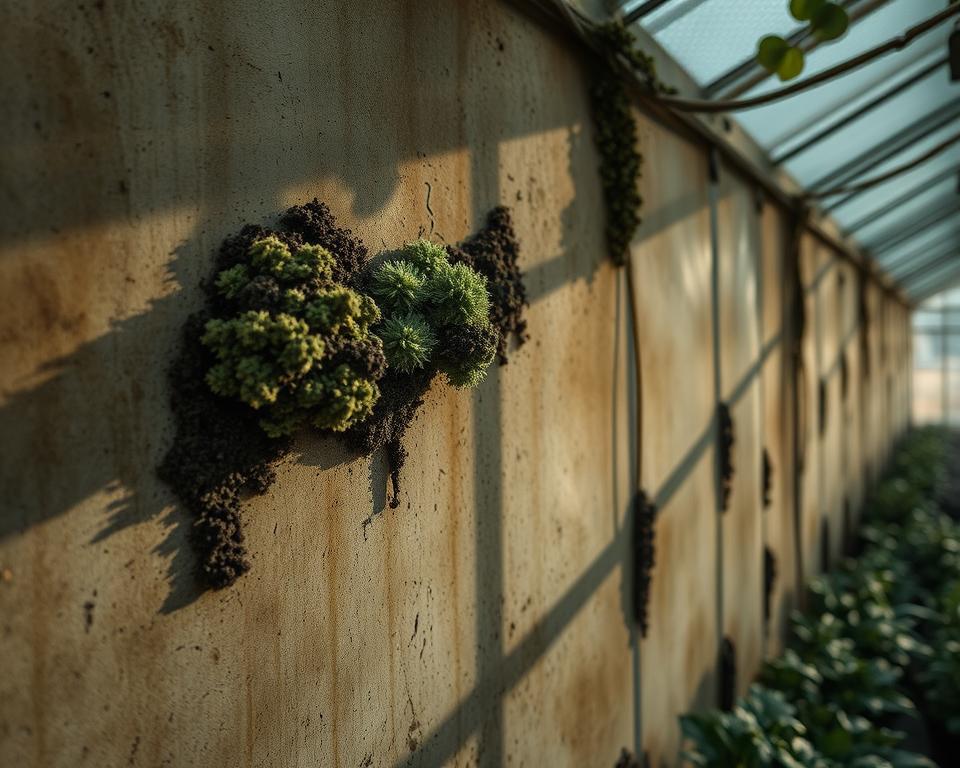
Powdery or felt-like growth on leaves, stems or fruit often signals mould. Colours range from white and grey to green, blue or black depending on species. Grey fuzzy coats on decaying flowers and fruit point to grey mould signs typical of Botrytis cinerea.
Look for spreading circular leaf spots with concentric rings from Alternaria. Olive-green spore masses on undersides suggest downy infections rather than surface moulds. Check benches, propagation trays, pots and shade cloth for slimy or powdery growth. Compost bags and wooden staging can host visible colonies that help you identify mould sources.
Subtle signs: wilting, discolouration and slowed growth
Seedlings that fail to establish or show stunting may be affected by hidden mould symptoms plants rather than nutrient issues. Yellowing or premature leaf drop without obvious surface growth can indicate root or crown moulds.
Poor root development in over-saturated compost often leads to secondary mould problems. Reduced vigour and delayed flowering or fruiting may point to chronic low-level mould pressure that will not always show as surface fuzz.
How to distinguish mould from other plant diseases
Compare symptoms carefully to distinguish plant diseases. Moulds usually produce surface mycelium or spores that can be rubbed off. Bacterial infections more often produce ooze or water-soaked lesions that do not brush away.
Downy mildew shows growth on the leaf underside and tends to be host-specific. Powdery mildew appears as white patches that resist washing off. A simple test is to scrape suspicious growth onto white card to check colour and texture, which helps identify mould types.
Environmental checks aid diagnosis. High humidity and condensation favour mould, while other diseases correlate with different stressors. When uncertain, collect samples for lab analysis to pinpoint the pathogen and guide treatment.
Causes of Mold Problems in Greenhouses
Greenhouse mould begins when small maintenance lapses create the right conditions for spores to thrive. Below are the key sources that, left unchecked, lead to persistent outbreaks and stubborn patches on benches, plants and equipment.

Poor ventilation and high humidity sources
Poor air movement traps moisture and warm air, creating pockets where spores settle. Blocked vents, closed louvres and fans that are too small for the space are common ventilation mould causes in UK glasshouses.
Shaded corners, dense canopy layers and drip from cold glazing add to local humidity. Condensation that runs onto benches and compost will keep surfaces wet at night, increasing the risk of surface and root fungi.
Overwatering and soil moisture management
Over-frequent watering and heavy, poorly draining composts encourage overwatering mould by keeping media continually damp. Compact or low-wicking mixes hold water near roots and at the pot rim, which favours fungal growth.
Misting systems and hand-watering that wets foliage prolong leaf wetness and raise the chance of mould on leaves. Choosing lighter, well-draining compost and checking pot weight before watering reduce this problem.
Contaminated tools, pots and propagation materials
Reused pots, trays and hand tools can harbour spores and infected compost. Bringing new plants or cuttings into the structure without quarantine raises the chance of contaminated pots mould taking hold.
Organic debris such as fallen leaves, spent compost and rotting fruit forms reservoirs for spores. Wooden benches and porous surfaces retain moisture and fungal material longer than plastic or metal, making thorough cleaning essential.
- Gardeners can transport spores on boots, clothing and hands between spaces.
- Pests such as aphids and thrips damage tissue and carry fungal spores into plants.
- Quarantine, good hygiene and targeted ventilation cut these risks significantly.
Monitoring and Early Detection Techniques
Regular checks and simple instruments give gardeners the best chance of managing mould before it spreads. A short routine combines quick daily looks with deeper weekly and seasonal inspections. Keep notes on temperature, relative humidity and recent watering to spot trends that signal risks.

Routine inspection checklists for gardeners
Carry out daily quick checks of seed trays, young seedlings, flower buds and the greenhouse floor for visible patches and condensation. These brief walks let you catch early signs that need action.
Perform weekly checks that include the undersides of leaves, staging, pot rims, compost surfaces and ventilation openings. Use a simple checklist that records plant density, watering times and any cleaning tasks completed.
Seasonal inspections should occur before the heating season and after major planting. Examine mortar joints, guttering and shading for damp spots that can harbour spores.
Using hygrometers and digital sensors to track humidity
Install a reliable hygrometer greenhouse unit at canopy height and a second sensor near glazing or benches to compare microclimates. Place one sensor by seedlings where mould risk is highest.
Consider datalogging systems or wireless monitors from brands such as Sensaphone or Xiaomi Aqara for hobbyists. These record diurnal swings so you can identify times of peak humidity and adjust ventilation.
Target relative humidity around 50–70% for most crops. For seedlings aim for 50–65% with good airflow. Avoid sudden night–day temperature drops that cause condensation; moderate ventilation overnight helps reduce that risk.
Sampling methods and when to send samples to a lab
When problems persist, collect affected leaves, fruit or small sections of infected material. Place samples in clean paper envelopes or sealed plastic bags with minimal air and keep them cool during transport.
Surface swabs from benches, pot rims or tools provide evidence of contamination and can be sent for testing. For suspected quarantine pathogens or unclear outbreaks, contact accredited diagnostic services for analysis.
UK services such as Royal Horticultural Society advisory or local plant health diagnostic labs can identify species and advise on appropriate cultural or chemical measures. Commercial growers benefit from species-level identification when pesticide use is regulated.
| Check | Frequency | Tools or notes |
|---|---|---|
| Seed trays and seedlings | Daily | Visual inspection; hygrometer greenhouse at seedling height |
| Leaf undersides and stems | Weekly | Hand lens, checklist with humidity and temperature entries |
| Staging, benches and pot rims | Weekly | Surface swabs available for sample mould greenhouse testing |
| Ventilation points, gutters and mortar joints | Seasonal | Record any damp spots; adjust shading and airflow as needed |
| Data logging and trend review | Continuous / Weekly review | Wireless sensors, Sensaphone or hobbyist devices to aid early detection mould |
Prevention Strategies for Mold in the Greenhouse
Good greenhouse design cuts the risk of mould before plants arrive. Thoughtful siting and simple layout changes reduce damp pockets and limit conditions that favour fungal growth. Use the guidance below to prevent greenhouse mould while keeping cultivation efficient.

Design and layout considerations to reduce damp spots
Position benches and staging to allow cross-flow of air; avoid placing tall plant blocks against glazing where cold-surface condensation forms. Choose non-porous, easy-to-clean bench surfaces such as plastic, galvanised steel or sealed timber to make hygiene simple.
Raise staging to promote airflow beneath pots and slope the ground to ensure runoff. Lay gravel or paving around the perimeter to keep surface moisture low. Create a dedicated quarantine bench for new plants and a separate propagation area to stop pathogens spreading between zones.
Ventilation solutions: natural and mechanical options
Natural ventilation works through roof vents, side vents and louvres that create stack-effect airflow. Open vents early in the day when humidity rises to exchange moist air for drier air.
Use circulation fans and extractor fans to remove still pockets at canopy level. Thermostatic vent openers and linked controllers keep a balance between heat and fresh air, which helps limit greenhouse design mould and reduces cold-surface condensation.
Where heating is used, pair thermostatic heaters with ventilation control. Forced-air or under-bench heating can reduce winter condensation when fuel costs and scale allow.
Watering best practice and irrigation timing
Water early in the day so foliage has time to dry before nightfall. Direct irrigation to the compost surface with drip lines or capillary mats to keep leaves dry and reduce spore spread.
Use free-draining, well-aerated potting mixes such as peat-free Premier mixes or John Innes blends and avoid overfilling trays. Tailor frequency to crop stage and pot size, checking moisture with a finger test or a handheld moisture meter rather than on a fixed schedule.
- Place fans at canopy level to encourage even air movement and prevent hotspots linked to greenhouse design mould.
- Install easy-clean surfaces and maintain a quarantine bench to prevent greenhouse infestations from taking hold.
- Adopt watering best practice greenhouse routines: morning irrigation, drip systems and moisture checks to reduce leaf wetness time.
Treatment and Remediation Methods
Effective treatment begins with a clear plan that combines product choice, cultural steps and thorough cleaning. Read labels carefully and follow COSHH guidance when you treat greenhouse mould. Use personal protective equipment such as gloves, eye protection and a suitable mask when handling treatments.
Safe fungicidal options:
For amateur and professional use in the UK, consider biological products first. Bacillus subtilis formulations, such as Serenade Garden, and Trichoderma-based compost treatments reduce mould pressure when used as part of integrated pest management. Where chemical contact products are required, copper-based sprays and permitted chlorothalonil alternatives can provide control on tolerant crops. Rotate active ingredients to limit resistance and respect pre-harvest intervals on edible crops.
Non-chemical mould control:
Remove infected tissue promptly and dispose of it hygienically. Burn material where local rules allow or double-bag and remove from the site. Prune to open canopies and thin overcrowded beds to increase airflow. Quarantine new plants and choose resistant cultivars, for example Botrytis-tolerant bedding plants or specific tomato lines, to lower future risk.
Cleaning and disinfection protocols:
Keep a regular cleaning schedule. Sweep benches and floors, remove spent compost and wash pots and trays between uses. To disinfect greenhouse surfaces, use products appropriate for the material. A 10% household bleach solution is effective on many non-metal surfaces when used with caution. Virkon S and F10SC are general-purpose disinfectants suited to horticultural use; follow manufacturer instructions for dilution and contact time.
Sterilise propagation equipment where feasible. Hot-water pasteurisation of pots and trays and steam cleaning of benches and paths reduce spore loads. Replace or repair porous items such as rotting wooden benches and degraded potting material that retain moisture and harbour spores. Record each cleaning event and ensure anyone working in the greenhouse understands hygienic procedures.
When choosing treatments, balance efficacy with crop sensitivity. Avoid spraying edible crops close to harvest unless the product label permits use. Combine fungicides greenhouse options with non-chemical mould control to achieve the best long-term results and to reduce reliance on sprays.
Maintaining Healthy Growing Conditions Year‑Round
Good greenhouse practice keeps plants productive and reduces mould risk all year. A clear routine that blends seasonal greenhouse adjustments with daily checks makes management simpler and more effective.

Seasonal adjustments for humidity and temperature
Winter needs controlled heating and measured ventilation to cut condensation. Raise night temperatures slightly where budgets allow to limit dew on leaves. Use thermostatic and hygrostat controls to automate responses and reduce human error.
Spring and autumn demand flexible ventilation. Open vents during warm daylight hours to relieve humidity spikes. Anticipate wet weather and scale back watering to avoid prolonged damp periods.
In summer, provide shade to prevent heat stress while keeping airflow steady. Avoid sealing the greenhouse on hot, humid days because trapped moisture fuels mould growth.
Crop rotation, spacing and plant selection to minimise risk
Rotate crops in beds and containers to stop pathogen build-up in soil and compost. Do not plant the same host in the same media year after year. A deliberate crop rotation greenhouse plan breaks disease cycles.
Keep recommended spacing for each crop to allow airflow through the canopy. Train climbers with trellises or espalier techniques to keep foliage open and dry quickly after watering.
Choose cultivars with proven disease resistance in high‑risk benches. Set aside dedicated propagation benches for tender seedlings and robust benches for mature cropping.
Record-keeping and ongoing maintenance schedules
Track planting dates, varieties, watering routines, climate logs and any pest or disease events. Simple logs help spot patterns when mould appears.
Adopt a firm greenhouse maintenance schedule. Include vent cleaning, gutter clearance, heater servicing and replacing worn seals or broken glazing. Regular upkeep keeps environmental control tight and predictable.
| Task | Frequency | Benefits |
|---|---|---|
| Check thermostats and hygrostats | Weekly | Stable temperature and humidity, fewer moisture spikes |
| Vent and louvre inspection | Monthly | Improved airflow, reduced condensation points |
| Gutter and drain clearance | Quarterly | Prevents water pooling and damp conditions |
| Heater and fan servicing | Annually | Reliable climate control, lower energy waste |
| Crop rotation review | Seasonal | Reduces soil pathogens and improves yield |
| Record audit and data correlation | Quarterly | Identifies recurring issues and refines strategies |
Resources and Further Help for UK Gardeners
For practical support on mould in greenhouses, start with suppliers and specialist retailers that stock suitable gear and materials. Seed and compost merchants, garden centres and equipment retailers supply everything from circulation fans to peat-free composts. Professional sensors and dataloggers help with precise monitoring when simple hygrometers are not enough.
Below is a compact guide to where to buy tools, sensors and materials in the UK, and which organisations and manuals to consult for trustworthy guidance.
- Retailers and specialist suppliers: Thompson & Morgan, Suttons, Dobbies and Marshalls Seeds for propagation needs and cultivation materials.
- Equipment and sensors: Grosvenor Garden Centre, Godfreys Garden Supplies and online outlets such as Amazon UK for hygrometers, fans and thermostatic controllers.
- Horticultural brands: Westland, Levington and Premier for composts and potting mixes, including peat-free alternatives.
- Professional monitoring: Voltcraft, Testo and Gardena provide higher-grade sensors and dataloggers for precise environmental records.
For authoritative advice and diagnostics, consult established British bodies that specialise in plant health. These organisations offer fact sheets, plant clinics and up-to-date protocols for disease management.
- Royal Horticultural Society: plant clinic services and detailed disease pages; many growers refer to RHS mould advice for treatment options and identification.
- Agriculture and Horticulture Development Board (AHDB): crop-specific research, disease management and practical guides for commercial growers.
- Local university horticulture departments and county horticultural societies: regional expertise and extension services to suit local conditions.
Use a mix of printed manuals and vetted online sources when researching control methods. Peer forums offer experience, yet scientific guides ensure safe and effective practice.
- RHS publications and greenhouse manuals by established authors for sanitation, pruning and cultural controls.
- DEFRA and Government plant health pages for official reporting procedures and national protocols.
- UK gardening networks and forums such as Gardeners’ World and Gardenforum.co.uk for community advice, cross-checked against expert sources.
For ease of comparison, the table below summarises options for common needs and where to obtain them within the UK market.
| Need | Recommended Source | Typical Products | Why Choose |
|---|---|---|---|
| Basic hygrometers and fans | Grosvenor Garden Centre, Godfreys Garden Supplies, Amazon UK | Digital hygrometers, clip fans, small circulation units | Wide range, affordable, quick delivery for hobby growers |
| Professional sensors and dataloggers | Voltcraft, Testo, Gardena | Multi-channel dataloggers, calibrated probes | High accuracy, suitable for trials and commercial use |
| Compost and potting mixes | Westland, Levington, Premier, Dobbies | Peat-free mixes, seed compost, multipurpose loams | Proven horticultural formulations, reliable quality |
| Seeds and propagation | Thompson & Morgan, Suttons, Marshalls Seeds | Seed ranges, plug trays, propagation mats | Specialist seed lines and propagation supplies for UK conditions |
| Authoritative advice and diagnostics | Royal Horticultural Society, AHDB, university extension services | Plant clinics, disease fact sheets, research briefs | Evidence-based guidance and practical control recommendations |
| Guides and manuals | RHS publishing, specialist greenhouse manuals | Sanitation protocols, mould management guides | Practical step-by-step approaches for hobbyists and professionals |
Conclusion
This greenhouse mould prevention conclusion pulls together the practical steps gardeners in the UK can use to protect greenhouse plants. Understanding mould biology, watching for early signs and keeping ventilation and watering correct are the foundation. Routine checks and small investments, such as a basic hygrometer, will pay dividends by catching humidity issues before they become infestations.
Summary greenhouse mould tips: keep a weekly checklist, maintain cleanliness, and create a quarantine bench for new arrivals. Prioritise airflow, remove damp debris and adjust irrigation timing rather than reaching straight for fungicides. When treatment is needed, choose targeted options and follow label guidance to limit pesticide use.
To protect greenhouse plants, act early and consult trusted resources such as the Royal Horticultural Society or local diagnostic services when uncertain. With consistent hygiene, environmental control and careful plant selection, mould problems are largely preventable and manageable, preserving plant health and reducing reliance on chemicals.
FAQ
What is mould and how does it develop in a greenhouse?
Mould is a group of filamentous fungi that reproduce via spores. Spores land on organic surfaces such as compost, plant debris and pot rims. In the right conditions—high relative humidity, poor air circulation and persistent leaf wetness—spores germinate, form mycelium and rapidly sporulate. Greenhouses concentrate spores and provide stable microclimates that favour quick colonisation, making prevention essential.
Which mould species are most common in UK greenhouses?
Typical species include Botrytis cinerea (grey mould) on soft fruit and ornamentals; Cladosporium and Alternaria species causing leaf spots; Penicillium and Aspergillus on damp compost and stored produce; and Trichoderma in potting media (sometimes beneficial as a biocontrol). Powdery mildew species (Erysiphe, Podosphaera) are also common greenhouse problems despite different humidity preferences.
How can I tell mould from other plant diseases?
Mould usually produces surface mycelium or spore masses that can often be rubbed off. Bacterial infections more commonly show water‑soaked lesions or ooze. Downy mildew often shows downy growth on leaf undersides and is host‑specific. Use simple checks—scrape growth onto white card, note environmental conditions, and, for persistent or unclear cases, send samples to an RHS plant clinic or accredited lab for diagnosis.
What are the main causes of mould problems in my greenhouse?
Key causes are poor ventilation and resulting high humidity; overwatering and poorly draining or compacted potting mixes; and contaminated tools, pots and propagation materials. Condensation on glazing, shaded corners, dense canopies and organic debris all create reservoirs for spores. Human vectors and pests can also introduce or spread mould.
How should I inspect the greenhouse to detect mould early?
Do daily quick checks of seed trays, young seedlings, flower buds and the floor for visible mould and condensation. Weekly, inspect undersides of leaves, staging, pots and ventilation openings. Keep a simple checklist recording temperature, relative humidity, plant density and watering. Use these routines to spot subtle signs such as stunting, wilting or premature leaf drop before surface mould appears.
What humidity levels should I aim for in a greenhouse?
For most crops, aim for a relative humidity of about 50–70%. Seedlings and highly susceptible crops benefit from lower humidity—around 50–65%—combined with good ventilation. Use accurate digital hygrometers and, where possible, datalogging sensors to monitor canopy and glazing microclimates and identify peak humidity times.
What practical ventilation solutions work for hobby greenhouses?
Use a combination of natural vents (roof, side and louvre vents) to create cross‑flow and stack effect. Install circulation fans at canopy height to prevent still pockets. For reliable control, fit thermostatic vent openers and, if budget allows, small extractor fans linked to temperature/humidity controllers. Open vents early in the day when humidity rises to reduce condensation.
How should I water to reduce mould risk?
Water early in the day so foliage dries by evening. Direct water to the compost surface using watering cans, drip irrigation or capillary mats rather than misting foliage. Use free‑draining, well‑aerated potting mixes (peat‑free or John Innes blends) and tailor frequency to pot size and crop stage. Check moisture with a finger test or moisture meter rather than a fixed schedule.
What non‑chemical methods help control mould once it appears?
Remove infected tissue promptly and dispose of it hygienically. Prune to improve airflow, thin overcrowded crops and remove spent flowers and rotting fruit. Implement quarantine for new plants, use resistant cultivars where available, and maintain clean benches and pathways. Cultural controls combined with environmental adjustments often resolve low‑level mould without fungicides.
Which fungicidal or biological products are suitable for greenhouse use in the UK?
Biological products such as Bacillus subtilis formulations (e.g. Serenade Garden) and Trichoderma treatments can be effective and fit integrated pest management. For chemical options, use only products authorised for the crop and follow label guidance, PPE and COSHH requirements. Consider copper‑based contact sprays where permitted and respect pre‑harvest intervals.
How do I clean and disinfect greenhouse surfaces and equipment?
Remove organic debris first, then wash surfaces with detergent. Disinfect with appropriate agents: authorised agricultural disinfectants such as Virkon S or F10SC are effective. Household bleach (10%) can be used cautiously on non‑metal surfaces. Sterilise pots and trays by hot‑water pasteurisation or steam where practical. Replace porous materials that retain moisture and spores.
When should I send samples to a diagnostic lab and which services are available in the UK?
Send samples when problems are persistent, unexplained or potentially quarantine‑level. Include affected leaves, fruit or swabs in clean paper envelopes or sealed bags and keep them cool. Contact RHS advisory services, local plant health diagnostic labs or AHDB for accredited testing and species identification. Labs can inform targeted chemical or cultural responses.
How can greenhouse design reduce mould risk?
Position benches to allow cross‑flow, avoid tall blocks against glazing and use non‑porous, raised benching to promote airflow. Ensure good perimeter drainage and slope ground away from the structure. Create a separate quarantine bench for new plants and segregate propagation areas from mature crops to limit cross‑contamination.
What seasonal adjustments should I make to maintain healthy growing conditions?
In winter, maintain moderate heating with controlled ventilation to reduce condensation. During spring and autumn, increase daytime ventilation to manage humidity spikes. In summer, provide shade while ensuring airflow. Use thermostatic and hygrostat controls to automate responses and reduce human error, and adjust watering to reflect external weather conditions.
Which UK suppliers and organisations can help with equipment and advice?
For supplies, consider Thompson & Morgan, Dobbies, Suttons and specialist retailers for compost, seeds, sensors and controllers. For expert advice and diagnostics, consult the Royal Horticultural Society (RHS), AHDB Horticulture and local university horticulture departments. For precision sensors and dataloggers, look to Testo, Voltcraft or Gardena for hobby and small commercial options.
How should I record and track mould incidents to prevent repeats?
Keep simple logs of planting dates, varieties, watering regimes, temperature and humidity readings, and any pest or disease occurrences. Note treatments applied and their effectiveness. Correlate mould events with environmental data to identify patterns and refine ventilation, watering and sanitation schedules over time.