UK Gazebo Placement Rules: Proximity to Fences
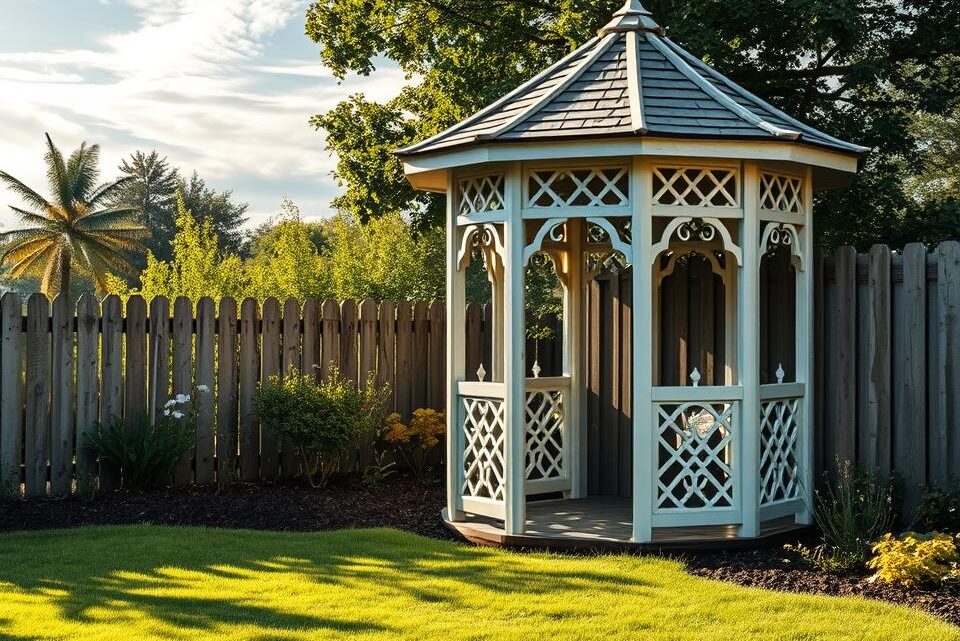
This article explains how close can a gazebo be to a fence in the UK and sets out the practical and legal issues to consider. It aims to give homeowners, landlords, tenants and garden designers a clear starting point on gazebo placement rules UK, garden structure regulations and what to check before you build.
There is no single nationwide numeric distance that applies in every case. Compliance depends on permitted development gazebo allowances, planning rules, building regulations, local bylaws, the Party Wall etc. Act 1996, fire safety and insurance terms from providers such as Aviva and NFU Mutual.
Read on for a structured guide that moves from the central question of a gazebo near boundary to national planning principles, technical building rules, local boundary matters, neighbour impact and practical steps to secure approvals or respond to enforcement.
Inhaltsverzeichnis
Key Takeaways
- There is no universal setback; check planning portal guidance and local council policies.
- Permitted development gazebo rules often apply, but size, height and position matter.
- Building regulations and the Party Wall etc. Act 1996 can affect works near a boundary.
- Fire safety, access for emergency services and insurance cover should inform siting decisions.
- Talk to neighbours early and seek pre-application advice from the local planning authority if unsure.
how close can a gazebo be to a fence in the uk?
The simple question hides several legal and practical strands. Homeowners, landlords and tenants often ask whether a gazebo must stand a set distance from a boundary. Answers depend on classification, size and whether the structure is temporary or permanent.
Understanding the phrasing of the key question
The query seeks both the statutory minimum and sensible neighbourly practice. A distinction exists between informal guidance and statutory rules. Informal guidance covers neighbourliness and sightlines. Statutory matters include planning rules, building regulations and party wall obligations.
Relevance to homeowners, landlords and renters
Homeowners need clarity before purchase and erection to avoid enforcement. Landlords must ensure tenant installations comply with covenants, safety standards and tenancy agreements. Renters should check leases and obtain landlord permission when required to prevent disputes.
Scope: garden gazebos, temporary structures and summerhouses
Not all gazebos are the same. Lightweight pop-up gazebos used for occasional events differ from timber-framed garden gazebos and metal-framed permanent structures. Summerhouses with solid walls and roofs are treated more like outbuildings.
Typical scenarios vary. A freestanding gazebo on paving may be simple to move. An anchored gazebo that needs foundations looks permanent. Gazebos attached to a house or placed on decking raise different planning and building control questions. Electrical installations such as lighting or heaters add further considerations.
The practical implication is that the answer hinges on classification, dimensions and materials. You must check whether a structure falls within permitted development or needs planning permission. That determines the relevant gazebo legal distance, gazebo distance from fence and which temporary garden structure rules apply.
Overview of UK planning rules for garden structures
Understanding planning rules helps homeowners place a gazebo or outbuilding with confidence. Many garden projects fall within permitted development and avoid the need for planning applications when they meet size, height and siting limits. This section outlines the main tests and common exceptions so you can check whether your proposal fits the rules.

Permitted development rights explained
Permitted development garden structures often include single‑storey outbuildings, sheds and gazebos that respect prescribed limits. In England these limits come from the Town and Country Planning (General Permitted Development) Order. Wales, Scotland and Northern Ireland have equivalent provisions with small differences in wording. Key checks cover maximum height, total footprint relative to the original house and whether the structure sits forward of the principal elevation.
When planning permission is usually required
Planning permission gazebo applications become necessary when a proposed structure exceeds permitted development garden structures limits. Examples include buildings taller than the allowable heights, outbuildings that use more than half the rear garden footprint, or features that create a separate dwelling. Proposals in conservation areas, World Heritage Sites or on listed properties often need formal consent regardless of size.
National and local variations in policy
Garden building rules UK change across England, Wales, Scotland and Northern Ireland. Local planning authorities can tighten controls through Article 4 Directions or local design guidance. Councils may limit materials, siting or appearance in sensitive areas. Always check the local council planning pages and use national planning portals as a starting point for guidance.
Even when permitted development rights gazebo tests are met, other controls can apply. Building regulations, party wall matters and private covenants may influence siting and construction. Early checks reduce the risk of enforcement action and help avoid delays.
Building regulations versus planning permission for gazebos

Planning permission and building regulations serve different purposes. Planning deals with land use and appearance. Building control focuses on safety, structure and services. A homeowner should check both before installing a garden structure.
When building regulations apply
Lightweight, temporary gazebos with no fixed services will usually fall outside building control. The question do gazebos need building regs UK depends on use, size and permanence. If a gazebo is intended for habitation, or is large and fixed to the ground, building regulations may apply.
Structural safety, foundations and electrical work
Permanent structures need safe foundations. Foundations requirements gazebo cover depth, bearing capacity and resistance to frost and uplift. Where substantial posts or roofs affect stability, compliance with Approved Documents for structure is required.
Fixed electrical work triggers regulation. Any hard‑wired lighting, sockets or heaters must meet electrical regulations garden building and be installed by a competent electrician. Part P requires notification to building control for certain installations.
Drainage, gas appliances and flues also bring building control into play. Sanitary fittings or a connection to sewer systems require approval and appropriate certificates.
How building control inspections work
Contact the local authority building control early or use an approved inspector. You may need to submit plans and pay a fee. Inspections typically occur at foundations, structural frame and final stages.
Keep records and certificates from qualified tradespeople. These documents help with future sales, insurance and demonstrate compliance when questions arise about building regulations gazebo or whether do gazebos need building regs UK.
Distance and boundary considerations under local bylaws
Local councils set varied expectations for siting a gazebo close to a property line. Many homeowners find clear guidance on maintenance access, privacy and safety in their council guidance pages. Checking local bylaws gazebo notes early avoids surprise enforcement later.
Common setback expectations from neighbours and council
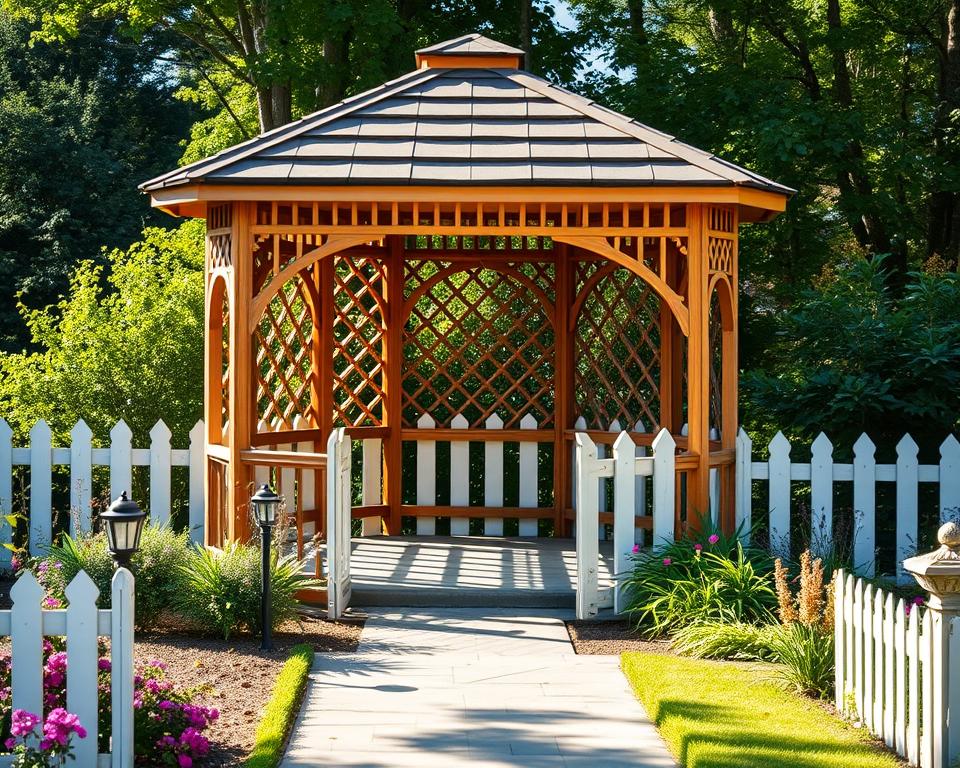
Councils rarely fix a universal one-metre rule for garden structures. A sensible gap of about 0.5–1.0 metre from a boundary is often suggested for maintenance access. Larger or taller gazebos typically need more distance to reduce overshadowing and to meet garden planning considerations under gazebo boundary rules UK.
Neighbours may expect a similar clearance so fences remain serviceable. If a structure blocks access to repair a fence, the council may weigh that in any complaint or enforcement action.
Party wall and boundary ownership issues
The Party Wall etc. Act 1996 applies when work affects a shared wall or a structure built up to the line. A party wall gazebo scenario arises where posts, foundations or excavations sit close to a neighbour’s wall. Serving notice can be a legal requirement.
Ownership of the boundary is decisive for who may fix posts or place a gazebo astride the line. Deeds held at HM Land Registry will show title and any restrictive covenants. If the fence stands wholly on the neighbour’s land, their consent may be needed for attachments or permanent fixings.
Local authority guidance and case examples
Planning officers publish examples of enforcement decisions and permitted layouts. Search your council’s planning pages for precedents that match your garden size and structure height. Appeal outcomes often clarify how strictly setback from fence gazebo rules are applied.
Reported cases show councils sometimes require removal or modification where outbuildings harm neighbours’ light or access. Use these examples to shape a compliant proposal and to explain the rationale when you consult the local planning authority about gazebo boundary rules UK and local bylaws gazebo.
Fire safety and access requirements near boundaries
Positioning a gazebo close to a fence brings safety and practical issues that deserve careful thought. Consider how materials, appliance use and access affect neighbours and emergency services before you install a structure near a boundary.
Materials and distance considerations for fire risk
Timber gazebos and canvas coverings can catch and spread fire more quickly than metal or non-combustible alternatives. Choose fire-retardant-treated timber or certified fire-resistant fabrics where possible to reduce risk. Keep portable heaters, barbecues and gas appliances well away from fences and combustible outbuildings.
There is no single national rule setting a minimum separation for small private structures, so err on the side of caution. Local fire and rescue services and British Standards guidance for outdoor heating and barbecues give useful reference points for assessing gazebo distance fence fire risk.
Access for emergency services and maintenance
A gazebo should not block escape routes, garden gates or access used by fire crews. Plan siting so emergency vehicles and personnel can reach the rear and sides of your property if needed. Leave space to perform routine maintenance on boundary fences and walls without having to dismantle the gazebo.
Complex properties with narrow alleys or shared access may need consultation with the local fire and rescue service to confirm that the chosen position does not hinder emergency response. Document any agreed access arrangements to avoid future disputes.
Insurance implications of close placement to a fence
Major insurers such as Aviva, Direct Line and NFU Mutual set conditions on siting and construction of outbuildings. Placing a gazebo immediately adjacent to a fence can raise the likelihood of damage and affect premiums or claim outcomes. Contact your home insurer before installation to check policy terms and any required precautions.
Keep receipts, product details and dated photographs of the gazebo and its proximity to the boundary. These records help when discussing an insurance gazebo boundary issue with your provider and support any future claims about condition or maintenance.
Impact on neighbours: nuisance, light and privacy
A gazebo close to a boundary can affect neighbours in several ways. Complaints tend to focus on loss of light, increased overlooking and general nuisance. Early discussion with those nearby reduces the chance of a formal gazebo neighbour dispute.

Right to light and overshadowing
The legal concept of the right to light can arise when windows or gardens have enjoyed daylight for many years. Courts assess established use and the extent of obstruction before granting relief. An overshadowing gazebo that significantly reduces sunlight to a neighbour’s room or garden may prompt claims. Where a right to light gazebo issue appears likely, obtain specialist advice and measure the likely loss of daylight carefully.
Privacy screens, planting and mitigation options
Privacy concerns often stem from raised floors or open sides that increase overlooking. Design choices can cut tension. Use privacy screens, frosted panels or trellis with climbers to limit views.
Lowering the roofline, moving the structure further from the fence or using semi-transparent materials keeps the space useful while easing neighbour worries. Planting a close hedge or installing a privacy gazebo fence provides a softer, greener barrier.
Resolving disputes: mediation and legal steps
Talk to neighbours first and try to reach an agreement. If talks stall, mediation services such as Citizens Advice or local mediation charities offer neutral help. Formal routes include serving party wall notices where required and seeking pre-application advice from the local council.
If the dispute persists, legal action or enforcement notices may follow. Seek specialist legal advice before pursuing court remedies to understand costs and likely outcomes. Proper record-keeping of measurements, photographs and correspondence strengthens any case in a gazebo neighbour dispute.
Practical guidance on siting a gazebo close to a fence
Careful planning makes siting a gazebo near a fence straightforward. Start with simple measures and clear records so you can show neighbours, insurers or the council what you intend to build.
Measuring and documenting distances
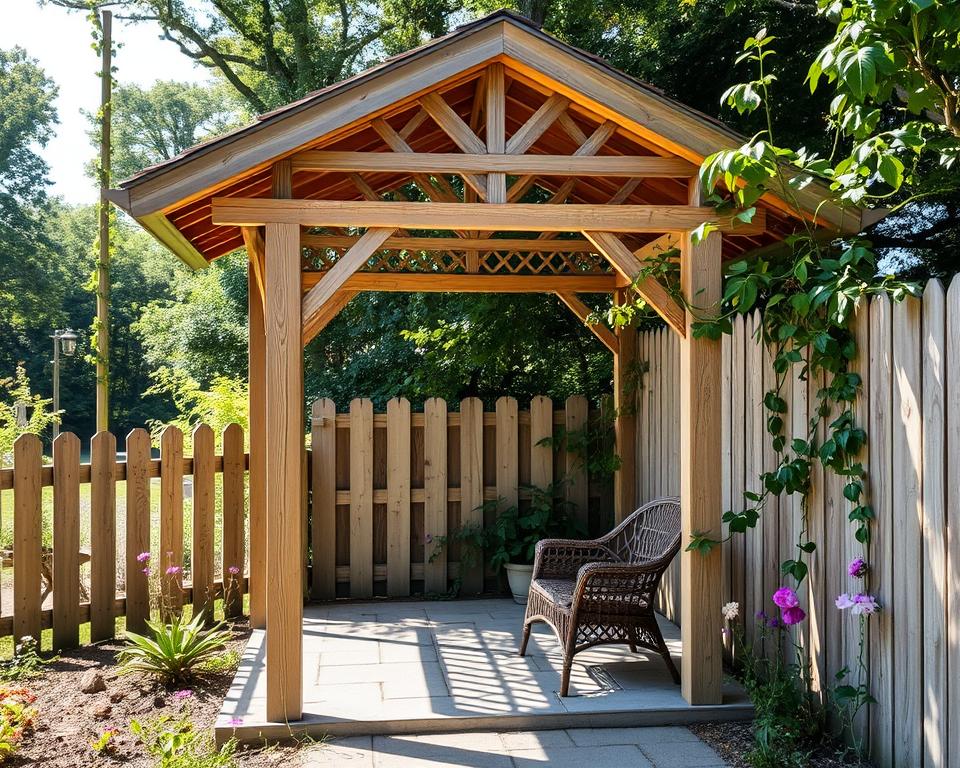
Use a tape measure to measure from at least three points on the proposed gazebo footprint to the fence. Note measurements in metres and photograph each point with a clear scale reference, such as a tape or metre stick.
Prepare a basic plan showing property lines, existing buildings and the proposed location. Keep digital and printed copies. These records help you to measure gazebo distance accurately when answering queries from planning or insurance.
Choosing materials and design to reduce issues
Select durable, low-maintenance finishes that reduce risks near boundaries, such as pressure-treated timber, galvanised steel posts or composite decking. Use fire-retardant coatings where recommended by manufacturers.
Design for minimal bulk beside the fence: lower eaves, open sides or an articulated roof can limit overshadowing and loss of light. Consider moveable or temporary canopies if permanence raises neighbour concerns. Using appropriate gazebo materials near fence avoids many common objections.
Checking deeds, covenants and estate rules
Search title deeds at HM Land Registry to confirm boundary lines and any restrictive clauses that affect positioning. In leasehold homes, check your lease and seek landlord consent before works begin.
Estate management companies and local covenants can impose extra rules. If a property has deed covenants gazebo restrictions, obtain written clarification before installing the structure.
Fixings, foundations and party wall matters
Where possible, use non-invasive fixings and avoid digging on land that may belong to a neighbour. If foundations will be near a shared boundary, confirm land ownership and follow the Party Wall etc. Act 1996 when necessary.
Utilities, lighting and safety
Plan electrical work in line with Part P and hire a NICEIC or NAPIT-qualified electrician. Choose outdoor heating and lighting that meet manufacturer clearances from fences and use RCD protection for external circuits.
Recordkeeping and neighbour communication
Keep copies of all correspondence with neighbours, planning officers and contractors. Retain invoices, certificates and installation photos to show due diligence. Early discussion with neighbours often prevents disputes and speeds approval.
How to secure approvals and avoid enforcement action
Getting the right permissions for a garden gazebo removes risk and gives peace of mind. Start by checking whether your plan fits permitted development. If there is doubt, a formal application or expert advice will make the position clear.
Applying for a lawful development certificate can confirm that a proposed or existing gazebo sits within permitted rights. Prepare clear site plans, elevations and dated photos showing existing features. Submit these documents to the local planning authority and keep copies of the application and any written responses.
Pre-application planning advice gazebo is worth seeking before work starts. Most councils, such as Camden or Birmingham City Council, offer written pre-application advice that sets out likely requirements. That written advice can support later applications and help resolve disputes with neighbours.
To avoid enforcement, check permitted development limits for height, footprint and proximity to boundaries. Serve party wall notices if foundations affect shared walls. Talk to neighbours early and retain records of discussions, professional reports and any consents.
If you are served with an enforcement notice gazebo owners must act quickly. The notice will explain required steps and timescales. You may comply, apply retrospectively for planning permission, or lodge an appeal with the Planning Inspectorate within the statutory period. Failure to act can lead to fines or court orders.
Common appeal grounds include factual errors, incorrect interpretation of permitted development, or special circumstances affecting the site. A retrospective application should include robust evidence and mitigation measures to improve chances of success.
Engage professionals when matters become complex. Chartered surveyors, planning consultants and solicitors familiar with local authority practice can save time and cost. Typical timelines: LDC decisions usually take up to eight weeks, pre-application replies vary by council, and appeals can take several months. Budget for fees for reports, application charges and professional advice when planning.
Keep every consent, letter and plan together. Clear records and early liaison with the council reduce the odds of receiving an enforcement notice gazebo and give the strongest position if you must respond to one.
Conclusion
There is no single definitive distance for how close can a gazebo be to a fence in the UK. Siting depends on permitted development limits, building regulations, party wall responsibilities, fire safety and insurance requirements, and neighbour relations. Each council and title deed can change what is acceptable, so the broad rules must be checked against local policy and your property documents.
Practical steps make compliance straightforward. Measure and document the proposed location, review deeds via HM Land Registry, assess the structure’s materials and height, and consult building control if you plan fixed services. Notifying neighbours and considering privacy or screening can prevent disputes and help meet garden structure compliance UK expectations.
For certainty, seek pre-application advice from your local planning authority or use the Planning Portal for initial guidance. Engage a party wall surveyor, electrician or planning consultant for complex cases. With careful planning, appropriate materials and open communication, a gazebo can usually be sited close to a fence lawfully and safely, which sums up the practical gazebo placement summary for homeowners, landlords and renters.
FAQ
How close can a gazebo be to a fence in the UK?
There is no single nationwide numeric distance that applies in every case. Whether a gazebo can be sited close to a fence depends on planning permitted development limits, building regulations, local bylaws, party wall rights, fire safety, insurance terms and neighbour relations. As a practical starting point, many councils and neighbours expect at least 0.5–1.0 metre for maintenance access, but final requirements depend on the gazebo’s classification (temporary or permanent), dimensions, materials and whether fixed services are fitted. Always check your local authority guidance and your insurer’s conditions before installation.
Do I need planning permission to install a gazebo next to a fence?
Many garden structures fall under permitted development and do not require planning permission if they meet size, height and siting criteria in the Town and Country Planning Order (or local equivalents in Wales, Scotland and Northern Ireland). If the gazebo exceeds permitted development limits, is in a conservation area, forms a separate dwelling, or conflicts with local planning policy, planning permission will usually be required. Use the Planning Portal for initial guidance and contact your local planning authority for definitive advice.
When do building regulations apply to a gazebo?
Building Regulations usually apply when the structure is used for habitation, includes fixed services (electrical, gas, drainage), requires permanent foundations or is of substantial size. Lightweight temporary gazebos without fixed services normally fall outside building control. Fixed electrical work must comply with Part P and be installed by a qualified electrician or notified to building control. Contact your local building control early if the gazebo will have foundations, utilities or heating.
Does the Party Wall etc. Act 1996 affect where I can put a gazebo?
The Party Wall etc. Act may apply if the works involve excavations close to a shared wall, create a structure on or astride the boundary line, or affect a neighbouring building’s foundations. If the gazebo requires posts, foundations or works that impinge on a party wall or boundary structure, you may need to serve notices to your neighbour and obtain agreement or appoint surveyors. Check title deeds at HM Land Registry to confirm boundary ownership before starting work.
What fire‑safety considerations should I bear in mind when siting a gazebo near a fence?
Timber and fabric gazebos present higher fire risk than metal or non‑combustible alternatives. Use fire‑retardant treatments and maintain sensible clearances from combustible fences and sheds. Be cautious with heaters, barbecues and gas appliances — follow manufacturer guidance and local fire advice. Placing a gazebo immediately adjacent to a fence can increase risk and may affect insurance, so consult your insurer (for example Aviva or NFU Mutual) before installation.
Could a gazebo next to my neighbour’s fence cause a dispute over light or privacy?
Yes. A tall or enclosed gazebo can cause overshadowing, loss of daylight, or increased overlooking. The legal concept of “right to light” can arise in established circumstances. To reduce impact, consider lower eaves, privacy screens, trellis with planting or relocating the structure. Start by discussing plans with neighbours and, where necessary, use mediation services such as Citizens Advice. If disputes escalate, seek specialist legal advice and consider party wall procedures or planning remedies.
Will my home insurance cover a gazebo placed close to a fence?
Insurers may impose conditions on outbuildings’ materials, secure fixings and siting. Placing a gazebo very close to a combustible fence could affect premiums or claims. Contact your insurer before installation to confirm coverage and any required measures. Keep receipts, photographs and certificates for foundations, electrics and purchased materials to support future claims.
How should I measure and document the distance from the gazebo to a boundary?
Measure from multiple fixed points using a tape or laser measure and note distances in a simple plan showing property lines, existing buildings and the proposed gazebo. Photograph the site with scale references and retain copies. Check title plans via HM Land Registry to confirm boundaries and record any correspondence with neighbours, the council, building control or professionals.
What materials and designs reduce issues when siting a gazebo close to a fence?
Choose low‑maintenance, fire‑retardant materials such as treated timber, galvanised steel or composites. Opt for designs that minimise height and bulk near boundaries — lower roofs, open sides, translucent panels or moveable canopies. Avoid invasive fixings into neighbouring land and favour non‑penetrative bases where possible. For electrical work, use qualified electricians and comply with Part P regulations.
Can a local council force me to remove a gazebo that is too close to a fence?
If the gazebo breaches planning control, building regulations or breaches an enforcement notice, the council can require alteration or removal and, in worst cases, pursue prosecution. Councils consider permitted development limits, local policies and impacts on neighbours. If served with an enforcement notice, you can appeal or apply retrospectively for planning permission, but it is advisable to seek pre‑application advice and professional help early to avoid enforcement action.
Should I get a Lawful Development Certificate (LDC) for my gazebo?
An LDC provides legal certainty that an existing or proposed gazebo is lawful under permitted development. If you are uncertain whether the structure meets PD limits or if you want reassurance for future sale, apply to your local planning authority with plans and evidence. Pre‑application advice can also clarify requirements and reduce the risk of later enforcement.
Who should I consult if I’m unsure about siting a gazebo near a fence?
Start with your local planning authority and building control for procedural and technical advice. If boundary ownership or party wall issues arise, consult a party wall surveyor or a chartered surveyor. For legal disputes, instruct a solicitor specialising in property. Use qualified electricians for fixed services and contact your home insurer for cover details. Early professional input helps avoid costly problems later.
Are there specific rules for leased properties, flats or managed estates?
Yes. Leasehold properties and estates often have covenants or management company rules that restrict outbuildings, require landlord consent, or impose design standards. Tenants should check tenancy agreements and seek landlord permission. Management companies and freeholders can enforce covenants, so obtain written consent where required and follow estate design codes.
Do rules differ across England, Wales, Scotland and Northern Ireland?
Planning and building rules vary between the four nations. England follows the Town and Country Planning Order and the Planning Portal, while Wales, Scotland and Northern Ireland have their own legislation and guidance. Local planning authorities can also apply stricter rules via Article 4 Directions or local development plans. Always consult the relevant national guidance and your local council.
What practical steps should I take before erecting a gazebo near a fence?
Measure and document the site, check title deeds and any covenants via HM Land Registry, consult the local planning authority for PD and pre‑application advice, notify neighbours and serve party wall notices if necessary, contact your insurer, appoint qualified tradespeople for foundations and electrics, and retain all correspondence, plans and certificates.