Durable Garden Sheds: Which Last the Longest?
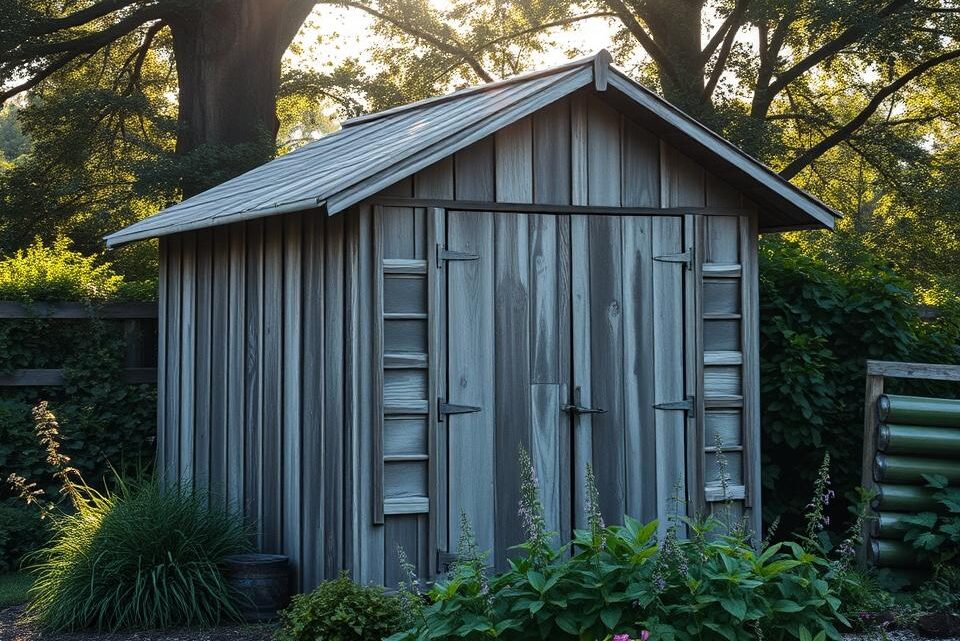
Every UK garden needs storage that endures rain, wind and damp. This guide asks the central question: what kind of shed lasts the longest? It introduces the common options — timber, metal, resin/plastic and brick or masonry — and explains which features and practices most influence shed longevity UK homeowners can expect.
We will compare durable garden sheds from recognised brands such as Forest, BillyOh, Shire, Yardmaster, Keter and Everite to give practical context. Key claims to be tested later include that masonry and well-built treated timber can last many decades, galvanised steel and aluminium perform well if corrosion and condensation are tackled, and modern resin sheds can provide low-maintenance life of 15–30+ years depending on UV exposure.
Site preparation, foundations, ventilation and routine maintenance often matter more than material alone. This article will examine material lifespans, essential construction features, installation tips, maintenance schedules, cost versus longevity and UK-specific environmental and regulatory considerations to answer the question of long-lasting sheds.
Inhaltsverzeichnis
Key Takeaways
- Timber and masonry can deliver the longest service life when correctly built and maintained.
- Metal sheds like galvanised steel or aluminium resist decay but need condensation control.
- Resin sheds offer low maintenance and 15–30+ years’ life in moderate UV conditions.
- Foundations, ventilation and regular checks extend shed longevity more than material choice alone.
- UK climate and planning rules influence choice; choose materials that suit local conditions.
what kind of shed lasts the longest?
Choosing a long-lived garden building depends on several practical points. Material durability, build quality, proper foundation and good roof detailing shape the expected service life. Exposure to UK weather, ventilation and regular upkeep change outcomes markedly. This brief outlines key shed longevity factors, compares common materials and lists simple maintenance steps that extend shed life.
Overview of longevity factors
Primary determinants include the type of material, the joinery and fixings, foundation and drainage, roof covering and airflow. Sites with constant damp, freeze–thaw cycles or coastal salt spray demand tougher choices and extra protection. Secondary items such as hinge quality, paint and how the shed is used also affect service life.
Comparing materials by lifespan
Timber often gives a warm, repairable option. Untreated softwood might last five to fifteen years. Pressure-treated or well-maintained tanalised timber can reach fifteen to thirty years. Cedar and other hardwoods resist rot and can last decades but cost more.
Galvanised steel sheds perform well where galvanisation is sound and condensation is controlled, commonly lasting twenty years or more. Aluminium resists corrosion and can last twenty-five years plus, though it is prone to dents.
Resin and modern plastic sheds made from polyethylene or polypropylene often claim ten to thirty years with minimal maintenance. UV stabilisers improve performance under strong sun. Brick and masonry are the most permanent choice. A properly built brick shed can last fifty years or more if foundations and the roof remain sound.
Common maintenance that extends lifespan
Regular inspections catch small faults before they worsen. Re-sealing joints, clearing gutters and removing moss from roofs reduce water ingress. Timber should be treated or painted every two to five years depending on product guidance. Repair leaks quickly and keep airflow to prevent condensation and rot.
Use stainless steel or galvanised fixings where possible and lubricate hinges. Replacing corroded hardware and addressing damp at the base will significantly extend a shed’s usable life. For readers comparing options, a clear shed lifespan comparison helps match budget to expected longevity and care requirements.
Timber sheds: durability, pros and cons
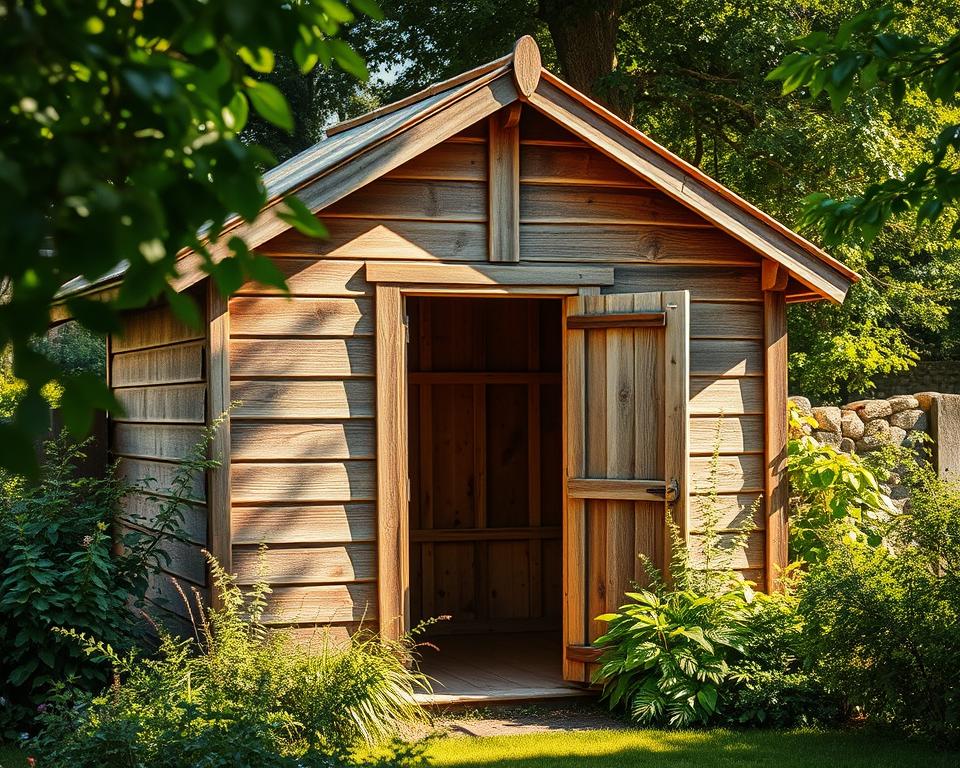
Timber remains a popular choice for garden buildings because it combines warmth, strength and traditional looks. Choices in species, preservative treatment and design all shape timber sheds longevity. A well-built timber shed can serve for decades if the right measures are taken at purchase and during upkeep.
Types of timber and their resistance to rot
Softwoods such as pine and spruce are common and cost-effective. They are more prone to rot when left untreated. Tanalised, or pressure-treated timber, offers extra defence and is widely used in the UK for bases and cladding.
Hardwoods like western red cedar and oak contain natural oils that resist decay. Cedar shed durability is notable; cedar sheds often need less intensive chemical treatment because of the wood’s inherent resistance.
Species such as larch and Douglas fir sit between softwood and hardwood. They give moderate durability at a lower cost than oak or cedar. Choice of species affects initial price and long-term performance.
Protective treatments and frequency
Factory pressure-treatment produces a pressure-treated timber shed that is suitable for close-to-ground use. Tanalisation uses copper-based preservatives that slow fungal and insect attack.
Surface preservatives vary. Microporous stains hide grain while letting timber breathe. Use water-repellent products on exposed cladding. Follow a sensible shed preservative schedule to avoid trapped moisture.
Typical refresh intervals: microporous stains every 2–5 years, oil finishes annually to biennially for decking-style boards, and quality exterior paint every 5–10 years. Base-treated boards need less frequent re-treatment but still benefit from inspections.
Design aspects that improve timber longevity
Raising the floor on timber bearers or a concrete base prevents direct ground contact and reduces damp transfer. Overhanging eaves and drip edges keep rain from saturating walls. Capped ends on cladding minimise end-grain absorption.
Create an air gap behind cladding when possible and fit elevated thresholds to reduce internal humidity. Use galvanised or stainless steel fixings and metal flashings at joints to prevent corrosion and water ingress.
Cladding choice matters. Overlap boards shed water well and suit wetter sites. Tongue-and-groove gives rigidity and a neat finish but needs careful sealing at joints to stop moisture entry.
| Feature | Benefit | Typical Service Interval |
|---|---|---|
| Pressure-treated timber (tanalised) | Resists rot and insects; suitable for ground contact | Factory treated; inspect annually |
| Microporous wood stain | Breathable protection that preserves appearance | Every 2–5 years depending on exposure |
| Oil finish (for cladding) | Enhances water repellence and colour | Annually to biennially in exposed sites |
| Raised floor on bearers | Prevents ground moisture and improves ventilation | One-off at installation; check bearers yearly |
| Galvanised/stainless fixings and flashings | Stops corrosion and protects vulnerable joins | One-off fit; inspect every 2–3 years |
Metal sheds: galvanised steel and aluminium options
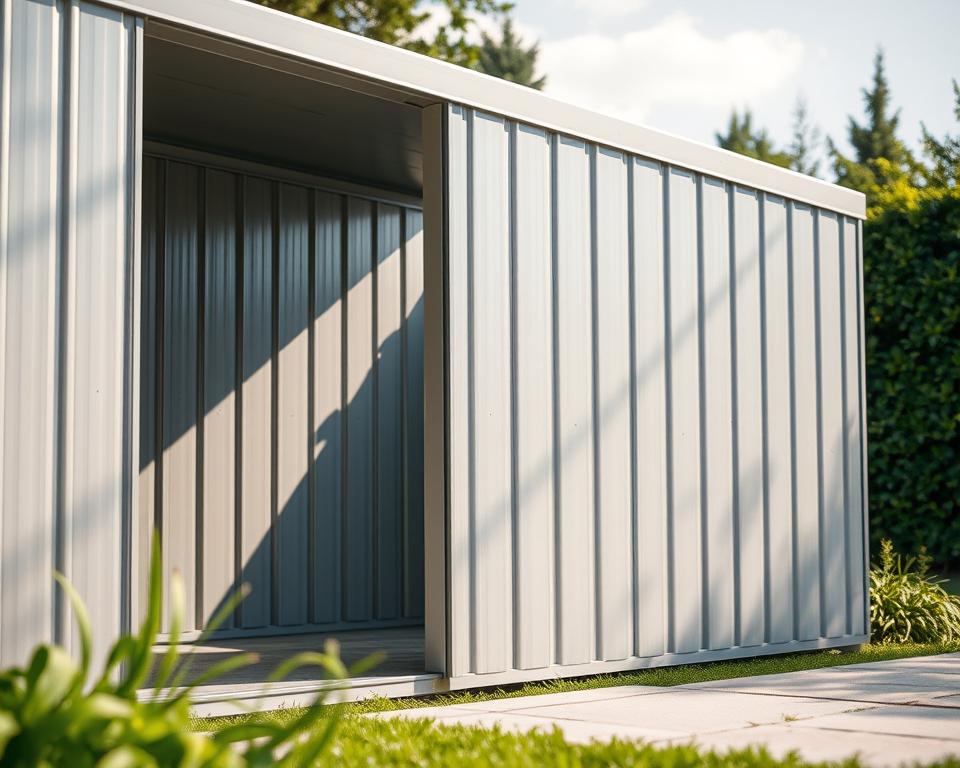
Metal shed durability relies on material choice, build quality and site preparation. Galvanised steel remains the most common option for garden storage. Steel panels receive a zinc coating to slow rusting and powder-coated finishes add further protection.
Gauge thickness affects strength. A heavier gauge resists denting and wind uplift better than thin sheet steel. The galvanised steel shed lifespan depends on coating integrity and maintenance. Scratches, damp interiors and contact with treated timber chemicals can shorten that life.
Aluminium offers clear advantages where weight and corrosion are concerns. Aluminium will not rust and is easier to transport and assemble. Coastal gardens benefit from aluminium shed advantages because salt air speeds corrosion on lesser steels.
Condensation poses a threat to metal buildings. Internal moisture can lead to corrosion from the inside out. Install vents, breathable linings or insulation and consider thermal breaks to limit internal damp. Regular inspections for rust spots and prompt touch-up of coatings will help preserve metal shed durability.
Panel strength, frame reinforcement and correct anchoring are essential. Secure the shed to a solid base and use stainless or aluminium fixings to avoid galvanic corrosion between dissimilar metals. For coastal use, choose marine-grade galvanising or aluminium for a more corrosion-resistant shed.
Expected lifespans vary with care. A well-made galvanised steel shed and a powder-coated aluminium unit can reach 20–30 years with routine cleaning, treatment of scratches and attention to sealants. Regular maintenance extends life and protects the investment in garden storage.
Resin and plastic sheds: low maintenance longevity
Resin and plastic garden buildings have grown popular for homeowners who want a low-upkeep option. These units blend synthetic polymers such as high-density polyethylene with design features that limit rot and rust. With the right choice and siting, many owners see long service from a resin shed.

Material composition and UV resistance
Most modern resin sheds use HDPE, polypropylene or composite blends. Some include fibreglass reinforcement for added stiffness. Manufacturers such as Keter and Lifetime often add UV stabilisers and pigments to prevent brittleness and fading over time.
Look for models that carry UV warranties. UV stabilised resin sheds resist sun damage, which boosts the resin shed lifespan by reducing cracking and discolouration in the UK climate.
Structural strength and wind resistance
Resin panels commonly interlock and, in higher-end models, attach to steel frames to increase rigidity. Thicker, ribbed panels offer better impact resistance than thin sheets.
Anchoring to a solid base is essential to stop uplift in strong gusts. Many manufacturers provide wind-resistance ratings. Check those ratings against local wind zones when assessing plastic shed durability.
Recycling and environmental considerations
Some producers now offer recyclable garden sheds or use recycled content in production. Availability of recycling at end-of-life varies across the UK, so owners should contact local centres or manufacturer take-back schemes.
Resin sheds often avoid timber treatments and repainting, cutting chemical use over the lifetime of the building. Still, plastic production relies on fossil fuels, so buying from brands with recycling programmes reduces environmental impact.
| Aspect | Typical feature | Effect on lifespan |
|---|---|---|
| Material | HDPE, polypropylene, composite blends | Good resistance to rot and corrosion; base for a long resin shed lifespan |
| UV protection | UV stabilisers and pigments; manufacturer warranties | Prevents brittleness and colour fade; improves plastic shed durability |
| Structural design | Interlocking panels, ribbed panels, steel reinforcement | Increases impact resistance and wind performance |
| Anchoring and base | Concrete, pavers or treated timber base with secure fixings | Reduces uplift and movement; essential for wind resistance |
| Maintenance | Occasional cleaning, tighten fixings | Minimal upkeep extends life toward 15–30+ years |
| End-of-life | Manufacturer take-back, local recycling | Options for recyclable garden sheds vary regionally; reduces landfill |
Brick and masonry sheds: permanence and costs
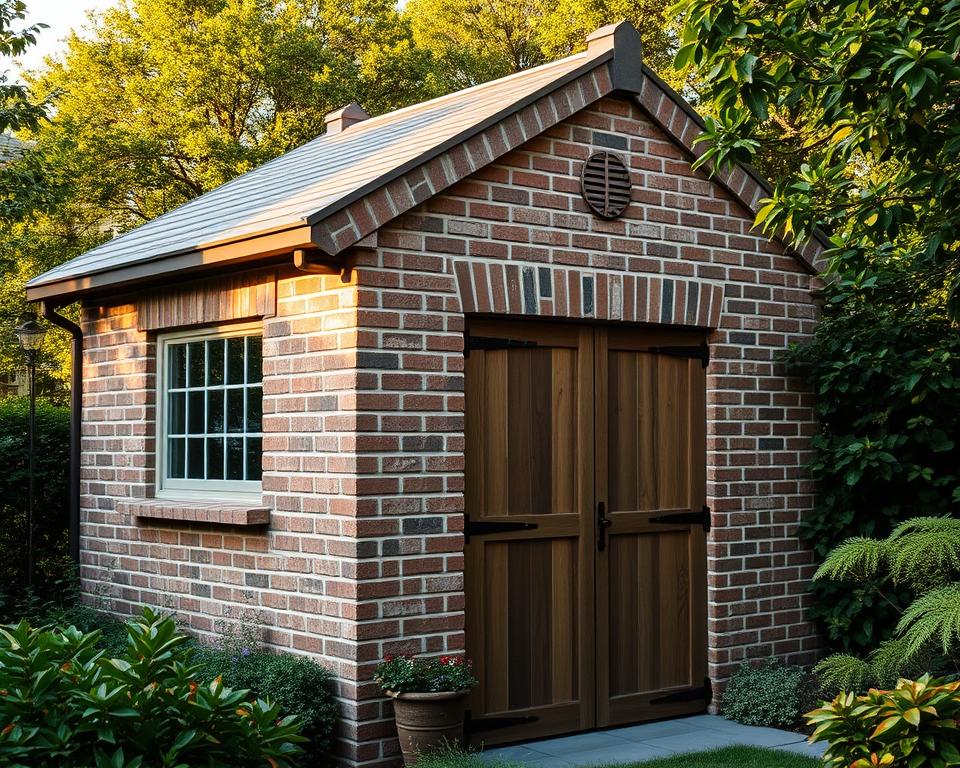
Well-built brick and blockwork structures deliver lasting performance. With a concrete foundation, a correct damp-proof course and sound roof detailing, a brick shed lifespan commonly reaches 50 years or more. Many owners treat a masonry garden shed as a permanent garden outbuilding for workshops, secure storage or a garden room.
Longevity depends on a few simple factors. Stable foundations, quality mortar and reliable roof coverings are essential. Drainage that directs water away from the walls reduces moisture risks. Cavity wall construction and a proper DPC curb rising damp and lengthen service life.
Expect higher upfront costs compared with timber or resin. Groundworks, lintels and potential building control sign-off push brick shed costs UK above lightweight options. Choosing tiled or slate roofing increases durability, although these materials demand stronger rafters and a larger budget.
Masonry offers strong thermal mass and good security. Internal insulation can create a comfortable workshop, provided ventilation is added to prevent condensation. Minimal routine maintenance on brickwork contrasts with the frequent treatments timber needs.
Consider planning and regulations before building. A permanent garden outbuilding used as habitable space or exceeding permitted development limits may need approval. Local councils and building control officers can advise on requirements and ensure compliance.
Use the following quick comparison to weigh common choices when cost, lifespan and function matter.
| Feature | Typical outcome | Impact on lifespan |
|---|---|---|
| Foundation type | Concrete slab with DPC | High — prevents settlement and damp |
| Wall construction | Solid brick or cavity blockwork | High — durable and weather-resistant |
| Roof covering | Slate or tiles | Very high — longest-lasting option |
| Insulation and ventilation | Internal insulation plus vents | Medium — improves usability, prevents condensation |
| Typical uses | Workshop, studio, secure storage | High — suited to long-term, frequent use |
| Approximate costs | Above timber/resin; varies by size and finish | Cost rises with longevity and finish |
Key construction features that increase shed lifespan
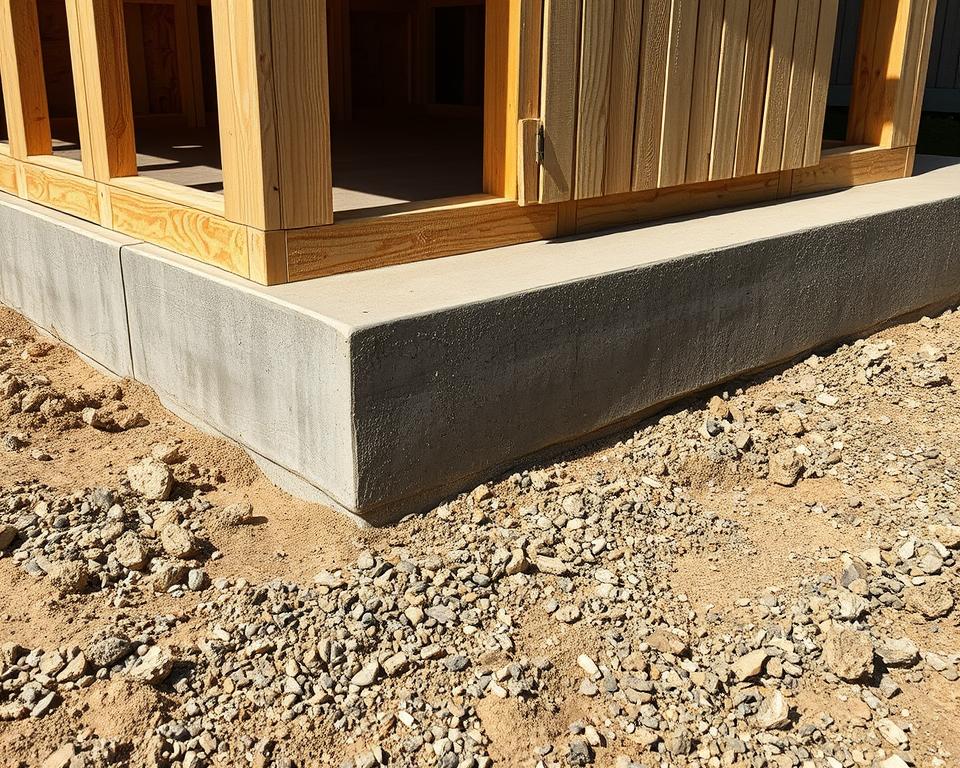
Good build details make the difference between a shed that lasts and one that fails. Start with a sound base and follow through with roof, ventilation and quality fixings. Small choices at this stage repay for years.
Foundations and damp-proofing
Choose a foundation to suit the shed size and ground. A concrete slab gives a solid, level platform for larger masonry or timber sheds. Paved bases work well for medium units. Timber bearers on concrete sleepers keep timber off the ground. Adjustable concrete pad systems suit uneven sites and make levelling straightforward.
A flat, well-drained foundation reduces ground contact and movement. That protects joinery and keeps doors aligned. For masonry buildings include a proper damp-proof course and provide external drainage. For timber builds use treated bearers and set skirting boards above ground level as part of a damp-proofing shed strategy.
Roof design, pitch and covering materials
Roof pitch affects how quickly water and snow run off. Steeper roofs shed moisture effectively. Low-pitch roofs demand high-quality waterproof membranes to prevent pooling and leaks.
Choose coverings for lifespan and budget. Asphalt felt suits short-term needs. EPDM rubber and standing-seam metal finishes last longer and resist ponding. Tiled or slated roofs suit masonry sheds when installed with correct underlays and fixings. Fit metal flashings at joins and provide eaves overhangs to protect walls.
Ventilation and condensation control
Ventilation for sheds prevents damp and keeps stored items dry. Fit passive vents, ridge vents or louvres to promote airflow and reduce condensation, an issue in metal and insulated sheds.
Add insulation with a breathable membrane and include a vapour control layer where needed. Arrange storage so items do not touch cladding. Leave a gap between belongings and walls to aid circulation and reduce mould risk.
Use stainless or galvanised fixings, protective cappings on joints and quality sealants around windows and doors. These features limit water ingress and corrosion, extending service life without costly repairs.
Installation and site preparation for long-lasting sheds
Choose a level, well-drained spot away from overhanging trees and heavy roots. A clear position reduces rot risk, keeps access easy and improves security when the shed sits close to the house. Good site selection is the first step in successful shed installation UK projects.
Assess soil type before digging. Clay soils can heave in winter, so consider deeper concrete foundations or a flexible pad system. Sandy soils drain well but may need compacted hardcore beneath the base to meet shed base requirements.
Prepare the base to precise tolerances. Excavate, compact the sub-base and lay either a concrete slab or a compacted hardcore layer with paving slabs for smaller cabins. Keep the base square and level to a few millimetres across the footprint to avoid warped panels and misaligned doors.
Plan drainage and landscaping around the shed. Ensure ground slopes away from the base and, where needed, fit gullies or French drains in persistently wet areas. Keep planting away from external walls and leave a service gap for repairs and repainting.
Follow manufacturer instructions closely during assembly. Prefabricated panels must not be forced into place. Use the recommended fixings to avoid stressing joints and to ensure structural integrity for many years after shed installation UK teams complete the build.
Secure the structure to the base with appropriate anchors. Use coach bolts into concrete or resin anchors for heavier builds. In exposed sites, anchoring sheds is essential to prevent uplift and wind damage during storms.
Consider professional help for large or heavy builds. For masonry sheds, tiled roofs or large timber frames, hire a qualified builder or carpenter and check building control rules if you plan to use the space as a workshop or office. Professional installation reduces risk and meets more stringent shed base requirements.
Maintenance routines that keep sheds lasting decades
Keeping a garden shed in good condition takes regular attention and a simple plan. A clear shed maintenance checklist helps owners spot small faults before they become expensive problems. Use seasonal shed care to pace tasks through the year and protect the structure from the UK climate.
Seasonal inspection checklist
Spring: inspect roof coverings and look for winter storm damage. Clear gutters and check the interior for condensation or leaks after prolonged wet months.
Summer: check for UV damage and faded paint. Test seals around doors and windows, lubricate hinges and locks, and note areas that may need repainting shed surfaces.
Autumn: remove leaves and moss from roofs and surrounds. Ensure drainage runs freely and inspect for mould or damp patches where moisture can settle.
Winter: assess ice and snow load risks and confirm doors close properly. If the shed has electrics or heating, ensure fittings are safe and protected from moisture.
Cleaning, repainting and resealing schedules
Timber sheds perform best with annual cleaning and a recoat of microporous stain or paint every two to five years depending on exposure. Pay close attention to end grains and door thresholds and reseal them more often.
Metal sheds need salt and grime removed at least once a year. Touch up scratched paintwork and apply rust inhibitor to vulnerable spots.
Resin sheds benefit from a wash with a mild detergent and a check for panel distortion. They do not require preservatives but seals and fixings should be inspected.
Masonry buildings may need occasional repointing over decades and regular checks to the damp-proof course and roof coverings.
Repairing damaged panels, joints and roofs
Addressing leaks immediately reduces decay and rust. Replace damaged felt, shingles or cracked resin panels rather than using poor temporary patches. Replacing corroded fixings with stainless or galvanised equivalents prevents recurrence.
For timber, remove rotten boards and treat the surrounding wood before fitting replacements. If foundations have shifted or roof timbers show structural distress, consult a qualified carpenter or structural engineer.
Keep a maintenance log and retain manufacturer warranties and installation manuals. Many guarantees require specific upkeep schedules to remain valid, so recording work supports any claims.
Cost versus longevity: choosing value for money
Assessing shed cost vs longevity means looking beyond the sticker price. A budget metal or resin shed can suit short-term storage and costs less up front. Expect lifespans from five to twenty years depending on build quality and site conditions.
Mid-range options, such as thicker resin panels or treated timber from brands like BillyOh, sit in the middle. They offer a balance of affordability and durability. With proper maintenance, these can reach fifteen to thirty years, which often improves long-lasting shed cost-effectiveness.
High-end solutions include hardwood timber, aluminium and masonry. A bespoke brick shed or oak timber by a reputable carpenter requires higher investment. Over decades, lower replacement and repair needs can make these the best value shed UK for owners planning multi-decade use.
To calculate true value, tally lifecycle costs: purchase, installation, regular maintenance, likely replacement intervals and potential resale. Factor in extras such as insulation, electrics and stronger foundations if the shed will serve as a workshop. These additions push initial spend up but can reduce operational costs and downtime.
Security and insurance matter, too. Brick or steel units may attract lower premiums and deter theft. That impacts long-lasting shed cost-effectiveness when comparing total ownership costs over time.
Create a simple decision framework: define intended use, desired lifespan and firm budget. For short-term, low-use storage, budget metal or resin is acceptable. For decades of intensive use, favour masonry, aluminium or high-quality treated timber to achieve the best value shed UK.
Check warranty terms and local service availability before buying. A longer warranty and nearby repair services improve lifecycle outcomes and help balance shed cost vs longevity in practical terms.
Environmental and regulatory considerations in the UK
Choosing the right site and materials for a garden building means matching legal rules with environmental sense. Many homeowners must check shed planning permission UK guidance before installation. Local council policies and the specifics of a plot influence what you can fit in a garden and where.
Permitted development covers most domestic outbuildings that meet height and location limits and are not used as sleeping accommodation. Those in conservation areas or listed properties face stricter controls. For larger or commercial structures, building regulations or full planning applications may be necessary. Confirm details with the local planning authority to avoid costly alterations.
When selecting materials, give priority to sustainable shed materials where possible. Forest Stewardship Council (FSC) or PEFC certification helps verify timber provenance. Treated timber extends life but carries chemical considerations. Metal frames, such as galvanised steel or aluminium, offer high recyclability and long service life.
End-of-life choices matter. Proper shed disposal UK options include recycling metal parts, reclaiming brick, or using manufacturer take-back schemes for resin units. Mixed-material assemblies complicate recycling. Planning ahead reduces waste and lowers the carbon cost of replacement.
Regional weather patterns affect design and material choice. Coastal locations benefit from aluminium or marine-grade galvanised steel and stainless fixings to resist salt corrosion. In wet western areas, raised bases and robust drainage reduce damp issues and prolong timber life. Upland or exposed sites need heavier anchoring and robust wind-rated construction.
Small grants or local reuse schemes occasionally support use of sustainable materials or reclaimed components. Check council initiatives and community salvage groups for help with sourcing recycled timber, bricks or take-back options. Combining the right materials with sensible site planning reduces long-term environmental impact and keeps the structure compliant with regulations.
| Consideration | Practical advice | Environmental impact |
|---|---|---|
| Legal checks | Verify permitted dimensions, council rules and listed building status before purchase | Prevents forced removal and waste from non-compliant builds |
| Timber choice | Use FSC/PEFC certified timber; weigh treated timber longevity against chemical use | Responsible sourcing reduces deforestation risk; repair and reclaim options lower waste |
| Metal options | Choose galvanised steel or aluminium with recyclable content and corrosion protection | High recyclability minimises landfill; coatings may complicate recycling |
| Resin and plastics | Prefer units with recycled content and manufacturer take-back schemes | Mixed plastics are harder to recycle; long life can offset initial impact |
| Masonry builds | Plan for long life; consider reclaiming bricks or crushing for aggregate at demolition | Higher upfront impact, lower replacement frequency reduces lifetime footprint |
| Site risks | Coastal: use marine-grade materials. Wet regions: raised bases and good drainage | Appropriate choices reduce repair needs and material turnover |
| End-of-life | Identify recycling, reuse and local disposal routes before buying | Planned disposal minimises landfill and supports circular use of resources |
Conclusion
Answering what kind of shed lasts the longest requires weighing material, build quality, site exposure and maintenance. Masonry and brick structures give the greatest permanence when sited on a proper foundation. A durable shed summary shows masonry will typically outlast other options by decades with minimal upkeep.
For many UK buyers the best long-lasting shed depends on priorities. If permanence is key, invest in brick or block with a damp-proof course. For a blend of appearance, cost and life expectancy, a well-constructed tanalised or hardwood timber shed with protective treatments and routine care performs strongly. Where low maintenance and corrosion resistance matter—for example at the coast—high-quality resin or aluminium is a sensible choice.
Practical steps to extend any shed’s life are straightforward: assess intended use, site conditions and budget; install a sound base and effective ventilation; use quality fixings and follow manufacturer maintenance schedules. Keep simple records of treatments and repairs to preserve value. This durable shed summary and the previous sections will help when comparing models, planning installation and checking local regulations before you build.
FAQ
What kind of shed lasts the longest?
Brick and masonry sheds generally last the longest when built correctly on a suitable foundation with a damp-proof course and well-installed roof coverings. Properly constructed masonry can endure 50 years or more. However, high-quality, pressure-treated timber (tanalised or durable hardwoods like Western red cedar), well-protected galvanised steel or aluminium, and premium resin sheds can also offer multi-decade life if sited, installed and maintained correctly.
How much does material choice influence shed longevity compared with installation and maintenance?
Material choice is a primary determinant of lifespan, but installation and maintenance are equally crucial. A well-built timber shed on a damp, poorly prepared base will fail sooner than a metal or resin shed sited on a solid concrete or compacted base with good drainage. Foundations, ventilation, roofing detail and regular inspections often matter more than the material alone.
Which timber types resist rot best and how often should timber sheds be treated?
Hardwoods such as Western red cedar and oak resist rot naturally and can last decades. Tanalised (pressure-treated) softwoods like treated pine are common and durable when correctly specified. External microporous stains or preservatives should be reapplied every 2–5 years depending on exposure. Oil treatments for decking-style cladding may be annual or biennial, while repainting typically occurs every 5–10 years.
Are metal sheds a good long-term option for coastal locations?
Coastal environments accelerate corrosion due to salt air. Aluminium is often the best metal choice for coastal sites because it will not rust. If choosing galvanised steel, select marine-grade galvanisation or heavy powder coatings, use stainless fixings, and maintain coatings regularly to limit corrosive damage.
How long do resin or plastic sheds typically last?
Quality resin sheds made from HDPE, polypropylene or composite blends with UV stabilisers commonly last 15–30+ years. Longevity depends on UV exposure, panel thickness and quality of assembly. Resin sheds require minimal maintenance—occasional cleaning and fixing checks—but poorly anchored or thin-panel models may deteriorate faster.
What foundation is best for a long-lasting shed?
A flat, well-drained concrete slab is the most durable foundation for heavier sheds and masonry buildings. For smaller units, a compacted hardcore base with paving slabs or timber bearers on concrete sleepers also works. The critical factors are levelness, drainage and preventing timber or cladding from contacting ground moisture.
How can I prevent condensation and internal rust in metal sheds?
Control condensation with passive ventilation (vents, ridge vents or louvres), insulation where appropriate, and breathable interior linings. Thermal breaks or foam-backed panels reduce temperature swings. Keep humidity low by avoiding storage of wet items and allow air circulation around stored goods.
What maintenance routine will extend my shed’s life the most?
Seasonal inspections are key: check roofs, gutters and seals in spring; look for UV damage and lubricate hardware in summer; clear leaves and moss in autumn; assess snow and ice risks in winter. For timber, clean annually and recoat with preservative every 2–5 years. For metal, clean salt and debris, touch up coatings and replace corroded fixings. Address leaks immediately.
Do I need planning permission or building regulations approval for a shed in the UK?
Many garden sheds fall under permitted development when they meet height and siting limits and are not used as habitable accommodation. Typical height limits apply (commonly about 2.5–3m depending on roof type and distance from boundaries) but rules vary. Conservation areas, listed properties and larger or habitable outbuildings may require planning permission or building regulations compliance. Check gov.uk and your local planning authority.
Which brands available in the UK are known for durability?
Several well-known UK brands offer durable options across materials. For timber, Forest, BillyOh and Shire have reputable ranges. Yardmaster and Everite supply robust metal sheds. Keter and Lifetime are respected for resin models. Brand durability varies by model and specification—look for thicker cladding, factory treatments, good warranties and independent reviews.
How do I choose between upfront cost and lifecycle value?
Consider intended use, security needs, desired lifespan and maintenance capability. Low-cost metal or resin may suit short-term or light storage, but mid- to high-end timber, aluminium or masonry often provide better lifecycle value for permanent workshops or garden rooms. Factor in installation, maintenance, replacement intervals and potential insurance savings when weighing total cost of ownership.
Can resin or plastic sheds be recycled at end of life?
Some resin sheds are recyclable, and certain manufacturers operate take-back or recycling schemes. Recycling options vary regionally across the UK, and mixed-material units are harder to process. Choosing products with recycled content or that are explicitly recyclable reduces environmental impact.
What quick upgrades improve any shed’s lifespan?
Raise the shed on a proper base or bearers, add overhanging eaves or drip edges, fit ventilation, use stainless or galvanised fixings, install quality roof coverings (EPDM, tiles or metal where appropriate), and ensure secure anchoring. These measures reduce moisture ingress, prevent ground contact and improve resistance to wind and wear.
How should I anchor a shed to resist uplift in exposed sites?
Use heavy-duty anchor bolts fixed into a concrete slab, ground anchors rated for soil type, or through-bolts into reinforced base pads. Anchor type depends on shed weight and local wind exposure. Larger or masonry sheds should be secured with appropriate fixings designed for the foundation; follow manufacturer guidance or consult a builder for exposed locations.
Is it better to repair or replace a shed showing rot or corrosion?
Minor localized damage—such as a few rotten boards or small rust patches—can often be repaired, restoring life at lower cost. Extensive structural timber rot, widespread panel delamination in resin, or major corrosion compromising frame integrity usually warrant replacement. Always address the root cause (poor drainage, leaks, condensation) to prevent recurrence.
Are there regional considerations in the UK when choosing a shed material?
Yes. Coastal areas need corrosion-resistant materials (aluminium, stainless fixings or high-grade galvanised steel). Western and north-western regions with high rainfall benefit from elevated bases, steeper roofs and more frequent timber treatments. Exposed upland or windy sites require stronger anchoring, heavier construction and wind-rated models.