Optimal Shed Bases: What Is the Best Choice?
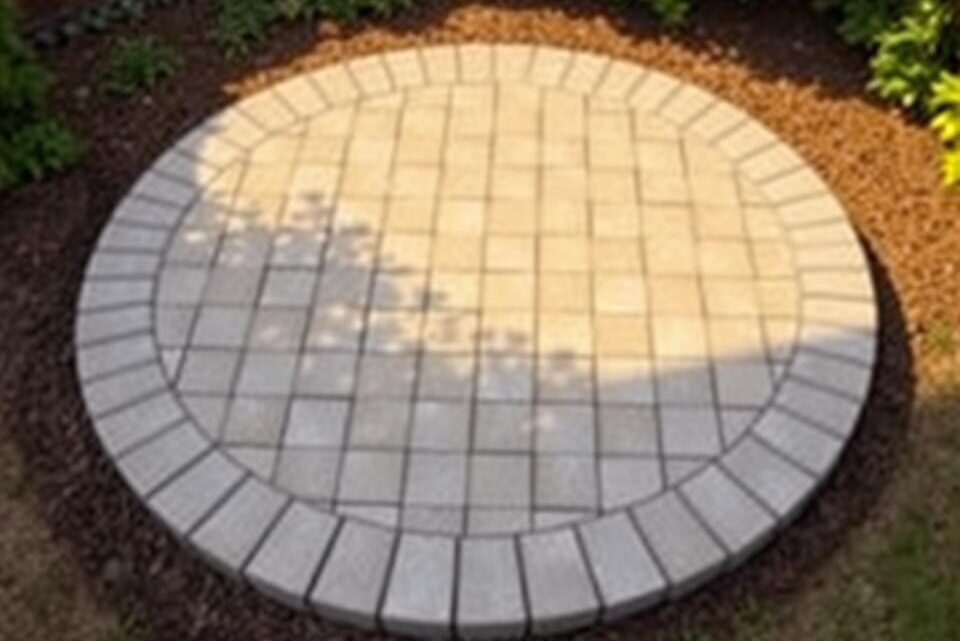
Choosing the best base for a shed begins with a simple question: what is the best base to put under a shed? For UK homeowners and tradespeople this is not just academic. Wet winters, heavy clay soils and areas with high groundwater all change how a shed performs over time.
This article compares common and specialist options so you can pick an optimal shed base for your garden. We will look at concrete slabs, pier-and-beam systems, timber bearers, compacted hardcore and gravel, paving slab installations, and eco-friendly solutions. Planning, permissions and site preparation are also covered to help you avoid costly mistakes.
Key decision drivers appear throughout: shed size, intended use (storage, workshop, summerhouse), site slope and drainage, budget, durability and ongoing maintenance. We will explain how each factor affects your shed foundation choice and when to consult professionals such as structural engineers for larger or permanent buildings.
Practical outcomes are clear. By the end you will have a straightforward recommendation pathway for the shed base UK projects commonly require, plus the criteria to weigh each option against. All guidance assumes compliance with UK building regulations and local planning rules where applicable.
Inhaltsverzeichnis
Key Takeaways
- UK weather and soil conditions make the shed base choice critical for longevity.
- The article compares concrete, pier-and-beam, timber, gravel and paving slab options.
- Select a base based on shed size, use, slope, drainage and budget.
- Practical guidance will point to the optimal shed base for common scenarios.
- Consult structural engineers or local authorities for large or permanent structures.
Understanding Shed Foundations and Why They Matter
Choosing the right base is one of the most important decisions when siting a garden outbuilding. A suitable foundation supports the weight, keeps doors and joinery true, and limits movement that leads to long-term damage. This short guide explains practical reasons to value shed foundation importance and how simple choices affect performance in typical UK conditions.
Role of the base in shed longevity
The base role in longevity begins with load distribution. A firm, even base spreads weight across the ground so floors do not sag. That reduces differential settlement which can warp doors and frames. Solid foundations extend service life of timber and metal sheds by keeping structural members aligned and limiting movement that causes joint failure.
Impact on structural stability and safety
Well designed foundations improve the structural stability of sheds by anchoring the structure against lateral loads from wind. Level support makes it easier to build square frames and ensures floors carry heavy equipment safely. For larger outbuildings, inadequate bases present a genuine safety risk, so follow British Standards and seek building control advice where needed.
Effects on moisture control and ventilation
Effective moisture control for sheds depends on elevation, drainage and barriers. Raised bases and gravel allow airflow that reduces trapped damp beneath timber floors. Concrete slabs need a damp-proof membrane and thought for perimeter drainage to avoid retained water. Good ventilation under shed and correct run-off management help prevent rot, fungal decay and metal corrosion.
| Issue | How the base helps | UK site risks |
|---|---|---|
| Load and alignment | Distributes weight, prevents sagging and misaligned doors | Frost heave on light foundations, uneven settlement on clay soils |
| Lateral stability | Anchors shed to resist wind and maintain squareness | High winds in exposed gardens, poor anchorage on soft ground |
| Moisture control | Provides damp-proofing, drainage and airflow beneath floor | Waterlogging on poorly drained plots, trapped moisture after heavy rain |
| Longevity | Reduces movement that causes structural failure and decay | Salt or chemical exposure on coastal or contaminated sites |
what is the best base to put under a shed?
Deciding what is the best base to put under a shed depends on the building, the ground and how you plan to use the space. A light garden storage shed needs very different support from a timber summerhouse or a workshop that will hold heavy tools. Good shed base selection starts by matching the base type to the shed’s weight, material and ventilation needs.
Interpreting the question for different shed types
For metal sheds, corrosion protection and firm anchorage are vital. Metal tends to transfer water and cold, so a solid, well-drained base prevents rust and movement. Wooden sheds need airflow beneath the floor and measures to keep timber dry. Insulated summerhouses require a stable, level base that limits heat loss. Workshops with machinery demand the strongest foundations to avoid vibration and settling.
Key decision factors: size, location, budget, and use
Size matters. Larger sheds place heavier loads on the ground and need more permanent support. Location affects choice too. Sloped sites, clay soils or flood-prone gardens alter which foundations will last. Budget must weigh initial cost against long-term maintenance and replacement expenses.
Consider intended use. Simple storage allows for cost-effective, DIY-friendly solutions. A hobby room or workshop will need a more durable base with good load-bearing capacity and insulation. Shed base selection should reflect these trade-offs to avoid unexpected repairs.
Balancing durability, cost and ease of installation
If permanence and maximum load-bearing are priorities, a concrete slab often fits best. For uneven or damp ground, a pier-and-beam layout raises the floor and helps ventilation. Cost-conscious DIYers often choose timber bearers on compacted hardcore or paving slabs for a simple, level platform. For environmentally conscious projects, recycled plastic grids or permeable systems give good drainage with lower ecological impact.
When in doubt, seek shed type base advice from landscaping contractors or groundworkers. For large, complex or permanent buildings, consult a structural engineer and notify local building control when required. Choosing shed foundation carefully reduces future expense and keeps the building secure and usable.
Concrete slab bases for sheds: pros and cons
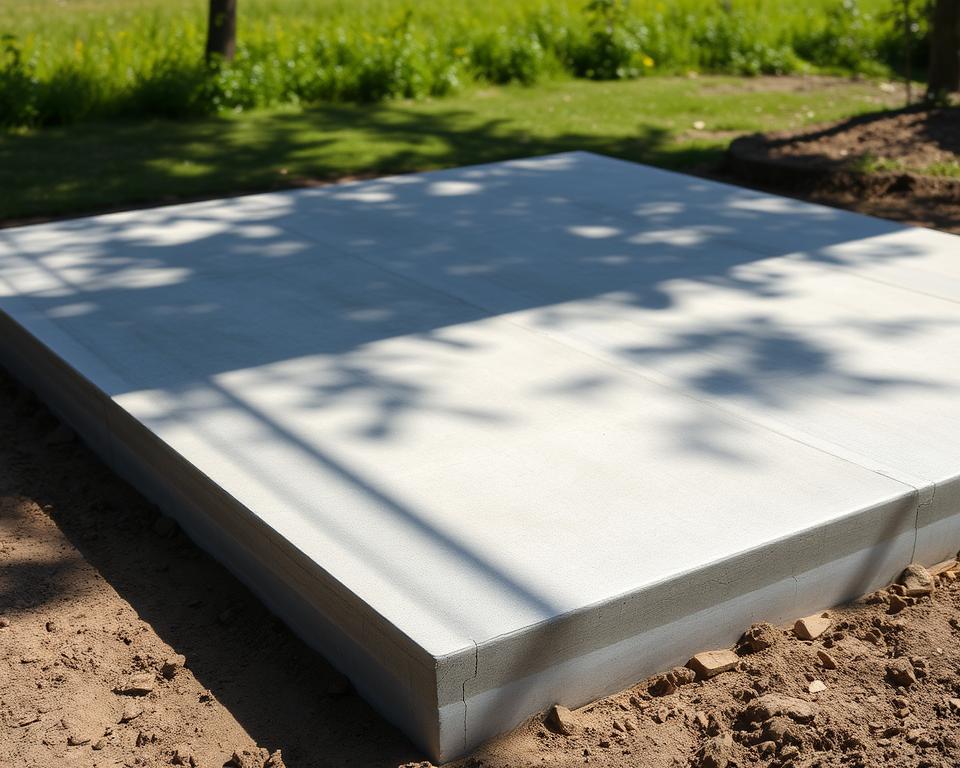
A concrete slab is a common choice for a permanent shed base. It gives a strong, level platform for garden buildings and workshops. Homeowners in the UK often pick this option when they need durability and a tidy finish.
Advantages
A concrete slab shed base offers permanence that suits long-term use. A well-built slab resists rot and settlement, making it easy to anchor a shed and fix shelving or heavy racking. Load-bearing capacity is a key benefit; a shed concrete slab UK can support machinery, lawn tractors and storage items without excessive deflection. Low maintenance is another plus. Once cured and sealed, the surface needs little attention, which appeals to those who want a robust, stable floor for electrics, heating and trade tools.
Drawbacks
Cost is the main downside. Materials, labour, formwork and concrete mixes such as C25 add up quickly. Drainage considerations must be addressed when choosing a permanent shed base. A solid slab can impede natural water movement, so a compacted hardcore sub-base and a perimeter fall are often required to avoid pooling. Installation complexity can catch out DIYers. Accurate levelling, correct mix specification, reinforcement and a suitable curing period are vital to reduce cracking and long-term problems.
When to choose a concrete slab
Opt for a concrete slab if the building is intended for frequent, heavy use. Workshops, large sheds over 8x6ft and sites planned for fixed machinery benefit from the strength of a concrete slab. Include a damp-proof membrane and consider reinforcement where frost or ground heave is likely. For many homeowners, the upfront cost is justified by the stability and low maintenance a permanent shed base delivers.
Concrete pier and beam bases: an alternative approach
A pier and beam system lifts a shed clear of the ground. Concrete piers for shed support posts or padstones that carry timber or steel beams. That creates a raised shed base with ventilation beneath the floor. This approach suits sites where a full slab would need heavy excavation.

The basic layout places piers at bearing points or on a regular grid. Beams span between piers and take the shed joists. Precast concrete pads make DIY installs faster. For larger buildings a builder may use poured piers tied into footing pads.
How pier placement and sizing work
Position piers under corners, wall lines and heavy load points. A typical small shed uses four to eight piers. Larger footprints need more piers or larger concrete piers for shed that meet load calculations. Use compacted hardcore under each pad to reduce settlement risk.
Benefits for awkward or damp sites
Piers suit slopes with minimal earthworks, offering clear uneven ground shed solutions. Raising the structure improves airflow and reduces moisture on timber floors. A pier and beam shed base causes less site disturbance than a slab and can be quicker to install for medium‑sized sheds.
Limitations and upkeep
Individual pier settlement can occur on weak soils, so periodic checks are wise. Timber beams need treatment against rot and preservative maintenance. Heavy point loads require engineering input; a pier and beam design is not ideal for very heavy machinery without reinforcement.
Practical tips
- Use precast concrete pads for repeatable, DIY-friendly piers.
- Place piers close to load concentrations under doors or workbenches.
- Maintain a void of at least 150mm beneath the floor for ventilation.
- Inspect piers and beam fixings annually for movement and decay.
Timber bearers and sleeper foundations
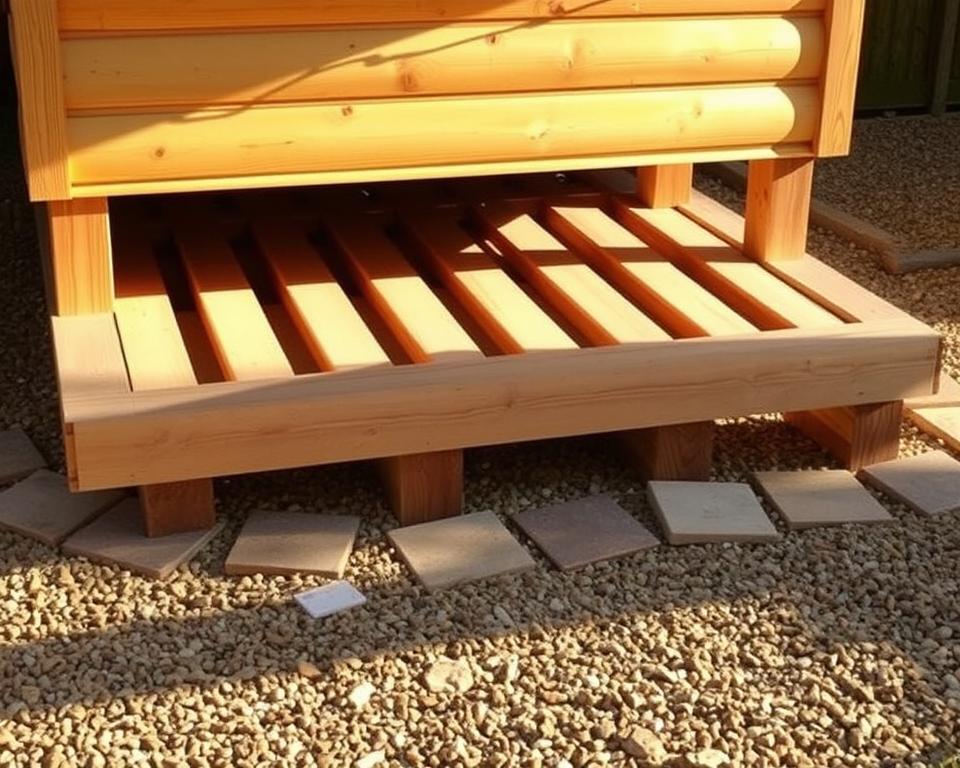
A timber bearer shed base provides a practical, low-cost foundation for many garden buildings. This approach uses pressure-treated timber laid on compacted hardcore or concrete blocks to give a stable, level platform. Alternatives include treated railway sleepers or robust joists for heavier loads. The picture below shows a typical arrangement for a wooden shed base.
Construction methods and suitable timber types
Start with a level, well-drained sub-base of compacted hardcore. Place concrete blocks or padstones at bearing points, then lay tanalised bearers across them. Use H4 pressure-treated timber where the wood contacts ground-facing supports to guard against decay. For longer spans pick larger cross-sections or add intermediate supports to reduce deflection. When using sleepers, ensure they are certified for ground contact and cut ends are retreated with preservative.
Advantages: speed, cost-effectiveness and levelling
A sleeper foundation shed or timber bearer shed base is quick to assemble and easy to adjust during installation. Small teams and DIYers can complete the work without heavy plant, cutting project costs. Levelling is straightforward; shims, packers or slight adjustments to support heights let you fine-tune the platform on mildly uneven ground. Lightweight sheds perform well on a wooden shed base, with the structure sitting neatly on the treated timber shed foundation.
Risks: rot, insect attack and lifespan considerations
Treated timber foundations carry a greater risk of long-term decay than concrete. Use H4 or higher preservative for ground contact and elevate joists where possible. Apply joist tape at timber-to-wooden-shed-base interfaces and fit ventilated skirting to promote airflow beneath the floor. Regular inspections will spot early signs of rot or movement so you can replace affected members before structural problems emerge.
| Feature | Timber bearer shed base | Concrete slab | Sleeper foundation shed |
|---|---|---|---|
| Installation speed | Fast; simple hand tools | Slow; requires formwork and curing | Fast; heavy pieces but quick placement |
| Upfront cost | Low to moderate | High | Moderate |
| Durability | Moderate; depends on treatment | Very high | Moderate; sleepers may last longer if well treated |
| Suitability for uneven sites | Good; easy to level | Poor; needs site excavation | Good; heavy mass resists movement |
| Maintenance | Periodic checks and possible replacement | Low | Periodic checks; treat exposed ends |
| Best use | Light to medium garden sheds | Workshops, heavy machinery bases | Sheds where a rustic look or larger timbers are desired |
Gravel and compacted hardcore bases
A well-prepared gravel shed base or compacted hardcore shed foundation offers a cost-effective, quick route to a stable shed. These bases drain well, sit flexibly on many soil types and make future re-levelling straightforward. Below are practical steps and clear guidance to get a reliable result.

Preparing the sub-base and edging
Clear topsoil and remove vegetation. Excavate to the required depth, depending on shed size and local frost risk.
Lay a geotextile membrane to stop weed growth and limit migration of fines. Spread Type 1 MOT or similar hardcore in 50–75mm layers. Compact each layer with a vibrating plate until firm.
Add a 20–50mm final layer of sharp sand or fine gravel to level the surface. Install a durable edging, such as treated timber or concrete kerbs, to retain the material and prevent spread.
Benefits for drainage and flexibility
A compacted hardcore shed foundation forms an excellent drainage shed base. Water moves through quickly, preventing standing water beneath the shed floor.
The granular structure allows slight movement without cracking, unlike rigid concrete. This makes it ideal where minor settlement is expected or when you need a permeable shed base that suits garden settings.
Installation is usually quicker and cheaper than a full concrete slab. Owners who don’t store heavy machinery find it a pragmatic option that is easy to adjust or relocate.
When gravel is not suitable
Gravel and compacted hardcore are not recommended where heavy point loads exist, for example workshop machinery or ride-on mowers. The base can deflect under concentrated weight unless reinforced or combined with concrete pads.
In areas prone to severe frost heave, poorly compacted layers may shift. Large structures that need a perfectly flat, permanent floor for joinery or insulation usually require a rigid slab instead of a permeable shed base.
| Feature | Gravel / Compacted Hardcore | Concrete Slab |
|---|---|---|
| Drainage | High; works as a drainage shed base | Low unless designed with falls and drainage |
| Flexibility | Allows minor movement without cracking | Rigid; cracks if ground shifts |
| Cost | Lower; quicker installation | Higher; more labour and materials |
| Suitability for heavy loads | Limited; not ideal for heavy point loads | Excellent; better for workshops and heavy equipment |
| Maintenance | Easy to re-level or top up | Low; long-term permanence |
| Environmental impact | Can be a permeable shed base if using suitable aggregates | Higher footprint; impermeable unless specified |
Concrete paving slabs and slab-on-ground options
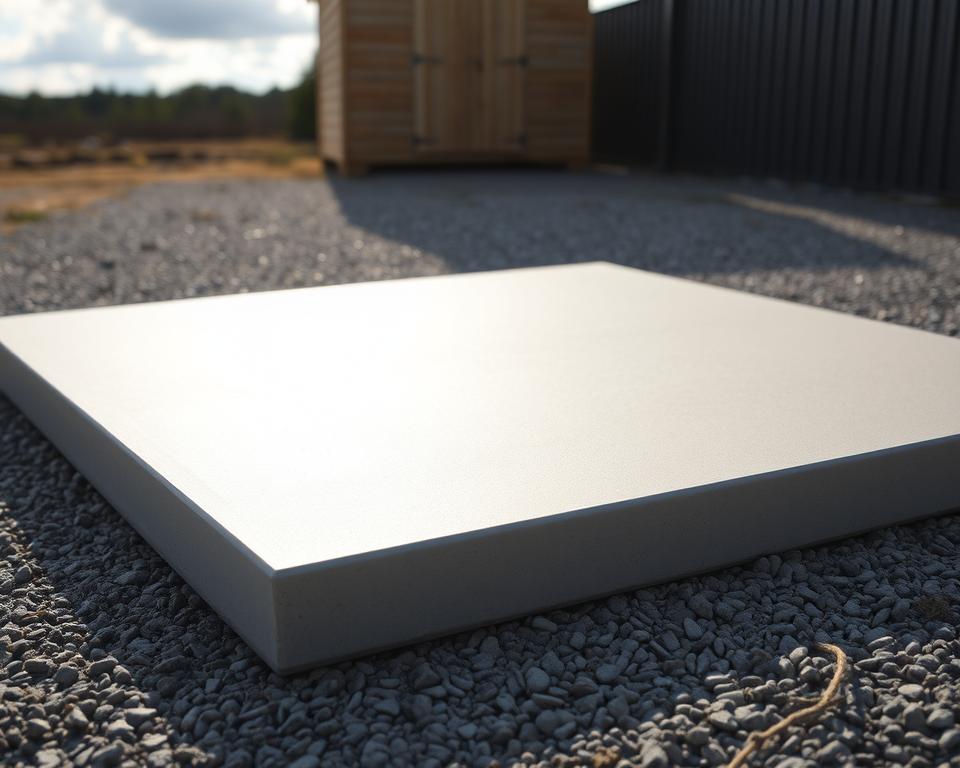
Choosing between a paving slab shed base and a slab-on-ground shed base depends on load, budget and DIY skill. Both approaches serve a firm, level platform for storage and workshops. Read on for practical guidance on installation, side-by-side comparison, and common pitfalls to avoid.
Installation best practice for paving slab bases
Start by excavating to the required depth and ensure the ground is level. Lay a geotextile membrane to prevent weed growth and loss of fines from the sub-base.
Compact a hardcore sub-base with a plate compactor until firm. Bed 50–75mm heavy-duty concrete paving slabs on a mortar or compacted sand bed. Keep mortar joints even and check falls so surface water drains away from the shed.
Install edge restraints to stop spreading and use a spirit level across multiple points to avoid rocking. Allow mortar to cure fully before moving heavy items onto the base. Recommended tools include a plate compactor, spirit level and proper trowels.
Comparing paving slabs with poured concrete
Paving slabs offer modularity and easier DIY installation. Individual slabs are quick to repair or replace if damaged. For small to medium sheds, laying paving slabs for shed projects often costs less in labour.
Poured concrete provides a monolithic, continuous surface that handles heavy loads and integrates well with services like electrics or plumbing. A slab-on-ground shed base tends to be stronger and needs less joint maintenance than a paved surface.
Decide on paving vs poured concrete by weighing long-term load needs, ease of repair and local labour rates. For frequent heavy traffic, poured concrete will usually be the better structural choice.
Common mistakes to avoid
Failing to compact the sub-base causes sinking or rocking. Using garden patio slabs not rated for heavy loads will lead to cracking. Poor drainage allows water to pond beneath the base and can destabilise flooring.
Weak or absent edge support lets edges spread and joints open. Uneven bedding results in twisted floors that strain shed frames. Give mortar time to cure and use correct tools to check levels and compaction.
| Aspect | Paving slab shed base | Slab-on-ground shed base |
|---|---|---|
| DIY friendliness | High; modular pieces make stepwise progress simple | Lower; requires formwork and skilled finishing |
| Durability under heavy load | Moderate; depends on slab rating and bedding | High; monolithic concrete resists heavy, concentrated loads |
| Repair and maintenance | Easy; replace individual slabs as needed | Challenging; repairs are larger and more disruptive |
| Drainage control | Good if installed with fall and joints; easier to adjust | Excellent when formed with falls; relies on correct design |
| Typical cost for small sheds | Lower materials and labour for DIY projects | Higher due to concrete pour and labour |
| Best use case | Garden sheds, hobby workshops, cost-sensitive installs | Heavy workshops, garage conversions, long-term permanence |
Eco-friendly and specialist base options
Choosing a base for an outbuilding can blend performance with environmental care. There are modern systems that reduce excavation, improve drainage and lower carbon compared with traditional concrete. Below are practical options to consider, with guidance on where specialist advice may be needed.
Recycled plastic grid systems and permeable bases
Interlocking recycled plastic grid systems create a firm, permeable surface when infilled with gravel. A recycled plastic grid base sits on a geotextile membrane and needs minimal excavation. Installation is quick and suits soft ground where rot or frost heave might trouble timber bearers.
These systems resist decay and are lightweight to handle on site. When used as a permeable shed foundation they help manage surface water and reduce runoff. For small to medium sheds they provide stability while keeping environmental impact low.
Sustainable materials and environmental considerations
Using recycled aggregate for hardcore and sustainably sourced timber treated to current EN standards cuts embodied carbon without compromising strength. Permeable paving reduces surface runoff and improves site ecology compared with continuous concrete.
Balancing sustainability with durability matters. Some eco-friendly shed base ideas require thicker sections or engineered support for heavy loads. Choose materials that meet the load demands of the building and the expected lifespan of the structure.
When to consider specialist engineered solutions
For large bespoke outbuildings, flood-prone sites or areas with peat and made ground, consult a geotechnical or structural engineer. Options such as piled foundations, reinforced concrete slabs and specialist drainage schemes may be appropriate.
Engineered timber systems offer raised, insulated floors for eco-builds and can be specified to meet thermal and durability targets. Professional input ensures the chosen solution performs under challenging ground conditions and long-term use.
Planning, permissions and site preparation
Before laying any base, check local rules and consider how the project may affect neighbours. Small garden buildings often fall under permitted development shed allowances, but limits apply. Typical constraints include being behind the principal elevation, covering no more than 50% of the garden, and observing height and boundary distances. For larger summerhouses, workshops with electrics or where ground levels change, consult the local planning authority and gov.uk for clarity on planning permission shed UK requirements.
Assessing ground for shed starts with simple visual checks. Walk the site after rain to spot pooling and test for springiness underfoot. Look for clues of clay, peat or made ground. For uncertain sites, dig a small trial pit or carry out a percolation test. Complex soils or sloping plots may need a professional ground investigation to avoid future movement or drainage problems.
Good site preparation shed base practice includes placing the building on higher ground when possible and grading the surrounding area so water falls away from the shed. Specify an appropriate sub-base, geotextile membrane and surface drainage. For persistent wet patches, consider sub-surface drainage such as a French drain to protect the base and structure.
DIY installers should gather the right tools and materials. Typical items include a spade, spirit level, tape measure, wheelbarrow, plate compactor, masonry tools and protective equipment. Common materials are Type 1 MOT hardcore, geotextile membrane, concrete mix or paving slabs, treated timber, DPM and reinforcement where required.
Safety matters. Use correct manual handling techniques and PPE. Before digging, arrange utility checks and follow the Dial Before You Dig guidance for buried services. Seek qualified trades for cutting reinforced concrete, lifting heavy slabs or any structural work that affects foundations or load-bearing elements.
When in doubt about permitted development shed limits or complex ground conditions, getting early advice from a structural engineer or planning officer can save time and cost. Clear preparation reduces risk and helps ensure a long-lived, stable base for the building.
Conclusion
There is no single best base for shed conclusion; the right choice depends on shed type, use, site conditions and budget. Reinforced concrete slabs deliver permanence and high load capacity for workshops and heavy machinery. Pier-and-beam systems suit sloping or damp sites where elevation and airflow matter.
For light garden sheds, compacted hardcore with timber bearers or well-laid paving slabs is often the most practical and cost-effective option. Gravel or recycled plastic grid systems offer excellent drainage and a sustainable alternative, making them worth considering in a shed base recommendation UK focused on environmental performance.
When choosing shed foundation summary: inspect the site, check local planning and building control, and factor in drainage and long‑term maintenance. For larger or specialist builds, seek professional advice and detailed quotes from local suppliers or contractors to confirm technical specifications and costs.
Use this article as a decision framework and plan for ventilation checks, periodic levelling and timber inspections to prolong service life. Take the next step by assessing your plot and obtaining estimates so you can proceed with confidence on a shed base recommendation UK tailored to your needs.
FAQ
What is the best base to put under a shed?
The “best” base depends on the shed size, intended use and site conditions. For permanent workshops or heavy loads a reinforced concrete slab is usually best. For sloping or damp sites a concrete pier-and-beam system provides a ventilated, elevated floor. Small garden sheds often perform well on compacted hardcore with timber bearers or on a properly bedded paving-slab base. Gravel with a geotextile membrane is a cost-effective, well-draining option. Consider budget, drainage, frost risk and whether you need a rigid surface for joinery or machinery when choosing.
How does the UK climate influence the choice of shed base?
UK conditions—wet winters, clay soils and local high groundwater—make drainage and ventilation critical. Bases that allow airflow beneath the floor (pier-and-beam, raised timber bearers) help prevent rot in timber sheds. Permeable bases such as compacted hardcore or gravel reduce standing water. Solid concrete slabs need a properly prepared sub-base, damp-proof membrane and consideration of perimeter drainage to avoid trapped moisture and frost heave.
When should I choose a concrete slab for a shed?
Choose a concrete slab for permanent or frequently used buildings, workshops, large summerhouses or when you will run services (electricity, heating) or house heavy equipment. Slabs give excellent load-bearing capacity, a stable level surface and low maintenance when correctly built with a suitable sub-base, reinforcement and a DPM. They are less suitable where drainage or frost-heave is a concern unless designed accordingly.
Are pier-and-beam bases suitable for uneven ground?
Yes. Pier-and-beam systems are ideal for sloping or damp sites because individual piers can be set at different depths to create a level platform. They minimise excavation, allow ventilation beneath the floor and reduce the need for extensive groundworks. However, piers can settle individually over time, so good design and periodic inspections are important for larger or heavier structures.
Can I use timber bearers and sleepers as a shed base?
Timber bearers on compacted hardcore or concrete pads are a common DIY-friendly solution. Use pressure-treated timber rated for ground contact (H4) and lift timber off persistent damp with concrete blocks or padstones. Timber is quick to install and easy to level, but it requires protective treatments, ventilation and routine checks for rot or insect attack. It’s best for lightweight garden sheds rather than heavy workshops.
How should I prepare a gravel or compacted hardcore base?
Excavate to the required depth, remove topsoil and vegetation, lay a geotextile membrane, spread and compact Type 1 MOT or similar hardcore in layers using a plate compactor, then add a finer layer (sharp sand or fine gravel) to level. Edge restraints (timber, concrete or metal) help retain the material. Proper compaction and membrane installation are essential to prevent settlement and weed growth.
Are paving slabs an acceptable alternative to poured concrete?
Paving slabs provide a modular, DIY-friendly surface and are a good choice for small to medium sheds when laid on a well-compacted sub-base and bedded on mortar or compacted sand. Use heavy-duty slabs (50–75mm) rated for load. Slabs are easier to repair than a monolithic pour but less suitable for very heavy loads or where a perfectly rigid, continuous slab is needed.
What eco‑friendly base options are available?
Options include recycled-plastic grid systems filled with gravel, recycled aggregate for hardcore, permeable paving and sustainably sourced treated timber. Plastic grid systems give good drainage and stability with minimal excavation. These choices lower embodied carbon relative to poured concrete, but large or heavy structures may still require engineered solutions to meet load and durability demands.
When should I seek professional advice for a shed base?
Consult professionals for large outbuildings, sites with poor or made ground, peat or high water tables, and any project that will carry heavy machinery or span large unsupported areas. Structural engineers or groundworkers can recommend piled foundations, reinforced slabs or specialist drainage. Also check with your local planning authority for permitted development limits or building-control requirements when works are substantial.
What planning and safety checks should I do before installing a shed base?
Verify permitted development rules and size/placement limits with the local planning authority and gov.uk. Perform basic ground assessments—look for pooling, springiness or signs of clay or peat—and consider trial pits or percolation tests for uncertain sites. For DIY work, use appropriate tools (plate compactor, spirit level), PPE and contact utility companies before digging. Hire qualified trades for structural concrete works, heavy lifting or where building-control approval is required.
How do I prevent moisture and rot under a timber-floored shed?
Incorporate ventilation beneath the floor by using raised bases (piers or bearers), fit a damp-proof membrane under concrete or timber-contacting layers, keep timber off direct ground contact with concrete pads or blocks, and use preservative-treated timber (H4 for ground contact). Ensure site drainage directs water away from the shed and consider breathable skirting or ventilators to maintain airflow and reduce trapped moisture.
What are common mistakes to avoid when building a shed base?
Avoid inadequate sub-base compaction, using patio slabs not rated for load, poor edge restraint, insufficient drainage, and failing to use a DPM where needed. Other errors include under‑sizing support piers or bearers, neglecting ventilation under timber floors, and not checking for buried services before excavation. Take time over levelling, proper bedding and curing to prevent future movement or cracking.