What garden style categories exist?
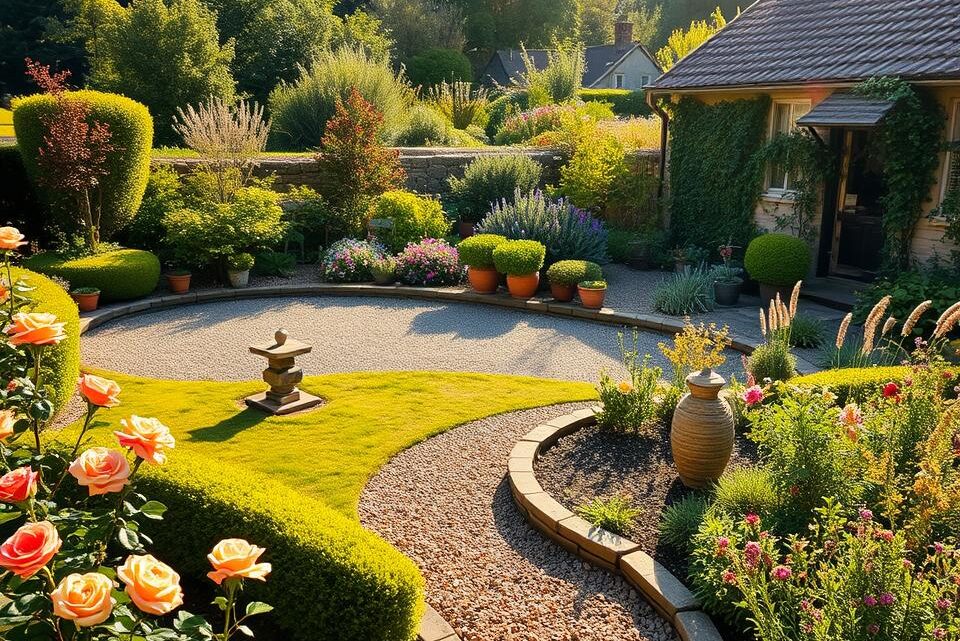
Start by naming the look and feel you want when you step outside. That clarity helps you choose planting, paths and furniture with confidence. Shortlisting a few well‑known types keeps decisions simple and coherent.
Think of classic approaches — cottage, formal, English country, Japanese, Mediterranean and contemporary — or pick condition‑led methods such as naturalistic prairie, eco‑friendly schemes, courtyards or rock and alpine plots. You can also combine approaches, for example a small courtyard in cottage fashion.
The UK has a long horticultural history, from Medieval physic beds and Tudor knot layouts to Georgian lakes and Victorian rockeries. Knowing this background helps you match a plan to your site size, soil, sun and maintenance aims.
Inhaltsverzeichnis
Key Takeaways
- Name the look you want to guide planting and hard landscaping choices.
- Choose from classic looks or condition‑led approaches to suit your plot.
- Combining types can create a personalised and practical result.
- UK garden history offers useful templates and planting cues.
- Match style to site size, soil, sun and realistic maintenance.
How to use garden styles to shape your outdoor space
Begin by deciding whether a classic look appeals or if site conditions should lead your plan. This simple choice makes later decisions easier. Name a garden style early and you will have a clear palette for planting, hard landscaping and furniture.
Choosing between classic looks and condition-led approaches
Classic themes—cottage, formal, English country or Japanese—give a ready-made toolkit of plants and forms. Condition-led routes focus on sun, wind, soil and wildlife to create resilient schemes.
- Decide whether a classic look or your plot’s conditions lead, or blend both for balance.
- Use a named concept to guide your planting choices, paths and materials.
- For small plots, prefer courtyard or urban approaches that multi-task features.
Aligning planting, paths and materials with your home’s architecture
Echo brick, tile hues or period tones so indoors and out feel connected. Use meandering routes for informal areas and strong axes where formal symmetry suits the house.
Test your plan with a simple moodboard of materials, colours and key plants before you spend money. This keeps the project coherent and manageable.
Cottage garden style: romantic planting, meandering paths and seasonal colour
A riotous, plant-led plot with mismatched seating and edible pockets sums up the cottage garden approach. You’ll favour abundant, romantic planting with layered perennials and annuals that mingle with veg and a single fruit tree for charm and utility.
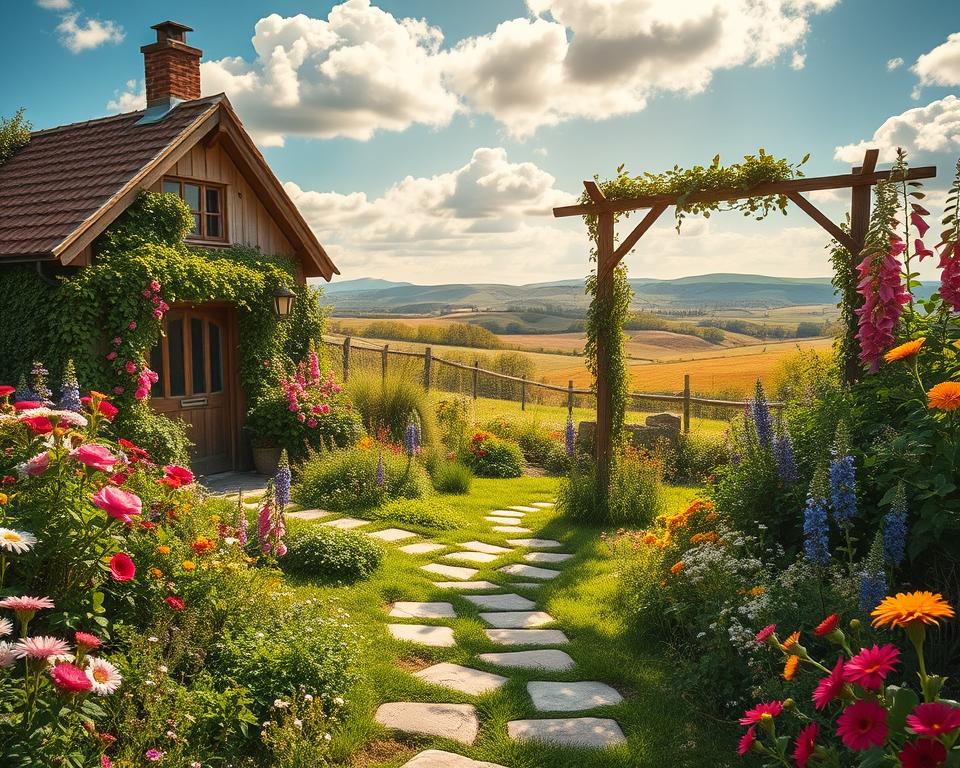
Core elements: flowers, herbs and productive mash-ups
Lean into plants you love. Prioritise regionally reliable flowers and weave in herbs and veg rows or containers to make the space productive as well as pretty.
- Layering: tall perennials at the back, mid-height herbaceous plants, low edging and groundcover.
- Structure: a fruit tree, rustic arches and low picket fencing keep the scheme informal yet coherent.
- Reuse: mismatched benches, painted pots and upcycled furniture suit the carefree look and save money.
Small gardens without lawns: paths, seating and informal structure
In small gardens drop the lawn to gain beds, a courtyard or winding routes that reveal planting in stages.
Paths can be brick, gravel or stepping stones and should curve to make the plot feel larger. Tuck seating into niches so you have a spot for tea or reading.
“Let self-seeders fill gaps, then edit gently through the year to avoid overcrowding.”
Keep irrigation light with mulches, plan seasonal interest from bulbs to seedheads, and consider a local plant mashup for resilience in your climate. These simple choices will give you a relaxed, productive and colourful garden that suits modern living.
Formal and traditional gardens: geometry, topiary and year-round structure
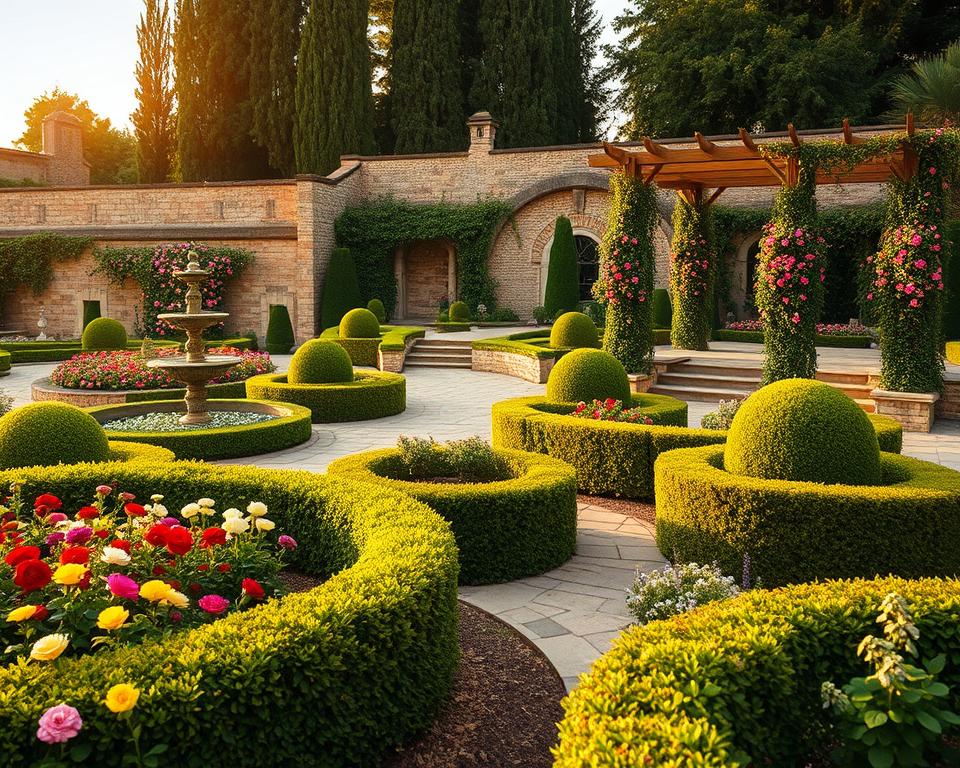
Geometry and clipped planting give a formal garden its calm, ordered character. You create clear rooms and routes by using axes, symmetry and crisp edges. This approach reads well from terraces and windows.
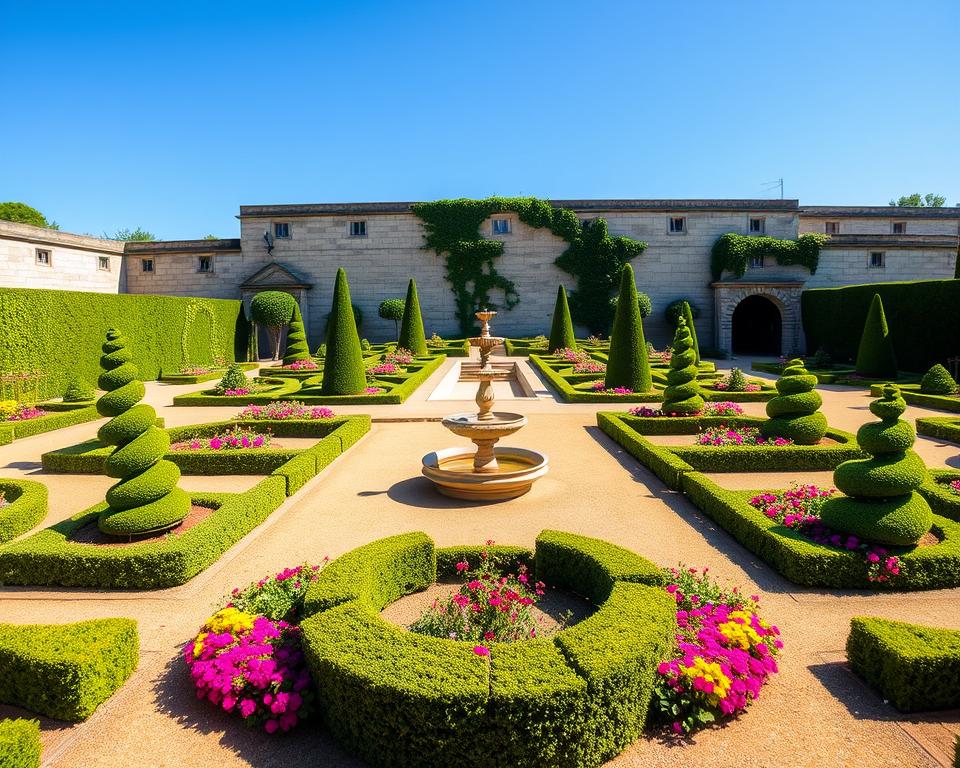
Parterres, hedges and focal points for balance
Frame spaces with hedges or walls to form outdoor “rooms”. This separates flower beds from productive plots and makes each area feel distinct.
Introduce parterres near the house for a neat foreground. Use clipped box alternatives if box blight is a risk.
Topiary, mazes and knot gardens in compact spaces
Simple topiary shapes — balls, cones or spirals — provide winter interest and reinforce lines. A single, topiary‑lined path can echo a grand avenue in a small plot.
“Repetition of forms and plants across beds strengthens the design and reads well from indoors.”
| Element | Purpose | Practical note |
|---|---|---|
| Axes & symmetry | Create balance and clear sightlines | Works in plots of all sizes |
| Hedges & walls | Define rooms and privacy | Choose native species for low maintenance |
| Focal points | Anchor vistas year‑round | Use urns, statues or a reflective pool |
| Topiary & knot patterns | Historic charm and winter shape | Keep patterns simple to match your maintenance |
English country garden: deep borders, roses and classic charm
An English country scheme brings broad, planted swathes and classic accents for a warm, lived‑in look. Set generous borders and leave room for a simple green panel or lawn to give the eye a rest.
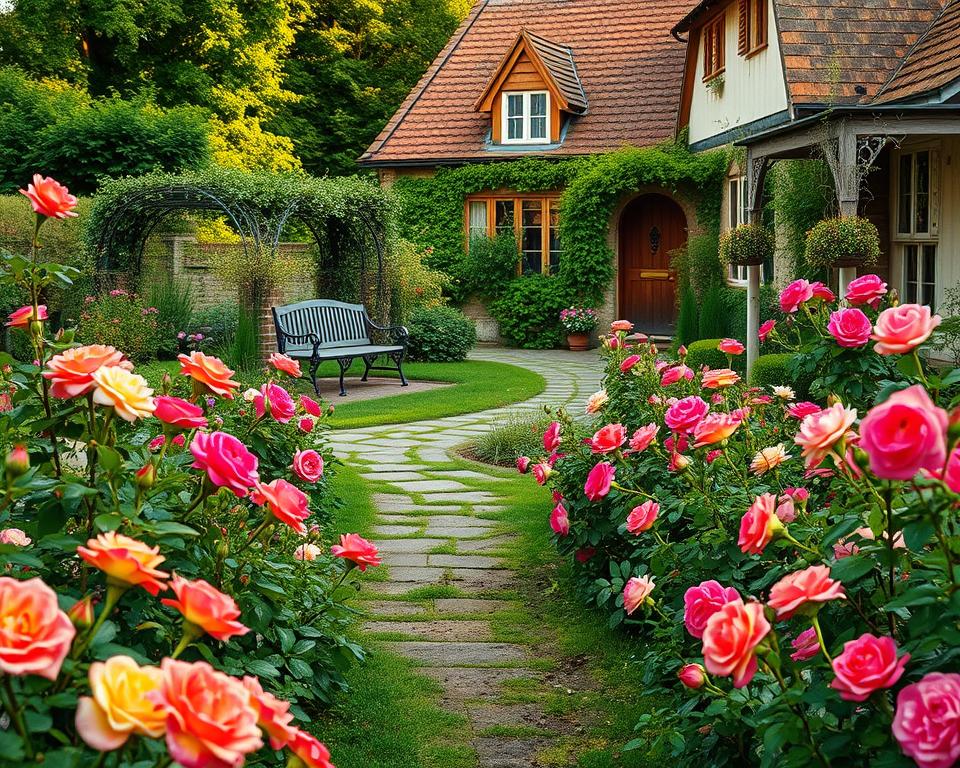
Wide paths, herbaceous planting and shrubs for winter interest
Keep routes wide so you can wheel a barrow and stroll together. Deep, herbaceous borders give layered colour from spring bulbs to late seedheads.
Include shrubs and small trees to carry form into winter and support wildlife between flowering seasons.
Benches, urns and trellis to complete the look
Weave roses on arches and trellis and add traditional touches such as a Lutyens‑style bench, urns or a sundial to anchor views from the house.
Blending formal structure with abundant planting
Balance clipped axes and hedges with looser perennial planting for a lived‑in charm that reads well from windows.
| Feature | Purpose | Practical tip |
|---|---|---|
| Deep borders | Layered seasonal interest | Underplant with bulbs for spring |
| Wide paths | Ease of movement and maintenance | Use compacted gravel or stone |
| Roses & trellis | Vertical colour and scent | Prune annually and feed in spring |
Contemporary and modern gardens: clean lines and curated planting
A refined palette of materials and repeated plant forms gives contemporary layouts a quiet, architectural presence.

Keep geometry simple. Use rectangles, aligned planes and strong sightlines so each part feels intentional.
Materials to try
Trial corten steel planters, gabion walls and large-format paving for a durable, refined finish. These materials age well and suit minimal compositions.
Restrained planting and colour
Curate a tight palette of around 12–20 species. Repeat architectural plants and a few grasses to create rhythm and cohesion.
- Keep lines crisp with simple geometry and built-in seating to avoid clutter.
- Use a minimal reflecting pool or rill to amplify light and textures.
- Conceal utilities with slatted screens and borrow views from main windows to extend compositions.
Shows like RHS Chelsea illustrate leading examples. If you want modern garden design ideas, focus on calm colours, sculptural plants and high-quality materials to achieve the gallery-like look of this garden style.
Japanese garden style: balance, pruning artistry and water
In a Japanese plot, every stone, pruned branch and pool is chosen to slow the pace and focus the eye. You aim for calm by mixing carefully placed features with open space, so the scene reads as a composed view rather than a crowded bed.

Heaven‑earth‑humanity planting and textural contrasts
Apply the Ikebana principle: one tall tree, a mid‑height shrub and a groundcover to give clear vertical layers. This heaven‑earth‑humanity rule helps you arrange plants so each element has purpose and breathing room.
Texture matters: moss, gravel, lichen‑marked stones and sculpted bark create age and calm. Use muted greens with a single bright accent, such as a red maple or a white blossom, to keep the palette restrained.
Ponds, stones and moss for tranquillity
Add water sparingly: a still pond, a gentle cascade or a narrow rill anchored by natural rocks will reflect light and sound without dominating the scene. Integrate boulders so they look inevitable rather than placed.
- Use asymmetry and negative space to craft a contemplative mood.
- Prune to reveal branch form; shape is as important as flowers.
- Lay stepping stones to guide slow walking and framed views from a seat.
“Keep ornaments few; a single lantern or tsukubai offers focus without clutter.”
| Element | Purpose | Practical tip |
|---|---|---|
| Heaven‑earth‑humanity planting | Clear vertical balance | Choose one tall tree, one mid specimen and a groundcover |
| Water feature | Light sound and reflection | Prefer still pond or gentle rill; hide pumps where possible |
| Stone & moss | Age, texture and calm | Use local stone and encourage moss with shade and moisture |
Mediterranean and dry gardens: drought-smart planting and gravel textures
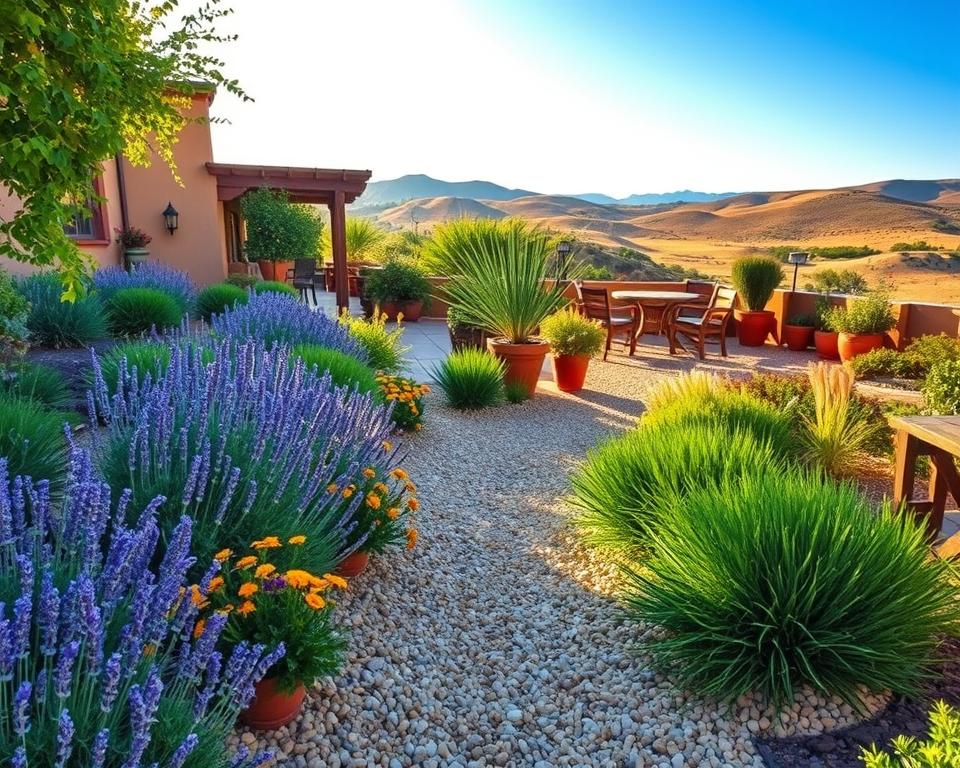
A compact plot can read Mediterranean with gravel, terracotta and drought-wise plants. Use repeatable materials and a tight plant palette to give heat and calm.
Choose resilient species such as lavender, rosemary, succulents and select grasses. These thrive in free-draining soil and cope with dry summers in many UK spots.
Low-water surfaces and structure
Lay a gravel mulch 5–7 cm deep to cut evaporation, suppress weeds and let some self-seeding occur. Add terracotta pots, warm stone and a few larger rock features to store heat and anchor the view.
Design moves for no-lawn plots
Replace turf with shaped beds, compacted gravel courts and simple seating. Meandering paths of gravel or stepping stones protect soil and make maintenance easy.
Coastal adjustments
On the coast use salt- and wind-tolerant plants and plant into shingle or sand. Recycled driftwood and shingle beds give an authentic coastal feel.
“Use rainwater harvesting and group plants by need to keep water use low.”
| Feature | Benefit | Practical tip |
|---|---|---|
| Drought-tolerant plants | Low irrigation need | Lavender, rosemary, succulents, grasses |
| Gravel mulch | Reduces evaporation | 5–7 cm depth; accept some weeding |
| Rock & terracotta | Store heat, add texture | Use local stone and varied pot sizes |
| Paths & seating | Reduce maintenance | Compacted gravel or stepping stones |
Exotic or tropical-look gardens: bold leaves, layers and colour
Dense, tropical planting can turn a middling plot into a verdant retreat with bold leaves and bright flowers. Use large-leaved species to create an immediate sense of scale and intimacy.

Creating lush canopies and sheltered seating
Build layers from canopy to groundcover so you read the space as an immersive room. Plant palms, tree ferns and large perennials together for depth and drama.
Create microclimates with fences, hedges and overhead canopies to shield tender foliage from wind and to raise humidity.
Overwintering tender plants in the UK
Many summers will reward you with dahlias, cannas and subtropical pots, but winters need planning. Lift tubers, wrap trunks, or move pots to a greenhouse or frost-free shed.
- Use water features or misters to boost humidity and amplify lush textures.
- Site seating under foliage for dappled shade and an immersive experience.
- Group pots of subtropicals near doors for seasonal impact and easier wintering.
Practical tips: favour dark mulch and rich soil to sustain rapid growth, choose paving that recedes visually, and accept a higher maintenance rhythm for a true paradise look.
Wildlife gardens: planting for pollinators, water and shelter
A wildlife-friendly plot gives birds, bees and bats food, shelter and safe water close to your house. These simple moves make your outside space productive for nature and pleasing to look at.
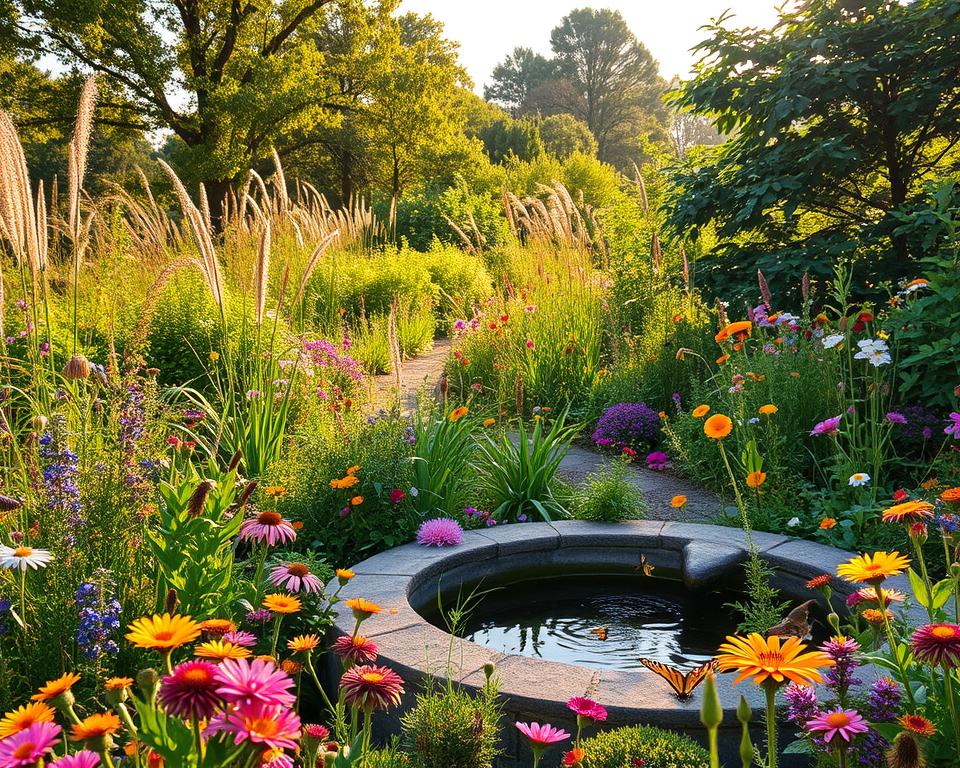
Start by thinking seasons: choose nectar-rich plants and species that set seeds and berries so food is available all year. Layering trees, shrubs and perennials creates nesting niches without losing form.
Low-chemical gardening and healthy soils
Reduce sprays and let natural predators — birds and frogs — take the strain on slugs and snails. Feed soil annually with compost or well-rotted manure to support microbes that keep plants vigorous.
Bird, bat and bug habitats that blend with any style
Add bird boxes, bat boxes and a bug hotel tucked among logs and leaf piles. A shallow pond or bowl gives drinking and breeding water while a gentle ramp helps wildlife access the edge safely.
- Prioritise nectar-rich and berry-bearing species for pollinators and birds.
- Keep an unmown corner or mini-meadow to boost insect diversity.
- Harvest rainwater to top up ponds and reduce mains use.
“Blend wildlife features into any garden style so nature and design both thrive.”
Rock, mountain and alpine gardens: stone-led structure and specialist plants
Alpine beds copy mountain slopes, using layered stone to give specialist plants the drainage they need. Victorian gardeners popularised rockeries after plant collecting trips, so these layouts often reference high, stony landscapes and compact planting.

Start with geology: arrange stone in naturalistic strata so grain and orientation read as one continuous element. Keep the rock dominant and plant tightly to make miniature views feel inevitable.
Prioritise sharp drainage. Use raised beds, scree or crevice techniques and site the plot in full sun with shelter from winter wet. Most alpines dislike waterlogged crowns, so water sparingly.
- Choose compact alpines and dwarf conifers, adding bulbs for seasonal sparkle.
- Build sinuous paths or stepping stones to access beds and reveal small scenes.
- Terrace slopes to create microclimates and stabilise the landscape.
Edit annually: lift invasive runners, refresh gravel mulches and prune low. If space is tight, try a raised alpine trough for a concentrated display that still reads like a proper rock garden.
Naturalistic, prairie and eco-friendly styles: resilient beauty
Naturalistic planting borrows from prairie meadows to give you resilient colour and movement across seasons. This approach favours drifts rather than formal beds, so each view changes through the year without heavy input.

Piet Oudolf-inspired grasses and perennials
Piet Oudolf popularised mixing structural grasses with perennial forbs to create long-season interest. Plant in blocks and broad drifts so wind and light animate the scheme.
- Use repeating groups of grasses with resilient plants for rhythm and winter silhouettes.
- Aim for spring shoots, summer fullness, autumn seedheads and winter form.
- Edit in late winter—cut back en masse but leave some seedheads for wildlife.
Water-wise design, meadows and recycled materials
Make the plot low‑input: choose tough species that suit your soil and need little irrigation once established. Add a rain garden, permeable paths and mulch to conserve water and feed soil life.
“Use inspiration from public plantings, such as the High Line, then scale those design ideas to your plot.”
Include a small meadow or flowering lawn to boost biodiversity. Reuse reclaimed brick, recycled gravel and timber to cut cost and carbon. Track what thrives and repeat the winners.
What garden style categories exist? A quick tour through history
Across centuries, outside spaces evolved from enclosed medicinal plots to sweeping parkland. This brief history helps you borrow features that suit your plot and house. Use the timeline to spot useful elements—axes, water, trees and ornament—that you can adapt today.
Medieval to Tudor: physic beds, orchards and knot layouts
Medieval plots were largely productive and enclosed. You would find physic beds, orchards, raised beds, fishponds and dovecotes close to the house.
Tudor fashion introduced patterned knot beds, mounts for views and ornate banqueting houses. These moves mixed utility with display and gave small plots a strong formal foreground.
Stuart and Georgian: avenues, parterres, lakes and follies
The Stuart era scaled up symmetry. Terraces, parterres and avenues asserted clear sightlines while canals and fountains animated water and movement.
Georgian designers then softened geometry into a pastoral landscape. Serpentine lakes, cascades, temples and follies linked house and park with the wider landscape.
Victorian and 20th century: plant collecting, rockworks and colour-led borders
Victorian gardeners embraced global introductions. Arboretums, glasshouses and flamboyant bedding schemes showcased new trees and exotic plant finds.
Rockeries grew popular as collectors sought alpine specimens, and the 20th century later added garden rooms, refined colour borders and naturalistic prairie and meadow planting.
“Through each era, recurring elements—axes, water, woodland and ornament—evolved to suit taste and technology.”
Tip: mix historical references sparingly. A Tudor knot, a Georgian vista or a Victorian fern corner can enrich your plot without forcing the whole scheme.
Conclusion
A focused plan helps you combine classic motifs and resilient planting into a cohesive whole.
Shortlist two or three complementary garden style options and test how they sit with your house, soil and sun. This gives clear ideas for materials, paths and furniture.
Borrow selectively from history — a knot pattern, a formal axis or prairie drift can add character. Align hard landscaping to your home so the design feels connected.
Prototype beds and pots before you commit, then build a simple moodboard of colours, textures and key plants. Revisit your plan each year and edit what performs best.
Seek local inspiration at open gardens and shows; they show what thrives in your microclimate. With defined garden styles and solid ideas, you can turn inspiration into a lasting, practical composition.
FAQ
What are the main garden style groups you might consider?
You can choose from romantic cottage schemes, formal and traditional layouts, English country borders, contemporary and modern designs, Japanese-inspired spaces, Mediterranean and dry planting, tropical or exotic looks, wildlife-friendly areas, rock and alpine arrangements, and naturalistic or prairie-style planting.
How do you use a style to shape your outdoor space?
Start by assessing sunlight, soil, aspect and available space. Match planting palettes, paths and materials to those conditions and your home’s architecture. Decide between a condition-led approach (what thrives where) and a classic look that suits your taste, then layer hard and soft landscaping to create cohesion.
How should you choose between classic looks and condition-led approaches?
If you prioritise heritage and symmetry, choose classic layouts with hedges, parterres or topiary. For sustainability and low maintenance, opt for condition-led choices such as drought-tolerant or shade-loving plants that suit microclimates. You can mix both by using formal structure with tolerant, regionally appropriate planting.
How can you align planting, paths and materials with your home’s architecture?
Use materials that echo your property — stone or brick for traditional homes, clean concrete or corten steel for modern houses. Match scale and proportions: small patios and intimate paths for cottages, broad avenues for larger villas. Choose colours and plant forms that complement building lines and finishes.
What defines a cottage garden and its core elements?
A cottage approach favours romantic, informal planting with densely packed flowers, herbs and edible mixes. Meandering paths, mixed borders and seasonal colour are key. Include perennial flowers, climbers like roses and clematis, and practical herbs to create a productive, relaxed feel.
How do you make a small outside space feel like a cottage setting without a lawn?
Use winding paths, compact seating pockets and layered planting to create intimacy. Replace lawns with gravel, paving or groundcover. Incorporate vertical interest with climbers, obelisks or trellis and focus on scent and seasonal blooms to give that cottage charm.
What are the hallmarks of formal and traditional designs?
Geometry, symmetry and year-round structure define formal schemes. Think parterres, clipped hedges, axial paths and strong focal points like statues or urns. These elements create balance and a controlled backdrop for seasonal bedding or restrained planting.
Can you use topiary, mazes and knot gardens in compact spaces?
Yes—scaled-down topiary and small knot-parterres work well in courtyards or compact plots. Use low hedging, clipped spheres or cones, and miniature pathways to suggest formality without overwhelming the space.
What makes an English country border distinctive?
Deep herbaceous borders, abundant roses, mixed shrubs and layered perennials give English country borders their lush, painterly quality. Paths are often wide and informal, with benches, urns and trellis adding classic accents and seasonal succession ensuring interest through the year.
How do you blend formal structure with abundant planting?
Anchor beds with clipped hedges or hard edges, then plant freely within those frames. Use a balance of shrubs for winter structure and herbaceous perennials for seasonal colour, allowing some plants to spill over edges for a softened, abundant look.
What features suit contemporary and modern gardens?
Clean lines, minimal planting palettes, strong architectural plants and durable materials like corten steel, gabions and precise paving work best. Focus on repetition, scale and texture rather than dense colour to achieve a restrained, elegant result.
Which materials and plants work well in modern schemes?
Try corten steel planters, smooth paving, gabion walls and gravel beds paired with architectural plants such as agaves, box pleached trees, ornamental grasses and clipped yew. Keep colours muted and plant forms sculptural.
What are the essentials of a Japanese-inspired plot?
Balance, careful pruning, and an emphasis on texture and negative space are central. Use stones, moss, water features and restrained planting to create calm. Elements should suggest harmony between heaven, earth and humanity.
How do ponds, stones and moss contribute to tranquillity?
Water adds reflective calm and sound; stones provide permanence and focal points; moss softens hard edges and suggests age. Together they create a serene, contemplative atmosphere typical of Japanese design.
What characterises Mediterranean and dry planting schemes?
Drought-smart planting, gravel textures and sun-loving species such as lavender, rosemary, succulents and ornamental grasses define these schemes. Terracotta pots, rock accents and mulches reduce water use and reinforce the aesthetic.
How do you design a no-lawn, low-water courtyard with Mediterranean influences?
Use gravel or paving shaped into clear circulation routes, group drought-tolerant pots and choose hardy shrubs and succulents. Add terracotta, rock and textured paving to cut water demand while keeping a warm, informal feel.
How can you adapt tropical or exotic looks for the UK climate?
Layer bold-leaved perennials and architectural plants in sheltered microclimates, use heavy mulching and choose hardy or half-hardy cultivars. Overwinter tender specimens in greenhouses or move them under cover during cold months.
What are simple steps to create a wildlife-friendly space?
Plant native nectar-rich flowers, leave areas of tussocky grass, add a small water source and minimise chemical use. Provide nesting boxes, log piles and diversified structure to support pollinators, birds and bats while blending with any design.
What defines a rock, mountain or alpine garden?
Stone-led structure, excellent drainage and specialist low-growing plants such as saxifrages, alpines and dwarf conifers. Careful soil mixes and raised or sloping beds mimic mountain conditions for these specialist species.
What is the naturalistic or prairie approach and its plant choices?
Naturalistic planting uses hardy grasses and perennials in drifts for year-round structure and movement. Influenced by designers like Piet Oudolf, these schemes favour resilient, low-input plants, seasonal succession and wildlife value.
How have historical periods influenced today’s layouts?
Medieval and Tudor eras produced physic beds, orchards and knot work; Stuart and Georgian times favoured avenues, parterres and lakes; Victorian and 20th-century tastes added rockeries, plant collecting and vivid colour themes. You can borrow elements from any period to suit present needs.