Creating a rock garden – tips
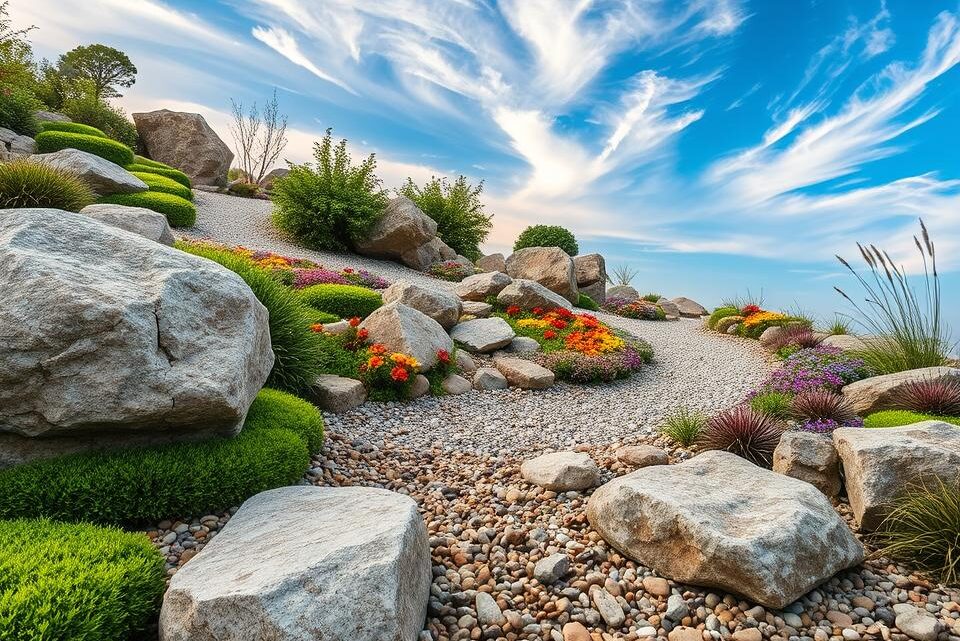
Imagine turning your ordinary garden into a stunning landscape that requires little upkeep. A rock garden offers exactly that. It brings natural beauty right to your home, creating a unique environment full of charm.
These special gardens are not just pretty. They provide practical solutions for British climates. You can grow specialised plants and flowers that thrive in rocky conditions. Even difficult areas in your yard can become beautiful features.
From small containers to large slopes, the possibilities are endless. Each design offers distinct visual interest throughout the year. With proper planning, you can build rock features that enhance your outdoor space.
This guide will help you create your own masterpiece. You’ll learn about selecting stones, preparing soil, and choosing the right species. Let’s explore how to bring this natural beauty to your garden.
Inhaltsverzeichnis
Key Takeaways
- Rock gardens transform outdoor spaces into low-maintenance, year-round features
- They provide ideal habitats for specialised plants suited to British conditions
- Even challenging areas can become beautiful garden features with proper design
- Versatile designs range from container displays to terraced slopes
- Successful rock gardening requires careful planning of site, stones, and soil
- These gardens create natural-looking environments that enhance overall appeal
- With good guidance, gardeners of all skill levels can achieve stunning results
Why Create a Rock Garden in Your British Garden
Transforming your outdoor space with natural stone features offers remarkable benefits beyond ordinary landscaping. These unique installations bring rugged beauty while solving common gardening challenges.
The aesthetic appeal of rock gardens
Natural stone arrangements create stunning visual interest throughout the seasons. They add depth and texture to flat areas, mimicking Britain’s wild landscapes.
The earthy tones and varied forms complement traditional garden plants beautifully. You can incorporate a water feature for added movement and tranquillity.
Low-maintenance benefits for busy gardeners
Once established, these features demand minimal attention. They significantly reduce weeding time and water requirements compared to conventional beds.
The excellent drainage conditions mean less worry about waterlogging. You’ll enjoy more leisure time while your space remains attractive all year.
Creating habitats for alpine plants and wildlife
Specialised planting pockets between stones provide perfect homes for alpine species. These micro-environments support biodiversity in your garden.
Local insects and small creatures find shelter among the rocks. You’ll create a thriving ecosystem right outside your home.
Even difficult slopes or poor soil areas become opportunities for beauty. The versatility of design means any space can become a captivating feature.
Essential Planning Considerations Before You Begin
Proper groundwork transforms your vision into reality. Thoughtful preparation ensures your rock garden thrives for years. You’ll create a stunning feature that enhances your outdoor space beautifully.
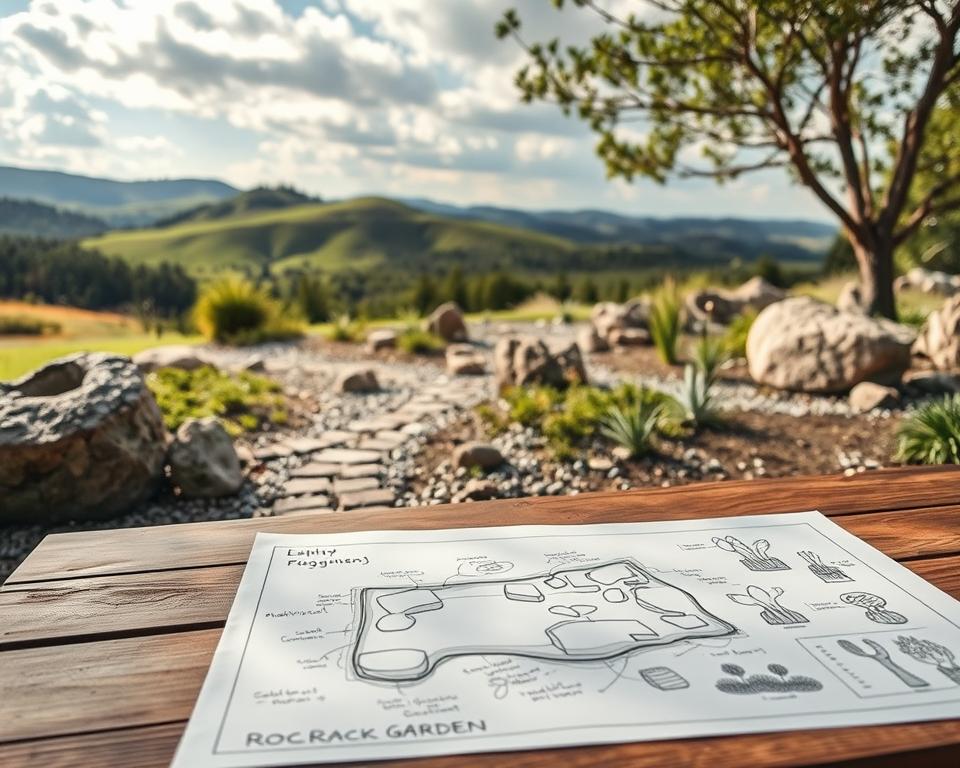
Assessing your garden’s sunlight patterns
Observe how light moves across your chosen area throughout the day. Note seasonal changes in sun exposure. Most alpine plants need several hours of direct sunlight.
Morning sun with afternoon shade often works best. This prevents scorching during hot summers. Your observations determine ideal placement for different species.
Evaluating drainage and soil conditions
Test your ground’s drainage by digging a hole and filling it with water. Watch how quickly it drains away. Poor drainage drowns roots and causes plant failure.
Clay soil requires significant improvement. Add generous amounts of grit and sharp sand. This creates the free-draining conditions alpine plants love.
Remove all perennial weeds completely before starting. They compete with your desired flowers and disrupt the design.
Determining the optimal size and scale
Consider how your rock garden will fit within existing landscapes. Balance ambition with available space and resources. Even small installations create impressive visual interest.
Allow proper access paths around the feature. You’ll need room for maintenance and enjoyment. Proportionate scaling ensures harmony with your overall garden.
Setting a realistic timeline and budget
Building with rocks demands patience and preparation. Allow sufficient time for proper construction and establishment. Rushing leads to disappointing results.
Create a detailed budget covering materials, plants, and tools. Remember transportation costs for heavy stones. Quality preparation saves money long-term.
| Planning Aspect | Key Considerations | Recommended Approach |
|---|---|---|
| Sunlight Assessment | Daily and seasonal patterns | Monitor for full week before planting |
| Soil Testing | Drainage rate and composition | Dig test holes after rainfall |
| Weed Removal | Complete eradication needed | Remove roots manually or chemically |
| Size Planning | Proportion to available space | Start modestly, expand later |
| Time Allocation | Weather-dependent stages | Allow 2-3 months for establishment |
| Budget Planning | Materials, plants, equipment | Add 20% contingency fund |
Good planning prevents common pitfalls. Your efforts will reward you with a magnificent feature that grows more beautiful each year. The right preparation makes building with rocks truly enjoyable.
Choosing the Perfect Site for Your Rock Garden
Selecting the ideal location transforms your vision into reality. The right spot enhances both plant health and visual appeal. Consider sunlight, surroundings, and integration with existing features.
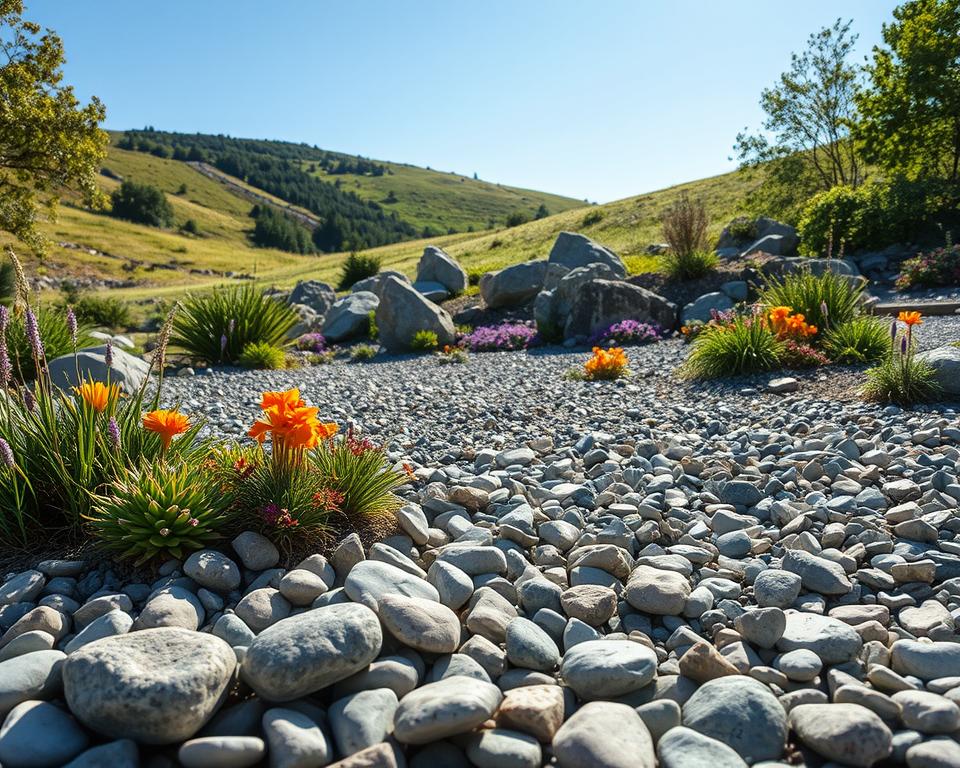
Finding an open site away from trees and buildings
Choose an open area that receives sunshine until at least 3pm. This provides optimal conditions for alpine plants. Avoid locations shaded by trees or structures.
Morning sun with afternoon shade prevents scorching. Your chosen site should offer excellent drainage and air circulation.
Considering natural background and surroundings
Assess how your installation fits within its environment. Use natural backgrounds to create seamless integration. The arrangement should appear as if it belongs there naturally.
Consider sight lines from your house and other vantage points. Position the feature to maximise visual interest throughout your space.
Working with slopes versus level ground
Slopes offer natural drainage and dramatic appeal. They create perfect conditions for cascading plants. Level ground requires careful preparation for success.
For flat areas, dig down slightly at the front. Create a small mound to improve visibility and drainage. This technique enhances the overall design beautifully.
Integrating with existing garden features
Blend your new installation with paths, walls, or water features. Use existing elements as assets rather than obstacles. Create natural transitions between different garden areas.
Consider access and maintenance when positioning planting pockets. Work with your landscape’s topography rather than against it. The result will be a harmonious outdoor space.
Sourcing Materials: Rocks, Soil and Plants
Gathering the right materials transforms your vision into reality. Quality components ensure your installation thrives for years. You’ll create a stunning feature that enhances your outdoor space beautifully.
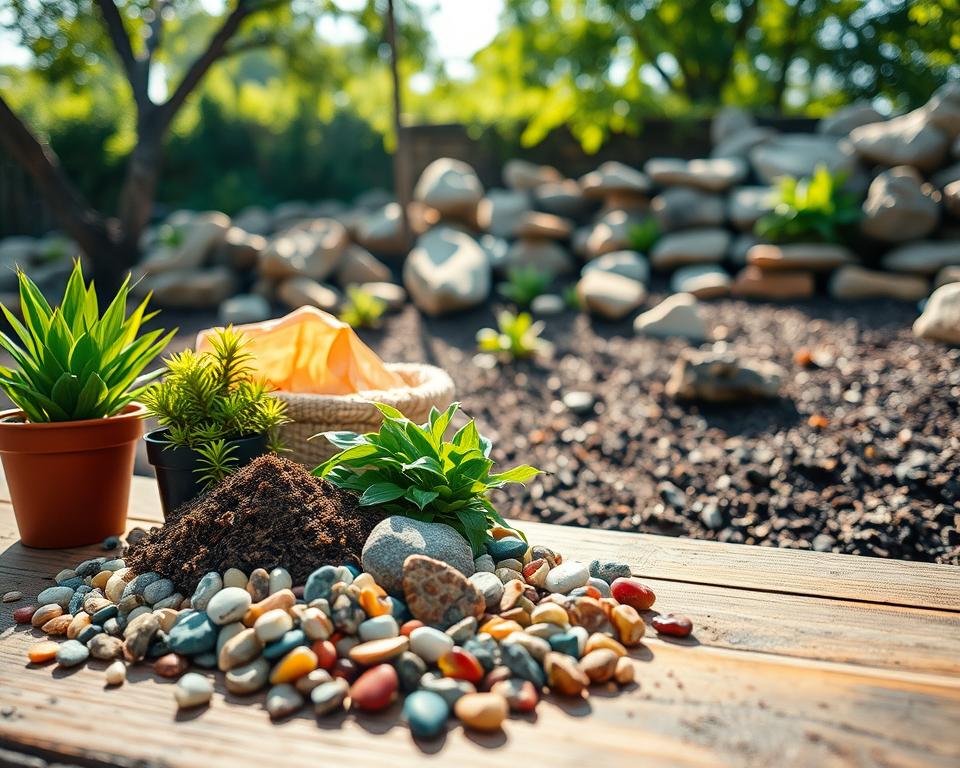
Finding locally sourced rocks that complement your area
Seek stones from your region that match the natural landscape. Visit stone merchants to compare colours and textures. Local materials blend seamlessly with your surroundings.
Katharine Woods selected Purbeck limestone for her project. This choice allowed the stones to grey naturally over time. They harmonised perfectly with existing features in her space.
Selecting the right mix of stone sizes and types
Use various sizes to create visual interest and natural appeal. Combine large anchor stones with smaller filling pieces. This approach mimics nature’s random beauty.
Katharine used ten substantial stones as structural elements. She complemented these with smaller rocks for detail. The variety created depth and character in her design.
Preparing the ideal soil mix for alpine plants
Create a special blend that provides excellent drainage yet supports growth. Alpine species need free-draining conditions to thrive. The right mixture prevents waterlogging and root rot.
Mix equal parts of three components:
- Weed-free topsoil
- Horticultural grit
- Leaf mould or coir
This combination creates perfect growing conditions for your plants.
Choosing appropriate plants for British conditions
Select species that flourish in our climate and specific environment. Traditional installations include diverse planting options. Consider these categories for your space:
- Alpine varieties for sunny spots
- Perennials for reliable colour
- Ornamental grasses for movement
- Small shrubs for structure
- Groundcovers for filling spaces
- Bulbs for seasonal interest
- Evergreen dwarf conifers for year-round appeal
For shaded areas, consider mosses, ferns and hostas. These species thrive in cooler conditions with less direct sunlight.
Explore specialist nurseries and seed exchanges for rare finds. The Alpine Garden Society offers wonderful ideas for unique species. Their collections provide exceptional choices for your project.
Match plants to microclimates within your arrangement. Some areas may receive more water or sunlight than others. Thoughtful placement ensures every species thrives in its perfect environment.
Practical Tips for Creating a Rock Garden
Transforming your outdoor space with natural stone requires careful execution. These professional techniques ensure your installation stands the test of time while looking completely natural.
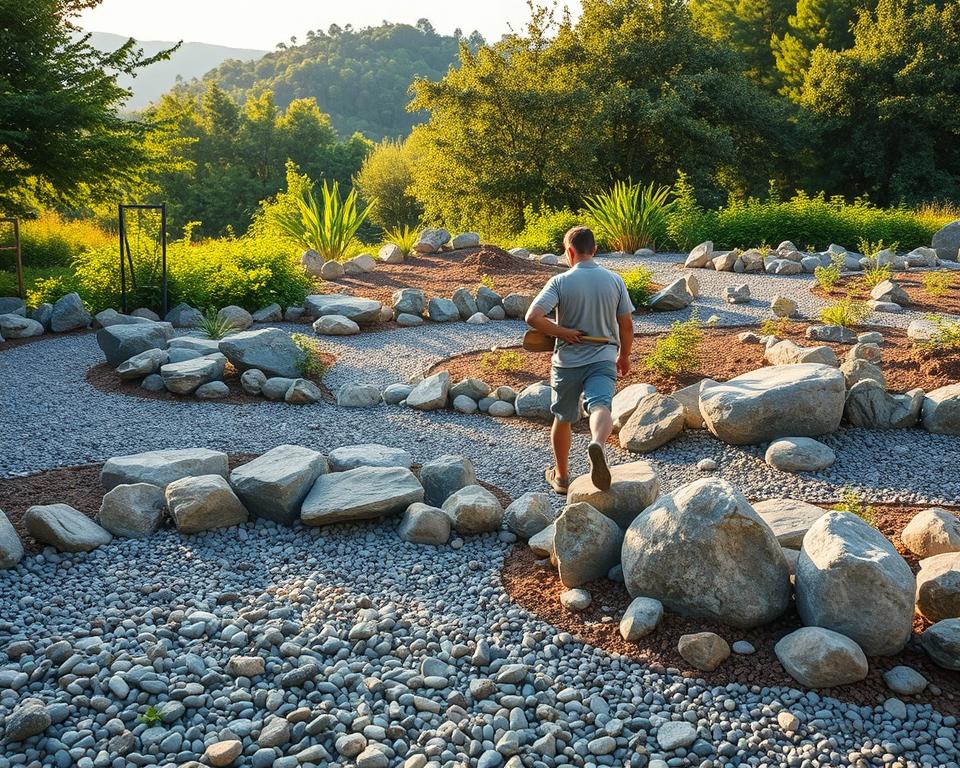
Preparing the site: weed removal and drainage
Complete weed eradication forms the foundation of success. Some persistent species demand significant attention over months.
Katharine Woods dedicated a full year to eliminating ground elder from her project. This thorough approach prevents future problems with invasive growth.
Begin with a layer of rubble for excellent drainage. Cover this with landscape fabric to block weed regeneration. These steps create ideal conditions for your plants.
Placing keystone rocks as structural anchors
Start with your largest stones at the base of slopes. These “keystones” become the backbone of your entire design. They provide stability and set the visual tone.
Partially bury each stone by excavating soil beneath it. This technique makes them appear naturally embedded in the landscape. Ram soil firmly into all gaps to secure their positions.
Creating natural-looking arrangements and crevices
Mimic nature’s random beauty through thoughtful placement. Use smaller stones to connect larger pieces visually. This approach creates seamless transitions throughout your feature.
Build fascinating crevices perfect for specialised planting. For particularly dramatic effects, try vertical arrangements with paving slabs. Fill these spaces with gravel and stones for authentic appeal.
Building planting pockets and microclimates
Create diverse environments within your installation. Face stones in different directions to vary sun exposure. This technique produces multiple microclimates across your space.
These variations support a wider range of plant species. Some areas retain moisture while others provide sharp drainage. You’ll enjoy greater biodiversity and visual interest throughout the year.
Remember to prioritise safety when handling heavy materials. Consider professional help for large projects requiring equipment. Your careful work will reward you with a stunning, low-maintenance feature.
Selecting and Planting for Year-Round Interest
Your planting choices transform stone features into living artworks. Thoughtful selection ensures beauty across seasons while thriving in your specific environment. Discover how to create captivating displays that evolve throughout the year.
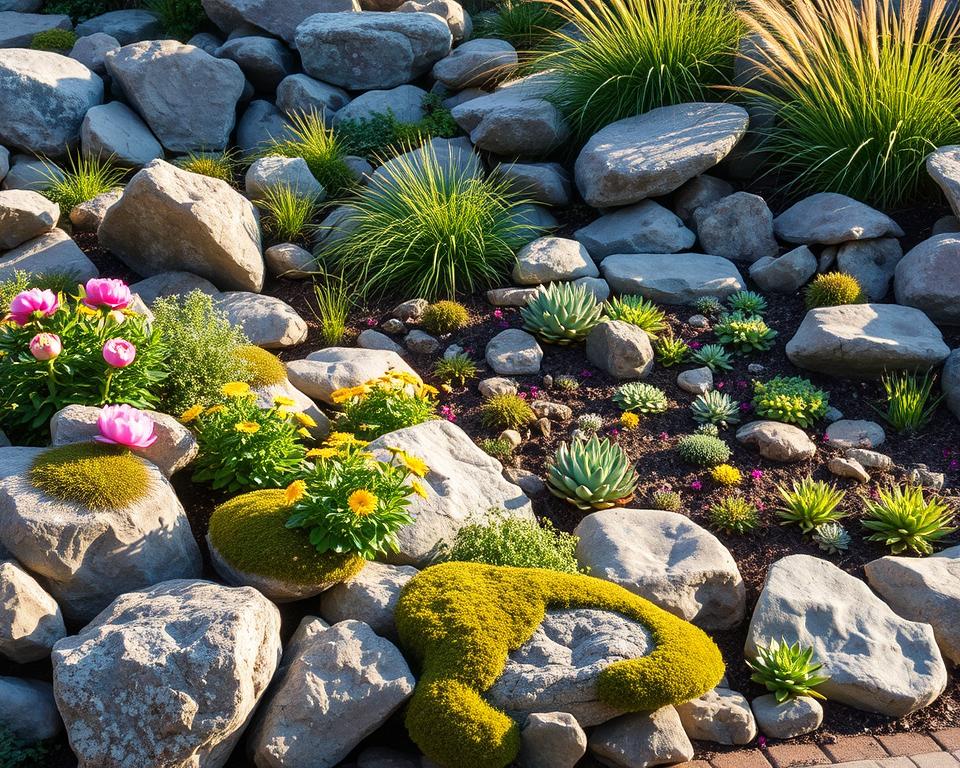
Choosing alpine plants for your specific conditions
Match species to your garden’s unique microclimates. Observe sunlight patterns, moisture levels, and soil composition carefully. Alpine varieties flourish in conditions mimicking their native mountain habitats.
Consider these factors when selecting:
- Sun exposure requirements for different species
- Drainage capabilities of each planting pocket
- Local climate challenges and advantages
- Mature size and growth habits of each plant
Specialist nurseries offer wonderful ideas for unique specimens. The Alpine Garden Society provides exceptional choices for connoisseurs. Their collections include rare finds perfect for your project.
Incorporating dwarf conifers for structure
Evergreen conifers provide permanent framework and winter interest. Their varied forms and textures create visual drama against stone backgrounds. Choose slow-growing varieties that maintain proportion over time.
Excellent options include:
- Dwarf pine varieties for vertical accents
- Creeping junipers for ground coverage
- Miniature spruce species for blue-grey tones
- Small cypress cultivars for feathery textures
These structural elements ensure appeal even during dormant seasons. They form the backbone of your design while supporting other plantings.
Adding seasonal colour with bulbs and perennials
Strategic planting delivers continuous floral displays. Combine early bulbs with late-flowering perennials for non-stop colour. This approach maintains visual interest from spring through autumn.
Consider this seasonal progression:
- Spring: Narcissus, wild tulips, and miniature iris
- Summer: Alpine campanulas, saxifrages, and thrifts
- Autumn: Cyclamen, autumn crocus, and gentians
- Winter: Winter aconites and early snowdrops
Ornamental grasses add movement and texture between flowering periods. Their delicate seed heads catch frost beautifully in winter months.
Creating visual interest with contrasting textures
Skillful combination of forms and surfaces enhances your design dramatically. Pair delicate foliage with bold leaves for captivating effects. Use colour harmonies that complement your stone selections.
Achieve stunning contrasts through:
- Feathery grasses against glossy evergreen leaves
- Silver foliage plants beside deep green conifers
- Upright forms cascading over creeping groundcovers
- Bold flowers contrasting with subtle stone colours
For shaded areas, combine ferns with hostas and coral bells. Their varied leaf shapes create luxurious textures without direct sunlight. This approach works beautifully in cooler garden spaces.
Remember to consider mature sizes when positioning specimens. Allow sufficient space for natural development over time. Your careful planning rewards you with a balanced, thriving display.
Maintaining Your Rock Garden Through the Seasons
Your stunning stone feature deserves ongoing care to maintain its natural beauty. Proper maintenance ensures your installation matures gracefully while supporting healthy growth. You’ll enjoy a thriving environment that evolves beautifully with each passing season.
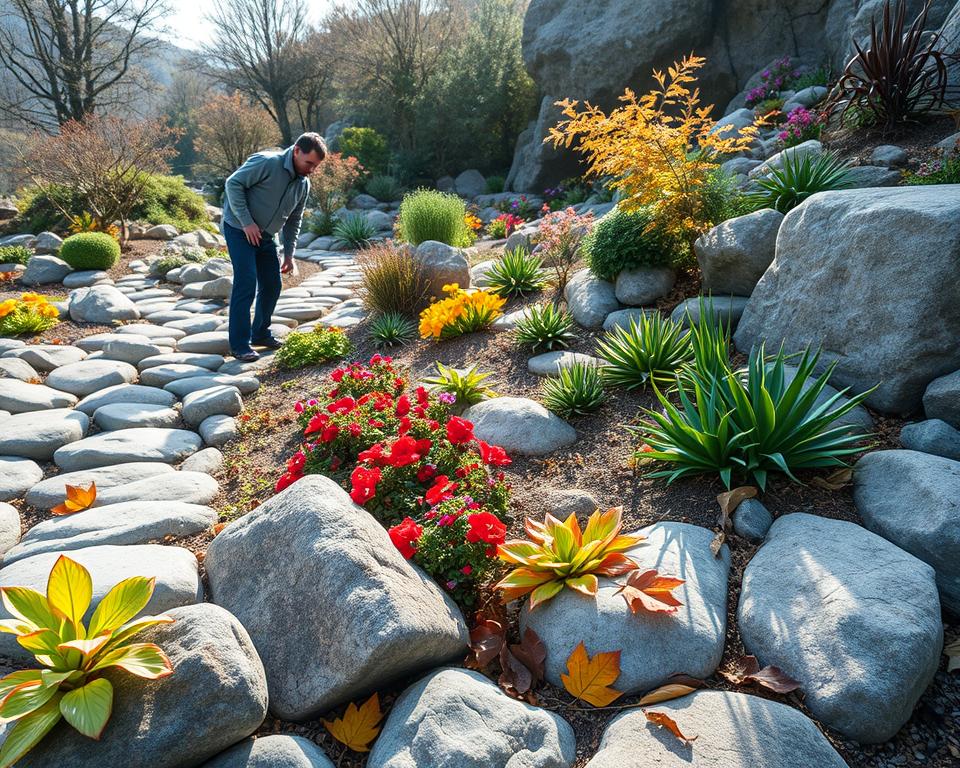
Watering strategies for different weather conditions
Develop smart watering habits that meet your plants’ needs without waste. During hot spells, stones absorb heat and increase evaporation. Check soil moisture regularly before adding water.
Early morning watering reduces evaporation loss. It allows foliage to dry before evening, preventing fungal issues. Deep, infrequent watering encourages strong root development.
Most alpine species prefer drier conditions once established. Overwatering causes more problems than underwatering. Learn each plant’s specific requirements for best results.
Weed control and prevention techniques
Regular weeding maintains your feature’s pristine appearance. A layer of gravel or smaller stones acts as natural suppression. It blocks light from reaching weed seeds beneath.
Remove unwanted growth while small to prevent competition. Persistent species demand thorough removal including roots. Stay vigilant throughout the growing season.
Consider using landscape fabric beneath gravel layers. This extra barrier significantly reduces weed emergence. Your plants will thank you for reduced competition.
Seasonal pruning and plant care
Different species require specific attention throughout the year. Remove spent flowers to encourage new growth and maintain appearance. Cut out dead or damaged growth promptly.
Some rock garden plants need little fertiliser while others benefit from nutrients. Alpine varieties and succulents thrive in lean conditions. Coral bells and hostas appreciate occasional feeding.
Spring cleaning removes winter debris and stimulates new growth. Autumn preparation helps plants withstand colder months. Each season brings unique maintenance opportunities.
Refreshing gravel mulch and maintaining drainage
Refresh gravel mulch as needed to maintain its protective function. Over time, organic matter mixes with stones reducing effectiveness. Top up with fresh material that tones with your rocks.
Ensure drainage remains effective by checking flow after heavy rain. Clear any blockages in drainage channels promptly. Good water movement prevents root rot and other issues.
Katharine Woods covered planted areas with matching grit after installation. This technique unified the appearance while providing practical benefits. Your feature will maintain its intended beauty for years.
| Maintenance Task | Best Time | Key Benefits |
|---|---|---|
| Deep Watering | Early Morning | Promotes strong roots, reduces evaporation |
| Weed Removal | When Soil Moist | Easier root extraction, prevents regrowth |
| Gravel Refresh | Spring/Autumn | Maintains appearance, suppresses weeds |
| Drainage Check | After Heavy Rain | Prevents waterlogging, protects roots |
| Seasonal Pruning | After Flowering | Encourages new growth, maintains shape |
| Plant Health Check | Monthly | Early problem detection, prevents spread |
Regular care keeps your installation looking magnificent through changing seasons. You’ll develop a deeper connection with your outdoor space over time. The rewards of proper maintenance are truly inspiring.
Conclusion: Enjoying Your Beautiful Rock Garden Creation
What began as a vision has transformed into your unique outdoor masterpiece. As Reginald Farrer wisely noted, each design reflects personal taste and site-specific conditions.
Your stone landscape becomes a living extension of your connection to nature. Like Katharine Woods’ project, it represents dedication that matures beautifully over time.
Watch with pride as plants establish and wildlife discovers this new habitat. Each season brings fresh visual interest to your outdoor space.
Celebrate the skills you’ve gained while build rock garden features. Your low-maintenance sanctuary will provide joy for years to come.
This personal retreat evolves continually, offering new discoveries each year. Your unique creation stands as a testament to vision meeting nature’s beauty.
FAQ
How much sunlight does a rock garden need?
Most alpine species thrive in full sun, so aim for a spot that receives at least six hours of direct light daily. Some plants tolerate partial shade, but good light encourages compact growth and better flowering.
What type of soil is best for alpine plants?
These plants prefer sharply draining soil to mimic their natural mountainous habitats. A mix of loam, sharp sand, and fine gravel works wonders, preventing waterlogging around the roots.
Can I build a rock garden on flat ground?
Absolutely. While a natural slope offers advantages for drainage, you can create mounds and contours on level ground. This allows you to design elevation and aspect for your planting pockets.
Where is the best place to source rocks?
Seek out locally quarried stone whenever possible. Local materials blend seamlessly with your landscape, look more natural, and are often more sustainable than imported stone.
How do I prevent weeds from taking over?
Start with a thoroughly cleared site. A deep layer of gravel mulch after planting suppresses weeds, conserves moisture, and keeps the roots of your precious alpines cool and dry.
What plants provide year-round interest?
Combine evergreen dwarf conifers for structure with seasonal alpines and bulbs. This mix ensures your feature has colour, texture, and form in every season.
How often should I water my rock garden?
Water deeply but infrequently to encourage strong root growth. Established plantings are remarkably drought-tolerant, needing little supplemental water except during prolonged dry spells.