Building vs Buying a Gazebo: Which Costs Less?
Is it cheaper to build a gazebo or buy one? That single question drives this guide for UK homeowners, renters with permission, gardeners and DIY enthusiasts weighing garden gazebo costs. This article sets out to compare upfront purchases and DIY expenses, ongoing maintenance, time investment and regulatory factors so you can make a clear, cost-based decision.
We use a practical methodology grounded in UK prices and real suppliers. Retail figures from B&Q, Wickes, Homebase and Wayfair inform typical gazebo price UK ranges, while timber, aluminium and composite material costs reflect current market rates. Labour and tool hire estimates follow common UK trades and rental rates, and planning guidance is referenced from local council pages and the Government planning portal.
The following sections present a balanced gazebo cost comparison UK: a direct build vs buy gazebo cost overview, typical purchase and self-build expenses, hidden and ongoing charges, time and opportunity costs, material longevity and customisation, supplier options and a decision framework to help you choose with confidence.
Inhaltsverzeichnis
Key Takeaways
- Begin by asking: is it cheaper to build a gazebo or buy one? The answer depends on materials, labour and time.
- Compare gazebo price UK figures from retailers like B&Q and Wickes with DIY material lists for a fair gazebo cost comparison UK.
- Factor in hidden costs: planning, installation, maintenance and insurance can change the build vs buy gazebo balance.
- Time and skill matter—DIY can save money but has an opportunity cost if you hire tradespeople.
- This guide breaks down costs, durability and sourcing so you can reach a cost-informed decision for your garden.
is it cheaper to build a gazebo or buy one?
Deciding whether to build or buy a gazebo starts with a clear cost picture. A quick comparison highlights where money goes: purchase price, materials, labour, site work and ongoing upkeep. Readers should weigh immediate outlay against long-term value when assessing build vs buy gazebo cost.
Direct cost comparison overview
Prefabricated gazebo kits can suit tight budgets and range from modest £150–£800 for small shelters to mid-range options at £800–£3,000. High-end marques and bespoke purchased gazebos often start around £3,000 and can exceed £10,000 with premium finishes.
DIY material-only builds commonly sit between £200 and £2,500, depending on timber, metal or composite choices. That figure excludes significant inputs: your time, tool hire and any professional help. Keep in mind the cheapest headline price may rise once delivery, installation and future maintenance are added to the calculation of gazebo ROI.
Key variables that affect cost
Size and shape drive material need. An octagonal summerhouse uses more timber and joins than a simple rectangular frame. Roof complexity raises costs quickly.
Material choice matters. Softwood is economical. Hardwood and composite cost more but can last longer and cut maintenance, affecting lifetime value. Aluminium gives low upkeep but higher initial spend.
Foundations and groundworks add expense. Concrete footings, a paving base or raised deck change budgets and sometimes require specialist labour.
Local trades rates vary across the UK. Labour, electrical work or glazing can push a DIY plan past the price of a buy-in option. Planning permission or building regulations that need professional certification increase overall cost.
Extras such as glazing, insect screens, lighting, heaters, paint or stain all increase final spend and alter the long-term picture of gazebo cost variables.
How to calculate a fair comparison
Start by listing every item for both paths: materials, delivery, tools, labour, permits and estimated maintenance. Assign current UK prices to each line and total them for a realistic figure.
Divide total cost by an expected lifespan to find cost per year. Use cost per square metre to compare sizes directly. These simple metrics make it easier to compare gazebo prices UK across options.
Obtain at least three quotes for purchased gazebos and two quotes for professional labour linked to DIY builds. Add intangible values like customisation satisfaction, skill gains and potential resale uplift when estimating gazebo ROI.
Typical costs of buying a gazebo in the UK
Buying a gazebo ranges from budget pop-ups to bespoke garden structures. Prices depend on size, frame material and roof type. The list below gives a clear picture of what to expect when shopping around.
Price ranges for prefabricated gazebos
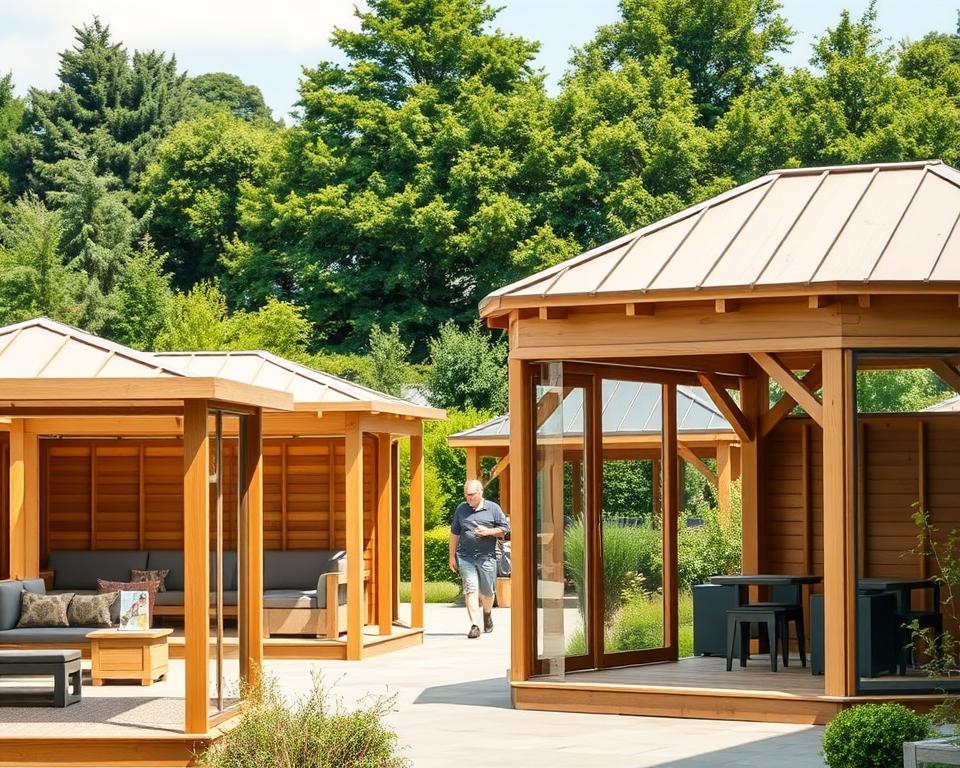
Small pop-up and fabric gazebos sell for roughly £50–£300 at retailers such as Argos and Amazon. These suit occasional use and short-term shade.
Mid-range metal or wooden kit gazebos typically cost £300–£1,200. Stores like B&Q, Homebase, Wickes and Wayfair supply a wide range of footprints and roof options.
High-end framed gazebos with integrated side panels or aluminium frames command £1,200–£3,000 from specialist garden retailers. Prices rise with polycarbonate or shingled roofs and additional fittings.
Costs of bespoke purchased gazebos
Timber-built bespoke gazebos made by carpenters or specialist suppliers normally start at around £3,000 and can reach £10,000. Oak or iroko and intricate joinery increase cost.
Bespoke aluminium or steel gazebos, especially those with engineered foundations or glass walls, often begin at £5,000. Custom work includes design fees and site surveys.
When planning a bespoke purchase, factor in design, structural checks and premium finishes that raise the final bespoke gazebo cost UK.
Delivery, installation and guarantee expenses
Delivery fees vary. Small items may arrive free or for a low charge of £0–£50. Palletised or large-item delivery commonly adds £50–£200 depending on distance and access.
Professional installation by garden installers or carpenters can add about £150–£1,000 or more. Some suppliers bundle installation into purchase packages.
Warranties differ by product. Retail kits often include 1–5 year manufacturer cover, for example polycarbonate roof warranties and aluminium frame guarantees. Bespoke suppliers may offer longer workmanship guarantees. Remember to check VAT at 20% where applicable.
| Category | Typical price (GBP) | What affects price |
|---|---|---|
| Small pop-up / fabric | £50–£300 | Size, fabric quality, brand (Argos, Amazon) |
| Mid-range kit (metal/wood) | £300–£1,200 | Footprint, roof material, included fittings (B&Q, Wickes, Wayfair) |
| High-end framed | £1,200–£3,000 | Integrated panels, aluminium frame, specialist retailer |
| Timber bespoke | £3,000–£10,000 | Size, hardwood choice (oak, iroko), custom detailing |
| Metal/glass bespoke | £5,000+ | Engineered foundations, glass walls, structural design |
| Delivery | £0–£200 | Item size, distance, pallet delivery |
| Installation | £150–£1,000+ | Complexity, labour rates, site work |
| Guarantee / warranty | Included or extra | Manufacturer terms, extended warranty cost |
Typical costs of building a gazebo yourself
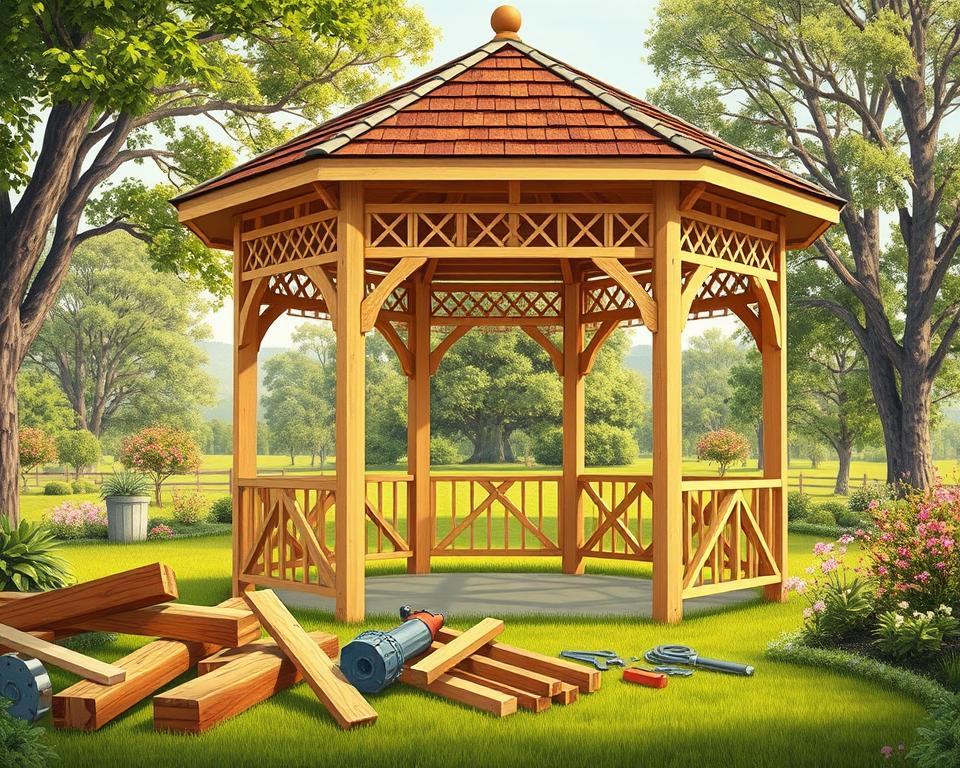
Building your own gazebo lets you control quality and budget. Below are the main cost areas to plan for, with realistic figures for a modest 3m x 3m structure in the UK. Use these ranges to estimate your DIY gazebo cost UK and decide which tasks you will tackle yourself.
Material costs by type
Softwood frames such as treated pine offer the most affordable option. Expect materials from around £150 to £600 for a simple frame and cladding. Hardwood like oak or iroko creates a premium finish and lasts longer. Materials for hardwood builds typically sit between £800 and £3,000 or more.
Aluminium frames are corrosion-resistant and low maintenance. For a mid-sized gazebo, aluminium parts and fittings usually cost £500 to £2,000. Composite materials that use wood-plastic blends have higher upfront costs, typically £600 to £2,500, but cut down future maintenance bills.
Roofing choices affect the final total. Polycarbonate sheets range from about £30 to £200. Shingles typically cost £50 to £300. Metal roofing sits between £100 and £500. Canvas or fabric covers can be £50 to £400. Foundations such as concrete pads, gravel bases or timber decking add roughly £50 to £600 depending on scale.
Tool hire or purchase and additional equipment costs
Essential tools include a circular saw, power drill, impact driver, spirit level, post-hole digger or auger, and a sander. If you need to borrow tools, hire rates for power tools at HSS Hire or local shops typically run from £10 to £40 per day.
Buying a moderate-quality toolset makes sense if you plan more projects. Expect to pay £200 to £800 for a basic kit that will cover most tasks. Safety kit, consumables and sundries such as fixings, screws, stain or paint and sealant add about £50 to £300. Waste removal or a skip for a larger project costs around £150 to £350.
Labour value if hiring tradespeople
Deciding to hire professionals for specialist tasks raises costs but reduces risk. Carpenters or joiners in the UK typically charge between £150 and £300 per day or roughly £25 to £45 per hour, depending on location and expertise. Groundworkers for concrete footings usually charge £120 to £250 per day.
An electrician for wiring or outdoor lighting will bill around £40 to £70 per hour. When planning, include the option to hire trades gazebo installers for critical structural or electrical work rather than attempting complex tasks yourself.
| Cost element | Typical range (£) | Notes |
|---|---|---|
| Softwood materials | 150–600 | Budget frames, treated pine for external use |
| Hardwood materials | 800–3,000+ | Oak or iroko for premium finish and longevity |
| Aluminium frame | 500–2,000 | Lightweight, corrosion resistant |
| Composite materials | 600–2,500 | Reduced maintenance, higher initial outlay |
| Roofing | 30–500 | Polycarbonate, shingles, metal or canvas options |
| Foundations | 50–600 | Concrete pads, decking base or gravel |
| Tool hire (per day) | 10–40 | From HSS Hire or local hire shops for major power tools |
| Tool purchase (kit) | 200–800 | Moderate quality kit for regular DIYers |
| Consumables & safety | 50–300 | Fixings, paint, sealant, PPE |
| Waste removal / skip | 150–350 | Depends on scale of demolition or waste |
| Carpenter / joiner | 150–300 per day | Skilled labour for complex joinery |
| Groundwork labour | 120–250 per day | Concrete footings and site prep |
| Electrician | 40–70 per hour | Wiring and lighting installations |
When tallying up your DIY gazebo cost UK, balance materials and labour choices against time and skill. If you plan to tool up, compare tool hire gazebo rates with purchase costs. If you prefer a quicker route, factor estimates to hire trades gazebo specialists for key phases.
Hidden and ongoing costs to consider
Adding a gazebo brings upfront outlay and steady running costs. Small fees and legal checks can shift a build from affordable to costly. Read the lines below to spot common expenses that owners often miss.
Planning permission and building regulations in the UK
Many garden structures fall under permitted development, but limits apply. Size, height and position next to boundaries matter. If your gazebo is over 2.5m high, sits within 2m of a boundary or will be used as living accommodation, planning permission may be required.
Specialist foundations, new drainage or electrics can trigger building regulations. A check with your local council or the Planning Portal helps avoid fines or enforced changes. If a professional drawing or structural calculation is needed, expect fees from about £100 up to £1,000 or more for complex designs.
Maintenance, repairs and longevity differences
Maintenance affects ongoing affordability. Timber needs staining or treatment every 2–5 years. Treatment costs range from roughly £50 to £300 depending on size and the product used.
Aluminium and composite frames demand less attention. Steel may require occasional anti-corrosion work. Roof repairs or replacement for shingles, tiles or canvas typically run between £100 and £700 across a gazebo’s life.
Spread routine service costs across expected years of use to compare long-term value. That way, cheap initial builds do not mask higher lifetime costs.
Insurance and potential depreciation
Declare a permanent garden structure to your insurer. Contents or buildings cover may change and premiums can rise modestly. Policies from Aviva, Direct Line or NFU Mutual vary, so shop around for quotes that include garden structures.
Gazebo depreciation depends on build quality. Low-cost fabric structures lose value quickly. Well-made timber or aluminium units hold value better and can add curb appeal when selling a property.
Storm damage, theft or vandalism create further costs. Factor in possible repair or replacement bills when calculating total ownership expense, and check whether your policy covers gardening buildings or requires an extra endorsement.
Time investment and opportunity cost analysis
Assessing time is as vital as tallying costs. A clear view of how long a build will take helps homeowners decide between hands-on work and hiring professionals. This section outlines typical durations and the trade-offs to consider when planning a garden project.

Simple kits for a small structure often take one weekend with two people, roughly 6–16 hours. These are common choices for those who want a quick finish and low fuss.
Self-built timber gazebos with foundations normally span several weekends to a few weeks. Typical DIY gazebo project time ranges from about 30 to over 100 hours depending on design, weather and skill level.
Bespoke builds that involve detailed joinery, complex roofing or custom features can stretch into months for part-time builders. Those projects demand patience and careful scheduling.
Time saved by buying pre-built or hiring installers
Buying a pre-built unit or engaging a professional reduces on-site effort. Supplier installation can often be completed in 1–3 days, which cuts personal involvement sharply.
Modular or pre-assembled units shrink the gazebo installation time on site, though delivery timing and installer availability need managing. Hiring tradespeople shortens project duration at the expense of higher fees.
Opportunity cost of spending weekends on a build
Quantify the true cost by valuing your time. Multiply your hourly worth by the estimated hours to compare DIY savings against paid installation. Doing this reveals whether a DIY approach is financially sensible.
Weather delays and family commitments frequently extend timelines. Projects planned for weekends often spill into additional days, affecting work and leisure.
Intangible returns include new skills, personal satisfaction and the pride of craftsmanship. Those benefits must be balanced against lost free time and potential stress.
| Project type | Typical duration | Key time factors | Common outcome |
|---|---|---|---|
| Small kit assembly | 6–16 hours (one weekend) | Two people, simple instructions, good weather | Quick finish, low complication |
| Self-built timber with foundations | 30–100+ hours (several weekends to weeks) | Skill level, foundation work, weather | Custom feel, moderate savings |
| Bespoke DIY build | Months (part-time) | Complex joinery, custom roofing, learning curve | Highly personalised, high time investment |
| Pre-built purchase with supplier install | 1–3 days | Delivery slots, installer schedule, site prep | Fast turnaround, higher upfront cost |
| Professional tradespeople | Varies; usually days to weeks | Scope of work, crew size, weather | Less personal time spent, higher labour cost |
Quality, durability and materials comparison
Choosing the right material shapes performance, upkeep and long-term cost. Below we compare timber, aluminium and composite options to help readers weigh appearance against durability and expense.
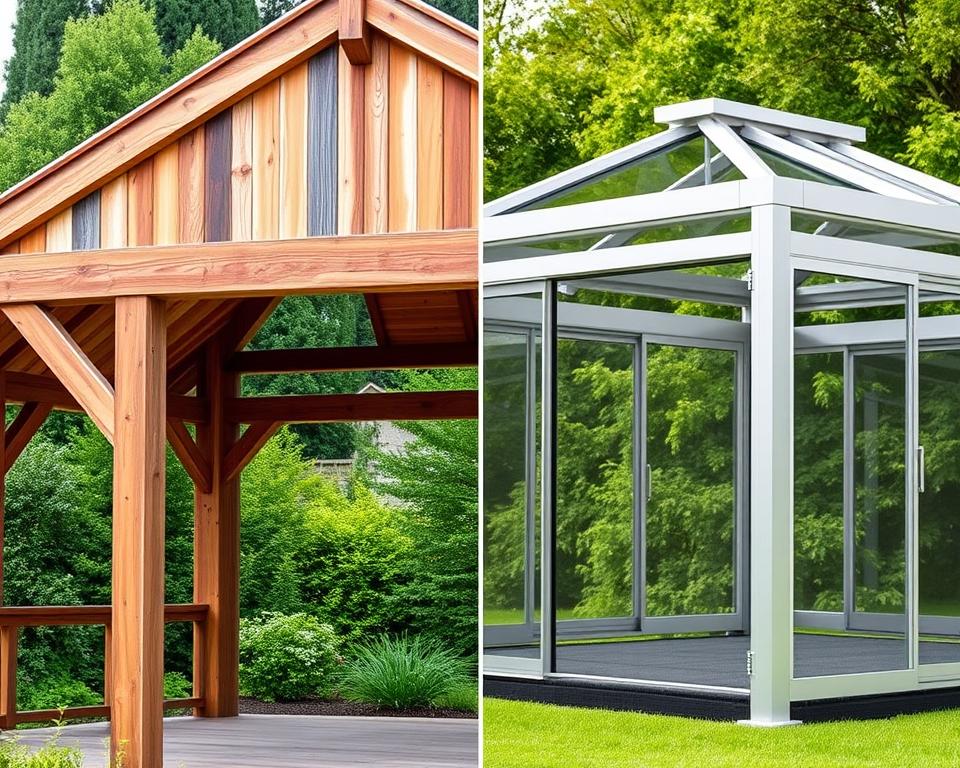
Timber delivers a warm, traditional look. Treated softwood is affordable but needs regular staining, sealing and inspections to avoid rot. Oak or other hardwoods cost more up front and demand less frequent repair when installed correctly.
Aluminium is light, corrosion-resistant and low maintenance. It suits modern schemes and resists UK weather with minimal care. The trade-off can be a higher initial price and a less classic appearance than wood.
Composite combines wooden aesthetics with plastic-like durability. Composite gazebo benefits include reduced painting and lower long-term upkeep. The initial investment tends to be higher, and traditional joinery choices are more limited.
Material choice alters the lifetime cost. A softwood frame may be cheaper at purchase but needs staining and occasional repairs, so annual running costs rise. Aluminium or composite may cost more up front yet save money through reduced maintenance over the years.
One useful metric is cost per year: add upfront price, expected maintenance and repair costs, then divide by estimated lifespan. That method clarifies whether a timber vs aluminium gazebo or a composite option is the better financial choice for your garden.
Typical lifespans vary widely. Small fabric gazebos often last 1–5 years depending on storage and weather exposure. Softwood structures can survive 5–15 years with regular care. Hardwood and well-made aluminium gazebos commonly reach 15–30+ years when properly maintained.
Warranties matter when assessing risk and value. Gazebo warranties differ by material and maker. Polycarbonate roof sheets may have 5–10 year guarantees. Aluminium frames frequently carry 10+ year warranties. Workmanship warranties for bespoke builds will vary by supplier, so ask for written terms before purchase.
The table below summarises key contrasts to aid quick comparison.
| Material | Appearance | Maintenance | Expected lifespan (years) | Typical warranties |
|---|---|---|---|---|
| Softwood timber | Traditional, warm | Regular staining, inspections | 5–15 | Variable; often limited for treated timber |
| Hardwood (oak) | Classic, premium | Occasional oiling, minor repairs | 15–30+ | Depends on supplier; some workmanship guarantees |
| Aluminium | Modern, sleek | Low; occasional cleaning | 15–30+ | Frames often 10+ years; roof components may vary |
| Composite | Wood-like, low fade | Very low; no painting | 15–30 | Manufacturer warranties vary; check for UV and structural cover |
Keep in mind that local climate, installation quality and ongoing care influence outcomes. A well-sited aluminium gazebo with solid foundations can outlast a poorly built hardwood frame, regardless of the material’s theoretical lifespan.
Ask potential suppliers for specifics on gazebo warranties, expected maintenance schedules and realistic lifespan estimates for the exact model you plan to buy. That information helps compare options like timber vs aluminium gazebo or the composite gazebo benefits in clear financial terms.
Design flexibility and customisation options
Customising a garden structure changes how it feels and how it works. Choosing between building and buying comes down to control over layout, materials and finish. A thoughtful plan keeps the project within budget while getting the most value from bespoke choices like glazing or integrated seating.

Custom build possibilities
Building gives you freedom to set size, shape and roof style. Options include octagonal, hexagonal and rectangular footprints, solid or lantern roofs, and fixed or sliding glass panels. You can add decking ties, built-in benches, planters and concealed wiring for lights and speakers. Choosing reclaimed timber or local hardwood reduces material cost and adds character.
Off-the-shelf limits
Ready-made kits suit standard plots and simple tastes. They come in fixed sizes, common colours and a limited range of roof forms. Many kits do not include bespoke glazing, bespoke joinery or integrated heating, and modifying them can void a warranty. Kits work best when the garden is regular and the aim is a quick, lower-risk install.
Costs of bespoke extras
Custom features change the budget significantly. Electrics typically add £200–£800. Glass walls range from about £500 to £3,000 or more depending on specification. Premium cladding or oak joinery can add several hundred to several thousand pounds. Prioritise structural integrity, weather protection and longevity before decorative extras when assessing gazebo customisation cost.
How to decide which features to fund
Start with a list: must-haves, nice-to-haves and luxury items. Must-haves are structural strength, drainage and durable roofing. Nice-to-haves include integrated seating and basic lighting. Luxury items cover bespoke glazing, heating and high-grade hardwood finishes. That order helps manage bespoke gazebo features within a clear budget.
| Feature | Typical DIY range (£) | Typical kit/retail add-on (£) | Impact on long-term value |
|---|---|---|---|
| Basic electrics (lighting, sockets) | 200–800 | 250–900 | Moderate; improves usability |
| Glass walls / sliding panels | 500–3,000+ | 800–4,000+ | High; adds weather protection and season use |
| Built-in seating / planters | 100–1,200 | 150–1,500 | Moderate; practical value |
| Premium hardwood cladding / joinery | 500–5,000+ | 800–6,000+ | High; boosts longevity and appearance |
| Custom roof shapes / lanterns | 300–2,500 | 400–3,000 | Medium; improves style and light |
For buyers in the UK, seeking a custom gazebo design UK means balancing desired features against real costs. If a homeowner needs unique proportions or integration with irregular landscaping, a custom build is often the best route. If speed and simplicity matter most, an off-the-shelf unit will be quicker and cheaper to install.
Keep the phrase gazebo customisation cost in mind when planning. Get multiple quotes for specialist work like structural glazing or electrics. Comparing supplier estimates reveals where savings are possible and where spending delivers lasting benefit.
Where to buy gazebos and where to source materials
Finding the right place to buy a gazebo UK requires a mix of research and on-the-ground checks. Major high-street and online names carry a wide range of kits and mid-range options, while specialist makers offer bespoke solutions for more complex builds.
Check well-known retailers such as B&Q, Wickes, Homebase, Dunelm, Wayfair and Argos for stock availability and seasonal deals. These outlets appear across the market and make comparing prices simple. For tailored designs, search listings on Rated People, Checkatrade and Trustpilot to find local joiners and garden-room specialists.
Local timber yards and builders’ merchants are useful when sourcing materials. Companies like Travis Perkins and Jewson supply treated softwood, hardwood and fixings. If you prefer eco-friendly options, look for FSC-certified timber suppliers or reclaimed-wood merchants who can supply sustainable timbers and recycled composite components.
Gazebo materials suppliers vary from large national firms to small independent merchants. Speak to staff about treatment, warranty terms and cutting services. Local yards often offer bespoke cutting and can advise on suitable preservative treatments for outdoor use.
Online marketplaces provide a route to bargains and rapid comparison. eBay, Facebook Marketplace and Gumtree commonly list garden structures and accessories. Exercise care with condition and delivery; always view a second-hand gazebo UK in person where practical and check fixings and fabric for wear.
Seasonal discounts can reduce costs significantly. Late summer and early autumn often bring sales on garden buildings. Black Friday and New Year promotions at major stores sometimes include gazebo ranges. When buying online, verify delivery fees, return policies and warranty coverage before committing to purchase.
For tool hire and occasional heavy plant requirements, HSS Hire and local hire shops offer short-term options to avoid full purchase costs. That approach suits buyers who plan to assemble a kit themselves after they buy gazebo UK materials from local suppliers or national chains.
Decision framework: when to build vs when to buy
Choosing between a DIY project and a purchased gazebo calls for a clear, structured approach. Use this short outline to weigh costs, skills and time against long-term needs. The questions below form a practical gazebo decision checklist that helps you avoid surprises and make a defensible choice.
Checklist: assess your budget, skills and timeline
- Budget: set a firm maximum that covers materials, labour, permits and routine maintenance.
- Skills: score your carpentry, roofing and groundwork ability; mark tasks needing professional help.
- Timeline: pick a completion date, add buffer for UK weather delays and supplier lead times.
- Space and design: note exact footprint, ground type and access for deliveries or installation.
- Long-term use: decide if the structure is for occasional shading or a year-round garden room.
Scenarios favouring building versus buying
- Build when you have decent DIY skills, time, tools and a limited budget but want a custom look.
- Buy prefab or bespoke when you need speed, warranty-backed finish and professional installation.
- Hybrid option: purchase a robust frame and complete finishing touches yourself to save time while customising appearance.
How to make a cost-informed final decision
- Tally every cost: materials, delivery, installer quotes, permits and expected maintenance.
- Value your time: convert DIY hours into a monetary figure and add to the build cost.
- Calculate cost per year and cost per square metre to compare options fairly.
- Gather multiple quotes for both purchased gazebos and professional build services.
- Use a simple decision matrix weighting cost, time, durability, customisation and maintenance to score each option.
Keep the question when to buy gazebo UK in mind if you live in Britain. Seasonal sales, delivery windows and local installer availability often sway the balance toward buying. Use the gazebo decision checklist above paired with real quotes to decide whether should I build or buy gazebo fits your priorities.
Conclusion
Deciding whether is it cheaper to build a gazebo or buy one? depends on priorities. A basic DIY build using softwood and simple fittings often has the lowest upfront price. However, when you add tool hire, time and the likely need for repairs, that initial saving can shrink fast.
For small, temporary gazebos, buying a low-cost prefabricated unit is usually the most economical and time-efficient choice. For a long-term, high-quality garden structure, investing in durable materials or a bespoke purchased solution can lower the gazebo cost conclusion UK over ten or fifteen years, thanks to reduced maintenance and longer warranties.
Always calculate total cost of ownership: upfront cost plus installation, maintenance and insurance divided by expected lifespan. Factor in time, skill and desire for customisation to complete your build vs buy summary. Use the decision checklist, gather material lists and obtain quotes to compare cost-per-year figures and pick the option that best fits your budget and garden needs.
FAQ
Is it cheaper to build a gazebo or buy one?
It depends. A basic prefabricated gazebo kit can cost from around £150–£800, while mid-range retail models typically sit between £800–£3,000. A DIY build can be cheaper on raw materials (often £200–£2,500) but labour, tool hire, foundations and your time can push the total higher. For long-term value, factor in maintenance, lifespan and warranties: a well-made aluminium or hardwood structure bought or professionally built may cost more upfront but be cheaper per year over 15–30+ years.
What are the main cost variables I should consider?
Key variables include size and complexity, material (softwood, hardwood, aluminium, composite), foundation and groundworks, delivery and installation, additional features (glazing, electrics, heating), local labour rates and any planning or building-regulation requirements. Hidden costs such as maintenance, warranties, insurance and potential repair after storm damage also affect total ownership cost.
How do I calculate a fair cost comparison between buying and building?
List all items for both options: materials, delivery, tool hire or purchase, labour, permits and expected maintenance. Assign realistic UK price estimates, add VAT where applicable, and divide the total by an expected lifespan (for example 10–20 years) to get cost per year. Also calculate cost per square metre. Obtain at least three product quotes and two labour quotes to validate estimates.
What are typical price ranges for prefabricated gazebos in the UK?
Small pop-up or fabric gazebos often cost £50–£300. Mid-range metal or wooden kit gazebos are typically £300–£1,200 from retailers like B&Q, Wickes, Homebase and Wayfair. Higher-end framed gazebos with integrated panels or aluminium frames generally cost £1,200–£3,000 from specialist suppliers.
How much do bespoke purchased gazebos cost?
Bespoke timber gazebos built by carpenters or specialist suppliers commonly range from £3,000–£10,000 depending on size and hardwood choice. Engineered aluminium or steel bespoke units with glass or specialist foundations often start at £5,000 and rise from there. Custom work can include design fees, site surveys and structural calculations.
What delivery, installation and warranty costs should I expect?
Delivery for small items may be free or £0–£50; pallet or large-item delivery typically costs £50–£200. Professional installation can add £150–£1,000+ depending on complexity. Retail kits often include 1–5 year manufacturer warranties; specialist or aluminium frames may carry longer guarantees. Remember to include 20% VAT where applicable.
How much do materials cost if I build a gazebo myself?
Material estimates vary by type. Softwood frames for a modest 3m x 3m gazebo might cost £150–£600. Hardwood (oak, iroko) can cost £800–£3,000+. Aluminium frames and components typically range £500–£2,000. Composite materials cost £600–£2,500. Roofing materials add £30–£500 depending on choice; foundations £50–£600.
What are tool hire and equipment costs for a DIY build?
Hire rates for major power tools from HSS Hire or local hire shops are typically £10–£40 per day. Buying a moderate-quality tool kit may cost £200–£800. Allow £50–£300 for safety kit, consumables and fixings. Skip hire for waste removal can be £150–£350.
When should I hire tradespeople and what will they charge?
Hire carpenters or joiners for tasks beyond your skillset, such as complex joinery or structural elements. UK carpenters commonly charge £150–£300 per day (£25–£45/hr). Groundworkers for footings cost around £120–£250 per day. Electricians typically charge £40–£70 per hour for wiring or lighting installations.
Do I need planning permission or building regulations approval?
Many garden structures fall under permitted development, but limits apply. Structures over 2.5m high, within 2m of a boundary, or used as separate living accommodation may need permission. Specialist foundations or services can trigger building-regulation requirements. Check GOV.UK guidance and your local planning authority or the Planning Portal and factor potential professional drawing or survey costs into your budget.
What are the ongoing maintenance costs for different materials?
Timber requires regular staining or treatment every 2–5 years; expect £50–£300 per treatment for a modest gazebo. Steel may need occasional anti-corrosion treatment. Aluminium and composite are low maintenance but require cleaning. Roof repairs or replacement (canvas, shingles, polycarbonate) over time can cost £100–£700.
How do insurance and depreciation affect total cost?
You may need to declare a gazebo to your buildings or contents insurer; premiums may rise slightly. Low-cost fabric gazebos depreciate quickly, whereas well-built timber or aluminium structures retain value and may enhance resale appeal. Factor potential repair costs after storm damage into long-term budgeting.
How long does a DIY gazebo project typically take?
Simple kit assembly can take a weekend (6–16 hours). A self-built timber gazebo with foundations often requires several weekends to a few weeks (typically 30–100+ hours). Complex bespoke builds may take months part-time. Weather and site access in the UK commonly extend project times.
How much time do I save by buying pre-built or hiring installers?
Professional installation or turnkey purchase typically completes in 1–3 days. Pre-built modular units shorten on-site time but require coordination for delivery and installer availability. Hiring tradespeople increases cost but reduces personal time and risk of build mistakes.
Which materials offer the best balance of cost and longevity?
Softwood is cheapest upfront but needs more maintenance. Hardwood (oak) and quality aluminium cost more initially but last significantly longer and usually offer lower lifetime cost per year. Composite materials sit between these options—higher upfront cost, low maintenance and respectable longevity.
What typical lifespans and warranties should I expect?
Fabric gazebos: 1–5 years. Softwood structures: 5–15 years with maintenance. Hardwood or well-made aluminium: 15–30+ years. Warranties vary—polycarbonate roofs often 5–10 years; aluminium frames can have 10+ year guarantees. Check manufacturer and workmanship warranties for bespoke builds.
Can I customise a bought gazebo to meet specific needs?
Off-the-shelf kits have limited size and finish options and modifications can void warranties. A practical hybrid is buying a quality frame and adding bespoke finishes yourself—staining, seating, integrated planting or lighting—to control cost while ensuring structural integrity and warranty protection.
Where should I buy gazebos or source materials in the UK?
Major retailers include B&Q, Wickes, Homebase, Dunelm, Wayfair and Argos for kits and mid-range options. For bespoke work, contact local joiners or specialist suppliers found via Checkatrade, Rated People or Trustpilot. For materials and tool hire use Travis Perkins, Jewson and HSS Hire; consider FSC-certified timber yards or reclaimed timber merchants for sustainable options.
Are second-hand gazebos a good option?
Second-hand purchases from eBay, Facebook Marketplace or Gumtree can offer savings but require careful inspection for rot, rust and structural damage. Check delivery logistics, condition and whether any original warranty remains. Seasonal sales (late summer/autumn, Black Friday) can be a safer way to secure discounts from reputable retailers.
How do I decide whether to build or buy?
Use a checklist: set a total budget including materials, labour, permits and maintenance; honestly assess skills and available time; define desired timeline and long-term use. If you have good DIY skills, time and a limited budget, building can be cost-effective. If you prioritise speed, warranty-backed quality and minimal personal time, buying or hiring professionals is preferable. Compute cost-per-year and cost-per-square-metre and obtain multiple quotes to reach a balanced, cost-informed decision.