Chic Terrace Covering Ideas for Stylish Homes
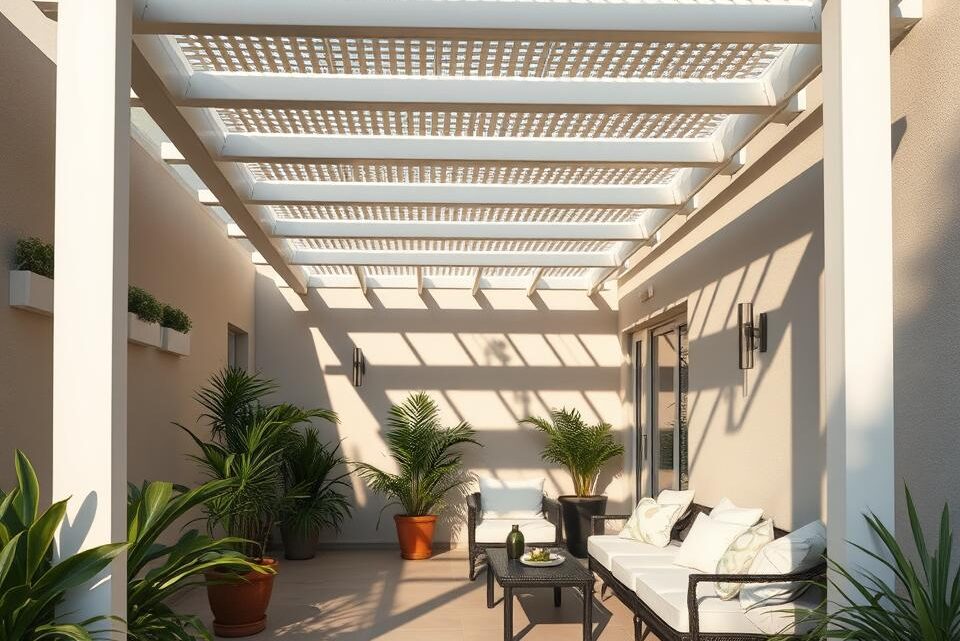
Discover practical inspiration for ideas for covering a terrace that lift both form and function. This short introduction sets the tone for a detailed guide aimed at homeowners across the United Kingdom, including owners of terraces, city flats with outdoor spaces, suburban homes and renovation professionals.
The purpose is clear: to present stylish terrace coverings and terrace roof ideas that balance aesthetics, weather protection and usability. We will compare systems such as retractable awnings, pergolas, glazed roofs, canopies and green roofs, and offer specification pointers on materials, thermal performance and maintenance.
Practical considerations—budget, planning and installation—will be explained, along with guidance on when to call in professionals. The article draws on industry best practice from manufacturers such as Warema and Markilux for retractable systems, UK government Planning Portal advice on permitted development and structural requirements, and design insight from RIBA Journal and The Guardian’s home & garden features.
This guide uses British English throughout and references UK regulatory and climate considerations to make the terrace covering ideas genuinely applicable to local projects.
Inhaltsverzeichnis
Key Takeaways
- Explore a range of terrace covering ideas from flexible awnings to fixed glazed roofs.
- Match stylish terrace coverings to architectural style and local climate.
- Consider materials, thermal performance and maintenance when specifying a design.
- Check Planning Portal guidance and building regulations early in the process.
- Refer to manufacturers such as Warema and Markilux for technical best practice.
Why invest in terrace coverings for stylish homes
Covering a terrace transforms a marginal outdoor area into a usable living space. Thoughtful coverings deliver terrace coverings benefits that buyers and homeowners notice straight away. Reports from Rightmove and Zoopla show a clear preference for outdoor entertaining areas when people search for family homes in the UK.
Benefits for property value and curb appeal
A well designed outdoor room can immediately add value to a property and help to add value terrace in listings. High quality materials such as marine‑grade timber or powder‑coated aluminium create a cohesive look that lifts curb appeal. Case studies from English Heritage research highlight how sheltered spaces increase perceived square footage and marketability.
Comfort and year‑round usability
Terrace coverings extend the season for outdoor living UK by providing shade, shelter and windbreak. Retractable awnings offer summer shade while glazed sides and insulated roofs maintain warmth in cooler months. Integrating heating, simple glazing and insulation improves terrace usability so the space feels like an extra room.
Protection from weather and UV rays
Good coverings protect furniture and decking from UV fading and water damage, lowering long‑term maintenance. Choose fabrics and glazing with certified UPF and safety ratings to guarantee UV protection terrace. Technical datasheets from brands such as Serge Ferrari and Pilkington help when comparing fabric membranes and laminated glass for durability and safety.
ideas for covering a terrace
Deciding how to shelter an outdoor area starts with materials and design. This short guide sets out common options, how to match them to your home and what budgets to expect.
Overview of materials and design approaches
Common choices include fabric awnings and sails, aluminium pergolas and louvred roofs, timber pergolas, glass or glazed roofs, living roofs and insulated roofing. Fabric sails offer a low‑cost, quick solution that is simple to install. Aluminium systems are durable and low maintenance but cost more up front. Timber pergolas give warmth and character; they need regular treatment to stay looking their best. Glazed roofs flood a space with light while sheltering it from rain. Living roofs add biodiversity and insulation but demand waterproofing and upkeep.
Each option has different compatibility with masonry walls, timber beams or freestanding posts. Installation on brickwork often needs heavy fixings. Timber structures can be post‑mounted into the ground or fixed to joists. Lightweight sails suit brick or timber anchors with the correct fittings.
How to match coverings with architectural style
For contemporary houses, choose clean aluminium frames, minimalist sail shades or frameless glazing to keep lines simple. Mid‑century modern schemes work well with slatted louvred pergolas and timber paired with dark metal accents.
Period or cottage properties benefit from painted timber pergolas, climbing plants and textured textiles. Traditional tiled canopies can be used where conservation rules apply. Always consider conservation area guidance and listed‑building advice before altering historic façades.
Budget ranges and cost considerations
Use the following indicative UK ranges to plan costs: DIY sail shade £150–£1,000; mid‑range retractable awning £1,000–£4,000; timber pergola (installed) £2,000–£8,000; aluminium louvred roof, motorised £5,000–£20,000+; glazed roof structure £4,000–£15,000+; green roof £3,000–£12,000+ depending on intensity.
Running costs include maintenance, replacement fabrics, glazing cleaning, motor servicing and any heating or electrics. Expect to set aside a 10–15% contingency for unforeseen structural work.
Product pricing guidance from UK suppliers such as Sunrise Awnings and Luxaflex, cost guides from Which? and Homebuilding & Renovating, and advice from RIBA and local councils help form a practical terrace budget guide when planning works.
Retractable awnings and blinds for flexible shade
Retractable systems give terraces instant shelter without heavy build. Homeowners across the UK favour a choice that tucks away when not needed. This section outlines common types, the materials that last and how motorised awnings join smart shading setups.
Types of systems
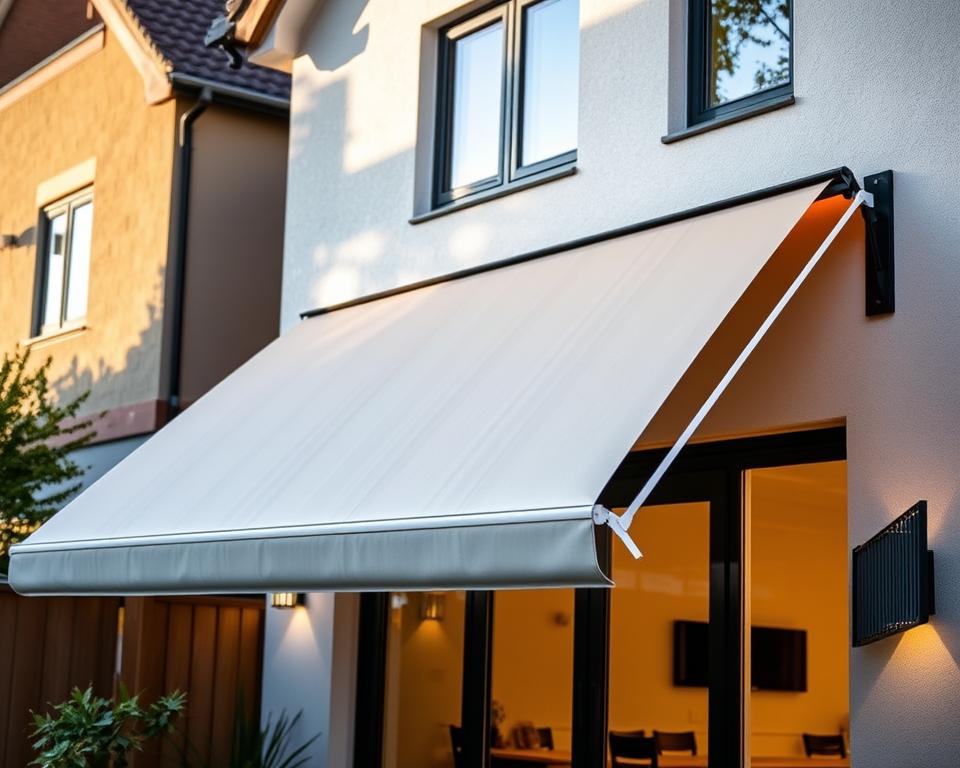
Cassette awnings enclose the fabric and mechanism for neat protection. Semi‑cassette models offer partial cover at lower cost. Exposed roller awnings are simple and lightweight for modest terraces. For side protection, vertical screen systems and Zip‑screens give wind defence and privacy. Pergola awnings stretch fabric across rafters to add shade while keeping a structural frame.
Materials and durability
Top fabrics include solution‑dyed acrylic and PVC‑coated polyester. Brands such as Sunbrella and Dickson have proven outdoor performance and clear warranty terms. These textiles resist UV, shed water and limit mildew when cared for correctly. Frames are typically powder‑coated aluminium to prevent corrosion. In coastal locations choose stainless steel fixings to avoid salt damage.
Maintenance essentials
Outdoor blinds maintenance is simple when done regularly. Wash fabric with mild detergent and cold water, rinse thoroughly and let dry before rolling away. Lubricate moving parts and inspect fixings once a year. Small checks prevent costly repairs and extend service life.
Motorised options
Electric motors from Somfy and Nice power many modern systems. They can be wired or battery‑powered depending on access. Motorised awnings add convenience for larger spans and frequent use. Pair motors with wind or solar sensors to retract automatically in strong gusts.
Smart home integration
Smart shading links retractable awnings with home automation platforms. Somfy RTS and Connexoon systems provide scheduling and remote control. Gateways enable voice commands via Alexa, Google Home or Apple HomeKit. Integration improves usability and helps protect fabric in changing weather.
Safety and installation
Electrical work must be carried out by a Part P registered electrician. Install isolators and weatherproof connections for outdoor use. Seek advice from reputable manufacturers such as Markilux and Somfy for technical briefs and warranty details.
- Choose the right cassette type for exposure and aesthetics
- Select durable fabric brands for longer warranties
- Keep to a simple maintenance routine to protect investment
- Consider motorised awnings for ease and smart shading control
Pergolas and louvred roofs for contemporary appeal
Modern terrace coverings blend form and function to create usable outdoor rooms. Design choices range from classic timber frames to high‑tech louvred systems. Each option suits different budgets, maintenance needs and aesthetic aims across the pergola ideas UK spectrum.
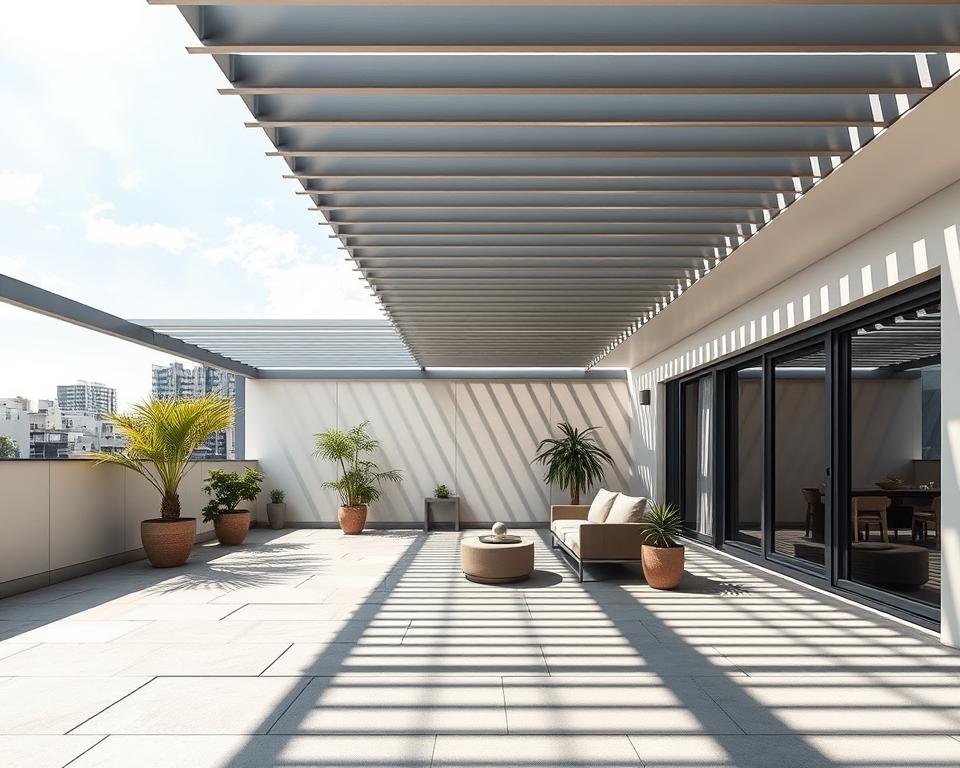
Fixed pergola designs and materials
Traditional timber pergola styles use oak, cedar or pressure‑treated softwood for warmth and texture. Timber pergola frames offer easy detailing such as slatted roofs, integrated beams and built‑in seating. Aluminium pergolas provide a low‑maintenance alternative with powder‑coated finishes that resist corrosion in coastal locations.
Structural considerations matter. Correct post sizing, suitable foundations or baseplates and stainless steel fixings meet guidance from British Standards and Eurocode practice. Good detailing prevents water trapping and extends service life.
Adjustable louvred roof for ventilation and light control
Bioclimatic adjustable louvred roof systems, offered by brands such as Renson, use rotating aluminium slats to control shade and airflow. Slats close to shed rain and open to encourage ventilation, which makes a louvred roof terrace comfortable in changeable British weather.
Integrated gutters and discreet drainage channels route water away from the building. Motorised control, wind sensors and weatherproof automation protect the roof and improve usability when conditions change.
Adding climbing plants and soft furnishings
Outdoor climbing plants soften hard lines and add scent and seasonal colour. Popular choices for UK gardens include Wisteria, Jasminum polyanthum and honeysuckle. Choose species to match exposure, root vigour and maintenance tolerance so vines do not overload timber posts.
Use stainless training wires and allow clearance between stems and structural timber. Complement planting with solution‑dyed acrylic cushions, weatherproof rugs and layered lighting for a cosy terrace that works all year.
| Feature | Timber pergola | Aluminium pergola | Adjustable louvred roof |
|---|---|---|---|
| Appearance | Warm, natural grain | Sleek, modern lines | Contemporary, technical |
| Maintenance | Periodic staining or treatment | Low; occasional cleaning | Moderate; mechanical checks |
| Durability | High with correct species and treatment | Very high; corrosion resistant | High; aluminium slats and motors |
| Weather control | Fixed shade; partial protection | Fixed shade; can include polycarbonate | Variable shade and rain shedding |
| Compatibility with plants | Excellent for climbers | Good; attach training wires | Good; allow maintenance access |
| Typical uses | Traditional garden rooms | Modern terraces, low maintenance gardens | All‑weather louvred roof terrace solutions |
Glass and glazed roofs for light‑filled terraces
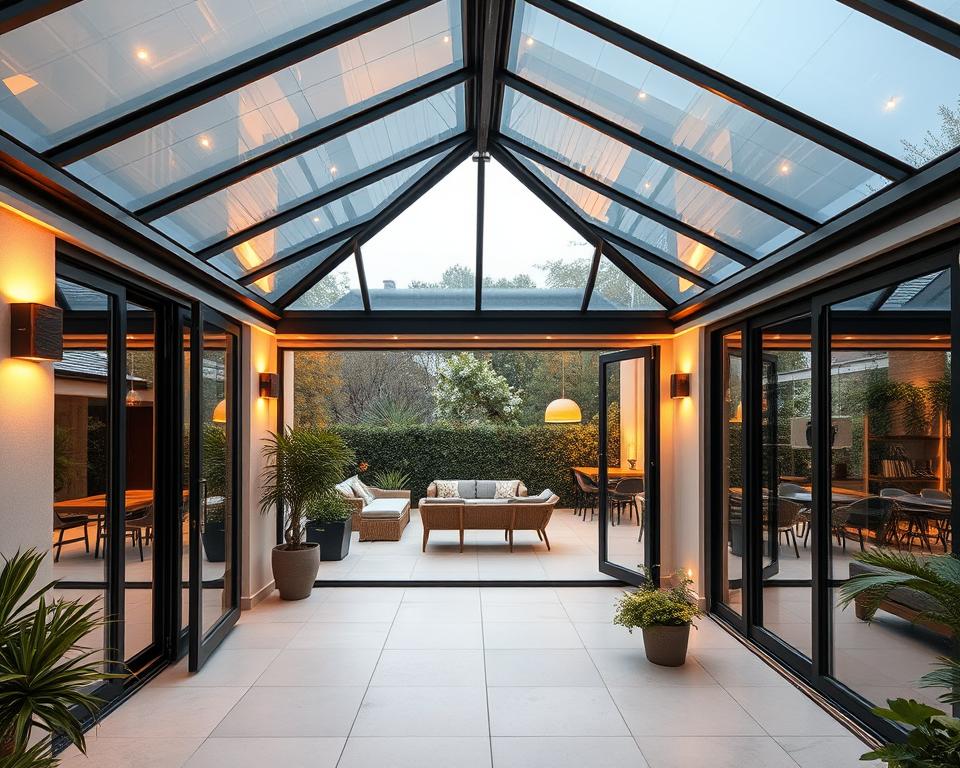
A glazed terrace roof brings natural light and a sense of space to outdoor living. Homeowners seeking conservatory roof alternatives often choose glass systems for their clean lines and year‑round usability. Good design balances daylight, solar control and thermal performance.
Framing affects appearance and performance. Aluminium frames give slim sightlines and long life with powder‑coated finishes suitable for modern homes. Timber frames lend warmth and can be finished to match joinery, though they need regular treatment for exposed locations. Steel frames let you span wide areas with slender profiles; galvanising and protective paints prevent corrosion.
Choosing the right glazing is crucial for safety and comfort. Toughened glass resists impact and is common in garden roofs. Laminated units combine safety and acoustic benefits, keeping fragments in place if damaged. A safety glass terrace benefits from laminated layers where falling or collision risk is higher.
Thermal glazing UK options include double and triple units with low‑E coatings to reduce heat loss. Thermally broken aluminium frames and warm edge spacer bars cut cold bridging. Insulated glazing bars add warmth at the frame, improving overall U‑values for compliance with Part L guidance.
Condensation control relies on ventilation and design. Trickle vents, passive airflow paths or mechanical extract reduce moisture build‑up. Heated glass and internal blinds help manage glare and surface condensation during cold spells.
Specifying glazing should reference British standards and industry guidance. Pilkington and Saint‑Gobain technical notes are useful for product selection. Building Regulations and BFRC ratings help confirm thermal and safety claims when comparing conservatory roof alternatives.
| Aspect | Aluminium | Timber | Steel |
|---|---|---|---|
| Visual | Slim sightlines, contemporary look | Warm, traditional aesthetic | Industrial, minimal profiles |
| Durability | High with powder finish | Moderate; needs maintenance | Very high if galvanised |
| Thermal performance | Best with thermal break | Good natural insulation | Requires thermal solutions |
| Best glazing pairing | Double/triple low‑E units | Laminated or double glazing | Triple glazing for large spans |
| Typical uses | Contemporary glazed terrace roof | Period properties, warmer feel | Large spans, architectural features |
Canopies and sail shades for modern minimalism
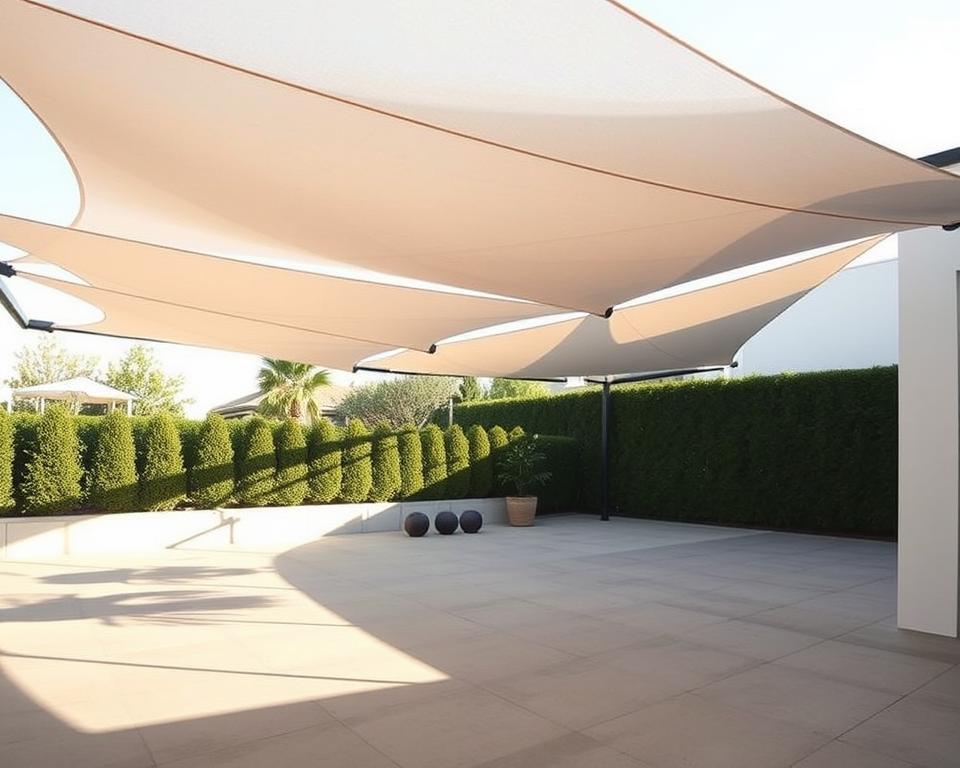
Light, crisp canopies and sail shades bring a pared-back look to contemporary terraces. They offer shelter without heavy structure and work well over a canopy terrace where clean lines matter. Choose fabrics and layouts that match the house palette and the scale of the outdoor space.
Fabric choices and UV protection ratings
Typical options include HDPE shadecloth, PVC‑coated polyester and solution‑dyed acrylics. Check UV fabric ratings and UPF figures on technical datasheets from reputable brands such as Serge Ferrari and TenCate. Many sunscreen fabrics block 90% or more of harmful rays when independently tested.
Fixing points, tensioning and wind resistance
Correct installation starts with suitable anchors. For masonry use resin anchors; for freestanding posts consider pad foundations or extended posts. Select stainless steel turnbuckles, ratchet straps or marine‑grade wire for tensioning.
Pre‑tensioning reduces flutter and extends the life of the sail. Assess wind ratings against BS EN 1991 guidance and remove or lower sails if conditions exceed the manufacturer’s limit. Consult structural anchor manufacturers for load data before fixing.
Creative layouts and layering sails
Layered sails add depth and control of shade. Combine triangular and rectangular panels at different heights to create sheltered zones and sculptural interest. Use overlapping sails to improve coverage and to form circulation paths around seating areas.
Contrast textures and colours to echo external finishes. For complex compositions consider a mix of permanent and seasonal sails so the canopy terrace adapts to summer sun and cooler months.
Green coverings and living roofs for eco‑chic spaces
A living roof terrace brings a soft, natural layer to urban homes. This approach blends design with function, offering an eco terrace covering that looks elegant and works hard for insulation and stormwater management.

The choice between an extensive green roof and an intensive green roof hinges on weight, planting and upkeep. Extensive green roofs use a shallow substrate, roughly 50–150mm, and support sedum, mosses and drought‑tolerant plants. They suit lightweight retrofit projects and reduce maintenance.
Intensive green roof systems need deeper substrate, often 150–600mm or more. These support shrubs and small trees, creating true roof gardens. They demand structural support and ongoing gardening, but deliver greater amenity and habitat value.
Insulation gains from biodiverse roofs reduce heat loss in winter and limit heat gain in summer. That improves U‑values and cuts energy use. Green roof UK projects frequently cite lower peak temperatures and quieter interiors as clear benefits.
Green coverings help wildlife. Pollinators, birds and invertebrates find food and shelter on biodiverse roofs. Roofs that form part of a network can act as stepping stones for urban wildlife and add to Sustainable Drainage Systems by retaining rainwater.
Robust waterproofing is vital. Use root‑resistant membranes such as EPDM, protected bituminous felts or single‑ply systems, combined with reliable drainage layers. Technical manuals from Bauder and Optigreen guide the correct build‑up for long life.
Maintenance remains straightforward for many schemes. Regular tasks include seasonal weeding, checking drainage outlets and occasional replacement planting. Intensive green roof beds will need more frequent care, fertilisation and irrigation.
Carry out a structural assessment before any installation. Saturated loads vary: typical extensive systems sit around 60–150 kg/m² while intensive roofs can be much heavier. Consulting the Green Roof Organisation guidance and local SuDS policy helps with compliance and design choices.
For homeowners seeking an eco terrace covering that marries style with function, a well specified living roof terrace or green roof UK installation gives long‑term benefits for comfort, biodiversity and resilience in city settings.
Outdoor rooms with insulated roofing for year‑round use
An insulated terrace roof transforms a summer shelter into a usable outdoor room UK residents can enjoy in all seasons. Thoughtful insulation choices, careful detailing at junctions and the right services make the space comfortable, efficient and compliant with regulations.
Insulation types and thermal bridging solutions
Select insulation based on thickness, U‑value target and vapour control. PIR (polyisocyanurate) offers high performance in slim profiles. Mineral wool gives acoustic benefits and fire performance. Use materials that meet Part L expectations when the room is heated.
Thermal bridging at posts, joists and fixings undermines performance. Treat connections with thermal breaks, insulated pads and thermally broken brackets. Detail around glazing and doors to avoid cold spots that cause condensation.
Integrating heating, lighting and glazing
Heating options should suit the enclosure level. Electric infrared heaters work well for semi‑open areas. Underfloor heating and mini‑split heat pumps provide steady warmth when the outdoor room UK becomes a true living space.
Layer lighting for atmosphere and function. Combine ambient LED strips, task lights over dining zones and IP44+ rated fittings for safety. Acoustic and insulated glazing units reduce heat loss and lower street noise. Consider sliding or folding doors to blend internal and external living.
Planning permission and building regulations in the UK
Planning permission terrace works may be required for major changes such as increased roof height, altered roof form or projects in conservation areas and listed buildings. Small, reversible canopies often escape formal consent, but check with the local planning authority.
Building regs outdoor space cover structure, thermal performance (Part L), ventilation (Part F), drainage and electrics (Part P). Conservatory exemptions stop applying once you install permanent heating or substantial insulation to the insulated terrace roof.
Seek pre‑application advice from the local planning department and engage building control or an approved inspector early. Manufacturer guides from Heatrae Sadia for heaters and lighting specialists such as Philips Lighting help align product choice with installer best practice and trade guidance from the Federation of Master Builders and NHBC.
Stylish materials and finishes for cohesive design
Choosing the right finishes shapes the character of a terrace. Start by weighing durability, maintenance and visual warmth. Test samples outside to see how light and weather change colour through the day.
The timber vs composite debate centres on feel and upkeep. Cedar, oak and treated softwoods give authentic warmth and age attractively. They need periodic staining or oiling and careful detailing to prevent rot. Composite boards from brands such as Trex and Kebony cut maintenance and offer long warranties. Composites often mimic grain while delivering recycled content and predictable lifecycle costs.
Consider certification and embodied carbon when choosing cladding options terrace. Look for FSC-certified timber or composites with clear recycled content figures. That protects resale value and meets buyer expectations in many UK neighbourhoods.
Metal finishes offer a contrasting modern edge. Aluminium and steel frames pair well with timber or composite facings. Specify powder coated aluminium where durability matters; powder coating resists UV and corrosion and comes in a wide palette. For coastal sites choose anodised aluminium or higher corrosion-class coatings to guard against salt air.
Small details make a big difference. Use stainless steel fixings and galvanised components to avoid staining and deterioration. Check technical datasheets from reputable suppliers such as AkzoNobel for guidance on suitable classes for coastal or industrial locations.
Outdoor colour palettes should balance tone and texture. Neutral ranges—charcoal, warm greys and muted greens—are popular for contemporary terraces. Contrast warm timber with cool metals to create visual balance. Introduce texture layering: smooth glazed panels next to rough-sawn timber, matte metals beside soft textiles.
Testing finishes in situ reduces risk. Obtain physical samples and observe them in morning, midday and evening light. Note how shadows and reflections alter perception before committing to large runs of cladding options terrace or powder coated aluminium frames.
| Material | Key benefit | Maintenance | Typical use |
|---|---|---|---|
| Cedar / Oak | Authentic warmth and natural grain | Annual oiling or staining; rot treatment as needed | Feature cladding, decking accents |
| Composite (Trex, Kebony) | Low maintenance; long warranties | Periodic cleaning; no staining required | Full cladding, terraces with high traffic |
| Powder coated aluminium | Wide colour choice; UV and corrosion resistance | Occasional wash; check coastal grade | Frames, pergola structures, screens |
| Stainless steel / galvanised fixings | Prevents staining and corrosion | Minimal; inspect for damage | Fasteners, brackets, structural joins |
Lighting, heating and accessories to complement coverings
Good coverings deserve matching fittings that extend use and lift style. Think of lighting, heating and terrace accessories as finishing touches that make a terrace feel like a proper room. Plan with practical needs in mind and add details that mark the space as intentional.
Layered outdoor lighting brings atmosphere and function together. Start with ambient sources such as integrated LED strips or tasteful string lights. Add task lighting for dining and food prep, for example a pendant above a table. Use accent uplighters to show planting or architectural features.
Fit dimmers and timers to control mood and running costs. Choose fittings rated for their exposed location, aiming for IP65 where wind and rain are a concern. Solar and low‑voltage LED options cut energy use and make installation simpler on older terraces.
Heating choices determine how long you can linger outside. Infrared heaters from brands like Heatscope or Bromic give immediate radiant warmth and suit al fresco dining. Check mounting height and clearances before fitting to meet safety guidance.
Firepits and chimineas create theatre and warmth but need careful siting. Observe local smoke nuisance rules and keep clear of combustible coverings and furniture. Some councils in the UK restrict open flames in built‑up areas.
Underfloor heating beneath a paved terrace is a discreet long‑term option. It requires a suitable sub‑base and waterproofing but provides consistent warmth year‑round and pairs well with insulated roofs and glazed coverings.
Choose weatherproof furniture that handles British conditions. Aluminium frames with quick‑dry foam, teak and UV‑stable synthetic rattan are robust choices. Look for textiles such as solution‑dyed acrylic and Sunbrella fabrics for cushions.
Keep maintenance straightforward. Use stainless hardware, clean surfaces regularly and store delicate cushions in a dry place during winter. Covers and simple storage chests are smart terrace accessories for protection and neatness.
Mix practical gear with thoughtful styling. A combination of layered outdoor lighting, suitable outdoor heaters UK and quality weatherproof furniture will make a covered terrace useful and inviting in all seasons.
Hiring professionals and DIY considerations
Deciding between a pro and a hands‑on approach starts with the scale and risk of the work. Small projects such as anchoring a sail shade or erecting a freestanding canopy suit an enthusiastic DIYer. Larger jobs that alter foundations, affect glazing or span wide openings call for professional input.
When to engage architects and structural engineers
Appoint an architect when the design must tie into the house fabric, needs bespoke joinery or requires planning permission. Use RIBA guidance to choose an appropriate designer and agree a clear brief. Bring a structural engineer where loads, long spans or foundations are involved. A structural engineer pergola will calculate wind and snow loads for timber or steel frames and size footings for green or glazed roofs.
Selecting reputable installers and warranties
Look for installers with recognised proof of competence. For glazing, choose FENSA or BSI‑Kitemarked teams. Membership of the Federation of Master Builders gives added reassurance. Ask for references, recent project photos and evidence of public liability and professional indemnity insurance.
Verify installer warranties and product cover before work starts. Manufacturer lists for Somfy motors and Markilux awnings often show approved fitters. A reputable awning fitter and clear installer warranties protect both workmanship and materials. If you need to hire terrace installer UK, request written guarantees and check the small print on exclusions.
DIY terrace covering tips, tools and safety guidance
Choose DIY projects that match your skills. Simple timber pergolas on concrete pads, freestanding canopies and correctly fixed sail shades are manageable. Prepare by reading manufacturer instructions and watching installation videos from trusted brands.
Essential tools include an impact drill, torque wrench and a spirit level. Use galvanised fixings and personal protective equipment such as safety goggles and gloves. Work at height only with a stable ladder and, where appropriate, a harness in line with HSE guidance.
Any electrical work must be undertaken by a Part P‑registered electrician. For significant structural changes contact building control. When in doubt, get a quote to hire terrace installer UK or consult a structural engineer pergola to confirm safety and compliance.
Conclusion
This ideas for covering a terrace conclusion brings together practical guidance to help UK homeowners choose terrace covering that fits both function and style. Begin by matching weather protection and year‑round usability with the look you want — timber for warmth, aluminium for a minimalist feel, or a green roof for a lush terrace makeover UK. Keep budget and maintenance in mind as you decide.
Key decision points include site conditions and wind exposure, the structural capacity of existing terraces, and any regulatory requirements. Seek professional advice from structural engineers or planning officers when loadings or building regulations are relevant. Also consider maintenance commitments for fabrics, glazing and planted roofs before you commit.
Take a phased approach: start with shading and quality furnishings, then upgrade to motorised awnings, louvred roofs or glazed solutions when budgets allow. For procurement, obtain multiple quotes, request product datasheets and warranties, and get pre‑application planning advice if in doubt. This measured route will ensure your terrace makeover UK is practical, durable and visually coherent.
FAQ
What practical options are there for covering a terrace to improve style and usability?
Homeowners can choose from retractable awnings and blinds, aluminium or timber pergolas, louvred roofs, glazed roofs, sail shades, and green or insulated roofs. Each option balances aesthetics, weather protection and maintenance differently. Retractable awnings and zip‑screens offer flexible shade; pergolas and louvred roofs provide a semi‑permanent architectural frame; glazed roofs deliver light and weatherproofing; sails and canopies give a minimalist look at lower cost; and green roofs add biodiversity and insulation. Consider site wind exposure, structural support, and desired year‑round use when selecting a system.
How do I choose between timber and aluminium for a pergola or framed roof?
Timber (oak, cedar, treated softwood) gives warmth and character but needs periodic treatment and careful detailing to avoid rot. Aluminium is low‑maintenance, powder‑coated for durability and suited to coastal locations when specified with appropriate corrosion class. Structural span, desired sightlines, conservation area constraints and maintenance willingness should guide the choice. Request samples and supplier datasheets (for example Kebony or Trespa for cladding alternatives) and specify stainless or galvanised fixings.
What are typical UK cost ranges for terrace coverings and ongoing running costs?
Indicative UK price bands vary by system: DIY sail shade £150–£1,000; mid‑range retractable awning £1,000–£4,000; timber pergola installed £2,000–£8,000; motorised aluminium louvred roof £5,000–£20,000+; glazed roof £4,000–£15,000+; green roof £3,000–£12,000+ depending on intensity. Running costs include fabric replacement, routine cleaning of glazing, motor servicing, winter protection and any heating or lighting energy. Budget 10–15% contingency for unforeseen structural works and get multiple quotes from reputable installers such as FENSA or Federation of Master Builders members.
Are retractable awnings and motorised systems reliable in the UK climate?
Yes, when correctly specified. Choose solution‑dyed acrylics or PVC‑coated polyester for fabrics and powder‑coated aluminium frames. Motors from Somfy or Nice with wind and sun sensors provide automatic retraction. In exposed coastal locations use stainless fixings and higher wind ratings. Regular maintenance—washing fabrics, lubricating moving parts and annual inspection of fixings—extends service life. Electrical work must comply with Part P and be done by a qualified electrician.
What planning permission or Building Regulations issues should I check before installing a covered terrace?
Small, reversible additions may fall under permitted development but works that change roof form, increase height, or affect a listed building or conservation area often need planning permission. If the roofed terrace becomes an insulated, heated living space it may trigger Building Regulations (Part L, F, P, etc.). Seek pre‑application advice from your local planning authority, consult the Planning Portal, and engage building control or an approved inspector for structural or thermal compliance.
How do glazed roofs perform thermally and what glazing should I specify?
For good thermal performance specify double or triple glazing with low‑E coatings, warm‑edge spacer bars and thermally broken frames to reduce heat loss. Toughened or laminated safety glass is essential for impact resistance and acoustic control. Condensation is managed with adequate ventilation—trickle vents or mechanical extract—and by reducing thermal bridges. Refer to Part L requirements and glazing standards (BS EN 1279) when designing an insulated roof.
Can I add heating and lighting to make an outdoor room usable year‑round?
Yes. Layered lighting (ambient, task, accent) using IP‑rated fittings and LED strips creates atmosphere. Heating options include electric infrared heaters, underfloor heating for paved terraces, and mini‑split heat pumps for enclosed spaces. Specify IP ratings, suitable mounting heights, and check local guidance for open fires or gas appliances. All electrical and gas installations should be carried out by qualified installers and conform to Part P and relevant safety standards.
What are the pros and cons of green roofs for terraces?
Extensive green roofs (sedum) are lightweight, low‑maintenance and support biodiversity and rainwater retention. Intensive roofs support shrubs and small trees but need greater structural loading capacity and ongoing maintenance. Both improve thermal regulation and SuDS performance. Waterproofing must be root‑resistant (EPDM or specialist membranes), with reliable drainage layers. Commission a structural assessment to confirm the roof can carry saturated loads and follow guidance from Bauder, Optigreen and the Green Roof Organisation.
How do I ensure sails and canopy fixes are safe and weather resistant?
Use appropriate anchors for the substrate—chemical/resin anchors for masonry, pad foundations for freestanding posts—and stainless steel fixings. Tensioning hardware such as turnbuckles or ratchets prevents flapping and extends life. Check fabric UPF and wind ratings, and conform to wind‑load guidance in BS EN 1991. In severe weather remove or lower sails if they’re not rated for gale conditions. Follow manufacturer datasheets from Serge Ferrari or TenCate for fabric performance.
When should I engage an architect, structural engineer or specialist installer?
Engage an architect or designer for projects that alter dwelling structure, affect listed buildings, or require bespoke detailing. A structural engineer is essential for long spans, glazed or green roofs, and foundation design. Use manufacturer‑approved installers for products that carry warranties (e.g., Markilux, Somfy). Verify trade body membership, insurance, references and warranties before appointment and obtain written specifications and schedules of works.
What maintenance should I plan for different terrace covering types?
Fabric awnings: wash periodically with mild detergent, check seams and zips, and store/remove in storms. Timber pergolas: treat and inspect for rot annually; check fixings. Aluminium and powder‑coated frames: wash and inspect seals. Glazed roofs: clean glass, check gaskets and drainage outlets. Green roofs: seasonal weeding, inspect outlets and membranes. Schedule motor servicing for powered systems and keep records of maintenance and warranties for future resale value.
How can I match a terrace covering with my home’s architectural style?
For contemporary homes choose slim aluminium frames, frameless glazing or minimalist sails in neutral palettes. Period and cottage properties suit painted timber pergolas, textured fabrics and climbing plants. Mid‑century modern benefits from slatted louvred roofs and warm timber accents. Test physical samples for colour and finish in situ and consider conservation area guidance where applicable. Use texture and layered materials—timber, metal and textiles—to create a cohesive scheme.
Are smart home integrations available for terrace coverings?
Yes. Motors and controls from Somfy and Nice can integrate with wind and sun sensors and smart hubs. Systems can be linked via RTS, Connexoon or gateways to HomeKit, Alexa or Google Home for scheduling and remote control. Ensure compatibility when buying and engage accredited installers to preserve warranties. Consider battery or solar‑assisted options where wiring is complex.
What sustainability and material credentials should I look for?
Look for FSC certification on timber, recycled content and long warranties for composites, and low‑VOC finishes. Select energy‑efficient glazing (low‑E), thermally broken frames and consider green roofs to enhance biodiversity and SuDS performance. Review manufacturer environmental data and lifecycle information when comparing products to balance upfront cost with long‑term environmental benefits.