Council Approval for Gazebo: Is It Necessary?
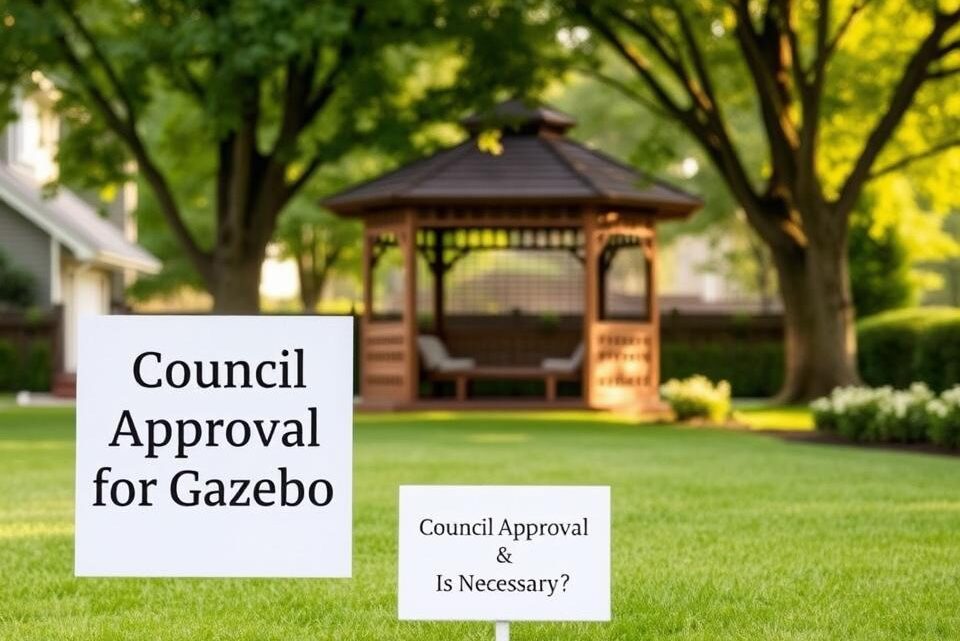
When homeowners ask, do you need council approval for a gazebo? the short answer is: it depends. National planning guidance and common practice make clear there is no single rule that covers every garden structure. Whether you need gazebo planning permission turns on planning law, permitted development rights and local restrictions set by your local planning authority.
Many small garden structures fall within permitted development. However, building regulations, conservation and listed-building consents or party wall matters can still apply. For example, a simple timber gazebo in a suburban garden may need no formal permission, while a larger, permanent structure close to a neighbour or inside a conservation area could trigger applications.
This article explains UK gazebo rules and garden structure planning in plain terms. It will outline when planning permission is likely, when building control matters matter, and how local planning authorities enforce rules in conservation areas, national parks and Areas of Outstanding Natural Beauty. Read on for practical checks and likely scenarios to help you plan confidently.
Inhaltsverzeichnis
Key Takeaways
- Whether you need council approval for a gazebo depends on planning law, permitted development and local designations.
- Many small gazebos are covered by permitted development, but exceptions apply in conservation areas and on listed land.
- Building regulations and party wall issues are separate from gazebo planning permission and may still be needed.
- Check UK gazebo rules with your local planning authority before starting work to avoid enforcement action.
- Simple design choices and correct siting often reduce the need for formal applications.
do you need council approval for a gazebo?
Many homeowners ask: do you need council approval for a gazebo? The short answer depends on several factors. Council approval can mean planning permission, listed building consent, conservation area consent or building regulations approval via building control.
Understanding the core question
Planning permission is the common form of council approval most people consider. A gazebo inside your garden may sit within permitted development rights, but those rights have limits. Listed properties and conservation areas usually need explicit consents.
How local planning rules typically apply to garden structures
Local planning rules gazebo often set stricter limits than national guidance. Councils can publish policies that control size, height, materials and siting of outbuildings. Some local plans and Supplementary Planning Documents give clear wording on acceptable garden structures and what needs formal approval.
Even if national permitted development allows a structure, local policy can remove that freedom. Councils may require an application where visual impact, heritage or neighbour amenity are concerns.
Where to find authoritative guidance in the UK
For reliable answers consult Planning Portal and the Gov.uk planning practice guidance. Your local council planning portal will list the Local Plan and any SPDs. Contacting the local planning authority gives tailored advice for your street and property.
When in doubt, ask for informal guidance from planning officers or request a pre-application discussion. That helps clarify whether you need gazebo council approval for your specific project.
Permitted development rights for garden structures
Permitted development allows homeowners to carry out certain works without a full planning application. National rules set limits and conditions. Many small garden buildings fall under these rights if they remain ancillary to the house and meet size and siting rules.

Overview of permitted development and when it applies
Under Class E of the General Permitted Development Order, single-storey outbuildings erected within the curtilage of a dwelling may be permitted development. A permitted development gazebo that serves as a private garden structure is often covered when it is incidental to the main residence. Owners should check garden outbuilding rules before committing to a build to ensure the structure fits the legal definition and does not change the use of the property.
Size, height and position limits that matter
Typical limits include a cap on the overall footprint and a restriction on the proportion of the garden that may be occupied. Eaves and maximum height rules differ for structures within two metres of a boundary. Outbuildings located forward of the principal elevation face tighter controls under garden outbuilding rules and may be excluded from permitted development. Two-storey outbuildings rarely qualify under permitted development rights UK unless they meet strict criteria.
Differences between temporary and permanent gazebos
Temporary gazebos such as pop-up canopies used for short periods are less likely to trigger planning controls. Permanent gazebos fixed on foundations, with services like electricity or plumbing, behave like conventional outbuildings. Such installations must align with permitted development rights UK or seek permission if they exceed size, height or siting limits.
Materials, construction and safety considerations
Choosing materials and detailing construction are central to any garden structure. Good choices reduce maintenance, meet local expectations and improve gazebo safety for users and neighbours. The following short guidance looks at common materials, when building control becomes relevant and practical fire-safety steps.
Common materials and their planning implications
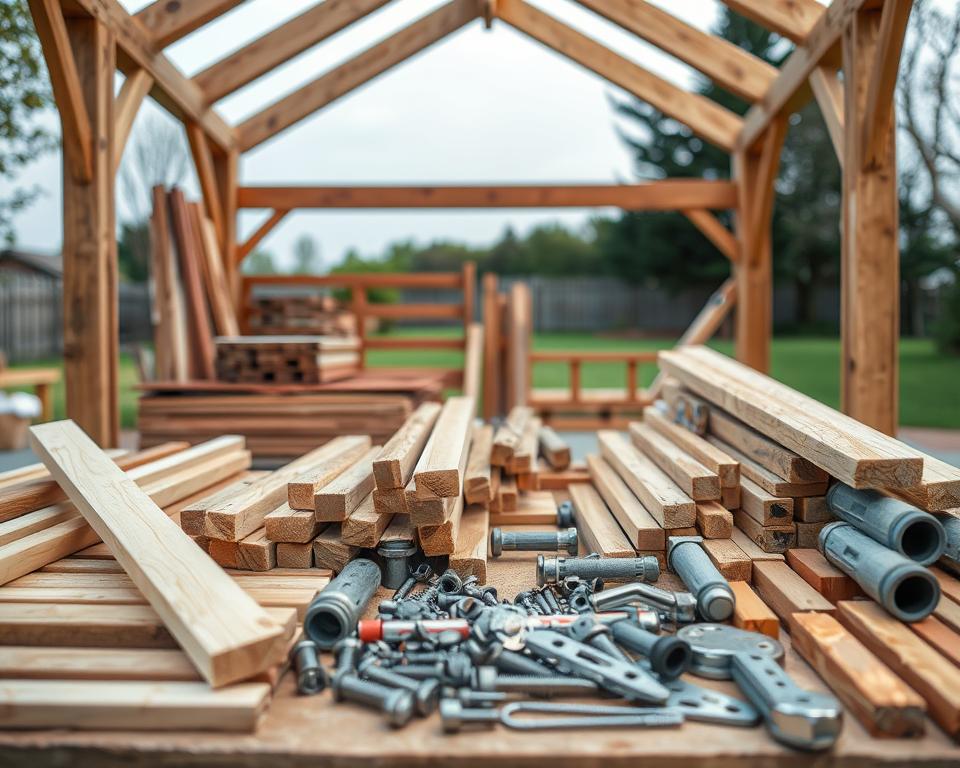
Timber remains popular for its traditional look and ease of repair. Softwood from suppliers such as Wickes or Travis Perkins can be treated for weather resistance. Metal frames, often steel, give strength and slimmer profiles. Aluminium resists corrosion and suits modern designs.
Glazing and polycarbonate roofs brighten interiors but can change a structure’s visual impact. In conservation areas councils often favour natural finishes and traditional materials. Early advice from your local planning office helps ensure your choice of materials aligns with local policies on appearance and setting.
Structural safety and building regulations
Building regulations apply if the gazebo is roofed and enclosed, provides sleeping accommodation, or contains mains services such as plumbing or electricity. Basic provisions cover foundations, load-bearing members and safe access. Foundations must suit soil and frost conditions; a competent builder or structural engineer can specify strip or pad footings.
Local authority building control or an approved inspector inspects work and issues compliance certificates. Even where planning permission is not needed, meeting gazebo building regulations gives legal protection and can be essential for insurance and resale.
Fire safety and proximity to neighbours
Combustible cladding increases fire risk when structures sit close to boundaries. Best practice includes using fire-retardant treatments for timber or non-combustible finishes where appropriate. Maintain clear separation from adjacent buildings and fences to reduce spread risk.
Consider smoke alarms if the gazebo will host gatherings. Neighbour relations improve when you inform nearby households about siting and safety measures. Observing recommended distances and choosing low-risk materials strengthens both compliance and gazebo safety.
Conservation areas, listed buildings and special designations
Local designations change the rules for garden additions. In conservation areas and protected landscapes, councils often limit permitted development rights to protect character and views. That means a simple timber gazebo that would be allowed elsewhere might need approval in a gazebo conservation area.

Additional restrictions in conservation areas
Conservation area policies focus on appearance, materials and visual impact. Councils expect new structures to respect street scenes and historic plots. If your proposal alters the setting or visible silhouette, you may need planning permission even when size and height limits are otherwise met.
Simple changes such as raised platforms, permanent foundations or striking cladding can trigger a formal application. Local planning guides from borough and district councils set out preferred materials and design approaches.
Consent requirements for listed properties
Listed building consent is required for works that affect the character of a listed building. This rule covers freestanding garden features if they sit close to, or are attached to, a listed house. A listed building consent gazebo will be assessed for impact on fabric, historic layout and the building’s setting.
Examples include a gazebo fixed to an original wall, one built over historic paving, or a structure that obscures a listed elevation. Owners should lodge an application early and seek advice from the conservation officer at the local authority.
Areas of Outstanding Natural Beauty and national parks considerations
Protected landscapes such as AONBs and national parks apply stricter design expectations to preserve scenic quality. National park gazebo rules often require planning permission where permitted development would apply in urban areas.
Planners assess siting, materials and cumulative visual effects. Low-profile, natural-coloured structures set behind hedging sit a better chance of approval than highly visible, brightly painted units.
| Designation | Typical restrictions | Advice for applicants |
|---|---|---|
| Conservation area | Reduced permitted development; focus on appearance and materials | Check local conservation guidance; use traditional materials and low profiles |
| Listed building | Listed building consent required for works affecting character | Consult conservation officer; submit heritage statements and detailed drawings |
| Area of Outstanding Natural Beauty | Stricter controls on visual impact and siting | Prioritise natural finishes; consider screening and reduced scale |
| National park | National park gazebo rules often remove permitted development rights | Engage planning officers early; show how design conserves landscape character |
How to check your local council’s rules
Before you build, spend a little time checking official guidance so you avoid delays. Use online planning resources to confirm whether your gazebo sits within permitted development or needs consent.
Using council planning portals and online resources
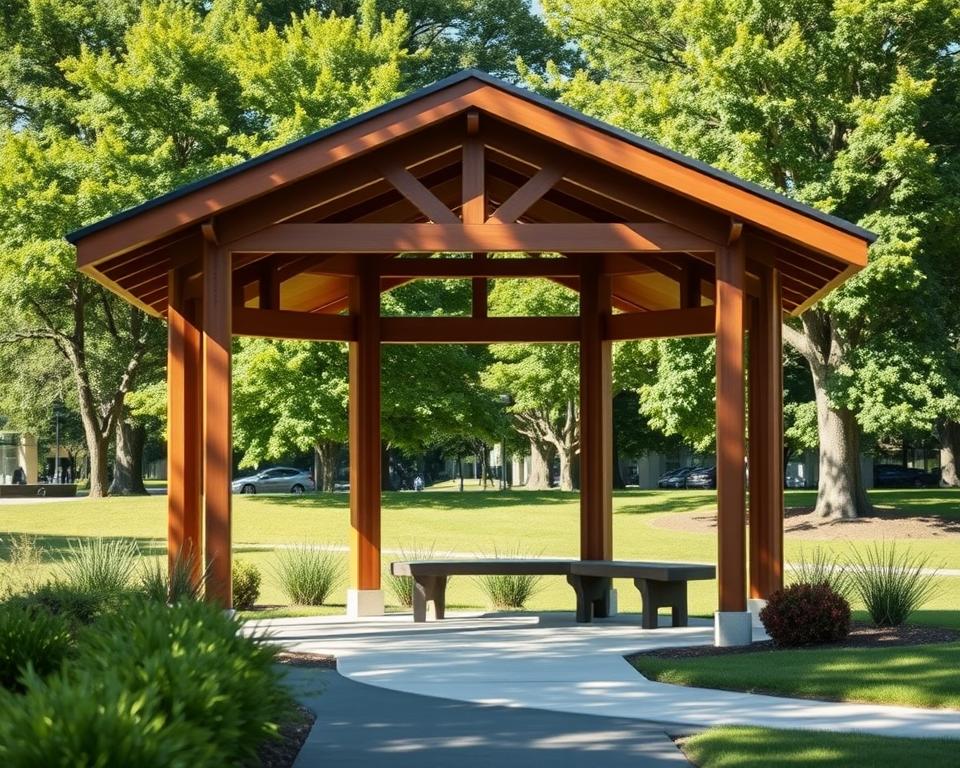
Start with the national Planning Portal and GOV.UK for base rules on permitted development and validation checklists. Visit your local authority’s planning pages to read local plan policies and any neighbourhood plans that apply. Search the council planning application archive for recent decisions on similar garden structures to see how officers interpreted rules.
Contacting planning officers for informal advice
Most councils offer informal telephone or written advice and some provide a paid pre-application service for detailed feedback. An informal chat can clarify whether you should submit a full application. If you choose the formal route, expect a written response that sets out likely conditions and application requirements.
What information to prepare before enquiring
Prepare clear drawings, a location plan and a block plan with measurements. Include photos of the proposed site and neighbouring properties, plus a description of materials and intended use. A short summary of dimensions and siting helps officers give accurate guidance.
| Step | What to check | Why it matters |
|---|---|---|
| Use the national portals | Planning Portal, GOV.UK guidance and validation checklists | Explains permitted development limits and required documents |
| Search local records | Council planning pages and application archives | Shows precedents and council interpretation for similar gazebos |
| Phone or email planning staff | Informal advice or formal pre-application service | Quick sense of whether you must apply and likely conditions |
| Prepare supporting information | Location plan, block plan, drawings, photos, material notes | Makes officer responses precise and reduces follow-up questions |
| Record the outcome | Save emails, officer names and reference numbers | Useful if you later need to check or rely on advice |
When you want to check council rules gazebo, do these steps in this order. If you need tailored guidance, contact planning officer gazebo with your prepared plans. Use the local planning portal gazebo as your starting point for documents and local policy details.
When you must apply for planning permission
Small garden structures can usually be installed without fuss. Some situations change that simple picture and make an application necessary. Read the brief notes below to spot common triggers and the practical steps if permission was not sought at the right time.
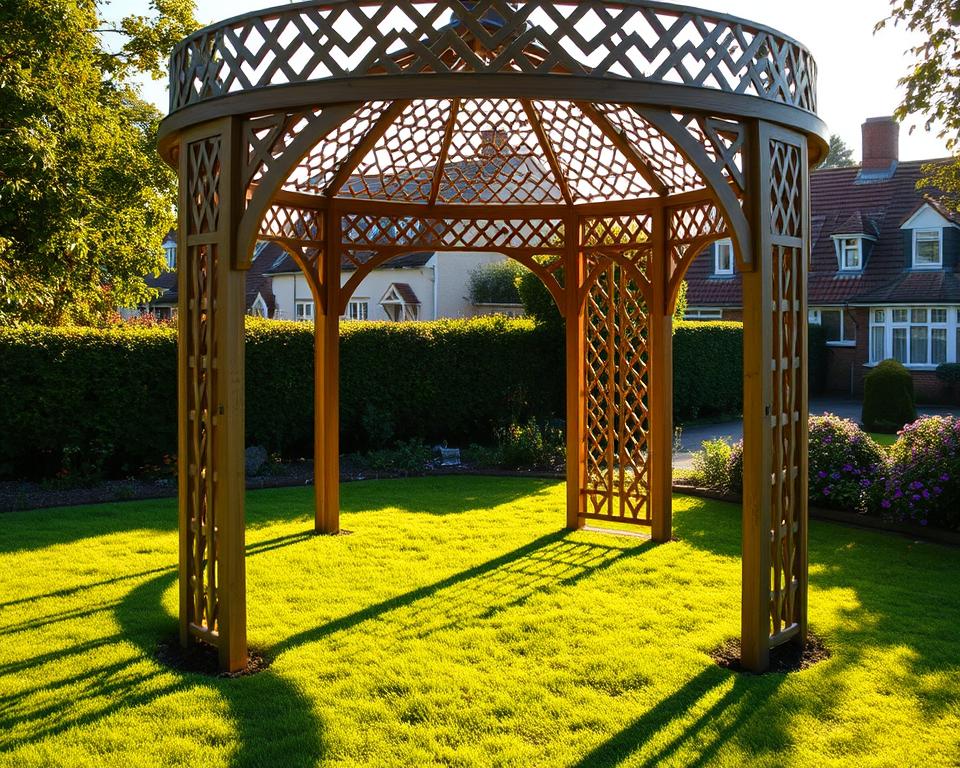
Common scenarios that trigger a planning application
Exceeding permitted development limits on size or height will often mean planning is required. Placing a gazebo forward of the principal elevation, for example on a front garden, can remove permitted development rights.
Installation of services such as plumbing or electrics that make the structure more permanent is another trigger. Location in a conservation area, an Area of Outstanding Natural Beauty or a national park brings extra controls. Use of a gazebo for business or as a separate dwelling is treated differently from a structure ancillary to the home.
How retrospective applications work
If a gazebo has been built without permission and planning permission is in fact needed, a retrospective planning application gazebo can be submitted to the local planning authority. The form and fee mirror a standard application.
Submitting a retrospective planning application gazebo does not guarantee approval. Councils assess the same material considerations as for a pre-emptive application. Applicants should include clear plans and photographs that explain alterations already made.
Possible outcomes and enforcement notices
The council may approve, approve with conditions, or refuse an application. A refusal can be appealed to the Planning Inspectorate within the statutory timescale. Approval with conditions may require changes to the gazebo to remain lawful.
Where the council finds a breach, it can issue an enforcement notice gazebo or a breach of condition notice. An enforcement notice gazebo sets out required action and a compliance period. Failure to comply can lead to fines or court proceedings and, in worst cases, forced removal of the structure.
Building regulations versus planning permission
Understanding the difference between planning rules and technical standards helps you avoid delays and penalties. Planning focuses on appearance, use and impact on neighbours. Building regulations deal with health, structural safety and energy efficiency. A garden structure may need one, both or neither, depending on size, function and fixed services.
Key differences and why both matter
Planning looks at visual impact and whether the gazebo changes how the land is used. Building control assesses foundations, structural stability, drainage and any gas or electrical work. Deciding between planning vs building control gazebo is not just academic. Both regimes protect property values and neighbour safety.
Small, open gazebos often fall within permitted development for planning. Enclosed or serviced structures are more likely to trigger building regulations. That split explains why some projects need a planning application and a separate building control application gazebo.
Examples where building control approval is required
A fully enclosed summerhouse with a fixed heater will usually require building regulations approval. Installing mains electricity, gas or fixed drainage creates further triggers. Significant structural elements such as large timber beams, deep foundations or raised decking also bring the work within building control scope.
Practical examples: adding sockets and circuit protection inside a gazebo needs electrical compliance. Turning a gazebo into sleeping accommodation means fire safety and insulation standards apply. These are typical scenarios where building control approval is required.
How to submit a building regulations application
There are two main routes: submit a full plans application to the local authority building control team or hire an approved inspector. Both routes require scaled plans, construction details and structural calculations where relevant. Submit early to avoid redesigns later.
Inspections happen at staged points: foundations, damp-proof measures, structural work and final sign-off. Some trades can use Competent Person schemes, for example NICEIC-registered electricians, which may simplify certification. Keep completion certificates safe; they prove compliance when selling the property.
| Situation | Planning likely needed | Building control likely needed |
|---|---|---|
| Open, freestanding gazebo under 2.5m height | No, usually permitted development | No, unless fixed services added |
| Enclosed gazebo used as living space | Possibly, if change of use or visual impact | Yes; structure, insulation, fire safety |
| Gazebo with mains electricity and sockets | Unlikely, unless appearance altered | Yes; electrical safety and certification |
| Gazebo with fixed drainage or gas heater | Maybe, depending on location | Yes; plumbing and gas safety requirements |
| Large gazebo with deep foundations or raised decks | Could need planning for massing | Yes; structural calculations and inspections |
Impact on neighbours and party wall considerations
A gazebo can improve a garden yet it can cause friction if placed too close to a shared boundary. Thoughtful design, clear communication and knowledge of the Party Wall etc. Act 1996 help reduce the chance of neighbour disputes gazebo and make it easier to avoid neighbour complaints gazebo.
Design features that reduce neighbour disputes
Siting the gazebo away from shared walls lowers noise and visual impact. Lower overall height and orienting openings away from adjacent windows reduce overlooking and loss of privacy.
Use living buffers such as hedging or a row of shrubs to soften sightlines. Robust fencing or trellis planted with climbers adds distance without major cost.
When a party wall agreement might be necessary
Works that build on or astride a boundary, that cut into a wall you share, or that excavate near a neighbour’s foundations can trigger the Party Wall etc. Act 1996. You must serve a notice on affected neighbours if the Act applies.
If a neighbour objects, either party appoints a surveyor or both agree a single surveyor. The surveyor issues an award detailing permitted works, timescales and protection measures for adjoining property.
Managing complaints and mediation options
Talk to neighbours early and show clear drawings and a brief programme. Early reassurance often prevents neighbour disputes gazebo from escalating into formal complaints.
If informal talks stall, use free mediation services or contact the council for informal guidance before matters escalate. Councils may act if complaints raise planning breaches; keeping records of communication and designs helps resolve issues quickly.
| Issue | Practical step | Benefit |
|---|---|---|
| Overlooking | Rotate openings and lower gazebo roofline | Reduces privacy concerns |
| Boundary proximity | Sit structure back from shared fence by 1–2m where possible | Less noise transfer and clearer property separation |
| Shared wall or foundation work | Serve Party Wall notice under the 1996 Act | Legal protection and defined working terms |
| Visual impact | Use hedging, trellis or timber cladding | Softens appearance and helps neighbours accept the build |
| Complaint escalation | Offer mediation and keep detailed correspondence | Avoids costly disputes and formal enforcement |
Cost, timescale and practical steps for applications
Before you submit anything, be clear on likely costs and the time a decision will take. Fees and timetables vary by council and project size. Preparing accurate drawings and the right paperwork makes the process quicker and cheaper in the long run.
Typical fees for planning and building control
Householder planning application fees commonly range from £200 to £450 depending on local authority charges and the complexity of the proposal. Councils may charge for pre-application advice; expect between £50 and several hundred pounds for that service.
Building control fees for a gazebo depend on whether you use an approved inspector or the council. Typical charges start around £150 and rise with structural work or complex inspections. Remember to budget for professional drawings, structural calculations and any survey work. These can add £300–£1,200 or more, depending on the consultancy.
Expected timetables for decisions
Statutory determination for a householder planning application is usually eight weeks from validation. Complex cases, additional information requests or an agreed extension can push timelines out.
Building control follows a different rhythm. Initial plan checks can take one to four weeks. On-site inspection schedules depend on the scope of work; completion certification often follows the final inspection within a few weeks, provided all stages pass.
Documentation and drawings you will need
Supply clear, scaled drawings to speed decisions. Typical documentation includes:
- Site plan at 1:1250 or 1:500 showing boundaries and neighbouring properties.
- Block plan at 1:200 or 1:500 locating the gazebo on the plot.
- Floor plans and elevations with dimensions and materials noted.
- Structural calculations if the design requires foundations or load-bearing elements.
- Materials specification and, if relevant, a heritage statement for listed buildings or conservation areas.
Well-presented plans reduce queries and shorten the planning timetable gazebo and decision time. Clear documentation can also limit additional building control fees gazebo by avoiding repeated inspections or amended submissions.
Siting, design and landscaping tips to avoid permission
Careful siting and modest design help projects remain within permitted development. Aim for a single-storey structure with a modest footprint and non-permanent foundations. Keep the gazebo non-habitable and locate it to the rear of the property rather than the front. These choices support permitted development and reduce the need to apply.
Design choices that fall within permitted development
Choose a small footprint and a low overall height. Stay below common limits for outbuildings and avoid adding sleeping or cooking facilities. Use lightweight, removable foundations such as paving slabs or timber bearers rather than deep concrete bases. A timber-framed gazebo with a simple roof is less likely to be classed as a change of use.
Using landscaping to reduce visual impact
Soft landscaping can disguise a structure and ease neighbour concerns. Plant native hedging like hawthorn or beech, or fit a trellis with climbers such as clematis or honeysuckle. A screening fence combined with taller planting works well on boundaries. Thoughtful landscaping to hide gazebo strengthens the case that the building sits unobtrusively in the garden.
Seasonal and practical siting considerations
Check drainage and avoid low-lying or waterlogged spots. Position the gazebo to capture sunlight in spring and autumn while offering shelter from prevailing winds. Allow access for construction and maintenance, keeping a safe distance from tree roots to protect both the tree and the structure. Good siting reduces the chance of complaints that might trigger formal permission checks.
Hiring professionals: when to consult architects or planning agents
Bringing a professional on board can ease the path from idea to finished gazebo. Small schemes may not need full design teams, but complex sites, conservation constraints or disputes with neighbours often benefit from expert input. Below is practical guidance on benefits, selection and cost considerations for those weighing help.
Benefits of expert advice
Accurate drawings and well-prepared paperwork improve the chance of a positive planning decision. A planning consultant gazebo can shape submissions so they address officer concerns and local policy. Architects bring construction detailing, material advice and sustainability options that reduce future problems.
Professionals can negotiate with council officers and suggest changes that keep the scheme within permitted development or speed a positive outcome. Early advice often prevents delays and cuts the risk of enforcement or costly remedial work.
How to choose the right professional
Look for RIBA-registered architects for design work and RTPI-affiliated planning consultants for planning strategy. Chartered building engineers suit projects where structural issues matter. Check portfolios for similar garden structures and request client references to confirm experience.
Verify professional indemnity insurance and ask about recent local approvals. Meet candidates to assess communication style and responsiveness. If you need to hire architect gazebo, ask for clear examples of past gazebo or small outbuilding projects.
Cost versus value
Fees vary. Small projects often suit a fixed-fee quote. Larger or more complex schemes may use percentage-based fees or staged billing. A planning agent gazebo may offer pre-application advice that reduces the chance of a full application and saves money overall.
Consider the potential cost of refused applications or enforcement notices when weighing fees. Professional input can shorten timetables, cut the risk of rework and protect property value, making fees an investment rather than a mere expense.
Conclusion
Whether you need council approval for a gazebo? The short answer is: it depends. Size, permanence, siting and local protections such as conservation area or listed building status will determine if the structure falls under permitted development. Many timber or metal gazebos in private gardens do not require full planning permission, but exceptions are common and must be checked.
For a clear gazebo planning summary, start with the Planning Portal and your local council planning pages. Prepare simple drawings showing footprint, height and distance from boundaries. Contact the local planning authority for informal advice early, and consider building control if you plan fixed foundations, electricity or plumbing. Discussing the scheme with neighbours can prevent disputes and future enforcement.
For complex or sensitive projects, seek professional help from a chartered architect or an RICS-accredited surveyor. Professional advice reduces risk in conservation areas, listed settings or where services are involved. Remember UK gazebo guidance varies by council, so always confirm local rules to ensure compliance and appropriate certification. This approach minimises delays and protects the value of your home.
FAQ
Council approval for a gazebo: is it necessary?
It depends. Whether you need council approval for a garden gazebo in the UK is decided by planning law, permitted development rights and any local restrictions. Many small, ancillary gazebos fall within permitted development and do not need a planning application. However, exceptions apply in conservation areas, for listed buildings, in national parks or Areas of Outstanding Natural Beauty (AONBs), and where the structure exceeds national size, height or siting limits. You should check both national guidance and your local planning authority’s rules before building.
What do we mean by “council approval”?
“Council approval” can mean one or more consents. The most common are planning permission and listed building consent. Other approvals include conservation area consent and building regulations approval (building control). A structure might need planning permission for its use or appearance, and building regulations approval for structural, safety or service works. Local planning teams can confirm which consents apply to your proposal.
How do local planning rules typically apply to garden gazebos?
Local plans and supplementary planning documents can impose tighter controls than national permitted development rights. Councils often publish specific guidance on outbuildings and garden structures. That means two gazebos of identical size can be treated differently in different council areas, especially where design, materials or visual impact are a concern.
Where can I find authoritative guidance about gazebos and planning?
Start with the Gov.uk planning practice guidance and the Planning Portal. Then consult your local council’s planning webpages and Local Plan or Supplementary Planning Documents (SPDs). Many councils also host planning application archives you can search for similar cases. When in doubt, contact your local planning authority for informal advice.
What are permitted development rights for garden structures?
Permitted development grants national rights to carry out certain works without a formal planning application, subject to conditions. For garden structures this typically covers single‑storey, ancillary buildings that meet size, height and siting limits (see Class E and related rules). The rights apply only where the structure is incidental to the dwelling and does not breach specified thresholds.
What size, height and position limits usually matter?
Key limits include maximum footprint relative to the original property, maximum heights for single‑storey and dual‑pitched roofs, and rules about siting forward of the principal elevation or close to boundaries. There are also restrictions on the proportion of garden covered by buildings and on buildings over two storeys. Exact figures vary with the permitted development class and whether the property is detached or otherwise; always check current national guidance and local interpretations.
Are temporary gazebos treated differently from permanent ones?
Yes. Temporary, movable gazebos and pop‑up canopies used short‑term are less likely to require consent. Permanently sited gazebos with foundations, fixed services or built from robust materials are treated as outbuildings and assessed against permitted development rules or planning criteria. Permanence, foundations and utilities are important determinants.
Do the materials I choose affect planning decisions?
Materials matter particularly in sensitive locations. Timber, metal, aluminium and glass are common. In conservation areas and near listed buildings, councils often favour traditional materials and finishes to protect character. Elsewhere, lightweight, unobtrusive materials can support a permitted development argument and reduce visual impact.
When do building regulations apply to a gazebo?
Building regulations apply where the structure affects health and safety, structural stability or energy performance. Typical triggers include sleeping accommodation, fixed heating, connection to mains electricity, drainage, or substantial structural elements. Enclosed, insulated or serviced gazebos are more likely to need building control approval than open, temporary shelters.
What fire safety or neighbour proximity issues should I consider?
Consider fire risk from combustible materials, safe escape routes and separation from neighbouring properties. Combustible cladding close to a boundary or to adjacent buildings can raise safety and planning concerns. Best practice is to use appropriate non‑combustible finishes where needed, maintain adequate separation and, if hosting gatherings, consider suitable alarms and safe access.
How do conservation areas and listed status change the rules?
In conservation areas, permitted development rights are often curtailed and councils assess the effect on local character. For listed buildings, any works affecting the building’s character – including garden structures closely associated with the listed house – normally require listed building consent, even if planning permission would not otherwise be needed. AONBs, national parks and World Heritage Sites also impose stricter expectations and may require permission.
How do I check my local council’s rules?
Use the Planning Portal, Gov.uk guidance and your local council’s planning pages. Look for the Local Plan, SPDs and validation checklists. Search the planning application archive for comparable cases. For personalised guidance, phone or email planning officers or use the council’s formal pre‑application service if available.
What information should I prepare before contacting the council?
Prepare a site location plan and block plan, scaled drawings of the gazebo (floor plan and elevations), dimensions, materials specification and photographs of the site and neighbouring properties. A short statement of intended use and any proposed utilities will help officers give accurate advice.
When must I apply for planning permission for a gazebo?
Apply if the gazebo exceeds permitted development size/height limits, is sited forward of the principal elevation, includes utilities or sleeping accommodation, or sits in a protected area. Commercial use or a structure that is not ancillary to the dwelling will also normally require planning permission.
What happens if I build a gazebo without the necessary consent?
If consent was required and not obtained, you can submit a retrospective planning application. The council may approve, approve with conditions, or refuse and issue enforcement notices requiring alteration or removal. In some cases legal action or fines may follow. Early engagement with the council reduces these risks.
How do planning permission and building regulations differ?
Planning permission regulates use, appearance and impact on neighbours and the wider environment. Building regulations control structural safety, fire safety, energy efficiency and services. A gazebo may need one, both or neither, depending on its design and use. Both sets of approvals should be considered at the design stage.
How do I submit a building regulations application?
Submit a full plans application to your local authority building control or use an approved inspector. Provide plans, structural calculations and specifications as required. Inspections are carried out during construction and a completion certificate is issued once work complies. Certain trades may be self‑certified under Competent Person schemes for specific installations.
Could my gazebo require a party wall agreement?
The Party Wall etc. Act 1996 may apply if your works affect a shared wall, involve excavations close to a neighbour’s foundations, or if you build on or astride a boundary. If the Act applies, serve the appropriate notices and secure either neighbour consent or a party wall award prepared by surveyors.
How can I avoid neighbour disputes around a gazebo?
Sit the gazebo away from shared boundaries, keep the height modest, use soft landscaping or screening, and orient openings to reduce overlooking. Consult neighbours early, share drawings and explain proposed use. Mediation services can help resolve disputes before they escalate to formal complaints.
What are typical costs and timescales for planning and building control?
Fees vary by council and project complexity. A standard householder planning application often has a set fee and a statutory determination period of eight weeks, though extensions are common for complex cases. Building control fees depend on the nature of the works and inspection regime. Factor in costs for professional drawings, structural calculations and any pre‑application services.
What documentation speeds up decisions?
Provide a clear location plan (1:1250 or 1:500), block plan (1:200 or 1:500), scaled floor plans and elevations with dimensions, materials specification, structural calculations where needed and a heritage statement if relevant. Well‑prepared, scaled drawings and good photographs help officers assess proposals quickly.
How can siting and design help me stay within permitted development?
Design for a single‑storey, modest footprint, non‑habitable gazebo with non‑permanent foundations and simple materials. Place the structure to the rear of the property, keep heights and volume below national limits, and avoid siting forward of the principal elevation. Landscaping—hedges, trellis or soft planting—can reduce visual impact and neighbour concerns.
When should I hire an architect, planning agent or surveyor?
Consult a professional for borderline cases, sensitive sites (conservation areas, listed buildings, AONBs), proposals involving services or complex structures, or when you want stronger planning submissions. Look for RIBA‑registered architects, RTPI‑affiliated planning consultants or chartered building engineers. Professional input often speeds approvals and reduces enforcement risk.
How much will professional advice cost and is it worth it?
Fees vary: small projects often attract fixed fees, larger schemes may be percentage‑based. Pre‑application services with councils may cost less than full consultant involvement. Professional advice can save time, avoid refusals and reduce the risk of costly remedial works, often representing good value for complex or sensitive proposals.