
Durability of Keter Sheds: Lifespan Insights

This article explains the Durability of Keter sheds and answers the central question: how long will a Keter shed last? It is written for UK homeowners who want clear, practical guidance. We draw on Keter manufacturer specifications and warranty statements, independent owner reports from retailers such as B&Q, Homebase and Screwfix, and testing or advice from consumer bodies like Which? and gardening publications including Gardeners’ World.
Different models — for example the Keter Factor, Manor or Oakland ranges — and different uses will affect any Keter shed lifespan. A shed used only for garden storage will usually outlast one used as a workshop. Local exposure, installation quality and maintenance all change expected service life, so the Keter shed durability UK picture is varied rather than fixed.
Later sections review typical lifespan ranges, material and construction details, climate impacts across the UK, installation best practice, maintenance tips, common faults and upgrades. Together these help readers judge value for money and decide how long a Keter shed might serve their needs.
Inhaltsverzeichnis
Key Takeaways
- Keter shed durability UK depends on model, use and site exposure.
- Manufacturer specs and warranties set an initial expectation.
- Good installation and a solid base greatly extend lifespan.
- Routine maintenance reduces risk of cracking, warping and damp.
- Real owner reports from B&Q, Homebase and Screwfix provide practical evidence.
how long will a keter shed last?
Choosing a Keter shed means weighing likely service life against your site, use and upkeep. Typical lifespans vary widely, so it helps to look at reported ranges, owner experience in the UK and the manufacturer’s warranty terms to set realistic expectations.
Typical lifespan range for Keter sheds
Most resin and polymer Keter sheds fall within a Keter shed lifespan range of about 10 to 25 years. Light domestic use in a sheltered garden commonly produces service beyond a decade.
More exposed or heavily used installations may show noticeable wear after 8–12 years. Careful siting, a firm base and occasional repairs can push many units past 20 years of useful life.
Evidence from owner reports and reviews in the UK
Owner reviews Keter shed posts across retailer pages and gardening forums often report 10–15 years as typical for everyday garden storage. Many UK users note minor repairs such as floor reinforcement and hinge replacement during that period.
Several long-term owners describe sheds still functional after a decade with minimal intervention. Anecdotes exist of units lasting 15–20+ years when placed under shelter and maintained regularly.
Manufacturer guidance and warranty information
Keter provides model-specific guarantees that vary by product and country. In the UK market a Keter warranty UK offering is commonly a 10-year limited warranty on many resin ranges.
The warranty covers faults in materials and workmanship for normal domestic use. It does not cover damage from improper installation, extreme weather, lack of maintenance, or misuse, so registration and proof of purchase are important.
| Factor | Typical effect on life | Practical action |
|---|---|---|
| Location and exposure | High wind and coastal salt shorten lifespan | Shelter from prevailing winds, choose sheltered siting |
| Usage intensity | Heavy use increases wear on doors and floor | Reinforce floor, reduce internal load, fit shelving |
| Maintenance | Regular care extends usable life considerably | Clean, check seals, lubricate hinges, repair promptly |
| Installation quality | Poor assembly causes stress and early failure | Follow instructions or use professional help |
| Warranty | Provides baseline expectation, not a lifetime guarantee | Register product, retain receipt, read exclusions |
Materials and construction: what makes Keter sheds durable
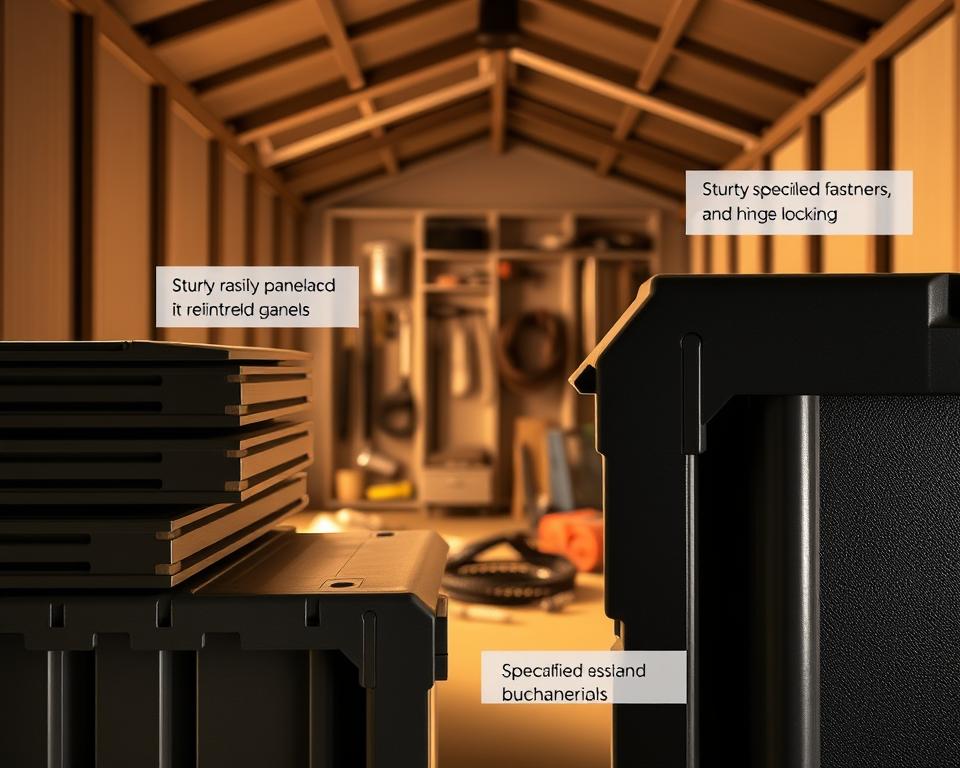
Keter sheds rely on engineered plastics and considered construction to deliver low-maintenance storage. The choice of Keter shed materials focuses on durability, weather resistance and ease of assembly for UK gardens.
Resin composition
Keter uses co-extruded polypropylene and high-density polyethylene blends in many models. These engineered resins resist rot and corrosion, so they do not need painting. UV stabilisers and colour pigments reduce fading and embrittlement, which helps polymer sheds retain strength and appearance over years.
Panel design and moulding
Panels are injection-moulded or rotationally moulded to form interlocking, monocoque-style sections. That distribution of load lowers the number of joints that can leak or fail. A sealed roof and tight panel fit cut down on water ingress and internal damp.
Metal reinforcement Keter
Critical areas such as door frames, hinges and anchoring points often include galvanised or zinc-plated steel inserts. These metal reinforcement Keter features add rigidity and security without compromising the low-maintenance benefits of plastic. Fastenings range from plastic clips to stainless or plated screws and bolts; quality here directly affects lifespan.
Timber vs plastic sheds
Timber needs preservative treatment and periodic re-staining to avoid rot and insect attack. Well cared-for timber can be repaired and refinished, giving a long service life. Plastic sheds avoid rot and insect damage and call for less routine upkeep.
Metal compared with polymer sheds
Galvanised steel sheds can be very long-lasting but are vulnerable where coatings scratch or seams meet, which can lead to corrosion. Metal can dent and transmit heat more readily. Polymer sheds offer corrosion resistance and reduced thermal bridging, though prolonged UV exposure or mechanical stress can cause warping or brittleness.
Each material type has trade-offs. Keter’s resin composition gives resistance to rot and corrosion with minimal maintenance. Metal reinforcement Keter components improve strength and security, creating a balance that suits many UK gardens when weighed against timber vs plastic sheds choices.
Impact of UK climate on Keter shed longevity
UK weather plays a key role in how long a Keter shed performs. Siting, exposure and maintenance all shape wear and tear. The paragraphs below outline common climate stresses and practical ways they affect resin construction.
Effects of rain, humidity and damp on plastic sheds
Resin sheds resist rot and do not soak up moisture like timber. That makes them well suited to frequent rain and humidity in many British gardens.
Problems usually start when water pools at the base or where drainage is poor. Standing water encourages mould, algae and corrosion of metal inserts. Poor ventilation inside can raise condensation, which damages stored items.
UV exposure and sun-related degradation in the UK
UK sunlight is milder than in southern Europe, yet repeated exposure still causes fading and slow loss of polymer flexibility over years. South-facing, unshaded sites age faster than shaded positions.
Keter adds UV stabilisers to slow surface weathering. Older models without modern stabilisers show more brittleness and chalking after prolonged sun exposure.
Cold weather, frost and thermal expansion considerations
Low temperatures reduce plastic flexibility and increase risk of cracking from impacts. Freeze–thaw cycles stress seals and joints if water sits in seams.
Thermal expansion and contraction cause panels and fastenings to work loose over time. Ice build-up on roofs adds weight and can strain seams where drainage is inadequate.
| Climate Factor | Primary Risk | Practical Check |
|---|---|---|
| Rain & humidity | Mould, algae, base pooling, metal corrosion | Ensure sloping, well-drained base; clear gutters and trim vegetation |
| UV exposure | Fading, loss of flexibility, surface chalking | Site in partial shade or use UV-protective covers for south-facing sheds |
| Frost & freeze–thaw | Cracking on impact, loose joints, roof ice stress | Maintain drainage, inspect seals each spring, remove heavy ice |
| Coastal salt air | Accelerated corrosion of metal fittings | Use stainless fastenings and rinse metal parts periodically |
| Microclimate (sheltered vs exposed) | Variable wear based on exposure | Choose site with windbreaks and minimise direct exposure |
Installation factors that affect shed lifespan
Good installation is a key step when installing Keter shed units. Small decisions at siting and during build shape long-term performance. A level platform, proper drainage and precise fastening pay dividends over years of use.

Importance of a level, well-draining base
A stable, level base meets basic shed base requirements and prevents distortion. Concrete slab, paving slabs set on compacted hardcore or a purpose-built timber or plastic base with sleepers give a solid platform. Raised or ventilated bases reduce damp transfer and extend floor life.
Siting on a slight slope or fitting perimeter drains avoids water pooling. Standing water encourages algae, mould and speeds corrosion of metal inserts.
Anchoring and wind resistance for coastal or exposed sites
Correct anchoring shed UK is vital where winds are strong. Use the manufacturer-approved anchoring points to bolt into concrete or a solid base. For exposed or coastal plots consider heavier fixings, extra bracing and the likely wind direction when placing the shed.
In extreme locations a reinforced structure or anchoring pattern will cut the risk of uplift or lateral movement.
Correct assembly to avoid stress on joints and panels
Following Keter instructions ensures correct shed assembly and reduces stress on panels. Misaligned parts, missing reinforcements or incorrect torque on fastenings create concentrated loads that lead to warping or cracking.
Two-person assembly helps keep panels straight and avoids bending. Use specified tools and do not substitute incompatible fixings. Leave clearance from fences and shrubs to prevent abrasion, aid airflow and permit routine checks.
| Installation element | Recommended approach | Risk if ignored |
|---|---|---|
| Base type | Concrete slab, compacted hardcore with paving, or ventilated timber/plastic base | Uneven load, panel distortion, damp floor |
| Drainage | Slope site slightly, add perimeter drainage or raised base | Standing water, mould, corrosion of metal inserts |
| Anchoring | Use manufacturer anchor points bolted to solid base; stronger fixings for exposed sites | Uplift, shift, damage in high winds |
| Assembly practice | Follow instructions, correct torque, two-person lift, specified tools | Warping, cracking, leaks, premature failure |
| Siting and clearance | Allow access from all sides; keep clear of vegetation | Abrasion, trapped damp, difficult maintenance |
Maintenance practices to extend a Keter shed’s life
A little routine care keeps a Keter shed working well for years. Regular attention to exterior panels, moving parts and ventilation prevents minor faults from becoming major failures. The guidance below covers simple, practical steps for Keter shed maintenance that suit UK gardens and seasonal changes.

Regular cleaning and removing mould or debris
Washing panels with mild detergent and a soft brush clears grime, moss and bird droppings. Avoid harsh solvents and abrasive pads to stop surface damage and loss of UV resistance. When mould or algae appear, treat the area with a diluted bleach solution or a garden-safe cleaner, rinse thoroughly and keep surrounding vegetation trimmed to reduce trapped moisture.
Lubrication and care for doors and hinges
Apply silicone spray or light machine oil to hinges, rollers and locks to prevent seizing and wear. Check alignment and adjust doors so they close squarely. Good shed door care reduces stress on latches and frames and prolongs hardware life.
Inspecting seals, vents and repairing damage promptly
Inspect seals around doors and roof seams for cracks or gaps and replace degraded seals to maintain weatherproofing. Clear vents to promote airflow and cut condensation risks when storing wood, compost or machinery. Small panel cracks and loose fixings should be repaired or tightened quickly to avoid water ingress and further deterioration.
Keep damp materials off the floor by using pallets or shelving. Use moisture absorbers in enclosed spaces and check fastenings for corrosion at least twice a year. Before storms and winter, re-check anchors, gutters if fitted and all seals to ensure the shed remains secure.
| Task | Frequency | Recommended action |
|---|---|---|
| Cleaning plastic panels | Every 3–6 months | Wash with mild detergent, soft brush; treat persistent mould with diluted bleach then rinse |
| Lubricating moving parts | Every 6 months | Spray hinges, rollers and locks with silicone or light oil; check door alignment |
| Inspect seals and vents | Seasonally | Check for gaps, replace worn seals, clear vents to reduce condensation |
| Fastener and anchor checks | Annually and after storms | Replace corroded screws/bolts, tighten clips, confirm anchoring is secure |
| Internal housekeeping | Ongoing | Store items off the floor, avoid damp loads, use shelving and moisture absorbers |
Common problems and how to fix them
Plastic garden sheds face a few recurring issues that owners in the UK report. This short guide covers the most frequent faults and practical repairs. Read each point and use genuine parts when required to keep warranties intact.
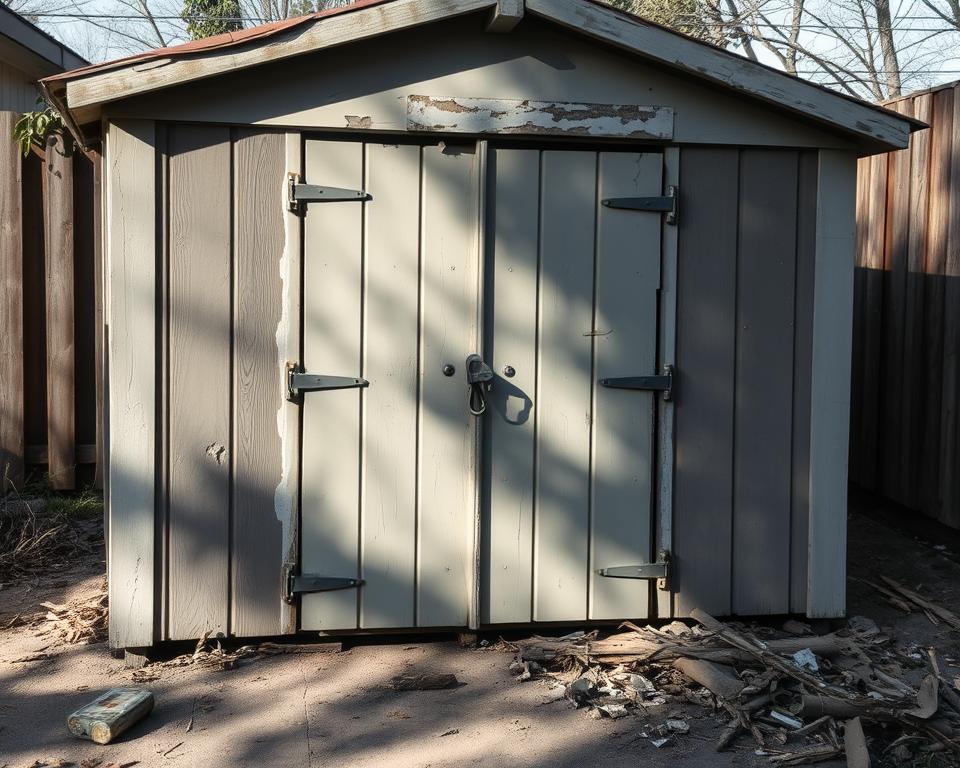
Warping can follow an uneven base, heavy local loading or repeated thermal expansion. First check the foundation and re-level where needed. Tighten loose fastenings and re-seat panels to restore alignment. To fix warped shed panels for minor bends, warm the area gently with a heat gun and brace it while cooling. Large distortions or impact damage need replacement panels.
Small cracks often accept repairs with a plastic adhesive or epoxy suited to polypropylene or polyethylene. Confirm compatibility before applying any product. When joints separate, reseal seams using manufacturer-recommended sealants or quality weatherproof tape. Add internal cross-bracing or supports to reduce recurrence and strengthen the base to spread loads evenly.
Dealing with condensation and internal damp
Condensation in plastic sheds forms when warm moist air hits cooler walls or roof. Improve airflow by fitting vents, louvre panels or a battery-powered extractor fan. Avoid storing wet items and use moisture absorbers like silica gel or inexpensive dehumidifier units designed for small spaces.
If damp collects on the floor, check the base for poor drainage or trapped ground moisture. For hybrid sheds with wooden floors choose treated timber bearers or fit a new decking panel to lift stored items from the floor and cut humidity transfer.
Replacing parts and sourcing genuine components
Keter supplies replacement items such as doors, roof panels, floors and hinges for many models. Keep your model number and proof of purchase to order the correct items fast. Use Keter replacement parts UK or authorised retailers to ensure fit and tolerance. Third-party parts may not match the original dimensions and can void warranties.
For locks and security fittings, swap worn components for recommended alternatives to maintain alignment and prevent forcing that breaks fixings. When a panel or structural element is beyond repair, order the matching replacement rather than improvising with non-compatible materials.
Upgrades and accessories that improve durability
Small upgrades make a big difference when you want a longer-lasting garden building. Choose proven improvements that reduce moisture, spread loads and cut thermal stress. Thoughtful kit choices fit most Keter models and suit different budgets.

Floor reinforcement and raised bases
Start with a solid, level base such as a concrete slab, paving-slab platform or an elevated timber/plastic frame. These prevent ground moisture contact and stop uneven settling. To reinforce shed floor use a plywood subfloor or a reinforced floor panel to distribute heavy loads and protect moulded plastic flooring.
Raise the base slightly and add a damp-proof membrane plus a breathable void beneath. This blocks capillary moisture and improves ventilation under the shed, reducing frost heave and decay in any timber components.
Internal shelving, lining and insulation options
Install shelving to lift stored items off the floor and reduce clutter that traps damp. Fixed shelves from brands like Tiger or Screwfix offer sturdy, modular solutions.
For temperate climates fit closed-cell foam or reflective insulation to limit condensation and temperature swings. When you insulate, line the walls with breathable boards so vapour can move freely. Proper lining extends panel life and makes the interior more usable in winter.
Roof enhancements and guttering solutions
Strengthen roof supports with extra rafters or a timber purlin underlay to reduce sag and stress on plastic roof sheets. A light-coloured roof or reflective coating cuts heat absorption and slows UV damage.
Fit bespoke shed guttering solutions and a downpipe kit to divert rainwater away from the base. Choose corrosion-resistant materials and route downpipes to soakaways or drains to avoid pooling and splash-back onto walls.
- Ventilation: add vents, ridge vents or a small extractor fan to manage humidity and reduce condensation.
- Security and shelter: a small overhang, canopy or well-placed windbreak protects against driving rain and wind without trapping moisture.
- Maintenance access: design upgrades so panels remain removable for inspection and repair.
Cost versus longevity: value for money
Choosing a garden shed means weighing initial outlay against how long it will serve you. Keter resin models sit in the mid-price bracket when compared with timber and metal. That position can give strong shed value for money UK buyers seek, if the product reaches its expected service life.
Initial cost compared to expected service life
Spread the purchase price over the likely life of the shed to get an annual cost figure. Keter sheds often promise 10–20 years of use. Cheaper timber may cost less up front, yet it usually needs regular treatment, which raises lifetime cost. Metal units may rust unless treated, adding future expense. This simple annualised approach helps clarify true Keter shed cost vs lifespan.
Long-term maintenance costs and replacement timelines
Resin sheds demand less routine care than painted timber. There is no sanding or staining, yet parts can need replacement after several seasons. Expect to budget for seals, door repairs and occasional floor reinforcement. A long-term maintenance shed plan should factor in periodic parts and anchoring checks to avoid bigger failures later.
Resale and recyclability considerations in the UK market
Used resin sheds return modest sums at resale. Condition, included base and model affect buyer interest. Removal and transport costs can reduce the practical resale value. On the environmental side, many manufacturers use recyclable plastics and list recycling codes. Confirm local recycling options or take-back schemes when planning disposal. Thinking about shed resale recyclability alongside lifespan highlights the broader cost to household budgets and the planet.
The table below summarises typical upfront and running costs, expected lifespans and end-of-life options so homeowners can compare choices more clearly.
| Aspect | Keter resin shed | Treated timber shed | Galvanised metal shed |
|---|---|---|---|
| Average initial cost (UK) | Mid-range (£400–£1,200) | Variable (£300–£1,500) | Low to mid (£200–£1,000) |
| Expected lifespan | 10–20 years | 5–15 years with maintenance | 8–20 years with anti-rust care |
| Routine maintenance | Low; occasional part replacements | High; preservative treatments and repairs | Medium; rust prevention and repainting |
| Typical long-term costs | Low to moderate; parts and floor work | Moderate to high; frequent treatments | Moderate; anti-rust measures |
| Resale potential | Modest; condition-dependent | Good if well maintained | Varies; rust reduces value |
| End-of-life & recyclability | Often recyclable plastics; check codes | Can be reused or chipped; timber disposal rules | Metal widely recyclable if not corroded |
| Best value scenario | Good when base and installation are correct | Good if owner commits to regular care | Good for durable, well-treated sites |
Real-world case studies and owner experiences
Many reports from Britain describe practical use of Keter models in varied garden settings. Readers will find accounts of sheds used for lawnmowers, seasonal tools and hobby workshops where a solid base and routine care made a big difference.
Long-term owners
Long-term Keter shed case studies show units still serving owners after a decade. Typical notes mention floor reinforcement, added shelving and periodic part swaps such as hinges and door seals. Owners in suburban areas often credit regular cleaning and occasional maintenance for extended service.
Failures and lessons learned
Common shed failures lessons point to poor base preparation, skipping anchoring and incorrect assembly. These mistakes frequently cause warping, panel separation or joint failure. Storing damp materials on the floor or allowing plants to press against panels speeds deterioration.
Regional differences across the UK
Regional shed performance UK varies by climate and exposure. Coastal sites report faster wear on metal inserts from salt air. Northern areas, including parts of Scotland, note more condensation while southern England shows greater UV fading due to stronger sun.
Practical takeaways from Keter shed owner experiences UK stress site selection, base quality and anchoring. Routine inspections and prompt repair of seals and fixings often separate average lifespans from long-term success.
Conclusion
In summary, the answer to conclusion how long will a Keter shed last is straightforward: under typical UK domestic use you can expect between 10 and 20 years. With a proper base, correct assembly, regular maintenance and sensible protection from severe exposure, many owners report service lives at the upper end of that range, and a few note 20+ years with excellent care.
Key determinants of longevity are clear. Material quality and metal reinforcements, correct siting and base preparation, following Keter assembly and anchoring guidance, local climate and exposure, plus proactive maintenance such as cleaning, seal checks and timely part replacement all shape outcomes. Practical steps like a solid, well‑draining base, anchoring for wind, floor reinforcement for heavy loads and using genuine replacement parts will help extend life.
Overall, this Keter shed summary UK shows that resin sheds offer a low‑maintenance, rot‑resistant option that often delivers good value for UK homeowners seeking durable garden storage. Long‑term performance depends largely on installation, site selection and ongoing upkeep, so apply the manufacturer’s guidance and seasonal checks to get the best return from your investment.
FAQ
How long will a Keter shed typically last in the UK?
Under normal domestic use in the UK, Keter resin sheds commonly last between 10 and 20 years. Lifespan depends on model, siting, base quality, wind exposure and maintenance. Heavily used or exposed sheds may show significant wear after 8–12 years, while well-sited and maintained units can exceed 20 years.
Does Keter provide a warranty and what does it cover?
Keter supplies product-specific warranties—many UK/EU resin ranges carry a 10-year limited warranty. This typically covers defects in materials and workmanship for normal domestic use. It does not cover damage from incorrect installation, extreme weather, misuse or lack of maintenance. Consumers should read model-specific terms and retain proof of purchase.
What materials are Keter sheds made from and why does that matter?
Keter uses engineered resins (co‑extruded polypropylene or HDPE blends) with UV stabilisers, together with metal-reinforced components such as galvanised or zinc‑plated inserts. The plastics resist rot and corrosion and need little painting, while metal inserts improve rigidity and security. Each material has trade-offs: plastics avoid rot but can fade or embrittle over long sun exposure; metal can corrode if coatings fail.
How does the UK climate affect a Keter shed’s durability?
UK rain and humidity have limited direct impact because resin does not rot, but poor drainage and standing water cause mould, algae and metal insert corrosion. UV in southern exposures gradually fades and can reduce flexibility over many years. Cold and frost can make plastics less flexible and thermal cycling can loosen joints. Coastal salt air accelerates corrosion of metal parts.
How important is the base and how should I prepare it?
A level, well‑draining base is essential. Recommended options include a concrete slab, paving slabs on compacted hardcore or a raised timber/plastic base with a damp‑proof layer. A firm, even base prevents distortion, reduces water pooling, and prolongs floor life. Ensure slight fall for drainage and avoid siting where water collects.
Do I need to anchor my Keter shed?
Yes. Anchoring is important, particularly on exposed or coastal sites. Use the manufacturer‑approved anchor points to bolt the shed to a solid base. Stronger anchoring or additional bracing is advisable in high‑wind areas. Proper anchoring reduces the risk of uplift and panel stress during storms.
What routine maintenance keeps a Keter shed in good condition?
Regular cleaning with mild detergent and a soft cloth, removing moss and debris, prevents surface grime and algae. Check and lubricate hinges and locks, inspect seals and vents, and replace corroded fixings. Keep stored items off the floor on pallets or shelving, clear vegetation away, and perform seasonal checks before winter and after storms.
How can I deal with mould, condensation or damp inside the shed?
Improve ventilation by clearing vents or fitting additional louvres or a small extractor. Avoid storing wet items directly on the floor and use moisture absorbers or dehumidifiers. For mould or algae, treat with diluted bleach or a garden‑safe cleaner and rinse thoroughly. Ensure surrounding ground is drained to reduce ingress of moisture.
What are common faults and can they be repaired?
Common issues include warping, cracked panels, loose joints and corroded metal fixings. Minor warping may be corrected by re‑seating fastenings or adding internal bracing; small cracks can sometimes be sealed with compatible adhesives. Structural panel failure usually requires replacement. Use genuine Keter parts to ensure fit and to protect warranties.
Where can I source replacement parts for a Keter shed?
Keter supplies replacement parts for many models through its website and authorised retailers such as B&Q, Homebase and Screwfix. Have the model number and proof of purchase ready. Using genuine components ensures correct tolerances and reduces the risk of voiding warranty terms.
Will reinforcing the floor or adding insulation help longevity?
Yes. Reinforcing the floor with plywood or additional joists increases load capacity and reduces stress on plastic floor panels. A raised base with a damp‑proof membrane prevents ground moisture transfer. Insulation with closed‑cell materials and breathable lining reduces condensation and thermal stress, improving the shed’s long‑term condition.
Are Keter sheds good value compared with timber or metal alternatives?
Keter resin sheds sit in the mid‑price bracket and offer low maintenance and rot resistance, which can make them cost‑effective over their service life. Timber can last long when well maintained but needs regular treatment. Metal can be durable but vulnerable to corrosion and denting. Consider initial cost, maintenance and expected lifespan to calculate value for money.
How do regional UK conditions influence expected lifespan?
Regional differences matter. Northern regions and Scotland see more persistent damp and lower UV, which can reduce fading but increase condensation risks. Southern England has stronger sun exposure, raising UV degradation risk but lower mould growth in dry spells. Coastal locations require corrosion‑resistant fixings and robust anchoring due to salt spray and high winds.
Can I fit guttering or roof enhancements to protect my Keter shed?
Yes. Guttering and downpipes divert rain away from the base and reduce splashback. Reinforcing roof supports with timber purlins reduces sag, and fitting a light‑coloured roof surface can lower heat absorption. Use corrosion‑resistant materials for external additions and ensure downpipes lead to soakaways or drains to avoid pooling.
What practical steps do owners report that extend shed life?
Long‑term owners commonly cite a solid, level base, correct anchoring, following assembly instructions, regular cleaning, prompt seal and part replacement, and floor reinforcement as key measures. Avoiding contact with vegetation and not storing wet materials on the floor are frequent practical tips from UK users.
How recyclable are Keter sheds at end of life?
Many Keter products are made from recyclable plastics and manufacturers increasingly provide recycling information. Recycling options depend on local UK facilities; check product recycling codes and local authority guidance. Longer product life reduces environmental impact, so maintenance and part replacement are preferable to full replacement where possible.

