Efficient Shed Organisation Tips for UK Homes
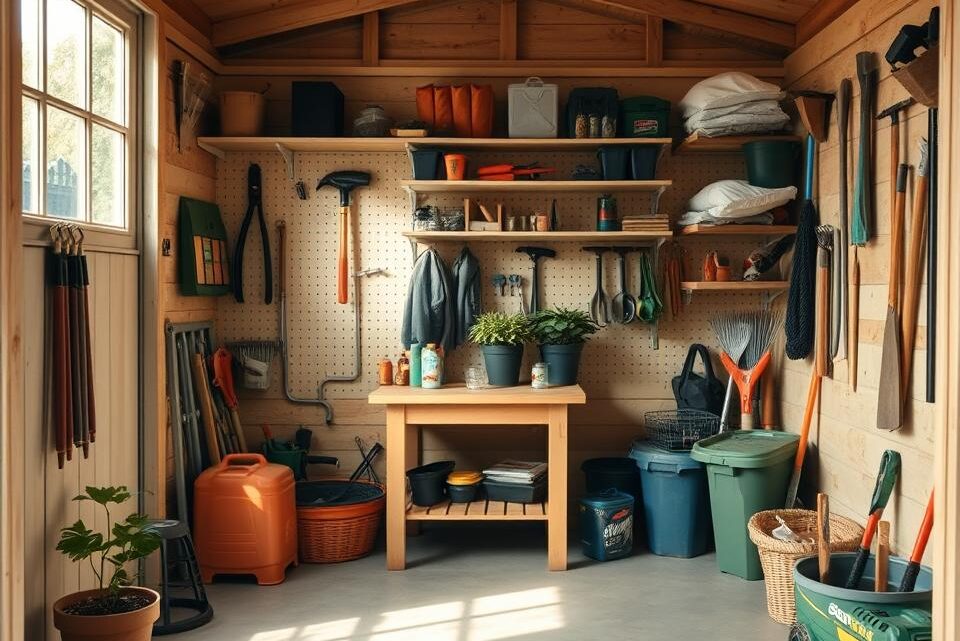
This practical guide to shed organisation is written for British homeowners, renters with garden sheds, allotment holders and keen DIY enthusiasts. It recognises typical UK garden sizes, varied weather and common uses such as garden tool storage, a DIY workspace and seasonal storage. The aim is to help you organise garden shed space so you gain easier access, extend tool life, store fuels and batteries safely, improve security and make better use of every metre.
Throughout this article you will find shed storage UK advice that is realistic and budget-aware. We focus on solutions that suit timber, metal and plastic sheds and on outdoor storage solutions that withstand British damp and temperature swings. Expect step-by-step planning, weatherproofing tips, tool and seasonal management and practical product-category suggestions such as shelving, pegboards, waterproof containers and robust locks.
The structure moves from initial assessment and planning through layout, smart shelving, and weatherproofing to tool maintenance, seasonal rotation and security. Later sections include eco-friendly ideas and low-cost options to help you organise garden shed space without overspending. These shed tips UK are designed to produce a purpose-driven, maintainable layout you can sustain over time.
Inhaltsverzeichnis
Key Takeaways
- Focus on a clear purpose for your shed: storage, workshop or a mix.
- Assess current layout before buying shelving or containers.
- Choose weatherproof storage and raise items off the floor.
- Plan zones for tools, seasonal items and hazardous materials.
- Use simple security upgrades to protect belongings.
- Work within a budget using second-hand or DIY solutions where sensible.
shed organisation: where to begin
Starting a garden shed assessment makes the whole process simpler. Begin with a clear plan for what you want the shed to do. A good shed planning step saves time and stops decisions from drifting as you work.
Begin with a shed audit to learn what you already have. If practical, empty the shed. If not, photograph and map the contents. Note how often each item is used. Look for damp, mould or pest signs. Check for hazards such as fuel leaks or corroded tools. Carry out the audit on a dry spring or summer day for easier handling and safer sorting.
Next, focus on purpose. Define one or two primary roles for the space: tool storage, potting bench, workshop or seasonal storage. Sketch a simple plan with zones: frequent-use, seasonal and hazardous. Use the sketch to guide shelf placement, workbench position and clearances for safe movement.
Prioritise items with a clear decision framework. Keep items used in the last 12 months or those essential for maintenance. Donate or sell usable but seldom-used items through British Heart Foundation shops, Facebook Marketplace or Freecycle. Recycle or dispose of broken, unsafe or obsolete items. Take chemicals and fuel to council hazardous waste facilities; your local community recycling centre will advise on accepted materials.
Finally, set rules for accessibility and safety. Place high-use items near the door and lock hazardous items in sealed containers. Make a list of the changes needed from your shed audit to support this plan. This approach makes declutter shed tasks manageable and boosts long-term order.
Planning your shed layout for maximum space
A clear plan makes the difference between a cluttered shed and an efficient workspace. Start with simple measurements and a sketch, then match usage to zones so you can maximise shed space without costly changes.
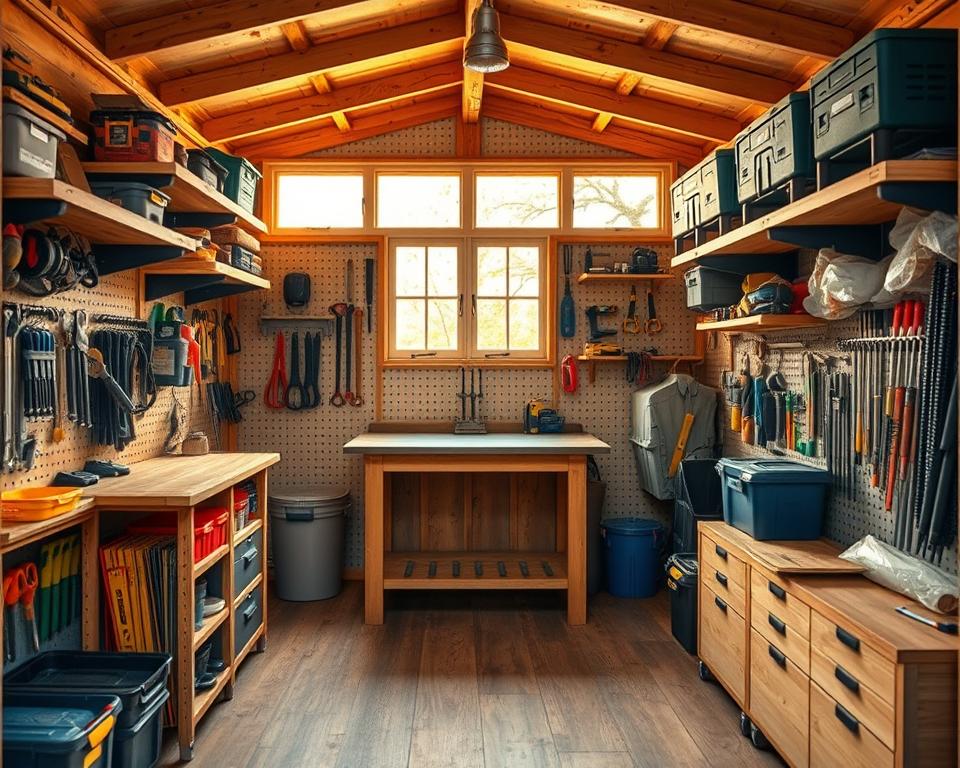
Measure the internal length, width and height. Note door swing, window positions, vents, rafters and power points. Transfer these details to graph paper or a digital tool to create a practical shed floorplan UK owners can use.
Mark fixed areas such as entrances, a tool zone, seasonal storage and a workbench. This shed zoning helps you decide where heavy items should sit and where a clear walkway must remain.
Position frequently used items near the door to reduce time spent searching. Keep a central aisle of at least 60–80cm for comfortable access. Allow a bench depth of 75–90cm to give a usable workspace.
Plan lighting and power for tasks. Place sockets and task lights where you will work. Keep fuels and paints near ventilation points and away from heat sources for safety and compliance.
Adapting the plan to different build types is essential. For wooden sheds, fix shelving to studs but check for rot and add insulation where needed.
Metal sheds suit freestanding shelving and purpose-made racking. Avoid direct contact between steel and timber to limit corrosion and consider anchoring systems for wind resistance.
Plastic or resin sheds need lightweight, modular fittings. Use ceiling storage systems designed for resin sheds and respect floor load limits when siting heavy items.
Below is a quick comparison to help choose fittings and anchoring by shed type.
| Feature | Wooden shed | Metal shed | Plastic shed |
|---|---|---|---|
| Best shelving | Fixed timber shelves, wall-mounted units | Freestanding steel shelving, bolt-on racks | Lightweight modular shelving, resin-compatible racks |
| Anchoring and floor | Secure to joists; check for rot; insulation options | Anchor to concrete or pads; avoid timber contact | Use base plates; spread loads to protect floor |
| Load limits | High if floor reinforced; inspect supports | Depends on floor type; steel sheds can rust if damp | Lower capacity; distribute weight across shelving |
| Ventilation and safety | Easy to add vents; good for storing timber tools | Ensure airflow to stop condensation; isolate fuels | Vent well; avoid storing heavy liquids on high shelves |
Smart shelving and vertical storage solutions
A well-chosen mix of shelving, wall systems and ceiling racks transforms a cramped shed into a practical workshop. Focus on materials that resist damp, secure fixing points and clear sightlines so tools and supplies are easy to find. Balance heavy storage at low levels with lighter items placed higher to keep the shed safe and usable.
Choosing robust shelving for UK weather conditions
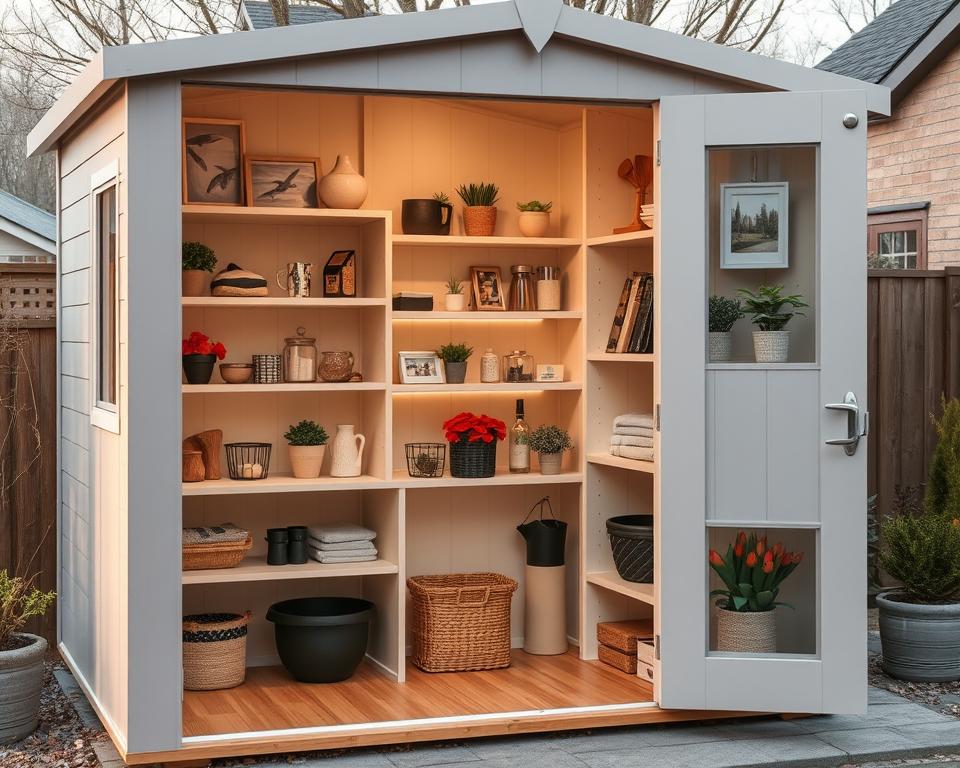
For damp-prone exteriors, galvanised steel shelving and heavy-duty plastic units stand up to moisture and rust. In wooden sheds, use treated timber shelving or marine-grade plywood with sealed edges to prevent swelling. Check weight ratings and fit secure anchor points; fit to studs or use masonry fixings for solid support. Wickes, B&Q and Homebase stock commercial-grade units suitable for garden sheds.
Using wall-mounted racks and pegboards effectively
Mount a pegboard shed panel at eye level to keep hand tools visible and easy to reach. Hardboard pegboards suit light tools, while metal pegboards handle heavier items. Fit hooks, labelled trays and baskets for screws, nails and small parts. Use slotted angle systems or welded racks for larger equipment such as spades and hoses. Distribute loads evenly and fix into studs or use appropriate wall plugs for masonry.
Optimising ceiling space with overhead storage
Ceiling storage frees floor area for work and movement. Consider fold-away slatted systems, pulley hoists for bikes and ceiling-mounted netting for bulky seasonal items. Always install an overhead shed rack into joists and observe maximum load limits. Store light, seasonal goods overhead and keep clear access routes beneath to avoid accidents. Screwfix and Argos offer purpose-built overhead kits designed for UK garages and sheds.
| Solution | Best for | Material | Key benefit |
|---|---|---|---|
| Shelving units | Bulk storage of paint tins, containers and pots | Galvanised steel, heavy-duty plastic, treated timber | High load rating and moisture resistance |
| Pegboard shed wall | Hand tools and small accessories | Hardboard or metal | Easy organisation and quick access |
| Slotted angle / welded racks | Long-handled garden tools and bulky items | Powder-coated steel | Strong support and flexible layout |
| Overhead shed rack | Seasonal items and lightweight storage boxes | Aluminium/steel frames, nylon netting | Maximises ceiling space and clears floor |
| Pulley hoist systems | Bicycles and awkward, light loads | Steel hoists, webbing slings | Simple lift-and-store, saves floor area |
Weatherproofing and protecting stored items
Keeping tools and belongings dry in a British garden shed starts with simple, practical steps. Good shed weatherproofing cuts the risk of rot and rust. Small upgrades can turn a damp, unusable space into reliable storage for years.
Insulation and moisture control for UK climates
For wooden sheds used as workshops, fit rigid foam or sheep’s wool between studs and line the interior with tongue-and-groove boards to create a stable working environment. Use a breathable membrane behind cladding and add vents near eaves to reduce condensation during cool, damp months.
Install a damp-proof course at the base and keep gutters clear to prevent water tracking back into the foundation. Regularly check seals around windows and doors and replace any failing silicone or brush strips to maintain a dry interior.
Choosing weather-resistant storage containers
Select polypropylene or polyethylene boxes with tight-sealing lids for general kit and choose IP-rated enclosures for electrical items. Brands such as Really Useful Boxes offer clear, stackable options that make contents visible and quick to locate.
Use waterproof storage containers for sensitive items and add silica gel packets to absorb residual moisture. Invest in a lockable tool chest from a reputable maker like Stanley for valuables and tools that need both security and weather protection.
Raising items off the floor to prevent damp damage
Lift stored goods at least 10–15cm off the floor using shelving with legs, plastic pallets or concrete blocks. Galvanised shelving avoids direct timber contact with damp floors and cuts the chance of mould or rot developing.
During seasonal checks look for flaking paint, rust or mould on stored items. Move anything affected outdoors, dry and treat it, then replace or upgrade its container to maintain a damp-proof shed environment.
Tool organisation and maintenance
Good tool organisation makes projects quicker and safer. Start by carving out a clear tool zone near the shed entrance or by a stable wall. Keep heavy items low and hang long-handled garden tools on wall racks or clip systems sold by retailers such as Screwfix and B&Q.
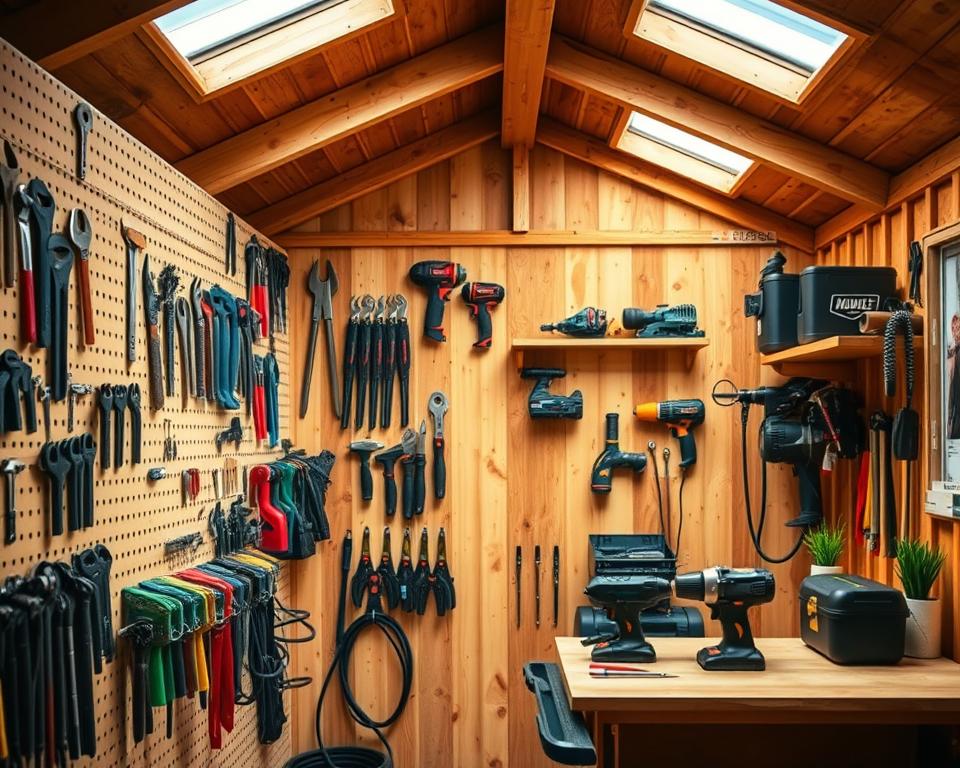
Create labelled storage for small hand tools and fasteners using stackable transparent boxes with compartmentalised organisers. Use a label maker or weatherproof tags for quick identification. Magnetic strips work well for screwdrivers and drill bits, while small plastic drawers from Wilko or Eurobox keep consumables tidy.
Adopt simple maintenance routines to extend tool life. Wipe down metal tools after use, apply light machine oil or WD-40 to prevent rust, and sharpen blades such as secateurs and shears with the correct files. Store batteries separately and follow manufacturer guidance from Bosch or Makita for charging and storage.
Plan an annual inspection to check handles, replace worn parts and reseason wooden grips with linseed oil. Balanced weight distribution and labelled storage reduce accidents and speed up work. A clearly marked tool zone combined with regular tool maintenance keeps the shed efficient year-round.
| Task | Recommended items | Frequency |
|---|---|---|
| Hand tool storage | Wall racks, clip systems, pegboards | Setup once; review seasonally |
| Small parts organisation | Transparent stackable boxes, compartment trays, label maker | Replenish as needed; check monthly |
| Rust prevention | WD-40, light machine oil, clean cloths | After each use or weekly for frequent use |
| Blade care | Sharpening files, whetstone, protective sheaths | As required; at least twice a year |
| Wooden handle upkeep | Linseed oil, sandpaper | Annually |
| Battery and power tool storage | Separate shelving, labelled bins, manufacturer charger | Store charged per manual; check monthly |
Garden equipment and seasonal storage
Good storage keeps tools ready and reduces risk. This section covers safe routines for keeping a tidy garden equipment storage area, how to rotate items for the seasons and where to keep batteries and fuel to meet UK guidance.
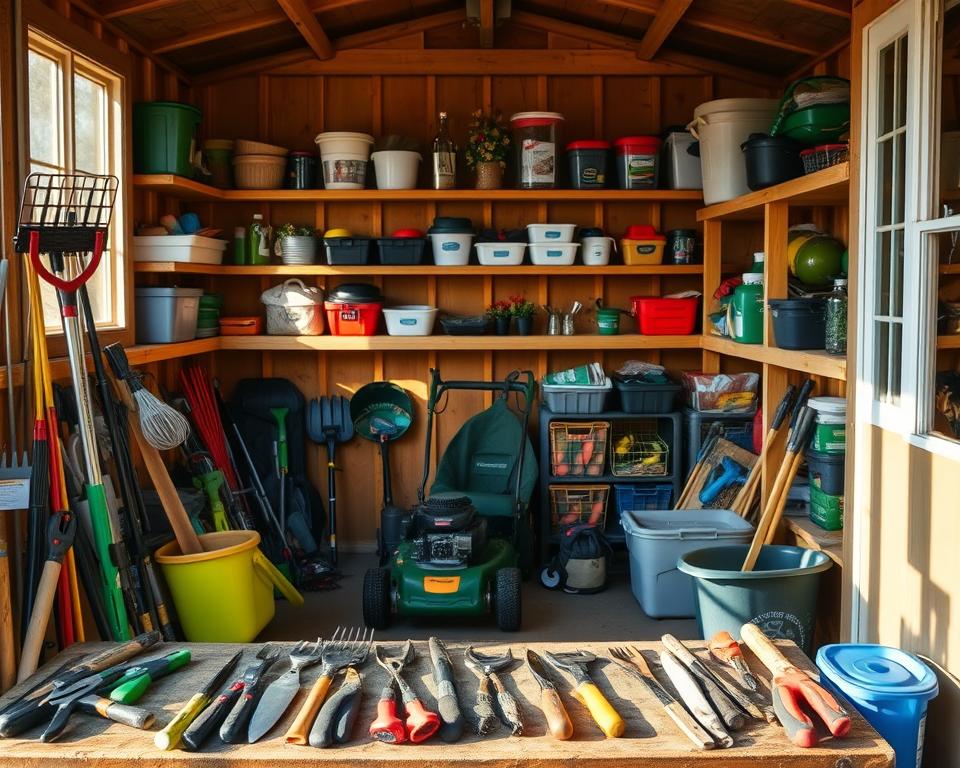
Storing lawnmowers, strimmers and power tools safely
Start by cleaning each machine and removing grass, soil and debris. For petrol engines use a fuel stabiliser or run the tank dry before stowage. Remove batteries from cordless models and place them in a cool, dry spot.
Keep petrol lawnmowers on a level surface in a ventilated area and place a drip tray underneath to catch leaks. Use a purpose-made cover and, where possible, a stand to raise the mower off a damp floor to extend service life.
Rotating seasonal items and creating a winter store
Plan seasonal shed storage UK by labelling boxes and grouping items by use. Keep winter essentials such as hedge cutters, grit and heavy tarpaulins within easy reach before cold weather arrives.
Move summer kit like BBQ accessories and decking tools to higher shelves or the back of the shed until needed. A simple checklist for rotations saves time and ensures nothing gets forgotten.
Safe battery and fuel storage practices
Store batteries according to manufacturer instructions and keep lithium-ion and NiMH packs in a fireproof container or insulated battery box. Aim to hold them at a moderate state of charge and away from freezing temperatures.
Keep fuel in certified jerry cans and store them in ventilated, bunded locations or a locked metal cabinet. Follow HSE guidance and local council advice for storing flammables and disposing of hazardous waste.
| Item | Best storage spot | Key action |
|---|---|---|
| Petrol lawnmower | Level, ventilated area with drip tray | Drain or stabilise fuel; lift off floor |
| Cordless strimmer | Wall hook or shelf, batteries removed | Clean cutting head; store battery in box |
| Batteries (Li-ion, NiMH) | Fireproof container inside shed or battery storage shed | Store at moderate charge; avoid frost |
| Fuel cans | Locked metal cabinet or ventilated external store | Use certified cans; follow HSE rules |
| Seasonal items | High shelves or labelled tubs for seasonal shed storage UK | Rotate before season change; use checklist |
Creative storage for DIYers and hobbyists
Good hobbyist shed organisation starts with a plan that fits your space and projects. Small changes can free floor area, protect materials and speed up workflow. Use robust, practical solutions that suit UK climate and the way you work.
Workbenches and fold-down tables save precious room when space is tight. Choose a sturdy compact bench or a wall-mounted fold-down table from retailers such as Screwfix or Wayfair UK. Fit the bench at 90–95cm high for comfortable use and add drawer units beneath to store hand tools and screws.
Wall-mounted benches are ideal for a workbench shed because they fold away after use. Fix hinges to studwork or a solid batten and use gas stays for controlled lowering. Keep heavy items below the bench and lightweight supplies above to maintain balance.
Paints, adhesives and craft supplies need tailored storage to stay usable and safe. Store paint tins in a cool, frost-free area on tiered shelving with drip trays to catch spills. Use sealed, vapour-proof bins for solvents and adhesives and label them clearly.
Plastic organisers work well in a craft storage shed for brushes, rollers and small components. Transparent boxes speed up retrieval. Follow COSHH guidance for hazardous materials and keep a basic spill kit close by for peace of mind.
Work-in-progress zones stop projects from spreading everywhere. Dedicate one shelf or a small trolley to current jobs and use labelled trays for parts. A pegboard above the area keeps frequently used tools at hand and visible.
Mobile storage trolleys maintain flexibility in a DIY shed storage layout. They move between workstations and tuck away when not in use. Keep a simple project log notebook on the trolley to record materials, measurements and next steps.
For heavy or delicate projects, add a dust-cover system such as breathable cloth covers or fitted boards to protect items. This keeps work tidy and reduces the chance of damage from damp or dust in the shed.
Security measures for your shed and belongings
A secure garden shed protects tools, bikes and seasonal kit from theft and weather damage. Good shed security starts with strong hardware and sensible habits. Small changes can make a big difference to deterrence and to any future insurance claim.
Choosing locks and reinforcing doors and windows
Fit a quality hasp and staple with concealed fixings to stop screws being undone from outside. Use a weather-rated disc padlock or shrouded shackle padlock designed for outdoor use. Reinforce timber doors with metal backplates and add hinges with non-removable pins.
Consider an internal shutter bar or a deadbolt where space allows. For windows, choose laminated security glass or fit a metal mesh guard to reduce smash-and-grab risk. Ground anchors secure larger items such as mowers or bicycles to the shed floor.
Low-cost security upgrades for UK homeowners
Motion-sensor solar lights offer visible protection without running electrical cables. Small, affordable shed alarms provide a loud deterrent when doors open unexpectedly. Dummy cameras and window/door sensors create uncertainty for casual thieves at minimal cost.
Plant thorny shrubs beneath windows and along vulnerable fence lines to add a low-tech barrier. Use timer lights and security stickers to suggest occupancy. These measures complement physical locks and raise the effort required to target your outbuilding.
Insurance considerations and item inventory
Check whether your home policy covers contents stored in a shed or whether you need standalone shed insurance. Many UK insurers, such as Aviva and Direct Line, set conditions that include specified lock types and that expensive items be ground-anchored.
Keep a dated inventory with serial numbers, receipts and clear photos stored in the cloud. This speeds any claim and supports valuation. Note policy excesses and any required security standards before you purchase cover.
Eco-friendly organisation and recycling tips
Small changes in shed habits cut waste and keep tools ready for use. An eco-friendly shed saves money and reduces household rubbish. Use simple steps to make storage greener and more practical.
Re-use and upcycle storage
Turn wooden pallets into sturdy shelving or plant racks. Old toolboxes, biscuit tins and jam jars make ideal organisers for nails, screws and seeds. Visit local salvage yards, Freegle listings and charity shops to source reclaimed timber and second-hand furniture for low-cost, durable storage.
Upcycle storage ideas
Fit reclaimed wood with brackets for bespoke shelves. Mount pegboards from repurposed boards to hang hand tools. Label repurposed boxes so small parts stay accessible and tidy.
Storing composting and recycling supplies
Set aside a dedicated corner for garden waste bins and a compost storage shed if you compost on site. Keep sealed containers for kitchen scraps used as temporary holding before adding to outdoor bins. Label bins clearly for glass, metal and plastics to ease recycling day routines.
Place compost bins well away from shed foundations to avoid damp. Use breathable bags or a lidded caddy to control odours and deter pests. Regularly turn garden compost to speed processing and reduce smell.
Reducing waste through smarter buying and storage
Buy garden consumables like fertiliser and birdseed in bulk then decant into airtight containers to cut packaging waste. Choose reusable cleaning cloths over single-use wipes. Keep a simple stock list so you avoid duplicate purchases and wasted items.
Switch to rechargeable batteries for garden tools and repair items when possible to extend their life. Small repairs often cost less than replacements and reduce landfill.
- Repurpose pallets and crates for shelving
- Label upcycled containers for easy access
- Keep compost and recycling clearly separated
- Store consumables in airtight jars or tubs
Budget-friendly shed organisation ideas
Creating an organised shed on a tight budget need not be complicated. Practical choices and a little elbow grease can turn clutter into efficient storage. Below are affordable strategies that work for most UK sheds.
Affordable shelving and second-hand furniture options
Search local marketplaces such as Gumtree and Facebook Marketplace for bargain shelving and cabinets. Charity shops and car boot sales often yield sturdy items at low cost.
For new inexpensive shelving, consider Wilko, Argos or IKEA alternatives for light loads. Inspect second-hand metal units for rust and wooden pieces for rot or woodworm before you buy. Check joints and drawers for smooth operation and smell timber for signs of damp.
DIY organisers from repurposed materials
Simple DIY shed organisers save money and add custom storage. Make a pegboard from hardboard, sand edges and coat with a water-resistant finish.
Stack wooden fruit crates to form open shelving. Treat timber with wood preservative and screw crates together for safety. Use offcuts to fit magnetic strips for small metal tools and cut PVC pipe to make holders for rakes and shovels.
Basic tools required include a drill, screws, sandpaper, a saw and wood preservative. Wear gloves and eye protection while cutting and sanding. Seal exposed edges and treat surfaces to resist damp.
When to invest in higher-quality storage solutions
Choose quality when items are heavy, used daily or of high value. Galvanised metal shelving resists corrosion and supports long-term loads. Lockable metal cabinets add security for power tools and expensive equipment.
Consider a fire-resistant safe for irreplaceable items. Weigh cost against lifespan and replacement expense. Investing in moisture-resistant products reduces long-term damage and can be cheaper than repeated repairs.
| Option | Typical cost | Best use | Pros | Cons |
|---|---|---|---|---|
| Second-hand shelving (marketplaces) | £10–£60 | Light to medium storage | Very cheap, sustainable, quick to source | May need repair; check for rust or rot |
| Inexpensive new shelving (Wilko/Argos) | £20–£120 | General organising for low weight | Clean finish, easy assembly | Limited load capacity, less durable |
| DIY crate shelving & pegboard | £5–£40 | Custom storage for tools and small items | Highly customisable, very cheap | Requires tools and time; finish matters for durability |
| Galvanised metal shelving | £80–£300 | Heavy tools, long-term storage | Durable, high load rating, weather resistant | Higher upfront cost |
| Lockable metal cabinet / fire safe | £100–£600 | High-value or hazardous items | Security, protection from theft and fire | Expensive; may need anchoring and ventilation |
When choosing between cheap shed storage and more durable options, think long term. For many homeowners, a blend of budget shed organisation techniques and targeted purchases gives the best value. Weigh buy vs DIY storage on the basis of tools, time and the level of protection required.
Maintaining order: routines and seasonal checklists
Keeping a shed tidy pays off. A simple shed tidy routine prevents small problems from becoming expensive repairs. Regular upkeep makes access easier, tools last longer and stored items stay in better condition.
The weekly and monthly schedule below gives a clear starting point. Use a labelled maintenance kit for quick fixes. A compact box with spare bulbs, tape and screws saves time when you spot an issue during a quick check.
Weekly and monthly tidy-up routines
Weekly: sweep the floor, return tools to their places, check batteries and fuels, wipe work surfaces. These short tasks take 15 minutes and keep clutter down.
Monthly: inspect for leaks, test locks, oil hinges and moving parts, spot-clean shelving and vents. Keep a record in the shed checklist so you can track recurring issues and repairs.
Seasonal checklist for spring, summer, autumn and winter
Spring: check for frost damage after cold spells, service the lawnmower, replace oil and sharpen blades. Carry out pest checks as wildlife becomes active.
Summer: inspect for insect nests and damp; sand and varnish wooden handles where needed; top up any weatherproof sealants. Schedule a mid-summer tidy to clear dust and debris.
Autumn: clear gutters and roof channels, store summer furniture, stock grit or salt for icy paths, winter-proof fuels and stabilise petrol. Move vulnerable items off the floor to reduce damp risk.
Winter: protect stored liquids from freezing, check insulation and vents to avoid condensation, keep a low-heat source or frost tape for sensitive equipment. Perform quick checks after storms.
How to involve family members in upkeep
Assign simple, consistent roles: one person looks after hand tools, another handles garden equipment. Use a visible chore chart on the shed door so responsibilities are obvious.
Train family members on safe handling of hazardous items such as petrol and garden chemicals. Create a shared digital inventory or photo log to coordinate who stored what and where.
| Task | Frequency | Who | Notes |
|---|---|---|---|
| Sweep and return tools | Weekly | Assigned family member | Keeps shed tidy routine simple and quick |
| Check batteries and fuels | Weekly | Tool lead | Store batteries dry; label fuel containers |
| Inspect for leaks and pests | Monthly | Maintenance owner | Update shed checklist with any findings |
| Oil hinges and moving parts | Monthly | Handy person | Reduces wear and secures locks |
| Seasonal deep checks | Quarterly | All household | Follow seasonal shed maintenance steps for each period |
| Update digital inventory/photo log | After major work | Inventory keeper | Helps with insurance and shared responsibility |
Conclusion
This shed organisation summary pulls together a clear, practical approach for UK homeowners. Start with a quick audit and a purpose-driven plan, measure and zone the space, fit robust shelving and vertical solutions, and weatherproof containers to keep items dry. Maintain tools, rotate seasonal kit and lock down security to protect value and safety.
For immediate action, spend one hour on a shed audit. List three priority changes — install shelving, create a dedicated tool zone, and move fuels or batteries to a safe storage point — and set a seasonal maintenance reminder. Use reputable UK suppliers such as B&Q, Screwfix or Homebase, and explore local reuse networks and Freecycle for budget-friendly options.
The tidy shed benefits are clear: more usable space, safer storage, longer tool life and less time hunting for items. A well-organised shed enhances everyday practicality and can add appeal when selling a home. Follow these steps to organise garden shed UK needs efficiently and enjoy the lasting gains.
FAQ
What are the main benefits of organising a shed for UK homes?
An organised shed improves access to tools and equipment, extends tool life through better storage and maintenance, reduces risk from fuels and batteries, and increases usable space. It also enhances security and helps prevent damp, mould and pest damage common in the UK climate.
How do I start assessing my current shed layout?
Begin with a full audit: empty the shed if practical or photograph and map contents, note frequency of use for each item, check for damp, mould or pest activity and identify hazards like fuel leaks. Carry out the audit in a dry spell, ideally in spring or summer, and record measurements and permanent features such as windows, vents and power points.
How should I decide what to keep, donate or discard?
Use a simple rule: keep items used in the last 12 months or essential for planned activity; donate or sell usable but rarely used items via charity shops (e.g. British Heart Foundation), Facebook Marketplace or Freecycle; recycle or dispose of broken or unsafe goods. For chemicals and fuels, use council hazardous waste services or local tips.
What’s the best way to measure and map my shed?
Measure internal length, width and height and note the door swing, joists and fixed features. Sketch zones—entrance, tool wall, workbench, seasonal storage—on graph paper or a digital plan. Leave a clear central walkway (60–80cm) and a bench depth of 75–90cm for comfortable working space.
How should I adapt a layout for different shed materials (wood, metal, plastic)?
Wooden sheds accept fixed shelving and wall fixings but need rot checks and possible insulation. Metal sheds suit freestanding or purpose-made shelving; avoid direct contact between steel and timber to limit corrosion. Plastic sheds should use modular, lightweight shelving and ceiling systems designed for resin sheds and respect floor load limits.
Which shelving works best in damp UK conditions?
Choose galvanised steel shelving or heavy-duty plastic units for damp environments. For wooden sheds, treated timber or marine-grade ply with sealed edges is appropriate. Check weight ratings, anchor into joists or masonry, and consider reputable UK retailers such as Wickes, B&Q, Homebase and Screwfix.
How can I make the most of vertical and overhead space?
Fit pegboards and wall racks at eye level for hand tools, use slotted-angle or welded racks for larger items, and install ceiling-mounted racks, pulley hoists or netting for lightweight seasonal goods. Ensure overhead fittings are fixed to joists and observe load limits—store only light items above head height.
What measures reduce damp and condensation inside a shed?
Insulate wooden sheds with rigid foam or natural insulation like sheep’s wool and line with tongue-and-groove boards if used as a workspace. Fit vents or breathable membranes to reduce condensation, maintain a damp-proof course on the base, and keep gutters clear to prevent water ingress.
Which storage containers are best for weather resistance?
Use polypropylene or polyethylene boxes with sealed lids and clear labelling. For electricals, choose IP-rated containers and include silica gel packets for moisture control. Brands such as Really Useful Boxes and Stanley offer robust options suited to UK conditions.
How high should items be stored off the floor to avoid damp damage?
Lift items at least 10–15cm off the floor using shelving with legs, plastic pallets or concrete blocks. Avoid direct contact between timber and damp floors, and inspect stored items seasonally for rust, flaking paint or mould.
How do I create an effective tool zone?
Dedicate a wall for hand tools and long-handled implements, using racks or clip systems to keep items off the floor. Hang frequently used tools at shoulder height and store heavy power tools lower down. Balance weight distribution to prevent tipping and allow easy access.
What’s the best way to store small tools and fasteners?
Use transparent stackable boxes with compartment organisers, small plastic drawers, magnetic strips for screwdrivers and labelled trays for fasteners. Weatherproof labels or a label maker help maintain order and speed up retrieval.
How should I look after and maintain garden tools?
Clean and dry tools after use, oil metal parts with light machine oil or WD‑40, sharpen blades and reseason wooden handles with linseed oil annually. Store batteries separately and follow manufacturer charging advice for brands like Bosch and Makita. Carry out an annual inspection to replace worn parts.
What are safe practices for storing petrol and batteries?
Store petrol in certified jerry cans in ventilated, bunded areas or a locked metal cabinet and follow HSE and local council guidance. Remove batteries from tools and store them in a fireproof or insulated battery box at moderate charge levels, away from frost and direct heat.
How can I organise seasonal rotation of equipment?
Create zones for seasonal items and label boxes. Keep winter essentials (grit, salt, heavy tools) accessible before cold months and move summer items to higher or less-accessible storage. Use a seasonal checklist and label lids to speed rotation.
What space-saving workshop solutions suit DIYers and hobbyists?
Install fold-down benches or compact workbenches, use mobile trolleys for flexibility and allocate a small shelf or trolley for work-in-progress projects. Pegboards and small labelled trays keep active tools within reach while protecting ongoing work.
Which locks and reinforcements improve shed security?
Fit quality hasp and staple locks with concealed fixings, outdoor-rated disc padlocks and reinforce doors with metal backplates and hinge pins. Use ground anchors for large items and consider internal shutter bars or deadbolts for extra protection.
What low-cost security upgrades can deter thieves?
Install motion-sensor solar lights, inexpensive shed alarms, window/door sensors or dummy cameras. Plant thorny shrubs near vulnerable access points, use timer lights and display security stickers as deterrents.
Should I insure shed contents and how do I document them?
Check home contents insurance for shed cover or arrange standalone shed insurance. Note policy conditions such as required locks. Keep a dated inventory with serial numbers and photos, stored digitally in the cloud, to support theft claims—refer to UK insurers like Aviva or Direct Line for guidance.
How can I reuse or upcycle materials for shed organisation?
Repurpose wooden pallets for shelving, use old toolboxes and biscuit tins for small parts, and refurbish second‑hand furniture from charity shops. Source reclaimed timber from local salvage yards or Freegle to keep costs low and reduce waste.
What eco-friendly habits help reduce waste in the shed?
Buy consumables in bulk into airtight containers, use rechargeable batteries, repair rather than replace where feasible and keep stock lists to avoid duplicate purchases. Store composting and recycling supplies in labelled containers and keep compost bins away from shed foundations.
What budget-friendly organising ideas work well?
Look for second-hand shelving on Gumtree or Facebook Marketplace, build pegboards from hardboard, create crate shelving from wooden fruit crates and make PVC holders for tools. Inspect second-hand buys for rust or rot and treat timber surfaces before use.
When is it worth investing in premium storage solutions?
Invest in higher-quality shelving, lockable metal cabinets or fireproof safes when items are heavy, valuable or used frequently. Prioritise moisture-resistant and secure products to protect tools and save money over the long term.
What routines help maintain shed order throughout the year?
Adopt a weekly quick-check—sweep, return tools, check batteries—and monthly tasks such as inspecting for leaks, testing locks and oiling moving parts. Keep a small maintenance kit in the shed and set seasonal reminders for more thorough checks.
How can family members help keep the shed tidy?
Assign simple roles—for example, one person manages tools, another garden equipment—use visible chore charts and create incentives. Provide brief training on safe handling of hazardous items and share a digital inventory or photo log to coordinate responsibilities.