Electricity Usage of Greenhouse Heaters – FAQ

This article answers the common question: do greenhouse heaters use a lot of electricity? It explains greenhouse heating electricity and greenhouse energy use for UK gardeners, allotment holders and small commercial growers. You will learn how heater choice, greenhouse type and local climate affect running costs and electric greenhouse heater cost estimates.
Heating needs vary widely — from unheated cold frames to glasshouses used for tomatoes. In the UK, Met Office winter lows often fall between 0°C and 5°C in temperate zones, with frost nights in rural areas. Those night-time lows and occasional cold snaps drive heat demand and influence total energy consumption for UK greenhouse heating.
We cite familiar UK brands and equipment so you can compare specs: electric options from Dimplex and Greenhouse Sensation, portable fan heaters and oil radiators sold under Blooma and Hozelock accessories, and common paraffin and gas convectors found at garden centres. These examples help you map typical wattages to real products when estimating electric greenhouse heater cost.
The article is structured to guide you through typical heater power ratings, comparisons of fuel types, step-by-step kWh and cost calculations, energy-saving measures, renewable alternatives and safety and regulatory considerations for the UK. Practical sections cover thermostat strategies, insulation improvements and when to zone or supplement heat for different crops.
Inhaltsverzeichnis
Key Takeaways
- Do greenhouse heaters use a lot of electricity? It depends on heater wattage, run hours and greenhouse insulation.
- Typical greenhouse energy use varies from low for hobby frames to high for heated glasshouses; check product wattage to estimate costs.
- Electric greenhouse heater cost can be reduced with good insulation, thermostats and duty-cycle control.
- Compare electric, gas and paraffin options and consider renewables like solar PV to lower long-term costs.
- UK greenhouse heating decisions should reflect local winter lows, crop needs and available budget for upgrades.
do greenhouse heaters use a lot of electricity?
Deciding whether greenhouse heating uses a lot of electricity depends on heater choice, runtime and the UK climate. Small hobby setups often draw modest power for frost protection. Propagation houses and heated benches raise consumption because they aim for higher temperatures for longer periods.
Typical power ratings of common greenhouse heaters
Common heater power ratings are straightforward to read on product labels. Small fan heaters typically range from 500–1500 W. Medium fan-forced and ceramic units sit around 1–3 kW. Underbench and soil cable systems are usually rated at roughly 50–300 W per metre, giving total outputs from about 100–1000 W depending on coverage. Larger commercial convectors span 3–12 kW.
Brands such as Dimplex, Warmflo and Greenhouse Sensation list greenhouse heater kW or electric heater watts on specifications. Remember that 1 kW running for one hour equals 1 kWh when you calculate energy use.
Comparing electric heaters, gas heaters and paraffin options
Electric heaters convert nearly all electricity into heat, so resistive devices are highly efficient at the point of use. Electric heater watts translate directly into kWh and then into cost. Running costs depend on the kWh price, which tends to be higher than gas or LPG.
LPG or natural gas convectors usually offer lower running cost per kWh but need ventilation and correct appliance approval. Paraffin heaters have lower upfront cost, but paraffin heater electricity use is low because they run on liquid fuel. Drawbacks include odour, poorer combustion and restrictions in some enclosed spaces.
For greenhouse heating fuel comparison, weigh fuel logistics. Gas and paraffin need deliveries or cylinders from Calor and other LPG suppliers. Installation, ventilation and safety checks can make fuel options less practical for hobbyists. Heat pumps and biomass are discussed later, as they have different efficiency and fuel logistics.
Average running hours and seasonal variability in the UK
Seasonal heating needs UK follow a clear pattern. The greenhouse heating season peaks November–March. Occasional cold snaps occur in October and April. Cooler regions need more hours than warmer ones in the south-east.
For frost protection a hobby greenhouse might run 2–6 hours per night in cold months. Propagation or seedling areas seeking 18–22°C may run many hours daily or operate on thermostatic cycles. Practical greenhouse heater hours depend on set temperatures, insulation and outside conditions.
Example scenarios illustrate variance. Maintaining 10°C overnight could need only a few hours on mild nights and near-continuous heat during prolonged sub-zero spells. Seedlings kept at 18–22°C will require much longer runtimes and therefore higher energy use.
How to estimate your monthly electricity cost
Use a simple step-by-step method to calculate costs. First, note the heater wattage or greenhouse heater kW. Next, estimate average daily running hours. Multiply kW by hours to get daily kWh. Multiply daily kWh by days per month for monthly kWh. Finally, multiply monthly kWh by your unit rate to calculate cost and add any standing charge for total billing.
UK unit rates change, so check Ofgem or your supplier for current figures. Recent ranges have been about 20–40 pence per kWh, depending on tariff. To calculate greenhouse electricity cost, use your rate in pence per kWh and apply it to kWh totals.
For illustration: a 1.5 kW heater running 6 hours a day uses 9 kWh per day. At 30 pence per kWh that equals £2.70 per day or about £81 for 30 days, excluding standing charges. Variations in rate or runtime will shift the greenhouse electric bill estimation significantly.
| Heater type | Typical power rating | Common use | Notes on running cost |
|---|---|---|---|
| Small fan heaters | 500–1500 W | Frost protection in small hobby houses | Easy to calculate from electric heater watts; higher pence/kWh affects running cost |
| Medium fan/ceramic units | 1–3 kW | General greenhouse heating for small to medium spaces | Typical hobby choice; greenhouse heater kW listed by manufacturers |
| Underbench / soil cables | 50–300 W per metre (100–1000 W total) | Root-zone warming and propagation benches | Low localised load; useful for reducing overall greenhouse heater hours |
| Commercial convectors | 3–12 kW | Large greenhouses and frost protection across beds | Higher output increases kWh use; better for large volume heating |
| LPG / natural gas convectors | Rated by kW output | Rapid heating for larger structures | Lower fuel cost per kWh but needs ventilation and certified installation |
| Paraffin (kerosene) heaters | Varies; fuel measured by litres | Portable, short-term warmth | Paraffin heater electricity use is minimal; fuel logistics and odour are drawbacks |
Factors that determine greenhouse heater energy consumption
Understanding what drives energy use makes it easier to manage running costs. Nominal wattage is the principal driver of instantaneous consumption, while efficiency determines how much of that input becomes useful heat in the target zone. Different heater types and the greenhouse fabric change how long a unit must run to hold a set point.
Heater wattage and efficiency ratings
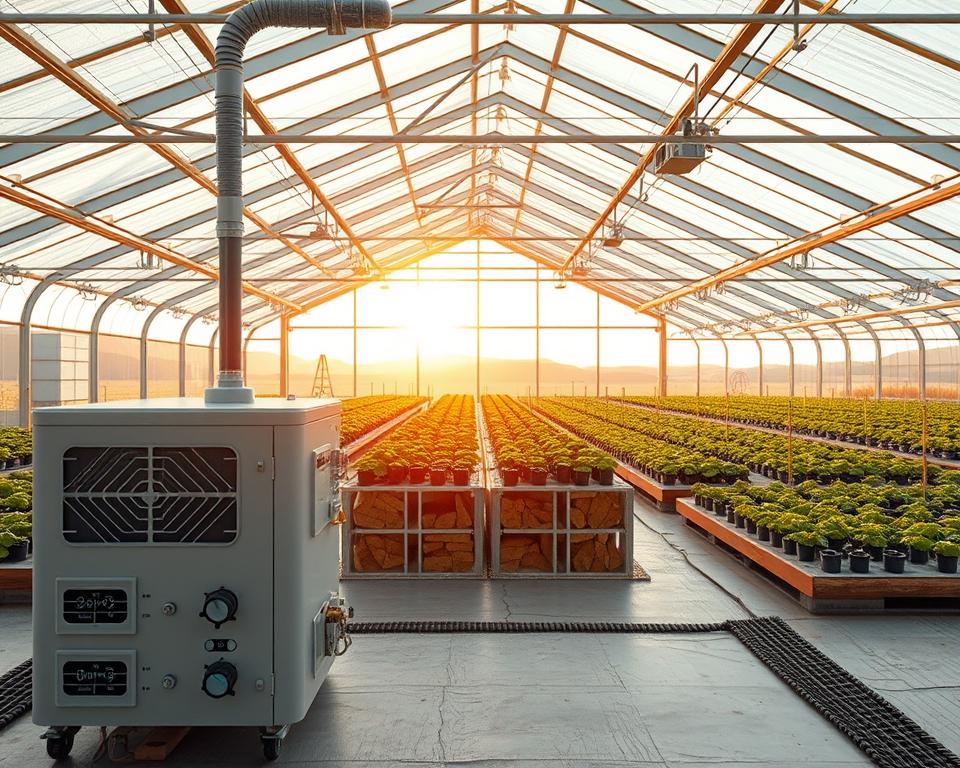
Wattage impact energy use directly. A 1,500 W fan heater draws three times the power of a 500 W unit when on. Resistive electric heating converts almost all electrical input into heat at the unit, so electric heater efficiency at the element level is near 100%.
Radiant infrared heaters send energy straight to plants and surfaces, cutting convective losses and making targeted heating more effective. Heat pumps, with a COP above 1, deliver more heat energy per unit of electricity and change the math for running costs.
Real-world distribution losses matter. Poor fan positioning can blow warm air at cold glazing where it is lost. Reflectors and infrared devices reduce convective waste and improve usable heat in the crop zone.
Greenhouse size, insulation and heat loss
Heat loss greenhouse depends on surface area, glazing type and airtightness. Conduction through glazing is often the biggest steady loss. Single-pane glass has a higher U-value greenhouse than twin-wall polycarbonate or horticultural polythene.
Twin-wall polycarbonate and bubble wrap reduce heat loss significantly. Thermal screens can cut night-time heat loss by up to 50% in some cases. Door gaps, poor seals and uncontrolled vents increase losses through convection and force longer heater run-times.
External climate, wind and night-time temperatures
External temperature greenhouse heating needs rise as outside air cools. Low night-time sky temperatures increase radiative losses to the sky. Wind effect greenhouse can magnify convective loss, especially on exposed allotments and ridgelines.
Microclimates matter. Sheltered back gardens usually show lower losses than exposed sites. Urban heat islands can slightly reduce heating need compared with rural sites at the same altitude.
Thermostat settings and control strategies
Set-point choices change consumption. Lower night-time set-points suit hardy crops and cut hours; higher targets are common for propagation. Accurate thermostat greenhouse placement is essential. If the sensor sits in a draft or directly in heater airflow it will cause short cycles and higher energy use.
Control options range from simple on/off thermostats to proportional and PID controllers. Frost-stat-only protection keeps systems off until critical lows, while full temperature control maintains stable conditions. Good greenhouse heating control strategies reduce cycles and improve temperature control greenhouse, yielding better energy economy and plant outcomes.
Types of greenhouse heaters and their electricity profiles
The choice of heater shapes running costs and plant performance. Below are common options used by UK gardeners and small growers, with notes on how much electricity they typically draw and where they work best.

Fan-forced convector units
Fan-forced convector heaters push air over a hot element to warm the greenhouse quickly. Hobby models usually range from 500 W to 3 kW. Brands such as Dimplex and Warmflo supply sealed-element fan units that are popular in horticultural retail.
Electric fan heater energy use equals the rated wattage while the unit runs. Duty cycle depends on thermostat settings and heat loss from the structure. Rapid air heating is an advantage when you need short bursts of warmth. A drawback is that moving air can dry foliage and waste heat if the heater is poorly placed.
Ceramic and infrared options
Ceramic heater greenhouse models use a ceramic element with a fan or passive casing to give focused warmth. Infrared greenhouse heater units emit radiant energy that heats plants and soil more directly than air. Typical power ranges sit between 0.5 kW and 2 kW.
Radiant heater energy use is still resistive when running, yet perceived energy needs often fall because the heat is targeted. These units suit frost protection of benches and crops that tolerate localised warmth while benefiting from lower ventilation losses compared with convective heaters.
Underbench and cable heating systems
Underbench heater greenhouse solutions include soil heating mats and electric cable systems laid in compost or under trays. Electric cable heating greenhouse products and soil heating mats are typically low wattage per metre and intended to keep the root zone warm.
These systems have a different electricity profile: lower total wattage but they often run for longer continuous periods. That steady input is energy-efficient for seed propagation, cutting rooting and overwintering container plants because air temperature can remain lower while roots get direct heat.
Hybrid and renewable-assisted configurations
Hybrid greenhouse heating mixes mains electric heaters with renewable supply. Solar assisted heating greenhouse setups commonly combine electric heaters with photovoltaic panels or solar thermal collectors that charge thermal mass during the day.
Battery storage greenhouse heating can store PV output to power heaters when sunlight falls. Solar and battery backing reduces grid consumption at peak times. In commercial settings, heat pumps or combined heat and power change the electricity profile by delivering higher efficiency per kWh used.
| Heater type | Typical power (kW) | Run pattern | Best use | Key benefit |
|---|---|---|---|---|
| Fan-forced convector heater | 0.5–3.0 | Intermittent bursts (thermostat-controlled) | Fast warming of air, short-term frost risk | Low capital cost, quick heat |
| Ceramic / infrared heater | 0.5–2.0 | Targeted cycles to protect benches | Frost protection, localized bench heating | Direct radiant heat, lower ventilation losses |
| Underbench mats & electric cable | 0.05–0.3 per m | Long, steady operation | Seed propagation, rooting cuttings | Efficient root-zone warming, lower air temp |
| Hybrid (PV, battery, mains) | Varies with system size | Mixed: daytime offset, night backup | All scales seeking lower grid use | Reduced grid consumption, flexible supply |
| Heat pumps / CHP (commercial) | Variable | Continuous or demand-led | Large greenhouses, commercial propagation | Higher efficiency per kWh |
How to calculate energy use and costs for a greenhouse heater
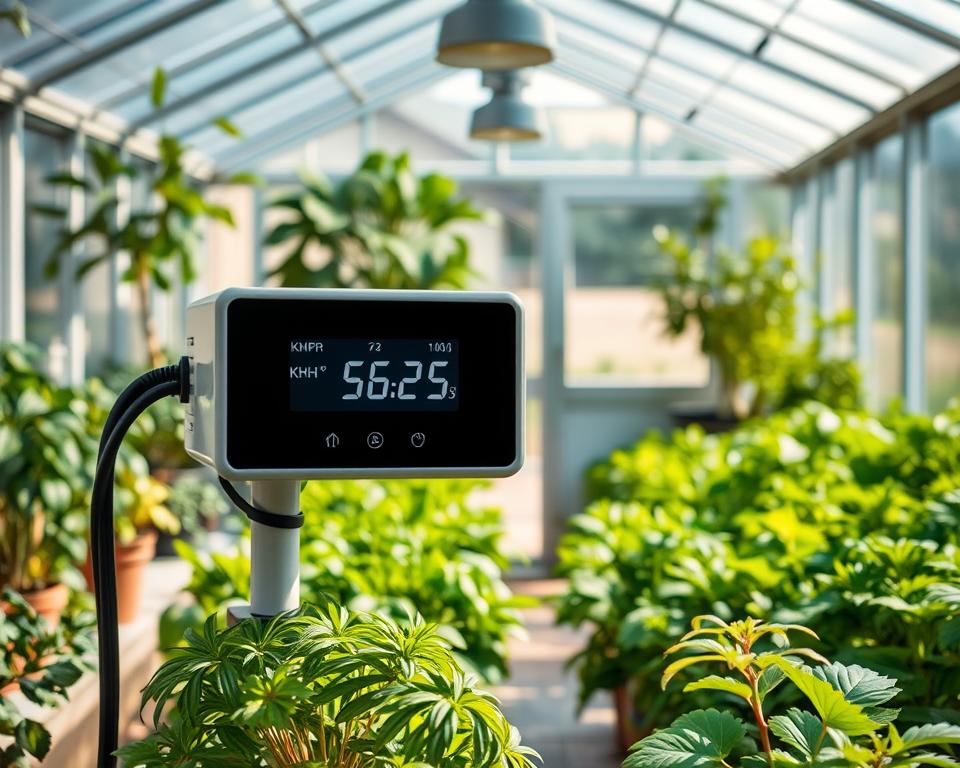
Getting an accurate energy calculation greenhouse heater requires a simple method and a few real measurements. Start with the heater wattage, convert watts to kilowatts using the heater kWh formula (W ÷ 1000), then multiply by hours run per day to find daily kWh. Multiply daily kWh by days per month to get monthly kWh. This straightforward approach feeds any greenhouse energy calculator or greenhouse kWh spreadsheet you choose to use.
Worked example: a 2 kW heater running 5 hours a day uses 2 × 5 = 10 kWh/day. Over 30 days that totals 300 kWh/month. Use this same method when comparing multiple heaters with a heater cost calculator or spreadsheet.
Thermostat behaviour matters. A thermostat duty cycle greenhouse describes the percentage of time the heater is actually on. If you know the duty cycle, factor it into consumption by multiplying rated kW by the duty cycle fraction. For instance, a 1.5 kW heater at a 40% duty cycle over 24 hours gives 1.5 × 0.4 × 24 = 14.4 kWh/day. This heater duty cycle calculation changes estimates far more than small differences in rated wattage.
On-off cycles heating, especially short cycles, can affect accuracy. Capture real performance with plug-in energy monitors such as British Gas Hive-compatible meters, or widely available devices in the UK like Kill A Watt alternatives. Data logging makes the energy calculation greenhouse heater far more reliable than guesswork.
UK electricity tariff greenhouse heating combines unit rates and a standing charge. Unit rates are shown in pence per kWh greenhouse heating and you must add the monthly portion of the standing charge impact heating cost. Some households use Economy 7 or Economy 10 off-peak hours to reduce bills if heating can be timed to night use.
Cost example using the earlier 300 kWh/month figure: if your unit rate is 20 pence per kWh, the energy cost is 300 × 0.20 = £60. Add the monthly standing charge (daily standing charge × days in month) to get total cost. Adjust this when using a greenhouse energy calculator to compare scenarios.
Practical spreadsheet layout: create columns for heater name, wattage, expected hours/day, duty cycle, daily kWh and monthly kWh, unit rate (pence per kWh greenhouse heating) and monthly cost. Sample formulas: daily kWh = (wattage ÷ 1000) × hours × duty cycle; monthly kWh = daily kWh × days. This greenhouse kWh spreadsheet structure pairs well with a heater cost calculator and helps track changes over a season.
| Step | Formula | Worked example |
|---|---|---|
| Convert watts to kW | kW = W ÷ 1000 | 2000 W ÷ 1000 = 2 kW |
| Daily kWh without duty cycle | Daily kWh = kW × hours/day | 2 kW × 5 h = 10 kWh/day |
| Daily kWh with duty cycle | Daily kWh = kW × duty cycle × 24 (or hours used) | 1.5 kW × 0.4 × 24 = 14.4 kWh/day |
| Monthly kWh | Monthly kWh = daily kWh × days/month | 10 kWh/day × 30 = 300 kWh/month |
| Energy cost | Cost = monthly kWh × unit rate + monthly standing charge | 300 × £0.20 + (£0.25/day × 30) = £60 + £7.50 = £67.50 |
Energy-saving measures to reduce electricity consumption
Small changes to insulation, controls and maintenance cut running hours and make heating more efficient. Target the biggest heat losses first and match active heating to what your plants actually need. Below is practical advice on insulation, control systems, passive heat and upkeep that suit UK greenhouses.
Improving insulation: polythene, double glazing and thermal screens
Start with simple greenhouse insulation tips that give quick returns. Horticultural bubble wrap greenhouse insulation, applied in a single or double layer, reduces conductive losses through glass and is cost effective. Twin-wall polycarbonate or retrofit double glazing cuts heat loss more permanently and improves durability.
Thermal screens greenhouse options, such as retractable reflective blankets, can cut night-time heat loss by around 30–50% when well fitted. Good door seals and weather‑stripping reduce convective losses from gaps. Fix bubble wrap without trapping condensation; leave small vents or use anti‑condensation products to protect plants.
Using thermostats, timers and smart controllers
Fit a programmable greenhouse heater to avoid unnecessary runtime. Set the greenhouse thermostat at crop-appropriate temperatures and keep the sensor at canopy height in a representative spot away from direct heater output and door drafts.
Smart greenhouse controller systems from reputable horticultural brands allow remote scheduling and logging. PID controllers and frost stats reduce overshoot and short cycling. Multi-zone controllers work well in larger structures to heat only where needed.
Maximising passive heat: thermal mass and south-facing placement
Design a thermal mass greenhouse to store daytime solar energy. Water barrels, stone or concrete beds absorb heat by day and release it at night, lowering heater run times. Use a passive solar greenhouse layout to make the most of natural gains.
Where site allows, orient glazing to gain maximum sun. South-facing greenhouse benefits include longer daily solar access, warmer day temperatures and reduced reliance on active heating in spring and autumn.
Combine thermal mass with low-level radiant or root-zone heating. This hybrid approach keeps temperatures stable with less energy input than overhead heating alone.
Maintenance to keep heaters running efficiently
Routine heater maintenance greenhouse tasks preserve performance and lifespan. Clean fans and filters regularly. Inspect electrical connections and thermostats. Check heating cables for wear and secure fittings.
Service greenhouse heater gas appliances annually through a Gas Safe registered engineer. Replace worn seals and gaskets in frames and doors. Poor maintenance increases run time and wastes electricity; regular checks improve heating efficiency maintenance and reduce long-term costs.
For complex systems, keep logs and act on erratic thermostat behaviour. Timed checks and early servicing prevent faults that lead to higher energy use and unsafe conditions.
Renewable and low-energy alternatives
A shift to renewable or low-energy greenhouse heating can cut running costs and carbon for hobbyists and commercial growers. Start by sealing draughts and adding thermal mass. Those steps lower the baseline load so technologies such as solar PV greenhouse heating or a heat pump greenhouse become more effective.

Solar PV on a roof or a nearby ground-mounted array can generate daytime electricity to offset heater use. Pairing panels with a battery storage greenhouse setup lets you store surplus energy for evening or early-morning warmth. Bear in mind PV output falls in winter; large battery capacity is often needed to meaningfully offset overnight heating.
Practical systems use daytime pre-heating with a smaller battery to support off-peak or short-night demands. A solar heater greenhouse arrangement that combines panels, modest storage and targeted electric heaters can deliver a better payback than batteries sized for full overnight coverage.
Air source heat pump greenhouse systems work by moving heat rather than creating it. The COP, or coefficient of performance, tells you the multiple of heat energy delivered for each unit of electricity consumed. Typical units achieve a COP of 2–4 under mild conditions, making a heat pump greenhouse far more efficient greenhouse heating than resistive elements.
Small-scale air source heat pumps can provide space heating or drive warm-water bench circuits. They need professional design and installation. Use MCS-certified installers and factor in that efficiency drops at very low outside temperatures.
Biomass greenhouse heating with wood pellet or wood chip boilers offers an alternative where fuel supply and storage are practical. These systems can have lower fuel cost per kWh than electricity, but they demand regular fuel handling, ash disposal and more maintenance. They may face air quality and planning requirements in some local authorities.
Gas greenhouse heater or LPG greenhouse heater options often cost less to run per kWh than electric resistance heaters. They must meet building and safety regulations and need correct flues and ventilation. Running costs depend on volatile fuel prices; installation tends to be simpler than biomass but safety checks are essential.
A hybrid greenhouse system that combines renewables, a heat pump greenhouse and efficient controls reduces reliance on a single fuel. Many growers choose to combine renewables greenhouse approaches: solar PV for daytime load, battery backup for short evening peaks, and a heat pump for steady base heating.
Compare costs from reputable UK suppliers such as Octopus Energy, Solarcentury, Vaillant and Viessmann when getting quotes. Request realistic payback assessments and on-site surveys. Incentives and local electricity prices will change the outcome for each site.
Start with low-energy greenhouse heating measures: thermal screens, draught-sealing, insulation and thermostatic controls. Next add targeted heating like root-zone mats or infrared panels. After load is reduced, explore PV, battery storage greenhouse options or a heat pump greenhouse. This sequencing keeps capital outlay sensible while improving long-term energy performance.
Weigh capital cost, fuel logistics and maintenance against running savings. For many UK growers, a combined approach that blends efficient greenhouse heating, modest solar PV and a carefully sized heat pump or fuel-fired backup gives the best balance of reliability, cost and carbon.
Practical tips for UK gardeners to balance cost and plant needs
Gardeners must match plant needs with sensible energy use. Choosing clear greenhouse temperature targets helps keep bills manageable while protecting crops. Start with simple bands: frost protection above 0–2°C, overwintering hardy vegetables at 5–10°C, and propagation or seedlings at 18–22°C. Tropical and subtropical plants need higher, steady warmth and will raise running costs significantly.
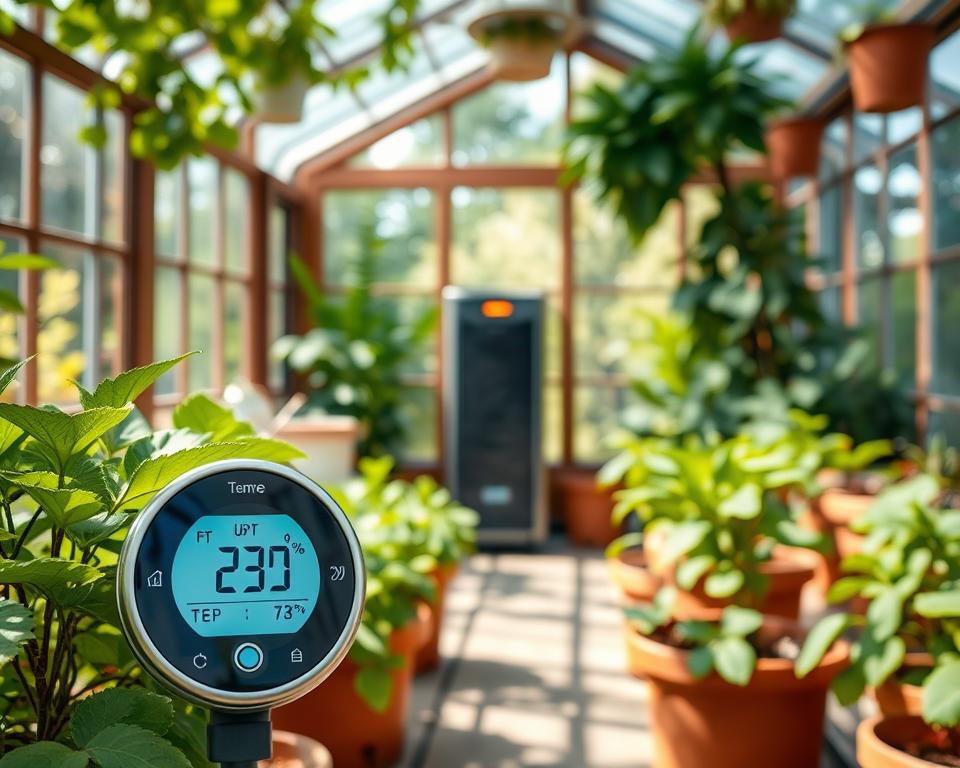
Set lower night-time greenhouse temp where possible and raise day-time greenhouse temp only when needed for growth. Reducing night set-points by a few degrees cuts consumption but risks frost damage. Use frost stats, crop covers or temporary fleece to keep tender plants safe. These measures let you control when to heat greenhouse without constant high output.
Consider greenhouse zoning to avoid heating the whole volume. A multi-zone greenhouse approach uses thermal curtains, shelving and bench covers to form heat zones greenhouse planners favour. Place propagation benches with cable mats in one zone and keep other benches cooler for overwintering pots.
Use separate heaters for different zones so you run small units rather than one large heater. Insulated bench covers and insulated cloches give local warmth with low cost. A heat zones greenhouse layout helps concentrate energy where seedlings and tender crops need it most.
Plan a seasonal greenhouse heating strategy. From spring to autumn, rely mainly on passive methods greenhouse such as south-facing glazing and thermal mass. In late autumn and early spring, use targeted low-level heating on cold nights. During mid-winter cold snaps, provide more comprehensive heating only for the most vulnerable plants.
Temporary moves reduce continuous demand. Use fleece, cloches or move tender plants indoors during extreme cold. These passive and temporary steps lower the need for full-time heater use and preserve energy for critical periods.
Monitor greenhouse energy use to refine decisions. Install energy monitors or a smart meter greenhouse to collect reliable consumption data. Smart plugs for individual heaters let you track heater kWh by zone. Regular greenhouse energy tracking helps identify waste and optimise run times.
Keep a simple log of indoor temperatures, heater run times and energy use under different weather conditions. Note night-time greenhouse temp and day-time greenhouse temp patterns alongside consumption. Reviewing this record adjusts set-points and informs choices on when to heat greenhouse.
Review supplier tariffs periodically and consider time-of-use deals if heating times match cheaper periods. Small changes in timing, coupled with better insulation and greenhouse zoning, can reduce costs while keeping crops healthy.
Safety, regulations and installation considerations in the UK
Safe heating starts with compliance. Any electrical work in a greenhouse must meet UK rules and industry standards to protect people, plants and buildings. Use certified installers for fixed work and choose equipment rated for humid, outdoor conditions where needed.
Hardwired heaters should be installed by a NICEIC- or NAPIT-registered electrician. A qualified electrical installer greenhouse will ensure correct earthing, appropriate circuit protection and RCDs. In commercial settings, keep records of PAT testing greenhouse heater units and maintenance to demonstrate regular checks and compliance.
Ventilation, condensation and fire risk
Good greenhouse ventilation heating design removes moisture and combustion gases. Mechanical ventilators or passive vents cut humidity and help prevent mould. Treat a condensation greenhouse heater issue with dehumidifying ventilation, thermal screens and careful thermostat control to avoid spikes when temperatures fall.
Address fire safety greenhouse concerns by keeping clearances around devices, fitting guards for radiant elements and using non-combustible surfaces near heaters. Store paraffin and gas fuels safely, following HSE guidance, and fit carbon monoxide alarms where combustion appliances are used.
Gas appliances and ongoing servicing
Any gas-fired heater needs installation and servicing by a Gas Safe registered engineer. Annual checks and prompt servicing reduce leak and combustion risks. Fit carbon monoxide monitors and ensure extraction for flue gases where present.
Planning, building rules and commercial obligations
Small hobby greenhouses usually avoid greenhouse planning permission UK requirements. Larger structures, permanent bases or a change of use often trigger permissions. Consult the local planning authority before major builds or alterations.
Commercial projects must follow building regulations greenhouse guidance and workplace safety law under the Health and Safety Executive. Commercial greenhouse rules often impose specific standards for heating, ventilation and fuel systems. Engage professionals early and obtain written confirmations where structural or fuel installations are involved.
Practical recommendations
Choose portable electric heaters with suitable IP ratings and plug them into RCD-protected circuits for safety. For fixed systems, hire a qualified electrical installer greenhouse and keep PAT testing greenhouse heater records for businesses. Always check local authority advice and use experienced contractors for complex or commercial works.
Conclusion
Do greenhouse heaters use a lot of electricity? Conclusion: they can, but it depends. Heater wattage, daily running hours, greenhouse size and insulation, and the temperature set-points are the main drivers of consumption. A high-wattage fan heater left on overnight in an uninsulated structure will draw far more power than a targeted infrared unit or underbench cable used with good thermal screens.
This greenhouse heating summary points to practical actions. Start by auditing heater wattage and run-times, then apply insulation upgrades such as thermal screens or double-layer polythene. Use smart thermostats, timers and zoning to cut wasted hours, and favour root-zone or infrared solutions where suitable to reduce overall demand.
To reduce greenhouse energy use UK gardeners should run the cost calculations described earlier, monitor actual kWh with a meter, and consider solar PV or battery storage to offset electric heating. Ensure all installations meet UK electrical safety standards and are fitted by a qualified installer. Using the article’s methods and ongoing monitoring will help balance plant health with manageable energy bills.
FAQ
Do greenhouse heaters use a lot of electricity?
It depends. Heater electricity use is driven by wattage, running hours and heat loss from the greenhouse. Small hobby fan heaters typically draw 500–1,500 W, medium units 1–3 kW and larger commercial convectors 3–12 kW. A 1.5 kW heater running six hours uses 9 kWh/day; at 30 pence/kWh that would be about £2.70/day or ~£81/month for 30 days. Insulation, thermostat strategy and UK regional climate (temperate night-time lows often between 0–6°C in winter) greatly influence actual consumption.
What types of heaters are common in UK greenhouses and how do their electricity profiles differ?
Common options include fan-forced electric convectors (resistive heaters), ceramic or infrared units, underbench mats and cable systems, plus non-electric options such as LPG/gas convectors and paraffin heaters. Resistive electric heaters convert nearly all electricity to heat when running, so their electricity draw equals rated watts. Infrared heaters deliver targeted radiant heat and can be more efficient for specific crops. Underbench/root-zone systems use lower wattage per metre and run longer, often giving better efficiency for propagation. Heat pumps and biomass have different efficiency and installation profiles discussed elsewhere.
How do I estimate monthly electricity costs for my greenhouse heater?
Convert the heater’s wattage to kilowatts (W ÷ 1,000), multiply by average hours run per day to get daily kWh, then by days per month for monthly kWh. Multiply monthly kWh by your unit rate (pence per kWh) and add the monthly portion of your standing charge. Example: 2 kW × 5 hours/day = 10 kWh/day → 300 kWh/month. At 30 pence/kWh that is £90/month plus standing charge. Adjust for thermostatic duty cycle when heaters are not running continuously.
What is a duty cycle and how does it affect energy estimates?
Duty cycle is the proportion of time a heater actively runs during a period because of thermostat cycling. If a heater has a 40% duty cycle over 24 hours, a 1.5 kW unit uses 1.5 × 0.4 × 24 = 14.4 kWh/day. Incorporating duty cycle gives a far more accurate consumption estimate than assuming continuous operation.
Are electric heaters more expensive to run than gas or paraffin heaters?
Typically yes on a per-kWh fuel-cost basis. Resistive electric heaters are highly efficient at converting electricity to heat, but electricity often costs more per kWh than LPG or natural gas. Gas and paraffin can be cheaper per kWh but bring ventilation, safety and fuel logistics issues. Heat pumps can be more efficient (COP 2–4), lowering running cost per unit of heat compared with resistive electric heating.
How much does greenhouse size and insulation affect energy use?
Greatly. Heat loss through glazing, air leakage and radiation to the night sky are primary drivers of required heat input. Single-pane glass loses far more heat than twin-wall polycarbonate or properly fitted horticultural bubble wrap and thermal screens. Good seals, reduced draughts and a thermal screen can cut night-time losses substantially and reduce heater run time.
What insulation and passive measures give the best savings?
Practical, cost-effective measures include horticultural bubble wrap, thermal screens, fleece for plants, door weather-stripping and south-facing siting where possible. Thermal screens can reduce night-time heat loss by a substantial percentage; adding thermal mass (water barrels, stone) stores daytime heat for release at night. Combining these with zoned heating and targeted root-zone warmth produces the best savings.
Can solar PV or batteries realistically offset greenhouse heating demand?
They can help, but winter solar output is low. Daytime PV can pre-heat or power pumps and ventilation, while batteries can shift some daytime generation to evening. To offset overnight heating substantially requires large battery capacity and careful system design, so most gardeners find a mix of insulation, timed heating and modest renewables more cost-effective than relying on PV alone in winter.
Are heat pumps suitable for greenhouse heating?
Air-source heat pumps can be suitable, offering higher efficiency than resistive electric heaters and producing warm water for bench systems or circulating air. They have higher upfront costs and reduced performance in extreme cold, but for sustained heating needs they often reduce running costs. Installation by MCS-certified installers and a site-specific assessment are recommended.
What controls and strategies reduce electricity use without risking plants?
Use accurate thermostats placed at crop canopy height, frost stats for minimum protection, timers and PID controllers to avoid short cycling. Zone the greenhouse so only propagation benches are heated to high set-points while other areas stay cooler. Employ crop-level measures like fleece or cloches for tender plants and rely on passive solar gain during daylight.
How can I monitor actual heater energy use?
Install a plug-in energy monitor or use a smart meter/plug to log kWh. Devices available in the UK include energy monitors and smart plugs compatible with home systems. Track heater run times, duty cycle and actual kWh over representative cold spells to refine estimates and tariff decisions.
Should I consider Economy 7/10 or time-of-use tariffs for greenhouse heating?
Possibly. Economy 7/10 offer cheaper off-peak rates at night which can be useful if heating can be shifted to those hours or if you have storage or timed pre-heating strategies. Check supplier terms, off-peak hours and whether your heating strategy aligns with those windows before switching.
What safety and regulatory considerations apply in the UK?
All electrical installations must meet UK regulations. Hardwired heaters should be installed by qualified electricians (NICEIC/NAPIT). Gas appliances require Gas Safe-registered engineers and annual servicing; paraffin use brings ventilation and odour issues and is restricted in some enclosed spaces. Use IP-rated equipment for damp conditions and follow HSE guidance on fuel storage and fire safety.
How much can maintenance and good positioning affect energy use?
Significantly. Clean fans, well-sealed glazing, working thermostats and correctly sited heaters reduce wasted run time. Poor maintenance increases cycles and energy use. Position heaters to avoid blowing directly at glazing and place thermostats away from direct heater output and draughts for accurate control.
What are recommended temperature set-points for common greenhouse uses?
Typical guidance: frost protection above 0–2°C; overwintering hardy vegetables 5–10°C; propagation and seedlings 18–22°C. Lower night set-points where possible and use localized heating for tender crops to reduce whole-greenhouse energy demand.
When is it worth investing in higher‑cost but lower running‑cost equipment?
Consider capital versus running cost, frequency of use and available incentives. For frequent, long-duration heating a heat pump or better insulated structure often pays back in lower running costs. For occasional frost protection, low-cost electric heaters with improved insulation and controls are usually the most economical.
Where can I find tools or templates to calculate greenhouse heating costs?
Use simple spreadsheet templates that convert watts to kW, apply hours and duty cycles, then multiply by your unit rate and standing charge. Reputable UK energy supplier calculators, National Energy Foundation tools and independent greenhouse forums provide examples and downloadable spreadsheets. Tracking actual meter data will always improve accuracy.