Garden Sheds: Explore Roof Designs & Styles
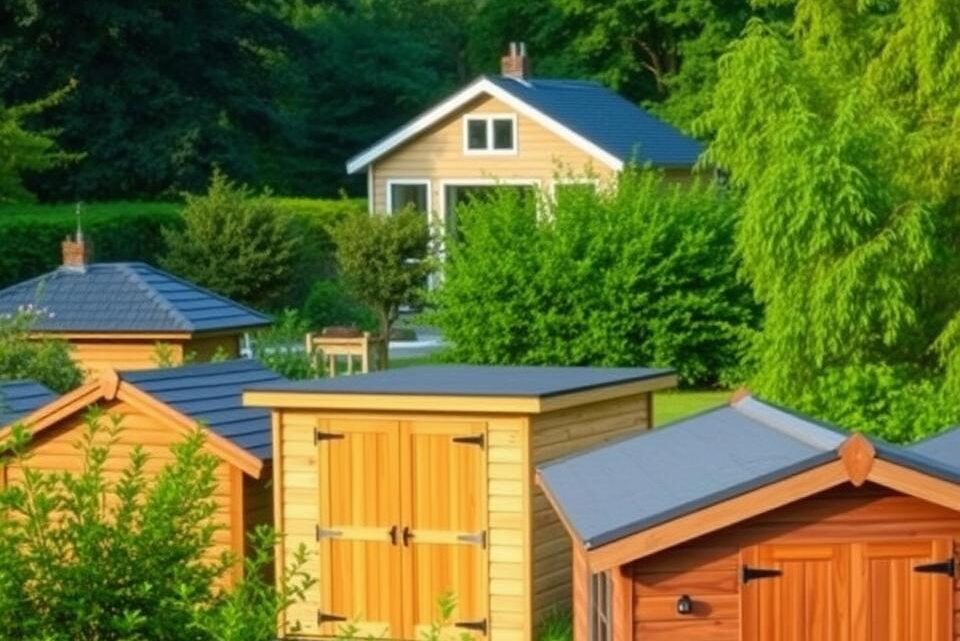
This article guides UK homeowners, landscapers, DIY enthusiasts and builders through the main garden sheds roof designs and shed roof styles you are most likely to consider: mono-pitched roof, gable roof and flat roof. It explains practical, aesthetic and regulatory factors that determine the best roof choice for small storage sheds, workshops, studio sheds and summerhouses across the United Kingdom.
We will cover design features, common materials such as felt, shingles, metal, EPDM and timber, plus insulation, waterproofing and ventilation approaches. The piece also outlines shed roofing UK rules, planning and permitted development limits so you know when to consult a professional.
Read on for clear comparisons of shed roof styles, actionable recommendations, cost and maintenance pointers, and signs that a replacement or a specialist’s advice is needed. Whether you want garden shed ideas for a sloping plot or a compact urban garden, this introduction sets the scope for an evidence-based, practical walkthrough.
Inhaltsverzeichnis
Key Takeaways
- Mono-pitched, gable and flat roof options each suit different garden uses and site constraints.
- Material choice affects longevity, appearance and thermal performance of shed roofing UK.
- Insulation, waterproofing and ventilation are essential for making sheds usable year-round.
- Planning rules and permitted development can influence roof height and placement.
- This guide delivers practical pros and cons, cost hints and when to hire a professional.
Overview of Garden Shed Roofs and Their Importance
Choosing the right roof for a garden shed shapes its performance and appearance. The design controls rainwater, wind resistance and solar gain. Good planning boosts the importance of shed roof design long before construction starts.
Why roof design matters for garden sheds
Roof slope and pitch dictate how quickly water runs off and how snow sheds in colder spells. A steeper pitch suits heavy rainfall areas and improves roof material compatibility. Thoughtful detailing at eaves and flashings limits wind uplift and reduces wind-driven rain entering the structure.
Impact on durability, weather resistance and maintenance
Correct pitch and material choice increase shed roof durability and cut the risk of ponding and leaks. In western parts of the UK, heavier rainfall calls for robust coverings and well-sealed joins. Roof overhangs protect cladding and doors, lowering long-term maintenance needs.
Different roof types demand different upkeep. Flat roofs need frequent checks for membrane integrity and drainage. Pitched roofs need periodic inspection of ridges, tiles and flashing to preserve weatherproof shed roofs and prevent rot.
How roof choice affects storage, loft space and aesthetics
Gable forms create ample shed storage headroom and allow easy loft additions for seasonal storage. Mono-pitched roofs concentrate height at one end for tall item storage while offering a modern look that complements contemporary houses. Flat roofs give a low-profile silhouette suited to small gardens and can host green roofs or solar PV panels.
| Consideration | Key effect | Practical tip |
|---|---|---|
| Pitch | Controls runoff, material options and snow shedding | Match pitch to local rainfall and chosen roofing material |
| Material | Affects lifespan and maintenance frequency | Choose durable membranes or shingles for wetter regions |
| Overhangs and flashings | Protect walls and doors from splashback | Include modest overhangs and quality flashings at joints |
| Internal height | Determines usable storage and loft potential | Prioritise shed storage headroom when planning interiors |
| Maintenance needs | Sets inspection rhythm and repair costs | Plan annual checks; increase frequency for flat roofs |
Mono-pitched roof, gable roof, flat roof – Garden sheds and their roof designs
Choosing the right roof shapes how a shed looks, performs and fits into a garden. Below we define three common options and note where each works best in the UK. This guide aids a clear shed roof types comparison and helps identify the best shed roof for UK conditions.
Mono-pitched
A mono-pitched roof, often called a pent or skillion, has a single sloping plane. Rafters run from the high rear to the low front in a simple layout. Builders favour this form for its clean, modern aesthetic and straightforward construction.
Gable
A gable roof has two sloping planes that meet at a ridge, creating a triangular gable at each end. It offers a symmetrical, traditional look that complements period homes and gives generous internal volume.
Flat
A flat roof appears horizontal but carries a shallow fall, typically 1–5 degrees, to aid drainage. It relies on a watertight membrane and careful detailing to avoid ponding. The low profile suits discreet or terrace-style placements.
Typical uses and UK suitability
Mono-pitched roofs suit contemporary gardens and sites that need light from clerestory windows. Placing the high side against a wall makes rain flow away from boundaries. This style fits sloping gardens well.
Gable roofs work best with traditional landscaping and older house styles such as Victorian or Edwardian terraces. They give taller headroom, room for loft storage and better ventilation for workshops used year-round.
Flat roofs are ideal where visibility must be minimised or where a roof terrace or living roof is planned. Small summerhouses and tool stores favour this form, provided waterproofing is prioritised for UK rainfall.
Comparative summary: pros and cons
- Mono-pitched — Pros: simple build, modern look, efficient run-off, easy to add skylights. Cons: limited loft space compared with gable.
- Gable — Pros: maximum internal volume, classic appearance, good ventilation potential. Cons: more complex to build, gable ends can catch wind on exposed sites.
- Flat — Pros: low profile, easy to fit under eaves, suitable for green roofs. Cons: greater demand for waterproofing, risk of ponding and shorter lifespan if poorly detailed.
This shed roof types comparison clarifies trade-offs so garden owners can weigh form, function and maintenance. For many UK gardens the best shed roof for UK conditions balances weather resilience with the desired look and internal space.
Mono-pitched Roofs for Garden Sheds
Mono-pitched roofs offer a clean, modern silhouette that suits contemporary gardens and sloping sites. Their single slope keeps construction simple while allowing flexibility in height, light and drainage. This design is a practical choice when you want maximum interior headroom on one side and minimal impact on boundary lines.
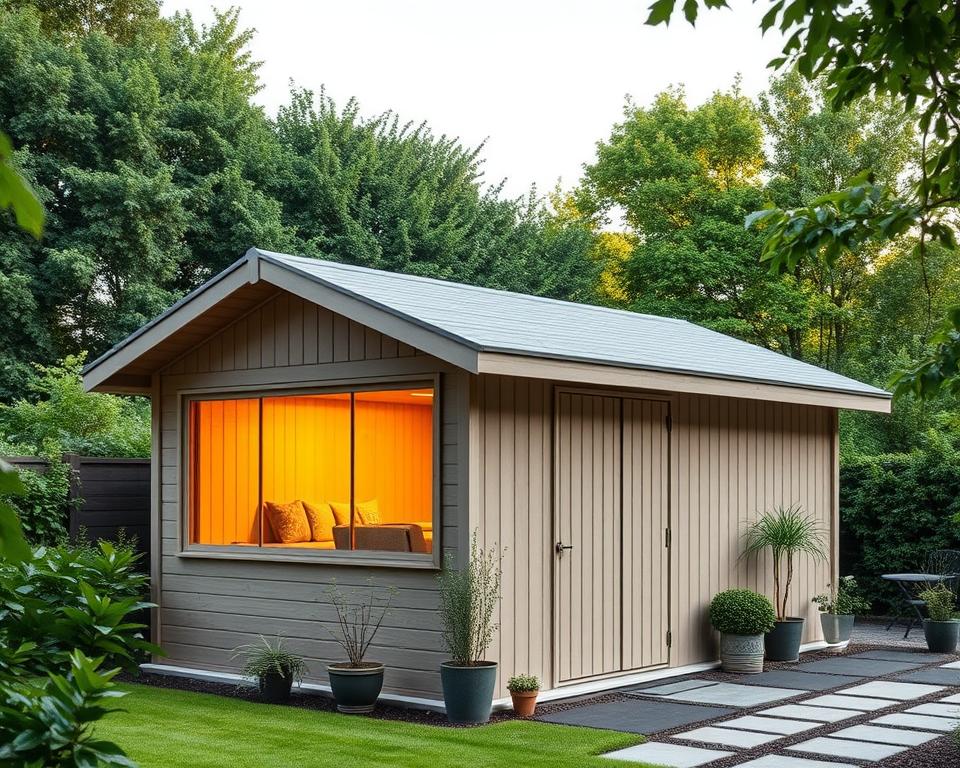
Design variations and pitch considerations
Typical shed roof pitch ranges from about 5° for very low profiles up to 30° or more for dramatic effect. Felt roofs usually need a higher pitch, around 10–15°, to ensure adequate runoff and longevity. Metal and composite shingles will perform well at lower slopes, so your choice of covering drives the suitable angle.
Think about orientation when planning the slope. If the shed faces the garden, slope the roof to the rear to keep the front higher and let light in. On shared boundaries, slope away from neighbouring patios and houses to avoid water discharge onto adjacent areas. Add modest overhangs and drip edges to protect the timber cladding and fit gutters if the roof area is large.
Materials commonly used for mono-pitched roofs
Common coverings include profiled steel or aluminium with protective coatings, asphalt felt, composite shingles and EPDM rubber membrane for very low pitches. Timber boarding beneath the covering gives the fixings something solid to grip. Choose suitable underlays: breathable membranes for ventilated roofs or vapour control layers if you plan to insulate the interior.
For many UK installers, brands such as Everbuild and Sika offer compatible sealants and membranes, while manufacturers like Tata Steel supply coated metal sheets that resist corrosion. Select pent roof materials that match the intended pitch and the expected weather load.
Benefits for contemporary and sloping gardens
The mono-pitched form complements modern landscaping with its straight lines and minimal profiles. Taller glazing on the high side can bring northern light into a workspace or potting room without losing privacy.
On sloping sites the mono-pitched roof adapts naturally to the gradient, reducing the need for complex foundations. Structurally it is simpler than a gable roof, using fewer rafters and quicker prefabrication, which cuts labour time and cost. Careful selection of shed roof pitch and appropriate pent roof materials will ensure a durable, weather-resistant result that suits urban and rural UK gardens alike.
Gable Roofs for Garden Sheds
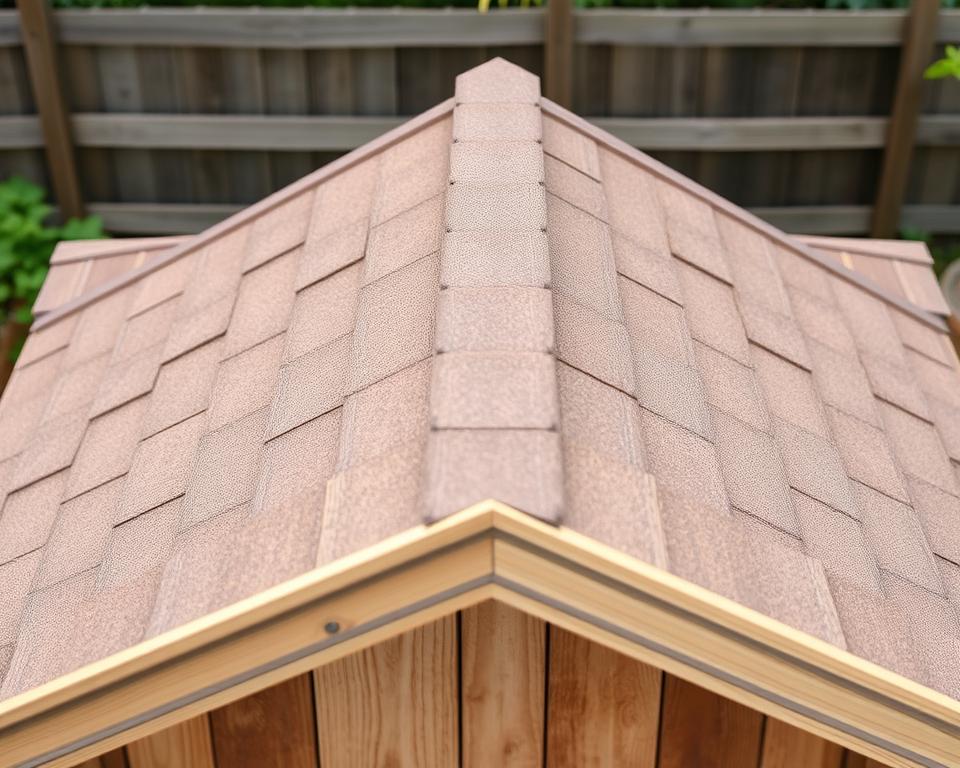
Gable roofs remain a popular choice for UK garden sheds. Their simple ridged form suits period cottages and modern gardens. The peak gives clear internal volume, making them ideal where shed loft storage or high headroom is needed.
Traditional forms and Victorian touches
The classic symmetrical gable with decorative bargeboards fits older properties and cottage gardens. The Victorian shed roof often includes ornate fascia, finials and timber detailing that match period homes. Contemporary takes keep the gable silhouette but use steeper pitches, dormer windows or pared-back eaves for a cleaner look.
Ventilation and loft potential
The central ridge creates a void that is easy to convert into shed loft storage or a small mezzanine. Ridge vents and gable vents improve airflow and cut condensation risk. The extra headroom is useful for potting benches, hobby workshops or storing tall equipment.
Materials and performance in UK weather
Common coverings include roofing felt on timber decking, composite shingles that mimic cedar, slate tiles for larger builds and tiled roofs to match house tiles. In exposed coastal locations choose corrosion-resistant fixings and robust flashing. Timber frames benefit from pressure-treated softwood or oak for long-term durability.
| Feature | Advantages | Considerations |
|---|---|---|
| Gable silhouette | Maximum central headroom; classic appearance that suits many garden styles | Requires correct bracing at ridge; taller profile may need planning checks near boundaries |
| Victorian shed roof detailing | Enhances period character; decorative joinery can add resale appeal | Ornate trim needs upkeep; painted timber needs regular maintenance |
| Shed loft storage | Creates valuable storage without extending footprint; easy to access with loft hatch | Load-bearing floor and safe ladder needed; insulation advisable for year-round use |
| Roof coverings | Options from felt to slate allow matching to house materials | Heavier coverings need stronger structure; coastal sites need stainless fixings |
| Ventilation | Ridge and gable vents reduce condensation and help protect stored items | Must be positioned to avoid draughts to workspaces; insect screens recommended |
Flat Roofs and Modern Low-profile Options
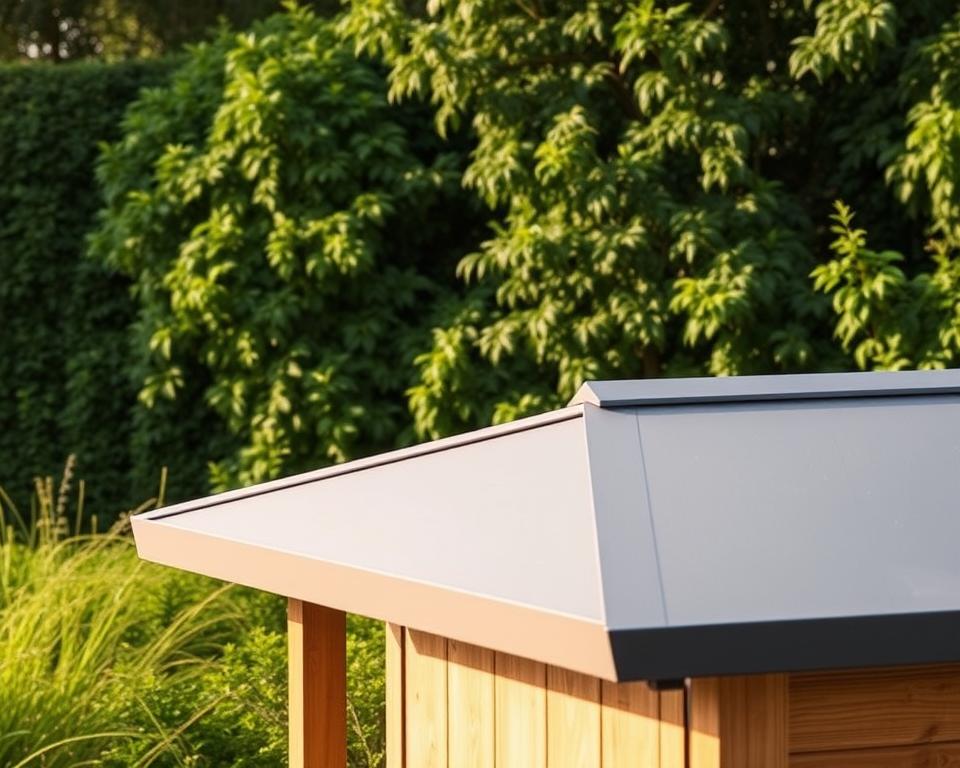
Flat and low-profile shed roofs suit tight gardens and contemporary landscaping. Builders often choose a shallow fall of 1–5° to ensure discreet drainage. Good detailing protects the structure and keeps maintenance low.
Construction methods and drainage solutions
Typical flat shed roof construction uses timber joists with a plywood or OSB deck topped by a waterproof membrane. Contractors may select EPDM, liquid rubber or torch-on felt depending on budget and expected lifespan.
Drainage must avoid ponding. Options include internal gutters, outlet scuppers and neat external guttering. Setting the fall toward a single low outlet keeps run-off controlled and reduces debris build-up.
Green roofs and living roof installations
A green roof shed appeals to homeowners seeking biodiversity and extra insulation. Extensive systems favour sedum or wildflower mixes and remain lightweight compared with intensive gardens.
Layers for a living roof include a root barrier, drainage layer, filter fleece and a lightweight substrate. EPDM shed roof membranes work well beneath green roofs because they resist roots and hold up over many years.
Cost, maintenance and lifespan considerations
Initial costs vary widely. Felt options are economical but may last only 10–15 years. An EPDM shed roof costs more up front and can last 25–40 years, lowering long-term repair bills.
Routine checks extend service life. Inspect drainage outlets, clear debris and examine membrane seams. Green roof upkeep involves occasional weeding and substrate checks. Proper initial detailing reduces lifetime repairs.
| Aspect | Economy | Lifespan | Maintenance |
|---|---|---|---|
| Felt | Low cost | 10–15 years | Regular inspections, patching |
| EPDM | Mid to high cost | 25–40 years | Minor seam checks, clear outlets |
| Torch-on | Medium to high cost | 20–30 years | Edge and seam inspection |
| Green roof (extensive) | Variable | Depends on membrane and care | Weeding, substrate monitoring |
Roof Materials: Felt, Shingles, Metal, EPDM and Timber
Choosing the right covering affects lifespan, appearance and insulation. This guide compares common options so homeowners can match materials to pitch, budget and local weather. Read on for clear differences in durability, cost and installation for shed roof materials UK.

Durability and appearance
Asphalt roofing felt is traditional and economical. It comes in long-roll and torch-on variants. Felt needs good decking and underlay to cut condensation and does not match the visual appeal of roof shingles for sheds.
Composite shingles mimic timber or slate and give an upgraded look. They offer better thermal and acoustic performance than felt and resist weathering well on pitched roofs.
Galvanised steel and aluminium form the backbone of a reliable metal shed roof. Metals shed rain swiftly and last decades when fixed with stainless or coated fasteners. They can transmit sound in heavy rain unless insulated.
EPDM rubber excels on flat and low-pitched roofs. Its flexibility makes detailing around vents straightforward and it delivers long-term waterproofing with minimal maintenance. Comparing EPDM vs felt, EPDM usually wins for longevity and leak resistance.
Timber decking or shiplap used as an exposed internal finish adds warmth. Timber requires a suitable underlay plus a weatherproof outer covering to be effective in the UK climate.
Cost and installation complexity
Felt ranks lowest for material and labour cost. Small sheds suit DIY fitting, though torch-on systems need a trained installer for safety and correct adhesion.
Shingles and composite tiles sit in the mid-range. Installation demands careful underlay placement and correct nails or staples to avoid uplift in high winds.
Metal roofs cost slightly more for materials. Panels install quickly, cutting labour time. Good practice requires precise fixing and corrosion-resistant screws, especially on coastal sites.
EPDM carries a higher upfront price but low ongoing maintenance costs. Small roofs can be DIY-fitted; complex penetrations benefit from professional installation to ensure warranty compliance.
Best match for roof type and UK climates
Pitched forms such as gable or mono-pitched roofs suit roof shingles for sheds, metal panels or slate-style composites. These options cope well with frequent rain and cold winters.
Low-pitched or flat roofs perform best with EPDM or torch-on felt. Where longevity and low fuss matter, EPDM is often the preferred choice.
For exposed or coastal gardens choose corrosion-resistant metals, high-spec membranes and stainless fixings. Combining a timber deck with a durable outer membrane gives a pleasant interior while standing up to UK weather.
| Material | Durability | Thermal/Acoustic | Cost | Best for |
|---|---|---|---|---|
| Asphalt felt | Moderate; shorter lifespan than membranes | Low to moderate; needs decking and underlay | Low | Small, low-cost sheds; temporary roofs |
| Roof shingles (composite) | Good; resistant to weathering | Better than felt; quiet under rain | Mid-range | Pitched roofs needing improved aesthetics |
| Metal (galvanised/alu) | Very good; long-lived with coatings | Moderate; needs insulation to reduce noise | Mid to high | Pitched or low-pitch roofs; quick install |
| EPDM rubber | Excellent on flat/low slopes | Good; rubber dampens sound | Higher upfront | Flat roofs needing long-life waterproofing |
| Timber decking | Depends on treatment and protection | Good internal finish; needs underlay | Variable | Exposed internal finish; combined with membrane |
Insulation, Waterproofing and Ventilation for Shed Roofs
Making a shed usable all year requires a clear plan for thermal control, moisture management and airflow. Choose materials and details that work together. Poor choices create damp, mould and warped timber. Good detailing delivers comfort for a workshop, potting shed or hobby room.
Insulation options
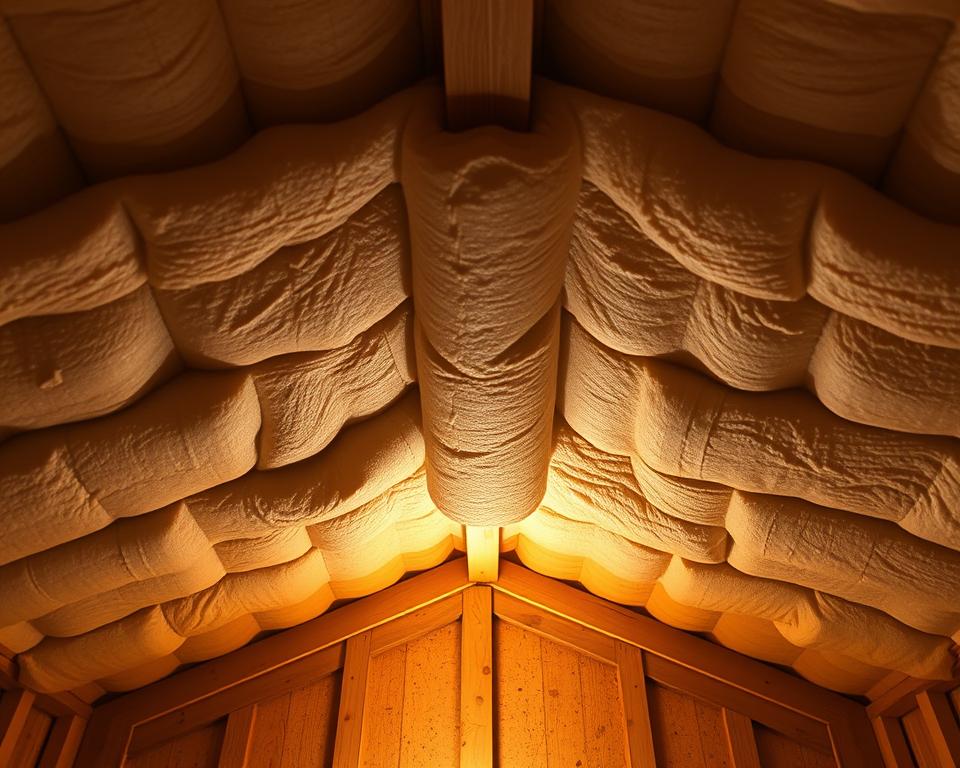
Rigid PIR boards fitted between rafters or laid over decking give high performance where depth is limited. Mineral wool suits deeper rafter bays and works well in a ventilated roof where air can move above the insulation. If you intend to heat the space, place a vapour control layer (VCL) beneath the insulation to cut the risk of interstitial moisture. For balanced results, insulate the roof and the floor and, when possible, add insulated external cladding to reduce cold bridging.
Waterproofing membranes and flashing
For a waterproof shed roof, choose proven membranes such as EPDM, bituminous torch-on felt, hot-melt or liquid-applied systems for awkward junctions. Follow manufacturer guidance for overlaps, adhesives and terminations to keep seams watertight. Use breathable underlays beneath pitched coverings so timber can dry out while keeping wind-driven rain out. Fit lead or aluminium flashings at wall abutments, verges and corners. If the shed sits against a boundary wall, ensure the abutment is sealed to prevent leaks where the shed meets the house.
Ventilation and condensation prevention
A ventilated shed roof reduces the need for bulky insulation and lowers the chance of condensation. Provide passive paths for airflow via eaves vents, ridge vents, gable louvers or small trickle vents. Ensure cross-ventilation so humid air can escape rather than linger. For workshops that produce fumes, dust or high humidity, install mechanical extraction to maintain air quality. Never seal a timber shell completely without pairing a VCL with adequate ventilation, or you will invite rot and poor indoor conditions.
Practical maintenance keeps systems working. Regularly inspect flashings and membrane laps. Check vents are clear of debris. Treat any signs of damp promptly to protect timber, finishes and stored items.
Planning, Building Regulations and Permitted Development in the UK
Before you add a new shed check the rules that affect garden outbuildings. Many small structures qualify as a permitted development shed, but exceptions exist for Listed Buildings, Conservation Areas and if the space will be used as independent living accommodation. Clear planning from the start saves time and prevents costly alterations.
When planning permission is required for garden sheds
Most garden buildings are classed as incidental to the main house and do not need formal consent. Use becomes the test. If the shed will be a workshop with power and heating, or converted into sleeping space, local authorities may require an application. Commercial uses and separate business premises usually trigger planning scrutiny.
Height limits, proximity to boundaries and roof choice implications
Permitted development rules set shed height limits that vary by roof type and distance from boundaries. A flat or mono-pitched roof sited within two metres of a neighbour’s boundary is often limited to about 2.5 metres. A dual-pitched roof typically allows a taller ridge up to roughly 4 metres when sited away from boundaries. Local policies can alter these figures, so confirm current guidance before choosing a roof.
Roof choice matters beyond aesthetics. A mono-pitched roof helps meet shed height limits while giving more internal headroom on one side. Consider overshadowing and drainage. Downpipes must not discharge onto a neighbour’s land without consent.
Health and safety, structural considerations and professional advice
Larger or habitable outbuildings often fall under building regs sheds requirements. The rules apply where electrical work, fixed heating or safety-critical structures are present. Make sure foundations suit the soil type and that timber is treated and sized correctly.
For borderline cases speak to the local planning authority, an architect or a chartered surveyor. Reputable installers such as Travis Perkins or local builders can advise on compliance and provide certificates where work triggers building regs. Professional advice reduces risk and keeps the project on track.
Maintaining and Renovating Existing Shed Roofs
Regular attention keeps a shed roof performing well and extends its life. A simple routine helps spot small problems before they become costly. Follow seasonal shed upkeep and a steady schedule of checks to protect stored items and avoid emergency work.
Routine inspection checklists
Check the roof every quarter for debris, ponding water and blocked gutters or downpipes. Look for split seams in membranes and signs of rot at eaves and junctions. After storms, inspect for blown coverings, loose fixings and damaged flashing.
On pitched roofs, remove moss and plant growth to stop moisture retention. Inside the shed, examine insulation and the ceiling for stains that show leaks. Test ventilation paths to ensure they are clear and working.
Repair strategies for leaks, sagging and damaged coverings
Small holes in felt can be patched by cutting out the damaged area and fitting a new piece of felt or applying liquid rubber products. For EPDM, use manufacturer-approved adhesives and patch kits to maintain warranty standards.
Sagging often points to weak joists, rotten decking or overload from heavy green roofs. Reinforce joists and replace decking where needed. Check green roof systems for correct load allowances before restoring them.
Damaged shingles or metal panels are best repaired by replacing individual pieces and resealing flashings. Swap corroded fixings for stainless steel fasteners to avoid repeat corrosion.
When to replace vs when to refurbish
Refurbish if the structure is sound and issues are isolated. Patching felt, re-felting small areas and resealing EPDM seams will stall further deterioration at a lower cost. Upgrade insulation and ventilation during refurbishment to reduce future condensation and improve year-round use.
Replace the roof if multiple repairs are needed, decking is rotten or the membrane has reached its expected end-of-life. Flat roofs older than 15–20 years with repeated failures usually give better value when you replace shed roof coverings with modern materials like EPDM or torch-on systems.
- Keep a seasonal shed upkeep log to track repairs and inspections.
- Prioritise repair shed roof leaks quickly to limit internal damage.
- When planning works, cost the option to replace shed roof against cumulative repair bills.
Conclusion
Choosing a shed roof comes down to site constraints, style and how you intend to use the space. Mono-pitched roofs suit sloping gardens and modern layouts, gable roofs give extra headroom and loft potential, while flat roofs offer a low-profile option and scope for a green roof. These trade-offs are central when choosing a shed roof and deciding the best shed roof UK for your plot.
For practical performance, opt for EPDM or a high-quality membrane on low slopes to avoid ponding and leaks. Shingles or metal coverings perform well on pitched forms in the wetter UK climate, and a properly specified green roof can boost insulation and biodiversity if the framing can bear the weight. These garden shed roof recommendations will help reduce long-term repair costs.
Detailing is critical: maintain adequate pitch, fit correct flashing, include vapour control and provide ventilation to prevent condensation and rot. Regular inspections and seasonal maintenance extend service life and protect stored items or habitable uses. For complex builds or where planning rules apply, consult local planning guidance and a qualified installer to ensure compliance and durability.
FAQ
What are the main roof styles for garden sheds and how do they differ?
The three principal roof styles are mono-pitched (single slope), gable (dual-pitched with a ridge and triangular gable ends) and flat (very shallow fall, typically 1–5°). Mono-pitched roofs offer a contemporary look and simple construction, gable roofs provide greater internal headroom and loft potential, and flat roofs give a low-profile option suitable for green roofs or discreet siting. Each type has different drainage, ventilation and maintenance implications.
Which roof type is best for a small storage shed versus a workshop or studio?
For small storage sheds a flat roof or low-pitched mono-pitch often suffices and keeps height low. Workshops and studios usually benefit from a gable or higher mono-pitch to provide headroom, natural light and potential loft storage. Choose based on internal space needs, intended use (habitable or not) and any local height restrictions under permitted development rules.
What roofing materials suit UK weather best?
In the UK, EPDM rubber and torch-on membranes are preferred for low slopes and flat roofs due to waterproofing durability. For pitched roofs, composite shingles, profiled metal (galvanised steel or aluminium) and quality felt or slate-effect tiles perform well. Coastal or exposed sites need corrosion-resistant fixings and higher-spec membranes.
How steep should a mono-pitched shed roof be?
Typical mono-pitched shed roof angles range from about 5° up to 30°. Minimum recommended pitch depends on covering: felt generally performs better from around 10–15°, while metal and composite shingles can work at lower pitches. Ensure adequate fall for runoff and orient the slope to avoid discharging water onto neighbouring property.
Can I put a green roof on a flat shed roof?
Yes. Extensive green roofs (sedum or wildflower mats) are common on garden sheds. They need a root barrier, drainage layer, filter fleece and lightweight substrate. Structural load increases typically range from 30–150 kg/m2, so confirm joist strength and waterproofing (EPDM is a common underlay) before installation.
What insulation and ventilation do I need if I want to use my shed year-round?
Use rigid PIR boards or mineral wool in a ventilated roof build to achieve thermal performance in limited depths. Fit a vapour control layer beneath insulation when heating the space to prevent interstitial condensation. Provide passive ventilation such as eaves/ridge vents or gable louvers; mechanical extraction may be needed for humid activities like potting or woodworking.
Do garden shed roofs require planning permission or building regulations approval?
Most small sheds fall under permitted development if incidental to the house, behind the principal elevation and within size limits. Exceptions include Listed Buildings, Conservation Areas or use as separate living accommodation. Building Regulations or planning permission may apply for habitable use, substantial floor area or certain services. Check local authority guidance for your specific site.
How often should I inspect and maintain a shed roof?
Carry out seasonal checks at least quarterly and after storms. Look for debris, ponding water, blocked outlets, split seams, loose fixings and moss on pitched roofs. Inspect flashings and eaves for rot. Promptly clear gutters and repair small defects to avoid larger failures.
When should I repair rather than replace a shed roof?
Repair is sensible for isolated failures—patching felt, resealing EPDM seams or replacing a few shingles—when the underlying structure is sound. Replace the roof when decking is rotten, there are multiple recurring leaks, or the membrane has reached its expected lifespan (felt often 10–15 years, EPDM 25–40 years). Consider upgrading insulation and ventilation at the same time.
Which materials are most cost‑effective and which offer the best longevity?
Felt is the most economical upfront option but typically has the shortest life. Composite shingles and metal offer mid to long-term durability with better appearance. EPDM has higher initial cost but low maintenance and long service life, often making it the best value for low-pitched roofs over the long term.
How do I prevent ponding on a flat shed roof?
Ensure the roof deck has a designed fall (around 1–5°) to discrete outlets, internal gutters or scuppers. Use adequately sized outlets, avoid debris build-up, and specify a trusted waterproof membrane such as EPDM or a high-quality torch-on system. Regular maintenance to clear outlets and check seams reduces ponding risk.
Are there special considerations for siting a shed roof next to a house or boundary?
Yes. Orient roof slopes to avoid discharging water onto neighbours’ land or onto patios. Maintain the permitted development requirement that outbuildings are behind the principal elevation where applicable. Use appropriate flashings at abutments and ensure downpipes do not cause nuisance; consult local rules for proximity and height limits.
What finishes and detailing improve weather performance in exposed UK locations?
Use corrosion-resistant fixings (stainless steel), mechanically fixed metal with secure flashings, high-spec membranes such as EPDM, and pressure‑treated or durable timber. Increase fixings and consider wind straps in particularly exposed or coastal sites. Proper verge and abutment detailing and quality gutters reduce failure risk.
Can I fit skylights or solar panels to a shed roof?
Yes. Skylights work well on mono-pitched or gable roofs to add light; ensure correct flashing and weatherproof detailing. Solar PV can be fitted to appropriately rated and oriented pitched roofs or even flat roofs with mounting frames. Check structural load capacity and consult qualified installers for electrics and mounting integrity.
What are typical lifespans for common shed roof systems?
Approximate lifespans: basic mineral felt 8–15 years, torch-on felt 15–25 years, composite shingles 15–30 years, metal roofs 20–40+ years depending on coating, and EPDM membranes 25–40 years. Lifespan varies with installation quality, site exposure and maintenance regime.
Where should I get professional help versus DIY for shed roofs?
Experienced DIYers can install small felt roofs or simple mono-pitched metal sheets. Professional help is recommended for EPDM detailing, torch-on membranes, complex flashing at abutments, green roof installations and any work near the homeowner’s house or in exposed locations. Use accredited roofers and request references or manufacturer guarantees.