Gazebo vs Marquee: Key Differences Explained
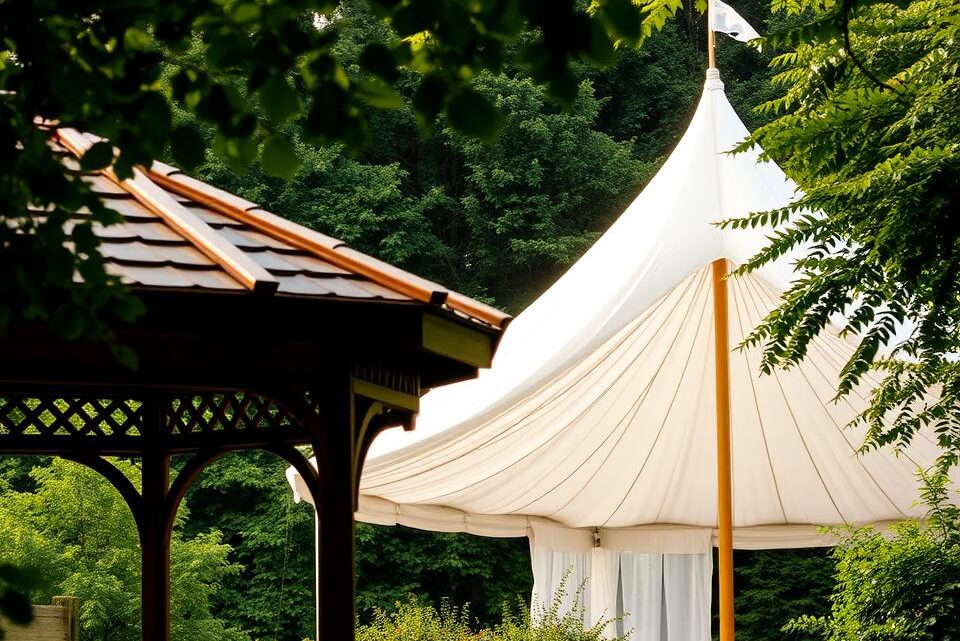
This short introduction sets out a clear, practical comparison between a gazebo and a marquee for readers in the United Kingdom. If you are planning an outdoor event, improving a garden space or launching a pop‑up for your small business, the key question is: what is the difference between a gazebo and a marquee? This article answers that question with straightforward guidance on structure, materials, setup, capacity, cost and legal considerations.
We will explain definitions and highlight gazebo marquee differences that matter when you choose shelter for sun, rain or wind. The focus is practical: design and structure for outdoor events, portability and storage, durability, and the best use cases for domestic and commercial needs.
Each subsequent section expands on one area of choice so you can compare options side‑by‑side. Expect advice tailored to homeowners, event planners, venue managers and small business owners in the UK, written in plain, professional language that follows British English spelling and clear readability standards.
Inhaltsverzeichnis
Key Takeaways
- Gazebo vs marquee decisions hinge on scale: gazebos suit smaller gardens; marquees suit larger events.
- Understand gazebo marquee differences in structure and materials to match weather performance.
- Consider setup time, portability and storage before you buy or hire.
- Check costs for purchase and hire in the UK and factor in long‑term maintenance.
- Review legal, safety and insurance requirements for public or commercial use.
what is the difference between a gazebo and a marquee?
Understanding outdoor shelter definitions UK helps event planners and homeowners choose the right cover for their needs. This brief section outlines the core meanings, common uses and how each option performs in scale and permanence.
Definition of a gazebo
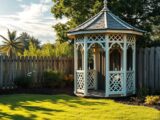
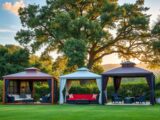
A gazebo is a freestanding structure, often hexagonal or octagonal, with a pitched or domed roof. Typical garden sizes range from 2–4 metres. Gazebos can be permanent timber or metal builds from suppliers such as Forest Garden and B&Q, or temporary pop-up models with steel or aluminium frames and polyester canopies from brands like Easy Gazebo.
Definition of a marquee
A marquee is a large temporary tented structure designed to host many people and varied events. Marquees come in types such as pole, frame and stretch, and in modular bays that allow wide spans. UK suppliers include Hireacat, Marquee & Tent and National Marquees. Sizes vary from small 3x3m units to vast structures covering several hundred square metres.
Direct comparison of core features
Scale differs sharply: gazebos are small and suited to gardens, while marquees cover large event footprints. A key point in the gazebo vs marquee definition is permanence. Gazebos may be permanent with long lifespans when built in timber, or temporary when offered as pop-up canopies. Marquees are predominantly temporary hire items for weddings, corporate events and festivals.
Construction methods contrast too. Gazebos often use central posts or perimeter frames. Marquees rely on complex frames, poles and guy ropes to achieve large, open interiors. These differences affect wind and weather performance, load capacity and installation time.
Purpose provides a clear dividing line. A gazebo functions as a garden shelter for shade and day-to-day use. A marquee serves events that need substantial covered space and flexible layouts. Lifespan varies from a decades‑lasting timber gazebo with regular maintenance to a PVC marquee canopy that requires periodic replacement.
Design and structure comparison for outdoor events
Choosing between a garden shelter and a hire tent depends on shape, size and roof type. Practical decisions on gazebo design and marquee structure affect how well the cover works for guests and gear. The UK climate makes these choices more important than they first appear.
Typical shapes, sizes and roof styles
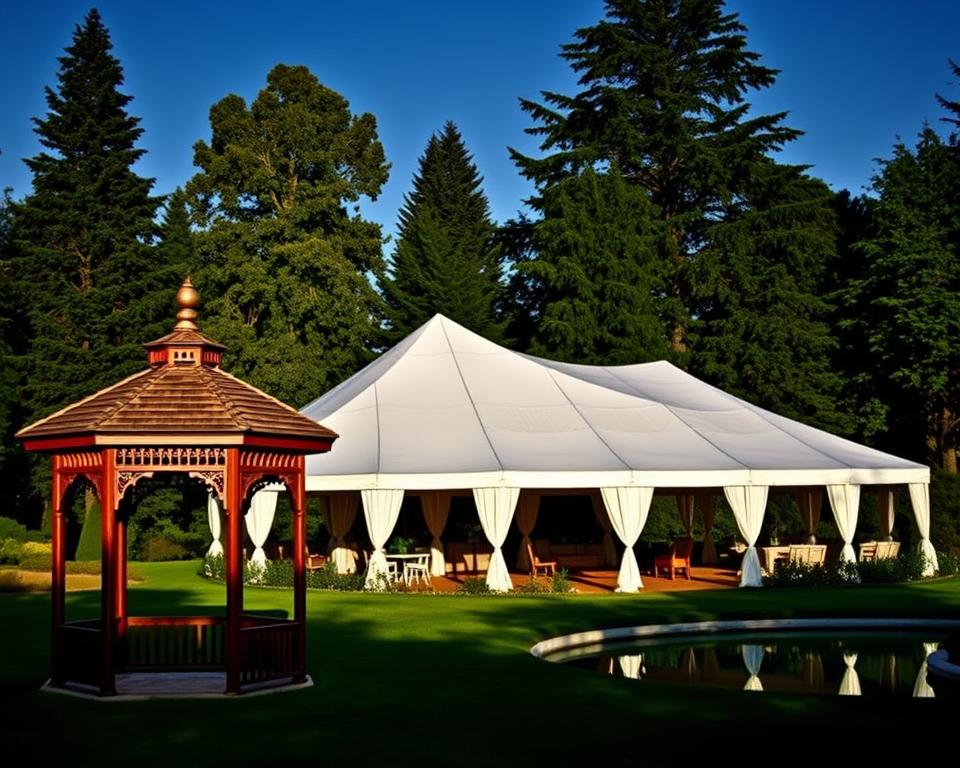
Gazebos often appear as hexagonal, octagonal, square or circular forms. Roofs range from hip or domed tops to pagoda peaks. Common roof coverings include shingles for timber builds, polycarbonate sheets and weatherproof fabric.
Marquees arrive in several types: pole marquees with peaked roofs, frame marquees with flat or gently pitched tops, clearspan units and stretch marquees. Roof materials for marquees tend to be heavy‑duty PVC or coated polyester designed for long runs and bay extensions. Garden gazebos typically span 2–5 metres across. Marquees start from single 3×3m bays and can extend to 20m widths with unlimited length by adding bays.
Frame materials and stability considerations
Gazebo frames use timber, powder‑coated steel or aluminium. Timber gives a traditional look and may need concrete pads or anchored footings for permanence. Steel and aluminium frames suit simpler, lighter installs and resist rot.
Marquee frames are usually galvanised steel or aluminium extrusions. Pole systems rely on wooden or metal poles and tensioned guy lines. Hire marquees often use professional anchoring systems. Stability improvements include ground pegs, ballast weights such as sandbags and concrete blocks.
Impact of design on wind and weather performance
Pitched roofs help shed rain quickly. Solid, rigid roofs handle snow load better, though heavy snow is rare in most of the UK. Open‑sided gazebos let wind pass through and avoid trapped uplift; permanent timber gazebos with anchored footings deliver stronger wind resistance for garden installations.
Marquees with full sidewalls and storm straps perform better in gusty conditions. Pole marquees depend on tension and anchoring and can be vulnerable when winds rise beyond safe limits. For large events, professional installation is advisable and checking manufacturer wind ratings is essential for wind resistance marquee gazebo UK applications.
- Design tip: Match roof styles gazebo marquee choice to local exposure and event duration.
- Safety tip: Use ballast or professional anchors for soft ground on coastal or exposed sites.
- Practical tip: Choose clearspan marquees where uninterrupted floor space is needed.
Materials, durability and maintenance considerations
Choosing the right fabrics and frames makes a big difference to how a shelter performs over time. This short guide describes common materials, their strengths and weaknesses, plus practical maintenance tips to protect your investment.
Common fabric and frame materials for gazebos
Gazebo fabrics are often polyester with a PU or PVC coating for weatherproofing. Premium models use canvas for breathability and a classic look. For light diffusion, polycarbonate roofing panels are popular choices.
Frames vary from treated softwood to oak for a high‑end appearance. Galvanised steel frames give stability, though powder coating should be checked for chips. Aluminium frames offer a lightweight, corrosion resistant option and are easier to transport.
Common materials used in marquees
Marquees typically use laminated PVC or heavy‑duty polyester with waterproof treatments. Clear PVC window panels bring natural light to large interiors. PVC grades such as 550gsm or 650gsm indicate increasing robustness for repeated hire and long events.
Frame systems for marquees lean on galvanised steel or aluminium extrusions. Stronger gauges and thicker profiles improve wind resilience and affect overall marquee durability UK buyers expect for outdoor hire and commercial use.
Maintenance tips to extend lifespan
- Clean fabrics with a mild detergent and rinse thoroughly to remove salt and grime.
- Dry canvas and PVC completely before storing to prevent mould and odour.
- Inspect seams and re‑seal or weld PVC seams when small leaks appear.
- Touch up powder coating or paint on metal frames to halt corrosion early.
- Replace worn guy ropes, pegs and fixings after heavy use to maintain structural safety.
- Treat timber gazebos annually with a preservative or stain to protect against rot and woodworm.
- For hired structures, professional de‑rigging and storage by the hire company reduces wear and prolongs life, cutting long‑term marquee maintenance costs.
Regular checks and prompt repairs improve gazebo durability UK owners rely on. Thoughtful choice of marquee fabric PVC grade and careful upkeep prevent many common failures. Small actions now save time and expense later while keeping outdoor spaces safe and inviting.
Setup, portability and storage differences
Choosing between a garden gazebo and a marquee often comes down to how quickly you need it up, how it will travel and where you will keep it when not in use. The next points break down typical assembly, transport and sensible storage advice for owners and hire companies in the United Kingdom.
Typical assembly time and tools required
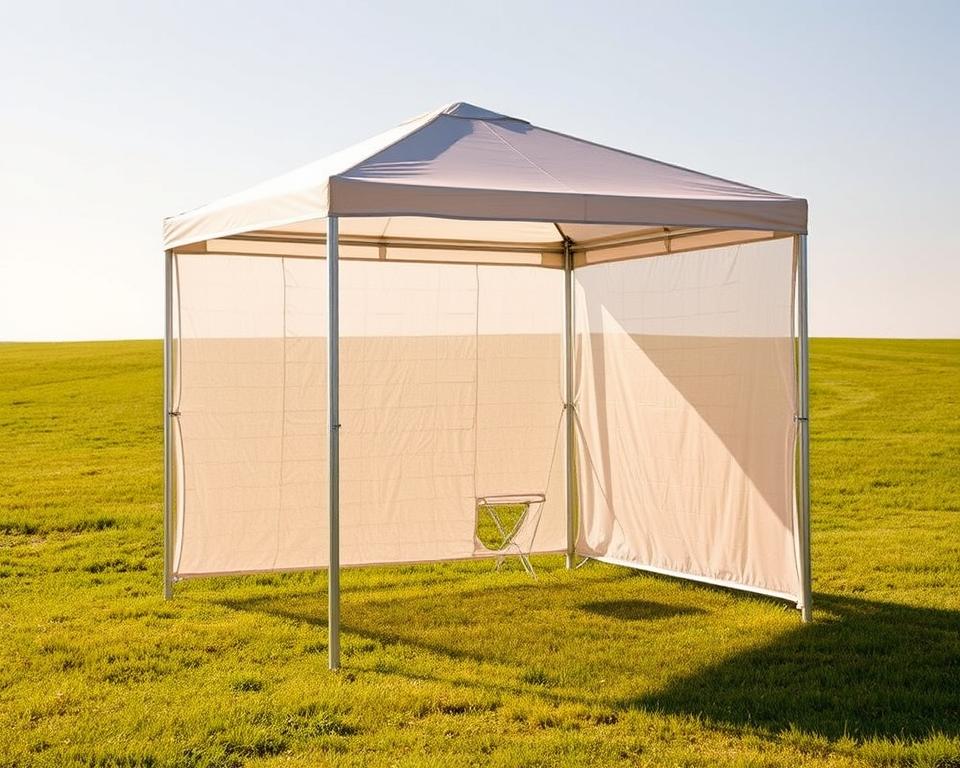
Pop-up gazebos can be erected by two people in around 10–30 minutes using simple tools such as a mallet and basic spanners. Timber garden gazebos demand carpentry skills, longer labour and sometimes concrete footings; these builds can take several hours or days.
For marquees, small frame bays are often fitted by a professional crew at roughly 1–3 hours per bay. Larger clearspan and pole marquees need half a day to multiple days and lifting equipment. Essential kit for marquee assembly includes scaffold towers, torque tools and modular connectors.
Transport and portability for garden use
Small, foldable units suit car-boot transport and straightforward garden installation. They are ideal when short gazebo setup time matters and owners want quick shelter for casual events.
Heavy timber gazebos require trailers or professional delivery and are effectively permanent. Marquees travel on vans or lorries from hire firms. Modular bay systems add significant weight and volume, so logistics and vehicle choice shape whether you DIY or book a hired install.
Storage recommendations when not in use
Store canopy fabrics dry and rolled or folded loosely to avoid sharp creases. Breathable storage bags reduce mildew risk. Disassemble metal frames and keep parts off damp floors to prevent corrosion.
If a portable gazebo UK is left up for a season, remove the canopy in winter or before severe weather. Marquee hire companies typically inspect and launder PVC between hires. Small businesses should consider racking and climate-controlled storage; following marquee storage tips protects membranes and speeds turnaround.
Capacity, layout and space planning
Choosing the right footprint affects comfort, safety and service flow. This short section sets out quick rules for guest numbers, useful spacing for dining and dancing, and key accessibility checks for events in the UK. Apply these guidelines during event space planning UK to avoid overcrowding and to meet regulatory expectations.

How to calculate guest capacity for a gazebo
Use simple area allowances to estimate numbers. For standing receptions allow about 0.5–0.75 m² per person. For seated use single tables and chairs and allow 1–1.2 m² per person.
As an example a 3m x 3m gazebo gives 9 m². That space suits roughly 8–12 standing guests or 4–6 seated comfortably. Gazebos work best as focal points, small ceremonies or market stalls rather than full dining areas.
Space planning for dining, dancing and furniture in a marquee
Marquees use modular bays (commonly 3m x 3m) and widths like 6m are standard. Apply area rates when planning: standing 0.5–0.75 m² per guest, theatre seating 0.5–0.7 m², dining 1.2–1.5 m² per person.
Reserve extra floor for a dancefloor and stage. A practical approach is to allocate a central dance area and plan catering, bar and buffet zones around it. Allow clear circulation around service points and position toilets and back-of-house so guests do not flow through food prep areas.
Accessibility and circulation considerations
Design routes with level thresholds or ramps for wheelchairs. Maintain aisle widths of 900mm–1200mm depending on expected traffic. Keep emergency egress clear and signposted in line with the Event Safety Guide and local authority advice.
Provide accessible toilet facilities and check that ramps, temporary flooring and doorways meet practical needs. These measures support smooth movement and comply with crowd management best practice used across event space planning UK.
| Element | Typical allowance | Notes |
|---|---|---|
| Gazebo standing | 0.5–0.75 m² per person | Good for cocktails or market stalls; small groups only |
| Gazebo seated | 1–1.2 m² per person | Comfortable for ceremonies or small dining setups |
| Marquee dining | 1.2–1.5 m² per person | Includes table, chairs and waiter circulation |
| Marquee theatre | 0.5–0.7 m² per person | Rows with aisles; suitable for presentations |
| Dance area | Variable, plan 0.3–0.4 m² per dancing guest | Allocate dedicated zone; near stage improves sightlines |
| Aisle width | 900–1200 mm | Wider aisles for high flow or accessible routes |
Use a marquee layout guide when mapping zones on paper or software. Mark exits, catering routes and accessible paths early. A clear plan saves time on the day and supports safe crowd flow in line with the Purple Guide and local authority expectations.
Cost comparison: purchase, hire and long‑term value
Choosing between buying and hiring comes down to budget, frequency of use and event scale. A clear view of purchase price ranges, typical hire fees and long‑term maintenance helps planners and homeowners make an informed decision.
Purchase price ranges for gazebos and marquees in the UK
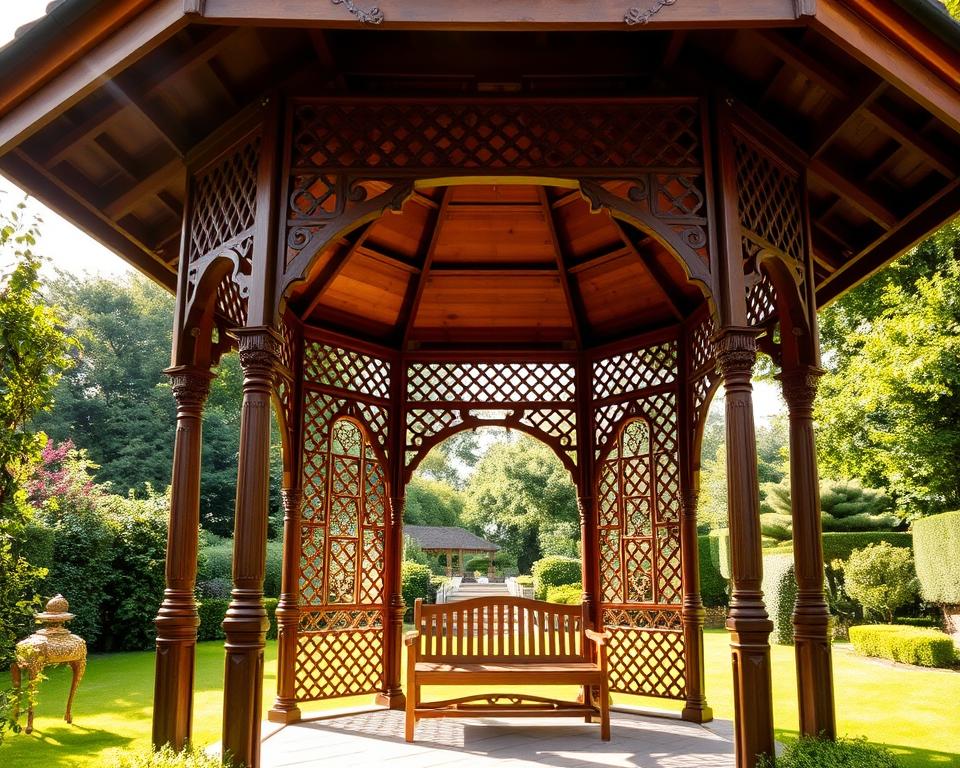
Consumer pop‑up gazebos commonly range from around £50 to £400 depending on size and brand. Mid‑range powder‑coated steel or aluminium models sit between £200 and £1,000. Timber gazebos and permanent wooden structures begin at about £800 and can reach several thousand pounds for larger bespoke builds.
Commercial marquees are pricier. Small bays for a basic marquee start at several hundred pounds each. Large clearspan systems can cost thousands. Most large marquees are bought by professional hirers rather than private individuals.
Hiring costs for events and seasonal factors
Small gazebo hire is typically between £30 and £100 per day. Marquee hire prices vary with size and specification. A small frame marquee may cost £100–£300 per day. Medium marquees, around 6–12m, often fall between £400 and £1,200 per day when installation is included.
Full event packages that add flooring, heating, linings, furniture and lighting push costs higher. Peak wedding season from May to September usually lifts marquee hire prices. Winter events often add heating charges. Delivery, installation and VAT should be factored into final event hire costs UK clients must budget for.
Long‑term value, repairs and replacement parts
Assess long‑term value by usage. Regular garden use often makes buying a gazebo cost UK sensible. Occasional large functions typically favour hire; buy or hire marquee gazebo decisions hinge on frequency and storage capacity.
Repairs and spare parts affect lifetime cost. Canopy replacements, PVC panel repairs, zip and fastener replacements and corrosion treatments for frames are common. Authorised spare parts from manufacturers extend service life and maintain safety standards.
| Item | Typical purchase range | Typical hire range (per day) | Key long‑term costs |
|---|---|---|---|
| Pop‑up gazebo | £50–£400 | £30–£100 | Canopy replacement, frame corrosion treatment |
| Mid‑range steel/aluminium gazebo | £200–£1,000 | £50–£150 | Powder coating touch‑up, spare fixings |
| Timber/permanent gazebo | £800–£4,000+ | Rare to hire | Timber treatment, roof repairs, staining |
| Small frame marquee (single bay) | £300–£800 | £100–£300 | Panel and zip replacements, pole repairs |
| Medium marquee (6–12m) | £1,000–£6,000+ | £400–£1,200 | PVC panel renewals, structural checks, tarpaulins |
| Clearspan/commercial systems | £5,000–£50,000+ | £1,000–£5,000+ (project dependent) | Full roof replacement, engineered parts, professional servicing |
Legal, safety and insurance considerations in the UK
Choosing a gazebo or marquee requires more than style. You must check planning rules, meet health and safety duties, and secure suitable insurance. These steps protect guests, organisers and property.

Planning permission and local authority rules
Permanent timber gazebos in gardens can need permission if they exceed specified height limits or sit inside conservation areas. Homeowners should review permitted development rights for England, Wales, Scotland and Northern Ireland before installation. For temporary structures, a short-term marquee for an event often avoids formal consent, but regular or prolonged use at a site may trigger permissions.
Marquee hire firms commonly liaise with councils on requirements and safe siting. When in doubt, contact your local planning authority to confirm whether gazebo planning permission or other approvals are required.
Health and safety standards for public events
Public events must follow recognised guidance such as The Purple Guide and the Regulatory Reform (Fire Safety) Order for means of escape. Risk assessments should cover wind loads, anchorage, emergency exits and crowd flow. Use flame-retardant fabrics and ensure textile structures meet British Standards like BS EN 13773 when applicable.
Electrical installations in temporary structures need PAT testing and competent contractors. Event organisers should document checks and assign a responsible person for event safety UK to oversee on-the-day compliance.
Insurance implications for private and commercial use
Private homeowners should check whether their home insurance covers temporary structures and the public liability risk of guests on their property. Commercial hirers and event organisers generally require public liability cover, commonly in the £5–10 million range, plus equipment or marquee insurance for hired items.
Insurers may insist on professional installation, written contingency plans, wind monitoring and clear evacuation procedures. Before booking a large structure, consult your insurer and local authority guidance to align cover with operational risks.
Use cases: best scenarios for choosing a gazebo or a marquee
Choosing between a gazebo and a marquee depends on scale, permanence and the activity you plan. Below are practical use cases to help homeowners, event planners and traders pick the right cover for their needs.
Small garden gatherings and everyday shelter
Gazebos suit family gardens and everyday outdoor living. They work well for barbecues, small ceremonies and as a garden shelter idea beside a patio or hot tub. Many homeowners prefer timber gazebos for a permanent feature that complements landscaping. Lightweight pop‑up marquee alternatives are handy for an extra sheltered spot, but freestanding gazebos often win on DIY installation and ongoing convenience.
Weddings, corporate events and large functions
For large guest lists and complex layouts, marquees provide the space and services required. Expect to create ballroom‑style interiors with fitted flooring, heating and staging. Marquee uses weddings often include areas for a dancefloor, catering kitchen and a staffed bar. Corporate launches benefit from aluminium frames and branded linings that support AV rigs, lighting and signage at scale.
Seasonal and pop‑up retail or hospitality uses
Market traders and hospitality operators use both shelters, depending on footprint and branding needs. A pop‑up marquee gives ample room for trade stands, beer tents and market stalls where space and visibility matter. Gazebos suit farmers’ markets, ticket booths and compact vendor pitches with simple assembly and lower cost. Any trading in public spaces requires appropriate licences, secure anchoring and robust weatherproofing for safe commercial use.
Customisation, accessories and aesthetic considerations
Choosing the right extras transforms a temporary structure into a memorable setting. This short guide compares common options for canopies, sidewalls, flooring and heating so planners can match comfort and style to the event brief.
Canopies, sidewalls, flooring and heating options
Gazebos often come with removable sidewalls, mosquito nets and curtains for flexible use in gardens. Lightweight polycarbonate roofing can boost weather protection while keeping daylight.
Marquees accept solid or windowed sidewalls and a range of flooring systems, from interlocking aluminium platforms to sprung wooden floors. Carpet or vinyl finishes help define zones for dining or entertainment.
Heating matters for UK spring and autumn events. Patio heaters and warm air blowers are common commercial choices. Use appropriate ventilation and follow manufacturer safety guidance when using gas heaters or fuelled units.
Lighting, décor and branding opportunities
Small gazebos suit string lights, lanterns or battery LED fixtures to create atmosphere with minimal power. For larger events, marquees support chandeliers, fairy lights, uplighters and full stage rigs.
Branding can be applied directly to canopies with printed panels, vinyl banners and custom linings. Suppliers such as Hireacat and National Marquees offer bespoke printing and themed linings for bars and stages.
Event planners should balance decorative choices with rigging limits and power availability when specifying marquee lighting ideas for live performances.
Colour, fabric choice and theme matching
Neutral whites and creams remain popular for weddings because they reflect light and suit floral décor. Corporate events favour bold, branded colours to reinforce identity.
Canvas offers breathable, natural texture for rustic themes. PVC gives a modern, waterproof finish suited to rain-prone British weather. Fabric weight and finish affect drape, sound absorption and light diffusion.
Always request sample swatches and consult a professional for high‑profile events to ensure chosen fabrics meet aesthetic and safety needs.
| Feature | Gazebo typical option | Marquee typical option | Practical note |
|---|---|---|---|
| Sidewalls | Removable mesh or curtain panels | Solid, windowed or zipped walls | Marquees offer greater customisation for weatherproofing |
| Flooring | None or simple mats | Aluminium systems, timber stages, carpet | Flooring affects accessibility and acoustic performance |
| Heating | Small electric heaters or portable units | Patio heaters, warm air blowers, diesel heaters | Ensure ventilation and follow fuel safety rules |
| Lighting | Battery LEDs, lanterns, fairy strings | Chandeliers, professional rigs, uplighting | Marquee lighting ideas suit performances and larger crowds |
| Branding | Printed valances and aprons | Full printed canopies, linings, banners | Bespoke printing available from major suppliers |
| Fabric | Breathable canvas, light PVC | Heavy‑duty PVC, coated polyester | Choose by weather, aesthetic and acoustic needs |
| Accessory availability | Local garden retailers and gazebo accessories suppliers | Specialist hire firms and marquee accessories UK stockists | Availability guides selection for tight lead times |
Conclusion
Deciding between a gazebo and a marquee comes down to scale, permanence, budget and weather resilience. For regular garden use, a gazebo offers a compact, cost‑effective shelter that suits small gatherings and everyday entertaining. For large, commercial or high‑capacity events, a marquee provides the space, professional installation and safety features needed to host hundreds of guests.
Practical guidance for choosing gazebo or marquee UK users: homeowners who plan recurring outdoor entertaining should consider purchasing a gazebo from established UK retailers such as Mitre Garden or Argos for convenience and long‑term value. For one‑off weddings or corporate events, hiring a marquee from reputable hire companies ensures correct wind ratings, fire retardancy and compliance with health and safety standards.
Before committing, assess guest numbers, event duration and likely weather risk, then obtain quotes and check insurance cover and local authority rules. This what is the difference between a gazebo and a marquee summary should help planners weigh permanence against capacity and budget. Use these factors to reach a clear gazebo vs marquee conclusion and select the right outdoor shelter for your needs.
FAQ
What is the difference between a gazebo and a marquee?
A gazebo is a typically small, freestanding outdoor structure—often hexagonal or square—used for shade and shelter in gardens or small events. It can be permanent (timber or welded metal) or temporary (steel/aluminium pop‑up with a polyester canopy). A marquee is a large temporary tented structure, usually hired for events, made from modular bays with PVC or heavy‑duty coated fabric and a robust frame. In short: gazebos suit small, frequent or garden use; marquees suit large, high‑capacity or commercial events.
Which should I buy for regular garden use: a gazebo or a marquee?
For ongoing garden use a gazebo is normally the better purchase. Pop‑up gazebos are inexpensive and portable; timber or powder‑coated metal gazebos provide a longer‑term, attractive feature. Marquees are costly to buy and are generally purchased only by professional hirers—hiring a marquee for occasional large events is usually more economical.
How do gazebos and marquees differ in materials and durability?
Gazebo frames are commonly timber, powder‑coated steel or aluminium with canopies in polyester (PU/PVC coated), canvas or polycarbonate panels. Timber gazebos require preservative treatment but can last decades. Marquees use galvanised steel or aluminium frames and PVC‑laminated fabrics (higher GSM for hire durability). PVC marquees are robust for frequent use but need professional de‑rigging and storage.
What are typical sizes and capacities for gazebos and marquees?
Garden gazebos commonly range from about 2–5 metres across and suit small groups—expect roughly 0.5–0.75 m² per standing guest and around 1–1.2 m² per seated guest. Marquees start with 3x3m bays and can be widened (6m, 12m, 20m+) with virtually unlimited length via bay extensions. Marquees can accommodate hundreds, whereas gazebos are limited to small gatherings.
How do wind and weather performance compare?
Permanent, well‑anchored timber gazebos resist wind better than lightweight pop‑ups. Open‑sided gazebos shed wind rather than trap it, but canopies should be removed in severe weather. Marquees perform well when properly anchored and with sidewalls and storm straps; pole marquees are more wind‑sensitive and require strict anchoring and evacuation criteria. Always check manufacturer wind ratings and use professional installation for large structures in the UK’s variable weather.
How long does it take to set up a gazebo or marquee?
A pop‑up gazebo can be erected by two people in 10–30 minutes with minimal tools. Timber gazebos need full carpentry assembly and possibly concrete footings, taking hours to days. Small frame marquees may take a trained crew 1–3 hours per bay; large clearspan or pole marquees can take half a day to several days and require lifting equipment and specialist tools.
What are the storage and transport differences?
Foldable gazebos are designed for car‑boot transport and compact storage; timber gazebos require delivery and are effectively permanent. Marquees are transported on vans or lorries and stored by hire companies or businesses in racked, climate‑controlled facilities. Fabrics must be dry and stored rolled or loosely folded to avoid mould and creasing.
How much does it cost to buy or hire a gazebo or marquee in the UK?
Pop‑up gazebos: roughly £50–£400; mid‑range metal models £200–£1,000; timber gazebos £800 upwards. Small gazebo hire is often £30–£100 per day. Marquees for purchase are costly; most customers hire. Small frame marquees hire from around £100–£300 per day, medium 6–12m marquees £400–£1,200 per day including setup; full event packages cost more. Prices vary by season, extras and location.
What planning, safety and insurance rules apply in the UK?
Permanent garden structures may need planning permission if they exceed local height or siting limits—check your local council. Temporary marquees for short events usually avoid planning but large or prolonged use can attract consent. Public events must follow The Purple Guide, fire safety regulations and British Standards (including textile structure guidance). Public liability insurance is essential for commercial events; homeowners should confirm cover for temporary structures and public gatherings.
How should I plan layout and accessibility for events?
Calculate guest numbers using recommended area allowances: standing 0.5–0.75 m² per person, seated dining 1.2–1.5 m² per person. Allocate space for catering, bars, toilets and emergency exits. Ensure level thresholds, ramps and clear aisle widths (typically 900–1,200mm or greater) for wheelchair access. Consult the Event Safety Guide (Purple Guide) and local authority guidance for larger public events.
Can gazebos and marquees be customised for branding and décor?
Yes. Gazebos can take printed canopies, sidewalls, curtains, lighting and themed décor. Marquees offer extensive customisation: branded linings, printed valances, solid or windowed sidewalls, flooring, stages, heating and professional lighting rigs. Suppliers such as National Marquees and specialist hire firms provide bespoke printing and theming for corporate or wedding events.
What maintenance is recommended to extend lifespan?
Clean fabrics with mild detergent and ensure they are fully dry before storage to prevent mould. Re‑seal seams, inspect and touch up powder coatings, replace worn guy ropes and pegs, and treat timber gazebos annually with preservative. Store materials in dry, ventilated conditions and use professional seam welding or replacement panels for significant PVC damage. For hired equipment, professional de‑rigging and storage reduces wear.
Is buying or hiring better for a one‑off large event?
Hiring is usually better for one‑off large events. Hire companies provide professional installation, compliance with safety standards, anchoring systems, and extras such as flooring, heating and lighting. Buying a marquee can be economical only for frequent commercial use and requires storage, maintenance and specialist crews.
Where can I source gazebos and marquees in the UK?
For consumer gazebos consider retailers and brands such as B&Q, Wayfair and Forest Garden for timber options. For marquee hire and bespoke event solutions use professional suppliers like National Marquees, Hireacat or local marquee companies that offer installation, accessories and guarantees. Always check reviews, wind ratings and fire‑retardancy certificates before booking or buying.
How do I decide which option is right for my event or garden?
Balance guest numbers, frequency of use, budget, weather resilience and legal requirements. Choose a gazebo if you need a low‑cost, easy solution for small gatherings or a permanent garden feature. Choose a marquee if you need scalable space, professional installation, integrated services and compliance for large or public events. Obtain quotes, check wind and fire ratings, and confirm insurance and local authority requirements before committing.