Greenhouse Cleaning Tips for UK Gardeners
Meta title: Greenhouse Cleaning Tips for UK Gardeners
Meta description: Discover expert advice for cleaning the greenhouse effectively. Essential tips tailored for UK gardeners to maintain a pristine growing space.
This guide offers practical, professional advice on cleaning the greenhouse for UK gardeners. Its purpose is to help hobby growers, allotmenteers and small-scale producers keep their structures clean, healthy and productive.
Cleaning the greenhouse means more than wiping glass. It lowers pest and disease pressure, boosts light transmission and extends the life of frames and glazing. In the variable UK climate, good greenhouse maintenance supports year-round growing and reduces seasonal setbacks.
The article covers seasonal scheduling, tools and supplies, safe and eco-friendly methods, and steps to prevent cross-contamination. British English spelling and local climatic considerations — cool, damp winters and changeable summers — are used throughout.
Inhaltsverzeichnis
Key Takeaways
- Cleaning the greenhouse protects plant health and improves light for better yields.
- Regular greenhouse maintenance cuts pest and disease risks before problems escalate.
- Seasonal planning makes deep cleans manageable and effective in UK conditions.
- Use safe, eco-friendly methods and proper PPE to avoid crop contamination.
- Clear communication of tasks helps allotment groups and household gardeners share work.
Cleaning the Greenhouse
Keeping a greenhouse clean protects crops and makes gardening easier. Regular attention prevents small issues turning into crop losses. Use a simple routine to keep the structure tidy, reduce pests and maintain light levels for healthy growth.
Why regular cleaning matters for plant health
Regular cleaning removes overwintered pests, fungal spores and algae that harbour pathogens such as Botrytis and powdery mildew. Removing debris and slimy growth improves airflow and helps control humidity, which reduces disease pressure.
Clean glazing and surfaces reduce shading, so plants get more light and photosynthesise better. That improves vigour and crop rates while cutting the need for chemical controls.
Timing your deep cleans with the UK gardening calendar
Plan a major deep clean in late winter to early spring, typically February–March, before sowing and new growth. This timing clears inoculum before plants become vulnerable and fits UK frost dates and propagation schedules.
Do a minor tidy in early summer after main plantings to clear foliage and check ventilation. Finish the season with an autumn clear-out to remove crop residues and slow overwintering pests.
Keep monthly spot checks between major sessions. Consistent upkeep is less work than infrequent, intensive cleans and supports a practical cleaning schedule UK gardeners can stick to.
Key benefits: pest reduction, disease control and light maximisation
Regular cleaning delivers clear greenhouse hygiene benefits. It lowers populations of aphids, whitefly and spider mites by removing breeding sites. It cuts inoculum loads for fungal and bacterial diseases, making outbreaks rarer.
Washing glazing can boost light transmission by 20–30%, which helps growth under Britain’s often dull skies. Better light and ventilation reduce humidity hotspots that favour pests and disease, improving overall plant health greenhouse owners aim for.
- Pest reduction: fewer hiding places for common greenhouse pests.
- Disease control: lower pathogen loads and less reliance on chemicals.
- Light maximisation: cleaner glazing, stronger photosynthesis and better yields.
Essential tools and supplies for greenhouse maintenance
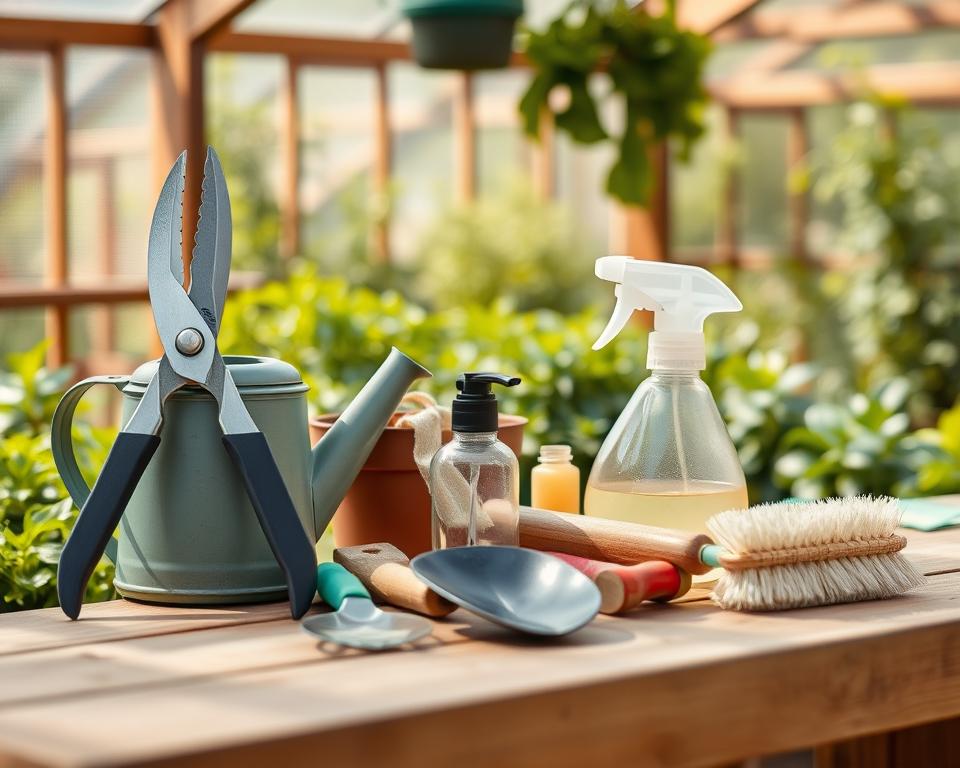
Keeping a greenhouse tidy starts with the right kit. Choose durable, purpose-made items and follow manufacturer guidance for brands such as Sneeboer, Leifheit and Vileda when selecting greenhouse cleaning tools and accessories.
Recommended brushes, scrapers and squeegees
Use soft-bristle brushes to avoid scratching glass. Long-handled squeegees from Leifheit or Vileda make high panels safe to reach. For polycarbonate, pick plastic scrapers to remove fouling without gouging sheets. Non-abrasive scourers suit aluminium frames that need light abrasion.
Fit extension poles to brushes and squeegees so you can work from the ground. This reduces ladder use and lowers accident risk while cleaning tall glazing.
Safe cleaning solutions and disinfectants for greenhouse use
For routine washes, warm soapy water with a biodegradable dish soap is effective and gentle. For sanitising hard surfaces, use a 1% sodium hypochlorite solution prepared from household bleach, rinsing surfaces thoroughly afterwards to avoid material damage.
For small tools, 70% isopropyl alcohol is quick and effective. Consider proprietary, plant-safe options such as Fargro Biocides or Solabiol sanitiser products where label instructions allow. Avoid copper-based treatments that may leach and harm plants.
Always test any agent on a discreet patch of polycarbonate or coated aluminium before treating whole panels. Read manufacturer recommendations for greenhouse makes such as Eden and Julian Charles to check compatibility.
PPE and disposal items for safe handling
Wear nitrile gloves or heavy-duty garden gloves when mixing solutions. Use eye protection and a waterproof apron for splashes. If handling strong disinfectants, wear a suitable mask and ensure good ventilation.
Provide sturdy waste sacks and clearly labelled containers for contaminated debris. Keep a first-aid kit to hand. Follow local council guidance for hazardous waste when disposing of chemical containers. Compost only organic material confirmed free of disease.
| Item | Recommended Type | Purpose | UK Brand Examples |
|---|---|---|---|
| Brushes | Soft-bristle, long-handled | Gentle removal of dirt on glass and frames | Sneeboer |
| Squeegees | Long-handled with rubber blade | Clear watermarks from high panels | Leifheit, Vileda |
| Scrapers | Plastic, non-abrasive | Remove deposits from polycarbonate safely | Garden tool retailers |
| Non-abrasive scourers | Soft pads | Clean aluminium frames without scratching | General brands available in cleaning supplies UK |
| Disinfectants | 1% sodium hypochlorite; 70% isopropyl; plant-safe proprietary | Sanitise surfaces, tools and benches | Fargro Biocides, Solabiol |
| PPE | Nitrile gloves, eye protection, masks, aprons | Personal protection during cleaning | Available from UK safety suppliers and garden centres |
| Disposal items | Labelled containers, heavy-duty waste sacks | Safe segregation and disposal of contaminated waste | Local council guidance; cleaning supplies UK retailers |
Preparing the greenhouse before cleaning
Before you begin any major works, take time to plan. A short inspection and a clear list will make the job quicker and safer. Photograph any problem areas and note parts to order, such as gaskets or sealant.
Clearing plants, pots and propagation trays
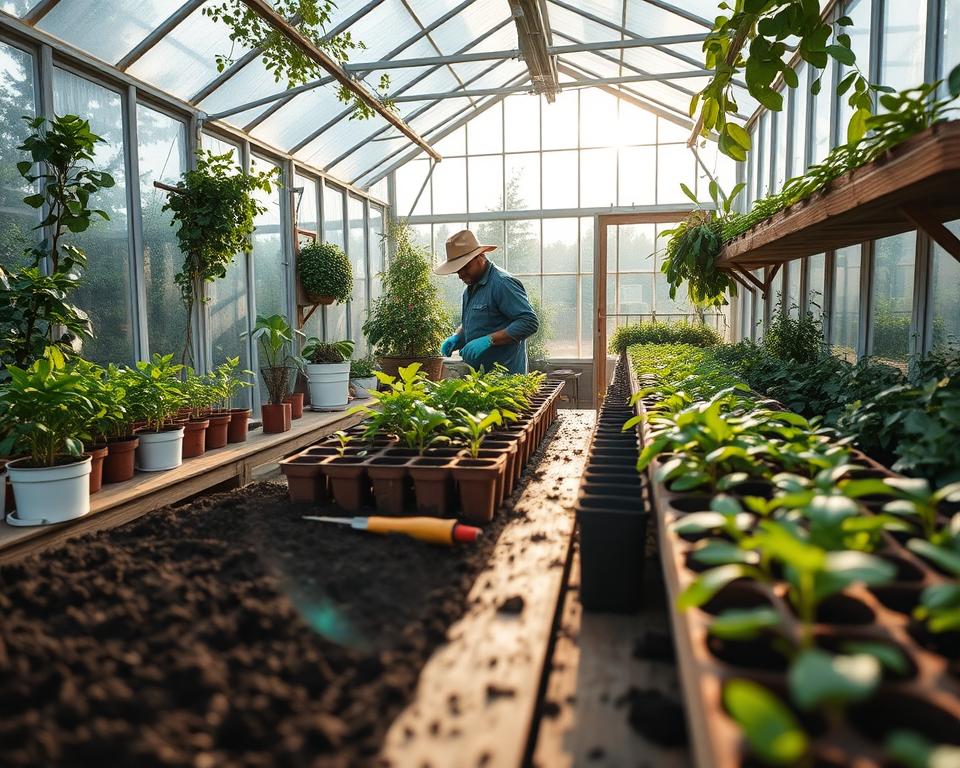
Start by clearing greenhouse plants that are vulnerable. Move seedlings and propagation trays to a sheltered spot indoors or under a frost-proof bench. Hardy specimens may stay, but give them temporary shading to avoid chilling.
Label pots and stack trays to keep them organised for washing. For large established plants, consider partial cleaning in situ to reduce stress.
Assessing structural condition and making a checklist
Carry out a careful check of glazing seals, door hinges, ventilation louvers, shelving fixings, guttering and the frame for corrosion or damage. Record each fault and take close-up photos for reference.
Create a written greenhouse checklist that covers tools, cleaning solutions, PPE, weather forecast, waste disposal and manpower. Prioritise tasks by risk, placing removal of diseased residues at the top.
Creating a waste and compost plan for removed debris
Sort removed material into clear categories: healthy plant matter for compost if disease-free, diseased or pest-infested material for council green waste or permitted burning, and plastics or containers for recycling.
Adopt a waste plan greenhouse approach that specifies hot composting for potentially contaminated material or using municipal services. Never add infected material to garden compost unless it will reach thermophilic temperatures.
- Photograph problem areas and order replacement parts early.
- Label and stack pots and trays for efficient cleaning.
- Keep a written greenhouse checklist to guide the team.
- Follow the waste plan greenhouse to protect soil health.
Cleaning glazed and polycarbonate panels
Keeping glazing clear influences light levels and plant health. Use the correct methods for each material to avoid damage and lengthen service life. Read safety points before working at height and work with a helper for larger roofs.

Gentle techniques for glass vs polycarbonate
To clean greenhouse glass, use warm soapy water and a soft cloth or a squeegee. This removes grime without scratching the surface. For tough deposits, repeat the wash and rinse with clean water.
To clean polycarbonate panels, choose a mild detergent and a soft sponge. Avoid solvents and abrasive pads; they can cloud or score the sheets. Do not use a high-pressure washer on older seals. Low-pressure rinsing is safer when extra force is needed.
Removing algae, limescale and hard water marks
To remove algae greenhouse growth, apply a dilute bleach solution of around 1% sodium hypochlorite, leave it a short time, then rinse thoroughly. For light algae, a vinegar and bicarbonate mix gives a gentler option that still cleans well.
Limescale and hard water marks respond to white vinegar or a commercial descaler safe for glazing. Apply carefully, let it act, then rinse fully to avoid residue that cuts light transmission. Consider harvesting rainwater or fitting a simple water softening system to reduce repeat marks.
When to reseal or replace damaged panels
Reseal greenhouse panels when seals show gaps, leaks or condensation between double-skinned sheets. Use a neutral-cure silicone sealant compatible with polycarbonate and aluminium frames to avoid chemical damage.
Replace panels if they are crazed, heavily scratched, cracked or permanently discoloured, as these conditions reduce light and weaken the structure. Manufacturers such as Palram and Colt provide clear guidance on replacement options and warranty limits.
For larger glazing jobs or work at height, hire a professional glazier or contractor. Use a stable ladder or platform and secure assistance when lifting and manoeuvring large panes or sheets.
| Task | Recommended method | When to call a professional |
|---|---|---|
| Cleaning greenhouse glass | Warm soapy water, soft cloth, squeegee, rinse | High glazing or broken frames |
| Clean polycarbonate panels | Mild detergent, soft sponge, low-pressure rinse | Large panels or adhesive residue |
| Remove algae greenhouse | 1% bleach solution or vinegar/bicarbonate, rinse | Widespread growth or recurring outbreaks |
| Remove limescale | White vinegar or descaler safe for glazing, thorough rinse | Severe incrustation or damaged seals |
| Reseal greenhouse panels | Neutral-cure silicone compatible with materials | Widespread seal failure or condensation between skins |
| Replace panels | Fit new polycarbonate or glass as per manufacturer guidance | Cracked, crazed or permanently discoloured panels |
Sanitising benches, shelving and work surfaces
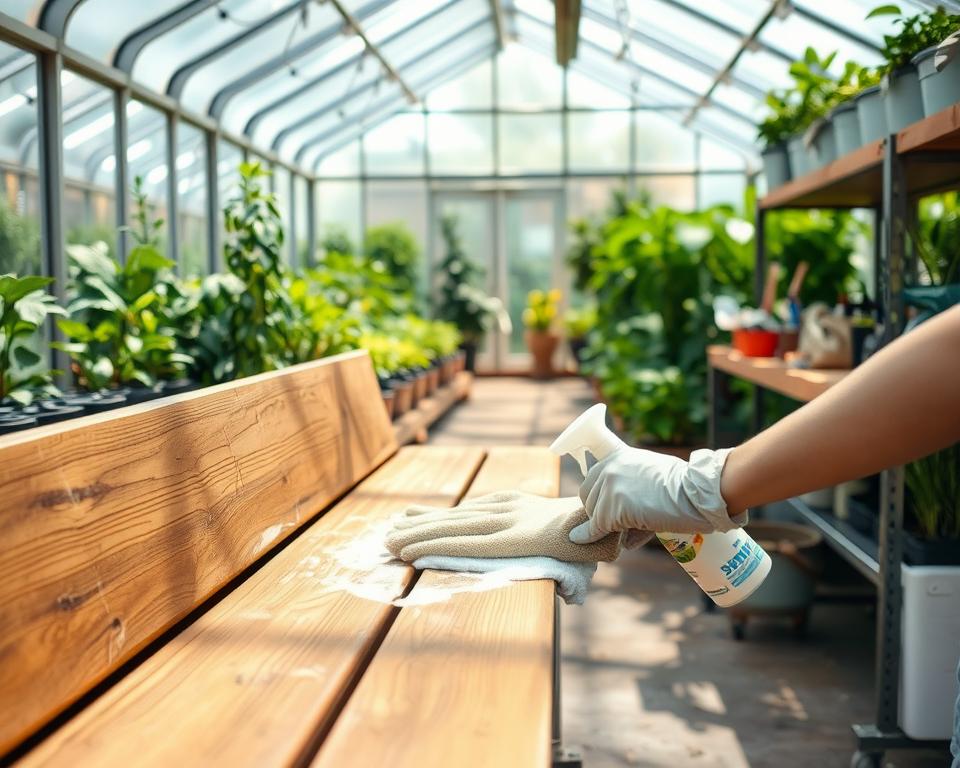
Clean worktops and benches keep plants healthy and tasks efficient in any UK greenhouse. Routine sanitisation reduces pests, limits disease spread and keeps propagation areas productive. Use safe, proven methods to sanitise greenhouse benches and disinfect greenhouse shelves without harming seedlings.
Effective disinfectants that are safe for plants
For metal tools and small items, use 70% isopropyl alcohol. It evaporates quickly and leaves minimal residue. For non-porous benches a dilute household bleach at about 1% sodium hypochlorite is effective when rinsed after contact. Peracetic acid cleaners work well where stronger sanitisation is needed and plant-safe labels are available. For wooden benches choose steam cleaning or hydrogen peroxide-based sanitisers to avoid soaking and warping.
Step-by-step sanitisation routine
Clear benches and shelving of pots, trays and loose debris. Sweep or vacuum to remove compost and spent leaves.
Scrub surfaces with warm soapy water to remove organic matter; disinfection works only after surfaces are clean. Apply disinfectant and respect the manufacturer’s contact time, commonly 10 minutes, to ensure efficacy. Rinse where product guidance requires it and allow full air-dry before returning plants. For routine care, weekly wipe-downs in the active season keep surfaces safe. After any disease detection perform immediate sanitisation and a more thorough end-of-season deep clean.
Preventing cross-contamination between crops
Clean between crop batches and always sanitise after handling diseased plants. Keep a quarantine bench for new arrivals and observe them for one to two weeks before moving them into the main greenhouse. Use colour-coded trays, trowels and labels to separate high-risk crops from hardier varieties. Change gloves between tasks and sanitise hands and tools frequently to reduce transfer of spores and pests. Clear labelling and simple physical separation support efforts to prevent cross-contamination greenhouse-wide.
| Task | Recommended Product | Contact Time/Notes |
|---|---|---|
| Metal tools and small implements | 70% isopropyl alcohol | Wipe until wet; air-dry. Quick evaporation, minimal residue. |
| Non-porous benches and shelves | Dilute household bleach (1% solution) | Allow 10 minutes, then rinse and air-dry to avoid residue harm to seedlings. |
| Harder sanitisation needs | Peracetic acid-based cleaner | Follow manufacturer instructions; suited to heavy biofilms and persistent pathogens. |
| Wooden benches and porous surfaces | Steam cleaning or hydrogen peroxide sanitiser | Prevents waterlogging; repeat as needed and allow full drying. |
| Routine schedule | Weekly wipe-downs; immediate after disease | Weekly during active growing, full sanitise at season end. |
Floor care and drainage management
Good greenhouse floor care starts with simple choices that cut cleaning time and disease risk. A well-planned floor and clear drainage reduce humidity, limit soil-borne pathogens and make routine maintenance straightforward. Below are practical steps for different floor types, keeping gutters and drains running freely and reusing water safely.
Best practices for concrete, gravel and soil floors
Concrete paths are easy to sweep and pressure-rinse. Repair cracks promptly and disinfect with a plant-safe solution to avoid harbouring spores.
Gravel beds need regular raking and occasional top-ups. A geotextile membrane beneath the stones suppresses weeds and keeps the surface stable.
Soil floors work for some crops but increase muddiness and disease spread. Use compacted paths or raised beds to separate growing areas from walkways and make cleaning easier.
Clearing and maintaining guttering and drains
Remove leaves and debris from gutters before storms and in autumn to prevent blockages. Check downpipes by flushing with water to confirm free flow.
Inspect gutter joints and brackets on popular greenhouse makes such as Juliana or4 Seasons for corrosion or misalignment. Fit gutter guards to reduce maintenance and clear them again before a frost.
Sustainable options for run-off and water reuse
Harvest rainwater with butts, barrels or a larger cistern to reduce mains use. Fit a first-flush diverter to keep roof contaminants out of storage tanks.
Simple filtration by mesh and settling lets you reuse water for non-edible beds. For propagation, add UV sterilisation or follow local guidance before using reclaimed water.
Practical drainage upgrades
Ensure floors have a slight gradient to move water towards drains. Where surface water builds up, a soakaway or a French drain will protect the structure and plants.
Poor greenhouse drainage creates humid pockets that favour mildew and botrytis. Regular checks and timely repairs keep ventilation effective and crops healthier.
Pest and disease prevention through cleaning
Keeping a greenhouse clean is a core part of greenhouse pest prevention UK growers rely on. A focused cleaning routine reduces habitats for pests and limits spores that cause common diseases. Regular work makes biological controls more effective once they are introduced.
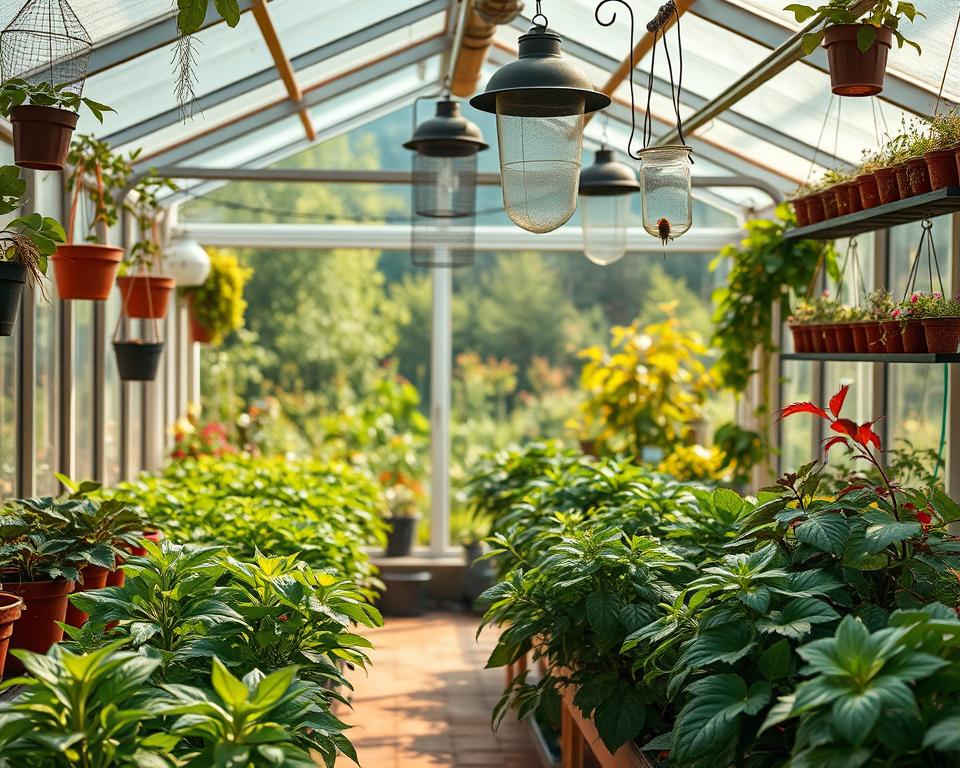
Identifying common greenhouse pests in the UK
Recognise typical pests early. Look for aphids, whitefly (Trialeurodes vaporariorum), glasshouse red spider mite (Tetranychus urticae), thrips, vine weevil and slugs. Note symptoms of disease such as Botrytis cinerea (grey mould), powdery mildew (Erysiphe spp.), Pythium root rot and downy mildew. Visual checks give fast clues: sticky leaves, stippling, silken webbing or discoloured roots.
Cleaning strategies to break pest lifecycles
Remove crop residues and overwintering material to deprive pests of shelter. Clear benches, potting benches and tools so eggs and pupae cannot survive on surfaces. Steam‑sterilise potting compost where appropriate to kill hidden stages in soil.
Rotate crops and avoid long stretches of the same crop to reduce population build‑up. Use yellow and blue sticky traps to monitor adults and reduce numbers. Dispose of infested material in sealed bags or by hot composting when safe.
Integrating biological controls after cleaning
Introduce beneficials only into a clean environment. Encarsia formosa controls whitefly and Aphidius colemani targets many aphid species. Phytoseiulus persimilis is effective against spider mites. For soil pests consider nematodes such as Steinernema spp.
Biological agents perform best with minimal pesticide residues. Consult reputable UK suppliers such as Koppert or Syngenta Bioline for product selection and release rates. Keep records of releases, pest counts and trap catches to refine greenhouse disease control and long‑term plans.
| Action | Targets | When to use | Expected result |
|---|---|---|---|
| Clear crop residues and clean benches | Aphids, whitefly, mites, Botrytis | Before new planting and after harvest | Reduces refuges for eggs and spores |
| Steam‑sterilise compost | Pythium, soil larvae, pupae | When reusing compost or potting on | Kills soilborne stages and lowers disease risk |
| Sticky traps and weekly inspections | Whitefly, thrips, aphids | Continuous monitoring during growing season | Early detection and trend data |
| Introduce biocontrols | Specific pest species listed by supplier | After thorough cleaning, when conditions stable | Biological suppression with low chemical use |
| Rotate crops and hygiene protocols | General pest and disease pressure | Annual planning and between cycles | Long‑term reduction in outbreaks |
Seasonal cleaning schedule tailored for UK climates
A year-round plan keeps a greenhouse healthy and productive. Follow a simple seasonal rota to match UK weather and plant cycles. Use the short checklists below to stay on top of seasonal greenhouse cleaning and reduce pest and disease risk.
Spring deep-clean checklist to start the growing season
Empty the greenhouse of non-hardy plants and clear compostable waste. Wash glazing inside and out to restore light levels. Sanitise benches, shelving and tools before repotting or sowing.
Replace spent potting compost and check seals, vents and heaters. Service fans and ventilation to avoid surprises during warm spells. Repair wooden frames where needed and treat with preservative.
- Empty greenhouse of non-hardy plants
- Wash glazing inside and out
- Sanitise benches and tools
- Replace potting compost and stock consumables
- Service heaters and ventilation
Summer maintenance to keep ventilation and shade effective
Keep vents and louvers clear and inspect shade cloth regularly. Remove weeds and excess growth to improve airflow. Check irrigation lines for blockages and top-up water storage.
Spot-sanitise after any pest or disease detection. Monitor for heat stress and ensure fans work well for hot days and heaters are ready for cooler nights. This phase of summer greenhouse maintenance preserves crop vigor.
- Clear vents and louvers
- Inspect and clean shade cloth
- Check irrigation and rainwater systems
- Spot-sanitise where needed
- Monitor for heat stress and maintain fans
Autumn tidy-up to remove crop residues and protect over winter
Remove spent crops and compost or dispose safely if diseased. Deep-clean benches and floors to break pest lifecycles. Clear guttering before heavy leaf fall to prevent blockages.
Service heating systems and insulate pipes. Consider bubble-wrap glazing for extra thermal efficiency. Carry out an end-of-season inventory and order replacements for next spring to simplify future seasonal greenhouse cleaning.
- Remove and compost or safely dispose of residues
- Deep-clean benches, floors and tools
- Clear guttering and drains (late October typical)
- Service heating and insulate pipes
- Prepare inventory and order spares
Printable quick-check tables below help you follow each seasonal routine. Keep one copy in the greenhouse or on a fridge for easy access.
| Season | Core actions | Timing (UK) |
|---|---|---|
| Spring | Empty non-hardy plants; wash glazing; sanitise benches; replace compost; service heaters and vents | March–April |
| Summer | Clear vents; clean shade cloth; check irrigation; spot-sanitise; monitor heat stress | June–August |
| Autumn | Remove spent crops; deep-clean floors and benches; clear gutters; service heating; insulate pipes | Late September–October (late October for many regions) |
Eco-friendly cleaning methods and products
Choose methods that protect plants, soil and wildlife while keeping the greenhouse hygienic. Small changes such as using mechanical action and plant-based formulations cut chemical load. The guidance below outlines household alternatives, certified products and strategies to reduce reliance on harsh biocides.
Household alternatives
White vinegar removes light limescale from glass and polycarbonate when diluted to one part vinegar in three parts water. Use bicarbonate of soda mixed to a paste for gentle scrubbing of benches and trays. Warm soapy water made with an eco-friendly washing-up liquid cleans general grime and is safe for plants after a full rinse. Diluted hydrogen peroxide, at commonly recommended horticultural dilutions, sanitises surfaces without leaving persistent toxic residues. Always check correct dilutions and rinse thoroughly to avoid residue build-up.
Choosing biodegradable and low-toxicity options
Look for products certified under UK environmental schemes or those stating biodegradability and plant-based surfactants on the label. Brands with clear safety data sheets, such as Ecover or Bio-D, publish aquatic toxicity and biodegradability information. Prioritise biodegradable cleaners greenhouse users can trust and select low-toxicity disinfectants for tasks that need stronger action. Read safety data sheets to confirm suitability for use around food crops and compostable waste.
Minimising chemical use while maintaining hygiene
Use mechanical cleaning, such as scrubbing and steam cleaning, to tackle most dirt before applying any product. Spot-treat stubborn areas rather than spraying the whole structure. Pair cleaning with biological controls and crop rotation to lower disease pressure over time. Harvest rainwater to avoid mains water with high mineral or chemical content that can cause scale or interact with treatments. Routine monitoring helps detect issues early and reduces the need for intensive chemical interventions.
Exercise caution with persistent biocides and copper-based sprays. Repeated use can accumulate in soil and harm beneficial organisms. Where stronger action is needed, choose low-toxicity disinfectants and limit applications to targeted areas. Follow label instructions and dispose of containers responsibly.
| Task | Recommended option | Notes |
|---|---|---|
| Light limescale on glazing | White vinegar solution (1:3) | Works well on glass and polycarbonate; rinse after cleaning |
| General cleaning of benches and pots | Warm water with eco washing-up liquid | Low cost, biodegradable; safe after rinsing |
| Stubborn grime and seedling trays | Bicarbonate of soda paste | Non-abrasive, effective for scrubbing; rinse thoroughly |
| Sanitising work surfaces | Diluted hydrogen peroxide | Leaves minimal residues; follow dilution guidance |
| Persistent outbreaks | Targeted use of low-toxicity disinfectants | Choose products with clear safety data and biodegradability |
| Ongoing prevention | Mechanical cleaning, biological controls | Reduces chemical reliance and supports soil health |
Maintaining equipment and tools after cleaning
Good post-clean routines protect your investment and keep plants healthy. Tidy storage, routine servicing and clear logs make upkeep simple and cost-effective.
Cleaning and storing propagation trays and pots
Soak plastic trays in warm soapy water, scrub and disinfect with 70% isopropyl alcohol or a dilute bleach solution. Rinse well and air dry to prevent residue and mould.
Stack clean, dry pots nested to save space and reduce contamination. Treat terracotta by baking or steam cleaning to kill persistent pathogens. Label clearly and store off the floor in a ventilated cupboard.
Servicing heaters, fans and irrigation components
Dust and wipe fan blades, check bearings and tighten electrical connections. Replace or clean filters and test thermostats before cold spells. For gas and paraffin models follow the manufacturer’s recommended service intervals and safety checks.
Flush irrigation lines to remove algae and slime. Sterilise lines where needed and replace worn drippers and pressure regulators. Regular attention helps service greenhouse heaters and extend the life of pumps and valves.
Record-keeping for maintenance schedules and replacements
Keep simple maintenance records greenhouse in a logbook or digital spreadsheet. Note last clean dates, parts changed, servicing and any pest or disease incidents. Use this history to predict replacement cycles and budget for items such as heater elements and panel seals.
Label stored tools, treat sharp implements with light oil to prevent rust and store them separately. Maintain an inventory of consumables — screws, gaskets and sealant — and set calendar reminders or horticultural app alerts for routine checks.
Conclusion
Regular, seasonal and methodical cleaning the greenhouse is essential for healthy crops in the UK. A consistent routine lowers pest and disease pressure, improves light transmission and helps heating and ventilation work more efficiently. This greenhouse maintenance summary underlines that small, regular actions pay dividends across a growing season.
Practical takeaways include keeping a seasonal schedule — a spring deep-clean, targeted summer maintenance and an autumn tidy — and using the right tools and plant-safe disinfectants. Plan waste disposal, check glazing and seals, and integrate biological controls after cleaning to keep pest numbers low and reduce reliance on chemicals. These steps form the backbone of good greenhouse hygiene UK.
Adopt a simple checklist approach, invest in a few quality brushes and sprayers, choose eco-friendly products where possible, and keep clear maintenance records. For major repairs consult manufacturers or a professional service. With steady attention and informed cleaning the greenhouse will reward gardeners with healthier plants, lower chemical use and a longer structure life.
FAQ
What does “cleaning the greenhouse” mean and why is it important?
Cleaning the greenhouse means removing dirt, algae, crop residues and pests, then sanitising surfaces, glazing and tools. It reduces pest and disease pressure, improves light transmission by up to 20–30%, prolongs the structure’s life and helps maintain correct humidity and airflow. For UK gardeners this supports year‑round growing despite cool, damp winters and changeable summers.
When should I carry out a deep clean in the UK gardening calendar?
Schedule a major deep clean in late winter to early spring (February–March) before new growth and sowing. Do a minor tidy in early summer after main plantings and an autumn clear‑out after harvest. Carry out monthly spot checks in between to catch problems early and reduce overall labour.
What tools and supplies do I need for safe greenhouse cleaning?
Essential items include soft‑bristle brushes, long‑handled squeegees (brands such as Leifheit or Vileda), plastic scrapers for polycarbonate, non‑abrasive scourers for aluminium frames and extension poles. Cleaning agents: warm soapy water, diluted household bleach (about 1% sodium hypochlorite) for sanitising, 70% isopropyl alcohol for small tools and plant‑safe commercial sanitisers such as Solabiol products. PPE: nitrile gloves, eye protection, waterproof apron and sturdy waste sacks.
How do I prepare the greenhouse before cleaning?
Remove vulnerable plants, label and stack pots and trays, and relocate seedlings to a sheltered area if possible. Inspect glazing seals, hinges, shelving and guttering and make a checklist of required tools and parts. Classify waste—disease‑free material for hot compost, infected material for municipal collection or safe disposal—and photograph problem areas for later reference.
How should I clean glass and polycarbonate panels differently?
For glass use warm soapy water and a soft cloth or squeegee. For twin‑wall polycarbonate use a mild detergent and soft sponge; avoid solvents and abrasive pads that scratch. Use low‑pressure rinsing only and test any cleaner on a hidden area first. Treat algae with a dilute bleach solution or vinegar, then rinse thoroughly.
When should I reseal or replace glazing panels?
Reseal if you see gaps, leaks or condensation between double skins. Use a neutral‑cure silicone compatible with polycarbonate and aluminium. Replace panels that are crazed, cracked, heavily scratched or permanently discoloured as these reduce light transmission. Consult manufacturers such as Palram for replacement guidance and consider professional help for major glazing repairs.
Which disinfectants are effective and safe for benches and tools?
Effective options include 70% isopropyl alcohol for tools and small surfaces, dilute household bleach (1% solution) for non‑porous benches with thorough rinsing, and peracetic acid or hydrogen‑peroxide based sanitisers where plant‑safe action is needed. Always remove organic matter first and follow contact times; rinse when required to avoid residue harm to seedlings.
How do I prevent cross‑contamination between crops?
Scrub and disinfect benches and tools between crop batches, use colour‑coded trays and tools, change gloves between tasks and quarantine new plants for 1–2 weeks. Keep separate or labelled areas for susceptible crops and maintain a schedule of immediate sanitisation after detecting disease.
What are the best floor and drainage practices for greenhouses?
For concrete floors sweep, pressure‑rinse and repair cracks, then disinfect. For gravel rake and top up, using geotextile membranes to suppress weeds. For soil floors prefer raised beds or compacted paths to limit mud. Keep guttering clear, flush downpipes and fit guards. Harvest rainwater and use first‑flush diverters to reduce contaminants and support sustainable reuse.
Which common pests and diseases should UK greenhouse owners watch for?
Look for aphids, whitefly, glasshouse red spider mite, thrips, vine weevil and slugs. Key diseases include Botrytis (grey mould), powdery mildew, Pythium root rot and downy mildew. Use weekly inspections and sticky traps to monitor populations.
How can cleaning help break pest and disease lifecycles?
Thorough cleaning removes overwintering material, eggs and pupae from benches, pots and compost. Steam‑sterilise potting compost when needed, rotate crops and dispose of infested material correctly. Breaking life cycles reduces reliance on chemical controls and improves success of biological agents.
When is it appropriate to introduce biological controls after cleaning?
Release beneficials after a thorough clean and when pesticide residues are absent. Effective options include Encarsia formosa for whitefly, Aphidius colemani for aphids, predatory mites for spider mites and Steinernema nematodes for soil pests. Suppliers in the UK include Koppert and Syngenta Bioline—follow their release rates and timing guidance.
What should a seasonal cleaning schedule look like?
Spring deep clean: empty greenhouse, wash glazing, sanitise benches and tools, replace compost and service heaters. Summer: maintain ventilation, clean shade cloth, check irrigation and spot‑sanitise. Autumn: remove crop residues, deep‑clean benches and floors, clear gutters and insulate pipes. Keep simple printable checklists for each season aligned to UK climate milestones.
Are there eco‑friendly cleaning alternatives that work well?
Yes. White vinegar for limescale, bicarbonate of soda for gentle scrubbing, warm eco‑friendly washing up liquid for general cleaning and diluted hydrogen peroxide for sanitising are effective. Prefer biodegradable detergents and plant‑based surfactants and use mechanical methods like scrubbing and steam cleaning to reduce chemical use.
How should I maintain tools and equipment after cleaning?
Soak and scrub trays and pots, disinfect and air‑dry before storage. Servicing heaters and fans includes cleaning blades, checking bearings and testing thermostats. Flush and sterilise irrigation lines and replace worn drippers. Keep a logbook of clean dates, servicing and replacements to plan maintenance and budget for parts.
How must waste from greenhouse cleaning be handled?
Segregate waste into disease‑free material for hot composting, infected material for municipal green waste or safe disposal, and recyclable plastics. Follow local council hazardous waste guidance for chemical containers. Avoid composting diseased material unless you can ensure thermophilic treatment that destroys pathogens.
Can I use household bleach on polycarbonate and aluminium frames?
Diluted bleach (about 1%) can sanitise hard surfaces but may damage some materials if left too long. Rinse thoroughly after application and test on a small hidden area first. Avoid prolonged contact with coated aluminium or copper‑sensitive components and follow manufacturer recommendations for brands such as Eden and Julian Charles.
What precautions should I take when working at height on glazing?
Use a stable ladder or platform, secure assistance and wear suitable PPE. Avoid pressure washers on older seals and consider hiring a professional for extensive glazing repairs or replacements to reduce risk of falls and damage.