
How do you install a gutter on a summerhouse

Protecting your cherished garden summerhouse from water damage requires strategic DIY summerhouse guttering. The British climate demands smart water management solutions that safeguard your outdoor retreat from persistent rainfall and moisture challenges.
Installing a gutter on your summerhouse isn’t just a weekend project—it’s an investment in preserving your garden building’s structural integrity. With the right approach to summerhouse gutter installation, you’ll prevent potential rot, damp penetration, and foundation erosion.
Our comprehensive guide walks you through every step of installing a gutter, empowering you to tackle this practical home improvement task confidently. Whether you’re a seasoned DIY enthusiast or a first-time garden building owner, this tutorial will transform your approach to protecting your summerhouse.
Inhaltsverzeichnis
Key Takeaways
- Understand the importance of proper water drainage
- Learn essential DIY summerhouse guttering techniques
- Prevent long-term structural damage
- Save money through self-installation
- Enhance your summerhouse’s weather resistance
- Gain confidence in home maintenance skills
Why Your Summerhouse Needs a Proper Gutter System
Protecting your summerhouse from water damage requires a strategic approach to rainwater management. Your garden building is vulnerable to moisture, which can cause significant structural problems if left unchecked.
Proper guttering serves as a critical defence mechanism against water-related deterioration. Effective rainwater management prevents numerous potential issues that could compromise your summerhouse’s integrity:
- Prevents wood rot and structural decay
- Protects foundation from water erosion
- Stops paint and exterior surface degradation
- Prevents interior dampness and mould growth
Summerhouse water damage prevention isn’t just about maintaining appearances. Uncontrolled water can seep into wooden structures, causing long-term damage that might require expensive repairs or complete replacement.
Garden building protection goes beyond simple maintenance. A well-designed gutter system channels water away from your cherished outdoor space, ensuring its longevity and aesthetic appeal. Water management is your first line of defence against Britain’s unpredictable weather patterns.
Investing in a robust gutter system is investing in your summerhouse’s future.
By understanding the critical role of gutters, you’ll transform your approach from reactive maintenance to proactive preservation.
Essential Tools and Materials for Summerhouse Gutter Installation
Preparing for your summerhouse gutter installation requires careful planning and the right equipment. Your success depends on selecting appropriate gutter materials and having the correct DIY tools at your disposal. This guide will walk you through everything you need to transform your project from challenging to achievable.
Choosing the Right Gutter Materials
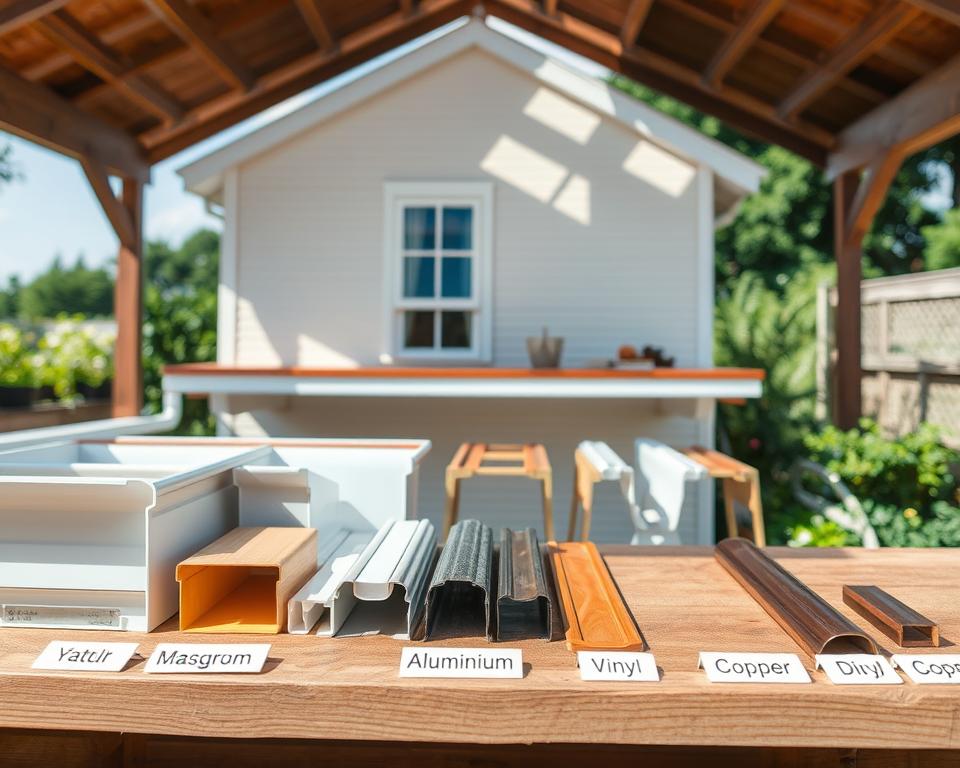
Your gutter material selection can make or break your summerhouse’s drainage system. Different options suit various architectural styles and budgets:
- PVC guttering: Lightweight, affordable, and perfect for most modern summerhouses
- Cast iron gutters: Ideal for traditional or period-style garden buildings
- Aluminium guttering: Offers durability with minimal maintenance
Must-Have Tools for the Job
Equipping yourself with the right DIY tools ensures a smooth gutter installation process. Here’s what you’ll need:
- Tape measure for precise measurements
- Spirit level to ensure proper alignment
- Hacksaw or angle grinder for cutting gutter sections
- Electric drill or screwdriver
- Gutter brackets for secure mounting
- String line for marking fall
Safety Equipment You’ll Need
Prioritising safety is crucial when working at height. Protect yourself with essential safety gear:
- Sturdy ladder or scaffold tower
- Safety glasses when cutting materials
- Protective work gloves
- Non-slip footwear
Remember: Proper preparation prevents poor performance!
Measuring Your Summerhouse for Gutter Installation
Getting the right gutter measurements is crucial for protecting your summerhouse from water damage. Accurate roof dimensions will help you create an effective drainage system that keeps your garden building dry and well-maintained.

- Long metal tape measure
- Spirit level
- Pencil and notebook
- Helper to assist with measurements
When calculating gutter fall, remember the golden rule: a subtle gradient of 1:600 ensures optimal water drainage. This means for every 3 metres, your gutter should drop approximately 6mm. This slight angle prevents water from pooling while remaining nearly invisible to the naked eye.
“Precision in measurement is the key to a successful gutter installation” – Professional Landscaper
To determine your gutter requirements, measure the fascia board length carefully. Pro tip: Always add 10% extra material to account for cuts, unions, and potential mishaps. This buffer ensures you’re not caught short during installation.
- Measure twice, cut once
- Check roof dimensions from multiple angles
- Mark potential downpipe locations
Your summerhouse’s unique configuration will dictate the number of gutter sections needed. Focus on corner points and roof edges to create a comprehensive drainage strategy that protects your cherished garden building.
Preparing Your Summerhouse Fascia Board
Successful gutter installation begins with meticulous fascia board preparation. Your summerhouse’s exterior demands careful attention to ensure a robust and long-lasting gutter system. Proper preparation sets the foundation for effective water management and protects your beloved garden structure.

Inspecting and Repairing the Fascia
Before installing gutters, a thorough fascia repair assessment is crucial. Carefully examine the wooden fascia board for these critical signs of damage:
- Soft or rotting wood sections
- Loose or damaged fixings
- Visible cracks or splits
- Signs of pest infestation
When conducting fascia board preparation, replace any compromised wooden sections. Use high-quality exterior wood preservative to protect against future moisture damage. Ensure all surfaces are smooth, stable, and capable of supporting gutter brackets securely.
Marking Your Gutter Fall Line
Establishing the correct gutter fall gradient is essential for optimal water drainage. Use the string line marking technique to create a precise guide for your installation:
- Attach one end of the string at the highest point
- Calculate the recommended fall (typically 1:500 gradient)
- Secure the opposite end at the outlet position
- Use a spirit level to verify accuracy
| Gutter Length | Recommended Fall | Bracket Spacing |
|---|---|---|
| Up to 3 metres | 6mm | 800mm |
| 3-6 metres | 12mm | 1000mm |
By meticulously preparing your fascia board and establishing an accurate fall gradient, you’ll create a professional-grade gutter system that protects your summerhouse for years to come.
How Do You Install a Gutter on a Summerhouse

Installing gutters on your summerhouse requires precision and careful planning. The gutter installation steps begin with positioning your first bracket at the highest point of the fascia board. You’ll want to ensure a steady, secure attachment that will support the entire gutter system.
To install gutter brackets effectively, follow these key guidelines:
- Measure and mark bracket positions precisely
- Use appropriate screws for your fascia material
- Maintain consistent spacing between brackets
- Check alignment using a string line
When you fit gutter sections, cutting them to the correct length is crucial. Use a hacksaw with smooth, controlled strokes to achieve clean, straight cuts. Gutter union joints play a vital role in creating watertight connections between different sections.
| Installation Step | Key Considerations |
|---|---|
| Bracket Placement | Every 600-800mm, ensuring proper slope |
| Gutter Sections | Cut precisely, align carefully |
| Union Joints | Seal tightly, check for water-resistance |
Your final steps involve securing stop ends, positioning corner pieces, and ensuring everything clicks perfectly into place. Take your time and work methodically to achieve a professional finish that protects your summerhouse from water damage.
Fitting Downpipes and Outlets to Your Summerhouse
Creating an effective rainwater drainage system for your summerhouse requires careful planning and precise downpipe installation. The right approach ensures water is channelled away from your garden building safely and efficiently.
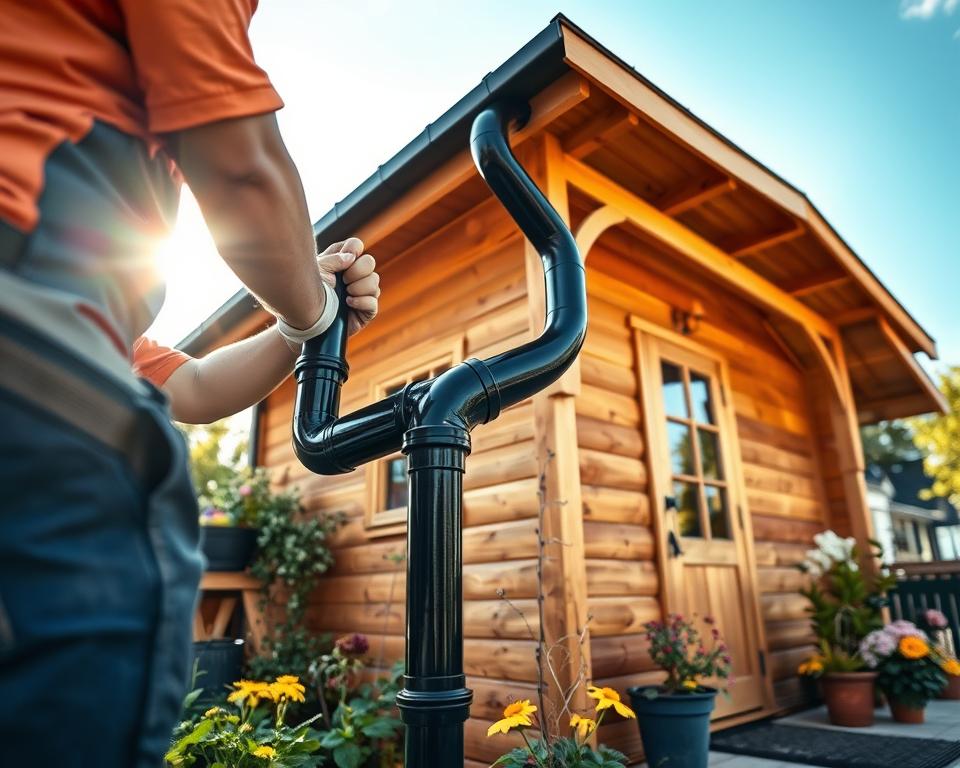
Proper outlet positioning is crucial for managing water flow and protecting your summerhouse’s structural integrity. Your rainwater drainage system must direct water away from the building’s foundations.
Positioning Downpipe Outlets Strategically
When setting up your downpipe outlets, consider these key factors:
- Align outlets with natural water runoff points
- Ensure a minimum fall of 1:60 for optimal drainage
- Use swan neck offsets to navigate wall gaps
- Position outlets at critical structural points
Securing Downpipes to Garden Building Walls
Robust downpipe brackets are essential for a stable installation. Follow these guidelines for secure mounting:
| Wall Material | Recommended Bracket Spacing | Fixing Method |
|---|---|---|
| Timber Cladding | 1.8 metres | Woodscrews |
| Brick Walls | 2 metres | Masonry Plugs |
| Rendered Surfaces | 1.5 metres | Wall Anchors |
By carefully implementing these downpipe installation techniques, you’ll create a robust rainwater management system that protects your summerhouse from potential water damage.
Sealing and Testing Your New Gutter System
After installing your summerhouse gutters, the final critical step is ensuring a watertight seal. Proper gutter sealant application transforms your installation from good to exceptional, preventing potential water damage and protecting your cherished garden building.

Choose a high-quality silicone-based outdoor sealant specifically designed for waterproof joints. Your selected gutter sealant should offer robust leak prevention capabilities and withstand varying British weather conditions.
- Inspect all gutter connections and end caps
- Clean surfaces thoroughly before applying sealant
- Use a professional-grade sealant gun for precise application
- Smooth joints for a neat, professional finish
To test your gutter system, conduct a comprehensive water flow examination. Start by running water through the gutters using a garden hose, beginning at the highest point. Watch carefully for:
- Smooth water flow without interruptions
- No standing water in gutter channels
- Consistent drainage through downpipes
- Zero leaks at joints or bracket connections
Pro tip: Make minor adjustments immediately if you notice any water pooling or unexpected leakage during your test.
Your meticulous approach to sealing and testing ensures your summerhouse gutters will perform reliably, protecting your outdoor space from water damage for years to come.
Maintaining Your Summerhouse Gutters Throughout the Seasons
Protecting your summerhouse’s gutter system requires consistent seasonal care. Proper gutter maintenance ensures your garden building remains in top condition, preventing water damage and costly repairs. By implementing a strategic approach to gutter cleaning and seasonal care, you’ll extend the life of your guttering and safeguard your investment.

Regular Cleaning and Inspection Strategies
Effective gutter cleaning is crucial for preventing blockages and maintaining optimal water flow. Follow these essential maintenance tips:
- Inspect gutters at least twice yearly (autumn and spring)
- Remove leaves and debris thoroughly
- Check for loose brackets or damaged sections
- Flush gutters with water to test drainage
Preventing Common Gutter Problems
Proactive strategies can help prevent gutter blockages and protect your summerhouse. Consider these protective measures:
- Install leaf guards to minimise debris accumulation
- Trim overhanging branches near the summerhouse
- Clear downpipe outlets regularly
- Consider gutter heating cables in frost-prone areas
| Season | Gutter Maintenance Tasks | Prevention Focus |
|---|---|---|
| Spring | Clear winter debris | Check for winter damage |
| Summer | Inspect gutter alignment | Prevent moss growth |
| Autumn | Remove fallen leaves | Install leaf guards |
| Winter | Check for ice damage | Ensure proper drainage |
By dedicating time to seasonal gutter care, you’ll protect your summerhouse from potential water damage. Consistent maintenance is key to preventing costly repairs and ensuring your garden building remains in pristine condition.
Conclusion
You’ve now completed an incredible DIY guttering achievement that transforms your garden building’s protection. The journey of summerhouse gutter installation proves you can tackle complex home improvement projects with confidence and skill. Your careful planning, precise measurements, and hands-on approach have safeguarded your cherished outdoor space against Britain’s unpredictable weather.
By mastering this garden building improvement project, you’ve not only protected your summerhouse from potential water damage but also developed valuable technical skills. The process of selecting materials, understanding drainage requirements, and executing a precise installation demonstrates your commitment to maintaining your property’s integrity and longevity.
Your newly installed gutter system will effectively channel rainwater away from your summerhouse, preventing structural issues and ensuring years of enjoyment. The satisfaction of completing this project yourself goes beyond mere functionality—it represents personal growth, practical learning, and the empowerment that comes from taking control of home maintenance.
As you step back and admire your work, remember that this achievement is just the beginning. Your newfound skills and confidence can inspire future DIY projects, transforming how you approach home and garden improvements. Enjoy your beautifully protected summerhouse, knowing you’ve made a lasting investment in your outdoor living space.
FAQ
What tools do I need to install gutters on my summerhouse?
You’ll need essential tools including a tape measure, spirit level, hacksaw, drill, ladder, safety glasses, and work gloves. These tools will help you measure accurately, cut materials precisely, and ensure a safe and professional installation.
How do I calculate the right number of gutter sections for my summerhouse?
Measure your summerhouse’s fascia board length and add approximately 10% extra material for cuts and contingencies. This ensures you have enough guttering to complete the project with some spare sections for potential adjustments.
What’s the correct fall gradient for summerhouse gutters?
The standard fall is approximately 1:600, which translates to about 6mm drop per 3 metres. This subtle slope ensures water flows efficiently towards the downpipe without being visibly noticeable.
How often should I clean and maintain my summerhouse gutters?
Inspect and clean your gutters twice annually – typically in autumn and spring. Remove debris, check for loose brackets, and flush the system with water to ensure optimal performance throughout the year.
What materials are best for summerhouse gutters in the UK?
In the UK, PVC guttering is lightweight and affordable, aluminium offers durability, and cast iron works well for period-style buildings. Choose based on your summerhouse’s style, budget, and local weather conditions.
How do I prevent common gutter problems?
Consider installing leaf guards, trim overhanging branches, regularly clear downpipe outlets, and check for early signs of damage like sagging sections or rust spots. Proactive maintenance prevents costly repairs.
Can I install gutters on my summerhouse by myself?
Absolutely! With careful preparation, the right tools, and following step-by-step guidance, you can successfully install gutters as a DIY project. Take your time, prioritise safety, and follow manufacturer instructions carefully.
What safety precautions should I take when installing gutters?
Always use a sturdy ladder or scaffold tower, wear safety glasses when cutting materials, use work gloves, and ensure someone knows you’re working at height. Never rush the installation process.
How do I seal gutter joints effectively?
Use a silicone-based outdoor sealant designed for exterior use. Apply neatly to joints, unions, and end caps, smoothing the application for both function and appearance. Test thoroughly after sealing.
What should I do if water pools in my gutters?
Pooling water indicates an incorrect fall gradient. Readjust your gutter brackets to ensure a consistent 1:600 gradient, checking with a spirit level and making precise adjustments to guarantee smooth water flow.

