Your Guide to Building a Homemade Garden Shower

Creating a homemade garden shower can be a fantastic way to enhance your outdoor space, providing a refreshing and convenient way to cool off during warm weather. By installing an outdoor shower installation, you can enjoy the benefits of a spa-like experience in the comfort of your own garden.
Building a DIY garden shower requires some planning and creativity, but the end result can be truly rewarding. Not only will it add value to your property, but it will also provide a unique feature that sets your garden apart.
Inhaltsverzeichnis
Key Takeaways
- Enhance your outdoor space with a homemade garden shower
- Enjoy a refreshing and convenient way to cool off during warm weather
- Create a spa-like experience in your own garden
- Add value to your property with a unique outdoor feature
- Plan and design your DIY garden shower for a successful installation
Why a Garden Shower is a Brilliant Addition to Your Outdoor Space
Outdoor showers are becoming increasingly popular, and for good reason – they offer a refreshing way to enjoy your garden. A garden shower can be a fantastic way to enhance your outdoor living experience, providing numerous outdoor shower benefits that make your garden a more enjoyable space.
Benefits of Having a Garden Shower
Having a garden shower can be incredibly beneficial, especially during the warmer months. Some of the key advantages include:
Cooling Off During Hot Summer Days
A garden shower provides a refreshing way to cool off after spending time in the sun. It’s an ideal way to relax and rejuvenate in your own backyard.
Rinsing Off After Gardening
Gardening can be a messy activity, and a garden shower makes it easy to rinse off dirt and debris before heading back indoors.
Popular Uses for Outdoor Showers in British Gardens
Outdoor showers are versatile and can be used in various ways. Some popular uses include:
Post-Swimming Pool Rinse
If you have a swimming pool, a garden shower is perfect for rinsing off chlorine and other chemicals after a swim.
Cleaning Pets and Muddy Wellies
Garden showers are also great for cleaning pets and muddy wellies, making them a practical addition to your outdoor space.
By incorporating a garden shower into your garden shower ideas, you can create a more functional and enjoyable outdoor area. Whether you’re looking to relax, garden, or simply enjoy the fresh air, a garden shower is a brilliant addition to any backyard shower setup.
Planning Your Garden Shower Project
Before you start constructing your garden shower, it’s vital to plan it thoroughly. A well-planned garden shower not only enhances your outdoor space but also ensures functionality and longevity.
Choosing the Perfect Location
Selecting the right location for your garden shower is crucial. You need to consider several factors to ensure it’s both practical and enjoyable.
Sun Exposure Considerations
Sunlight can significantly impact your shower experience. Ideally, you want a location that receives partial shade to avoid overheating and to create a more comfortable showering environment.
Privacy from Neighbours
Ensuring privacy is another key consideration. You may need to install screens or plant foliage to create a secluded area, especially if your garden is overlooked by neighbours.
Determining Water Source Options
Deciding on the water source for your garden shower is a critical decision that affects both the installation process and ongoing costs.
Connection to Household Plumbing
One option is to connect your garden shower to your household plumbing system. This can provide a reliable water supply but may require professional plumbing expertise.
Standalone Water Tanks
Alternatively, you can use a standalone water tank, which can be filled manually or connected to a rainwater harvesting system. This option offers more flexibility in terms of location.
Considering Drainage Solutions
Proper drainage is essential to prevent waterlogging and ensure the longevity of your garden shower.
Natural Drainage Options
One approach is to utilize natural drainage by situating your shower in a slightly sloping area that allows water to drain away naturally.
Connecting to Existing Systems
Another option is to connect your garden shower to an existing drainage system. This can be more complex and may require professional assistance.

UK Regulations and Permissions to Consider
Before you start building your garden shower, it’s crucial to understand the regulatory landscape in the UK. Compliance with local regulations ensures your project is successful and stress-free.
Planning Permission Requirements
In most cases, a garden shower is considered a minor development and might be exempt from requiring planning permission. However, it’s essential to check with your local planning authority, especially if you live in a conservation area or your property is listed.
Water Regulations Advisory Scheme (WRAS) Compliance
Your garden shower must comply with WRAS regulations to prevent contamination of the water supply. This includes using approved backflow prevention devices and ensuring that your plumbing system meets the required standards.
Considerations for Listed Properties
If your property is listed, there are additional considerations to take into account. Any external work, including the installation of a garden shower, may require special permission to ensure it does not alter the historical integrity of your property.
To summarize, key considerations include:
- Checking if you need planning permission
- Ensuring WRAS compliance for your plumbing system
- Obtaining necessary permissions for listed properties
Essential Tools and Materials You’ll Need
To construct a functional and aesthetically pleasing garden shower, you’ll need to gather essential tools and materials. Having the right equipment on hand will streamline the building process and ensure a successful outcome.
Basic Tools for Construction
Before commencing your project, it’s vital to assemble the necessary tools for construction. You’ll need to decide between power tools and hand tools, depending on the scale of your project and your personal preference.
Power Tools vs. Hand Tools
Power tools offer efficiency and speed, while hand tools provide precision and control. For a garden shower, you’ll likely need a combination of both. Essential power tools include a drill and a saw, while hand tools like trowels and hammers are necessary for finer details.
Measuring and Marking Equipment
Accurate measurements are crucial for a successful build. Ensure you have a reliable tape measure, spirit level, and marking gauge to achieve precise cuts and alignments.
Plumbing Materials Checklist
For a functional garden shower, you’ll need to install a reliable plumbing system. This requires a range of specific materials.
Pipes, Fittings, and Connectors
You’ll need pipes, fittings, and connectors that are resistant to corrosion and suitable for outdoor use. Choose materials like copper, stainless steel, or high-quality plastics that can withstand the elements.
Sealants and Waterproofing Products
To prevent leaks and ensure a watertight system, apply appropriate sealants and waterproofing products. Silicone sealants and epoxy-based coatings are effective options for sealing joints and protecting against moisture.

Optional Extras for Enhanced Functionality
To enhance your garden shower experience, consider incorporating additional features that improve convenience and comfort.
Shelving and Storage
Adding shelving or storage units near your shower can be incredibly useful for storing toiletries and towels. Consider using water-resistant materials like teak or recycled plastic for these features.
Lighting Options
Installing appropriate lighting can enhance the ambiance and safety of your garden shower area. Solar-powered lights or low-voltage LED strips are energy-efficient and suitable for outdoor use.
By carefully selecting the right tools and materials, you’ll be well on your way to creating a functional and enjoyable garden shower that complements your outdoor space.
Different Types of Garden Showers to Consider
Garden showers come in a variety of designs, from simple and portable to complex and eco-friendly installations. The type you choose will depend on your specific needs, available space, and budget.
Simple Standalone Designs
Standalone garden showers offer flexibility in terms of placement and can be easily relocated if needed.
Portable Options
Portable garden showers are ideal for those who may want to move their shower to different locations within the garden. They are typically lightweight and easy to set up.
Fixed Installations
Fixed standalone showers provide a more permanent solution. They can be more substantial and may include features like storage for shower products.
Wall-Mounted Options
Wall-mounted garden showers make efficient use of space and can be attached to either the house exterior or a garden wall.
Attaching to House Exterior
Mounting your shower to the exterior of your house can simplify plumbing and provide a sturdy installation.
Garden Wall Installations
Installing a shower on a garden wall can create a beautiful focal point and help define different areas within your garden.
Eco-Friendly Solar Showers
Solar showers are an eco-friendly option that use the sun’s energy to heat water, reducing your carbon footprint.
How Solar Heating Works
Solar heating works by using a black water tank or bag that absorbs heat from the sun. This heated water is then used for your shower.
Best Positioning for Maximum Efficiency
To maximize efficiency, position your solar shower in a sunny spot, ideally facing south to capture the most sunlight throughout the day.
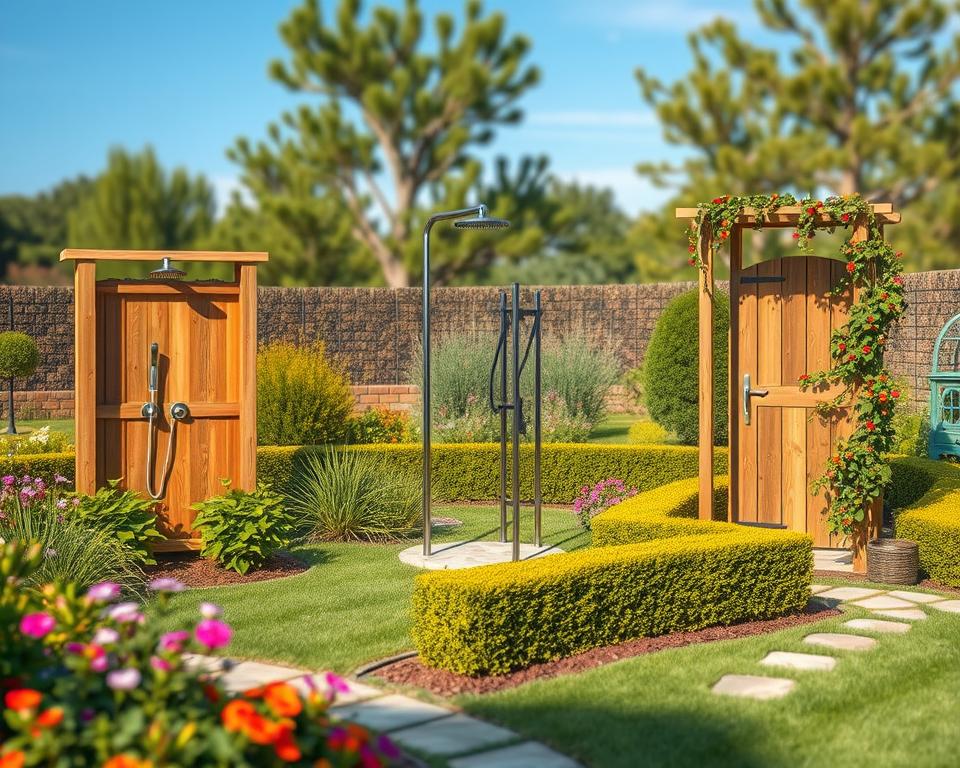
How to Build a Garden Shower Yourself: The Basic Framework
When building a garden shower, the first crucial step is to create a stable base that can support the entire structure. This foundation is essential for the durability and safety of your outdoor shower. A well-planned base will also make the construction process smoother.
Creating a Stable Base
A stable base is vital for your garden shower. It ensures that the structure remains level and secure over time. There are two primary options for creating a base: a concrete pad or a decking platform.
Concrete Pad Construction
A concrete pad provides a solid, long-lasting foundation. To construct one, you’ll need to excavate the area, lay a sub-base, and then pour concrete. This method is durable but requires more initial effort.
Decking Platform Options
A decking platform offers a more flexible and potentially quicker alternative. You can build a raised platform using timber, which is ideal if you have uneven ground or prefer a wooden finish.
Building the Main Structure
Once your base is in place, you can start constructing the main frame of your garden shower. The choice between a wooden and metal frame depends on your preferences and the style of your garden.
Wooden Frame Construction
A wooden frame is a popular choice for garden showers as it blends well with outdoor environments. Ensure you use treated wood to withstand the elements.
Metal Frame Alternatives
Metal frames offer a sleek, modern look and can be more durable than wood. However, they may require additional coating to prevent rust.
| Material | Durability | Aesthetic Appeal | Maintenance |
|---|---|---|---|
| Wood | Medium | High | Regular treatment needed |
| Metal | High | Medium | Coating required to prevent rust |
Safety Considerations During Construction
Safety should be your top priority when building your garden shower. This includes working safely with tools and using proper lifting techniques to avoid injury.
Working with Tools Safely
Always wear protective gear, such as gloves and goggles, when using power tools. Ensure your work area is well-lit and clear of clutter.
Proper Lifting Techniques
When lifting heavy materials, bend at the knees, keep the load close to your body, and lift with your legs. This reduces the risk of back strain.

Setting Up the Plumbing System
The plumbing system is the backbone of your garden shower, and setting it up properly is essential. A well-designed plumbing system ensures that your shower operates efficiently and safely.
Connecting to Your Home’s Water Supply
To supply your garden shower with water, you’ll need to connect it to your home’s water supply system. This can be done in two primary ways:
- Using existing outdoor taps
- Installing new exterior plumbing
Using Existing Outdoor Taps
If you have an existing outdoor tap, you can use it as a water source for your garden shower. Ensure the tap is compatible with your shower’s plumbing requirements and is located close enough to the shower area to minimize pipe runs.
Installing New Exterior Plumbing
If you don’t have an outdoor tap or if it’s not conveniently located, you may need to install new exterior plumbing. This involves running pipes from your home to the garden shower location. It’s crucial to insulate these pipes to protect them from freezing temperatures during winter.
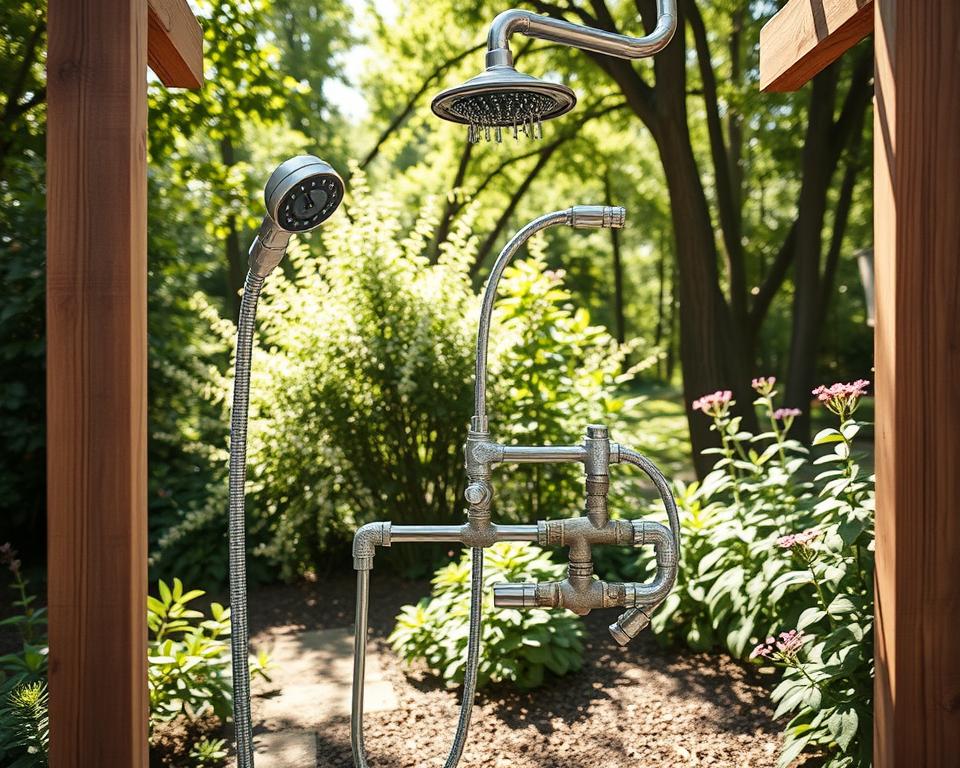
Installing Pipes and Fittings
Once you’ve determined your water supply connection, you’ll need to install the necessary pipes and fittings. The type of pipes you choose will depend on your specific needs and local regulations.
Choosing Between Copper and Plastic Pipes
Copper pipes are durable and resistant to bacteria, but they can be more expensive. Plastic pipes, such as those made from cross-linked polyethylene (PEX), are flexible, resistant to freezing, and generally more affordable.
Proper Sealing Techniques
Regardless of the pipe material you choose, it’s essential to use proper sealing techniques to prevent leaks. Use appropriate sealants on threaded connections, and ensure that all joints are securely made.
Testing for Leaks
After installing your pipes and fittings, it’s crucial to test the system for leaks. This involves pressurizing the system and checking all connections for signs of leakage.
Pressure Testing Methods
You can perform a pressure test by turning on the water supply and checking the system under pressure. Listen for any signs of leaks, and visually inspect the pipes and fittings.
Fixing Common Plumbing Issues
If you identify any leaks, turn off the water supply and address the issue. Common problems include loose connections or damaged pipework. Make the necessary repairs and retest the system.
By following these steps, you can ensure that your garden shower’s plumbing system is installed correctly and functions reliably.
Installing the Shower Fixtures
Now that you’ve built the basic framework of your garden shower, it’s time to focus on installing the shower fixtures. This step is crucial in bringing your outdoor shower to life and ensuring it functions properly.
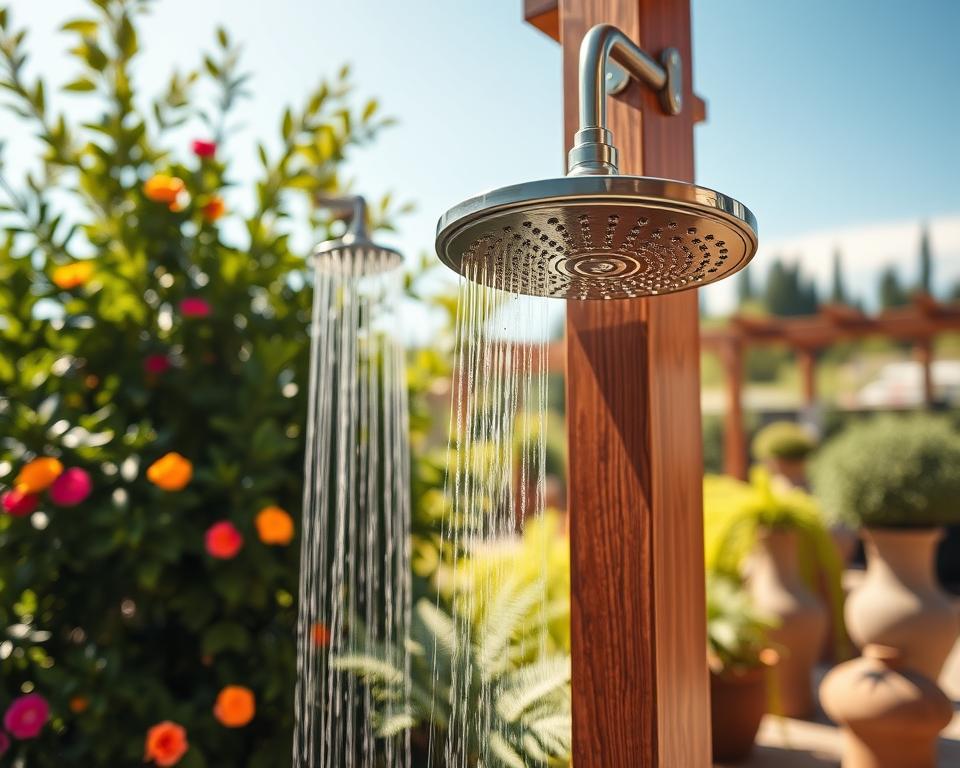
Choosing the Right Shower Head for Outdoor Use
When selecting a shower head for your outdoor shower, you have several options to consider. The choice between different types can significantly impact your showering experience.
- Rainfall vs. Standard Shower Heads: Rainfall shower heads provide a luxurious experience, simulating rain, while standard shower heads offer a more traditional showering experience.
- Rust-Resistant Options: For outdoor use, it’s essential to choose shower heads made from rust-resistant materials to withstand the elements.
Mounting Taps and Controls
Mounting taps and controls requires careful consideration to ensure they are both accessible and weatherproof.
Height Considerations
The height at which you mount your taps and controls is important for comfort and usability. Typically, they should be positioned between 900mm to 1,050mm from the floor.
Weatherproof Installation
To protect your taps and controls from the weather, ensure they are installed with proper sealing and consider using weatherproof covers.
Adding a Mixer Valve for Temperature Control
A mixer valve allows you to control the water temperature, blending hot and cold water to your preferred temperature.
Thermostatic vs. Manual Mixers
Thermostatic mixers provide precise temperature control, while manual mixers offer a more straightforward, cost-effective solution.
Anti-Scald Protection
Consider a mixer valve with anti-scald protection to prevent sudden changes in water temperature, enhancing safety.
By carefully selecting and installing your shower fixtures, you can create a functional and enjoyable outdoor shower experience.
Creating Proper Drainage for Your Garden Shower
When building a garden shower, one of the most critical aspects to consider is drainage. Proper drainage ensures that your outdoor shower remains safe and functional.
Simple Soakaway Systems
A simple soakaway system is an effective way to manage water from your garden shower. This involves creating a gravel bed to absorb and disperse the water.
Gravel Bed Construction
To construct a gravel bed, you’ll need to dig a pit, fill it with coarse gravel, and ensure it’s adequately sized for the water volume.
Suitable Soil Types
Soakaway systems work best in areas with permeable soil like sand or gravel. If your soil is clay-based, you may need to consider alternative drainage solutions.
Connecting to Existing Drainage
If you have an existing drainage system, you can connect your garden shower to it. This might involve linking to your house drainage or a nearby surface water drain.
Linking to House Drainage
Connecting to your house drainage requires careful planning to ensure it’s done correctly and safely. You may need to consult a professional plumber.
Required Fittings and Connections
You’ll need the right fittings and connections to link your garden shower to the existing drainage system. These should be durable and resistant to corrosion.
Eco-Friendly Grey Water Solutions
Consider using eco-friendly grey water solutions to make the most of the water from your garden shower. This can include watering your garden or using environmentally safe soaps.
Watering Your Garden with Shower Water
You can use the grey water from your shower to water your garden, reducing your water waste and creating a more sustainable outdoor space.
Environmentally Safe Soaps
Using environmentally safe soaps in your garden shower can minimize the impact on your garden and local waterways.

Privacy Solutions for Your Outdoor Shower
Creating a private outdoor shower area is essential for a comfortable experience. When you’re showering outdoors, feeling secluded and secure can make all the difference. There are several ways to achieve this, ranging from building structures to using natural elements.
Building Shower Screens or Enclosures
One effective way to ensure privacy is by constructing shower screens or enclosures. These can be tailored to fit your garden’s style and layout.
Wooden Panel Construction
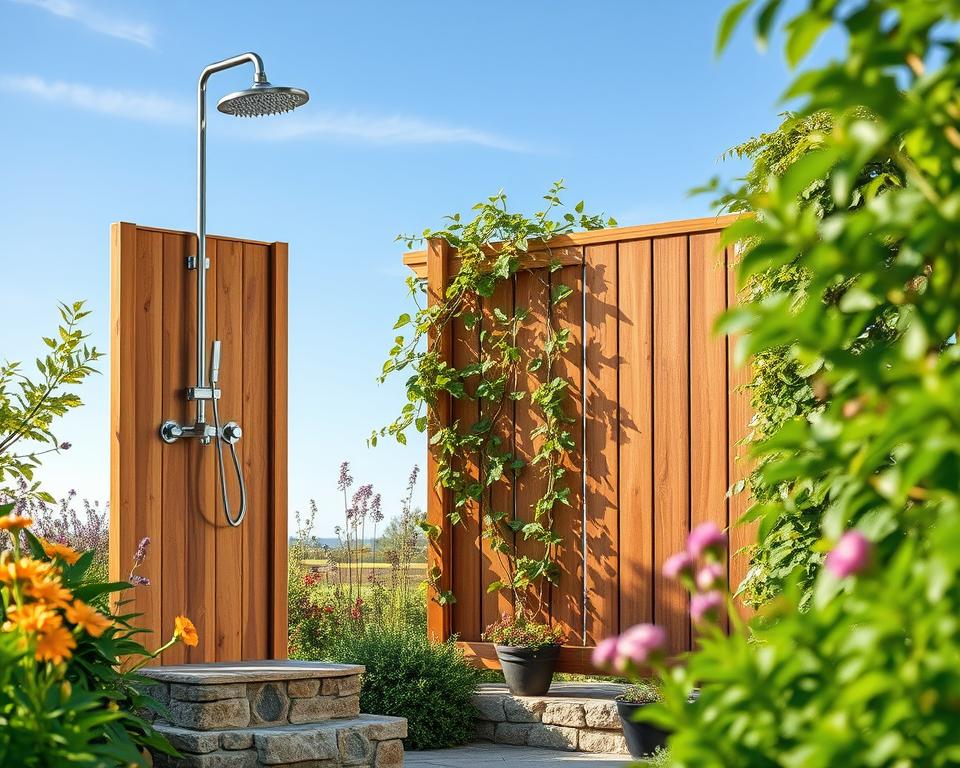
Wooden panels are a popular choice for creating enclosures. They can be stained or painted to match your garden’s aesthetic. Durable woods like cedar or teak are ideal as they withstand the elements well.
Trellis and Fabric Options
Trellis systems with fabric or climbing plants offer a more flexible and less permanent solution. This option allows for airflow while maintaining privacy.

Using Plants for Natural Privacy
Nature provides an excellent means of creating privacy. By strategically planting certain species, you can create a natural screen around your shower area.
Fast-Growing Hedge Options
Fast-growing hedges like privet or leylandii can quickly form a dense screen. They require regular maintenance to keep them healthy and shaped.
Climbing Plants for Vertical Screens
Climbing plants such as clematis or ivy can be trained to grow up trellises or walls, creating a vertical screen that enhances privacy.
Temporary Privacy Options
For those who prefer flexibility or are renters, temporary privacy solutions are available.
Shower Curtains for Outdoor Use
Waterproof shower curtains can be hung around your shower area to provide privacy. They come in various designs and can be easily removed or replaced.
Removable Screens
Removable screens made of wood, metal, or fabric can be positioned around your shower. They offer the flexibility to change your layout as needed.
| Privacy Solution | Durability | Maintenance |
|---|---|---|
| Wooden Panel Construction | High | Regular staining or sealing |
| Trellis and Fabric | Medium | Periodic cleaning and plant maintenance |
| Fast-Growing Hedges | High | Regular pruning |
| Climbing Plants | Medium | Training and occasional pruning |
Weatherproofing Your Garden Shower
Weatherproofing your garden shower is crucial for ensuring it remains functional and enjoyable throughout the year. A garden shower exposed to the elements without proper protection can deteriorate quickly, leading to costly repairs or even replacement.
Choosing Weather-Resistant Materials
Selecting the right materials for your garden shower is the first step in weatherproofing. The choice of material can significantly impact the durability and maintenance needs of your shower.
Hardwoods vs. Treated Softwoods
Hardwoods like teak and oak are naturally resistant to rot and insect damage, making them excellent choices for outdoor showers. Treated softwoods, on the other hand, are more budget-friendly but may require more maintenance.
Metal and Plastic Components
When it comes to metal components, stainless steel and brass are preferred for their corrosion resistance. Plastic parts should be UV-resistant to prevent degradation from sunlight.
| Material | Durability | Maintenance | Cost |
|---|---|---|---|
| Teak | High | Low | High |
| Treated Softwood | Medium | Medium | Medium |
| Stainless Steel | High | Low | High |
| UV-Resistant Plastic | Medium | Low | Medium |
Applying Protective Finishes
Applying a protective finish can enhance the weather resistance of your garden shower. Different types of finishes offer varying levels of protection and aesthetic appeal.
Oils, Stains, and Paints
Oils and stains penetrate the wood, offering protection while maintaining its natural appearance. Paints provide a more durable barrier but may chip or peel over time.
Application Techniques
The method of application can significantly affect the performance of the finish. Always follow the manufacturer’s instructions for the best results.
Seasonal Protection Strategies
Different seasons bring different challenges for your garden shower. Implementing seasonal protection strategies can help extend its lifespan.
Winter Preparation
Before winter, ensure your garden shower is drained to prevent freezing damage. Consider covering it or applying a winter-specific protective finish.
Spring Maintenance
In the spring, inspect your shower for any damage accumulated over winter. Clean and reapply protective finishes as needed.
Adding Comfort and Style to Your Garden Shower
To elevate your outdoor shower experience, consider incorporating elements of comfort and style. A well-designed garden shower can become a serene oasis in your backyard, perfect for relaxing after a swim or a workout.
Flooring Options for Comfort and Safety
Choosing the right flooring for your garden shower is crucial for both comfort and safety. You have several options to consider:
Non-Slip Decking Materials
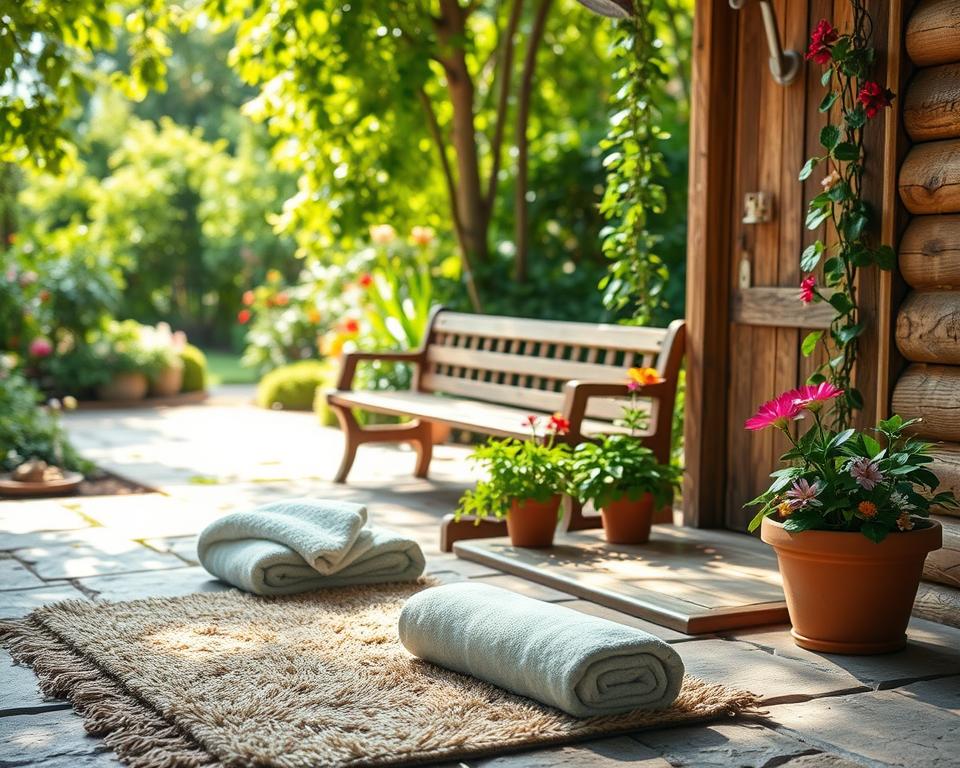
Opting for non-slip decking materials can significantly reduce the risk of slipping on wet surfaces. Materials like composite decking or textured wood are excellent choices.
Natural Stone Alternatives
Natural stone alternatives, such as porcelain or ceramic tiles with a textured finish, can provide both slip resistance and a luxurious feel underfoot.
Storage Solutions for Toiletries
Having adequate storage for toiletries in your garden shower can enhance the overall experience. Consider the following options:
Weatherproof Cabinets
Installing weatherproof cabinets can keep your toiletries dry and within easy reach. Look for cabinets made from durable, water-resistant materials.
Built-In Niches and Shelves
Built-in niches and shelves can provide convenient storage while maintaining a sleek, integrated look. Ensure they are constructed from weather-resistant materials.
Decorative Elements That Withstand the Elements
To add a touch of style to your garden shower, incorporate decorative elements that are designed to withstand outdoor conditions.
Outdoor-Safe Accessories
Choose accessories that are specifically designed for outdoor use, such as stainless steel or brass fixtures, which can resist corrosion and maintain their appearance over time.
Lighting for Evening Use
Installing appropriate lighting can extend the use of your garden shower into the evening. Solar-powered lights or low-voltage LED lights are energy-efficient options that can add ambiance without the hazard of high voltage.
By incorporating these elements, you can create a garden shower that is not only functional but also a beautiful and comfortable space to enjoy.
Eco-Friendly Considerations for Your Garden Shower
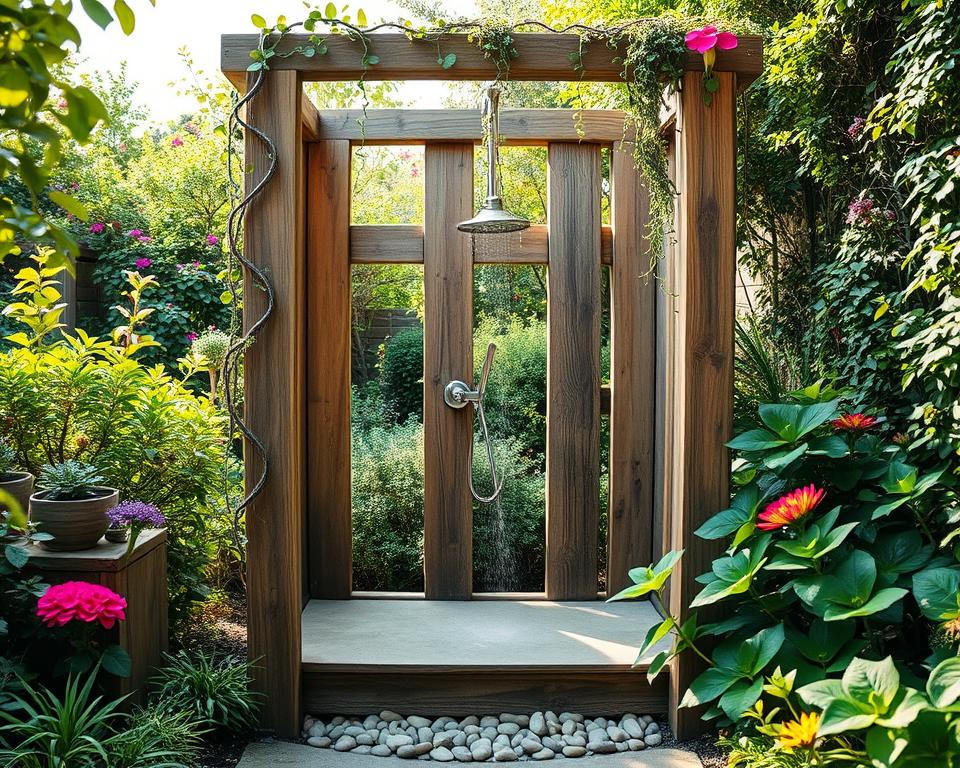
You can make your garden shower more sustainable by incorporating several eco-friendly features. This not only benefits the environment but also enhances your outdoor showering experience.
Water Conservation Techniques
Conserving water is crucial for an eco-friendly garden shower. Simple measures can significantly reduce water usage.
Low-Flow Shower Heads
Installing low-flow shower heads can drastically cut down water consumption without compromising the shower experience.
Push Button Timers
Push button timers allow you to control the duration of your shower, preventing unnecessary water waste.
| Water Conservation Method | Water Saved | Installation Ease |
|---|---|---|
| Low-Flow Shower Heads | Up to 50% | Easy |
| Push Button Timers | Variable | Moderate |
Solar Heating Options
Solar heating is an excellent way to make your garden shower eco-friendly by utilizing renewable energy.
DIY Solar Heating Systems
You can create a DIY solar heating system using a black hose coiled on a wooden frame, exposed to the sun.
Commercial Solar Shower Units
Alternatively, commercial solar shower units are available, offering a more sophisticated and efficient solution.
Biodegradable Soaps and Products
Using biodegradable soaps and products ensures that your garden shower doesn’t harm the local ecosystem.
UK-Available Eco-Friendly Brands
Several UK brands offer eco-friendly soap options that are perfect for outdoor use.
Making Your Own Natural Products
You can also make your own natural soap products, allowing for complete control over ingredients.
Maintaining Your Garden Shower Throughout the Year
To keep your garden shower in optimal condition, regular maintenance is crucial. A well-maintained shower not only ensures a refreshing experience but also prolongs the lifespan of the installation.
Regular Cleaning and Maintenance
Regular cleaning is vital to prevent the buildup of dirt and grime. You should clean the shower head and taps regularly to maintain water quality and flow.
Preventing Limescale Build-up
To prevent limescale buildup, consider using a water softener or a limescale-resistant shower head. Regularly cleaning the shower head with a descaling solution can also help.
Cleaning Natural Materials
If your garden shower incorporates natural materials, such as wood, ensure you use appropriate cleaning products that won’t damage the material. Regularly inspect these areas for signs of wear or damage.
Winterising Your Outdoor Shower
As winter approaches, it’s essential to winterise your garden shower to prevent damage from freezing temperatures.
Draining the System
Drain the shower system completely to prevent water from freezing within the pipes. This may involve draining the water heater and pipes.
Protective Covers and Shields
Consider using protective covers or shields to safeguard your shower from harsh winter weather. This can help protect both the structure and the plumbing.
Dealing with Common Issues
Despite regular maintenance, issues can still arise. Being prepared to address these problems can save time and money.
Fixing Leaks and Drips
Inspect your garden shower regularly for signs of leaks or drips. Tightening loose connections or replacing worn-out washers can often resolve these issues.
Replacing Worn Components
Over time, components of your garden shower may wear out. Regularly inspect and replace these parts as needed to maintain the shower’s functionality.
Budget-Friendly Garden Shower Ideas
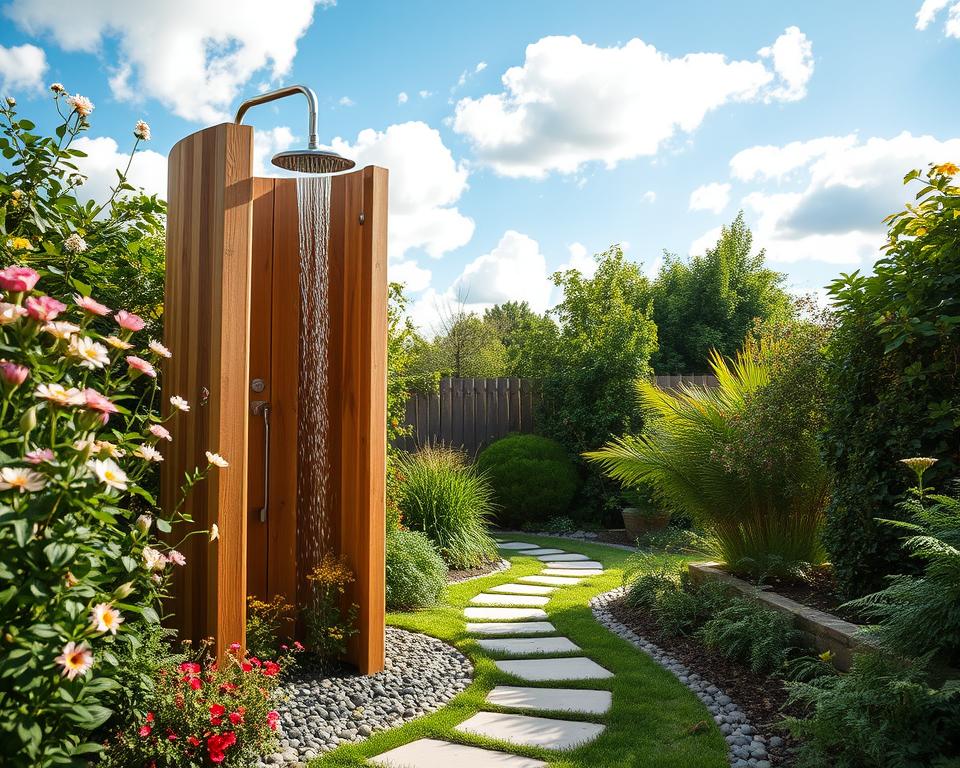
A budget-friendly garden shower is within reach when you consider alternative materials and DIY solutions. Creating an outdoor shower that is both functional and aesthetically pleasing doesn’t have to break the bank.
Upcycling Materials for Your Shower
One of the most effective ways to save money is by upcycling materials. This not only reduces waste but also adds a unique character to your garden shower.
Repurposing Pallets and Reclaimed Wood
Using pallets and reclaimed wood can significantly cut costs. You can create the structure, flooring, or even decorative elements from these materials. Ensure that the wood is properly treated to withstand outdoor conditions.
Second-hand Fixtures and Fittings
Consider sourcing second-hand fixtures and fittings from salvage yards or online marketplaces. With a bit of cleaning and refurbishment, these can be made to look like new.
DIY Alternatives to Expensive Fixtures
Instead of buying expensive shower fixtures, you can create your own DIY alternatives.
Homemade Shower Heads
You can make a shower head using a perforated pipe or by modifying an old sprinkler head. This not only saves money but also allows for customization.
Simple Tap Adaptations
Adapting existing taps or using outdoor-friendly tap designs can be a cost-effective solution. Ensure that the taps are suitable for outdoor use and can withstand various weather conditions.
Phased Building Approach
Adopting a phased building approach allows you to spread the costs over time.
Starting with Basics and Upgrading Later
Begin with the essential components and gradually add more features as your budget allows. This makes the project more manageable financially.
Temporary to Permanent Conversion
You can start with a temporary setup and later convert it into a more permanent structure. This flexibility is particularly useful if you’re unsure about the final design.
Conclusion: Enjoying Your New Garden Shower
Now that you’ve completed your DIY garden shower, it’s time to relax and enjoy the many outdoor shower benefits. Having a shower in your garden not only enhances your outdoor living space but also provides a serene spot to unwind after a long day.
As you start enjoying your garden shower, remember the effort and care you put into building it. A well-maintained DIY garden shower will provide years of service, making it a worthwhile investment for your home.
Whether you’re looking to refresh after a swim or simply seeking a peaceful spot to connect with nature, your new garden shower is sure to become a favourite retreat. So, take a moment to appreciate the satisfaction of creating something with your own hands, and get ready to enjoy the refreshing experience of your new outdoor shower.
FAQ
What are the benefits of having a garden shower?
Having a garden shower provides numerous benefits, including cooling off during hot summer days, rinsing off after gardening, and enhancing the overall outdoor living experience.
Do I need planning permission to install a garden shower?
In most cases, you won’t need planning permission to install a garden shower, but it’s essential to check with your local authority to determine if any specific regulations apply to your property.
How do I ensure proper drainage for my garden shower?
To ensure proper drainage, you can install a simple soakaway system, connect to existing drainage, or implement eco-friendly grey water solutions, such as using the shower water for watering your garden.
What type of materials should I use for building a garden shower?
When building a garden shower, it’s recommended to use weather-resistant materials, such as hardwoods or treated softwoods, and metal or plastic components that can withstand outdoor conditions.
Can I use my garden shower during the winter months?
To use your garden shower during the winter months, you’ll need to take steps to winterise it, including draining the system and using protective covers or shields to prevent damage from freezing temperatures.
How can I make my garden shower more eco-friendly?
You can make your garden shower more eco-friendly by implementing water conservation techniques, such as using low-flow shower heads and push-button timers, and considering solar heating options.
What are some budget-friendly ideas for creating a garden shower?
Some budget-friendly ideas for creating a garden shower include upcycling materials, such as repurposing pallets and reclaimed wood, using second-hand fixtures and fittings, and adopting a phased building approach.
How do I maintain my garden shower throughout the year?
Regular maintenance is crucial to keep your garden shower in good condition. This includes cleaning and inspecting the shower regularly, preventing limescale build-up, and addressing any issues promptly.