How to Build a Trellis Yourself

Creating a DIY trellis can be a fulfilling project that enhances both the functionality and aesthetic appeal of your garden. Whether you’re an experienced gardener or just starting out, a well-designed trellis can provide support for climbing plants and add visual interest to your outdoor space.
By following this trellis tutorial, you’ll learn how to plan, design, and construct a sturdy garden trellis that suits your needs. This project allows you to tailor the trellis to your garden’s specific requirements, ensuring it complements your existing landscape.
Inhaltsverzeichnis
Key Takeaways
- Learn to plan and design a trellis that suits your garden’s needs.
- Understand the materials required for building a sturdy trellis.
- Discover techniques for constructing a trellis that complements your garden.
- Gain confidence in your DIY skills by completing a rewarding project.
- Enhance your garden’s functionality and aesthetic appeal.
Understanding Trellises and Their Benefits
Before you start building a trellis, it’s crucial to understand its purpose and the benefits it brings to your garden. A trellis is a fundamental element in gardening that serves both functional and aesthetic purposes.
What Is a Trellis?
A trellis is a structure used to support climbing plants, providing them with a framework to grow upwards. It can be made from various materials, including wood, metal, or vinyl, and comes in different designs to suit various garden styles. By supporting plants like roses, clematis, or grapevines, a trellis helps to maximise space and add visual interest to your garden.
Benefits of Installing a Trellis in Your Garden
Installing a trellis in your garden offers several benefits. Some of the key advantages include:
- Maximising Space: Trellises allow climbing plants to grow vertically, making the most of your garden space.
- Improving Air Circulation: By elevating plants off the ground, trellises improve air circulation around them, reducing the risk of disease.
- Enhancing Visual Appeal: Trellises can add a decorative element to your garden, creating a beautiful display of flowers or foliage.
- Supporting Plant Health: Trellises provide support for plants, keeping them upright and promoting healthy growth.
By understanding the benefits and purpose of a trellis, you can make informed decisions about how to incorporate one into your garden design, enhancing both the functionality and beauty of your outdoor space.
Planning Your Trellis Project
Planning is a crucial step in creating a trellis that is both functional and aesthetically pleasing. You need to consider several factors to ensure your trellis meets your garden’s specific needs.
Determining the Right Location
Choosing the right location for your trellis is vital. Consider the amount of sunlight your plants require and ensure the trellis won’t obstruct other garden features or pathways. Assess your garden’s conditions to determine the best spot.
Choosing the Right Size and Height
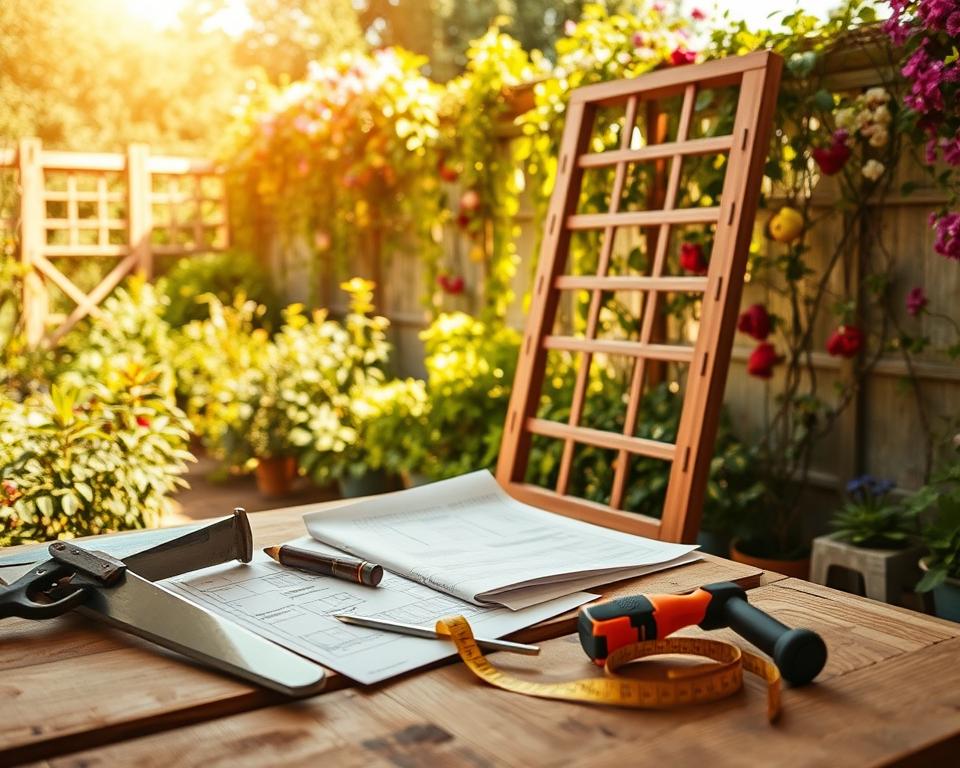
The size and height of your trellis depend on the type of plants you want to support. Climbing plants like roses or clematis may require taller trellises, while smaller plants like peas or beans can thrive with shorter ones. Measure your space to determine the ideal dimensions.
Considering Your Plant Types
Different plants have different requirements. For example, flowering plants may need more robust support, while delicate vines may require a more intricate trellis design. Understand your plants’ needs to design a trellis that is both functional and visually appealing.
| Plant Type | Trellis Height | Support Required |
|---|---|---|
| Roses | 6-8 feet | Robust |
| Clematis | 6-8 feet | Delicate |
| Peas/Beans | 4-6 feet | Moderate |
Essential Tools and Materials
The success of your trellis project depends on having the appropriate DIY tools and selecting the right materials. Whether you’re building a simple lattice trellis or a more complex fan design, being well-prepared is key to a successful outcome.
Tools You’ll Need
To construct your trellis, you’ll require a variety of tools. These can be categorized into measuring and cutting tools, assembly tools, and finishing tools.
Measuring and Cutting Tools
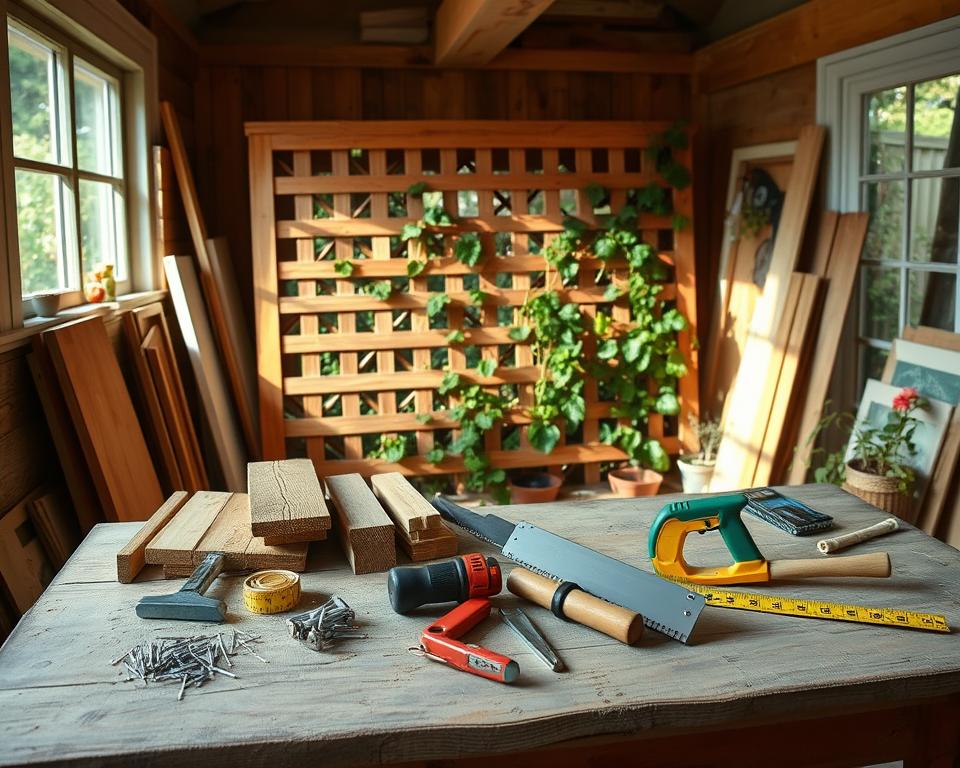
Accurate measurements are crucial. You’ll need a tape measure, a square, and a pencil to mark your cuts. For cutting, a saw (circular or handheld) is essential, and if you’re working with metal, a hacksaw or bolt cutters may be necessary.
Assembly Tools
For assembling the trellis, you’ll need a drill with appropriate bits, a hammer, and possibly a mallet. If you’re using screws or nails, having a screwdriver or a nail gun can be very helpful.
Finishing Tools
To give your trellis a professional finish, you’ll need sandpaper to smooth out any rough edges, and if you’re applying a finish, a brush or roller.
Materials for Different Trellis Types
The materials you choose will depend on the type of trellis you’re building and the plants it will support. Common materials include wood, metal, and recycled materials.
| Trellis Type | Common Materials | Characteristics |
|---|---|---|
| Wooden Lattice | Cedar, Redwood, Pressure-Treated Wood | Durable, resistant to rot and insects |
| Metal | Aluminum, Steel | Strong, can be made ornamental |
| Recycled Materials | Old fencing, reclaimed wood | Eco-friendly, unique appearance |
When choosing materials, consider factors like durability, maintenance, and aesthetic appeal. For example, cedar and redwood are popular for wooden trellises due to their natural resistance to rot and insects. For a more modern look, metal trellises can be a great option, offering strength and the potential for intricate designs.
Safety Considerations When Building a Trellis
Ensuring your safety is vital when building a trellis or any other garden structure. As you embark on this DIY project, it’s essential to be aware of potential hazards and take necessary precautions to avoid accidents.
Proper Tool Handling
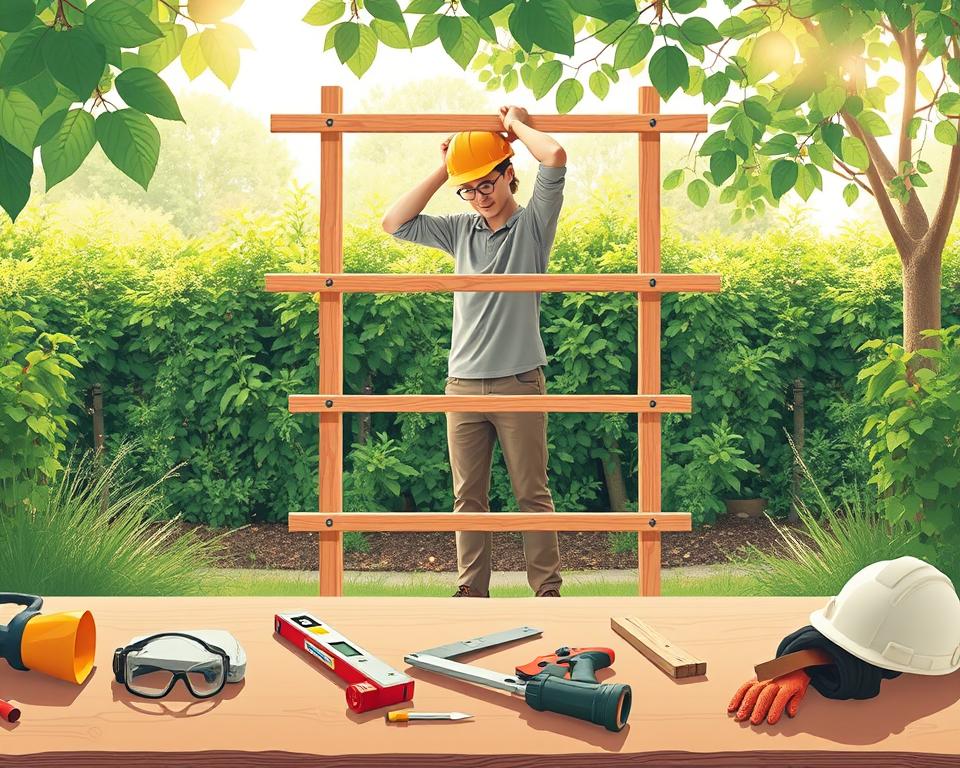
Handling tools correctly is crucial for your safety. Always use tools according to their intended purpose, and ensure they are in good condition. For instance, sharp tools should be handled with care, and power tools should be used with appropriate safety gear, such as goggles and gloves. “Safety is not just a precaution, it’s a practice,” as the saying goes, and being mindful of your tool handling is a significant step in this direction.
Working with Treated Wood Safely
When working with treated wood, it’s vital to take extra precautions. Treated wood contains chemicals that can be harmful if not handled properly. Wear protective gloves and a mask when cutting or drilling into treated wood, and avoid inhaling sawdust. Always follow the manufacturer’s instructions for handling and disposing of treated wood.
Selecting the Right Wood for Your Trellis
The type of wood used for your trellis plays a vital role in its overall performance and lifespan. When constructing a trellis, you need to consider the type of wood that will provide the necessary durability and resistance to various weather conditions.
Best Wood Types for Outdoor Trellises
For outdoor trellises, certain types of wood are more suitable due to their natural resistance to rot, decay, and insect damage. Here are some of the best options:
- Pressure-Treated Pine: Economical and widely available, pressure-treated pine is a popular choice for outdoor structures.
- Cedar and Redwood: Naturally resistant to rot and insects, cedar and redwood are durable options, though they can be more expensive.
- Hardwoods: Certain hardwoods like oak and teak are known for their strength and durability, making them suitable for trellises.
Pressure-Treated Pine
Pressure-treated pine is treated with chemicals to resist rot and insects, making it a cost-effective option for outdoor trellises.
Cedar and Redwood Options
Cedar and redwood are naturally aromatic and resistant to decay, providing a durable and attractive option for trellises.
Hardwood Considerations
Hardwoods like oak and teak are dense and durable, offering long-lasting performance for your trellis.
Treating and Weatherproofing Your Wood
Regardless of the wood type you choose, treating and weatherproofing are crucial steps to extend the lifespan of your trellis. Applying a waterproof sealant or stain can protect the wood from moisture and UV damage.
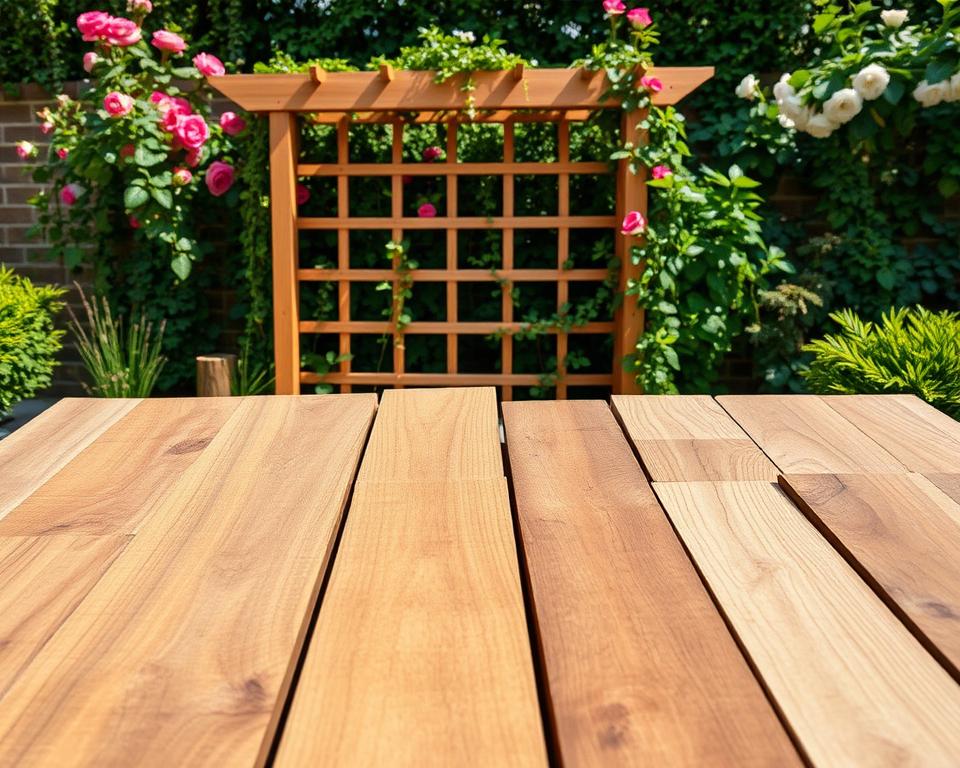
Popular Trellis Designs and Styles
Selecting the perfect trellis involves considering both form and function to create a harmonious garden environment. With a wide range of designs available, you can easily find one that matches your garden’s unique character and layout.
Classic Lattice Trellises
Classic lattice trellises are a timeless choice, offering a traditional and elegant look that complements many garden styles. The lattice pattern provides excellent support for climbing plants like roses and clematis, while also adding visual interest to your garden.
Lattice trellises can be customized to various sizes and can be made from different materials, including wood and metal, to suit your garden’s aesthetic.
Fan and Arch Designs
Fan and arch trellis designs offer a beautiful and functional way to showcase climbing plants. The fan design allows for a creative display of flowers and foliage, while arch designs can create a stunning entrance or focal point in your garden.
These designs can be particularly effective when used to frame a pathway or entrance, adding a touch of elegance to your outdoor space.

Freestanding vs. Wall-Mounted Options
When choosing a trellis, you must decide between freestanding and wall-mounted options. Freestanding trellises offer flexibility in placement and can be used in various locations throughout the garden. Wall-mounted trellises, on the other hand, are ideal for maximizing space and can be particularly effective in smaller gardens.
Both options have their advantages, and the choice ultimately depends on your garden’s layout and your personal preference.
Modern and Minimalist Designs
For those who prefer a contemporary look, modern and minimalist trellis designs are an excellent choice. These designs often feature clean lines, simple shapes, and a limited colour palette, creating a sleek and sophisticated appearance.
Modern trellises can be made from a variety of materials, including metal and recycled plastic, offering a durable and low-maintenance solution for supporting climbing plants.
How to Build a Trellis Yourself: Basic Lattice Design
With the right materials and a bit of guidance, you can construct a sturdy and attractive lattice trellis to complement your outdoor space. This guide will walk you through the process of building a basic lattice trellis, a great DIY project for enhancing your garden’s beauty and functionality.
Measuring and Cutting the Frame Pieces
To start, you’ll need to measure and cut the frame pieces for your trellis. Accurate measurements are crucial to ensure that your trellis is square and sturdy.
Creating Perfect 90-Degree Corners
To achieve perfect 90-degree corners, use a combination square to mark your cutting lines. This ensures that your corners are precise, providing a solid foundation for your trellis.
Ensuring Symmetrical Dimensions
Double-check your measurements to ensure that both sides of the trellis frame are symmetrical. This not only enhances the appearance but also ensures stability.
Assembling the Frame
Once you have cut all the frame pieces, it’s time to assemble them. Use durable joining techniques to ensure that your trellis can withstand various weather conditions and support the weight of climbing plants.
Joining Techniques for Durability
Consider using mortise and tenon joints or screws to assemble the frame. These methods provide excellent durability and can withstand outdoor conditions.
Reinforcing the Corners
To add extra stability, reinforce the corners with metal brackets or additional screws. This step is crucial for ensuring that your trellis remains sturdy over time.
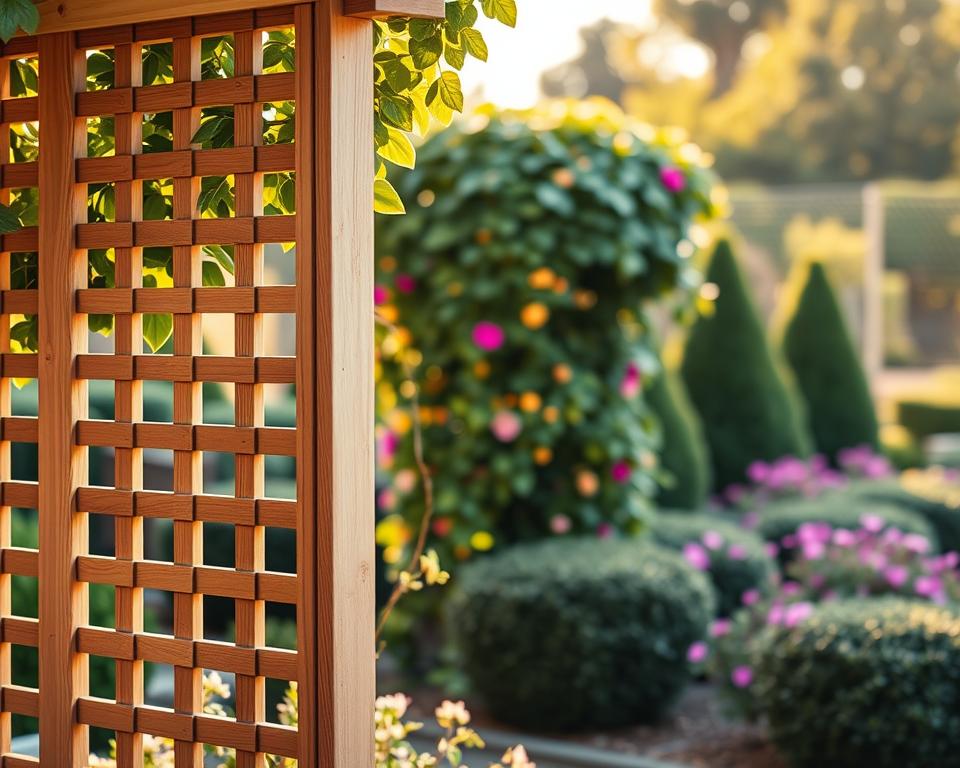
Adding and Securing the Lattice
The lattice is the most distinctive feature of your trellis, providing support for climbing plants. To add the lattice, start by cutting the lattice panels to the correct size. Then, secure them to the frame using wire or nails, ensuring they are evenly spaced and tightly fixed.
By following these DIY instructions, you can create a beautiful and functional lattice trellis that will enhance your garden for years to come.
Creating a Fan-Style Trellis
If you’re looking to add a unique touch to your outdoor space, consider building a fan-style trellis. A fan trellis can add a beautiful, elegant element to your garden while providing support for climbing plants.
Cutting the Base and Support Pieces
To start, you’ll need to cut the base and support pieces for your fan trellis. Use a high-quality wood that’s suitable for outdoor use, such as cedar or oak. Cut the pieces to the required length, ensuring they’re slightly thicker than the slats you’ll be using for the fan pattern.
Arranging and Securing the Fan Pattern
Once you have your base and support pieces ready, it’s time to arrange the fan pattern. Begin by spacing the slats evenly, using a spacer to maintain consistent gaps. You can use a simple geometric pattern or get creative with a more complex design.
Spacing the Slats Evenly
To achieve a uniform look, it’s crucial to space the slats evenly. Use a spacer or a template to ensure the gaps between the slats are consistent. This will not only enhance the visual appeal but also provide the necessary support for your climbing plants.
Securing Methods for Stability
To ensure the stability of your fan trellis, use a secure method to attach the slats to the base and support pieces. You can use screws or nails, depending on the type of wood and design you’re using. Make sure the slats are firmly attached to prevent the trellis from toppling over.
Finishing Touches
Once you’ve assembled and secured your fan trellis, it’s time to add the finishing touches. You can stain or paint the trellis to match your garden’s aesthetic. Apply a weather-resistant finish to protect the wood from the elements.
With these steps, you can create a beautiful and functional fan-style trellis to enhance your garden. Remember to choose the right materials and follow proper safety precautions when working with power tools.

Building a Sturdy A-Frame Trellis
If you’re looking to create a sturdy support for your climbing plants, an A-frame trellis is an excellent choice. This type of trellis is not only functional but also adds a decorative element to your garden. By following a few simple steps, you can build a robust A-frame trellis that will support your plants for years to come.
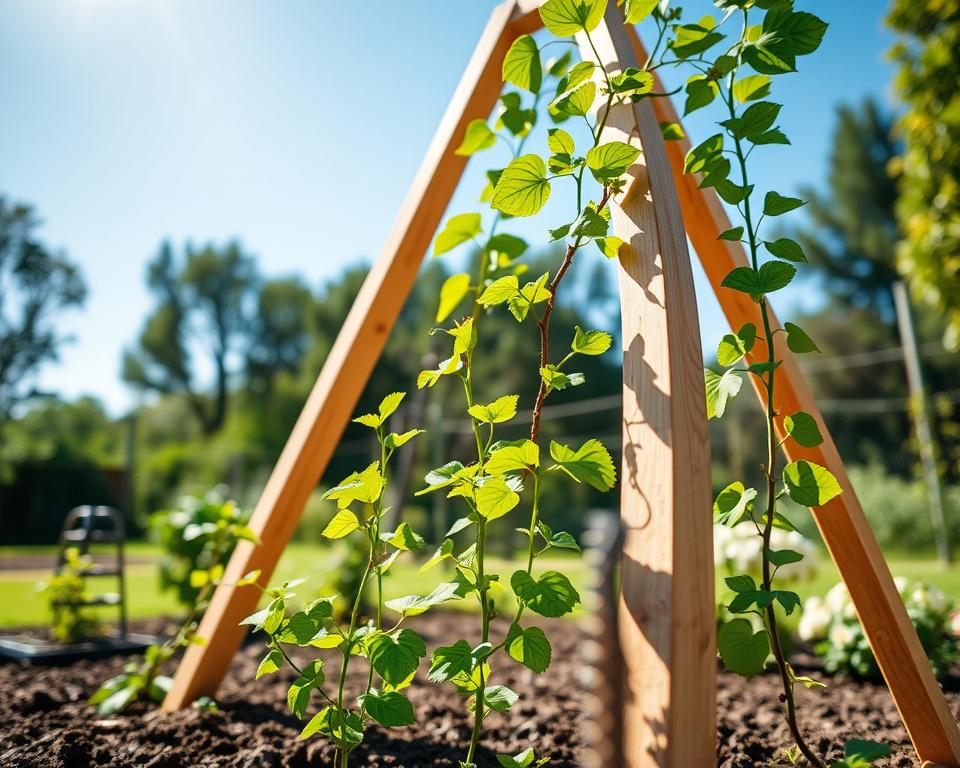
Constructing the Two Triangle Sides
The first step in building your A-frame trellis is to construct the two triangle sides. To do this, you’ll need to cut four pieces of wood to the required length for the sides of your triangles. Use a mitre saw or a circular saw to make precise cuts. Once you have your pieces cut, assemble the triangles using wood screws or nails. Ensure the corners are secure and the triangles are identical.
Here are some key considerations when constructing the triangle sides:
- Use durable wood that can withstand outdoor weather conditions.
- Ensure the triangles are identical to provide even support.
- Use appropriate fasteners to secure the corners.
Adding Cross Supports
After constructing the triangle sides, the next step is to add cross supports between them. These supports will provide additional stability to your trellis and help distribute the weight of the plants evenly. Cut several pieces of wood to the required length and attach them between the two triangles using wood screws. Make sure the supports are evenly spaced to provide maximum stability.
The cross supports are crucial for the stability of your A-frame trellis. Here are some tips to keep in mind:
- Space the cross supports evenly to ensure uniform support.
- Use the same type of wood for the cross supports as for the triangle sides.
- Secure the cross supports firmly to prevent any movement.
Connecting the Sides
The final step is to connect the two triangle sides together at the top to form the A-frame structure. Use a sturdy piece of wood or a metal rod to connect the apex of the two triangles. This will provide additional stability and complete the A-frame design. Ensure the connection is secure to withstand wind and the weight of the plants.
By following these steps, you can create a sturdy A-frame trellis that will provide excellent support for your climbing plants. Remember to check your trellis periodically to ensure it remains stable and secure.
Constructing a Wall-Mounted Trellis
For those with limited garden space, a wall-mounted trellis offers a practical and aesthetically pleasing solution. It allows you to grow climbing plants upwards, making the most of your available space. In this section, we’ll guide you through the process of constructing a wall-mounted trellis, from preparing the wall surface to securely mounting the trellis frame.
Preparing the Wall Surface
Before you start mounting your trellis, it’s essential to prepare the wall surface. Ensure the wall is clean and dry. If you’re dealing with a brick or stone wall, check for any crumbling mortar or damaged bricks that may need repair. For wooden fences or structures, inspect for rot or damage. Cleaning the wall with a wire brush can help remove dirt and debris, providing a better surface for mounting.
Building the Trellis Frame
Building the trellis frame involves measuring and cutting the wood according to your design. Use a miter saw for precise cuts. Assemble the frame using screws or nails, ensuring it’s sturdy enough to support the weight of your plants. You can add a lattice pattern or keep it simple, depending on your preference.
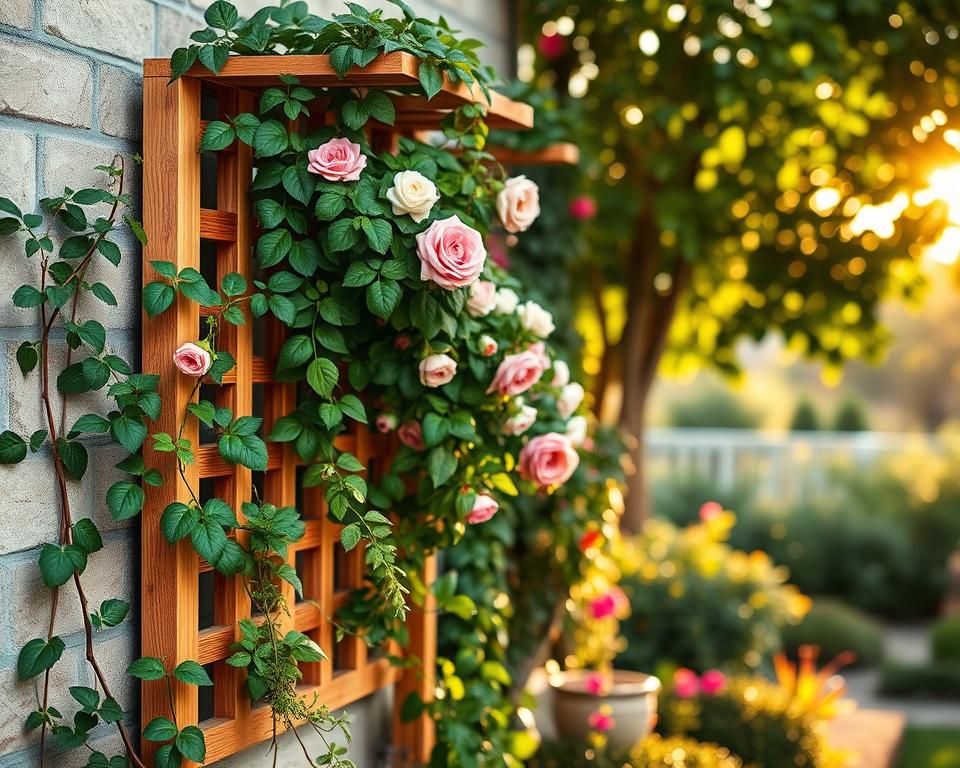
Securely Mounting to Different Wall Types
The method of mounting your trellis will depend on the type of wall you have. Here are some considerations for different wall types:
Brick and Stone Walls
Use masonry screws or anchors to secure your trellis to brick or stone walls. Drill pilot holes carefully to avoid damaging the surrounding area.
Wooden Fences and Structures
For wooden surfaces, use screws that are long enough to provide a secure hold. Pre-drilling holes can help prevent the wood from splitting.
Concrete Surfaces
Concrete walls require special anchors or screws designed for masonry. Ensure the anchors are set deep enough to provide a firm hold.
| Wall Type | Mounting Method | Recommended Fasteners |
|---|---|---|
| Brick/Stone | Masonry screws or anchors | Masonry screws |
| Wooden | Screws | Wood screws |
| Concrete | Masonry anchors | Concrete anchors |
By following these steps and choosing the right mounting techniques, you can create a sturdy wall-mounted trellis that will support your plants and enhance your garden’s beauty.
Creating an Arch Trellis for Garden Entrances
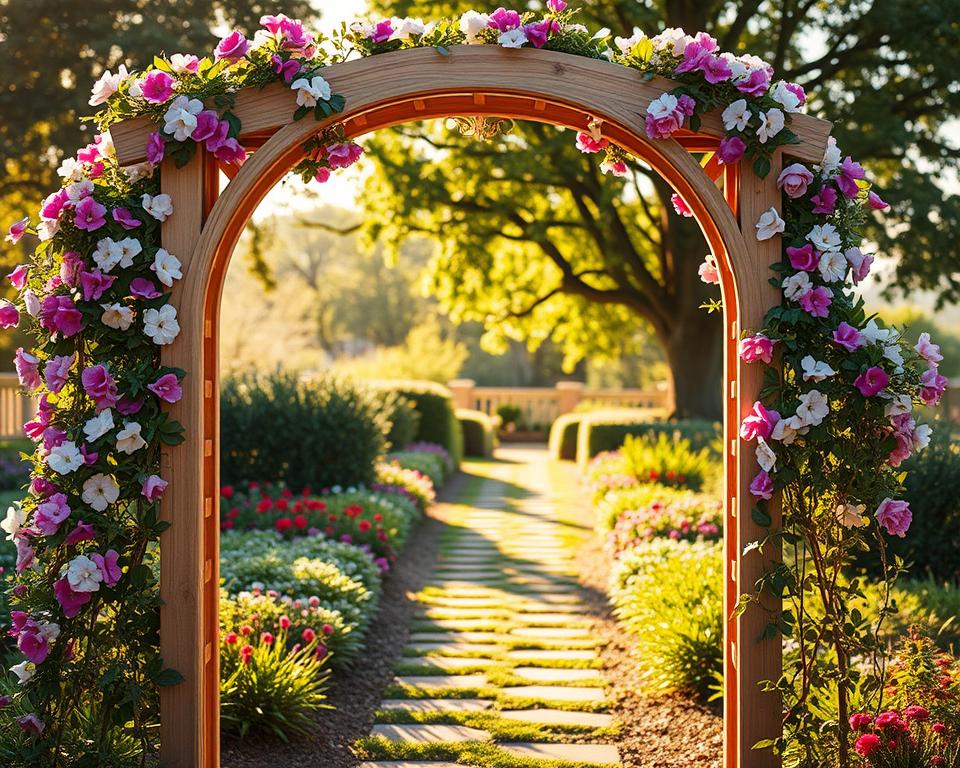
Building an arch trellis is a rewarding DIY project that can transform your garden entrance. An arch trellis not only adds a touch of elegance but also provides support for climbing plants, creating a beautiful display that welcomes visitors to your garden.
Building the Side Supports
The first step in creating your arch trellis is to build the side supports. These will form the foundation of your structure and need to be sturdy enough to support the weight of the arch and any plants. Use pressure-treated wood to ensure durability against the elements.
To construct the side supports, you will need to cut two identical pieces of wood to the desired height of your trellis. The width should be sufficient to provide stability. Assemble these pieces using screws or nails, ensuring they are square and level.
Forming and Securing the Arch
Once the side supports are in place, you can begin forming the arch. This involves bending wood into the desired shape and securing it to the supports.
Bending Techniques for Wood
To bend wood, you can use a technique called steam bending, where the wood is steamed to make it pliable, then bent into shape and allowed to dry. Alternatively, you can use pre-bent wooden pieces or flexible materials like willow branches.
Alternative Arch Construction Methods
If bending wood is not feasible, you can construct the arch using multiple short pieces of wood, creating a segmented arch. This method involves cutting several pieces of wood to the same length and joining them together to form the arch shape.
Securing the arch to the side supports requires careful planning. Use strong brackets or screws to ensure the arch is firmly attached and can withstand wind and weather conditions.
Adding Decorative Elements
To enhance the appearance of your arch trellis, consider adding decorative elements. You can add a trellis top or decorative finials to the top of the arch for a finishing touch. Additionally, training flowering plants like roses or clematis to climb up the trellis will add colour and vibrancy.
As gardening expert, Graham Rice, once said, “A well-designed garden entrance can be a real showstopper, and an arch trellis is the perfect way to make a beautiful first impression.”
“The entrance to your garden is like the front door to your home; it sets the tone for what’s to come.”
| Material | Durability | Aesthetic Appeal |
|---|---|---|
| Pressure-Treated Wood | High | Medium |
| Cedar Wood | High | High |
| Metal | High | Low to Medium |
Alternative Materials for Trellis Building
Beyond wood, there are numerous materials you can use to create a trellis that suits your garden style. Using alternative materials can not only add a unique aesthetic to your garden but also make your trellis more eco-friendly. The choice of material depends on the desired durability, maintenance, and the overall look you wish to achieve.
Metal Trellis Options
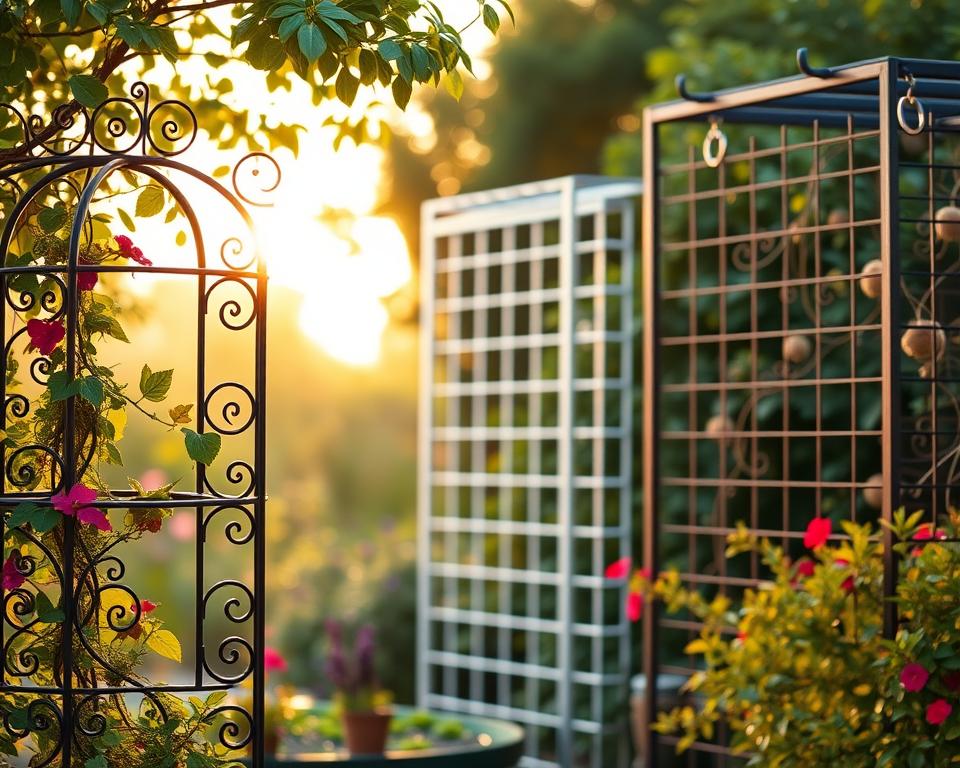
Metal trellises offer a sleek, modern look and can be made from materials like aluminium or steel. They are durable and can withstand various weather conditions. Aluminium trellises are particularly popular due to their rust resistance and lightweight nature, making them easy to install and maintain.
Using Bamboo and Natural Materials
Bamboo and other natural materials are excellent choices for creating an eco-friendly trellis. Bamboo is sustainable, durable, and can add a tropical feel to your garden. Other natural materials like willow or hazel can also be used to create unique and rustic trellises.
| Material | Durability | Maintenance | Aesthetic |
|---|---|---|---|
| Bamboo | High | Low | Tropical/Rustic |
| Metal (Aluminium) | High | Low | Modern/Sleek |
| Willow/Hazel | Medium | Medium | Rustic/Natural |
Upcycled and Repurposed Materials
For a truly unique trellis, consider using upcycled or repurposed materials. Old fencing, reclaimed wood, or even metal pipes can be repurposed into a functional and eco-friendly trellis. This approach not only reduces waste but also adds character to your garden.
By choosing the right alternative material, you can create a trellis that is not only functional but also a statement piece in your garden, enhancing its overall aesthetic and eco-friendliness.
Installing Your Completed Trellis
Installing your trellis correctly is crucial for its stability and longevity. A well-installed trellis will provide the necessary support for your plants to grow healthily.
Ground Installation Methods
There are several methods to install a trellis in the ground, each with its own advantages. The choice of method depends on the type of soil and the size of the trellis.
Setting Posts in Concrete
One of the most secure methods is setting the trellis posts in concrete. This involves digging a hole, placing the post in it, and then filling the hole with concrete. This method provides a strong foundation, especially in loose or sandy soils.
Using Ground Spikes and Anchors
Another method is using ground spikes or anchors. These are driven into the ground and provide a quick and easy way to secure the trellis. They are particularly useful for lighter trellises and in areas with firmer soil.
Ensuring Stability and Support
To ensure your trellis remains stable, it’s essential to check its stability regularly, especially after strong winds or heavy rainfall. You can also add additional supports, such as guy wires, to keep it upright.
| Installation Method | Soil Type | Trellis Size |
|---|---|---|
| Concrete | Loose/Sandy | Large |
| Ground Spikes | Firm | Small/Medium |
| Anchors | Various | Various |
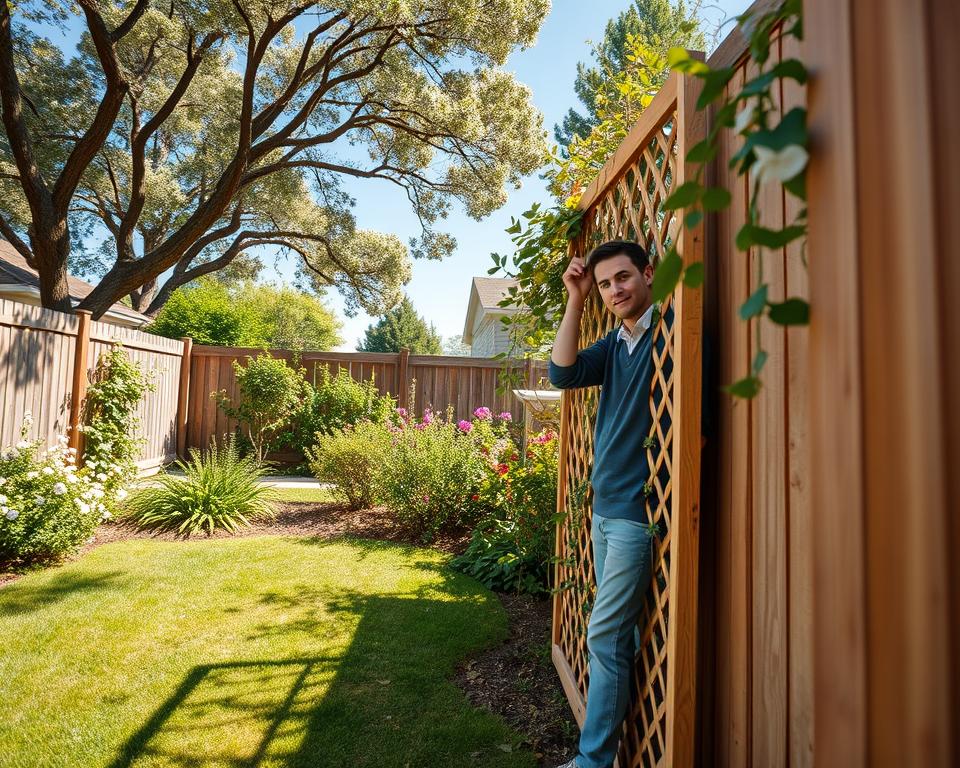
By choosing the right installation method and ensuring the trellis is well-supported, you can enjoy a sturdy structure that will support your plants for years to come.
Painting and Finishing Your Trellis
To protect your trellis from the elements, consider applying a weather-resistant finish. This not only enhances its appearance but also prolongs its lifespan. A well-finished trellis can withstand various weather conditions, ensuring it remains a sturdy support for your plants.
Choosing Weather-Resistant Paints and Stains
When selecting a paint or stain for your trellis, it’s crucial to choose products that are specifically designed for outdoor use. Look for weather-resistant finishes that are formulated to withstand rain, sunlight, and temperature fluctuations. Consider the type of wood your trellis is made from, as certain finishes work better with specific wood types.
Application Techniques for Longevity
Proper application is key to ensuring the longevity of your trellis finish. Start by preparing the surface: sanding down any rough edges and cleaning the wood thoroughly. Apply a primer if necessary, followed by your chosen paint or stain. Use a brush or roller that suits the texture of your trellis, and apply thin, even coats. Allow each coat to dry according to the manufacturer’s instructions before applying additional coats.
| Finish Type | Durability | Maintenance |
|---|---|---|
| Oil-based paint | High | Moderate |
| Water-based stain | Medium | Low |
| Waterproof varnish | High | Low |

Maintaining Your DIY Trellis
A well-maintained trellis not only enhances your garden’s appearance but also prolongs its lifespan. Regular upkeep is necessary to ensure your trellis continues to support your plants effectively and withstand various weather conditions.
Seasonal Maintenance Tips
To keep your trellis in good condition, follow these seasonal tips:
- Inspect your trellis regularly for signs of wear and tear.
- Clean the trellis with a mild soap solution to remove dirt and debris.
- Apply a weather-resistant finish to protect the material.
- Check and tighten any loose screws or bolts.
Repairing Common Damage
Common issues with trellises include broken or rotting wood and loose joints. To repair these damages:
| Damage Type | Repair Method |
|---|---|
| Broken Wood | Replace the broken piece with new wood, securing it with screws or nails. |
| Rotting Wood | Cut away the rotten section and replace it with treated wood. |
| Loose Joints | Tighten the screws or bolts. If necessary, re-glue the joint. |
Regular maintenance and timely repairs will extend the life of your trellis and keep it looking its best.
Conclusion
Now that you’ve reached the end of this guide, you’re ready to start building your own DIY trellis. By following the steps outlined in the previous sections, you’ll create a sturdy and attractive trellis that will support your climbing plants and enhance your garden’s beauty.
As you embark on your trellis-building journey, remember to apply the gardening tips you’ve learned along the way. With a little patience and creativity, you’ll be enjoying a lush and vibrant garden in no time. A well-designed trellis can make all the difference in your outdoor space, providing a beautiful focal point and a haven for your plants to thrive.
So, get started on your DIY trellis project today and discover the joy of gardening with a trellis that you can be proud of.
FAQ
What is the best material to use for building a trellis?
The best material for building a trellis depends on your specific needs and preferences. Wood, metal, and recycled materials are popular options. Cedar and redwood are durable and resistant to rot, while pressure-treated pine is also a good choice. You can also consider using bamboo or other natural materials.
How do I choose the right size and height for my trellis?
The size and height of your trellis will depend on the type of plants you want to support and the space available in your garden. Consider the mature size of your plants and leave enough space for them to grow. A general rule of thumb is to make the trellis at least 6 feet tall to provide adequate support.
What are the benefits of using a trellis in my garden?
Using a trellis in your garden can provide several benefits, including maximising space, improving air circulation, and adding visual interest. Trellises can also help to support climbing plants, keep them organised, and promote healthy growth.
How do I ensure my trellis is stable and secure?
To ensure your trellis is stable and secure, you should anchor it firmly to the ground or a wall. You can use ground spikes, concrete, or wall anchors to secure the trellis. Regularly inspect the trellis for damage or wear and tear, and make repairs as needed.
Can I use a trellis for plants other than climbing plants?
Yes, you can use a trellis for plants other than climbing plants. For example, you can use a trellis to provide support for tall or top-heavy plants, or to create a screen or divider in your garden.
How do I maintain my trellis to extend its lifespan?
Regular maintenance is essential to extend the lifespan of your trellis. Inspect the trellis regularly for damage or wear and tear, and make repairs as needed. You should also clean the trellis periodically to prevent the buildup of dirt and debris.
What are some common mistakes to avoid when building a trellis?
Some common mistakes to avoid when building a trellis include using inadequate materials, failing to anchor the trellis securely, and not considering the mature size of the plants. You should also avoid building a trellis that is too small or too large for the space available.
Can I customise my trellis to fit my garden’s style?
Yes, you can customise your trellis to fit your garden’s style. Consider using different materials, designs, or finishes to match your garden’s aesthetic. You can also add decorative elements, such as carvings or ornaments, to enhance the trellis’s appearance.