How to Build a Wooden Garden Table (DIY Guide)

Crafting your own garden furniture can transform your outdoor space while saving money. This comprehensive DIY wooden table guide will walk you through creating a beautiful, functional centrepiece for your garden that reflects your personal style and craftsmanship.
Building a garden furniture project might seem challenging, but with the right guidance, anyone can successfully complete a DIY wooden table. Whether you’re an experienced woodworker or a passionate beginner, this step-by-step tutorial will empower you to design and construct a stunning garden table that will impress family and friends.
Garden furniture DIY projects offer unique opportunities for customisation. You’ll learn how to select materials, use essential tools, and create a robust table that withstands British weather conditions. By investing your time and skills, you’ll develop a cherished piece of outdoor furniture that brings satisfaction and practical value to your garden.
Inhaltsverzeichnis
Key Takeaways
- Create a personalised garden table with basic woodworking skills
- Save money compared to purchasing pre-made outdoor furniture
- Learn valuable woodworking techniques and craftsmanship
- Design a table tailored to your specific garden space
- Develop confidence in DIY home improvement projects
Planning Your Wooden Garden Table Project
Embarking on an outdoor furniture building project requires careful preparation and thoughtful planning. A successful wooden table design starts long before you pick up your first tool. Your garden table will become a centrepiece of outdoor living, so investing time in initial planning is crucial.
Crafting the perfect outdoor furniture demands strategic consideration of several key elements that will determine your project’s success.
Choosing the Right Wood for Outdoor Furniture
Selecting appropriate timber is fundamental to your wooden table design. Different wood types offer unique characteristics for outdoor furniture building:
- Oak: Extremely durable and resistant to weathering
- Cedar: Naturally rot-resistant with beautiful grain patterns
- Treated Pine: Cost-effective and readily available
| Wood Type | Durability | Cost | Maintenance |
|---|---|---|---|
| Oak | High | Expensive | Low |
| Cedar | Medium-High | Moderate | Medium |
| Treated Pine | Low-Medium | Affordable | High |
Determining Your Table Dimensions and Design
Your garden’s space and intended use will guide your wooden table design. Measure your available area carefully and consider these design aspects:
- Dining capacity
- Table shape
- Height requirements
- Aesthetic preferences
Creating a Budget and Timeline
Realistic budgeting prevents unexpected expenses during your outdoor furniture building project. Calculate costs for:
- Materials
- Tools
- Finishing products
- Potential professional consultations
A well-planned project saves time, money, and frustration.
Allocate sufficient time for each project stage, accounting for potential weather delays and your personal schedule. Patience is key in creating a stunning garden table that will serve you for years to come.
Essential Tools and Materials You’ll Need
Preparing for your garden table woodworking project requires careful selection of tools and materials. Your success depends on having the right equipment and supplies to create a durable outdoor piece that will withstand British weather conditions.
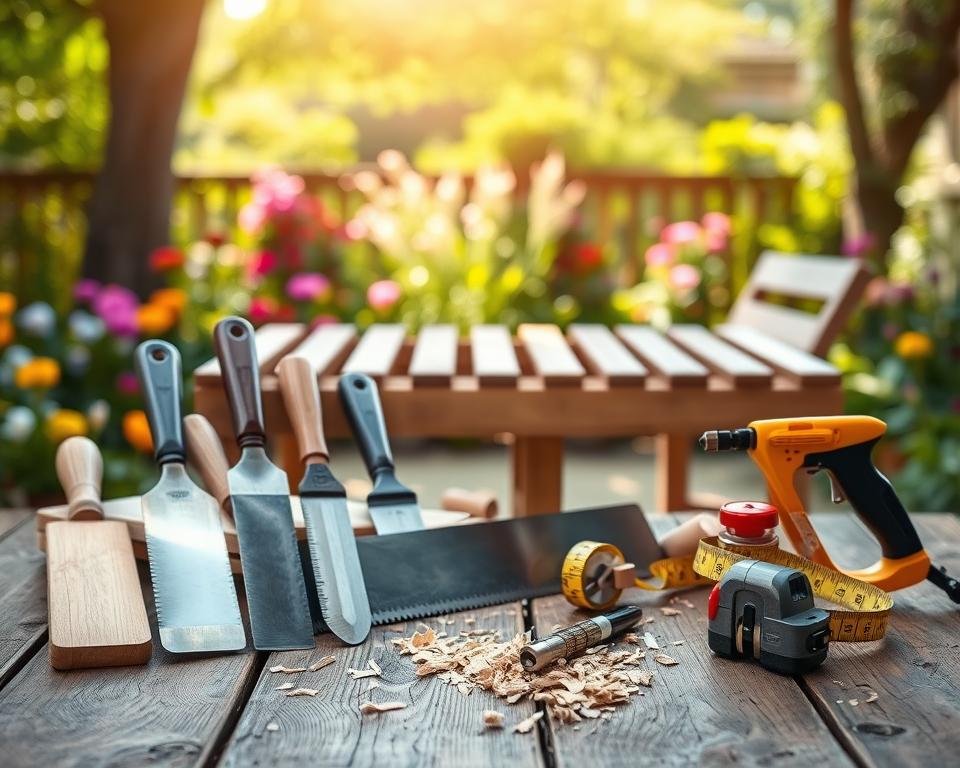
Before starting your garden table materials collection, you’ll need to gather both essential hand tools and power tools. Your toolkit should include:
- Measuring tape
- Combination square
- Marking gauge
- Hand saw or circular saw
- Electric drill
- Orbital sander
Safety should be your primary concern during any woodworking project. Protect yourself with:
- Safety glasses
- Dust mask
- Work gloves
- Ear protection
Your garden table materials will determine the project’s durability. Consider these recommended wood types:
| Wood Type | Durability | Cost |
|---|---|---|
| Cedar | Excellent | Medium |
| Oak | Superior | High |
| Pine | Good | Low |
For outdoor use, select weather-resistant fixings like stainless steel screws and galvanised nails. Wood adhesive rated for exterior applications will provide additional strength to your garden table.
By carefully selecting your tools and materials, you’ll set yourself up for a successful woodworking project that results in a beautiful, long-lasting garden table.
Preparing Your Workspace and Wood
Creating a successful timber furniture project begins with meticulous preparation. Your outdoor table construction requires a well-organised, safe workspace that enables precision and efficiency.

Before diving into your garden table project, establishing the right environment is crucial. A clean, well-lit area with ample space will dramatically improve your woodworking experience.
Setting Up a Safe Working Area
Safety should be your primary concern when preparing for timber furniture construction. Follow these essential guidelines:
- Choose a well-ventilated space with good natural or artificial lighting
- Ensure stable, level work surfaces
- Wear appropriate safety gear, including:
- Safety glasses
- Dust mask
- Hearing protection
- Keep your workspace clean and organised
- Store timber in a dry, flat area to prevent warping
Measuring and Cutting Your Timber
Precision is key in outdoor table construction. Adopt the professional woodworker’s mantra: measure twice, cut once.
When working with timber for your garden table, consider these cutting techniques:
- Use a sharp pencil for accurate marking
- Invest in a quality measuring tape
- Mark cut lines clearly and double-check measurements
- Use a guide or mitre saw for straight, consistent cuts
- Account for blade width when measuring
By meticulously preparing your workspace and mastering precise measurement techniques, you’ll set the foundation for a professional-quality timber furniture project.
Step-by-Step Building Instructions
Crafting a wooden garden table requires careful planning and precise execution. Your table building guide begins with understanding the critical steps that transform raw materials into a beautiful outdoor furniture piece. Outdoor woodworking demands attention to detail and a systematic approach.
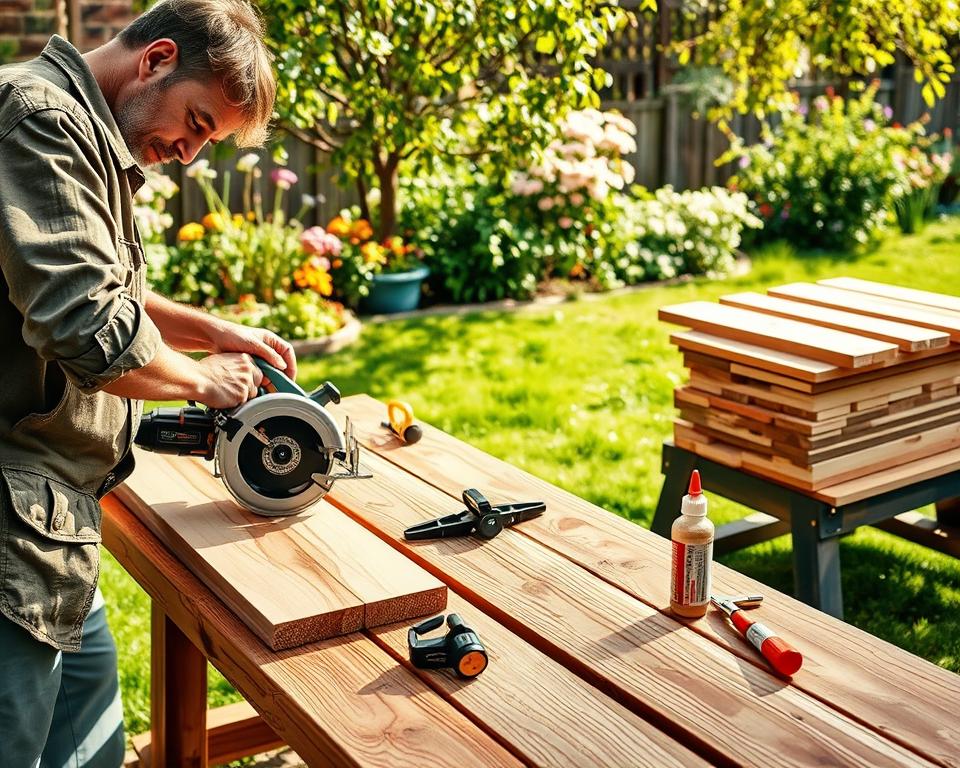
Before diving into construction, gather all necessary materials and tools. Preparation is key to a smooth woodworking experience.
- Dry-fit all components to ensure proper alignment
- Check timber for any warping or imperfections
- Verify measurements twice before cutting
- Prepare your workspace with adequate lighting and support
When assembling your garden table, follow these critical techniques:
- Use pilot holes to prevent wood splitting
- Countersink screws for a professional finish
- Apply wood adhesive sparingly but effectively
| Construction Stage | Key Actions | Time Required |
|---|---|---|
| Component Alignment | Dry-fitting and measurement | 30-45 minutes |
| Frame Assembly | Drilling, screwing, gluing | 1-2 hours |
| Final Adjustments | Levelling and squaring | 30 minutes |
Remember to work methodically and patience is your greatest tool in outdoor woodworking. Take breaks when needed and double-check each step of your table building guide.
Precision in woodworking transforms good projects into exceptional pieces.
Constructing the Table Frame
Building a sturdy frame is crucial for successful wooden furniture construction. Your garden table’s stability depends on precision and careful assembly of its fundamental structure. This stage transforms individual timber pieces into a robust foundation that will support your entire table.
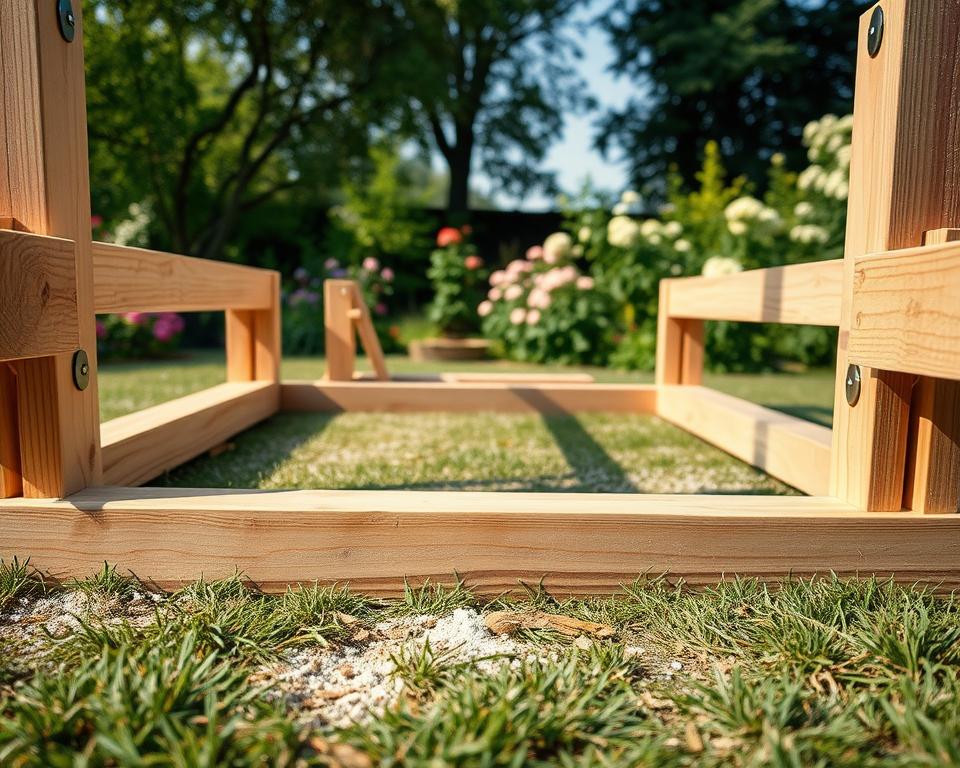
The table assembly process requires strategic planning and meticulous execution. You’ll want to focus on creating a solid base that can withstand outdoor conditions and regular use.
Building the Base Support Structure
Your base support structure forms the critical backbone of the garden table. Follow these essential steps:
- Select straight, knot-free timber for maximum strength
- Measure and mark components with absolute precision
- Cut frame pieces using a reliable saw
- Ensure all connections are square and level
For optimal results, consider using reinforced joinery techniques such as:
- Mortise and tenon joints
- Half-lap connections
- Pocket hole screws
Assembling the Leg Components
Leg assembly demands careful attention to alignment and stability. Your goal is creating perfectly vertical supports that distribute weight evenly.
“Precision in leg construction determines your table’s long-term performance and durability.” – Woodworking Craftsman
Key considerations for leg assembly include maintaining consistent height, preventing lateral movement, and ensuring robust connections between legs and frame.
- Check leg squareness using a carpenter’s triangle
- Use wood glue for additional strength
- Implement cross-bracing to minimise wobbling
Creating and Attaching the Tabletop
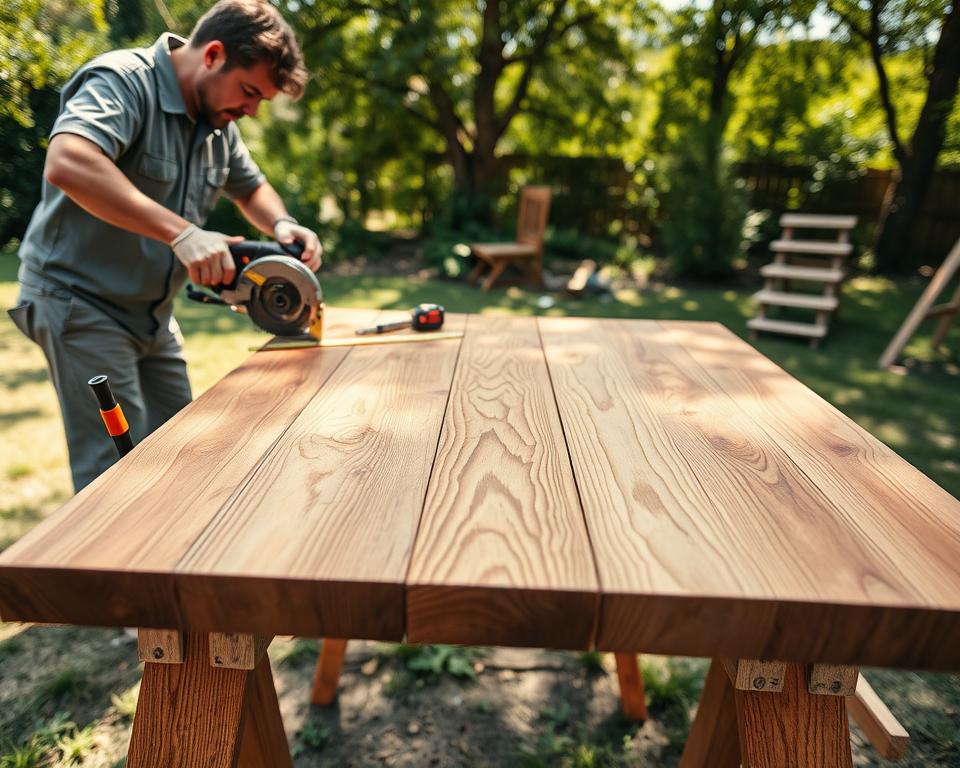
Crafting the perfect tabletop is a critical step in your garden table plans. Your choice of construction method will determine the overall durability and appearance of your DIY garden furniture. Begin by selecting high-quality timber that can withstand outdoor conditions.
You’ll want to consider several approaches for creating your tabletop:
- Wide plank method: Using broad boards placed side by side
- Edge-joining technique: Connecting narrower boards for a seamless surface
- Slatted design: Creating gaps for water drainage
When joining boards, account for wood movement caused by moisture changes. British weather can be unpredictable, so leave slight gaps between boards or use special joining techniques that allow for natural expansion and contraction.
| Tabletop Attachment Method | Pros | Considerations |
|---|---|---|
| Tabletop Fasteners | Allows wood movement | Requires precise installation |
| Slotted Screw Holes | Flexible positioning | Minimises structural stress |
| Wooden Buttons | Traditional method | Permits seasonal movement |
Pay special attention to board arrangement. Arrange boards to showcase attractive grain patterns and distribute any natural wood characteristics evenly. Ensure the tabletop sits centrally on the frame with consistent overhangs on all sides.
When securing the top, aim for hidden fixings that maintain a clean, professional appearance. Take time to level the surface, compensating for any minor frame irregularities to create a smooth, sturdy garden table that will be the pride of your outdoor space.
Finishing and Protecting Your Garden Table
Creating a durable wooden garden table requires careful finishing and wood treatment techniques. The right approach will protect your handcrafted furniture from the unpredictable British weather and extend its lifespan significantly.
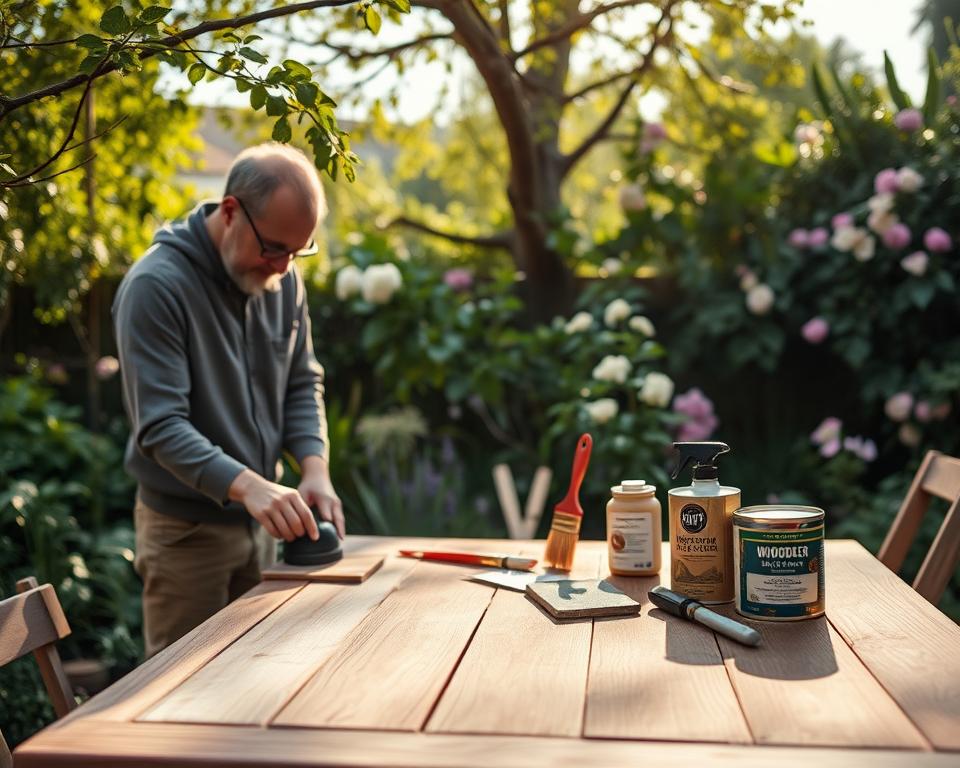
Sanding for a Smooth Surface
Proper sanding is crucial for achieving a professional-looking finish. Start with coarse-grit sandpaper (80-100 grit) to remove any rough spots or imperfections. Gradually progress to medium (120-150 grit) and then fine-grit sandpaper (180-220 grit) for a silky-smooth surface.
- Always sand with the grain to prevent scratches
- Round off sharp edges for comfort and safety
- Remove all sanding dust thoroughly before finishing
Applying Weather-Resistant Treatments
Wood treatment is essential for outdoor furniture to withstand moisture and sunlight. Choose from several protective options that will enhance your table’s durability and appearance:
- Penetrating oils: Enhance natural wood beauty while providing water resistance
- Exterior varnishes: Create a protective film layer
- Wood stains with sealers: Offer colour and protection in one application
When applying wood treatment, use thin, even coats and allow sufficient drying time between applications. Pay extra attention to end grain, which absorbs more finish and requires additional protection.
Maintenance Tips for Long-Lasting Outdoor Furniture
Protecting your handcrafted wooden garden table requires consistent care and attention. Regular maintenance will help preserve its beauty and extend its lifespan, ensuring you can enjoy your outdoor furniture for years to come.
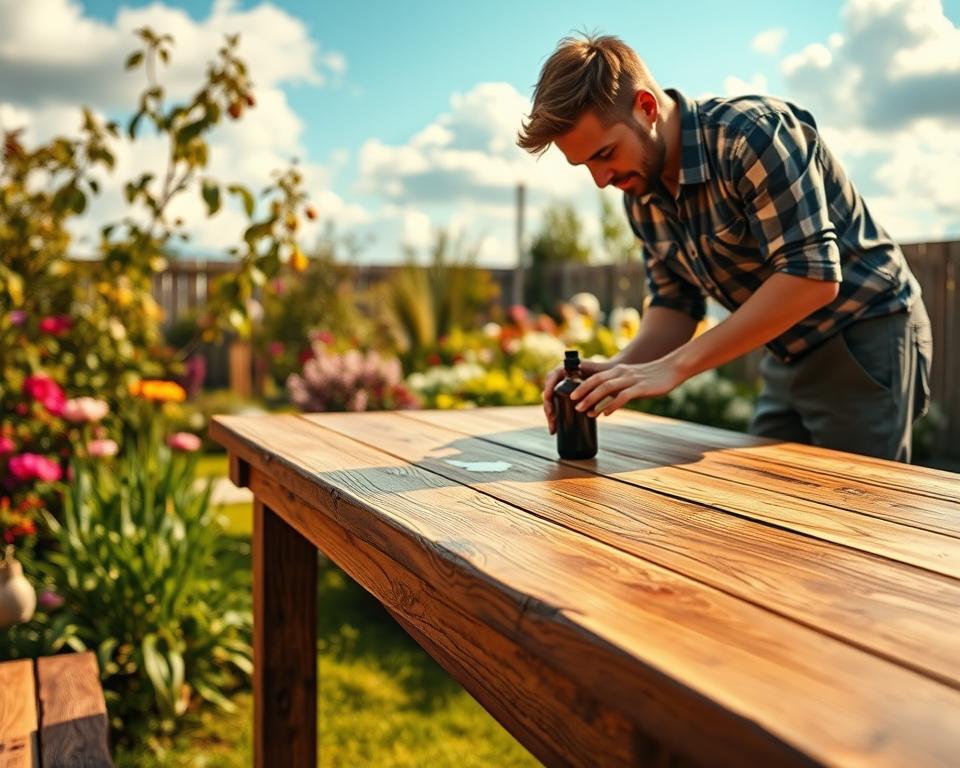
Seasonal maintenance is crucial for keeping your garden table in top condition. Follow these essential care guidelines:
- Clean the table thoroughly using a mild soap solution and soft cloth
- Inspect for signs of wear or damage after winter months
- Apply protective wood treatment annually
- Remove standing water and debris promptly
Cleaning techniques are vital for wood preservation. Always use gentle, wood-specific cleaning products that won’t strip away the protective finish. Avoid harsh chemicals or abrasive materials that could damage the wood’s surface.
Watch for these key maintenance signals:
- Water no longer beading on the surface
- Visible cracks or splitting in the wood
- Loose joints or fixings
- Mildew or discolouration
During harsh winter months, consider storing your table in a sheltered area or using a breathable furniture cover. This extra protection will shield the wood from extreme moisture and temperature fluctuations, preventing potential damage.
Regular care is the secret to maintaining a beautiful and functional garden table for decades.
By investing a little time in routine maintenance, you’ll keep your wooden garden table looking pristine and structurally sound throughout the changing British seasons.
Conclusion
Building your own wooden garden table represents more than just a weekend project. You’ve transformed raw materials into a functional piece of outdoor furniture through skill, patience, and creativity. The table you’ve crafted is uniquely yours, reflecting your personal design choices and woodworking capabilities.
Your newfound woodworking skills open doors to future DIY projects. This garden table serves as an excellent foundation for exploring more complex furniture designs. The techniques you’ve learned—from selecting timber to applying protective treatments—will prove invaluable in creating additional outdoor accessories like benches, planters, or decorative garden elements.
Regular maintenance will ensure your handcrafted table remains beautiful and sturdy for years. Remember the protective treatments and cleaning techniques you’ve learned. By dedicating a small amount of time to care, you’ll preserve the integrity of your woodworking creation and extend its lifespan significantly.
Sharing your achievement can inspire others to embrace DIY woodworking. Whether through social media, local craft groups, or simply hosting gatherings, your garden table becomes a testament to what can be accomplished with dedication and basic woodworking skills. Your project proves that with careful planning and execution, anyone can create stunning, personalised outdoor furniture.
FAQ
What type of wood is best for an outdoor garden table?
For outdoor furniture in the British climate, cedar, oak, and treated softwoods are excellent choices. Cedar naturally resists rot and insects, oak offers exceptional durability, and treated softwoods provide a cost-effective option with good weather resistance. Each wood type has unique properties that make it suitable for external use, depending on your budget and aesthetic preferences.
How long will it take to build a wooden garden table?
Typically, a DIY wooden garden table project can be completed over a weekend or two, depending on your woodworking experience and the complexity of the design. Most hobbyist woodworkers can expect to spend approximately 8-12 hours on the entire project, including preparation, cutting, assembly, and finishing.
What essential tools do I need for this project?
You’ll require both hand and power tools, including a measuring tape, combination square, circular saw or mitre saw, electric drill, orbital sander, clamps, and safety equipment such as protective eyewear and dust masks. Basic hand tools like a hammer, wood glue, and various drill bits are also crucial for successful construction.
How do I protect my wooden garden table from British weather?
Protect your table by applying weather-resistant treatments such as exterior wood oils, varnishes, or marine-grade sealants. Regular maintenance is key – clean the table annually, reapply protective finishes every 1-2 years, and consider using furniture covers during extended periods of harsh weather. Positioning the table in a sheltered area can also help prolong its lifespan.
Can I customise the table design to fit my garden space?
Absolutely! The DIY approach allows complete customisation of dimensions, wood type, and finish. You can adjust the table’s length, width, and height to suit your specific garden layout, choose a design that matches your outdoor aesthetic, and select a wood finish that complements your existing garden furniture.
What maintenance is required for an outdoor wooden table?
Regular maintenance includes annual cleaning with mild soap, inspecting for any loose joints or damage, and reapplying protective finishes every 1-2 years. During winter, either store the table in a dry place or use a weatherproof cover. Check for signs of moisture damage, mildew, or wood decay, and address any issues promptly to extend the table’s longevity.
How much will it cost to build a wooden garden table?
The cost varies depending on wood selection and quality of materials, but typically ranges from £100 to £300. This includes timber, fixings, finishing products, and assumes you already own or can borrow most tools. Compared to purchasing a ready-made outdoor table, a DIY approach can save you significant money while providing a fully customised piece.
Is this project suitable for beginners?
Yes, this garden table project is suitable for beginners with basic DIY skills. The guide provides step-by-step instructions, and the design can be adapted to match your skill level. If you’re new to woodworking, take your time, follow the instructions carefully, and don’t hesitate to seek advice from experienced woodworkers or local DIY stores.