How to Install Electricity in the Summerhouse

Transforming your summerhouse into a functional space requires careful planning for garden building electrics. Electrical installation in outdoor buildings demands precision, knowledge, and strict adherence to UK safety regulations. Your summerhouse can become a versatile workspace, leisure area, or hobby room with proper power infrastructure.
Installing electricity in an outdoor building involves more than simply running cables. The process requires understanding building regulations, electrical load calculations, and safety protocols. While DIY enthusiasts might feel confident, electrical work demands professional expertise to ensure compliance and prevent potential hazards.
This comprehensive guide will walk you through the entire outdoor building power supply process. From initial assessment to final certification, you’ll gain insights into creating a safe and functional electrical system for your summerhouse. We’ll explore legal requirements, essential tools, installation techniques, and critical safety considerations.
Inhaltsverzeichnis
Key Takeaways
- Understand UK electrical regulations for summerhouse installations
- Plan your electrical circuit layout carefully
- Choose appropriate cable types and specifications
- Prioritise safety with RCD protection
- Consider professional consultation for complex installations
- Obtain necessary building control approvals
- Implement regular maintenance schedules
Understanding Electrical Requirements for Your Summerhouse
Planning the electrical installation for your garden office or summerhouse requires careful consideration of power requirements and electrical load calculation. Proper preparation ensures a safe and efficient power supply that meets your specific needs.
https://www.youtube.com/watch?v=Pm5Qit6Wi-4
Before diving into the technical details, you’ll need to conduct a comprehensive assessment of your garden office power supply needs. This involves identifying every electrical device and system you plan to use in your summerhouse.
Assessing Your Power Needs
Start by creating a detailed inventory of electrical equipment. Consider the following categories:
- Lighting fixtures
- Computing devices
- Heating systems
- Communication equipment
- Specialised work tools
Calculating the Electrical Load
Electrical load calculation is crucial for determining the appropriate power infrastructure. You’ll need to compute the total wattage of all devices and convert this to amperes.
Use this simple formula: Watts ÷ Voltage = Amperes
| Device Type | Typical Wattage | Estimated Amperage |
|---|---|---|
| LED Lighting | 10-20 watts | 0.1-0.2 amps |
| Desktop Computer | 200-300 watts | 1.7-2.5 amps |
| Electric Heater | 1500-2000 watts | 12.5-16.7 amps |
Remember that underestimating power requirements can lead to circuit overload, while overestimating might result in unnecessary expenses. Precision in your electrical load calculation is key to creating a safe and efficient garden office power supply.
Legal Regulations and Building Control Approval
Electrical installations in your summerhouse are governed by strict legal requirements in the United Kingdom. Understanding the Part P regulations and Building Regulations is crucial for ensuring a safe and compliant electrical setup.
The BS 7671 wiring regulations establish the fundamental standards for electrical work in domestic properties. These regulations apply to all electrical installations, including those in summerhouses, and outline the essential safety requirements you must follow.
- Part P regulations mandate professional standards for electrical work
- Building Regulations require all electrical installations to meet safety criteria
- Compliance is mandatory for insurance and property value protection
You have two primary routes for completing electrical work in your summerhouse:
- Hire a registered electrician who can self-certify the installation
- Complete the work yourself and arrange an inspection through local Building Control
Failing to comply with these regulations can result in serious consequences. Your home insurance might be invalidated, and you could face challenges when selling your property. Most importantly, non-compliant electrical work poses significant safety risks to you and your family.
Safety and legal compliance should always be your top priority when installing electrical systems.
While you can technically perform electrical work on your own property, the installation must still meet all regulatory standards. Proper testing and certification are non-negotiable to protect your safety and investment.
Essential Tools and Materials for Summerhouse Electrification
Preparing for a summerhouse electrical installation requires careful planning and the right electrical materials. Your success depends on selecting appropriate tools and understanding the specific requirements for outdoor electrical systems.
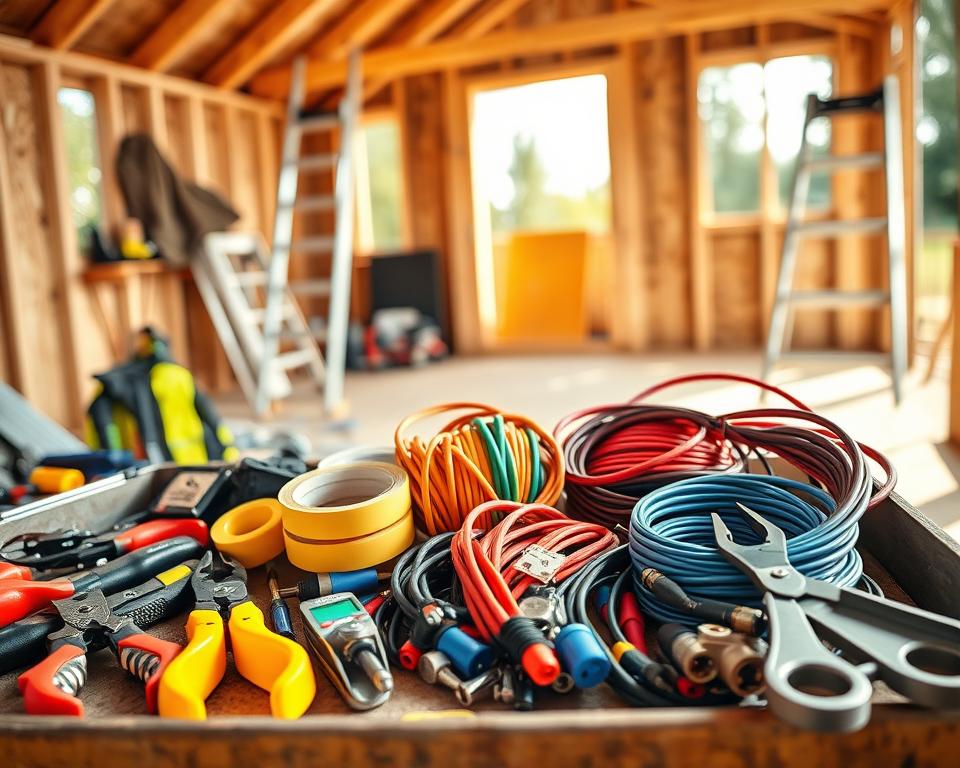
Before beginning your project, you’ll need a comprehensive toolkit designed for electrical work. The essential equipment includes:
- Cable strippers
- Crimping tools
- Precision screwdrivers
- Drill with masonry and wood bits
- Spirit level
- Cable clips
- Measuring tape
Cable Types and Specifications
Selecting the correct cable is crucial for a safe and reliable summerhouse electrical installation. Steel Wire Armoured (SWA) cable stands out as the preferred choice for outdoor and underground power connections. This robust armoured cable provides exceptional protection against physical damage and moisture.
When choosing SWA cable, consider these key factors:
- Cable size (2.5mm², 4mm², 6mm²)
- Voltage drop calculations
- Distance from main property
- Expected electrical load
Consumer Units and Circuit Breakers
Your summerhouse’s electrical safety relies on a well-designed consumer unit installation. Choose between main consumer units and sub-main boards based on your specific power requirements.
Critical protective devices include:
- Miniature Circuit Breakers (MCBs) for overcurrent protection
- Residual Current Devices (RCDs) for earth fault protection
- Appropriate rating selection based on calculated load
Proper selection of electrical materials ensures a safe and efficient power supply to your summerhouse.
Planning Your Electrical Circuit Layout
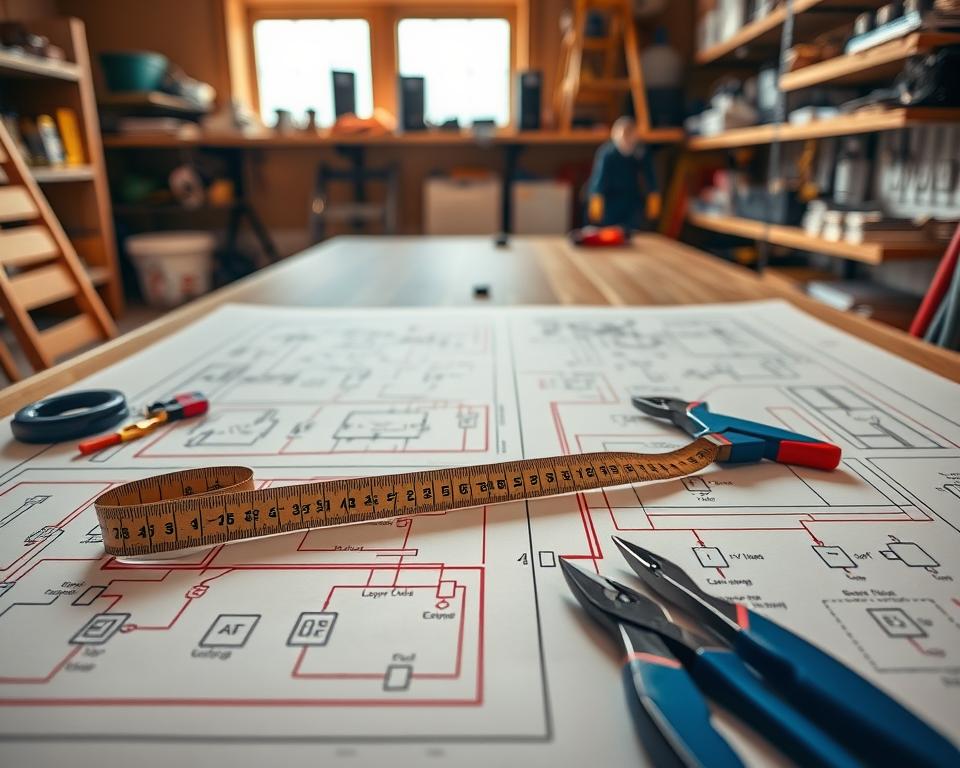
Crafting a well-designed electrical layout is crucial for your summerhouse’s functionality and safety. Circuit design requires careful planning to ensure your space meets both practical needs and electrical regulations.
Your electrical layout planning should begin with a comprehensive wiring diagram that maps out every electrical point. This approach helps you visualise the entire electrical system before installation begins.
- Identify primary electrical zones
- Mark socket and light switch locations
- Plan cable routes strategically
- Consider future electrical requirements
When developing your summerhouse wiring diagram, consider these key factors:
- Socket placement: Position outlets near work areas and entertainment spaces
- Lighting design: Balance natural and artificial lighting
- Circuit separation: Create distinct circuits for lighting and power
Professional electrical layout planning involves understanding load distribution and avoiding potential overload risks. Your circuit design should prioritise safety while providing flexible electrical infrastructure for your summerhouse.
A well-planned electrical system transforms your summerhouse from a simple structure into a functional, versatile space.
Remember to consult a qualified electrician to review your initial plans and ensure compliance with UK electrical safety standards.
How to Install Electricity in the Summerhouse
Electrical installation in a summerhouse requires careful planning and precision. While some DIY enthusiasts might feel confident, it’s crucial to understand that certain aspects of cable installation and electrical work demand professional expertise.

Before beginning any electrical work, you must prioritise safety and compliance with UK electrical regulations. Professional guidance or certification is strongly recommended to ensure your installation meets legal standards.
Running Cable from Your Main Property
Underground cable burial is the preferred method for connecting your main property to the summerhouse. Follow these key steps:
- Dig a trench at least 600mm deep
- Use protective ducting for cable protection
- Place warning tape above the cable
- Seal entry points carefully in both buildings
Installing the Distribution Board
Distribution board wiring requires precision and careful mounting. Install the consumer unit at a height between 1.2 and 1.5 metres, ensuring secure attachment and proper earthing arrangements.
Wiring Sockets and Light Fittings
Socket installation involves strategic cable routing and secure connections. Key considerations include:
- Use appropriate cable sizes
- Secure cables properly
- Follow ring circuit configurations
- Ensure proper insulation
Remember: Electrical work can be complex and potentially dangerous. When in doubt, consult a qualified electrician to guarantee safety and compliance.
Choosing Between Armoured Cable and Conduit Systems
When electrifying your summerhouse, selecting the right cable protection method is crucial for a safe and reliable installation. Two primary options emerge for SWA cable installation: Steel Wire Armoured (SWA) cables and electrical conduit systems.

SWA cable installation offers robust protection for underground electrical routes. The steel wire armour provides exceptional mechanical strength, protecting against ground pressure, moisture, and potential rodent damage. This method suits direct burial applications and provides an integrated earth conductor.
- Ideal for long, straight cable runs
- Direct burial capability
- Integrated mechanical protection
- Cost-effective for straightforward installations
Electrical conduit systems present an alternative approach for cable protection methods. These systems involve running standard cables through protective plastic or metal tubes, offering greater flexibility in complex routing scenarios.
- Suitable for above-ground installations
- Allows easier future cable replacements
- Provides protection against environmental factors
- Adaptable to various installation configurations
Your specific summerhouse electrical requirements will determine the most appropriate method. Consider factors such as cable route complexity, ground conditions, and potential future modifications when making your selection.
Professional tip: Always consult a qualified electrician to assess your specific installation needs and ensure compliance with current electrical regulations.
Testing and Certifying Your Electrical Installation
Completing your summerhouse electrical installation requires rigorous electrical testing and proper certification. These final steps are crucial for ensuring safety and legal compliance. Professional verification protects you, your property, and anyone using the electrical system.
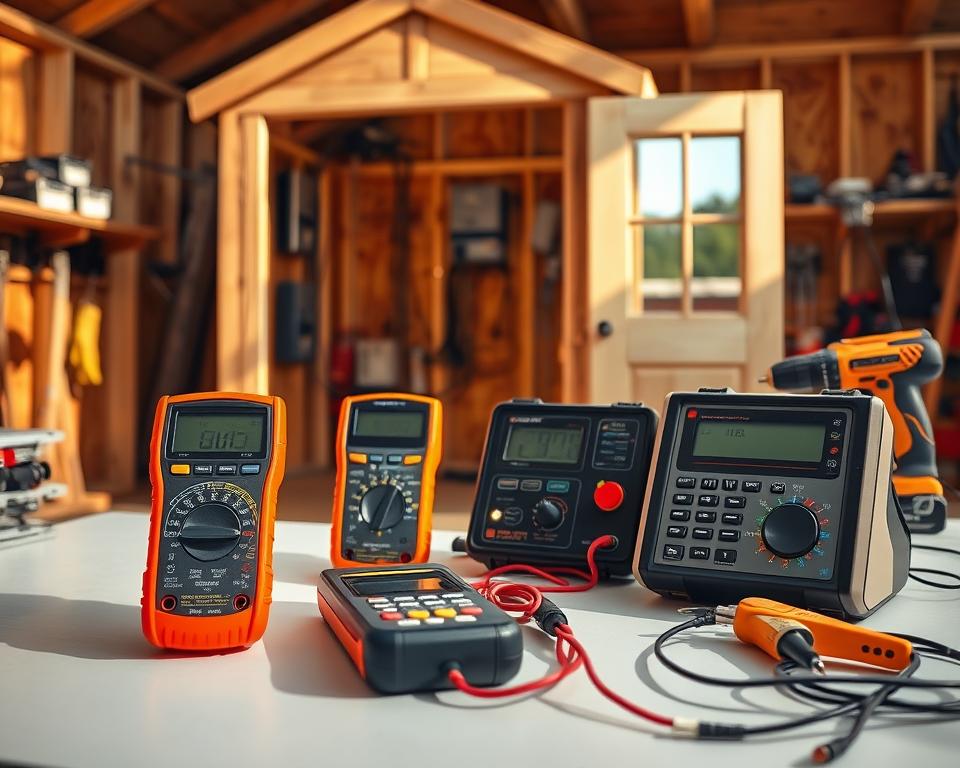
The electrical testing process involves several critical assessments that validate the integrity of your electrical installation. Skilled electricians use specialised equipment to conduct comprehensive checks that go beyond basic visual inspections.
Conducting Insulation Resistance Tests
Insulation resistance testing is a fundamental aspect of electrical verification. This critical procedure involves:
- Measuring cable insulation integrity
- Detecting potential current leakage paths
- Identifying risks of electric shocks
- Preventing potential fire hazards
Professional electricians use megohmmeters to apply high voltage and assess insulation quality. These precise instruments detect even minor weaknesses in electrical systems that could compromise safety.
Obtaining an Electrical Installation Certificate
After successful testing, you’ll receive an essential document: the Electrical Installation Certificate (EIC). This certificate confirms your installation meets British Standard BS 7671 requirements.
| Certificate Type | Purpose | Issued By |
|---|---|---|
| Electrical Installation Certificate (EIC) | New electrical installations | Registered electrician |
| Minor Electrical Installation Works Certificate (MEIWC) | Smaller electrical additions | Qualified electrical professional |
Maintaining these certificates is crucial. They provide proof of compliance, protect your property’s value, and are often required for home insurance and property sales.
Safety Considerations and RCD Protection
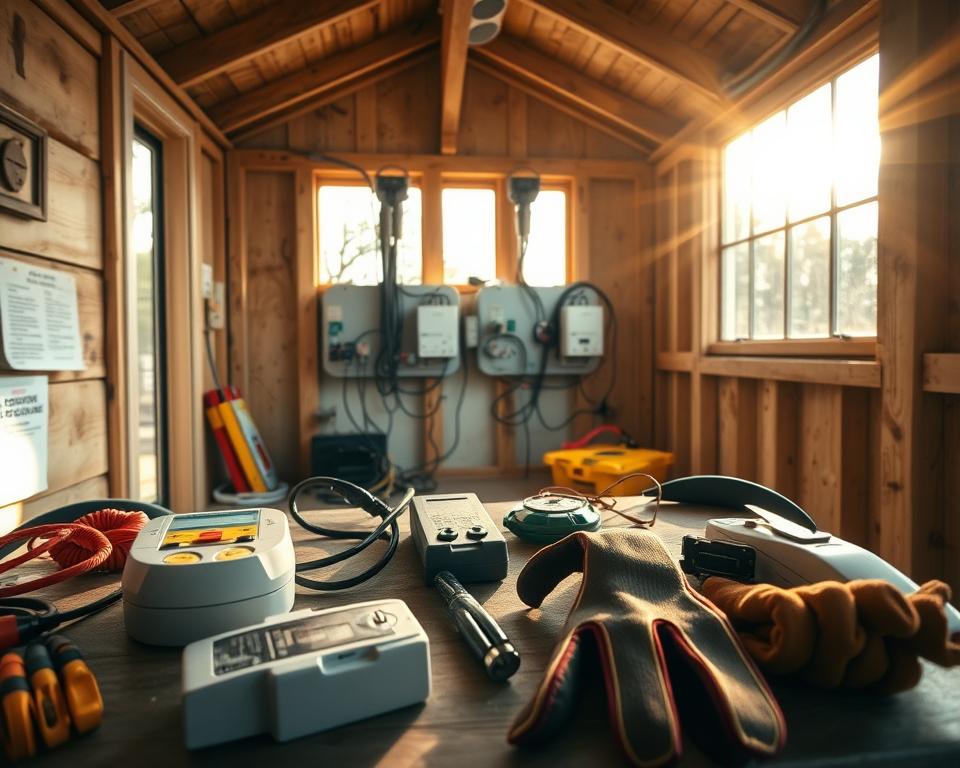
Electrical safety is paramount when installing electricity in your summerhouse. Garden buildings present unique challenges that demand careful attention to protect against potential electrical hazards.
Understanding RCD protection is crucial for ensuring your safety. A Residual Current Device (RCD) acts as a critical guardian against electric shock by detecting imbalances in electrical currents. These devices can disconnect power within milliseconds if they detect current leaking to earth, which could potentially save your life.
- Protect all socket outlets with 30mA RCD
- Install RCD protection at main consumer unit
- Consider additional protection at summerhouse distribution board
When dealing with earth fault protection, you must consider several key factors:
- Moisture resistance of electrical components
- Proper earthing and bonding
- IP ratings for outdoor equipment
- Safe distances from water features
Never underestimate the risks of DIY electrical work. Improper installation can lead to serious electrical hazards, including shock, fire, and long-term hidden faults. Always prioritise professional guidance and follow strict safety procedures.
Professional installation ensures your summerhouse remains a safe and enjoyable space.
Regular visual inspections and immediate professional attention for any electrical issues are essential for maintaining a safe electrical environment in your summerhouse.
Ongoing Maintenance for Summerhouse Electrics
Electrical maintenance is crucial for keeping your summerhouse’s electrical system safe and functional. Your electrical installation requires regular attention to prevent potential hazards and ensure long-term performance.

Proper electrical safety checks involve a combination of personal vigilance and professional periodic inspection. Understanding the importance of routine maintenance can save you from costly repairs and potential safety risks.
Visual Inspection Checklist
Conduct regular visual checks of your summerhouse electrical system to identify potential issues early:
- Inspect sockets and switches for discolouration
- Check for any physical damage to electrical accessories
- Listen for unusual sounds from electrical equipment
- Watch for flickering lights or frequent circuit breaker trips
Professional EICR Inspections
An Electrical Installation Condition Report (EICR) is essential for maintaining electrical safety. Professional electricians recommend the following inspection frequencies:
| Installation Type | Inspection Frequency |
|---|---|
| Standard Domestic Summerhouse | Every 10 years |
| Heavily Used or Exposed Installation | Every 3-5 years |
Maintenance Best Practices
To ensure ongoing electrical safety, follow these maintenance tips:
- Test RCD protection quarterly
- Keep the summerhouse well-ventilated
- Avoid overloading electrical circuits
- Maintain comprehensive inspection records
Remember, proactive electrical maintenance is always more cost-effective than reactive repairs. Prioritise your summerhouse’s electrical safety to enjoy peace of mind and reliable performance.
Conclusion
Embarking on a summerhouse electrical installation requires careful planning and professional expertise. Your guide through this complex process has equipped you with essential knowledge about electrical requirements, legal regulations, and best practices for creating a safe, functional electrical system.
While this comprehensive overview provides valuable insights, the critical recommendation remains engaging a qualified electrician for your electrical project completion. Professional installation ensures your summerhouse meets stringent UK building regulations and safety standards. The investment in a registered professional protects your property and provides peace of mind.
Understanding the intricacies of summerhouse electrical installation empowers you to be an informed client. You can now discuss technical requirements, comprehend proposed work, and verify proper certification with confidence. Your newfound knowledge transforms a potentially daunting project into an achievable goal, turning your summerhouse into a versatile, powered space for work, leisure, or relaxation.
Your next step is straightforward: assess your power needs, review the comprehensive guidance provided, and contact a registered electrician to begin your summerhouse electrical transformation. With strategic planning and professional execution, you’ll create a safe, reliable electrical system that enhances your garden workspace for years to come.
FAQ
Do I need a professional electrician to install electricity in my summerhouse?
In most cases, yes. While you can undertake some electrical work yourself, UK Building Regulations Part P requires that electrical installations are either completed by a registered competent person or inspected and certified by local Building Control. A qualified electrician ensures safety, compliance, and proper certification.
What cable type is best for running electricity to a summerhouse?
Steel Wire Armoured (SWA) cable is typically the most suitable option for outdoor and underground electrical installations. It provides robust protection against physical damage, moisture, and environmental factors, making it ideal for running power from your main property to a summerhouse.
How deep should I bury the electrical cable to my summerhouse?
The recommended minimum burial depth for electrical cables is 600mm (approximately 2 feet). You should also use protective ducting and place warning tape above the cable to prevent accidental damage during future groundworks.
What electrical protection do I need in my summerhouse?
You’ll need a consumer unit with Miniature Circuit Breakers (MCBs) and a Residual Current Device (RCD) to protect against overcurrent and earth fault conditions. The RCD should be rated at 30mA to provide comprehensive protection against electric shock.
How often should I have my summerhouse electrical installation inspected?
Formal Electrical Installation Condition Reports (EICRs) are recommended every 10 years for domestic installations. However, for summerhouses with harsh conditions or heavy use, consider inspections every 3-5 years. You should also perform visual checks twice yearly.
Can I run electrical cables above ground to my summerhouse?
While underground installation is preferred, you can use conduit systems for above-ground cable routing. This method is suitable for complex routes or when direct burial isn’t practical. Ensure proper sealing and protection against environmental factors.
What documentation do I need after installing electricity in my summerhouse?
You’ll require either an Electrical Installation Certificate (EIC) for new installations or a Minor Electrical Installation Works Certificate (MEIWC). These documents are crucial for insurance purposes and must be kept safely with your property deeds.
How do I calculate the electrical load for my summerhouse?
Calculate the total wattage of all intended devices, then use the formula: Watts ÷ Voltage = Amperes. This helps determine appropriate cable sizes, circuit protection, and ensures you don’t overload your electrical system.
What safety considerations are crucial for summerhouse electrical installations?
Key safety considerations include proper RCD protection, appropriate IP-rated accessories, adequate earthing, safe cable routing, and avoiding moisture exposure. Always prioritise electrical safety and consult a professional if you’re unsure about any aspect of the installation.