How to Plant a Raised Bed with Various Herbs – Tips

Creating a raised bed herb garden offers UK gardeners an exciting opportunity to cultivate fresh, flavourful herbs right at home. A raised bed herb garden provides several advantages over traditional planting methods, allowing you to control soil quality and maximise your growing space with precision.
Planting herbs in raised beds enables you to transform even small garden areas into productive culinary spaces. Whether you’re a novice gardener or an experienced botanist, this comprehensive herb garden guide UK will walk you through every essential step of establishing a thriving herb sanctuary.
Your raised bed herb garden can become a vibrant source of fresh ingredients, providing aromatic herbs for cooking, garnishing, and even medicinal purposes. With careful planning and strategic techniques, you’ll create a sustainable green space that delivers both aesthetic beauty and practical benefits.
Inhaltsverzeichnis
Key Takeaways
- Learn comprehensive techniques for creating a successful raised bed herb garden
- Understand optimal soil preparation strategies
- Discover herb variety selection and companion planting methods
- Master watering and maintenance techniques
- Maximise small garden spaces with efficient raised bed design
Understanding the Benefits of Growing Herbs in Raised Beds
Raised bed gardening offers remarkable advantages for herb enthusiasts across the United Kingdom. The benefits of raised beds transform your herb cultivation experience, providing optimal growing conditions that traditional ground planting cannot match.
The advantages of raised bed gardening extend far beyond simple aesthetics. These elevated garden spaces solve multiple gardening challenges, particularly for herb growers seeking perfect growing environments.
- Improved drainage prevents waterlogging
- Complete soil quality control
- Enhanced pest management
- Reduced physical strain during gardening
Why grow herbs in raised beds? These purpose-built garden spaces warm faster in spring, extending your growing season significantly. Mediterranean herbs like rosemary and thyme thrive in the well-draining soil, avoiding root rot and moisture-related complications.
| Raised Bed Benefit | Impact on Herb Growth |
|---|---|
| Soil Temperature | Faster germination and growth |
| Drainage | Prevents root diseases |
| Accessibility | Easier maintenance for gardeners |
Raised bed benefits in the UK include protection from ground-dwelling pests and simplified weed control. You’ll create a structured, manageable herb garden that looks professional and produces abundant, healthy herbs with minimal effort.
Choosing the Right Location for Your Herb Garden
Creating a successful herb garden starts with selecting the perfect location. Your herb garden placement is crucial for healthy plant growth and abundant harvests. The right spot can make all the difference in nurturing thriving herbs.
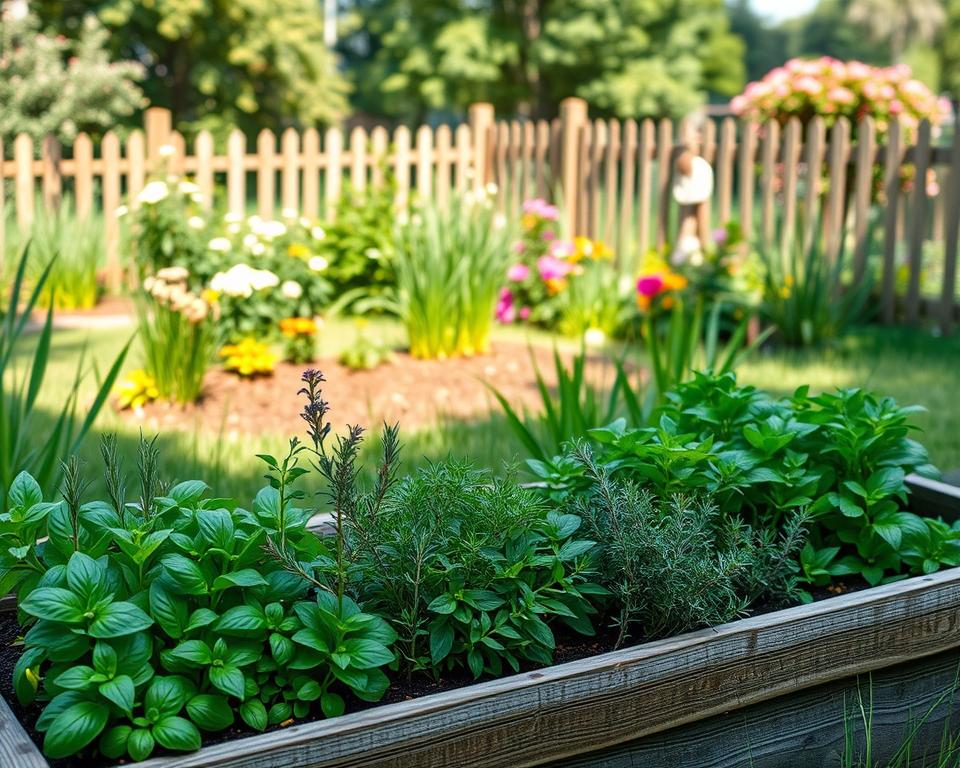
When considering your herb garden location, several key factors will determine the success of your raised beds. Understanding these elements will help you create an optimal growing environment for your culinary and medicinal herbs.
Assessing Sunlight Requirements for Different Herb Varieties
Sunlight for herbs is a critical consideration. Most culinary herbs thrive with 6-8 hours of direct sunlight daily. Here’s a breakdown of herb sunlight preferences:
- Full Sun Herbs (6-8 hours):
- Basil
- Rosemary
- Sage
- Thyme
- Partial Shade Herbs (3-4 hours):
- Parsley
- Mint
- Coriander
- Chervil
Considering Accessibility and Garden Drainage
Your herb garden placement should prioritise both convenience and plant health. Select a location that offers:
- Close proximity to the kitchen
- Easy water access
- Good garden drainage
- Protection from strong winds
| Location Factor | Ideal Conditions | Potential Issues |
|---|---|---|
| Sunlight | South-facing position | Less than 6 hours direct light |
| Drainage | Level ground, good water flow | Water-logged soil |
| Wind Protection | Sheltered area | Exposed, harsh winds |
Remember, where to place raised beds is a decision that will impact your herb garden’s entire lifecycle. Take time to assess your garden’s unique characteristics before establishing your herb growing space.
Selecting the Best Raised Bed Materials and Dimensions
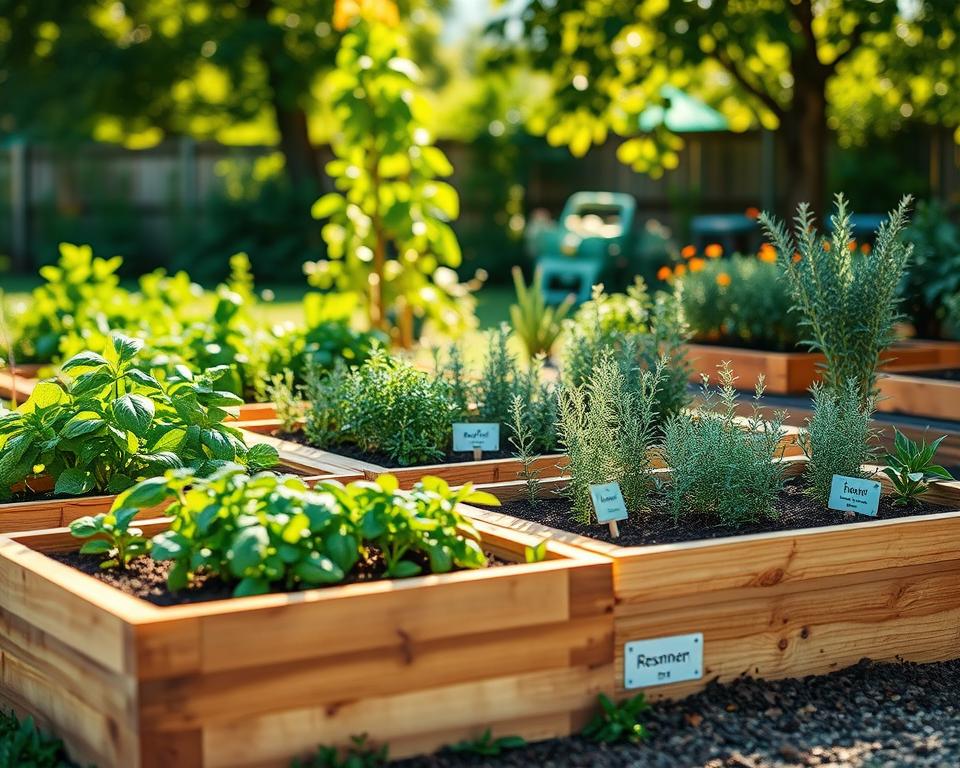
Choosing the right raised bed materials and dimensions is crucial for creating a successful herb garden. Your selection will impact plant health, growth, and overall gardening experience.
When considering raised bed materials, cedar raised beds stand out as an exceptional choice. Natural wood options provide numerous benefits for herb cultivation. Let’s explore the best materials and dimensions to help you create the perfect herb garden.
Top Raised Bed Materials
- Cedar: Naturally rot-resistant and chemical-free
- Untreated hardwoods like oak and larch
- Composite wood alternatives
- Galvanised steel for durability
- Stone or brick for aesthetic appeal
Raised bed size plays a critical role in plant health. Experts recommend keeping beds no wider than 1.2 metres to ensure comfortable reach from both sides. The optimal raised bed dimensions typically range between 1.8 to 2.4 metres in length.
“The key to a successful herb garden is creating the right environment from the ground up.” – Gardening Experts
Depth is equally important for raised bed gardens. Aim for 20-30 centimetres minimum, with 30-45 centimetres providing optimal root development. Deeper beds offer better moisture retention and more space for herb roots to spread.
Raised Bed Dimension Recommendations
- Width: Maximum 1.2 metres
- Length: 1.8-2.4 metres
- Depth: 20-45 centimetres
Consider creating multiple smaller beds instead of one large bed. This approach allows for better herb variety management, easier access, and more flexible crop rotation strategies.
Preparing the Perfect Soil Mix for Herb Cultivation
Creating the right herb garden soil is crucial for growing healthy, vibrant herbs in your raised bed. The foundation of successful herb cultivation begins with understanding and crafting the ideal soil mix for herbs that will support optimal plant growth and flavour development.
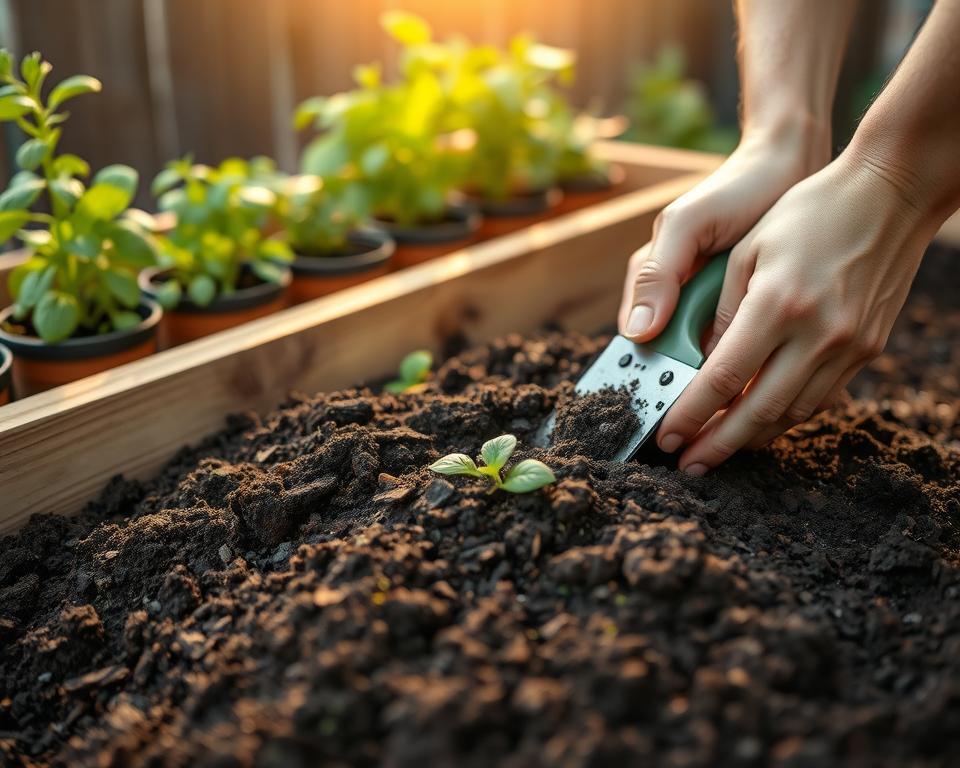
Your raised bed provides a unique opportunity to design a custom soil environment that meets the specific needs of your herbs. The key is balancing organic matter, drainage, and nutrient content to create the perfect growing medium.
Understanding Soil pH and Nutrient Requirements
Most herbs thrive in slightly acidic to neutral soil with a pH between 6.0 and 7.0. Before planting, test your soil pH using a simple garden centre testing kit. Different herbs have varying pH preferences:
- Mediterranean herbs like rosemary prefer slightly alkaline conditions
- Leafy herbs such as basil and parsley enjoy more neutral soil
- Mint and chives are more tolerant of varied pH levels
Adding Organic Matter and Compost for Optimal Growth
Incorporating organic matter is essential for creating a rich soil mix for herbs. Well-rotted compost improves soil structure and provides slow-release nutrients that support healthy plant growth.
| Compost Type | Benefits for Herb Garden |
|---|---|
| Aged Manure | Provides rich nutrients, improves soil structure |
| Leaf Mould | Enhances moisture retention, adds lightweight organic matter |
| Homemade Compost | Balanced nutrients, environmentally friendly |
For optimal results, mix your raised bed soil using a combination of:
- 1/3 quality topsoil
- 1/3 organic compost
- 1/3 sharp sand or perlite for drainage
Pro tip: Allow your prepared soil mix to settle for a week before planting to ensure proper compaction and nutrient distribution.
How to Plant a Raised Bed with Various Herbs – Tips

Planting herbs in raised beds requires careful planning and attention to detail. The best time for herb planting in the UK is typically late spring, after the last frost has passed. This window from late April to May provides ideal conditions for most herb varieties.
When starting your raised bed planting guide, consider these key herb planting tips:
- Choose between seeds, seedlings, or established plants
- Select herbs suited to your local climate
- Prepare your raised bed with nutrient-rich soil
- Ensure proper spacing between different herb varieties
For successful how to plant herbs techniques, follow these essential steps:
- Create appropriate planting holes
- Gently remove plants from their original containers
- Position herbs at the same depth as their original pots
- Firm soil around the roots to eliminate air pockets
Watering is crucial immediately after planting. Thoroughly saturate the soil to help reduce transplant shock and establish your herbs quickly.
| Herb Type | Planting Time | Sunlight Requirement |
|---|---|---|
| Basil | Late Spring | Full Sun |
| Rosemary | Early Spring | Full Sun |
| Mint | Spring/Autumn | Partial Shade |
Consider adding a light mulch layer around your herbs to retain moisture and suppress weeds. Remember to label your plants clearly, especially when growing multiple herb varieties that might look similar when young.
Deciding Which Herbs to Grow Together
Companion planting herbs requires careful strategic planning to ensure a thriving raised bed garden. Understanding which herbs grow well together can dramatically improve your garden’s health and productivity.
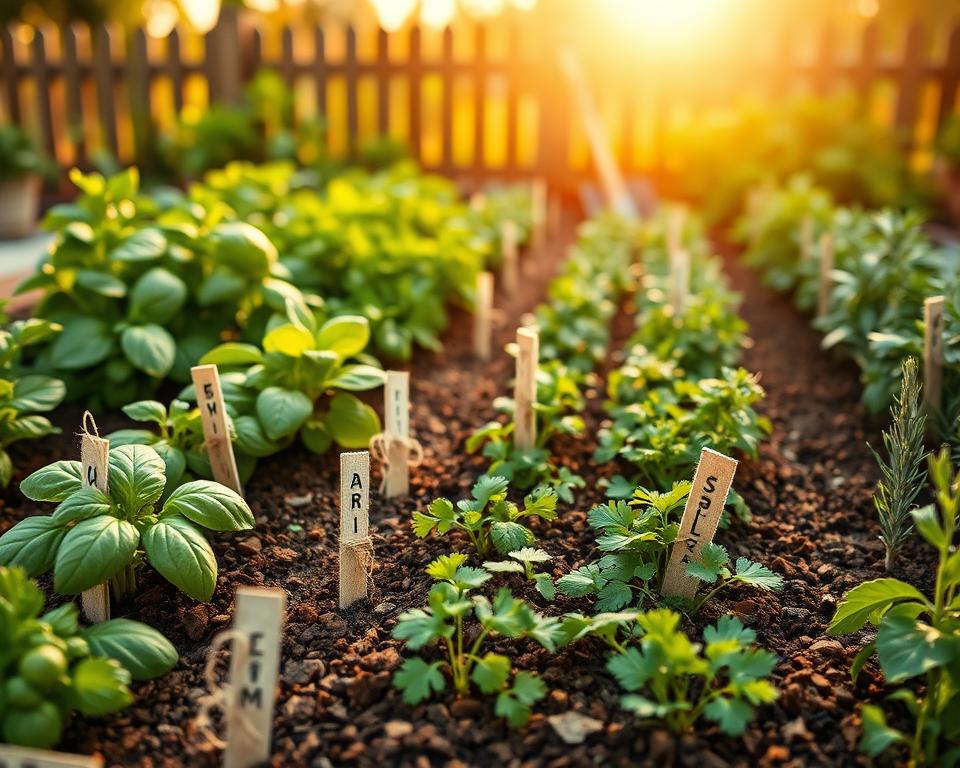
Companion Planting Strategies for Herbs
When designing your herb combinations, group plants with similar growing requirements. Mediterranean herbs like rosemary, thyme, and oregano prefer drier conditions and can be planted together. Moisture-loving herbs such as parsley and chives require different care and should be separated.
- Plant low-growing thyme around taller rosemary for efficient space usage
- Create herb sections based on water and sunlight needs
- Consider flavour and pest-deterrent relationships between herbs
Separating Invasive Herbs from Delicate Varieties
Mint in raised beds demands special attention. This vigorous spreader can quickly dominate your garden if not carefully managed. Use sunken containers or dedicated sections to prevent mint from overwhelming more delicate herb varieties.
| Invasive Herbs | Recommended Containment Method |
|---|---|
| Mint | Planted in separate containers |
| Lemon Balm | Isolated bed or restricted planting area |
| Oregano | Controlled growth zones |
Protect delicate annual herbs like basil and coriander from robust perennial neighbours. Consider mature plant sizes to prevent shading and competition for nutrients.
Proper Spacing and Planting Techniques for Herbs

Mastering herb spacing is crucial for creating a thriving raised bed garden. Proper planting distance ensures each herb receives adequate nutrients, sunlight, and air circulation. Understanding how far apart to plant herbs can make the difference between a struggling garden and a bountiful harvest.
Different herbs require specific planting techniques and spacing. Here’s a comprehensive guide to help you achieve optimal herb growth:
- Small herbs (thyme, chives): Plant 15-20 centimetres apart
- Medium herbs (basil, parsley, coriander): Allow 20-30 centimetres between plants
- Large herbs (rosemary, sage, lavender): Space 45-60 centimetres apart
When implementing herb planting techniques, remember that spacing measurements refer to the centre of each plant. Resist the temptation to overplant, as herbs need room to develop fully. A seemingly sparse raised bed will quickly fill out as plants mature.
| Herb Type | Spacing Recommendation | Planting Technique |
|---|---|---|
| Woody Herbs | 45-60 cm | Plant slightly above soil surface |
| Annual Herbs | 20-30 cm | Use succession planting |
| Root Herbs | 15-20 cm | Direct sow for best results |
Consider using block planting instead of strict rows for a more natural and space-efficient approach. Succession planting works particularly well for annual herbs, allowing you to enjoy a continuous harvest throughout the growing season.
Key planting tips include avoiding deep planting, which can cause stem rot, and ensuring each herb has sufficient room to develop its unique characteristics. With careful attention to herb spacing and planting techniques, you’ll create a lush, productive herb garden in your raised bed.
Establishing a Watering and Maintenance Schedule
Successful herb garden maintenance begins with understanding the unique watering needs of your raised bed herbs. Raised beds require special attention to irrigation methods to ensure healthy plant growth and optimal herb production.
Irrigation Methods for Raised Herb Beds
Watering herbs effectively is crucial for their survival and growth. Different irrigation techniques can help you maintain a thriving herb garden:
- Hand watering with a gentle rose attachment
- Drip irrigation systems
- Soaker hoses for targeted root hydration
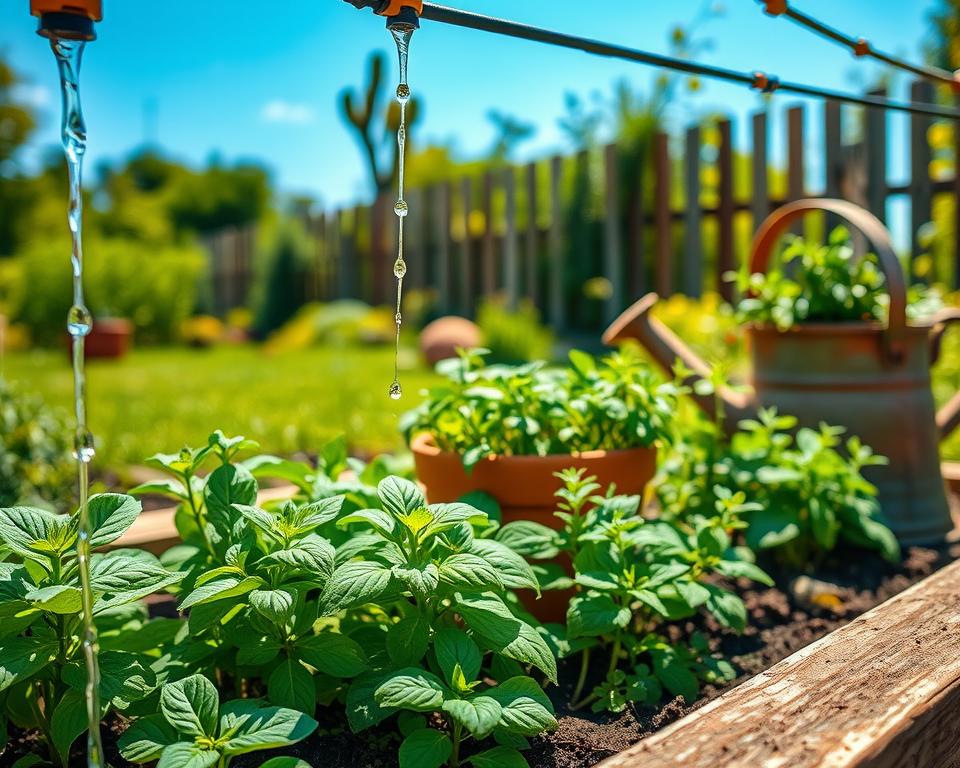
When considering how often to water herbs, remember that most varieties prefer soil that dries slightly between waterings. Mediterranean herbs especially thrive with less frequent, deep watering.
Recognising Signs of Overwatering and Underwatering
| Overwatering Signs | Underwatering Signs |
|---|---|
| Yellowing leaves | Crispy brown leaf edges |
| Wilting despite moist soil | Drooping that improves after watering |
| Root rot | Slow growth |
A simple finger test can help prevent irrigation for raised beds from becoming problematic. Push your finger 5 centimetres into the soil to check moisture levels before watering. This method helps you avoid overwatering herbs and ensures your plants receive just the right amount of hydration.
Regular maintenance goes beyond watering. Harvest herbs frequently to encourage bushier growth, remove flowers from foliage-focused herbs, and feed with organic liquid fertiliser during the growing season to keep your herb garden thriving.
Managing Pests and Diseases in Your Herb Garden
Protecting your herb garden from herb garden pests and diseases requires careful attention and proactive strategies. While herbs are generally resilient, they can still fall victim to various challenges that threaten their health and productivity.
Common herb garden pests can quickly compromise your plants’ vitality. Aphids frequently target tender herb growth, particularly on basil and mint. These tiny insects can multiply rapidly, creating significant problems for your garden.
- Identify aphids on herbs early to prevent widespread infestation
- Use organic pest control methods to manage populations
- Inspect plants regularly for signs of damage
Preventing herb diseases requires a multifaceted approach. Proper plant spacing, adequate air circulation, and appropriate watering techniques can significantly reduce the risk of fungal infections like powdery mildew and root rot.
| Pest/Disease | Symptoms | Organic Control Method |
|---|---|---|
| Aphids | Clusters on new growth | Neem oil spray |
| Powdery Mildew | White coating on leaves | Improve air circulation |
| Slug Damage | Holes in leaves | Copper barriers |
Natural predators can be your allies in maintaining a healthy herb garden. Encourage ladybirds and lacewings to inhabit your garden, as they naturally control pest populations without harmful chemicals.
Your best defence against herb diseases is maintaining strong, healthy plants. Choose disease-resistant varieties, practice crop rotation, and always use clean gardening tools to minimise potential contamination.
Conclusion
Embarking on a raised bed herb garden adventure offers immense satisfaction for gardening enthusiasts across the United Kingdom. Your raised bed herb garden success starts with thoughtful planning and a passion for cultivating fresh, aromatic herbs right in your outdoor space.
Growing herbs in a raised bed transforms your gardening experience by providing controlled growing conditions. The herb gardening tips UK gardeners rely on emphasise the importance of selecting the right location, preparing quality soil, and understanding each herb’s unique requirements. With careful attention to sunlight, drainage, and companion planting, you can create a thriving herb garden that produces flavourful ingredients for your kitchen.
Remember that every gardening journey involves learning and adaptation. Start with a few herbs you frequently use in cooking, such as basil, rosemary, or thyme. As you gain confidence, you can expand your collection and experiment with different varieties. The sensory pleasure of brushing against fragrant foliage and harvesting fresh herbs just steps from your kitchen makes the initial effort worthwhile.
Your raised bed herb garden is more than just a gardening project—it’s an opportunity to connect with nature, enjoy fresh ingredients, and create a beautiful, functional outdoor space. Embrace the process, be patient with yourself, and enjoy the delightful journey of herb cultivation.
FAQ
What are the best herbs to grow in a raised bed?
The best herbs for a raised bed include Mediterranean herbs like rosemary, thyme, sage, and oregano, which thrive in well-drained soil. Leafy herbs such as parsley, chives, and mint also do well. Consider your cooking preferences and local climate when selecting herbs. Basil, coriander, and chervil are excellent choices for annual herbs, while lavender and lemon balm provide both culinary and ornamental value.
How deep should a raised bed be for herbs?
For most herbs, a raised bed depth of 30-45 centimetres (12-18 inches) is ideal. This depth provides ample room for root development and moisture retention. Mediterranean herbs can tolerate slightly shallower beds, while root-heavy herbs like parsley benefit from deeper soil. The minimum recommended depth is 20 centimetres (8 inches), but deeper beds offer better growing conditions and are more forgiving during dry periods.
How often should I water herbs in a raised bed?
Watering frequency depends on the herb variety and weather conditions. Mediterranean herbs require less frequent watering and prefer soil to dry slightly between waterings. Typically, water deeply once or twice a week, checking soil moisture by inserting your finger 5 centimetres into the soil. During hot summers, you might need to water more frequently, while in cooler periods, reduce watering to prevent root rot.
Can I grow herbs together in the same raised bed?
Yes, but with careful planning. Group herbs with similar water and sunlight requirements together. Keep invasive herbs like mint contained in separate pots within the bed. Mediterranean herbs (rosemary, thyme, sage) can be planted together, while moisture-loving herbs like parsley and chives form another group. Avoid placing tall herbs where they’ll shade smaller varieties.
What type of soil is best for a herb raised bed?
The ideal soil mix is well-draining and slightly acidic to neutral (pH 6.0-7.0). Combine one-third quality topsoil, one-third compost, and one-third sharp sand or perlite. For Mediterranean herbs, increase drainage material. Incorporate organic matter like well-rotted compost to improve soil structure. Avoid heavy clay soils and ensure good drainage to prevent root rot.
How do I prevent pest problems in my herb raised bed?
Use organic pest management strategies. Encourage beneficial insects by planting companion flowers. Remove pests manually when possible. Use natural deterrents like neem oil or insecticidal soap for persistent issues. Maintain good air circulation, avoid overwatering, and keep the bed clean. Companion planting with strongly scented herbs can help repel some common garden pests.
When is the best time to plant herbs in the UK?
In the UK, late spring (late April to May) is ideal for planting most herbs after the last frost. Tender herbs like basil should be planted after temperatures are consistently above 10°C. Hardy perennial herbs can be planted from early spring through early autumn. Consider using seedlings for beginners, and start annual herbs like basil and coriander from seed directly in the bed.
How much sunlight do herbs need?
Most herbs require 6-8 hours of direct sunlight daily. Mediterranean herbs like rosemary, sage, and thyme are particularly sun-loving. Some herbs like parsley, mint, and coriander can tolerate partial shade with 3-4 hours of sunlight. A south-facing position typically provides the most consistent light in the UK. Consider your specific garden’s light conditions when placing your raised bed.