Largest Shed Without Council Approval Guide
This short guide explains the core rules on the largest shed without council approval for homeowners, landlords and tradespeople across the United Kingdom. It draws on Government planning guidance, Planning Practice Guidance and Building Regulations to show when a permitted development shed size is allowed, where garden shed planning permission may still be required, and which outbuilding planning UK limits are most relevant.
Permitted development rights normally let you add single-storey outbuildings within the curtilage of a house, subject to conditions on height, location and total footprint. However, shed rules UK vary by location: conservation areas, listed buildings, and national parks can restrict or remove those rights. Building Regulations may also apply for structural works, electrics or drainage even where no planning application is needed.
The purpose of this guide is practical. You will find clear explanations of common limits for permitted development shed size, simple measuring and documentation advice, and next steps if your proposed outbuilding falls outside permitted limits. The aim is to help you decide quickly whether you need to apply for garden shed planning permission or can proceed under outbuilding planning UK rules.
Inhaltsverzeichnis
Key Takeaways
- Permitted development often allows single-storey outbuildings without a planning application, but conditions apply.
- Maximum permitted development shed size depends on height, footprint and siting relative to the house.
- Shed rules UK are tighter in conservation areas, for listed buildings and in national parks.
- Building Regulations may be required for electrics, drainage or significant structural work.
- Measure height, eaves and footprint accurately and check local authority guidance before building.
what is the largest shed without council approval?
Many homeowners ask what is the largest shed without council approval in plain terms. The question covers three measures: footprint (square metres), overall height and eaves height. It also assumes “without council approval” means the structure falls within permitted development rights and meets all related conditions.
Understanding the primary question
When assessing a proposed outbuilding, define “largest” by the usable floor area, plus the maximum ridge and eaves heights. For planning checks, the eaves height often matters more than the ridge because permitted development limits usually cap eaves at around 2.5 metres in certain situations.
Permitted development rights require that the outbuilding is single storey, for incidental use to the house, and located behind the principal elevation. If any of those conditions fail, a planning application will normally be required.
Summary of permitted development limits in the UK
For England, typical rules allow single-storey outbuildings with eaves no higher than 2.5 metres where the building sits within 2 metres of a boundary. Dual-pitched roofs may reach up to 4 metres; other roof types are often limited to 3 metres.
There are coverage limits that affect the permitted footprint. One common constraint prevents outbuildings, together with other extensions, from covering more than half the area of land around the original house. Use and location conditions must be satisfied, meaning the shed cannot be used as a separate dwelling.
Permitted development limits shed and garden coverage in tandem. Meeting every condition is essential to avoid needing a full planning application.
How size limits vary by property type and location
Rules differ for flats, maisonettes and houses. Properties in conservation areas, Areas of Outstanding Natural Beauty, National Parks and World Heritage Sites may have permitted development removed or restricted by local authorities.
Listed buildings require listed building consent for work affecting their character, regardless of size. Article 4 directions can withdraw permitted development rights in specific streets or neighbourhoods, so a shed that meets generic limits may still need permission locally.
Always check whether the property type or local designation changes permitted development rights before assuming the maximum shed size UK for your site.
Permitted development rights for outbuildings
Permitted development lets householders add small structures without a full planning application. This sits within national planning law and aims to speed up routine work. In England the rules for houses are set out in the Town and Country Planning (General Permitted Development) Order.
Below are the key points to check before you build. They explain how permitted development rights outbuildings work and where the planning law outbuilding rules apply.
Overview of permitted development under UK planning law
Permitted development means certain works are authorised by statute so no planning application is needed. Rights often cover Class E and other relevant classes for houses. These rights do not routinely apply to flats, most commercial premises or many listed buildings.
Key conditions that must be met for no-application builds
- Location: outbuildings must normally sit behind the principal elevation of the house.
- Coverage: total outbuildings and other additions must not exceed 50% of the private garden or yard.
- Height limits: maximum heights vary by roof form and distance from the boundary; portions near a neighbouring boundary face stricter limits.
- Use: structures must not form separate self-contained living accommodation.
- Protected land: national parks, Areas of Outstanding Natural Beauty, the Broads and conservation areas often have tighter controls or removed rights.
- Other features: rooflights, chimney stacks and flues have specific conditions; proximity to highways can restrict development to avoid obstruction.
How permitted development interacts with listed buildings and conservation areas
Listed buildings require listed building consent for works that affect their character. Permitted development rarely overrides that need. Local planning authorities may also apply Article 4 directions to remove some rights in conservation areas.
Even if an outbuilding meets planning law outbuilding rules, councils can investigate and enforce breaches. For sites in high-risk locations it is sensible to seek pre-application advice from the local authority before relying on sheds without planning permission.
Specific size and height limits for sheds in England
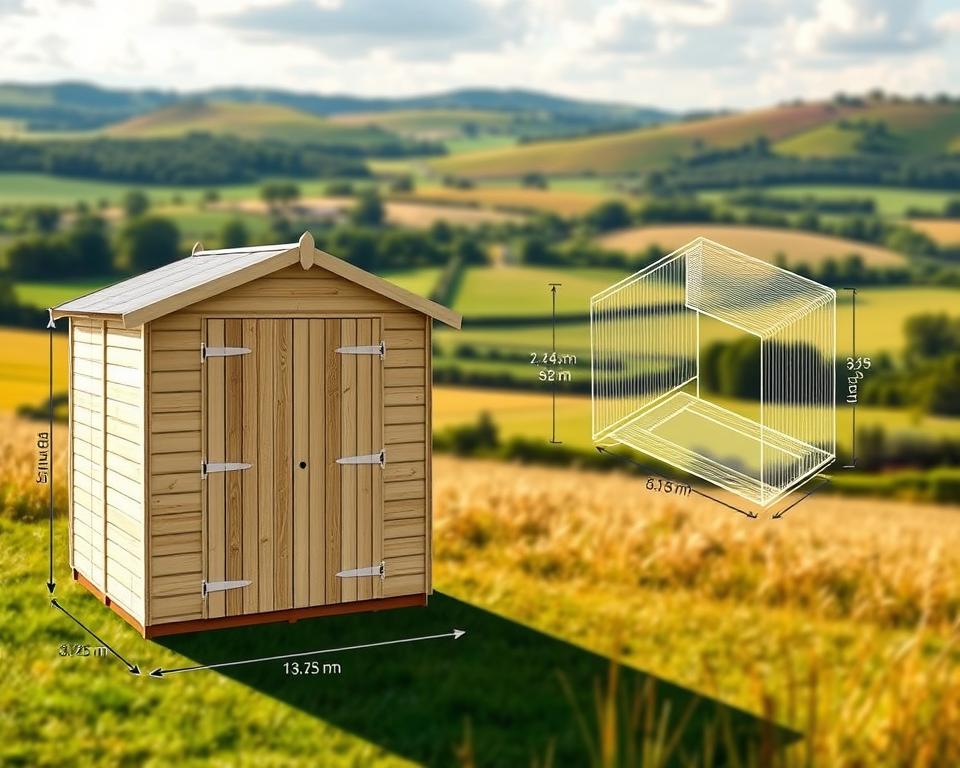
Before you place a shed, understand the common limits that apply across England. These rules affect simple garden stores as well as larger hobby spaces. Read the points below to check whether your plan sits within permitted development England shed rules.
Maximum height allowances for single-storey outbuildings
For most single-storey outbuildings the usual maximum is 4 metres for a dual-pitched roof. Other roof types normally have a 3-metre cap when the building stands more than 2 metres from the boundary. If the outbuilding is within 2 metres of a boundary, the eaves or overall height generally must not exceed 2.5 metres. Flat-roof structures can be permitted where they meet the stated limits and sit within the allowed footprint and position.
Permitted footprint and location restrictions
The outbuilding must not be forward of the principal elevation of the house, so avoid siting a shed between the house and the road. The combined area of all extensions and outbuildings must not cover more than 50% of the land around the original house. The term “original house” refers to the property as it was built or as it stood on 1 July 1948 in some cases. Local planning officers assess cumulative additions by adding all prior extensions and outbuildings to determine remaining outbuilding footprint limits.
Exceptions and special circumstances that affect limits
Properties on designated land, such as National Parks, Areas of Outstanding Natural Beauty and conservation areas, face tighter restrictions. Article 4 directions can remove permitted development rights in specific localities. Previous extensions beyond permitted limits reduce any remaining allowance for further outbuildings. Permitted development England shed rights do not override other legislation like the Party Wall etc. Act, building regulations or restrictive covenants contained in deeds.
When in doubt, consult your local planning authority for tailored advice and check whether any local constraints apply to your property before ordering materials or starting work.
How rules differ in Scotland, Wales and Northern Ireland
Planning rights for outbuildings vary across the UK. If you own property outside England you must check national rules and local interpretations before building. Relying on England-specific figures risks non-compliance when considering shed limits devolved UK.
Scotland: planning permission and permitted development rights
Scotland uses the Town and Country Planning (General Permitted Development) (Scotland) Order. Thresholds, definitions and permitted dimensions are not always the same as England. Local authorities assess whether an outbuilding would materially affect the amenity of the area.
Conservation areas, national scenic areas and listed buildings attract tighter controls. Speak to the relevant council planning office before work begins to confirm how the local plan interprets shed rules Scotland.
Wales: devolved planning rules and variations
Wales has its own planning policy framework and permitted development Wales guidance. The Welsh Government sets rules that local planning authorities apply, and some dimensional limits differ from those in England.
Planning Policy Wales and local authority guidance explain how designated land is treated and what counts as permitted development. Consult your LPA pages to check the precise interpretation of permitted development Wales for your site.
Northern Ireland: separate regime and where to check local guidance
Northern Ireland operates a distinct planning system with separate permitted development provisions. Thresholds for outbuildings vary, particularly around listed buildings, Areas of Outstanding Natural Beauty and conservation zones.
Use the Planning Portal Northern Ireland guidance or contact the local council planning office to verify Northern Ireland planning outbuildings rules that apply to your property.
| Nation | Key reference | Common restrictions | Practical step |
|---|---|---|---|
| Scotland | Town and Country Planning (GPDO) (Scotland) | Different height/footprint limits; conservation area constraints | Contact local council planning; check shed rules Scotland guidance |
| Wales | Planning Policy Wales and devolved PD rights | Varied dimensional limits; differing approach to designated land | Review permitted development Wales notes on LPA website |
| Northern Ireland | Local planning legislation and portal guidance | Separate thresholds for listed/protected areas | Consult Planning Portal Northern Ireland and the council; confirm Northern Ireland planning outbuildings |
Impact of neighbours, party walls and boundary positioning
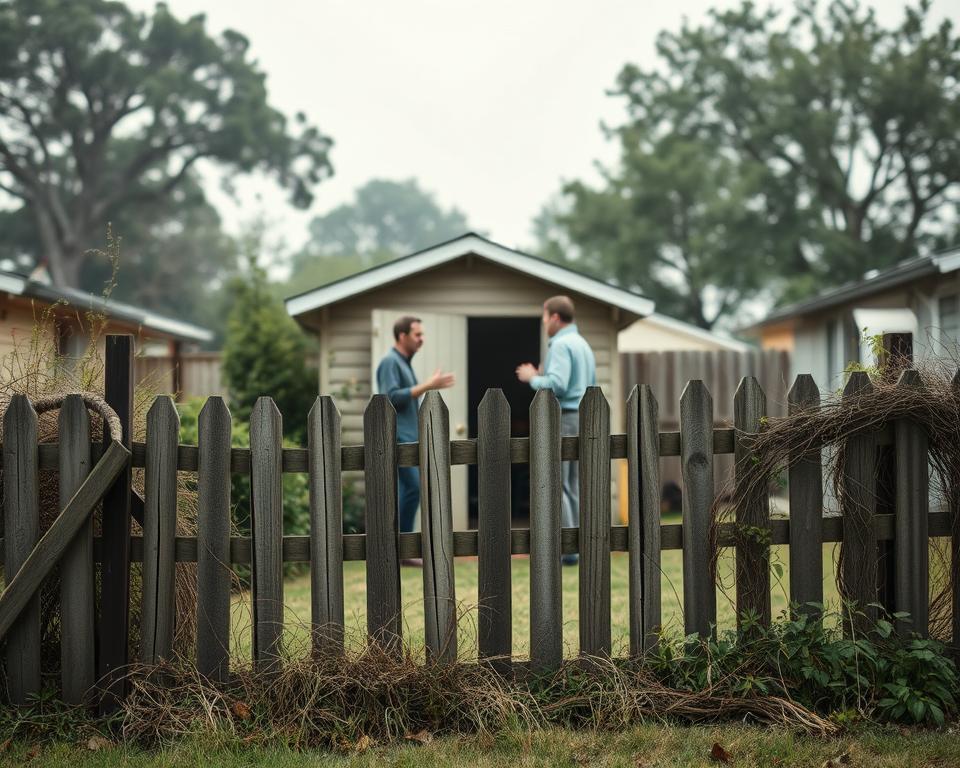
Neighbours can influence whether a shed stays or must change. Local planning authorities often act after complaints that point to visual intrusion, loss of light, excessive height near a boundary or use as living space. A single objection does not block a lawful build, yet repeated neighbour objections shed can prompt an investigation and possible enforcement action.
When a neighbour’s complaint leads to enforcement
An LPA will check if the outbuilding breaches permitted development or planning conditions. Typical triggers include a roof higher than allowed, siting too close to adjacent windows and works that alter the character of the area. If the LPA finds a breach, it can issue an enforcement notice requiring alteration or removal.
Party Wall etc. Act considerations for outbuildings
The Party Wall etc. Act 1996 can apply even when planning permission is not needed. Works that affect a shared wall, or excavations near a neighbour’s foundations, require notice and agreement under the Act. A Party Wall Act shed issue often needs a surveyor to produce an award or resolve disputes. Chartered surveyors such as RICS members commonly manage these agreements for clarity and legal compliance.
Practical siting to avoid disputes
Siting choices help to avoid friction. Where possible, keep the shed more than two metres from a boundary to take advantage of higher permitted heights and reduce shading. Position windows away from neighbouring gardens to limit overlooking.
Use planting to soften visual impact and install timber screens for privacy. Put proposals in writing and share drawings with neighbours early. Clear communication reduces the risk of shed boundary disputes and helps to avoid neighbour disputes shed escalating to formal complaints.
When in doubt, seek pre-application advice from the council or ask a planning consultant to review the scheme. Early professional input avoids surprises and lowers the chance that neighbour objections shed or Party Wall Act shed issues will derail the project.
Materials, foundations and building regulations considerations
This section covers practical choices for materials, recommended bases and clear guidance on building compliance. Read on to understand when building regulations outbuildings become relevant, what ground preparation works work best and how to pick materials that balance durability with safety.
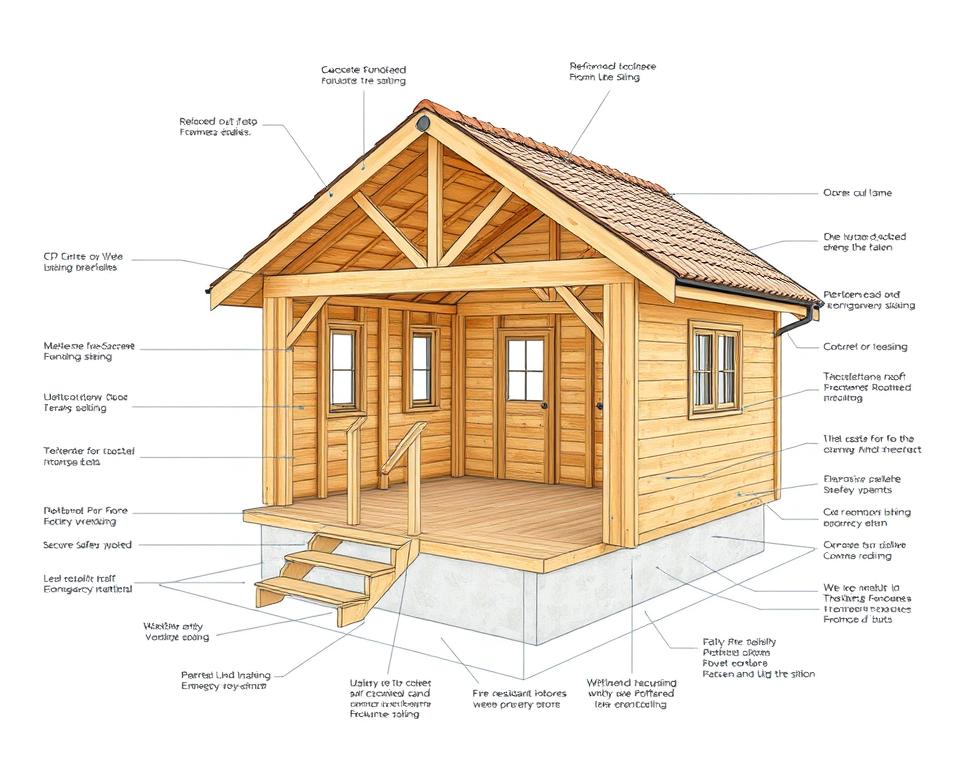
When building regulations apply
Building regulations apply where an outbuilding contains controlled activities. Examples include sleeping rooms, bathrooms, fixed plumbing or permanently installed heating appliances. Electrical installations that require certification can also trigger requirements.
Purely ancillary garden sheds used for storage rarely trigger building control. Sheds with significant foundations, drainage, or permanent heating and electrics usually prompt an inspection. Owners should check local building control if they are unsure when do building regs apply.
Recommended foundations and moisture control
Start with a stable, level base to prevent movement and rot. For permanent timber or steel-framed buildings use concrete strip or pad foundations. These give structural support and meet structural portions of building regulations outbuildings when required.
Include a ground-level damp-proof membrane under the floor and use treated timber bearers where wood meets the ground. Ensure good ventilation beneath the floor and provide site drainage that diverts water away from the base. Proper drainage reduces long-term maintenance and helps prevent timber decay.
Shed foundations advice also covers correct levelling, compacted hardcore and edge restraints to avoid settling. Small, lightweight resin or plastic sheds may sit on paving or compacted stone but still need a flat, drained surface.
Choosing materials to meet durability and compliance needs
Materials vary by cost, longevity and maintenance. Pressure-treated timber offers a traditional look with good durability when maintained. Galvanised steel frames resist rust and are low maintenance. Plastic or resin sheds resist rot and need minimal upkeep.
Timber clad buildings with robust roofing such as EPDM, metal or tiles are suitable where insulation or a workshop environment is planned. Consider fire risk near boundaries and acoustic impacts if the shed will host noisy tools.
For compliance choose certified products: FSC-certified timber, CE or UKCA marked components and electrics installed by a competent electrician. Where insulation, heating or complex services are fitted, professional installation helps meet regulations and improves shed materials durability.
What to do if your shed exceeds permitted development limits
If your outbuilding goes beyond permitted development, act quickly and calmly. You have options that can bring the structure into compliance or secure formal approval. This short guide explains how to approach retrospective planning permission, practical ways to reduce or alter the shed, and what to do if the council issues an enforcement notice.
Applying for retrospective planning permission
Begin by submitting a full planning application to your local planning authority describing the existing development. Include scaled plans, a site plan, photographs and a clear covering letter that explains why the shed was built or altered without prior consent. Councils treat retrospective planning permission shed applications as discretionary.
Decisions can grant permission, grant with conditions, or refuse the application. A refusal may require removal or alteration of the structure. Keep records of all communications and be prepared to supply extra information if the planning officer requests it.
Options for reducing or altering the structure to comply
Small, practical changes often resolve breaches. Consider lowering the roof height, changing the roof form from a gable to a mono-pitch, moving the shed further from boundaries, or removing windows that give the appearance of a habitable building.
Reducing the footprint or converting the interior to non-habitable storage can help. Phased alterations may be possible; discuss a staged approach with the LPA to show intent to comply. In some cases, a lawful development certificate can regularise an existing structure if it meets exemption rules or has been on site long enough.
Potential enforcement notices and how to respond
Councils may use enforcement notices, stop notices or breach of condition notices to resolve unauthorised development. Each notice sets different timescales and requirements. Read any notice carefully and note appeal deadlines.
Respond within the period stated, lodge an appeal if appropriate, or supply a retrospective planning permission shed application to the LPA. Engage a planning consultant if the case is complex. Legal advice may be needed where enforcement threatens removal or prosecution.
Keep communication constructive. Negotiating practical remedies with the council often leads to a workable outcome that avoids costly removal and preserves the use of your garden building.
Practical guidance for measuring and documenting your proposed shed
Before you start, gather a tape measure, spirit level and camera. Accurate measurements and clear documents speed up checks with your local authority. Use the natural ground level as your reference when you measure and record everything.
How to measure height, eaves and total footprint correctly
Measure vertical height from the natural ground level to the highest point of the roof (ridge) to record overall height. For eaves height, measure to the underside of the eaves or soffit where the wall meets the roof. Note any roof features such as raised centres or lanterns.
To record the footprint, measure the external perimeter of the building at ground floor. Mark the length and width along the outer faces and calculate the area. On sloping ground use the natural ground level at each corner and note the highest natural level for consistency.
When the shed sits near a boundary, check the 2 metres rule: measure the distance from the outer wall to the boundary. Record the shortest clearance and specify which boundary it is, for example the rear garden fence or side path.
Preparing simple site plans and photographs for planning checks
Create a block plan showing the house, garden boundaries, existing outbuildings and the proposed shed. Either draw a scaled plan or provide a dimensioned sketch with clear distances to each boundary and to the main building.
Take photographs from at least three angles, including a shot that shows the proposed location in relation to a fixed point such as the house or a fence. Label each photo with the viewpoint and date so the planner can match images to the plan.
When submitting, ensure drawings meet file and scale requirements set by the Local Planning Authority or the national portal you use. Include a north arrow and a scale bar or dimensions on the plan.
Using local planning portals and pre-application advice services
Use the relevant national portals: Planning Portal for England and Wales, MyGovScotland planning pages, or Planning Portal Northern Ireland. Each portal gives guidance on accepted file types and maximum upload sizes for a planning portal shed submission.
Check your local authority’s planning pages for online forms and guidance notes. Many councils offer pre-application advice; this service can clarify whether permitted development rights apply and flag issues early. A formal pre-application advice shed request is often chargeable but can reduce the risk of refusal.
| Document | What to include | Why it matters |
|---|---|---|
| Dimensioned plan | House outline, garden boundaries, distances to shed, scale or dimensions | Shows compliance with setback and footprint limits |
| Height notes | Overall ridge height from natural ground, eaves height to soffit, slope treatment | Confirms whether height limits are exceeded |
| Photographs | Three or more views with reference points and labels | Provides visual context that supports the site plan |
| Location statement | Exact boundary distances, proximity to neighbours and existing structures | Helps assess the 2 metres rule and potential objections |
| Portal-ready files | PDF or JPEG, named and sized to portal limits for planning portal shed uploads | Smoother upload and faster validation by the LPA |
Costs, timescales and choosing between DIY and professional help
Deciding between a DIY build and hiring specialists affects budget, timing and risk. Typical shed costs and planning steps vary by size, materials and whether you need permissions. A clear plan reduces surprises and streamlines any planning application timescales shed may trigger.
Typical costs for compliant sheds and installation
Small prefabricated garden sheds typically range from about £150 to £1,000. Larger bespoke timber or metal sheds, including log cabins, usually sit between £1,000 and £10,000 or more depending on size, finish and insulation. Additions such as concrete foundations, basic electrics and drainage can add several hundred to a few thousand pounds.
Pre-application advice from local planning authorities and professional reports, such as party wall surveyors, may cost a few hundred pounds. Retrospective planning applications and specialist surveys can push costs higher, especially if alterations or legal advice are needed.
Timescales for planning checks and retrospective applications
Pre-application advice from a local planning authority can take several weeks. Householder planning applications in England are usually decided within eight weeks, though complex cases or requests for extra information can extend that period. Retrospective applications follow the same statutory timescales, yet negotiation with the council can lengthen the process.
Enforcement investigations may take weeks or months, depending on case complexity and council workload. Allow extra time when building near conservation areas or listed structures, as specialist input is often required.
Benefits of hiring a surveyor, architect or specialist installer
Engaging professionals reduces the risk of non-compliance and can save money over time by avoiding enforcement or rework. Chartered surveyors and architects produce accurate drawings, handle technical submissions and advise on planning compliance. If you need to hire surveyor shed or an architect, they can prepare reports for party wall matters and pre-application meetings.
A professional shed installer brings trained labour, guaranteed build quality and often a warranty. For contentious plots or larger builds, consider a planning consultant to liaise with the local planning authority and manage planning application timescales shed may involve.
Quick decision checklist
- Estimate likely shed costs UK, including foundations and electrics.
- Check typical planning application timescales shed could trigger for your LPA.
- Decide whether to hire surveyor shed for measurements and legal works.
- Obtain quotes from a professional shed installer if you want guaranteed workmanship.
Conclusion
The largest shed without council approval depends on meeting permitted development conditions: height, footprint, siting relative to the principal elevation and boundaries, and limits on designated land. England’s common thresholds — for example, 4m for dual‑pitched roofs, 3m for other roofs, 2.5m next to a boundary and no more than 50% of the garden area — provide a clear practical framework, but local policies and devolved rules can change what is allowed. This largest shed without council approval conclusion gives a simple snapshot of those typical limits.
Take care to check the specific rules for your location in England, Scotland, Wales or Northern Ireland before starting work. Building regulations, the Party Wall etc. Act and private covenants may apply regardless of planning permission, so due diligence is essential. Use the local planning portal or seek pre‑application advice where any doubt exists; this approach forms the core of a robust shed planning summary.
Measure and document your proposal carefully with accurate plans and photos, and speak to neighbours early to reduce the risk of disputes. If the outbuilding nears permitted limits or sits in a sensitive area, engage a surveyor, architect or planning consultant to improve compliance and reduce enforcement risk. This outbuilding compliance summary captures the practical steps to complete a lawful, durable and neighbourly build.
FAQ
What is meant by “largest shed without council approval”?
The phrase refers to the biggest single‑storey outbuilding you can erect under permitted development rights so you do not need to submit a planning application to the local planning authority. It is measured in footprint (external ground area), overall height (from natural ground level to the highest point of the roof) and eaves height (underside of the soffit). Permitted development is conditional: if any condition is breached — for example roof height, distance to a boundary, cumulative coverage of the garden, or location relative to the principal elevation — planning permission will usually be required.
What are the typical permitted development size and height limits in England?
For many houses in England, single‑storey outbuildings are normally allowed subject to conditions. Typical thresholds include an overall maximum height of up to 4 metres for a dual‑pitched roof and 3 metres for other roof forms when the building is more than 2 metres from a boundary. If the outbuilding is within 2 metres of a boundary, eaves or overall height is generally limited to 2.5 metres. The combined area of extensions and outbuildings must not cover more than 50% of the land around the original house. These figures are a practical framework; local and devolved variations apply and designated land often imposes tighter limits.
Do permitted development rights apply everywhere in the UK?
No. England, Scotland, Wales and Northern Ireland each have their own planning rules and permitted development orders. In addition, local restrictions—such as conservation areas, Areas of Outstanding Natural Beauty, National Parks and Article 4 directions—can remove or limit permitted development rights. Listed buildings always require listed building consent regardless of PD. Always check the appropriate national guidance and your local planning authority’s pages for the precise regime that applies to your property.
How does the location of the shed on my plot affect the rules?
Location is critical. An outbuilding must not be forward of the principal elevation (i.e. between the house and the road). Proximity to boundaries matters because higher permitted heights are allowed only where the building is more than 2 metres from any boundary. Cumulative coverage is assessed against the original house footprint and garden area. Siting in front gardens, near highways or within designated land triggers additional restrictions and may require a planning application.
Are flats and maisonettes covered by the same rules as houses?
Generally not. Permitted development rights for houses (householders) differ from rights for flats, maisonettes and commercial properties. Many flats have reduced or no PD rights for outbuildings. If your property is a flat, maisonette or part of a conversion, consult the local planning authority or the relevant planning portal for the applicable rules.
When do building regulations apply to a shed?
Building regulations apply when an outbuilding contains controlled functions: sleeping accommodation, fixed heating, bathrooms, significant electrical installations or structural work above certain thresholds. Simple garden storage sheds rarely trigger building regulations, but workshops with electrics, plumbing or substantial foundations often do. Electrical work may also require certification under Part P or registration with a competent person scheme.
What must I consider about foundations, moisture and materials?
Permanent outbuildings need suitable foundations — concrete strip or pad foundations are common for timber or steel frames. Use damp‑proof membranes, treated timber bearers and ensure good ventilation beneath the floor to limit rot. Choose durable, certified materials (for example FSC timber, galvanised steel, or UKCA/CE‑marked components) and consider fire risk near boundaries. Good drainage and a stable level base prevent movement and reduce maintenance and compliance risk.
How should I measure height, eaves and footprint correctly?
Measure vertical height from natural ground level to the highest point of the roof for overall height. Measure eaves height to the underside of the eaves or soffit. Footprint is the external perimeter at ground floor level. For sloping sites, use the natural ground level adjacent to each elevation. Record distances to boundaries from the nearest external wall to check the 2‑metre rule and to assess cumulative garden coverage.
What if my shed exceeds permitted development limits?
If the structure already exists and exceeds PD limits you can apply for retrospective planning permission. Submit a full application with plans and a covering letter. The local planning authority may grant, grant with conditions, or refuse the application. Alternatively, modify the building to comply — lower the roof, change the roof form, move it further from the boundary, or reduce the footprint. Enforcement notices, stop notices or breach of condition notices are possible; seek professional planning or legal advice if served.
Do I need to notify neighbours or deal with party wall matters?
You do not always need to notify neighbours for planning purposes, but neighbour objections can trigger enforcement investigations. Separately, the Party Wall etc. Act 1996 may require you to serve notices and agree works with neighbours if you affect a party wall or excavate near their foundations. Even where planning permission is not required, complying with the Party Wall Act may be mandatory; consider appointing a chartered surveyor for party wall agreements.
What documentation should I prepare before building or applying?
Prepare a scaled or dimensioned site plan showing the house, garden boundaries and distances to boundaries, elevations with heights and roof form, and photographs of the site from several angles. Include calculations showing the percentage of the garden occupied by buildings. If you plan to use the Planning Portal or seek pre‑application advice, ensure drawings meet the authority’s scale and file requirements.
What are the typical costs and timescales for compliant sheds and planning checks?
Small prefabricated sheds typically cost from around £150–£1,000. Larger bespoke timber or metal outbuildings and log cabins range from about £1,000 to £10,000+ depending on size, materials and installation. Pre‑application advice from an LPA can be chargeable and take several weeks. Householder planning applications in England are usually decided within eight weeks, but complex or retrospective applications can take longer. Add costs for foundations, electrics, party wall surveyors or planning consultants where needed.
When should I use a professional (surveyor, architect or installer)?
Engage a professional for larger or contentious builds, or where the proposal approaches permitted limits or sits in a sensitive location (listed buildings, conservation areas, AONB, National Park). Architects and chartered surveyors produce accurate drawings and handle applications. Specialist installers offer guaranteed build quality and can manage compliance with building regulations and party wall matters. For complex sites a planning consultant can liaise with the council and reduce enforcement risk.
Where can I find authoritative guidance and check current rules?
Use the national and local official sources: the UK Government’s planning guidance and the Town and Country Planning (General Permitted Development) Order for England, Planning Practice Guidance, HM Government Building Regulations and Approved Documents, the Planning Portal (England & Wales), MyGovScotland planning pages, and Planning Portal Northern Ireland. Also consult your local planning authority’s website for local policies, Article 4 directions and pre‑application services.
Can I obtain a Lawful Development Certificate (LDC) to confirm compliance?
Yes. If you need formal confirmation that existing works are lawful (for example because they meet PD conditions or have become immune through long use), you can apply for a Lawful Development Certificate from the local planning authority. An LDC is a legal record that the development is lawful and can be useful for selling a property or resolving disputes. The LPA examines evidence and will grant the certificate only where the development meets the necessary tests.
How can I reduce the risk of neighbour disputes and enforcement?
Best practice is to communicate proposals early with neighbours, provide drawings and photos, and move the shed more than 2 metres from boundaries where feasible. Use screening and sympathetic materials to reduce visual impact. Seek pre‑application advice from the local planning authority for borderline cases. Keep clear records of communications and addresses of any professional advice obtained to demonstrate due diligence if concerns arise.
Are there specific considerations for designated land such as conservation areas and National Parks?
Yes. Designated land often has reduced or removed permitted development rights. In conservation areas, National Parks, AONBs and World Heritage Sites you are more likely to need planning permission, and the LPA applies stricter design, scale and siting tests. Listed buildings require listed building consent for works affecting their character irrespective of size. For properties in such locations obtain pre‑application advice and consult local guidance before building.