
Optimise Your Space with Expert Shed Organisation

Garden sheds are a staple of British outdoor life, used for storage, hobbies and seasonal kit. This guide aims to help UK homeowners and keen gardeners transform clutter into order. You will find practical, professional advice to optimise shed space, improve outdoor storage optimisation and protect tools from damp and frost.
The focus is on real-world challenges: storing lawnmowers, strimmers, wheelbarrows and hedge trimmers while keeping everything safe and accessible. We draw on guidance from Screwfix, B&Q and Toolstation for fittings, Met Office advice on weatherproofing, and consumer guidance from Which? and Country Living for maintenance and safety.
Read on to learn how to assess your current layout, choose the best shelving and containers, use space‑saving techniques and create custom solutions. You will also find eco-friendly options, upkeep routines and signs that it’s time to call a professional organiser or handyman.
Tone throughout is professional and evidence-informed, with practical tips and product references from brands such as Dewalt, Makita, Bosch, IKEA and B&Q to make implementation straightforward.
Inhaltsverzeichnis
Key Takeaways
- Shed organisation helps protect tools, save time and reduce replacement costs.
- Weatherproofing and damp prevention are essential for UK conditions.
- Simple fittings from Screwfix, Toolstation or B&Q can vastly improve storage.
- Assess, plan and zone your shed to optimise shed space and accessibility.
- This guide covers tools, space-saving ideas, eco options and when to call an expert.
Why Effective Shed Organisation Transforms Your Outdoor Space
Good shed organisation changes how you use your garden. Clear zones for frequent items and wide, unobstructed paths make DIY and gardening easier. Wall-mounted tool racks for hand tools, a dedicated potting bench and labelled seed boxes keep things in reach. These simple choices boost functionality and create accessible garden storage that invites more outdoor activity.
Organising by task reduces time spent searching for equipment. An orderly layout and visible storage let you grab what you need and get on with the job. That practical flow delivers shed organisation benefits every time you step outside.
Correct storage saves household budgets over the long term. Storing petrol lawnmowers with stabilised fuel and keeping battery packs dry can extend lifespan and prevent faults. Replacing a mid-range lawnmower or cordless battery pack can cost hundreds of pounds. Thoughtful storage helps you save time and money storage by avoiding premature replacement.
Which? and consumer reports note that proper care increases tool longevity. The right containers, shelving and climate control reduce wear on metal parts and electronics, supporting tool preservation across seasons.
Poorly organised sheds raise safety concerns. Trip hazards from loose items and the risk of fire when fuels or batteries are stored incorrectly are common problems. Damp and rust damage gear that sits on the floor or against cold walls.
Adopt safe storage methods to cut risk and protect equipment. Use lockable cabinets for chemicals and fuels, keep flammables and batteries separate, and fit raised shelving so items stay above potential flood water. Be COSHH-aware when storing hazardous substances and follow HSE guidance for safe handling.
| Issue | Practical step | Benefit |
|---|---|---|
| Cluttered floor space | Install wall-mounted racks and pegboards | Frees working area, improves accessibility |
| Battery and fuel damage | Store batteries separately in ventilated boxes; use stabiliser for petrol | Reduces faults, supports tool preservation |
| Moisture and rust | Use raised shelving and dehumidifiers; follow Met Office tips | Extends equipment life, lowers replacement costs |
| Hazardous chemicals | Keep in lockable cabinets with COSHH labels | Improves shed safety and legal compliance |
| Frequent searching for items | Label boxes and create designated zones by use | Helps you save time and money storage and boosts efficiency |
Assessing Your Current Shed Layout and Storage Needs
Begin with a clear plan to assess shed layout and note what you want from the space. A quick overview helps you focus on practical steps such as a shed storage audit and measuring shed space before you buy fittings or rearrange shelves.
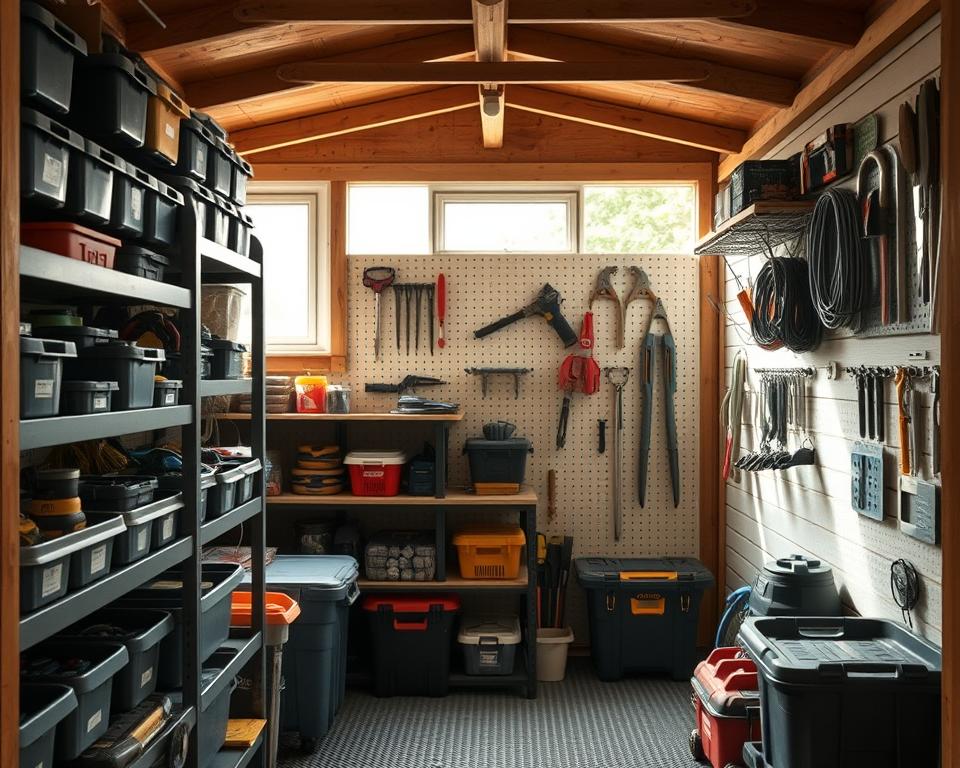
How to perform a storage audit
Work systematically. Empty the shed or tackle it section by section. Sort belongings into four piles: keep, donate or sell, recycle and dispose. Use a tape measure, marker and notepad or a smartphone to record sizes and condition.
Photograph items as you sort them. Create a simple inventory list that notes tool condition and any safety concerns. That list becomes the backbone of your shed storage audit and helps when you decide what to keep.
Identifying frequently used items versus seasonal gear
Classify items by how often you use them, their weight and fragility, and whether they are needed for current projects. Place hand tools and chargers in a daily or weekly zone for instant access.
Label boxes for seasonal shed storage such as winter grit, summer furniture covers and holiday decorations. Store heavy or bulky seasonal items on low shelves or near the back where they won’t block access to everyday tools.
Measuring space and planning zones
Measure internal dimensions: height, width and depth. Record door swing, window positions and any obstructions. Accurate measuring shed space prevents buying the wrong storage units.
Plan shed zones around use: entry and access, a workspace with a bench, heavy equipment area for a mower or strimmer, seasonal storage and a locked cupboard for hazardous materials. Leave clear floor space for manoeuvring large items and ensure adequate ventilation for petrol tools and paints.
| Checklist | Purpose |
|---|---|
| Empty or section audit | Reveal true contents and volume |
| Inventory and photos | Track condition and ownership |
| Measure height, width, depth | Match fittings and shelving |
| Label seasonal boxes | Simplify retrieval for seasonal shed storage |
| Define zones | Improve flow and safety |
Use guidance from BBC Gardeners’ World and manufacturer advice from Stihl or Husqvarna when positioning machinery. Apply ergonomic tips for bench height and reach to create a user-friendly layout that endures through changing projects and seasons.
Essential Tools and Materials for Practical Shed Organisation
Getting the right kit makes a real difference. This short guide covers sturdy shelving, versatile wall systems, smart containers and reliable lighting. It also touches on flooring and weatherproofing so your shed stays useful year-round.

Shelving and wall systems
Choose shelving to suit load and environment. Steel shelving from Screwfix or galvanised options resist rust in damp spots. Fibreboard or plywood shelves work for light items and cost less.
Pegboards come as hardboard or perforated metal. Perforated metal suits heavy tools and damp areas. Consider branded modular wall systems similar to Elfa, available via local suppliers and some IKEA alternatives. Check weight capacities and anchor brackets to studs. Use corrosion‑resistant fittings where moisture is an issue.
Containers, boxes and labelling
Use stackable plastic boxes with airtight lids for seed packets and small parts. Clear boxes speed item recognition. Metal tins keep nails and screws organised. For birdseed and animal feed pick food‑safe containers to avoid contamination.
Adopt practical labelling ideas like waterproof labels, Brother P‑Touch labellers and colour‑coded tags. Chalkboard paint on small crates gives reusable labels for seasonal swaps. Good labelling reduces time searching and keeps storage containers for shed use consistent.
Lighting, flooring and weatherproofing
Install LED batten lighting for bright, low‑draw illumination. Solar motion lights help small sheds without wiring. Keep a USB‑rechargeable headlamp for hands‑free tasks and fine work.
Raise equipment off the floor with pallet platforms or fit interlocking PVC tiles for an easy clean surface. Rubber mats cut down on damp and provide grip.
Seal gaps with silicone or draught excluders to protect tools in a weatherproof shed. Treat timber with Ronseal or Cuprinol preservatives to extend life. Fit breathable vents to reduce condensation and use DampRid or a small dehumidifier where moisture builds up.
Quick shopping checklist
- Galvanised or steel shelving units rated for load
- Pegboard storage in hardboard or metal with corrosion‑resistant hooks
- Clear stackable boxes and food‑safe storage containers for shed needs
- Brother P‑Touch labeller, waterproof labels and colour tags
- LED batten lights, solar motion lights, USB headlamp
- Pallet platforms, PVC floor tiles, rubber mats
- Silicone sealant, draught excluder, timber preservative and ventilation
Space-Saving Techniques for Small and Large Sheds
Good shed design begins with clever use of every surface. To maximise shed space, start by treating walls and the ceiling as prime storage real estate. Small sheds gain room for movement, while larger sheds keep tools organised and easy to reach.

Vertical storage and utilising wall space
Fit slatwall panels or heavy-duty pegboards to create adaptable zones for hand tools, pots and gardening gear. Use specialised tool organisers to hang rakes, spades and forks vertically so handles point down and heads are secure. For ladders, hoses and bulky items choose heavy-duty hooks rated for the weight you intend to store.
Always check wall construction and load-bearing limits. On stud walls spread load across multiple studs with timber battens. For brick or concrete walls use rawl plugs or heavy-duty masonry anchors rated to the manufacturer’s specification. Distribute weight evenly to avoid pulling fixings out under sustained loads.
Ceiling-mounted racks and overhead options
Ceiling space suits seasonal and bulky gear. Overhead bike racks and pulley hoists work well for cycles, kayaks and items used only part of the year. Choose ceiling-mounted shelving for lighter boxes and labelled containers.
Follow safety guidance for centre-of-gravity and secure fixings. Use strong rope hoists or branded hoist kits with clear load ratings. Confirm joist strength and attach with suitable brackets. Test systems slowly under incremental load before storing valuable items.
Fold-away workbenches and multifunctional furniture
Fold-down benches that hinge from a wall free floor space when not in use. Fit a compact vice to a detachable board for quick, stable clamping. Consider benches with under-seat or under-top storage so tools sit within reach.
Multifunctional shed furniture turns one area into workshop and storage. Examples from Wickes and Screwfix show affordable fold-away workbench options. Bespoke carpentry can tailor a bench to fit uneven walls and integrate lockable drawers for hazardous materials.
Combining a vertical storage shed layout with an overhead storage shed strategy and a sturdy fold-away workbench creates a highly efficient workshop. Choose multifunctional shed furniture to adapt the space as projects change.
shed organisation
Creating a tidy, efficient shed starts with a simple plan. Group items by use and frequency to reduce clutter and speed up tasks. A clear layout helps with garden tool storage, sports gear storage and DIY tool organisation while making the space safer and easier to maintain.

Organising by category: tools, gardening, sports and DIY
Begin by sorting everything into broad categories: hand tools, power tools, gardening gear, sports equipment and consumables for DIY. For example, put hammers and screwdrivers together, keep drills and saws in a power-tool zone, and group spades, pots and fertiliser under gardening. This approach lets you organise shed by category so items are simple to find and track.
Break categories into subgroups. Pruning tools sit with secateurs and shears while digging tools include forks and spades. Sports gear storage should separate balls and bats from larger items like bikes and kayaks where possible. DIY tool organisation benefits from small-box systems for screws, nails and adhesives.
Creating clear zones for work, storage and seasonal items
Designate a work zone, a storage zone and a seasonal zone. The work zone needs a stable bench, good lighting and a wall-mounted toolboard for frequently used power tools. Place this near the door for quick access.
Use the storage zone for heavy or bulky items. Store these on low shelving for safe handling. Label boxes for small parts and fasteners so you can spot supplies at a glance. The seasonal zone holds infrequently used items on higher shelves in labelled containers.
Maintaining a logical flow for quick access
Arrange items by frequency of use. Keep everyday tools at waist or eye level, heavy items at hip level and seldom-used items high or low. This reduces bending and lifting strain and follows ergonomic guidance from the Health and Safety Executive for safe handling.
Map the flow before you install fittings. Sketch a simple plan on paper or use a digital app to test routes from the door to each zone. Create “return-to” habits by setting a drop zone for muddy boots and wet gloves to avoid spreading dirt and to speed clean-up.
| Zone | Typical contents | Placement advice |
|---|---|---|
| Work zone | Workbench, drill, jigsaw, pegboard with everyday hand tools | Near door, good lighting, eye-level storage for common tools |
| Storage zone | Heavy machinery, lawnmower, labelled boxes of fasteners | Low shelving for heavy items, clear aisles, secure anchors |
| Seasonal zone | Christmas lights, holiday inflatables, winter salt | High shelves or loft area, labelled containers, moisture-proof bags |
| Garden tool storage | Spades, forks, pots, fertiliser, pruning tools | Wall racks for long-handled tools, separate pruning subgroup |
| Sports gear storage | Balls, bats, helmets, bikes | Hooks for bikes, mesh bins for balls, clear zones for bulky items |
| DIY tool organisation | Screws, nails, adhesives, measuring tools | Small parts organisers, labelled drawers, magnet strips for bits |
Custom Storage Solutions and Smart Fittings
Tailored storage turns a cluttered shed into a tidy, efficient workshop or garden room. Fit-for-purpose units and clever fittings make tools easier to find and protect expensive kit. Choose materials and systems that suit the shed’s shape, expected use and local weather.

Bespoke shelving and modular units
For odd-shaped corners, plywood or softwood bespoke shelving shed options allow precise fitting. Built-in drawer modules keep small parts organised and hidden. Adjustable steel modular shelving offers heavy-duty support and can be reconfigured as needs change.
Modularity means you can add tool drawers, bins or a worktop later. Many systems integrate with slatwall or pegboard panels so standard hooks and brackets fit cleanly. Screwfix and Toolstation stock compatible profiles and fittings for DIYers and builders.
Magnetic strips, hooks and specialised holders
Magnetic tool storage is ideal for spanners, screwdrivers and chisels. A magnetic strip keeps metal tools visible and off surfaces. Choose stainless steel or powder-coated bars for corrosion resistance.
Rake and shovel racks, hose reels and bracketed cable holders free floor space and prevent damage. Use heavy-duty hooks for bikes and ladders. Outdoor-rated fixings and rustproof finishes extend service life.
Smart locks and security considerations
Shed security starts with robust fittings. A hasp and staple closed-shackle padlock remains a simple, insurer-friendly option. For higher protection, consider ground-anchored alarms and bar-style bolts on doors and windows.
A smart lock shed setup provides keyless access and logs entry. Look at recognised brands such as Yale and comparable smart padlocks that use Bluetooth or PIN codes. Check manufacturer specifications and Secured by Design guidance to meet insurer requirements.
Mark high-value items with a forensic marking pen or immobiliser to deter theft. Motion-activated lights and strong door fixings add visible deterrents. Case studies of modular workshop builds show that combining physical locks with smart sensors gives the best outcome for both convenience and shed security.
Eco-Friendly and Cost-Effective Organisation Ideas
Small changes can cut waste and save money while improving shed function. This section shares practical ways to create eco-friendly shed storage that keeps tools safe and tidy without a big spend. Follow simple steps to repurpose items, make the most of reclaimed wood and fit low‑energy lighting.
Repurpose household storage by turning common items into useful organisers. An old shoe organiser fixed to the shed door holds hand tools and packets of seeds. Mason jars screwed to a wooden board make clear, stackable jars for screws and nails. A salvaged pegboard becomes a neat tool wall once cleaned and cut to size.
Check safety before installing anything second‑hand. Clean items, test their strength and treat porous materials against damp. Use rust‑free hooks and seal wooden pieces with a low VOC preservative when necessary to ensure long life and safe eco-friendly shed storage.
Upcycled shed ideas work well with pallets and reclaimed fittings. Pallets can be disassembled for shelving, crafted into a vertical bike rack or stacked to form raised flooring. Source second‑hand cabinets from Gumtree, Freecycle or local reclamation yards to save money and time.
Treat pallet wood properly. Sand rough edges, remove visible chemical stamps and apply an FSC‑approved wood preservative if you plan indoor use. Use galvanised screws and proper bracing when creating shelving to keep weight supported and durable.
Energy efficient shed lighting keeps running costs low and improves visibility for tasks. Fit LED strip lights or low‑energy LED bulbs on motion sensors to limit use. For off‑grid sheds, choose solar‑powered units with integrated batteries for overnight illumination.
Combine LED fittings with reflective surfaces and light paint to reduce the number of fixtures needed. Choose fixtures rated for outdoor or damp locations and pick products advised by the Energy Saving Trust for reliability and efficiency.
Sustainable shed materials extend beyond wood and lights. Buy FSC‑certified timber for any new shelving or benches. Recycled plastic storage boxes offer moisture resistance and long life for garden kit and seasonal items.
Choose low VOC paints and wood treatments to protect your items and limit fumes. Small investments in sustainable shed materials pay back through longer product life and lower environmental impact, supporting a practical, green approach to organisation.
Maintenance Strategies to Keep Your Shed Organised Year-Round
Regular care keeps a shed useful and tidy. A simple plan for shed maintenance reduces repair bills and saves time when you need kit quickly. Start with a twice-yearly audit and a basic shed cleaning routine to keep everything in order.
Perform a seasonal shed declutter in spring and autumn. Take everything out, sort into keep, repair and discard piles, then rotate seasonal stock. Replenish consumables such as oil, spare spark plugs and batteries. Check fuel and battery storage for leaks or damage. Inspect tools for rust and wear, and update labels so your inventory stays accurate.
Adopt a steady shed cleaning routine to prevent build-up of dirt and moisture. Sweep floors, wipe down the workbench and clear dust from shelving. Clean gutters and check the roof for leaks after storms. Small tasks completed monthly avoid larger repairs later and improve safety when using equipment from manufacturers such as Stihl and Husqvarna.
Take practical steps to prevent pests in shed. Store birdseed, pet feed and other foodstuffs in sealed metal or sturdy plastic containers. Fit fine mesh to vents to keep out rodents and insects. Use humane traps or non-toxic deterrents when needed. Keep vegetation trimmed around the building to reduce nesting opportunities and contact local council guidance for safe pest control advice.
Review and update shed layout as needs change. Hobbies evolve and households grow, so reassess workflow every six months. Move shelving, swap zone placement and add adjustable or modular units to avoid major renovations. Flexible fittings reduce cost and downtime while making it simple to adapt storage for new tools and kit.
Use this checklist to guide inspections:
- Check fuel and battery storage for leaks and expiry dates.
- Inspect tools and equipment for rust, wear and service needs.
- Verify labels and update the inventory list.
- Sweep floors, clean work surfaces and clear debris from gutters.
- Secure foodstuffs in sealed containers and fit mesh to vents.
- Assess shelving positions and plan adjustments to update shed layout.
Combining a clear seasonal shed declutter with a steady shed cleaning routine makes long-term care straightforward. Regular checks help prevent pests in shed and keep your storage efficient. Small, consistent actions form the backbone of effective shed maintenance throughout the year.
Professional Services and When to Call an Expert
Knowing when to call a professional can save time and prevent costly mistakes. If clutter returns quickly after tidying, heavy or valuable kit needs secure storage, structural problems such as damp or rot appear, or mains electrics are required, it is sensible to get help. Limited time or mobility are valid reasons to seek a professional shed organiser to deliver a long-lasting system.
Signs you need professional shed organisation help
Persistent clutter despite repeated efforts is a clear signal. Complex storage demands, such as storing mowers, compressors or batteries, often need stronger shelving and specialist fixings.
Structural faults, insecure doors or rising damp call for tradespeople rather than DIY. Request a professional when mains wiring, high-load shelving or fuel-related appliances are involved.
What to expect from a professional organiser or handyman
Reputable providers begin with an on-site assessment and a bespoke plan. Typical services include supply and installation of shelving, wall systems, lighting and security fittings, plus removal of unwanted items and a simple inventory to keep track of tools.
For electrics ask for qualified electricians registered with NAPIT or NICEIC. Any gas or fuel appliances should be handled by Gas Safe registered engineers. Look for organisers with association membership, training or proven client testimonials.
Estimating costs and choosing local UK providers
Expect a small organisation job to cost around £80–£250. Bespoke shelving and installation can range from £200–£1,000 depending on materials and labour. A full shed refit including electrics often starts at £1,000 and rises with complexity and specification.
Obtain multiple quotes and read reviews on platforms such as Trustpilot and Checkatrade. Search local Facebook community groups, Rated People and independent handyman directories to find local shed services. If you prefer to hire a specialist, use searches like hire shed organiser UK or handyman shed installation to compare offers and availability.
Conclusion
This shed organisation summary pulls together the practical steps needed to optimise shed space UK homeowners can use today. Start with a thorough storage audit and simple plan that defines zones for tools, gardening and seasonal kit. Invest in appropriate shelving, pegboards and labelled containers from reputable suppliers so you can create a tidy garden shed that works for daily tasks.
Adopt space‑saving techniques such as vertical racking and ceiling storage, and fit LED lighting and basic weatherproofing to protect equipment. Implement safety and security measures informed by HSE guidance and Met Office moisture advice, and choose eco‑friendly materials and energy‑efficient fittings recommended by the Energy Saving Trust to reduce running costs.
For long term shed maintenance, schedule seasonal checks, pest prevention and inventory reviews. If a job feels complex, consider a professional organiser or local handyman—trade resources help with quotes and standards. The long‑term benefits include improved usability of outdoor space, cost savings, extended equipment life and greater peace of mind.
Immediate checklist: measure your shed, list your top 10 frequently used items, buy a basic pegboard and labelled containers, and install an LED light. These quick actions will kick‑start a tidy garden shed and set you on course for sustained long term shed maintenance.
FAQ
What is the primary aim of this guide to shed organisation?
The guide aims to provide practical, evidence‑informed advice for UK homeowners and gardeners to maximise shed space, improve accessibility and protect stored items from damp, frost and wear. It covers assessment, essential fittings, space‑saving techniques, bespoke solutions, eco‑friendly options and maintenance, referencing trusted UK suppliers such as Screwfix, B&Q, Toolstation and product brands like Dewalt, Makita and Bosch.
How does effective shed organisation save time and money?
Good organisation reduces time spent searching for tools and prevents damage caused by damp or poor storage. Storing petrol mowers correctly, using stabilisers and dry, raised shelving can extend equipment life and delay costly replacements of items such as cordless battery packs or lawnmowers. Clear labelling and inventories also avoid unnecessary repeat purchases.
What are the key safety considerations when organising a shed?
Key considerations include segregating flammables and chemicals in lockable cupboards, storing batteries separately, securing heavy items low down, and ensuring clear walkways to avoid trip hazards. Follow COSHH awareness for hazardous substances, and consult HSE guidance for safe storage and lifting practices.
How do I perform a storage audit of my shed?
Empty the shed or work section by section. Sort items into keep, sell/donate, recycle and dispose piles. Photograph contents, create an inventory and note item condition. Use a tape measure and smartphone to record dimensions and plan zones for entry, workspace, heavy equipment and seasonal storage.
What shelving and wall systems work best in damp UK conditions?
Use galvanised or powder‑coated steel shelving and corrosion‑resistant fixings. Fibreboard or plywood are suitable for light items if treated. Pegboards made from perforated metal or treated hardboard and modular wall systems provide flexible storage while resisting humidity better than untreated wood.
Which containers and labelling systems are most practical?
Robust, stackable plastic containers with airtight lids are ideal for seeds and small parts. Metal tins suit nails and screws. Waterproof labels, Brother P‑Touch labellers and colour‑coded tags help maintain order. Use food‑safe containers for birdseed and pet feed to reduce pest attraction.
How can small sheds maximise floor space?
Use vertical storage: slatwall panels, heavy‑duty hooks and tool organisers to hang spades, rakes and hoses. Ceiling‑mounted racks or pulley hoists can store bulky seasonal items. Install fold‑away workbenches or multifunctional furniture to create temporary workspace without losing storage capacity.
What security measures should I use for a garden shed?
Fit a quality hasp and staple with a closed‑shackle padlock or consider smart padlocks with Bluetooth or PIN access from reputable brands. Add motion‑activated lights, secure door and window fixings and consider alarms or ground anchors for high‑value equipment. Check insurance requirements as some policies stipulate specific locks.
Are there eco‑friendly ways to organise a shed on a budget?
Yes. Repurpose household items (shoe organisers, jars), upcycle pallets into shelving, and source second‑hand fittings from Gumtree, Freecycle or local reclamation yards. Use LED lighting or solar lights and choose FSC‑certified timber or recycled plastic storage where possible to reduce environmental impact.
How often should I maintain and declutter my shed?
Perform a full audit at least twice a year, ideally in spring and autumn. Regularly sweep floors, check for leaks, inspect stored fuels and batteries, and rotate seasonal items. Maintain sealed containers for foodstuffs and check vents and pest‑proofing to prevent infestations.
When should I hire a professional organiser or tradesperson?
Call a professional if clutter persists despite efforts, if you have structural issues (damp, rot), require mains electrics (use a NICEIC or NAPIT electrician) or need bespoke high‑load shelving installations. Typical small organisation jobs start around £80–£250; bespoke refits and electrics can cost significantly more—always obtain multiple quotes and check reviews on Checkatrade or Trustpilot.
Which UK suppliers are recommended for shed fittings and storage products?
Reliable UK suppliers include Screwfix, B&Q, Toolstation, Wickes and Homebase for shelving, fittings and lighting. For timber treatment and preservatives, brands such as Cuprinol and Ronseal are widely used. For power tools and accessories, consider Dewalt, Makita, Bosch and Stihl for specialist equipment.
How can I prevent damp and condensation in my shed?
Improve ventilation with breathable vents, seal gaps around doors and windows, raise items off the floor on pallets or shelving and use moisture absorbers such as DampRid. Treat timber with appropriate preservatives and repair any roof or gutter leaks promptly. Consult Met Office guidance on moisture control for regional considerations.
What quick actions can I take today to start organising my shed?
Measure your shed, list the top ten frequently used items, install a basic pegboard and a few labelled containers, fit LED lighting if practical, and create a plan of zones on paper. These simple steps deliver immediate gains in accessibility and form the basis for more extensive upgrades.

