Optimise Your Space with Shed Insulation

This short guide explains how effective shed insulation can make an insulated garden shed more comfortable, protect possessions and cut energy use. It is written for homeowners, hobbyists and small‑business owners across the United Kingdom who are converting sheds into workshops, offices or studios. The article covers retrofit and new builds and looks at floors, walls and roofs so you can choose the best approach for your project.
Shed insulation here means improving a small building’s thermal performance to retain heat, manage moisture and reduce cold bridges. Key terms used throughout include U‑value, vapour control, breathable membranes and thermal performance. We will explore how these elements affect shed heating, workshop insulation and studio insulation.
This introduction outlines the benefits you will read about later: better heat retention, condensation prevention, an extended usable season, lower heating bills and improved protection for tools and stored items. The guide also places work in its statutory context: Building Regulations and permitted development rights in the UK are discussed in a later section.
Materials and standards referenced include Building Regulations Approved Documents for England & Wales, Scottish technical standards, and recognised brands such as Knauf, Kingspan and Celotex for material characteristics. We will also note British Board of Agrément guidance and common trade practice from TrustMark and FENSA installers to help you choose compliant options.
Inhaltsverzeichnis
Key Takeaways
- Shed insulation improves comfort and protects stored items while lowering heating costs.
- Understand U‑values, vapour control and cold bridges before specifying materials.
- The guide covers floors, walls and roofs for both retrofit and new builds.
- Relevant standards include Building Regulations, BBA guidance and recognised brands like Kingspan and Celotex.
- Later sections explain ventilation, safety, costs and when to hire a professional.
Why Shed Insulation Matters for Your Home and Garden
Insulating a shed transforms it from a basic storage unit into a useful, comfortable space. The benefits of shed insulation reach beyond warmth; they stabilise internal temperatures and cut down on draughts and cold floors. Many homeowners convert their sheds for hobbies, homeworking or a quiet workshop because insulation supports year‑round comfort without heavy heating use.
Benefits for year‑round comfort
Good insulation smooths temperature swings so the room feels steady in spring, summer and winter. With modest heat from an electric radiator or oil‑filled heater you get usable space for longer. That comfort makes the shed suitable for crafts, music practice or an occasional home office.
Energy efficiency and reduced heating costs
Insulation cuts heat loss through the roof, walls and floor. The roof often accounts for the largest share of heat escape, so treating it pays back quickly. Lower U‑values improve thermal performance and can reduce heating demand noticeably. Exact savings vary by heater type, hours of use and local energy prices, but insulating a small workshop typically helps reduce heating costs.
Protecting tools and stored items from moisture and extremes
Thermal buffering from insulation limits rapid temperature swings that cause condensation, rust and timber warping. That helps protect hand tools, paints, adhesives and electronics from damage. Insulation alone will not solve damp problems; adequate ventilation and moisture control are essential to protect tools from damp over the long term.
| Benefit | What it does | Practical tip |
|---|---|---|
| Year‑round comfort | Stabilises internal temperatures and reduces draughts | Insulate roof and walls first; add a small heater for extended use |
| Reduce heating costs | Reduces heat loss; lowers demand on heaters | Aim for lower U‑values and seal gaps around doors and windows |
| Protect tools from damp | Limits condensation and thermal shock that cause rust and warping | Combine insulation with vents or a dehumidifier for best results |
| Environmental and lifestyle gains | Fewer heating hours reduce carbon emissions; frees up house space | Use efficient electric heaters and consider cavity insulation methods |
Understanding Different Types of Insulation Materials
A well‑chosen insulation material shapes comfort, moisture control and usable space in a shed. The following notes compare common options and explain how to fit them to avoid cold bridges and condensation. Read on to match material properties to your build and budget.
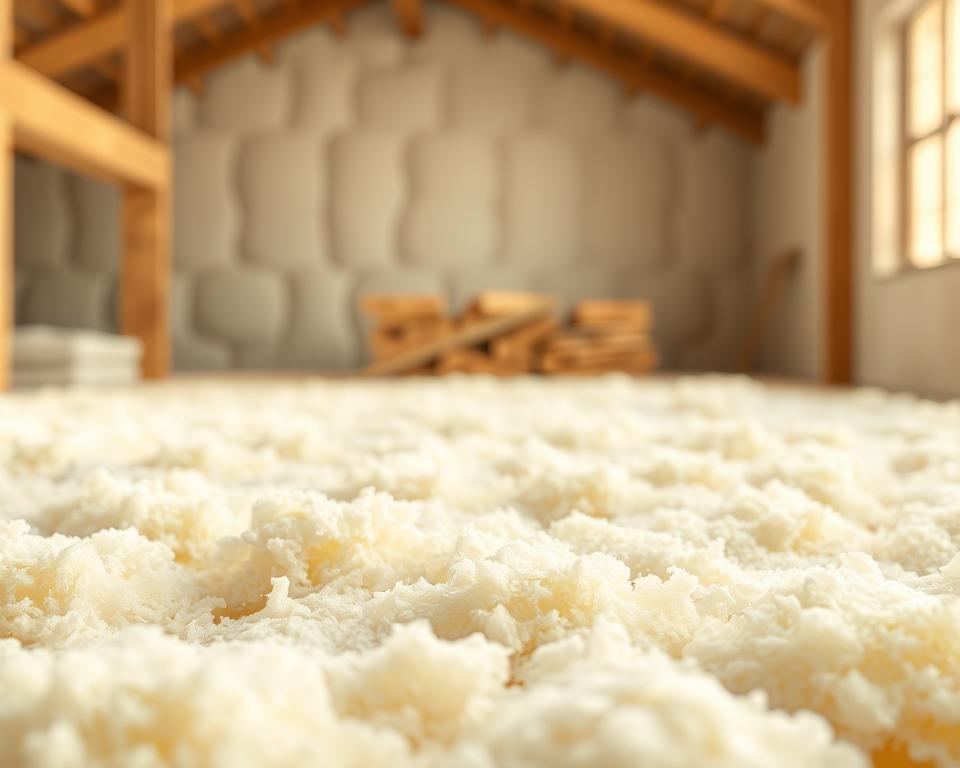
Mineral wool and glass wool are fibrous insulants made from rock and recycled glass respectively. Both give typical thermal performance with lambda values around 0.035–0.040 W/m·K. They absorb sound well, offering useful acoustic dampening for workshops or studios.
Mineral wool is non‑combustible and tolerates moisture better than many alternatives. Glass wool is lightweight and easy to tuck between studs and rafters. Both are inexpensive and simple to cut on site. They can sag if left unsupported and need protective clothing when being fitted. Brands such as Rockwool and Knauf are widely available and come in batts sized for common timber sections.
PIR boards, a form of polyisocyanurate rigid foam, deliver higher thermal efficiency. Typical lambda values sit near 0.022–0.025 W/m·K, so thinner sections achieve the same U‑value as much thicker fibrous insulation. This makes PIR a good choice where cavity depth is limited or where internal space must be preserved.
PIR boards and other rigid options such as EPS and XPS need careful cutting and secure fixing. Use tape or appropriate mechanical fixings on joints to maintain continuous performance. Consider a vapour control layer on the warm side when installing in an insulated, heated shed. Check fire performance and BBA approvals; Kingspan and Celotex are common, reputable manufacturers.
Reflective foil insulation works by reflecting radiant heat when installed with an air gap. Multi‑foil liners need low‑emissivity faces and a ventilation gap to perform as intended. They suit roof linings where radiant loss is significant but they rarely replace bulk insulation on their own.
A correctly placed breather membrane allows moisture vapour to escape from within the structure while keeping driving rain out. Membranes such as Tyvek belong on the outer face beneath roofing or cladding, preventing trapped moisture when used with external insulation systems. Position the breather membrane relative to the vapour control layer to avoid creating a condensation trap.
| Material | Typical lambda (W/m·K) | Key strengths | Common drawbacks |
|---|---|---|---|
| Mineral wool | 0.035–0.040 | Non‑combustible, good acoustic damping, cost‑effective | Requires support to avoid sagging, needs PPE when fitting |
| Glass wool | 0.035–0.040 | Lightweight, easy to install, affordable | Can compress if crowded, installer protection required |
| PIR boards (polyisocyanurate) | 0.022–0.025 | High performance for thin profiles, ideal for shallow cavities | Costlier than wool, varying fire ratings, needs taped joints |
| EPS / XPS | 0.030–0.038 | Moisture resistant (XPS), easy to cut and fix | Lower thermal efficiency than PIR, flammability considerations |
| Reflective foil insulation | Depends on configuration | Reflects radiant heat, thin and lightweight | Requires air gap, not a substitute for bulk insulation |
| Breather membrane | Not applicable | Allows vapour escape, prevents liquid water ingress | Must be positioned correctly relative to vapour control layers |
Assessing Your Shed: Structure, Ventilation and Thermal Performance
Before any retrofit, take time to assess shed condition. A short, methodical inspection saves money and avoids surprises when fitting insulation. Note construction type, signs of decay and existing insulation so you can plan airtightness and ventilation improvements.

Checking wall, roof and floor construction
Start by identifying the frame and cladding. Timber frames and stud walls behave differently from metal sheds. Look at cladding types such as timber, metal or composite for gaps, cracked boards or rust. Inspect roof structure for purlins, rafters or trusses and check for loose fixings or sagging that may affect insulation fit.
On floors, distinguish suspended timber from a concrete slab. For timber, probe for rot or insect damage beneath joists. For concrete, check for damp patches and verify any existing damp‑proof membrane or paving is intact.
Identifying common cold bridges and air leaks
Cold bridges occur where conductive materials bypass insulation. Typical examples include exposed timber studs, metal fasteners and uninsulated door thresholds. Window frames and metal fixings can create thermal bridges that reduce overall performance.
Air leakage often appears at gaps around doors, windows and eaves. Use simple diagnostics such as a smoke pencil or a tissue to reveal draughts. For a clearer picture, consider hiring a thermal imaging camera from a local council or tool hire shop to spot hidden cold spots and quantify where air leakage is worst.
How to measure U‑values and what they mean for small buildings
U‑value measures heat transfer in W/m²K. A lower value means better resistance to heat loss. For quick checks use manufacturer data or look‑up tables for common assemblies rather than complex calculations.
For accuracy, add layer resistances (R‑values) of each material and invert the total to calculate the U‑value. Aim for standards comparable to habitable rooms if you plan a conversion. As a guide, modern roof assemblies often target roughly 0.13–0.18 W/m²K for high performance; use this as an orientation rather than a mandate.
Record findings and photographs as you go. Use this evidence to quantify improvements, reduce air leakage and address cold bridges so that your planned upgrades will improve the shed thermal performance in a measurable way.
Insulating the Floor: Choices and Techniques
A well insulated floor cuts heat loss, keeps the shed usable year-round and protects stored items. Choose a method that suits your base, awareness of ventilation needs and moisture control will prevent timber decay and condensation problems.
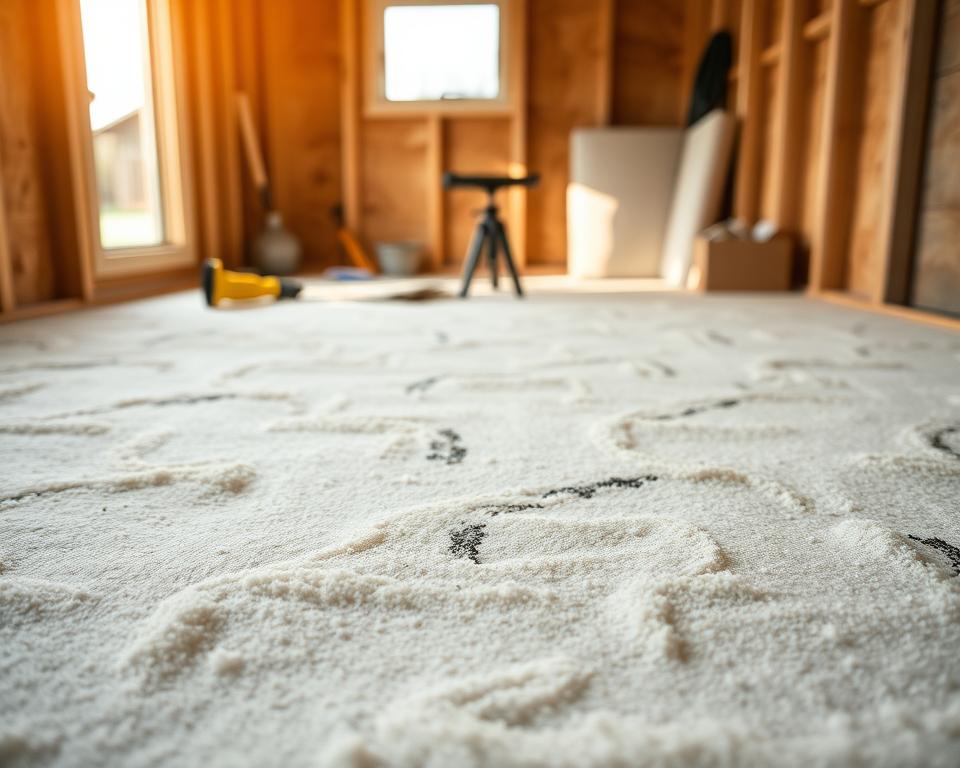
Insulation beneath suspended floors
For an insulated suspended floor, fit mineral wool or rigid insulation boards between joists. Use netting or timber support strips beneath the joists to hold loose or quilt insulation in place and avoid sagging.
If the timber is ventilated, lay a breathable membrane under the boards to permit moisture movement while keeping draughts out. Keep underfloor vents clear and maintain prescribed airbrick openings or install ventilation ducts where vents are insufficient.
Insulating concrete or timber base floors
When you have an insulating concrete slab, install rigid PIR or XPS boards beneath the screed or place them on top beneath a floating floor. If insulation sits on ground, a damp proof membrane must go beneath it to shield the slab from ground moisture.
Timber base floors benefit from insulation between joists plus an extra boarding layer for a neat finish. Add edge insulation around the perimeter to reduce thermal bridging at the wall junction and improve overall U‑value performance.
Vapour control and damp‑proof considerations
Use a continuous damp proof membrane under concrete slabs to stop rising moisture. On the warm side of insulation fit a vapour control layer where required to prevent interstitial condensation inside the build-up.
Understand the difference between a vapour control layer and a breathable membrane. A VCL blocks water vapour and suits warm, internal layers. A breathable membrane allows moisture to escape and suits ventilated timber assemblies.
Check for rising damp and poor drainage around the shed base. Address external damp proofing and fall to drains before fitting floor insulation to avoid trapping moisture beneath the finish.
| Floor type | Recommended insulation | Moisture control | Key benefit |
|---|---|---|---|
| Suspended timber | Mineral wool or rigid boards between joists; support netting | Breathable membrane under boards; maintain airbricks | Easy access; good ventilation prevents rot |
| Timber base | Insulate between joists and add boarding finish | Vapour control layer on warm side if room sealed | Neat interior finish and improved thermal comfort |
| Concrete slab | Rigid PIR/XPS beneath screed or under floating floor | Continuous damp proof membrane under insulation | Stable thermal mass and low maintenance |
| Perimeter details | Edge insulation strips or insulated skirting | Ensure DPM continuity at wall junctions | Reduces thermal bridging and heat loss |
Insulating Walls and Roof for Maximum Space Efficiency
Choosing the right approach to wall and roof insulation makes a big difference to usable space and long‑term performance. This section outlines practical choices, moisture control and fitting tips for rafters and studwork so you can make the most of your shed without risking damage.
Internal lining versus external cladding
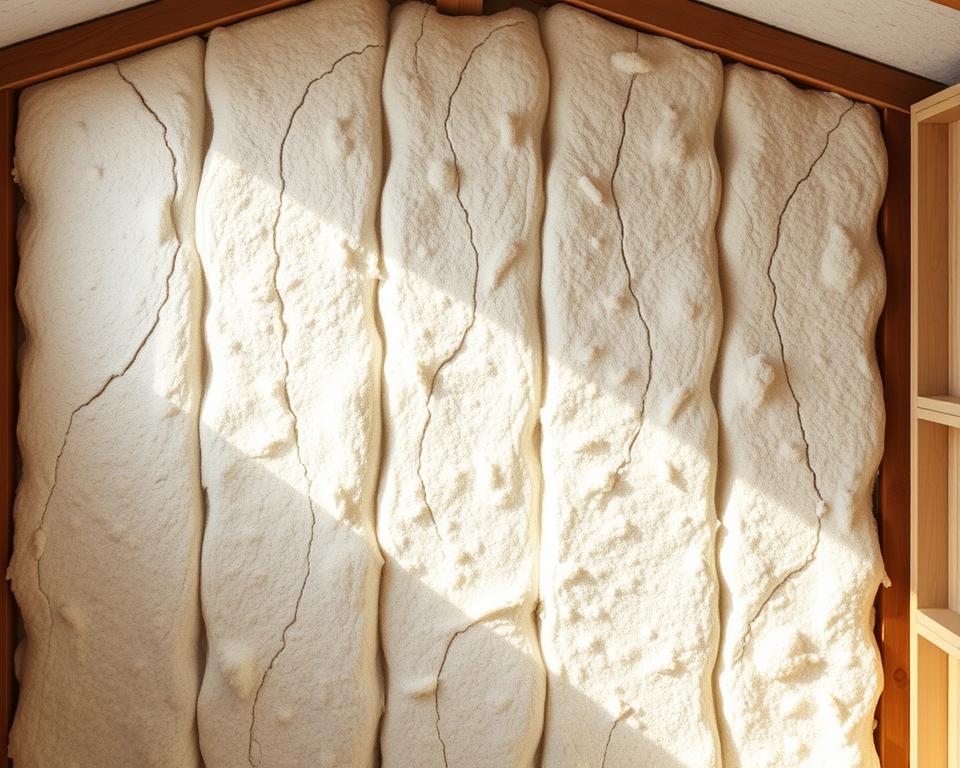
Internal lining is the least disruptive option. Fit insulated plasterboard or build a stud wall filled with mineral wool or PIR. Good internal finishes include OSB, tongue‑and‑groove boarding and insulated plasterboard. This method keeps the outside appearance unchanged but reduces internal floor area and can complicate electrical runs.
External cladding preserves internal space and adds weatherproofing. Adding insulated cladding or external rigid panels raises the shed’s overall depth. Planning consent may be required if the cladding alters appearance or height. Choose breathable, weather‑resistant outer layers when fitting external insulation.
Maintaining structural integrity and avoiding condensation
Always inspect timber and treat any rot or damp before you add insulation. Sandwiching damp wood between impermeable layers creates decay. Put a vapour control layer on the warm side of insulation and a breather membrane on the cold side where the roof or wall requires it.
For activities that generate moisture, such as painting or drying, ensure ventilation paths to remove damp air. Simple vents, trickle vents or an extractor fan will help avoid condensation in sheds and protect stored items and structure.
Best practices for rafter and stud spaces
Measure cavity depths before buying insulation. Avoid compressing mineral wool or PIR; compressed insulation loses performance. For rafters, keep a continuous ventilation gap beneath the roof covering and above the insulation. Where space is tight, install counter‑battens to restore airflow and maintain the roof’s thermal layer.
For stud walls, use friction‑fit batts or batt support to keep insulation in place. Seal junctions with tape and acoustic or multisurface sealants to improve airtightness. Plan service voids so wiring runs do not compress the vapour control layer or create thermal bridges.
- Choose insulation thickness to match rafter and stud depths.
- Keep a clear ventilation path for roof cavities.
- Use breathable outer layers with external cladding.
- Install a continuous vapour control layer on the warm side.
Installing Insulation Safely and Legally
Proper installation keeps your shed warm and protects occupants and stored items. Follow the right legal steps and safety practices before you cut, fix or seal materials. Check guidance for planning and building control early in the project.
Relevant building regulations and permitted development in the UK
Small outbuildings often fall within permitted development, but changes that make a shed habitable or add heating can trigger building control. Parts B and L of the building regulations are most relevant: Part B covers fire safety and Part L addresses conservation of fuel and power.
Rules vary across England, Wales, Scotland and Northern Ireland. Local planning limits outbuilding size, height and distance from boundaries. Always check with your local authority or consult a building control officer before starting work to confirm whether building regulations shed requirements apply.
Safety when cutting and fitting insulation materials
Wear appropriate PPE when handling mineral wool, glass wool or PIR. Use gloves, long sleeves and eye protection. For dust, use a respirator at least rated FFP2. These measures reduce skin and lung irritation and improve insulation safety on site.
Cut foam boards with a sharp knife on a stable surface. When sawing or sanding materials, use tools with dust extraction where possible. Follow COSHH guidance for any adhesives and sealants; store and dispose of offcuts and packaging responsibly.
When to hire a professional installer
Hire a TrustMark-registered tradesperson for major works or where compliance is required. Use Gas Safe or an accredited electrician for any heating, wiring or new appliances. Professionals reduce the risk of non-compliance and improve long-term performance.
Obtain at least three quotations, check references and confirm public liability insurance. If work involves structural changes, complex roofing or guaranteed U‑values, it is sensible to hire insulation installer professionals rather than attempt a DIY approach.
| Decision point | When DIY is acceptable | When to hire a professional |
|---|---|---|
| Simple internal lining | Small, non‑structural timber sheds with basic insulation | Large spans, structural framing or altered roof pitch |
| Heating or electrics | None; avoid DIY on mains wiring | Any installation of heaters, sockets or permanent lighting |
| Planning and regulation risk | Storage-only outbuildings within permitted development limits | Conversions to living space or increases in size that may trigger building regulations shed checks |
| Material handling | Insulation types needing only simple cutting and fitting | Work involving hazardous adhesives, complex vapour control or specialist membranes |
Improving Ventilation and Moisture Control
Good insulation raises a shed’s airtightness. That reduces heat loss but increases the need for planned ventilation. Controlled airflow avoids trapped moisture and keeps stored items in better condition. Use a mix of background ventilation and targeted extraction where wet tasks take place.
Balancing insulation with adequate airflow
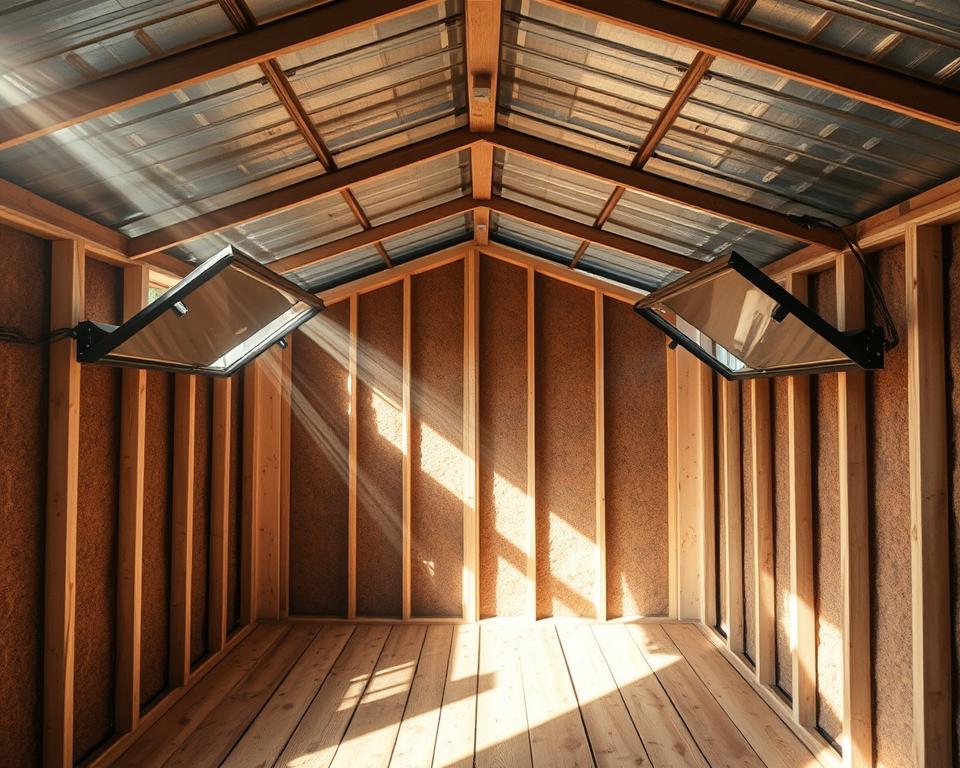
When you upgrade wall and roof insulation, add measured ventilation to prevent damp. Background trickle vents give a steady, low level of fresh air. Intermittent extraction removes bursts of humidity from activities such as painting, drying clothes or boiling kettles.
Installing vents, extractor fans and passive airflow solutions
Fit trickle vents in windows and doors to maintain steady air exchange. For pitched roofs, eaves vents help move air along the rafter space. Wall vents with insect mesh protect the interior while allowing flow. Position vents to promote cross‑flow; place intake vents low and exhaust vents high for best results.
For workshops and home offices consider low‑power extractor fans or a mechanical heat recovery unit for larger conversions. Choose extractor fans for sheds with quiet, low‑energy models from brands like Panasonic or Vent‑Axia. Avoid siting vents where rain can enter and secure grills to prevent pests from entering.
Dealing with mould, condensation and long‑term moisture management
First, identify the moisture source: rising damp, roof leaks or indoor humidity. Repair leaks and improve external drainage to keep water out. Increase ventilation and raise internal temperatures slightly on cold nights to lower relative humidity.
Use a moisture control shed strategy that includes desiccant or electric dehumidifiers for stubborn problems. Treat affected areas with a fungicidal wash and paint with mould‑resistant emulsion to reduce recurrence. These steps support long‑term condensation prevention and protect timber, tools and finishes.
Cost, Return on Investment and Practical Budgeting
Planning a shed upgrade starts with clear figures and realistic expectations. The cost of shed insulation UK varies with materials and labour, so a simple budget for shed conversion helps households avoid surprises and make informed choices.
Typical costs for materials and labour in the UK
Material ranges offer a straightforward guide. Mineral wool batts cost around £5–£15 per m2. PIR boards sit between £10–£30 per m2, depending on thickness and brand. Breather membranes and tapes are roughly £2–£6 per m2. Labour for a small retrofit can be a few hundred pounds for basic fitting, rising to several thousand for a full insulated and heated workspace with electrics.
Obtain current quotes from local firms such as Travis Perkins, Wickes, or independent installers to refine your budget for shed conversion. Prices change, so factor in a contingency of 10–20%.
Estimating energy savings and payback period
Energy savings depend on use. Occasional hobby use yields longer payback. Daily use as an office shortens payback and improves insulation ROI. Insulating roof and walls usually gives the best returns; a well insulated floor improves comfort and reduces heat loss further.
As a simple example, cutting heat loss by 50% could halve running costs for electric heating. With current energy costs, that might save £200–£600 a year for a regularly used workspace. Those savings can cover material and basic labour costs in a few years, depending on scale and usage.
Value added to your property and practical resale considerations
Converting a shed into a functional office or studio can increase perceived value and marketability. Estate agents often note extra usable space as attractive to buyers who work from home. To increase property value with insulated shed, ensure the conversion is practical, well finished and compliant with permitted development rules.
Check guidance from local estate agents and seek any necessary approvals before work begins. Proper paperwork avoids complications at sale and preserves the insulation ROI when the property is marketed.
Use a simple spreadsheet to track material quotes, labour estimates, projected annual savings and likely uplift in market appeal. That gives a clear picture of whether the budget for shed conversion meets your goals for comfort, cost control and long-term value.
shed insulation
Good insulation transforms a cold, damp shed into a usable space for work or leisure. Below are practical, targeted tips and short case studies that show how to get the best results whether you have a compact garden unit or a larger outbuilding.
Targeted tips for small sheds
Prioritise the roof and the floor first to keep internal space. Use thin PIR boards where depth is limited to reach decent U‑values without losing headroom. Fit an internal lining and a reflective foil layer to trap heat and reflect radiant losses.
Targeted tips for large sheds
Consider external insulation or full studwork lining to avoid reducing usable floor area. Create zones for a workshop area and a storage area with separate heating controls. Match heating output to the intended use and plan lighting to reduce heat gains from incandescent fittings.
Metal shed considerations
Metal shells invite condensation. Add an insulated internal lining, include a continuous vapour control layer and provide deliberate airflow. Even simple vents and a trickle of background ventilation cut moisture risk and protect stored items.
Workshop insulation case study
A garden workshop benefits from insulation between rafters and a durable OSB lining. Install floor insulation and anti‑vibration mounts for heavy tools. Provide an electrical supply with an RCD and an extractor to manage dust and fumes.
Converting shed to office
Home office conversions must balance warmth, acoustics and services. Use higher thermal standards, double‑glazed windows and quality insulation to meet comfort needs. Fit reliable broadband or Power over Ethernet and plan for compliance with Part L if the space will be permanently heated.
Art studio scenario
Studios need generous natural light and humidity control. Use easy‑clean internal finishes over an insulated base and ensure ventilation for solvent fumes. Robust floor coverings over thermal insulation make the space both practical and comfortable.
retrofit shed checklist
- Inspect structure and repair rot or corrosion.
- Seal draughts around doors and windows.
- Establish a continuous vapour control layer where needed.
- Prioritise roof, then walls, then floor for insulation work.
- Choose minimal thickness solutions if internal space is limited.
- Upgrade doors and windows; seal frames carefully.
Checklist for new builds
- Design in insulation cavities and specify target U‑values.
- Include external breather membrane and DPM at construction.
- Plan service routes to avoid multiple fabric penetrations later.
- Set a ventilation strategy linked to the intended use.
- Consult building control early to clarify requirements.
These practical shed insulation tips and the brief workshop insulation case study show how small choices change usability. Use the retrofit shed checklist when upgrading older units and follow design principles for new builds to avoid costly rework.
Conclusion
This shed insulation summary pulls together the practical points you need before you start. Insulating garden buildings improves comfort, protects tools and stored items from moisture and extremes, and reduces heating costs. Choosing the right materials — such as Kingspan, Celotex or Rockwool — and detailing vapour control and ventilation correctly are essential to avoid condensation and mould.
Begin by assessing your existing shed condition and prioritise the roof, then walls, then floor when planning work. Decide on insulation types based on cavity depth and budget, and get quotes from competent installers for more complex conversions. For any shed conversion final thoughts that affect habitability, check local building control and guidance from TrustMark.
Long‑term moisture management and good airflow must be integral to every retrofit. Use manufacturer datasheets and BBA certificates to verify product performance, and ensure vapour control layers and vents are fitted where needed. With careful planning and the right expertise, insulating garden buildings will extend usability and protect your investment for years to come.
FAQ
What is shed insulation and why should I consider it?
Shed insulation is the addition of thermal materials to the floor, walls and roof to reduce heat loss, control condensation and stabilise internal temperatures. It makes sheds more comfortable for year‑round use as workshops, offices or studios, protects tools and stored items from moisture and temperature extremes, and can lower the energy required for heating. The guide covers materials, vapour control, U‑values, cold bridges and breathable membranes relevant to UK homeowners, hobbyists and small‑business owners converting outbuildings.
Which insulation materials are most suitable for garden sheds?
Common options are mineral wool (Rockwool, Knauf) for ease of fitting and acoustic benefits, rigid foam boards such as PIR (Kingspan, Celotex) for high thermal performance in thin cavities, and reflective multi‑foil liners for radiant heat control. Breather membranes (for example Tyvek) are used on the external face to manage moisture. Choice depends on cavity depth, budget, fire performance and whether you need a vapour control layer (VCL) to prevent interstitial condensation.
What are U‑values and what should I aim for in a shed conversion?
A U‑value measures heat transfer through a construction (W/m²K) — lower is better. While sheds are not always regulated like dwellings, if you convert to a habitable space aim for similar targets to new builds: roof U‑values in the region of 0.13–0.18 W/m²K are good guidance. Use manufacturers’ data or simple R‑value calculations for accuracy. If in doubt, consult Building Regulations Approved Documents and Scottish technical standards for detailed targets.
How do I prevent condensation and mould after insulating my shed?
Good vapour control and planned ventilation are essential. Install a continuous VCL on the warm side where required, and a breather membrane on the cold side where external moisture is a risk. Provide background ventilation (trickle vents, eaves vents) and intermittent extraction for moisture‑producing activities. Address leaks, improve drainage and consider a dehumidifier for persistent humidity. Treat existing mould with fungicidal wash and remediate underlying defects before insulating.
Should I insulate the floor, walls or roof first?
Prioritise the roof and walls for the best heat retention and return on investment, since the roof typically accounts for the greatest heat loss. Floor insulation greatly improves comfort—especially where people stand for long periods—but roof and wall measures usually deliver larger energy savings first. For small sheds with limited depth, thin PIR boards or reflective foil combined with internal lining are effective.
Can I insulate a metal garden shed and how do I handle condensation?
Yes. Metal sheds are prone to condensation; use an internal lining system with a suitable VCL and either PIR boards or insulated plasterboard to create a thermal break. Maintain some ventilation to avoid trapping moisture and consider a breather layer if externally exposed. Avoid sandwiching moisture‑sensitive timber between impermeable layers and ensure any insulation is fixed without compressing it against metal panels, which can create cold bridges.
Do I need planning permission or building regulation approval to insulate or convert my shed?
Simple insulation work usually does not need planning permission. However, converting a shed into a habitable space or adding heating, electrics or enlarging the building can trigger building regulations (Part L for conservation of fuel and power, Part B for fire safety and others) and may conflict with permitted development limits. Requirements differ across England, Wales, Scotland and Northern Ireland. Check local planning guidance or consult building control before major conversions.
What safety precautions should I take when installing insulation?
Use PPE: gloves, long sleeves, eye protection and a suitable dust mask (FFP2 recommended) for mineral wool. Cut foam boards with a sharp knife on a stable surface; use dust extraction when sawing. Follow COSHH guidelines for adhesives and sealants. Dispose of offcuts responsibly. For electrical work, heating installation or structural alterations, hire qualified tradespeople such as Gas Safe, NICEIC or TrustMark‑registered installers.
How do I identify cold bridges and air leaks in my shed?
Look for thermal bridges at studs, metal fixings, door thresholds and window frames. Visual checks for gaps, cracked cladding or rot help. Use simple diagnostics such as a smoke pencil, a tissue to find draughts, or hire a thermal imaging camera from local libraries or councils to reveal cold spots. Sealing gaps with tapes and sealants, upgrading door/window seals and insulating thresholds reduce unwanted heat loss.
What are realistic costs and payback expectations for insulating a shed?
Material costs vary: mineral wool batts typically range around £5–£15 per m², PIR boards £10–£30 per m², and membranes/tapes £2–£6 per m². Labour for a small retrofit can be a few hundred to a few thousand pounds; a full insulated and heated office conversion will cost more. Payback depends on use: daily heated office use shortens payback, occasional hobby use lengthens it. Insulating roof and walls delivers the best energy savings; use current energy prices to estimate running‑cost reductions.
Which ventilation options work best for different shed uses?
For storage and occasional hobby use, trickle vents, eaves vents and basic wall vents suffice. For workshops and studios where dust or solvents are produced, install extractor fans and localised extraction; ensure proper filtration where necessary. For a permanently used office, consider low‑power mechanical ventilation or heat recovery ventilation for comfort and energy efficiency. Position vents to encourage cross‑flow and protect against rain and pests.
How should I approach insulating an older shed versus a new build?
For retrofits, inspect and repair the structure first: treat rot, fix leaks and ensure a continuous VCL if required. Prioritise roof, then walls, then floor; use thin high‑performance boards where internal space is limited. For new builds, design insulation cavities, specify target U‑values, include breather membrane and DPM at construction and plan service routes to avoid later fabric penetrations. In both cases consult manufacturer data and BBA certificates for products you select.
Which brands and standards should I look for when choosing materials?
Choose reputable brands such as Kingspan and Celotex for PIR boards, Rockwool and Knauf for mineral wool, and well‑known breather membrane manufacturers like DuPont Tyvek. Check for British Board of Agrément (BBA) certificates, declared thermal conductivities (lambda values), fire performance data and relevant manufacturer installation guidance. Refer to Building Regulations Approved Documents and Scottish technical standards for compliance details.
Where can I find trusted installers and what should I check before hiring?
Seek TrustMark‑registered tradespeople, reputable local builders, or installers recommended by insulation manufacturers. Check for public liability insurance, request at least three written quotes, ask for references and evidence of previous similar work, and verify competence for electrical or heating installations (NICEIC, Gas Safe). Confirm they will follow building control requirements where applicable.