
Summer House Paint DIY: Revamp Your Retreat

Repainting a summer house is one of the most effective ways to refresh an outdoor space without a big budget. This guide is designed to help UK homeowners and DIY enthusiasts undertake a summer house paint DIY project with confidence. You will find practical advice on summer house painting, how to paint summer house timber and joinery, and ideas for a garden room revamp that suit British weather and regulations.
Summer houses and garden rooms dot many UK gardens, from compact sheds in London to larger retreats in Cornwall. A good coat of paint gives instant curb appeal and protects timber from damp and rot. This article explains why a paint job is a high‑impact, low‑cost outdoor retreat makeover and when to call in professional help.
You will be guided through preparation, materials, paint selection and the step‑by‑step application. Later sections cover finishing techniques, maintenance, eco options and project planning. Advice reflects UK considerations such as waste disposal rules and COSHH awareness for chemical use.
This content is aimed at homeowners, DIYers, tenants with permission and gardeners keen to upgrade their outdoor living. Read on for practical, safety‑orientated tips that deliver professional‑quality results for your summer house painting project.
Inhaltsverzeichnis
Key Takeaways
- Summer house paint DIY can transform a retreat affordably and effectively.
- Proper preparation and the right materials extend paint life in UK climates.
- Follow COSHH and local waste disposal rules when working with paints and solvents.
- Step‑by‑step guidance helps both beginners and experienced DIYers achieve neat finishes.
- Consider eco‑friendly paints to reduce VOCs and environmental impact.
Why Choose a Summer House Paint DIY Project
Refreshing a small garden building can be quick and rewarding. A summer house refurbishment done by you brings immediate visual impact and lets you plan work around family life and weather. Taking on a DIY garden room project builds practical skills in preparation and finishing, while keeping control of timing and scope.
Benefits of repainting your summer house yourself
Painting your own summer house gives a clear sense of achievement when a space looks revived. You gain hands‑on experience in sanding, priming and applying finishes that transfer to other home tasks. Work can be phased to fit spare weekends, which makes the project less stressful and more enjoyable.
Cost savings and value for money
Material costs for paint, primers and preservers form the bulk of a DIY job. Tool hire or a modest purchase of brushes and rollers is often a one‑off investment. Many homeowners save between 40% and 70% compared with hiring tradespeople for a straightforward repaint. You still should call a professional for extensive rot or structural repairs to protect the build.
Personalisation and creative control
Choosing bespoke colour choices lets you match the summer house to borders and paving. Popular UK schemes include muted pastels, natural greens and charcoal greys that blend with garden planting. Small decisions such as a contrasting door or bright window trim can transform the look and boost enjoyment of the space.
Plan realistically. Allow time for surface preparation, watch UK weather forecasts for dry spells and factor in drying times. Careful planning helps you save on labour costs while achieving a durable, attractive finish for your summer house refurbishment.
Preparing Your Summer House for Painting
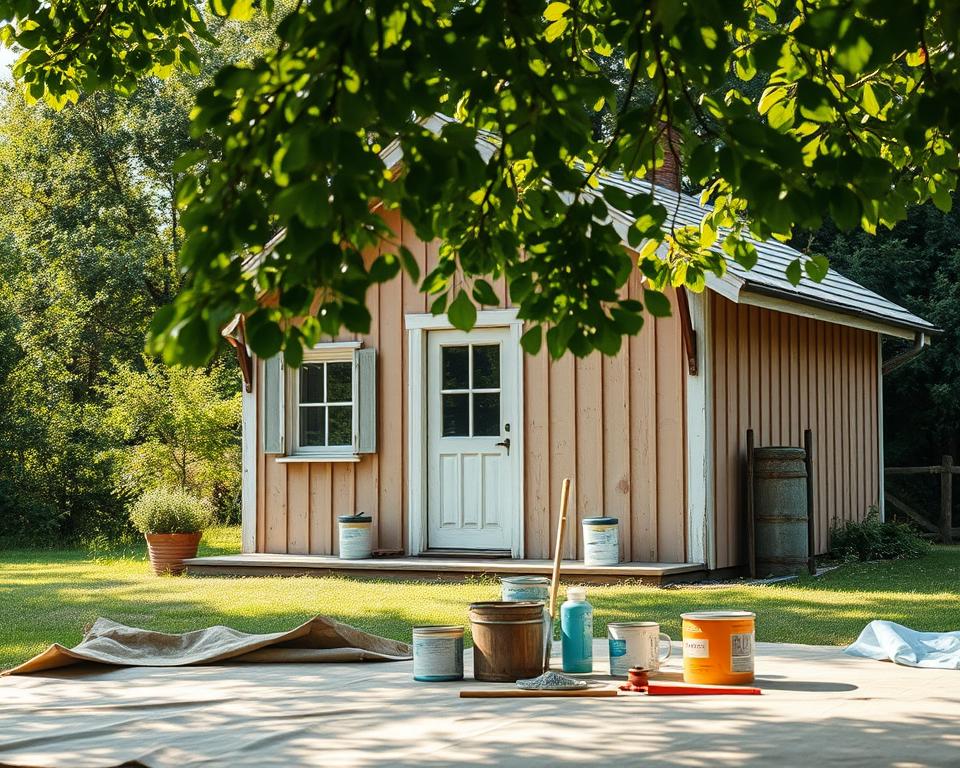
A thorough preparation sets the foundation for a long‑lasting finish. Before you begin, walk around the building and note cladding, frames, doors, glazing putty, roofing overhangs and decking. Use a simple checklist to decide what needs repair, cleaning or protection.
Assessing the condition of timber and surfaces
Start with a close visual inspection for loose or flaking paint, surface contamination and signs of water ingress. Check for soft or spongy timber and woodworm holes. Examine existing coatings such as stain, preservative or gloss to plan the correct preparation method.
Carry out simple tests: gently probe suspect areas with a screwdriver to detect rot. Use a moisture meter to measure damp levels in walls and frames. Record findings so you can prioritise repairs and estimate material needs for the timber assessment.
Essential tools and materials checklist
Gather everything before work starts. A clear painting tools checklist saves time and avoids repeat trips to the shop.
- Exterior primer/undercoat and topcoat paint suitable for timber
- Exterior wood preservative such as Cuprinol or Ronseal
- Sandpaper, grit range 60–240; scrapers and wire brushes
- Power washer or garden hose with pressure washer caution
- Brushes (synthetic and natural), rollers (short nap and longer nap)
- Paint trays, masking tape, dust sheets and drop cloths
- Step ladder or platform and exterior wood filler
- Sealant (acrylic or silicone) for glazing and joints
- Respirator masks, eye protection and gloves
Health and safety considerations for DIY painters
Safety matters at every stage. Use appropriate PPE for painting such as safety goggles, gloves and FFP2 or FFP3 respirators when sanding older coatings. Follow COSHH guidance for paints and solvents and keep products sealed when not in use.
Work from a stable ladder or a step platform. Ensure good ventilation in enclosed areas and avoid painting in high wind or damp conditions. Keep children and pets away from wet paint and stored chemicals.
If the summer house is older, check for lead paint. Though rare, lead requires professional testing and removal. Dispose of hazardous waste according to UK regulations and take empty or partially used paint cans to local recycling centres.
Selecting the Right Paint and Finish for Outdoor Retreats
Choosing paint for an outdoor retreat means balancing protection and appearance. Pick products that suit timber, resist the UK climate and match your design goals. Use sample pots and read manufacturers’ datasheets before committing.
Types of exterior paint suitable for summer houses
Oil‑based (alkyd) paints deliver a hard, long‑lasting film that works well on trims and doors. They take longer to dry and have higher VOCs, so use them where durability matters most.
Water‑based acrylics and emulsions are popular across the UK for exterior timber. They dry quickly, stay flexible with seasonal movement and usually have lower VOCs than oils.
Microporous paints let moisture escape from timber while stopping water ingress. These are ideal for cladding where breathability reduces long‑term rot risk.
Specialist products include wood stains, preservative oils and decking paints. Stains penetrate and enhance grain. Preservative oils, such as Ronseal Weatherproofing Wood Treatment, protect against decay. Decking paints add slip resistance where needed.
Brands to investigate include Dulux Weathershield, Johnstone’s Fence & Shed and Cuprinol Garden Shades. Check coverage rates, recommended coats and drying times for the best paint for summer house projects.
Choosing colours that suit your garden and surroundings
Start with garden colour palettes that complement planting and the wider landscape. Neutral greys and muted greens help a summer house recede into borders.
Use brighter shades as accents to create focal points, such as a bold door or window frame. Test sample pots at different times of day to see how light and foliage shift the tone.
Consider how sheen affects perceived colour. A satin finish can deepen hues slightly, while matt will soften them. Select colours that work with paving, fences and neighbouring buildings.
Finishes and durability: matt, eggshell, satin and gloss
Matt finishes have low sheen and conceal surface flaws. Use matt on cladding where texture matters more than wipeability.
Eggshell offers a soft sheen. It balances concealment and cleanability, making it suitable for walls and sheltered areas.
Satin has a mid‑sheen and improved paint finish durability. Choose satin for areas that need regular cleaning or face wear, such as external seating surrounds.
Gloss gives a high sheen and strong durability. It suits doors, trim and window frames but highlights imperfections on old timber.
Look for UV resistance and antifungal additives in formulations. For floors and decking, select products with slip resistance. If using the summer house as a workshop, consider anti‑condensation treatments on interior surfaces to reduce damp and mould.
| Paint Type | Best Use | Pros | Cons |
|---|---|---|---|
| Water‑based acrylic/emulsion | Exterior timber cladding, general walls | Flexible, quick drying, lower VOCs | May need more coats than oil‑based options |
| Oil‑based (alkyd) | Trim, doors, high‑wear areas | Hard finish, excellent adhesion | Slower drying, higher VOCs, less flexible |
| Microporous paint | Breathable cladding and aged timber | Allows moisture escape, reduces rot risk | Limited colour range, may require specialist prep |
| Wood stains & preservative oils | Natural finishes, protection against decay | Enhances grain, protective against rot | Less opaque coverage, periodic re‑application |
| Decking & floor paints | Decks, steps, flooring | Slip resistance, durable underfoot | Surface prep critical, may need seasonal upkeep |
summer house paint diy
Refreshing a summer house demands clear steps, realistic timing and care to avoid costly rework. Use this practical outline to follow DIY painting steps, dodge common errors and build a sensible painting schedule that suits a UK project timeline.
Step-by-step guide for a successful DIY paint job
1. Inspect the structure and list repairs. Note rotten boards, loose fixings and areas of flaking paint.
2. Wash surfaces with a mild detergent, removing dirt, bird droppings and cobwebs. Use a fungicidal wash where mould appears.
3. Strip loose paint with scrapers and wire brushes. Use a chemical stripper only with PPE and manufacturer guidance.
4. Sand to feather edges and create a key for new coatings. Dust off all residues before priming.
5. Repair timber: replace rotten sections, treat exposed end grain with preservative and fill holes with exterior filler.
6. Apply primer and undercoat as instructed by the manufacturer. Observe drying times to ensure adhesion.
7. Apply topcoat(s) using brush, roller or spray, maintaining a wet-edge for an even finish. Work from high to low.
8. Complete trim and detail work. Remove masking tape before the final cure to leave crisp edges.
9. Clean tools and store or dispose of leftover materials safely. Label tins with date and contents for future touch-ups.
Common pitfalls and how to avoid them
Painting in unsuitable weather causes poor finish and extended drying. Check forecasts and allow contingency days in your painting schedule.
Insufficient surface preparation leads to early failure. Spend time on cleaning, scraping and sanding to ensure good adhesion.
Applying coats too thickly causes runs and slow drying. Use thin, even layers and allow full drying between coats.
Using interior paint or the wrong product for exterior timber reduces durability. Choose exterior formulations specified for timber and follow the label.
Skipping primer often creates uneven coverage. Always prime bare timber and patched areas to level absorption and improve topcoat performance.
Ignoring manufacturer drying and recoat times risks tacky finishes. Note these times on your project timeline UK and stick to them.
Time estimates and project planning tips
For a small summer house (6–12 m² walls) allow one day for inspection, cleaning and repairs. Plan a further day for primer and one to two days for topcoats, factoring in drying times.
Larger structures need a weekend or a phased approach across several weekends. Create a clear project timeline UK with contingency days for poor weather.
Best months in the UK are late spring to early autumn when temperatures stay above 8–10°C and prolonged rain is unlikely. Build a realistic painting schedule that includes waiting time between coats.
Prepare a checklist and a simple calendar. Mark repair tasks, primer day and each topcoat application. Allow extra days to avoid rushing and to avoid painting mistakes that lead to rework.
Surface Preparation Techniques for Long‑Lasting Results
Good surface preparation sets the stage for any successful summer house makeover. Spend time cleaning, inspecting and correcting defects so paint bonds well and lasts longer. The guidance below covers practical methods to remove surface contaminants, deal with decay and ensure proper priming before you apply finish coats.

Cleaning, sanding and removing old paint
Start with a soft wash using a mild detergent and a stiff brush to lift dirt and pollen. For green algae or black mould, use a fungicidal wash made for exterior timbers. Popular consumer products include Wet & Forget alternatives and garden fungicides labelled for wooden buildings.
Low‑pressure power washing can be effective but keep the setting gentle to avoid tearing timber fibres. Mechanical removal methods include a scraper, wire brush and sanding. Work through grit progression: begin with 80–120 to strip rough coatings and finish with 180–240 for a smooth paint key.
For stubborn coatings consider a heat gun or a chemical stripper. Follow COSHH guidance for any chemicals and dispose of residue responsibly. Take care when you remove old paint to avoid lead hazards on very old buildings; test first if you suspect lead‑based finishes.
Treating rot, mould and damp issues before painting
Distinguish active rot from surface decay. Active rot is soft, spongy and often has a wet smell. Remove affected timber and splice in new boards for small defects. After cutting back, treat the exposed area with a preservative such as Cuprinol Garden Shades or Ronseal Total Wood Preserver.
For mould, apply a labelled fungicidal wash and allow full drying time before any paint goes on. Check the summer house roof, gutters and flashings for leaks. Ensure adequate ventilation beneath the base and raise the building on bearers to reduce ground contact and rising damp.
If rot is extensive or structural timbers are compromised, consult a joiner or structural professional for repair options. Proper diagnosis prevents repeat failure and protects any subsequent paintwork.
Priming and undercoating for better adhesion
Choose a primer that suits the substrate and the topcoat. Use a dedicated wood primer on bare timber and a stain‑blocking primer for knotty areas. Correct priming improves adhesion, lowers topcoat consumption and evens out colour for a uniform finish.
Typically, apply one undercoat then one or two topcoats as recommended by the paint manufacturer. Observe drying and recoat windows on the tin. Match primer and topcoat chemistry when you can, for instance an acrylic primer with an acrylic topcoat.
| Task | Recommended Product/Tool | Key Benefit |
|---|---|---|
| General cleaning | Mild detergent, stiff brush | Removes dirt and pollen before further treatment |
| Algae and mould | Fungicidal wash (Wet & Forget alternatives) | Effective mould treatment UK conditions; prevents regrowth |
| Pressure washing | Low‑pressure washer | Clears grime without damaging timber fibres |
| Mechanical stripping | Scraper, wire brush, sandpaper (80–240 grit) | Remove old paint and smooth surface for adhesion |
| Timber preservation | Cuprinol Garden Shades, Ronseal Total Wood Preserver | Treat timber to prevent rot and insect attack |
| Priming | Wood primer or stain‑blocking primer | Priming exterior wood for better adhesion and finish |
| Repairing rot | Splice-in timber, professional joinery | Removes decayed sections and restores structural integrity |
Painting Techniques and Professional Finishes
Choosing the right application method makes a big difference to the final look of outdoor timber. This short guide compares common approaches and gives practical tips for neat trim painting and correct paint layering times. Follow simple steps to achieve a finish that looks professional and lasts well in UK weather.

Brush, roller and spray application methods
Brush work gives the best control for corners, joints and small panels. A quality synthetic brush suits water‑based paints and helps paint penetrate the grain. Use a sash or angled brush for precise edges and detailed work.
Rollers are faster on large, flat boards. Choose a short‑nap roller for smooth timber to avoid texture. Rolling uses paint efficiently and produces consistent coverage when you maintain a wet edge across each panel.
Spraying is the quickest method for full coverage and textured cladding. Airless sprayers deliver high flow for exterior wood, while HVLP units give a finer finish with less overspray. Mask windows, plants and neighbouring fences carefully before you spray. Spray setups suit contractors or experienced DIYers who can manage masking and weather risks.
Achieving crisp edges and neat trim work
Start by cutting in with an angling brush before you roll panels. Work top to bottom so drips run into areas you have yet to smooth. Use exterior masking tape designed for paint to protect joinery.
Keep brush strokes with the grain and avoid overworking tacky edges. Remove tape while paint is tacky to reduce lifting and create cleaner lines. For glazing and window frames, use hand tools and high‑quality sealant where needed to ensure durable joints.
Layering and drying times to maintain quality
Thin the first coat if the manufacturer recommends it to aid penetration and adhesion. Back‑brushing or back‑rolling while the paint is still wet helps work the product into the wood grain for a stronger bond.
Typical drying windows for UK acrylics are touch dry within 1–4 hours. Recoating times vary from 4–24 hours depending on temperature and humidity. Avoid recoating late in the evening when dew may form. Full cure can take several weeks, so handle surfaces with care until they reach final hardness.
| Method | Best for | Pros | Cons | Notes on use |
|---|---|---|---|---|
| Brush | Corners, trim, small areas | Control, good penetration, neat trim painting | Slower, brush marks if misused | Use synthetic brushes for water‑based paints; follow grain direction |
| Roller | Large smooth panels | Fast, even coverage, economical paint usage | May miss deep joints, texture depends on nap | Short‑nap rollers for smooth timber; cut in edges first |
| Spray (Airless) | Cladding, fences, full sheds | Very fast, excellent coverage | High overspray, needs extensive masking | Best for experienced users or contractors; adjust pressure for exterior wood |
| Spray (HVLP) | Fine finishes, controlled environments | Low overspray, smooth finish | Slower than airless, limited flow for heavy coats | Ideal for doors and joinery; practise settings first |
Maintenance and Aftercare for Painted Summer Houses
Keeping a painted garden room looking its best takes a few simple routines and timely repairs. Regular attention prevents small problems becoming expensive ones and helps maintain painted summer house finishes for years.

Routine inspections and cleaning schedules
Carry out visual checks twice a year, in spring and autumn. Look for flaking, blistering, mould, cracked seals and wear on trims. Note areas facing prevailing winds and driving rain, as these will need more frequent attention.
Do an annual gentle clean with a soft brush and soapy water to remove pollen, algae and dirt. Treat persistent staining with a fungicidal wash when required. Protect nearby plants and paving by covering them and avoid runoff into soil when rinsing.
Touch‑up techniques to extend paint life
Keep a small sealed tin of matched paint for future paint touch up. For small chips, sand lightly, apply preservative to any bare wood, prime where needed and topcoat to blend the repair.
For larger damaged areas, feather the old paint back to a sound edge before repainting. This reduces visible transitions and gives a cleaner finish. Prompt repair of exposed wood stops rot and reduces long‑term maintenance.
Seasonal advice for UK weather and protection
In winter, clear gutters and check seals to prevent water ingress. Ensure good ventilation to reduce condensation and prop doors open occasionally in damp spells to discourage mould growth.
Plan re‑coating cycles based on exposure and paint quality. Expect a high‑quality finish to need re‑coating roughly every 3–7 years. Attend quickly to west and south‑west facing elevations where driving rain and wind cause the most wear.
Eco‑friendly Options and Sustainable Practices
Choosing greener materials for a summer house refresh keeps the project practical and planet friendly. Small changes in paint, disposal and timber choices cut waste and extend the life of your build without sacrificing appearance or durability.
Low‑VOC and water‑based paints for a greener project
Low‑VOC acrylics and water‑based finishes give reduced odour and quicker drying. They improve air quality during work and let you clean brushes with water, so reuse is easier. Look for products with EU Ecolabel, British Standards guidance or manufacturer environmental statements when selecting paint.
Reputable UK makers such as Farrow & Ball, Dulux Weathershield and Earthborn offer low VOC paint UK options across many colour ranges. Using these reduces volatile compounds in the garden and helps preserve nearby plants and wildlife.
Recycling and disposing of leftover materials responsibly
Label and seal tins, then store them in a cool, frost‑free place for future touch‑ups. Councils often accept small volumes of leftover paint at civic amenity sites; fully empty cans may go in household recycling where accepted.
Avoid pouring paint down drains. For small quantities, let paint dry with cat litter or a commercial hardener, then dispose as general waste if your local authority permits. Where possible, donate unopened tins to community projects or reuse shops and take schemes that collect and recycle paint.
Choosing sustainably sourced timber and accessories
For replacement boards or a new summer house, choose timber certified by PEFC or FSC to support responsible forestry. Reclaimed or recycled timber makes sense for a distinctive look while cutting demand for new lumber.
Select durable fixings such as stainless steel and breathable coatings to guard timber against damp. These choices lower maintenance cycles and the need for frequent repainting, which helps reduce long‑term environmental impact from supplies and waste.
| Choice | Environmental benefit | Practical tip |
|---|---|---|
| eco friendly exterior paint | Lower emissions during application, safer near plants | Check EU Ecolabel or manufacturer claims before purchase |
| low VOC paint UK | Reduced odour, quicker re‑entry times for users | Compare Farrow & Ball, Dulux Weathershield and Earthborn ranges |
| recycle paint cans | Less landfill, material recovery where facilities exist | Empty tins for kerbside recycling or take to civic amenity sites |
| sustainable timber garden buildings | Supports responsible forestry, extends lifecycle of structures | Choose FSC or PEFC certified timber and stainless fixings |
Conclusion
This summer house paint DIY conclusion draws together the article’s main points: taking on a repaint can save money, allow personalisation and extend the life of your garden building. Proper preparation is vital—assess timber condition, clean and sand surfaces, treat any rot or mould and prime where needed to achieve a long-lasting finish.
Choose products suited to the UK climate and your maintenance goals. Consider low‑VOC, water‑based options and durable finishes from reputable brands such as Dulux, Johnstone’s or Farrow & Ball. Plan with a clear tools and materials list, check manufacturer datasheets, and schedule work for dry, mild weather to improve adhesion and drying times.
Start small: use sample pots or paint a discreet test area to confirm colour and compatibility. For complex issues like structural repair or suspected hazardous materials, consult a local trade adviser or specialist. Keep safety and eco considerations at the forefront by wearing appropriate PPE and disposing of leftovers responsibly.
In short, this outdoor paint summary and guide to garden room repainting UK shows that, with sensible planning, the right materials and careful technique, a DIY repaint can deliver a durable, attractive summer house that enhances garden life and adds value to your property.
FAQ
What is the purpose of this summer house paint DIY guide?
This guide helps UK homeowners and DIY enthusiasts plan and complete a comprehensive repaint of a summer house or garden room. It explains preparation, materials, paint selection, step‑by‑step application, finishing techniques, maintenance and eco considerations, with safety and legal notes relevant to the UK such as COSHH awareness and local hazardous‑waste disposal.
Who is this guide aimed at?
The guide targets homeowners, gardeners, DIYers and renters with permission who want to refresh a summer retreat. It assumes basic DIY skills and offers professional tips while flagging when tradespeople should be called in—for example, for extensive rot, structural repairs or suspected hazardous materials like lead paint.
How much can I expect to save by doing the job myself?
Typical DIY savings versus hiring professionals range from about 40–70% for straightforward repainting work. Savings depend on the cost of paint and materials, tool hire or purchase and the complexity of repairs. Major structural or joinery work will reduce potential savings and may require specialist intervention.
What tools and materials will I need for an exterior timber paint job?
Essentials include exterior primer/undercoat, topcoat suitable for timber, wood preservative (e.g. Cuprinol or Ronseal products), sandpaper (60–240 grit), scrapers, wire brushes, low‑pressure washer or hose, brushes and rollers, paint trays, masking tape, drop cloths, step ladder or platform, exterior wood filler, sealant for glazing, respirator masks, eye protection and gloves.
How do I assess the condition of my summer house before painting?
Conduct a systematic inspection of cladding, frames, doors, glazing putty, roof overhangs and decking. Look for flaking paint, water ingress, soft or spongy timber, woodworm holes and mould. Use a screwdriver to probe suspected rot and a moisture meter where possible. Document repairs and prioritise structural or damp issues before decorating.
How should I prepare surfaces for a long‑lasting finish?
Clean dirt and algae with a soft wash and fungicidal solution if needed, remove loose paint with scrapers and wire brushes, sand to feather edges (progress from coarse to fine grit), repair or replace rotten boards, treat exposed end grain with preservative, fill holes and prime bare wood with a compatible primer before undercoat and topcoat.
Which types of exterior paint are best for UK timber summer houses?
Water‑based acrylic paints are popular for exterior timber due to flexibility, faster drying and lower VOCs. Oil‑based alkyds give a harder finish but are slower and higher in VOCs. Consider microporous paints, wood stains or specialist preservative oils for particular needs. Check manufacturers’ datasheets for Dulux Weathershield, Johnstone’s, Cuprinol and Ronseal product recommendations.
What colour and finish should I choose?
Choose colours that complement garden planting and architecture—muted greens and greys recede into the landscape, while brighter accents create focal points. Test sample pots in different light. For finishes: matt conceals flaws, eggshell balances concealment and cleanability, satin offers durability for cladding, and gloss suits doors and trim. Consider UV resistance and antifungal additives for exposed faces.
Can I use a sprayer, or should I stick to brushes and rollers?
Brushes are best for detail and grain penetration, rollers for flat panels and consistent coverage, and sprayers for fast, full coverage on textured surfaces. Spraying requires careful masking of windows, plants and neighbouring structures and is better suited to experienced DIYers or contractors. Choose tools according to surface area, access and skill level.
What are common painting pitfalls and how do I avoid them?
Avoid painting in cold, wet or very windy conditions; perform thorough surface preparation; don’t skip primer; apply coats to manufacturer‑recommended thickness; observe drying and recoat times; and use the correct product for timber. Address rot and damp before painting. Plan project timing around UK weather and allow contingency days for drying.
How long will a typical project take?
For a small summer house (around 6–12 m² walls), expect roughly one day for preparation and repairs, one day for priming, and one to two days for topcoats, allowing for drying times between coats. Larger or more complex jobs may take a weekend or be phased over several weekends. Seasonal weather can extend timelines.
What health and safety precautions should I follow?
Use PPE: safety goggles, gloves and appropriate respirators (FFP2/FFP3 or P2 when sanding old paint). Follow ladder‑safety practices and consider a platform for stability. Observe COSHH guidance for paints, thinners and strippers. Keep pets and children away from wet paint and stored chemicals. Dispose of hazardous waste through local civic amenity sites.
How do I deal with rot, mould and damp before painting?
Remove and replace rotten timber where necessary, treating new end grain with a preservative such as Ronseal Total Wood Preserver or Cuprinol. Apply fungicidal wash for mould and allow thorough drying. Check roof, gutters and base ventilation to eliminate causes of damp. Consult a joiner or structural specialist for extensive rot or persistent damp.
How should I maintain my painted summer house after completion?
Carry out visual inspections twice a year for flaking, blistering, mould and seal failures. Clean annually with soapy water and treat algae as required. Keep a small, sealed tin of matched paint for touch‑ups. Sand, treat and prime bare wood before repairing chips. Recoat cycles typically range from 3–7 years depending on exposure and paint quality.
What eco‑friendly options are available?
Choose low‑VOC, water‑based acrylics and eco‑certified ranges such as Earthborn or Farrow & Ball’s low‑VOC options where appropriate. Reuse and store leftover paint properly; take hazardous waste to local civic amenity sites. Use sustainably sourced timber (FSC or PEFC) for repairs and durable fixings to reduce replacement frequency.
How should I dispose of or recycle leftover paint and materials?
Label and seal partly used tins for future touch‑ups. Many UK councils accept leftover paint at household recycling centres. Do not pour paint down drains. For small quantities, allow water‑based paint to dry or use an absorbent like cat litter; follow local authority guidance for disposal of hardened paint.
Could my summer house contain lead paint and what should I do if I suspect it?
Lead‑based paint is rare in modern garden buildings but possible in older structures. If you suspect lead, avoid dry sanding and use professional testing or a specialist contractor for removal. Follow strict COSHH and hazardous‑waste disposal rules for any lead‑containing materials.
Are there any legal or regulatory considerations I should know?
Follow COSHH for handling paints and solvents, and use local council guidance for hazardous‑waste disposal. If replacing structural elements or carrying out significant alterations, check planning and building‑regulation requirements. Always comply with manufacturer instructions and safety datasheets.
Any tips for achieving crisp edges and neat trim work?
Use exterior masking tape designed for paint, cut‑in with an angled sash brush before rolling panels, and remove tape while paint is still tacky. For glazing and close trim, use a high‑quality brush and appropriate sealant. Work from top to bottom and maintain a wet edge to avoid lap marks.
Where can I find product recommendations and coverage details?
Consult manufacturer datasheets for products such as Dulux Weathershield, Johnstone’s Fence & Shed, Cuprinol Garden Shades and Ronseal ranges for coverage rates, recommended coats and drying times. Local trade advisers at DIY stores like B&Q, Wickes or independent timber merchants can also offer practical guidance.

