Top Gazebo Brands: Which Is Best? – UK Guide
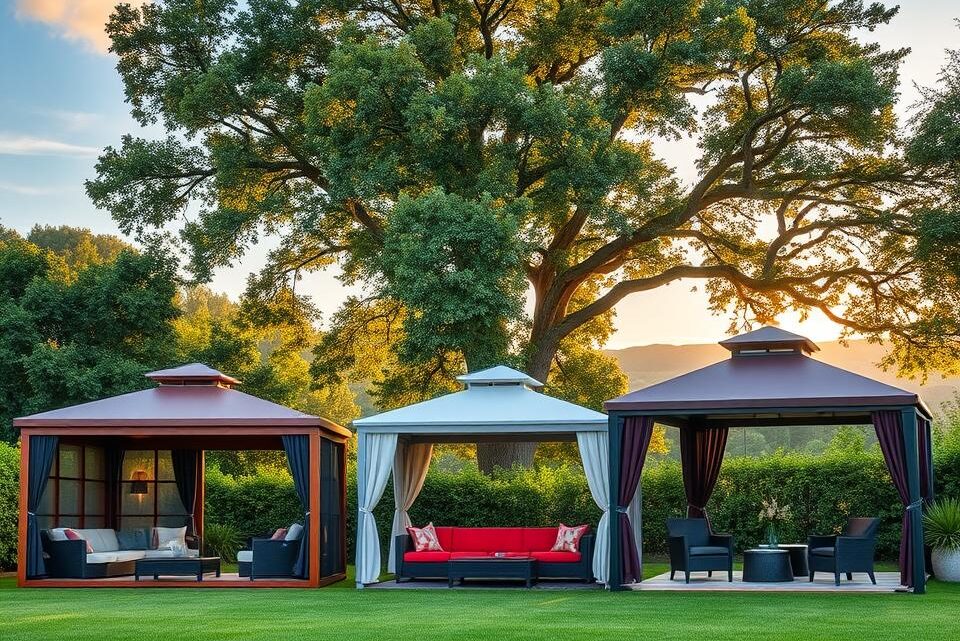
This short guide helps UK homeowners and garden users decide which brand of gazebo is best for their space, budget and weather. We compare top gazebo brands UK across established heritage names, budget manufacturers and premium designers, focusing on durability, weather resistance, build quality, price-to-value and aftercare.
The audience includes British homeowners, renters with gardens, landscape designers and event organisers looking for either long-term performance or seasonal use. Coverage is relevant to small urban gardens, larger suburban yards and commercial outdoor spaces, so readers can pick the best gazebo for garden needs.
The full article sets out our testing methodology, a market overview, brand spotlights, installation and maintenance guidance, material comparisons, a price comparison and customer feedback analysis. This gazebo buying guide UK closes with clear recommendations and a concise gazebo comparison to help you shop with confidence.
Meta: which brand of gazebo is best? — This page uses British English spelling and reflects local purchasing channels and standards for the UK market.
Inhaltsverzeichnis
Key Takeaways
- We evaluate which brand of gazebo is best using durability, weatherproofing and build quality.
- Top gazebo brands UK include heritage, budget and premium makers to suit varied needs.
- Choose the best gazebo for garden size and intended use — seasonal or long-term.
- This gazebo buying guide UK explains testing, materials, pricing and aftercare.
- Our structured gazebo comparison helps match performance to budget and location.
which brand of gazebo is best?
Choosing a gazebo means weighing build quality against cost and weather performance. This short guide sets out the practical checks we used when comparing brands for UK gardens. It frames gazebo brand criteria, describes our gazebo testing UK approach and explains how price and lifetime costs feed into gazebo value for money assessments.
Criteria used to judge brands
We rated brands on frame strength, material choice and joinery. Steel, aluminium and timber each bring different pros for load and corrosion resistance. Roof fabric quality received attention for UV resistance and waterproof ratings.
Other factors included wind and snow performance, ease of assembly, spare parts availability and warranty length. Customer service responsiveness and retailer support were part of the overall gazebo brand criteria.
How we tested durability, weather resistance and build quality
Testing combined hands-on assembly with controlled experiments. Static load tests revealed how frames cope under weight. Simulated wind anchoring checks and accelerated weathering allowed us to probe long-term behaviour.
We checked manufacturer specs such as galvanisation and powder-coating thickness, then compared those figures with independent reviews and owner reports. Fabric denier, seam construction and water-head ratings were measured to assess the best gazebo features for UK conditions.
Price-to-value assessment for UK buyers
Price bands were split into entry-level, mid-range and premium tiers. We calculated expected lifetime cost using typical lifespan, likely part replacements and warranty cover.
Retail pricing from B&Q, Wickes, Homebase, Amazon and Wayfair was surveyed to reflect market reality. Seasonal discounts and common offers were noted so readers can judge gazebo value for money against likely local weather: persistent rain, strong winds and occasional snow.
Overview of the UK gazebo market and popular brand categories
The UK gazebo market has widened in recent years as outdoor living becomes a priority for many households. Shoppers look for quick-erect canopies for events, sturdy permanent shelters for dining and hot tubs, and designer pergola-style structures for year-round use. Choices now stretch from bargain pop-ups to bespoke aluminium frames made by specialist manufacturers.
Types of gazebos sold in the UK
Pop-up canopies are popular for markets, garden parties and weekend events. Brands such as Gorilla Tents and TecTake supply lightweight frames that erect in minutes and pack down for storage. Metal-framed gazebos, often steel with powder coating, come from retailers like Keter and Outsunny and suit regular outdoor use.
Timber gazebos and summerhouses appeal to homeowners seeking a traditional look. Makers such as Mercia and Cadix offer treated timber options and larger, permanent designs. Aluminium and pergola-style gazebos target the premium market. Suppliers inspired by Azenco produce slim, corrosion-resistant frames with louvred roofs for extended season use.
Where UK customers buy gazebos
High-street garden and DIY retailers provide convenience and in-store displays. Chains such as B&Q, Wickes and Homebase let customers see models before purchase and return items locally. Supermarket garden centres, including Tesco Garden Centre, often stock seasonal gazebos aimed at casual buyers.
Online marketplaces widen the available range. Amazon, Wayfair and eBay list numerous models with user reviews and competitive pricing, so many people choose to buy gazebo UK through these channels. Specialist garden retailers and manufacturer direct sales remain the route for bespoke units and premium brands.
Seasonal trends and demand in British gardens
Demand peaks in spring and early summer as gardens are readied for warm weather. Event-driven spikes in late spring and across summer boost sales for pop-up and shading solutions. Black Friday and Boxing Day sales create off-season buying opportunities for price-conscious shoppers.
There is growing interest in all-season and permanent structures. Post-pandemic shifts in lifestyle and increased investment in gardens have driven new garden gazebo trends that favour durability and year-round use. This shift has expanded the market beyond occasional-use gazebos to products built for long-term enjoyment.
Brand spotlight: established heritage brands
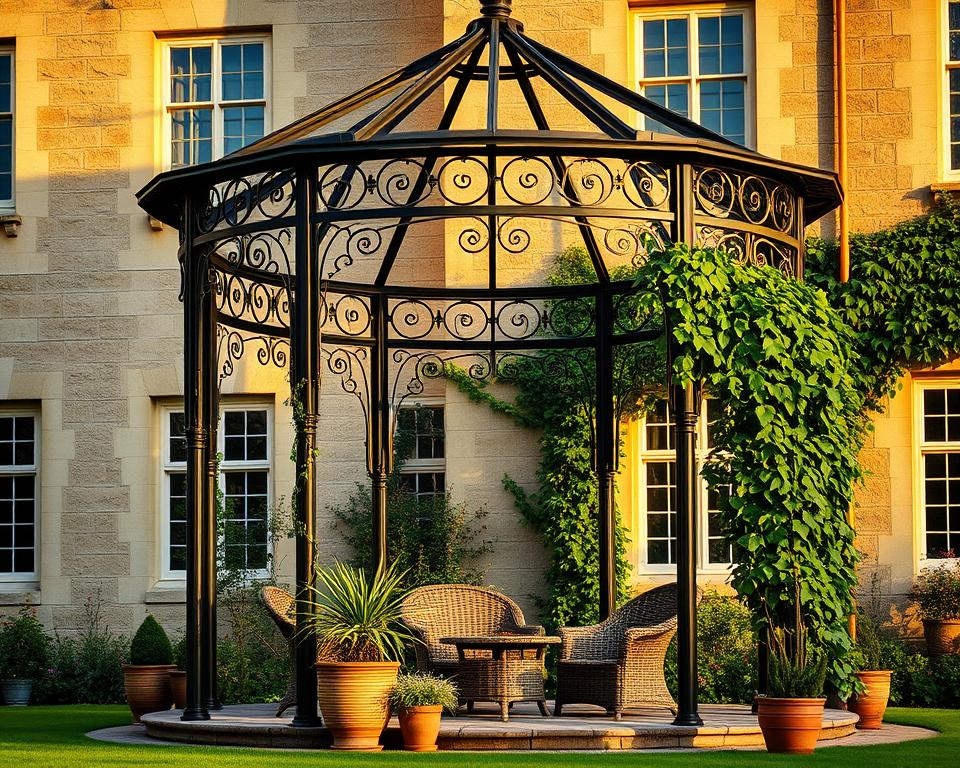
Long-standing makers have shaped garden architecture in the UK and continental Europe for decades. Brands such as Mercian Timber, Forest Garden and Cadix bring a history of craftsmanship and a track record that buyers recognise. Their longevity explains why many homeowners look for heritage gazebo brands UK when choosing a lasting garden feature.
Company history and reputation in the UK
Mercian Timber began as a specialist in timber garden buildings and expanded into gazebos and pavilions that suit traditional British gardens. Forest Garden has roots in outdoor living products and is known for consistent availability across high-street retailers. Cadix and several German and Italian manufacturers entered the UK market with export-quality timber and metal work.
These firms built reputations through decades of production, steady design evolution and attention to material sourcing. Reputation gazebo manufacturers benefit from positive trade feedback, long dealer networks and repeat customers who value proven performance in British weather.
Typical product range and signature models
Heritage brands tend to offer classic timber gazebos, octagonal garden pavilions, and premium pergolas with timber or aluminium options. Signature models often include integrated seating, gable ends, and optional side screens for wind protection.
Smaller models suit compact urban gardens while larger pavilions serve as focal points for entertaining. Accessory lines such as replacement finials, canopy upgrades and bespoke stained finishes help owners tailor a model to their plot.
Warranty, spare parts and customer support availability
Established manufacturers typically supply multi-year warranties covering structural frames and separate guarantees for timber treatment or finishes. For example, timber treatments commonly carry shorter service guarantees than the structural frame.
Spare parts systems are a key advantage. Heritage gazebo brands UK often maintain UK-based customer service and parts inventories so replacement roofs, panels and fixings remain obtainable years after purchase. This supply continuity supports the status of durable gazebo brands in long-term ownership.
| Aspect | What heritage brands provide | Buyer benefit |
|---|---|---|
| Company pedigree | Decades in garden buildings; established dealer networks | Confidence in quality and ongoing support |
| Product range | Timber gazebos, octagonal pavilions, pergolas, accessories | Choices for small and large gardens; customisable options |
| Signature features | Integrated seating, gable ends, side screens, bespoke finishes | Enhanced usability and aesthetic fit with garden style |
| Warranties | Multi-year structural warranties; separate treatment guarantees | Clear protection for major components and timber care |
| Spare parts | Structured supply of roofs, finials, panels and fixings | Easy repairs and longer service life |
| Customer support | UK-based helplines and dealer service | Faster resolution and local knowledge for installation |
Brand spotlight: budget-friendly manufacturers
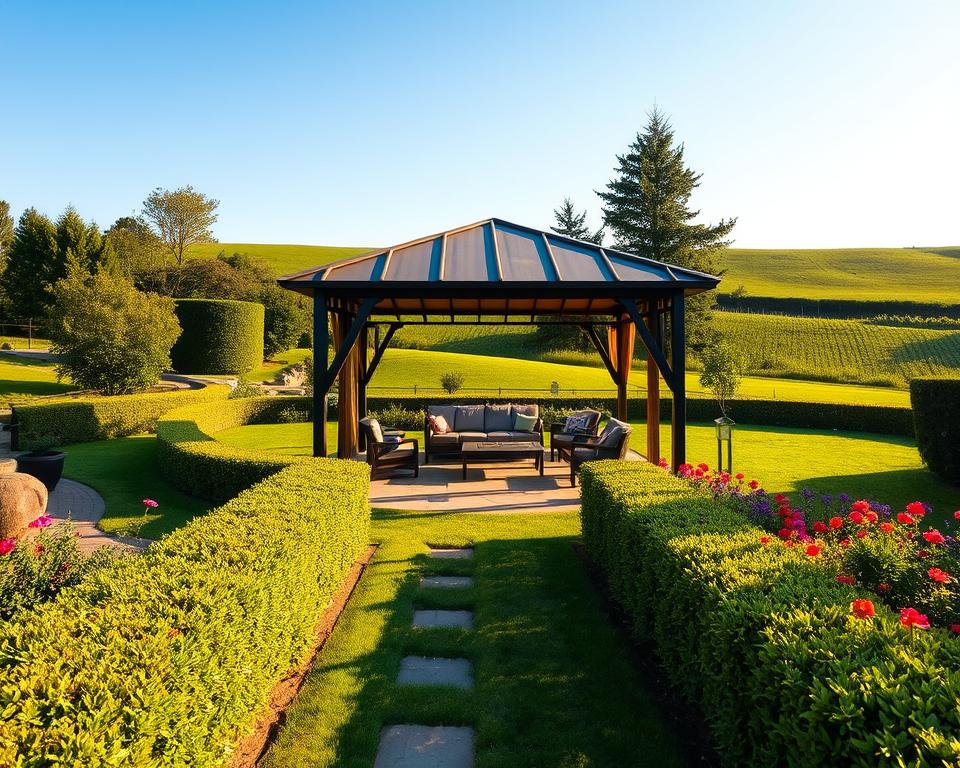
Budget gazebo brands UK serve shoppers who need shelter without a premium price. These makers focus on value, providing functional frames and covers suited to occasional use or small gardens. Buyers should expect sensible compromises in materials and warranties when choosing cheap gazebos.
What budget brands offer and common trade-offs
Brands such as Outsunny and TecTake, along with lines sold by Argos and Tesco Home, and many unbranded Amazon or Wickes listings, supply lightweight frames and simple roof fabrics. Typical features include thinner steel tubing, lower-denier polyester or PVC, and basic anchoring kits.
Trade-offs include lower wind and snow performance, faster fabric fading from UV exposure, and shorter or limited warranties. Spare parts can be harder to source for unbranded models, so repairs may be more time-consuming or costly in the long run.
Best-value models for small gardens or occasional use
For patios and modest lawns, a pop-up event gazebo of 2.5–3m works well as a best-value gazebo for parties and shade. Small aluminium-framed canopies with PVC roofs give a sturdy feel for short-term use and resist light rain.
When shopping for an affordable garden canopy, pick models with clear UV and waterproof ratings and sturdy customer reviews. Choose designs with removable covers that are simple to replace; that keeps the unit useful when the fabric degrades.
Tips for extending the lifespan of lower-cost gazebos
Anchoring and weighting cheap gazebos reduces wind damage. Remove fabric covers before strong gales or in winter to prevent stress on frames.
Treat exposed steel with rust-proofing spray and store all parts indoors when not in use. Consider modest upgrades, such as a heavier-duty cover, upgraded guy-ropes or a timber base, to add stability without spending on a premium brand.
Replacing covers proactively and keeping spare fixings to hand improves longevity. Small investments and consistent maintenance make a budget gazebo more reliable for several seasons.
Brand spotlight: premium and designer gazebo makers
High-end outdoor structures transform a garden into a year-round living space. Premium gazebo brands UK and designer garden pavilions aim for durability, refined aesthetics and features that rise above mass-market models. Buyers can expect advanced materials, tailored finishes and engineering that copes with British conditions.

Materials, finishes and bespoke options
Top manufacturers such as Kettler and Boreham use marine-grade aluminium frames, galvanised and powder-coated steel, or seasoned oak for strength and low maintenance. Roof choices range from insulated composite panels to multiwall polycarbonate. These materials improve thermal performance and UV stability.
Custom finishes and bespoke gazebos let homeowners choose paint colours, cladding and glazed walls. Extras include integrated lighting, heated infrared systems, louvred roofs and remote-controlled screens. Designer garden pavilions often incorporate hidden gutters and stainless-steel fixings for a polished result.
Performance in British weather and longevity expectations
Premium builds resist wind and rain better than entry-level alternatives. Snow-load ratings, reinforced joints and sealed connections cut water ingress and movement. With routine upkeep, expect lifespans of 10 to 25 years depending on material and exposure.
Warranty terms tend to be more generous and parts are easier to replace through authorised dealers. Luxury pergolas with durable roofs and corrosion-resistant frames offer reliable year-round use, even in coastal or changeable inland climates.
Who should consider premium brands and why
Choose high-end options if you want an outdoor room for entertaining, a covered area for a hot tub or an integrated outdoor kitchen. Landscape designers and homeowners seeking a cohesive, high-spec finish benefit from bespoke gazebos and luxury pergolas.
The higher upfront cost often reduces maintenance, repair and replacement spending over time. For those needing longevity and a refined look, premium gazebo brands UK represent an investment in practicality and style.
Installation, maintenance and aftercare: brand differences
Getting a gazebo set up and keeping it in good order varies between manufacturers. Some brands design fast, straightforward kits while others favour robust, permanent structures that need more time and skill. Knowing typical gazebo assembly time and what follow-up care is required helps ownership run smoothly.
Assembly complexity and typical installation time by brand
Pop-up gazebos from brands such as Coleman or Quest can be ready in 10–60 minutes for two people. These suits casual use and events where quick gazebo assembly time matters.
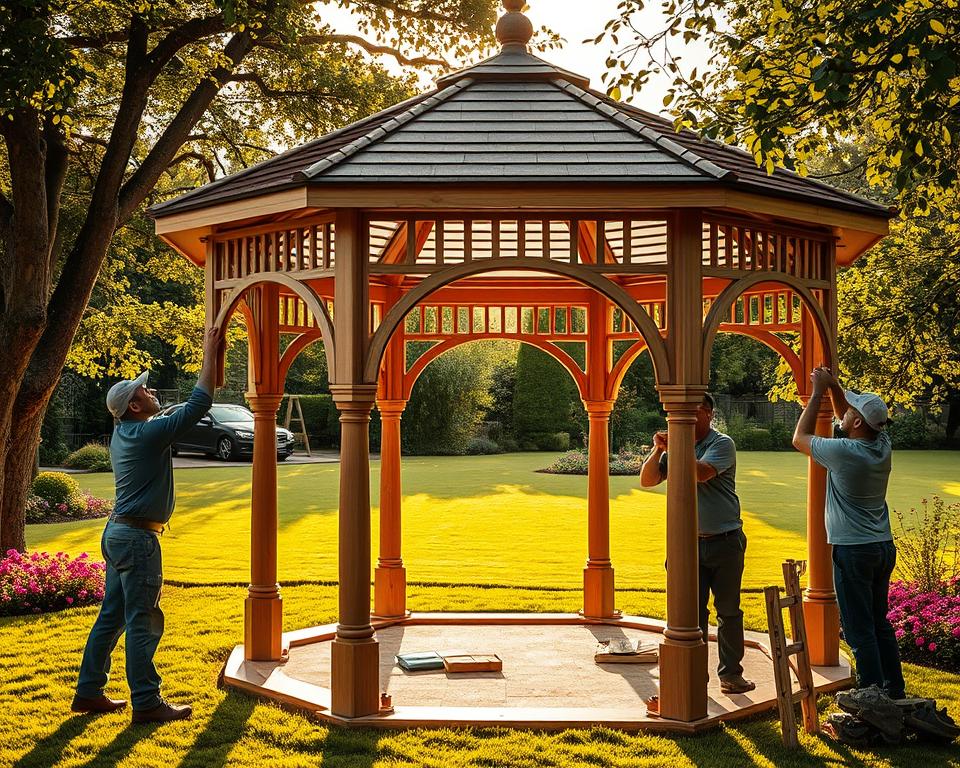
Metal-framed and timber gazebos from suppliers like Harbour or Garden Buildings Direct usually take several hours to a day. Premium bespoke makers such as Rowlinson or Forest require longer builds and may need tradespeople.
Permanent units often demand foundations or concrete footings. Expect to use spirit levels, impact drivers, masonry bits and ladders. Basic DIY skills suffice for simple frames. Complex installs call for carpentry, concrete work and, at times, a hired fitter.
Recommended maintenance schedules and seasonal checks
Carry out a full inspection annually. Check joints, bolt tightness and signs of corrosion. Tighten loose fixings after winter and temperature cycles.
Perform seasonal checks in spring and autumn. Examine cover tension, anchor points and fabric seams. Clean fabric covers with mild detergent to prevent staining and mildew.
Inspect immediately after storms. Look for bent frames, torn covers and dislodged anchors. Treat timber every 2–3 years with suitable preservative. Recoat metal frames if paint shows wear.
Availability of replacement covers, parts and accessories
Established and premium names such as Kettler and Lifetime maintain stocks of gazebo replacement parts including canopies, poles and spare fixings. Budget and unbranded models often force owners to seek third-party covers or replace whole units.
Before ordering parts, record part numbers and measure panels. Confirm compatibility by checking dimensions and connector types. Keep a small kit of spare screws, washers and anchors to reduce downtime.
| Gazebo type | Typical gazebo assembly time | Maintenance frequency | Ease of finding gazebo replacement parts |
|---|---|---|---|
| Pop-up / Event | 10–60 minutes (two people) | Clean after use; annual deep check | High for branded models; third-party for generic units |
| Metal-framed (portable) | 1–4 hours | Spring/autumn checks; repaint as needed | Moderate; branded spares common |
| Timber / Permanent | Several hours to days; may need professionals | Timber treatment every 2–3 years; annual inspection | Good for established brands; limited for budget ranges |
| Aluminium / Premium | 2 hours to professional fit | Annual checks; clean and recoat fasteners | High availability from manufacturer and dealers |
Comparative performance: durability, weatherproofing and materials
The choice of frame, roof and fabric drives performance in British gardens. This short guide sets out material strengths, routine care and the tests buyers should seek when comparing models. Use these notes to form a practical gazebo materials comparison before purchase.
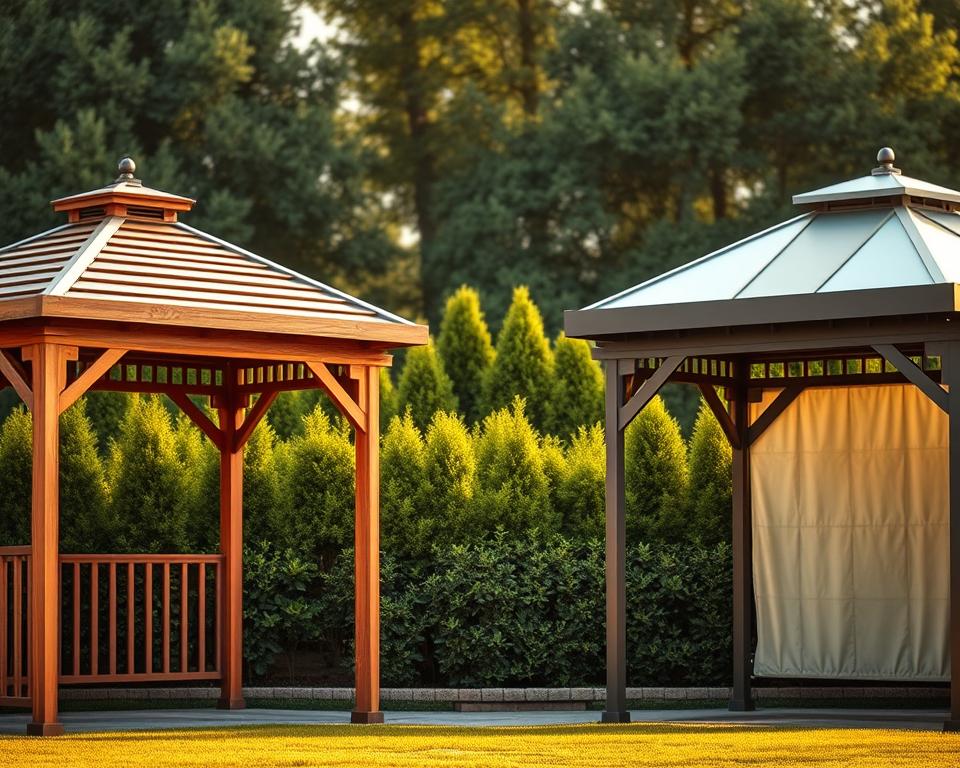
How frame materials compare: steel, aluminium, timber
Steel frames offer high structural strength at a modest cost. Galvanised or powder-coated steel resists rust better than plain steel. Steel is heavier, so it suits fixed or bolted installations on patios and decked areas.
Aluminium frames are light and corrosion-resistant. That makes aluminium a good pick for coastal sites and for owners who need easier handling during assembly. An aluminium frame will usually cost more than a steel alternative, but maintenance is lower.
Timber frames give a traditional look and solid feel. Hardwoods and pressure-treated softwoods resist rot when maintained. Timber demands periodic treatment and inspection for insect attack. Use timber for permanent pavilions and high-end verandas where appearance matters.
Fabric and roof options: polyester, PVC, polycarbonate
Polyester fabrics are common and budget-friendly. Look at denier and PU or PVC coatings to judge waterproofing and UV resistance. Breathability varies, so ventilation features help reduce condensation under polyester covers.
PVC covers are heavy-duty and highly waterproof. They crease in low temperatures and can degrade if exposed to chemicals or prolonged UV without stabilisers. PVC often appears on marquees and commercial awnings where robust waterproofing is essential.
Polycarbonate roofs are rigid and transmit light well. Single-wall and multiwall panels both appear in garden roofs. A polycarbonate roof gazebo gives better snow and wind performance than textile covers. It also improves thermal performance while keeping rain noise low.
Tests and certifications relevant to UK buyers
Check for CE marking where it applies and seek manufacturer data on wind-speed ratings and snow loads. British Standards for structural fixings and EN material ratings can validate claims. Fire-retardant treatments for fabrics should be supported by test certificates if stated.
Ask sellers for lab reports or independent test data when assessing high-value gazebos. Confirm that anchors, bolts and brackets meet load-bearing requirements for your planned location. Understanding gazebo safety standards UK helps reduce risk and ensures compliance with local regulations for fixed installations.
For quick comparison, consider a short checklist: frame material and finish, roof type and thickness, hydrostatic head or waterproof rating for fabrics, wind and snow figures, plus any third-party certification. This approach makes a straightforward gazebo materials comparison and clarifies trade-offs such as steel vs aluminium gazebo or the benefits of a polycarbonate roof gazebo.
Price comparison and value analysis across top brands
Understanding gazebo prices UK helps you decide which model suits your garden and budget. This section outlines common price bands, annualised ownership costs and where to spot the best gazebo deals UK. Use these points to plan a purchase that balances cost with longevity and performance.
Entry-level, mid-range and high-end price bands
Entry-level pop-up gazebos and small metal frames usually sit between £50–£250. Typical examples include Tesco or Lidl seasonal pop-ups and basic Gardenline steel frames. They offer light-duty use and easy storage.
Mid-range models range from £250–£1,000. Brands such as B&Q’s Garden Trading, Kettler and Outsunny supply larger framed units, more robust fabrics and better warranties. Expect thicker frames, better wind resistance and replaceable covers.
Premium gazebos start at around £1,000 and can exceed £10,000 for bespoke aluminium pavilions from brands like Hartman, Kettler premium lines and specialist makers. These feature powder-coated aluminium, integrated gutters, glass or polycarbonate roofs and extended guarantees.
Cost per year of ownership and running costs
Calculate annual cost by dividing purchase price by expected lifespan, then add maintenance. For a £150 pop-up replaced every four years, the annualised purchase cost is about £38. Add £20–£50 a year for repairs and replacement covers.
By contrast, a £2,500 aluminium pavilion lasting 15 years has an annualised purchase cost near £167. Maintenance for treatments, occasional cover replacement and infrequent professional servicing might add £50–£100 per year.
When comparing cheap vs premium gazebo choices, factor in downtime, replacement frequency and how often the structure will be used. Regular use and exposure to British weather often make higher initial spend more economical over time.
Where to find deals, seasonal sales and price-matching in the UK
Best times to buy include spring promotions, Black Friday, end-of-season clearances and bank-holiday sales. Retailers such as B&Q and Wickes offer price-matching policies on selected lines. Check their terms before relying on a match.
Look for manufacturer-direct discounts, ex-display or refurbished units from specialist sellers and voucher codes from reputable outlets. Factor delivery and assembly into the total cost to ensure fair gazebo cost comparison.
Use a side-by-side cost table when choosing between models to see true value. This approach highlights where a slightly higher upfront price can reduce annual costs and improve satisfaction for regular users.
Customer feedback and reliability: reviews and returns
Customer experience often tells more than spec sheets. Read a mix of buyer reports to judge gazebo reliability and how brands handle faults. Below we summarise recurring praise and common problems, outline UK warranty and return practice, and give practical tips to spot fake reviews when you consult gazebo reviews UK.
Common praises and complaints
Buyers praise sturdy frames, clear assembly for pop-up models, good value from mid-range makers and effective waterproofing on polyester and PVC roofs. Premium aluminium and timber gazebos win points for finish and longevity.
Complaints often cluster by product type. Budget units are criticised for fragility, weak anchors and rapid fabric fade. Several reports cite poor instructions, missing parts on delivery and rusting on untreated steel frames. Read multiple reviews to see if faults repeat across retailers before you decide.
Typical warranty claims and return policies in the UK
UK shoppers benefit from the Consumer Rights Act 2015 when goods are faulty or not as described. Manufacturer warranties vary by part; expect anything from one year on fabric to up to ten years on structural components for premium brands.
Retailer return windows commonly run from 14 to 30 days. Some sellers will ask customers to pay return shipping for bulky gazebos. Keep receipts, order confirmations and dated photos to support warranty claims or a gazebo returns policy dispute.
How to interpret online reviews and spot fake feedback
Look for verified-purchase badges and a natural mix of long and short reviews. A healthy distribution of ratings over time suggests genuine buying patterns. Give weight to posts with photos or videos showing build details or weathering.
Watch out for lots of short, glowing reviews with similar phrasing. Use third-party aggregators and consumer forums such as Trustpilot, Which? and MoneySavingExpert to corroborate observations. Cross-check recurring faults across multiple retailers to better spot fake reviews and get a truer sense of gazebo reliability.
Conclusion
This review gives a clear framework to help decide which brand of gazebo is best for your needs. For long-term reliability and easy access to spare parts, established heritage brands are the sensible choice. Budget manufacturers work well for occasional events or seasonal use if you commit to proactive maintenance, while premium designers suit those seeking a lasting outdoor living solution with bespoke finishes.
When you choose a gazebo UK shoppers should match product type to use-case. For event or occasional use, pop-up canopies and low-cost metal frames offer convenience. For regular family or patio use, mid-range powder-coated frames with replaceable covers balance durability and cost. For permanent structures, timber or aluminium pavilions with professional installation deliver longevity and better performance in British weather.
Before purchase, follow a short checklist: confirm wind and snow ratings, read the warranty and spare-part policy, test assembly complexity against DIY skill, and compare total lifetime cost. Prioritise anchoring and structural integrity to stay safe in variable UK conditions. This best gazebo UK conclusion aims to make it easier to choose a gazebo UK that fits purpose, budget and the British climate.
FAQ
What is the purpose of this guide to gazebo brands for UK homeowners?
This guide helps UK homeowners, renters with gardens, landscape designers and event organisers choose the gazebo brand that best suits their garden, budget and weather conditions. It compares heritage names, budget manufacturers and premium designers across durability, weather resistance, build quality, price-to-value and aftercare. The article also outlines testing methodology, brand spotlights, installation and maintenance guidance, material comparisons, pricing analysis and customer feedback to inform buying decisions.
Which brand of gazebo is best?
There is no single “best” brand for every buyer. Choose a brand based on intended use: budget brands for occasional event use; mid-range powder-coated steel or aluminium frames for regular patio use; and premium timber or marine-grade aluminium pavilions for long-term outdoor living. Consider wind and snow ratings, warranty length, spare-parts availability and total lifetime cost when selecting which brand of gazebo is best for your needs.
What criteria were used to judge gazebo brands?
Brands were assessed on structural integrity (frame strength, welds, joint systems), material quality (steel, aluminium, timber), roof and fabric performance (UV resistance, waterproof rating), wind and snow capability, ease of assembly, availability of spare parts, warranty length, customer service responsiveness and price-to-value for UK market conditions.
How were durability, weather resistance and build quality tested?
Testing included static load checks on frames, accelerated weathering (UV exposure and water resistance), simulated wind anchoring tests and long-term user reports. Hands-on assembly assessed instructions and component fit. Manufacturer specifications such as powder-coating thickness, galvanisation and fabric denier were cross-referenced with independent reviews and field observations.
How is price-to-value assessed for UK buyers?
Price-to-value is judged by price bands (entry-level, mid-range, premium), expected lifespan, frequency of part replacement, warranty coverage, maintenance needs and typical retailer pricing at B&Q, Wickes, Homebase, Amazon and Wayfair. Seasonal UK weather—wind, rain and occasional snow—is factored into value judgements and total cost of ownership.
What types of gazebos are commonly sold in the UK?
The main types are pop-up canopies (quick‑erect event gazebos), metal-framed gazebos (steel or powder-coated), timber gazebos and summerhouses, and aluminium/pergola-style gazebos. Typical uses include events, shading, dining areas, hot-tub covers and permanent garden structures.
Where do UK customers usually buy gazebos?
Customers buy from high-street DIY and garden retailers such as B&Q, Wickes and Homebase for convenience and local returns, or from online marketplaces like Amazon, Wayfair and eBay for wider choice and competitive pricing. Specialist garden retailers and direct sales from manufacturers are common for bespoke or premium units.
Which brands count as established heritage names in the UK market?
Established heritage names include long-standing UK and European manufacturers such as Mercia (timber garden buildings), Cadix and Forest Garden, plus respected German and Italian exporters. These brands are known for quality materials, craftsmanship and ongoing spare-parts support.
What trade-offs do budget-friendly gazebo manufacturers present?
Budget brands often use thinner steel, lower-denier fabrics, simpler anchoring systems and offer shorter warranties. Trade-offs include reduced wind and snow performance, faster fabric fading and limited spare-part availability. They remain suitable for occasional use if maintained carefully.
When should I consider a premium or designer gazebo?
Choose premium brands if you want a long-term outdoor room, bespoke finishes, integrated features (louvred roofs, lighting, glass walls) or superior resistance to British weather. Premium units often offer longer lifespans (10–25 years), stronger warranties and easier part replacement, making them cost-effective for heavy use.
How complex is gazebo installation and how long does it take?
Pop-up gazebos can take 10–60 minutes for two people. Larger metal or timber units may require several hours to days and sometimes professional installation. Permanent structures often need foundations or concrete footings and basic carpentry or masonry skills.
What maintenance should I perform and how often?
Recommended upkeep includes an annual deep inspection of joints, bolts and coatings; seasonal checks in spring and autumn for cover tension and anchors; wood treatment every 2–3 years; cleaning fabric covers with mild detergent; and storing removable fabrics over winter. Post-storm inspections are essential.
Are replacement covers and spare parts readily available?
Established and premium brands typically stock replacement canopies, poles and fixings. Budget and unbranded models may require third-party covers or full replacement. Always check part numbers, measurements and compatibility before purchase and keep spare fixings where possible.
How do frame materials compare: steel, aluminium and timber?
Steel is strong and economical but needs galvanisation or powder-coating to resist rust. Aluminium is lightweight, corrosion-resistant and ideal for coastal locations. Timber is attractive and solid but requires regular treatment to prevent rot and insect damage. Choice depends on desired longevity, maintenance willingness and aesthetic preference.
What roof and fabric options should I consider?
Common options include polyester (affordable, variable denier), PVC (heavy and very waterproof) and polycarbonate (rigid, high light transmission and durable for permanent roofs). Check UV protection, hydrostatic head or waterproof ratings, and suitability for UK temperatures and snow loads.
What tests or certifications should UK buyers look for?
Look for CE marking where applicable, relevant British Standards for structural fixings, EN material ratings, fire-retardant fabric certificates (if claimed) and manufacturer wind speed or snow load test data. Request test reports for high-value purchases if uncertain.
How do price bands for gazebos break down in the UK?
Typical UK price ranges are entry-level pop-up and small metal gazebos (£50–£250), mid-range and larger framed units (£250–£1,000), and premium bespoke or aluminium pavilions (£1,000–£10,000+). Features, materials and warranty levels distinguish these bands.
How should I compare cost per year of ownership?
Annualised cost considers purchase price, maintenance, replacement cycles and installation. An entry-level gazebo may be replaced every 3–5 years, while a premium unit can last 10–20 years. Over time, higher-quality purchases often reduce cost per year for frequent use.
When are the best times to find deals on gazebos in the UK?
Best times include spring promotions, Black Friday, Boxing Day and bank-holiday sales. Retailers like B&Q and Wickes may offer price-matching. Also consider ex-display or refurbished units and manufacturer direct discounts to save on total cost including delivery and assembly.
What do customers commonly praise or complain about?
Praises often highlight sturdy frames, easy assembly and good waterproofing. Common complaints include poor anchoring, inadequate instructions, rapid fabric fade, rusting and missing parts. Budget models tend to attract more complaints about fragility, while premium models score highly for finish and longevity.
What are typical warranty and return policies in the UK?
Manufacturer warranties range from one to several years depending on component. Retailers usually offer 14–30 day return windows. Consumer protections under the Consumer Rights Act 2015 apply for faulty goods. Keep receipts and photos for claims; large-item returns may require the buyer to cover costs.
How can I spot fake or biased online reviews?
Check for verified-purchase badges, review distribution over time, detailed photos and video evidence. Be cautious of very short, overly positive reviews and look for consistent fault patterns across retailers. Use third-party aggregators and forums such as Trustpilot, Which? and MoneySavingExpert for corroboration.
What final checks should I perform before buying a gazebo?
Confirm wind and snow ratings, warranty and spare-part availability, assembly complexity relative to your DIY skills, and the total lifetime cost including delivery and installation. Buy from reputable UK retailers or direct from recognised manufacturers and prioritise anchoring and structural safety for British weather conditions.