UK Shed Electrics Permit Guide | Running Power Safely

This guide explains whether you need a permit to run electricity to your shed in the UK. It is written for homeowners, landlords and tradespeople who want clear, practical advice on shed electrics permit UK questions and UK shed wiring rules. You will find concise information on Building Regulations, Part P, BS 7671, and the role of local authority building control so you can decide when to hire a registered electrician or notify authorities.
The article covers common installation choices for running power to shed setups, from a simple spur from the house to a separate consumer unit or external meter. It also outlines safety steps, testing and certification needed for compliance with shed electrical regulations and for insurance and resale purposes.
Inhaltsverzeichnis
Key Takeaways
- Check whether your planned work is notifiable under Part P before you start.
- BS 7671 (IET Wiring Regulations) and Building Regulations set the technical and legal standards.
- Registered schemes such as NICEIC and NAPIT simplify notification and certification.
- Simple spurs may be suitable for minor needs; complex supplies usually need a qualified electrician.
- Keep test certificates and compliance paperwork for insurance and future sale.
Understanding the Main Question: do i need a permit to run electricity to my shed in the uk?
Searchers often type the query exactly as a practical question about legal steps. The phrase do i need a permit to run electricity to my shed in the uk signals someone weighing DIY against formal checks. That small change in wording affects which guidance appears and whether results focus on planning, building regulations or simple convenience tips.
Clarifying the exact wording and why it matters for search
Users asking do i need a permit to run electricity to my shed in the uk usually want to know if formal approval is required. They may mean a planning permit or a regulatory notification. Using shed electrics permit meaning helps distinguish between planning permission and electrical certification under building regulations.
Immediate high-level answer for homeowners and DIYers
There is no separate planning-style permit just to feed power to a detached shed in most cases. What can be required is notifiable electrical work under Part P shed electrics rules. Either a Part P registered electrician must self-certify the job or you must notify building control to inspect and certify the installation.
When phrased this way: implications for regulations and compliance
Ask do i need a permit to run electricity to my shed in the uk and you will receive advice on safety and compliance rather than a simple yes or no. The outcome depends on scope: a temporary, portable extension from indoors is different from fixed wiring, a new consumer unit or an external buried supply.
If the work is notifiable, failing to notify or using an unregistered contractor may affect insurance and prompt enforcement. Homeowners seeking clarity should check whether they must notify building control shed projects or hire a certificated electrician who can confirm compliance under Part P shed electrics guidance.
Overview of UK Electrical Regulations for Outbuildings
Running power to a shed means more than choosing the right cable. You must follow technical standards and legal rules that protect people and property. This short overview sets out the key documents, who enforces them and how planning differs from electrical approval.
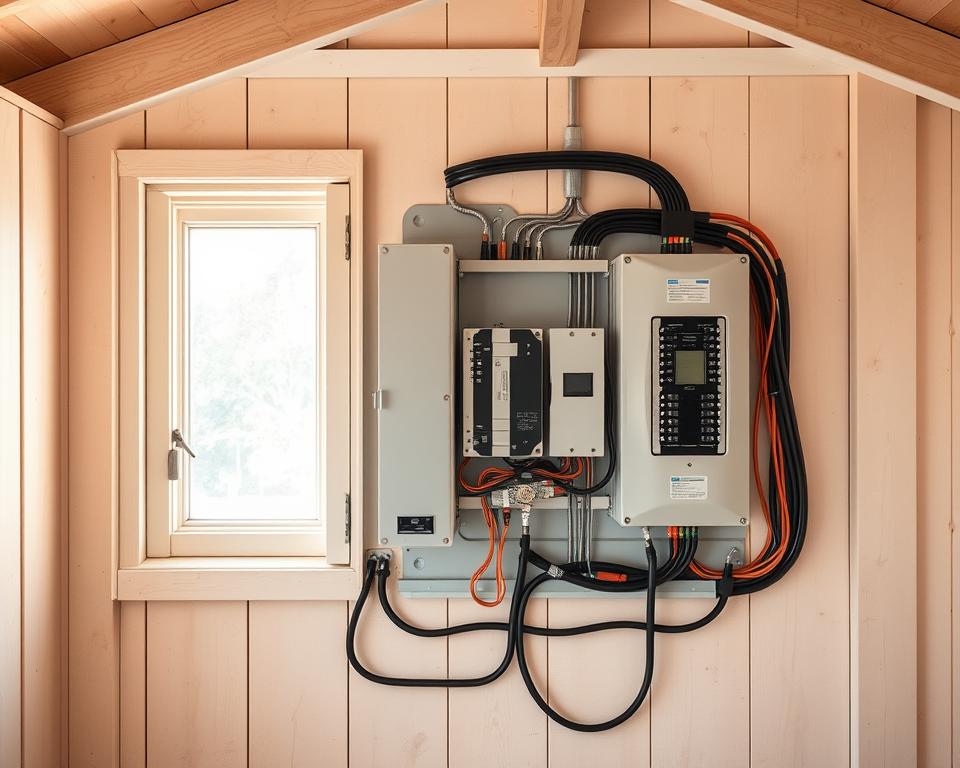
Key legislation and standards to be aware of
BS 7671 sets the technical requirements for wiring in any building, including garden rooms and workshops. When planning a BS 7671 shed wiring installation, pick cables, protective devices and earthing methods that meet the current IET Wiring Regulations.
Building Regulations outbuildings provide the safety framework for work that affects electrical systems. In England, Part P overview explains which domestic electrical tasks are notifiable and which must be carried out by a competent installer.
Role of local authorities and building control
Local authority building control ensures compliance with Building Regulations outbuildings. They inspect notifiable work and issue completion certificates when installations meet the standard. For a building control electric outbuilding inspection you may need to book visits and supply plans or test results.
Competent person schemes such as NICEIC, NAPIT and ELECSA allow registered electricians to self-certify certain installations. A self-certifying installer can often avoid a separate building control electric outbuilding notification, provided the work falls within their scheme’s scope.
Difference between planning permission and electrical permits/notifications
Planning permission focuses on land use, appearance and neighbour impact. Most small sheds do not need planning consent just for a new supply. The electrical side is separate and safety-led.
Part P overview and building control electric outbuilding rules deal with safety and certification. Even if planning permission is not required, your installer must make sure BS 7671 shed wiring standards are met and any notifiable work is reported.
When a Notification to Building Control or Part P Applies
Deciding whether your shed electrics require formal approval rests on clear rules. Part P notifiable work shed covers new circuits, new consumer units and fixed wiring in locations that need special protection. Regional building standards vary, so checking local guidance is essential before you start.
Definition of notifiable work under Part P of the Building Regulations
Under Part P in England, work that creates a new or replacement circuit is notifiable. Installing a new consumer unit or an isolator dedicated to an outbuilding is also notifiable. Work in special locations, such as outdoors where equipment faces moisture, can trigger notification too. Scotland and Northern Ireland follow different rules, so contact the local authority for precise thresholds.
Examples of notifiable and non-notifiable shed electrics work
Typical notifiable electrical work examples include installing a radial or ring circuit to power a shed, fitting permanent lighting circuits inside the outbuilding and adding a new consumer unit to feed the outbuilding. These jobs normally require either a competent person to self-certify or a formal process to notify building control.
Common non-notifiable scenarios include using a portable appliance connected to an existing house socket via a weatherproof external lead, or simple like-for-like replacements of fittings that do not alter circuits. Small repairs that do not create new circuits rarely need notification.
Consequences of failing to notify when required
Failing to notify building control electrics shed can lead to enforcement action. Local authorities may demand alterations to make an installation safe or require removal. Retrospective approval is not guaranteed. Missing certification can cause insurance claims to be denied and complicate property sales when buyers seek compliant documentation.
Using a registered competent person from NICEIC or NAPIT usually avoids notification paperwork because they self-certify their work. If you plan DIY work that meets notifiable criteria, you must notify building control before starting or hire a qualified electrician to carry out the job and handle certification.
| Work type | Typical status | Action required |
|---|---|---|
| New radial or ring circuit feeding shed | Notifiable | Notify building control or use a registered electrician to self-certify |
| New consumer unit or isolator for outbuilding | Notifiable | Notify building control or engage a competent person scheme member |
| Permanently wired lighting or fixed appliances in shed | Notifiable | Notify building control or use a certified electrician |
| Portable appliance plugged into house socket via external lead | Generally non-notifiable | No formal notification; ensure safe weatherproofing and RCD protection |
| Minor like-for-like replacement of fittings | Generally non-notifiable | No notification if circuit remains unchanged; follow manufacturer guidance |
| Retrospective works found unsafe | Enforcement possible | Local authority may require remedial work or removal; certification may be refused |
Types of Electrical Work Typically Required for Sheds
Deciding how to supply power to a shed affects safety, cost and compliance. Below is a clear outline of typical work you may need, with practical notes on wiring methods and environmental protection.
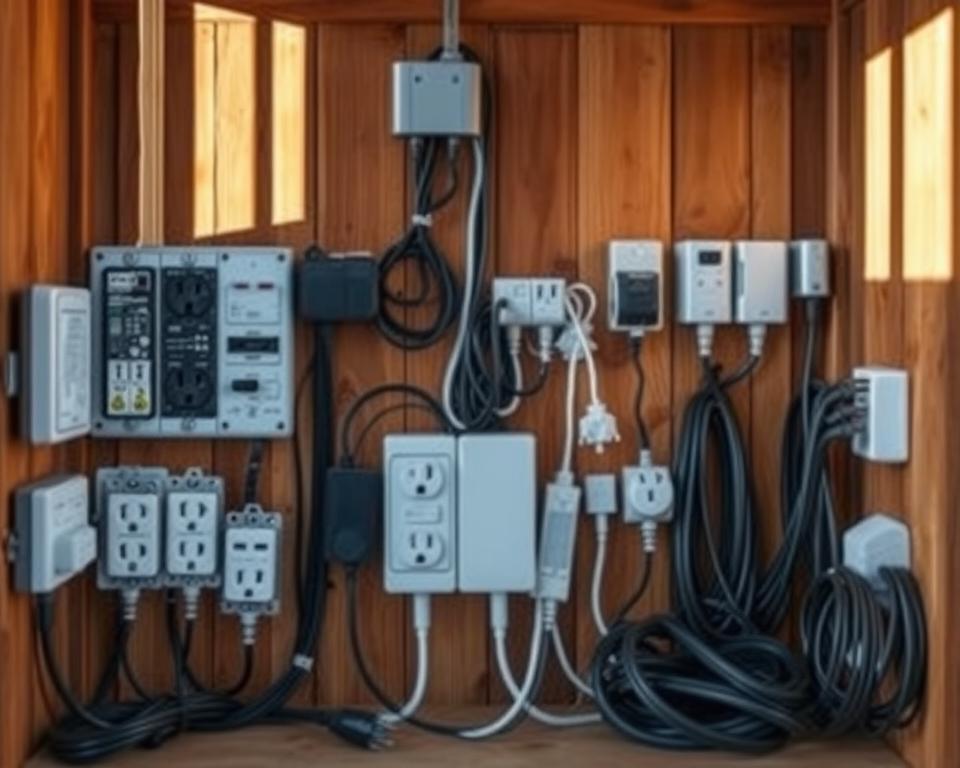
Basic supply options
A common approach is a spur from house shed electrics, taken from an existing radial or ring circuit to feed an outdoor socket or fused connection unit. This is usually the simplest route, but you must check the capacity of the original circuit and whether any new circuits will trigger notification to building control.
Many homeowners choose an external consumer unit shed or a separate consumer unit inside the house to provide dedicated circuits with RCD protection. This gives better isolation and is often treated as notifiable work, so certification is likely required.
Rarely, an independent supply with an external meter and a direct connection to the distribution network is installed. This option is costly and needs coordination with the DNO, but it suits high-demand uses such as workshops with heavy machinery or EV charging.
Common circuits
Garden shed circuits typically include lighting, general-purpose sockets for tools and chargers, and fixed-appliance circuits for items like fridges or heaters. For workshops, consider dedicated circuits for heavy tools or an EV charger to avoid nuisance trips and voltage drop.
Use correct wiring methods for each circuit. External runs often require armoured cable or buried SWA for mechanical protection. Inside the shed, conduit or trunking helps protect cables and keeps the installation tidy.
Special requirements for wet or garden environments
Sheds face moisture and splash risks, so fit IP-rated fittings at the appropriate level. Outdoor sockets should use weatherproof enclosures and circuits feeding external sockets must have RCD protection. Splash-proof switches and stainless fixings reduce corrosion over time.
| Option | Typical use | Key advantage | Compliance note |
|---|---|---|---|
| Spur from house shed electrics | Light use, occasional power tools, chargers | Lower cost, quicker install | Check circuit capacity; may be non-notifiable if no new circuit added |
| External consumer unit shed | Workshops, multiple circuits, safety-focused installs | Dedicated RCD protection and isolation | Often notifiable; requires certificate from a competent electrician |
| External meter / independent supply | High-power workshops, EV charging, commercial use | Independent supply and billing | Coordination with DNO; higher cost and lead time |
| Wiring & protection | All installations | Armoured cable, trunking, IP-rated fittings | Ensure correct cable size for distance to avoid voltage drop |
When to Hire a Qualified Electrician (and What Qualifications to Check)
Running power to an outbuilding carries safety and legal obligations. If you are unsure about cable sizing, earthing or whether work is notifiable, it is wise to bring in a professional. A competent tradesperson will reduce risk, handle certification and save time on corrections later.
Definition of a competent installer
A competent electrician will be listed on a recognised scheme such as NICEIC, NAPIT, ELECSA or TrustMark. A Part P registered installer can self‑certify domestic work to building control where the rules allow. Choosing a NICEIC registered electrician or one who can show NAPIT electrician verification gives clear proof of technical competence and insurance-backed workmanship.
How to verify credentials and check past work
Ask for the installer’s registration number and public liability insurance details. Use online registries to confirm status and look for any disciplinary history. Request sample certificates or photographs of similar shed electrics jobs and check written quotes for clarity on materials and labour.
What the electrician will do on site
Expect a site survey and risk assessment. The electrician will size cables, pick RCDs and MCBs, and choose enclosures with the right IP rating for a garden setting. Work will be completed to BS 7671 standards and the installer will either issue an Electrical Installation Certificate or self‑certify through their competent person scheme.
Where building control notification is required, a Part P registered installer will submit the notification or supply a Building Regulations Compliance Certificate. This paperwork matters for insurance and future property sales.
| Task | Provided by a qualified electrician | Benefit |
|---|---|---|
| Site survey and risk assessment | Yes | Identifies hazards and correct scope of work |
| Cable sizing and protective device selection | Yes | Prevents overloads and ensures safe operation |
| Installation to BS 7671 | Yes | Meets legal and safety standards |
| Issuing Electrical Installation Certificate | Yes | Proof of compliant work for building control and insurers |
| Building control notification | Handled by Part P registered installer or notified by homeowner | Avoids enforcement and possible remedial work |
| Insurance-backed workmanship | Yes, when registered with NICEIC or NAPIT | Financial protection if work is faulty |
DIY Shed Electrics: What You Can and Cannot Do Yourself
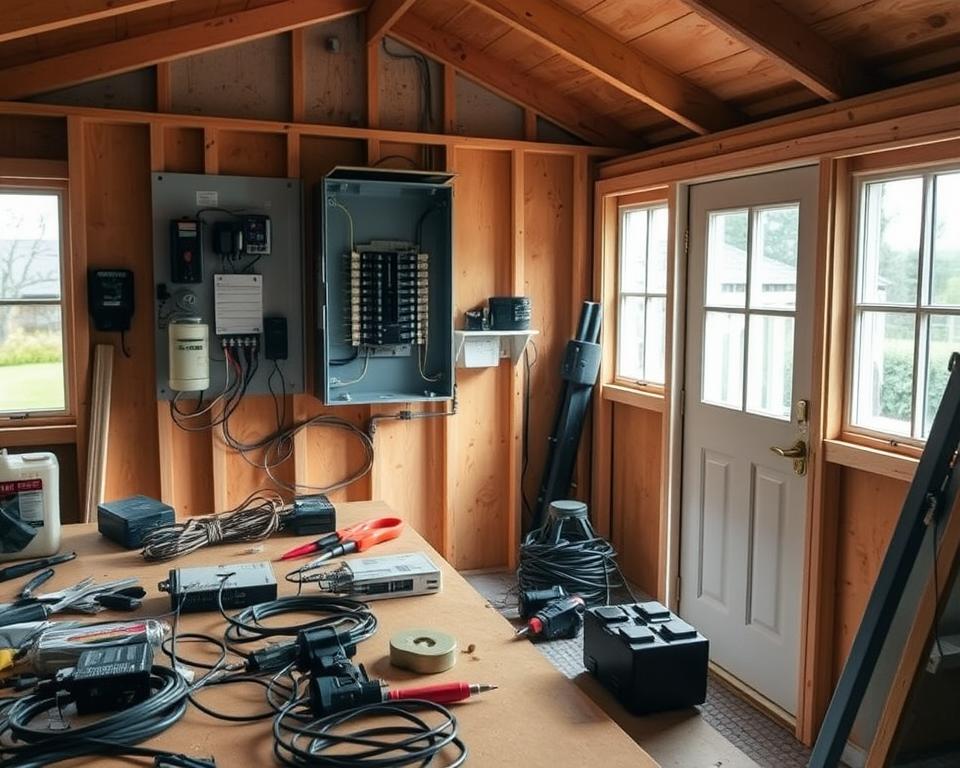
Many homeowners ask “can i wire my shed myself UK” when planning a simple power supply. Basic, low-risk jobs can be tackled by competent DIYers. Complex installs and new circuits usually need a registered electrician and notification under building regulations.
Permitted tasks for competent DIYers
Small works that do not create new fixed wiring are often acceptable as permitted electrical DIY tasks. Examples include plugging in portable appliances, replacing a like-for-like light fitting where no new wiring is added, and minor repairs to existing sockets that do not alter circuits.
Notifiable and restricted work
Installing a new circuit to the shed, adding a separate consumer unit or any fixed wiring is not covered by simple DIY rules. Such work is classed as notifiable and must be carried out by, or certified through, a competent person scheme. Failure to notify can affect insurance and resale value.
Shed wiring safety and essential tools
Electricity is hazardous. For any task, check shed wiring safety first. Use PPE, insulated tools and test equipment. Common tools include insulated screwdrivers, cable cutters, a digital multimeter and a continuity tester. For ground runs, use a cable avoidance tool and follow safe digging practice.
Materials to choose
Select the right cables and protection devices for external use. SWA or suitably armoured cable is advised where mechanical protection is needed. Fit correctly rated RCDs and MCBs, use outdoor-rated sockets and IP-rated enclosures to guard against moisture and corrosion.
When to call a professional
Seek professional help if voltage drop is likely on long cable runs, if selective RCD discrimination is required, or for any installation that will be notifiable under Building Regulations. A qualified electrician from NICEIC or NAPIT can certify work, handle notifications and ensure compliance.
| Work type | DIY possible? | Key safety note |
|---|---|---|
| Plugging in portable appliances | Yes | Check PAT testing and condition of leads |
| Replacing like-for-like light fitting | Yes, if no new wiring | Isolate supply and test before touching |
| Minor socket repairs (no circuit changes) | Yes, if competent | Use insulated tools and test continuity |
| Installing new circuit to shed | No | Notifiable work; use registered electrician |
| Adding consumer unit or fixed wiring | No | Requires certification and compliance with BS 7671 |
| External cable runs and burial | Depends on skill | Use SWA where needed; follow safe digging and burial depths |
Safety Requirements and Best Practices for Running Power to a Shed
Running electricity to an outbuilding needs clear safety measures. Follow practical steps for protection, cable routing and earthing so the installation performs reliably in a garden setting.
Circuit protection
Fit a residual current device or individual RCDs where sockets or garden tools are supplied. RCD protection shed arrangements reduce shock risk when equipment is used outdoors. Use correctly rated miniature circuit breakers to guard against overload and short circuits. Provide a local means of isolation for the shed supply and label it clearly for anyone using the building.
Cable selection and burial
Choose conductors sized for the load and length to limit voltage drop. For external runs, consider steel wire armoured cable or route standard cable inside continuous conduit. Check the usual cable burial depth UK guidance before digging. Common practice is a minimum of 450mm in conduit and up to 600mm for direct-buried armoured cable, but confirm current local advice.
Protect cables where they cross driveways or areas at risk of mechanical damage. Use ducting, concrete cover or marker tape to maintain outdoor cable protection and avoid accidental strikes when digging.
Earthing, bonding and moisture protection
Make sure earthing shed electrics ties into the main house earth or a dedicated electrode when a separate consumer unit is installed. Proper bonding prevents dangerous touch voltages between metalwork and supply conductors. Choose corrosion-resistant fixings and IP-rated fittings, with IP44 or better for outdoor sockets.
Control condensation and provide ventilation inside the shed to limit moisture-related faults. Use stainless steel or plastic enclosures where damp or salt exposure is likely.
Practical labelling and user safety
Label isolation switches and circuits clearly. Advise householders to avoid trailing extension leads across lawns and to use RCD-protected extension reels for temporary work. Arrange periodic checks and record test results for future inspection or sale.
| Risk or Requirement | Best Practice | Typical Specification |
|---|---|---|
| Shock protection | RCDs on outdoor circuits; local isolation | 30mA RCD for final circuits supplying sockets and tools |
| Overload/short-circuit | MCBs sized to match cable and load | Type B or C MCBs per load characteristics |
| Cable routing | Conduit or SWA; avoid shallow burial | Conduit 450mm depth; SWA up to 600mm (verify local rules) |
| Mechanical protection | Ducting, concrete cover, marker tape | Concrete covers or heavy-duty duct at crossings |
| Earthing and bonding | Connect to house earth or install earth electrode | Compliance with BS 7671; earth electrode if separate supply |
| Environmental durability | IP-rated fittings; corrosion-resistant materials | Minimum IP44 for outdoor sockets; UV-stable enclosures |
| User guidance | Labels, instruction and periodic testing | Certificates retained; annual visual checks recommended |
Cost Considerations and Typical Price Ranges
Running electricity to an outbuilding brings clear cost choices. The final bill depends on distance, supply type, materials and labour. Small jobs can be cheap. Complex installations rise quickly in price.
Factors that influence cost
Distance from the house affects cable size and trenching time. Longer runs need larger cable and more excavation, which pushes up the price to run power to shed.
Supply type matters. A simple plug-in or extension is the cheapest route. A spur from an existing circuit costs more. A dedicated consumer unit or separate meter brings higher fees and may need DNO involvement.
Materials add up. Armoured SWA cable, conduit, RCDs, sockets, IP-rated enclosures and branded components such as Schneider or Hager increase outlay. Labour rates vary by region with London and the South East usually at the top of the scale.
Typical quotes — quick reference
Below is a practical price guide to help set a budget. Figures reflect the current UK market and are indicative.
| Work | What it includes | Indicative cost (GBP) | Keywords reflected |
|---|---|---|---|
| Simple plug-in or outdoor lead | Weatherproof extension or outdoor lead, minimal labour | Under £100 | shed electrics cost UK |
| Spur from existing circuit | Outdoor socket, protective RCD, short run from house | £200–£600 | cost spur to shed |
| Dedicated radial circuit | Trenching, armoured cable, single circuit from consumer unit | £400–£1,200+ | price to run power to shed |
| Full consumer unit and multiple circuits | New consumer unit, RCDs, lighting and sockets for workshop | £800–£2,500+ | consumer unit install price |
| Separate meter / independent supply | DNO connection, new supply head and meter | Several thousand pounds | shed electrics cost UK |
Testing, certification and possible remedial work
Qualified electricians include testing and certificates in their fees. Building control inspections carry extra charges when notifications apply. If tests fail, remedial work will add to the final cost.
Cost-saving and planning tips
Get at least three written quotes from reputable electricians such as NICEIC or NAPIT members. Choose good mid-range components to balance warranty and price. Plan cable routes to shorten trenching and consider future needs so upgrades are avoided later.
How to Obtain Permits, Notifications or Approval from Local Authorities
Running power to an outbuilding often needs formal approval. Follow the right steps to notify building control shed electrics and meet building regulations. The process reduces risk and protects property value.
Step‑by‑step process for notification and approval
- Check whether the work is notifiable under Part P or local rules. If the installation is notifiable, you must inform the council before work starts.
- If a registered competent person from NICEIC or NAPIT will do the job, they can self‑certify and carry out the building control notification electrical on your behalf.
- If you do not use a competent person scheme, contact your local authority’s building control team to submit a formal notification. Many councils offer online forms and publish fees.
- Arrange any inspections required by building control during the installation. Keep communication clear and document inspection dates.
- Receive the completion certificate once building control is satisfied. That certificate proves compliance with how to apply building regs for electrical work.
Documentation you should prepare
- Location plans showing shed position and cable routes relative to the main property.
- Scale or annotated sketches of the proposed installation, including consumer unit layout, proposed circuits and protection devices.
- Electrician’s quotation, proof of competence and, after completion, Electrical Installation Certificates and Building Regulation Compliance Certificates.
- Test results for continuity, insulation resistance, earth loop impedance and RCD operation. Keep schedules neatly filed.
Timelines, inspections and handling problems
Notify building control shed electrics before any work begins. Inspection timing varies by council; typical responses range from a few days to a couple of weeks.
If building control raises issues, you will receive a written notice detailing the remedial work required. Arrange corrections with the installer and request a re‑inspection once repairs are complete.
Dealing with refusals or further requests
- Ask for a written report of deficiencies if changes are requested. Use that to agree a remedial plan with your electrician.
- Escalate persistent disputes to the building control manager at the council or seek technical advice from industry bodies such as NICEIC or the Institution of Engineering and Technology.
- Remember regional differences. Scotland uses Scottish Building Standards and, for some projects, a building warrant route rather than the same notification process used in England and Wales.
Testing, Certification and Handover: Ensuring Compliance
Before a shed receives regular use, the electrics must pass a set of mandatory checks and be handed over with full paperwork. These steps confirm safety, meet Building Regulations and protect homeowners from future disputes.
The standard tests include continuity of protective conductors to ensure earth paths remain intact. Insulation resistance checks confirm separation between live conductors and earth. Earth loop impedance testing verifies that fault current will clear fast enough to prevent danger.
An RCD test shed must show correct trip times and residual leakage thresholds. Electricians will also carry out polarity checks and functional tests on switches and fused devices. If any test fails, the installer must rectify faults and repeat testing until results meet BS 7671.
On completion, the workforce should issue an electrical installation certificate shed that records the circuits, the tests performed and the measured results. When building control is involved, a building regs certificate electrics or completion certificate will follow after inspection.
Competent person scheme installers such as those registered with NICEIC or NAPIT will notify building control and supply the homeowner with copies of certificates. Retain these documents for insurance claims and evidence during property sales.
Handover should include labelled circuits, a consumer unit manual and clear isolation instructions. Ask for printed and digital copies of the electrical installation certificate shed and test sheets for the RCD test shed so records are easy to find if needed.
| Test | Purpose | Typical Pass Criteria |
|---|---|---|
| Continuity of protective conductors | Confirm earth paths are continuous | Low resistance consistent with conductor size |
| Insulation resistance | Verify no unwanted connections between live and earth | Megohm readings acceptable per BS 7671 |
| Earth loop impedance | Ensure adequate fault current to operate protection | Impedance below calculated maximum for circuit |
| RCD test | Check trip time and leakage threshold | Trip within specified ms and at rated mA |
| Polarity and functional checks | Confirm correct wiring of switches and devices | Correct operation with no reversed connections |
Keep both physical and digital copies of the electrical installation certificate shed and the building regs certificate electrics. Uploading scanned copies to a secure cloud folder helps when insurers or buyers request proof during a claim or sale.
Competent installers will outline any remedial work required after testing. If building control raises concerns, unresolved issues may prompt further inspection or enforcement until compliance is achieved.
Common Pitfalls, Mistakes and How to Avoid Them
Running power to a shed seems straightforward. Poor choices and shortcuts create hazards, wasted money and compliance problems. Read the points below to spot common mistakes shed electrics and act before work starts.
Incorrect cable sizing and inadequate protection
Undersized conductors cause overheating, voltage drop and fire risk. Calculate load demand and voltage drop for your expected appliances. Match cable size to load and run length to prevent cable sizing errors shed. Fit RCD protection and MCBs rated to protect the chosen cable. Protective devices must match cable ratings and the planned load to reduce shock and fire exposure.
Poor routing and lack of mechanical protection for buried cables
Cables laid without ducting or warning tape face damage from digging, strimmers and mowers. Use conduit or armoured cable and bury to the specified depth. Mark routes clearly to avoid accidental strikes. These steps prevent premature faults and long-term repair costs.
Failing to notify, or relying on unregistered contractors
Skipping notification for notifiable work can trigger enforcement, remedial bills and insurance refusal. Handing installations to unregistered individuals increases unregistered electrician risks. Always check NICEIC, NAPIT or TrustMark registration and confirm public liability insurance before work begins.
Material and documentation issues
Outdoor fittings must be IP-rated and corrosion-resistant. Cheap or indoor-only components fail in damp garden conditions. Keep all certificates and test results safe at handover. Missing paperwork creates problems at house sale or when making an insurance claim.
Avoidance strategies
- Use qualified installers and request written certification.
- Obtain multiple quotes and check references.
- Specify scope, responsibilities and guarantees in a written contract.
- Confirm whether work is notifiable and who will notify building control.
| Issue | Risk | Practical Fix |
|---|---|---|
| Undersized cable | Overheating, voltage drop, fire | Calculate load and voltage drop; upsize cable where needed |
| No RCD/incorrect MCB | Electric shock, non-compliance with BS 7671 | Install appropriate RCDs and MCBs matched to cable and load |
| Exposed or shallow-buried cable | Physical damage, supply loss | Use ducting, armoured cable, bury to correct depth with warning tape |
| Non-IP fittings outdoors | Water ingress, corrosion, failure | Choose IP-rated enclosures and corrosion-resistant fixings |
| Unregistered installer | Lack of certification, insurance refusal | Verify NICEIC, NAPIT or TrustMark registration and insurance |
| Skipping building control notification | Enforcement action, remedial cost | Confirm notifiability; use registered installer or notify building control |
| Lost or missing certificates | Problems at sale or insurance claim | Collect and store Electrical Installation Certificate and test reports |
Conclusion
In summary, the short answer to do i need a permit to run electricity to my shed in the uk conclusion is that planning permission is rarely needed, but some electrical work is notifiable under Part P of the Building Regulations. Simple, minor spurs may be non-notifiable, while new circuits, consumer unit changes or rewiring usually require notification or a registered competent person to do the work.
This shed electrics summary underlines practical safety steps. Use RCDs and MCBs, pick correct cable type and burial depth, and choose IP-rated fittings for outdoor use. For safe shed wiring UK, ensure earthing and bonding are correct and carry out the necessary insulation, continuity and RCD tests so installations meet BS 7671.
For compliance and insurance, hire a qualified electrician accredited with NICEIC, NAPIT or ELECSA for major work, or confirm a competent person can certify non-notifiable jobs. Keep Electrical Installation Certificates and any Building Regulation Compliance Certificates safe for resale and claims.
Finally, contact your local building control for site-specific rules or ask a registered electrician for a written survey and quotation that includes testing, certification and notification where required. Following these steps gives clarity on do i need a permit to run electricity to my shed in the uk conclusion and helps secure safe, compliant installations.
FAQ
Do I need a permit to run electricity to my shed in the UK?
A formal planning permit is rarely needed simply to run power to a shed. However, certain electrical works are notifiable under Building Regulations (Part P in England) and must either be carried out by a registered competent person (for example NICEIC or NAPIT members) who will self‑certify, or be notified to your local authority building control for inspection and certification. New fixed circuits, new consumer units or any permanent wiring in the outbuilding are typical examples that trigger notification. Portable plug‑in solutions are usually non‑notifiable, but they must still be used safely.
What legislation and standards govern shed electrics?
The technical standard is BS 7671 (IET Wiring Regulations). Building Regulations (notably Part P in England) set domestic safety and notification rules. Scotland, Wales and Northern Ireland use regional building standards, so check local guidance. Local authority building control enforces the rules and inspects notifiable work. Also consult gov.uk guidance and scheme bodies such as NICEIC, NAPIT or ELECSA for practical advice and certification details.
What types of shed electrical work are notifiable under Part P?
Notifiable work typically includes installing a new circuit (including a radial feeding a shed), installing or replacing a consumer unit, and certain work in special locations or outdoors that requires fixed wiring. Regional definitions vary, so confirm with your local building control. If in doubt, either use a registered competent person who will self‑certify or notify building control before starting.
Can I run power to my shed myself as a DIYer?
Some small tasks are acceptable for competent DIYers, such as using a portable extension or replacing like‑for‑like fittings. However, installing new fixed wiring, creating a new circuit, or adding a consumer unit is generally notifiable and is best handled by a qualified electrician. Electricity is hazardous; if you lack the necessary skills, testing equipment or knowledge of BS 7671, hire a registered installer.
What supply options exist for powering a shed and how do they differ?
Common options are: a spur from an existing internal circuit to an outdoor socket or fused connection unit; a dedicated radial circuit from the house consumer unit; a separate consumer unit dedicated to the outbuilding; or, rarely, a separate meter and DNO supply. Spurs are often cheaper but mustn’t overload existing circuits. Dedicated circuits and consumer units offer better protection and are more likely to be notifiable.
What safety protections are required for shed circuits?
RCD protection is normally required for circuits supplying outdoor sockets and garden equipment. MCBs sized to the cable and load prevent overloads. Correct earthing and bonding arrangements are essential if the shed forms part of the dwelling’s electrical system. Use IP‑rated fittings and outdoor‑rated sockets, and ensure the supply can be isolated and clearly labelled. All work should meet BS 7671 requirements and be tested on completion.
What cable types and burial depths should I use for external runs?
Cable selection depends on load, distance and mechanical risk. Armoured cable (SWA) or cable protected in conduit is commonly used for external runs. Typical guidance for burial depth varies by method and local practice; conduit runs are usually buried shallower than direct‑buried armoured cable. Always follow current manufacturer guidance and local authority recommendations, and protect cables where they cross driveways or are at risk from mechanical damage.
How do I choose a competent electrician and what should I check?
Choose installers registered with recognised competent person schemes such as NICEIC, NAPIT or ELECSA. Verify their registration number on the scheme’s online register, ask for proof of public liability insurance, request sample certificates or references, and obtain a written quote. A competent electrician will size cables, select protective devices, carry out tests to BS 7671, notify building control if required, and issue an Electrical Installation Certificate on completion.
What tests and certificates are issued on completion?
Mandatory tests include continuity of protective conductors, insulation resistance, earth loop impedance and RCD function tests. A registered installer will issue an Electrical Installation Certificate and, where applicable, notify building control and supply a Building Regulations Compliance Certificate. These documents are important for insurance and future property sales, so retain physical and digital copies.
What are the typical costs for running power to a shed?
Costs vary by distance, supply type and labour rates. A simple plug‑in option can be very inexpensive. A spur with an outdoor socket and RCD protection typically ranges from a few hundred pounds. A dedicated radial circuit with trenching and armoured cable can be several hundred to over £1,000. A full consumer unit upgrade or separate DNO supply will cost substantially more. Obtain multiple quotes and budget for testing and any building control fees.
What are common mistakes to avoid when installing shed electrics?
Common errors include undersized cables leading to voltage drop or overheating; lack of RCD protection; poor routing or inadequate mechanical protection for buried cables; using non‑IP rated fittings outdoors; and employing unregistered installers who do not provide certification. Failing to notify building control for notifiable work risks enforcement, insurance problems and remedial costs. Use competent professionals and secure all documentation.
How do I notify building control or obtain approval if needed?
If using a registered competent person, they will normally notify building control and provide the required certificates. If not, contact your local authority building control before starting work to make a formal notification; many councils have online forms and charge an inspection fee. Provide plans or sketches, installer details and, after completion, test results and Electrical Installation Certificates to obtain a completion certificate.
Will running power to a shed affect my home insurance or property sale?
Yes. Non‑compliant or uncertified electrical work can invalidate home insurance claims and complicate property sales. Mortgage and conveyancing surveys expect evidence of compliant installation and appropriate certificates. Always keep completion certificates and test results to demonstrate compliance for insurers and prospective buyers.
Are there special considerations for workshops, EV chargers or heavy machinery in a shed?
Yes. Higher loads, motor starts and dedicated equipment such as EV chargers increase demand on the supply and may require dedicated circuits, larger conductors, and coordinated protective devices. Voltage drop, RCD discrimination and thermal management should be assessed. These installations are likely to be notifiable and should be designed and installed by a qualified electrician with relevant experience.
Who enforces the regulations in Scotland, Wales and Northern Ireland?
Each nation has its own building standards regime. Scotland enforces the Scottish Building Standards, while Wales and Northern Ireland have their own regional rules and enforcement pathways. Local authority building control in each area administers inspections and compliance. Always confirm the precise requirements with the relevant local authority before starting work.