Which type of wood should you use for your deck/terrace?

Selecting the right decking materials is a critical decision for any homeowner planning an outdoor living space. Your choice of best wood for decking will determine not just the aesthetic appeal, but also the longevity and performance of your terrace through Britain’s challenging weather conditions.
Outdoor decking requires careful consideration of multiple factors. The timber you select must withstand constant moisture, temperature variations, and potential UV exposure while maintaining its structural integrity and visual charm.
From budget-friendly softwoods to premium tropical hardwoods, the range of decking options can seem overwhelming. Understanding the unique characteristics of different wood types will help you make an informed decision that balances performance, cost, and visual appeal.
Inhaltsverzeichnis
Key Takeaways
- Carefully evaluate wood durability against British climate conditions
- Consider long-term maintenance requirements
- Balance aesthetic preferences with practical performance
- Assess budget constraints for decking materials
- Understand environmental impact of timber selection
Understanding the Importance of Choosing the Right Decking Material
Selecting the right decking timber is crucial for creating a durable and beautiful garden decking space. Your choice impacts not just the aesthetic appeal but the long-term performance and maintenance of your outdoor area.
When considering timber decking, several key factors determine the success of your project:
- Climate resistance
- Structural integrity
- Maintenance requirements
- Longevity
Different wood species respond uniquely to environmental challenges. Moisture absorption, dimensional stability, and fungal resistance vary significantly across timber types. The UK’s variable weather conditions demand careful material selection to prevent premature degradation.
| Wood Property | Impact on Decking Performance |
|---|---|
| Wood Density | Determines durability and wear resistance |
| Grain Structure | Influences stability and water repellence |
| Natural Oils | Provides inherent protection against decay |
Your specific circumstances—including sun exposure, ground moisture, and expected foot traffic—will guide the ideal timber decking material. Prioritise lifecycle value over initial cost to ensure a sustainable and attractive outdoor space.
Softwood Options for Your Outdoor Space
When exploring wood decking options, softwoods present an attractive and budget-friendly solution for your deck construction project. These timber varieties offer unique characteristics that can transform your outdoor space while providing practical benefits for homeowners.
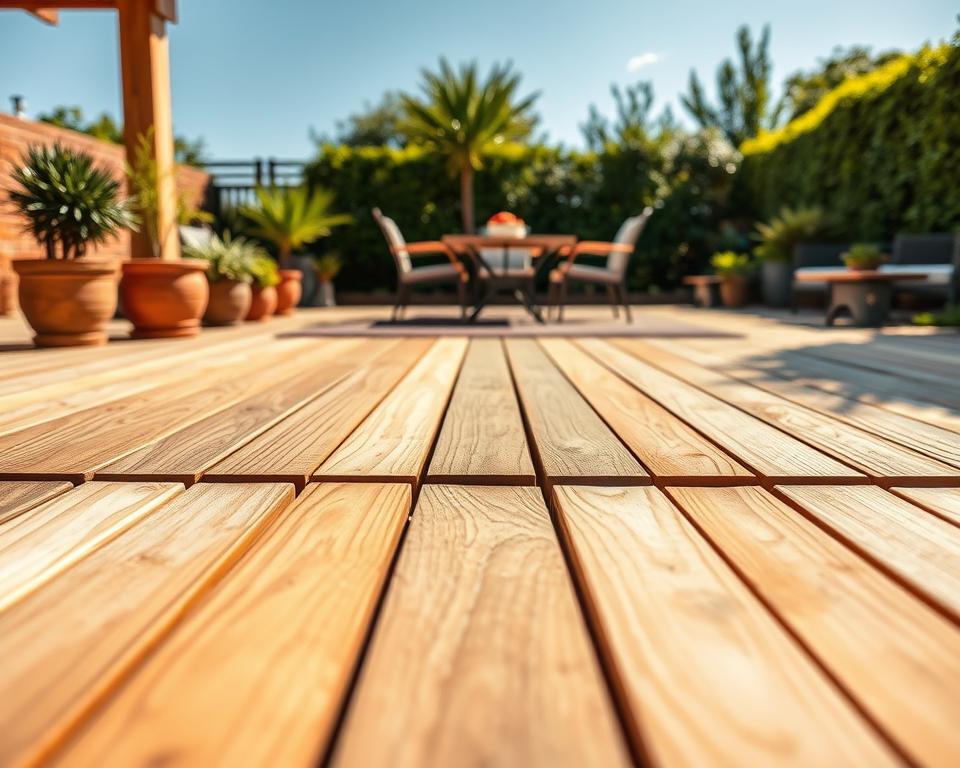
Softwood decking boards provide an excellent balance between affordability and performance. Each wood type brings distinct advantages to your outdoor design, allowing you to create a stunning terrace that meets both aesthetic and functional requirements.
Pressure-Treated Pine: Affordability Meets Durability
Pressure-treated pine stands as the most economical choice for deck construction. This wood undergoes a special treatment process that significantly enhances its resistance to:
- Rot and moisture damage
- Insect infestation
- Weathering effects
While it might not boast the most elegant appearance, pressure-treated pine offers exceptional value for larger projects and secondary outdoor structures.
Cedar: Natural Resistance and Beautiful Aesthetics
Cedar emerges as a premium softwood option with remarkable natural properties. Its inherent oils provide robust protection against decay and insects without requiring chemical treatments. Western Red Cedar particularly stands out with its:
- Distinctive reddish-brown colouration
- Pleasant aromatic qualities
- Lightweight installation characteristics
The wood naturally weathers to an attractive silver-grey patina, offering homeowners a beautiful and low-maintenance decking solution.
Redwood: Premium Quality for Lasting Performance
Redwood represents the pinnacle of softwood decking materials. This exceptional timber delivers superior durability with stunning natural beauty, featuring rich tones ranging from light amber to deep reddish-brown.
- Exceptional dimensional stability
- Natural resistance to warping
- Minimal splitting tendencies
Classified into architectural, construction, and merchantable grades, redwood allows you to select the perfect quality level for your specific deck construction needs.
Hardwood Decking: Investing in Long-Term Quality
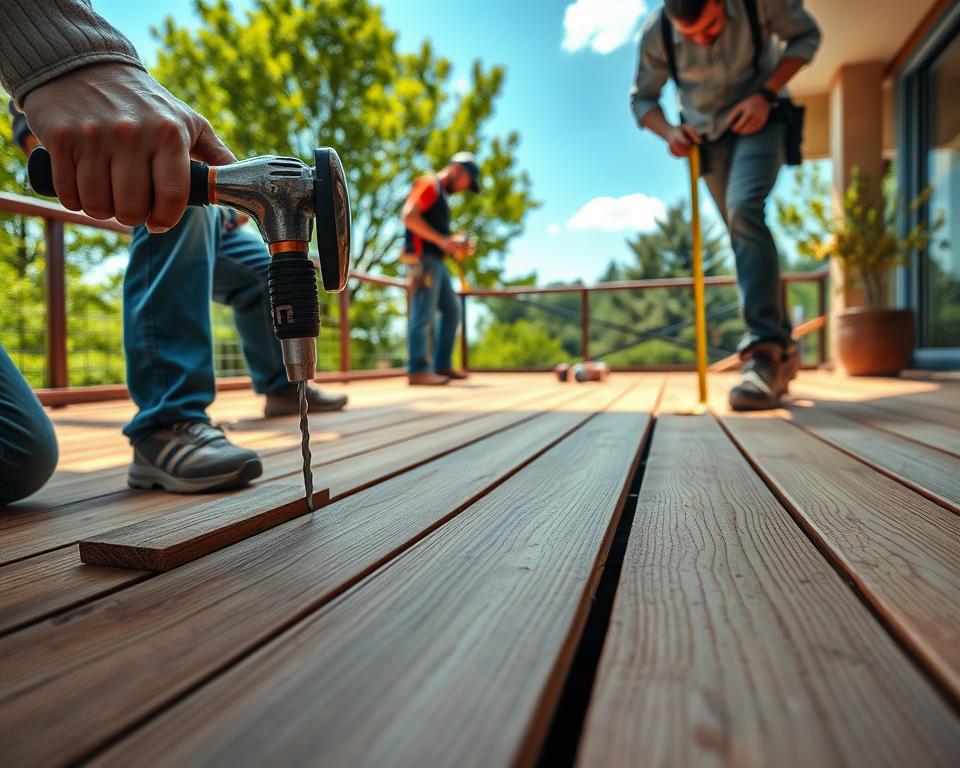
When considering durable decking for your outdoor space, hardwood emerges as a premium choice that promises exceptional longevity and performance. These robust timber options represent a significant investment in your property’s aesthetic and functional value.
Hardwoods distinguish themselves through remarkable characteristics that set them apart from softer alternatives. Their dense cellular structure creates naturally weather-resistant wood that withstands harsh environmental conditions with remarkable resilience.
- Superior moisture resistance
- Enhanced structural integrity
- Minimal maintenance requirements
- Extended service life (25-50 years)
The inherent strength of hardwoods means you’ll experience fewer replacements and repairs compared to traditional softwood decking. While initial costs might be higher, the long-term benefits far outweigh the upfront investment.
Hardwood decking represents not just a surface, but a lasting architectural statement for your outdoor environment.
Selecting hardwood requires careful consideration of factors like grain density, natural durability, and specific performance characteristics. Professional installation with specialised tools ensures optimal results, maximising the potential of these exceptional timber selections.
Your choice of hardwood decking transforms outdoor spaces into elegant, enduring environments that combine practical functionality with sophisticated design.
Tropical Hardwoods: Exotic Beauty and Exceptional Strength
When considering premium decking timber, tropical hardwoods represent the pinnacle of outdoor decking materials. These extraordinary woods offer unmatched durability, stunning aesthetics, and exceptional performance for your decking installation.
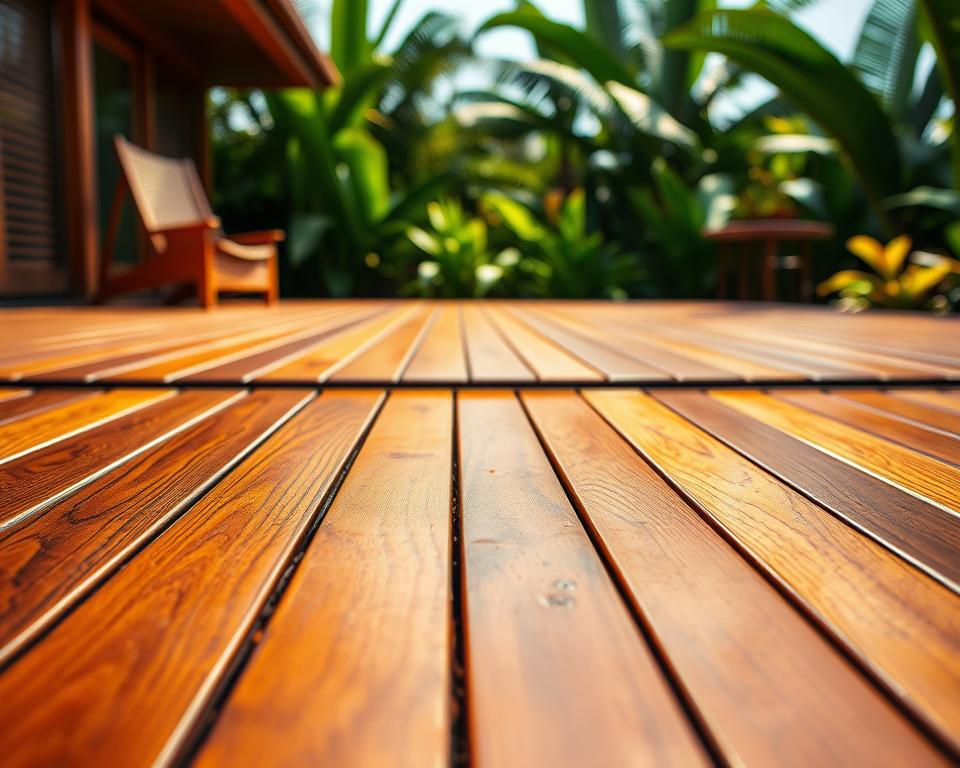
Tropical hardwoods provide homeowners with robust solutions that transcend typical decking expectations. Their natural properties make them ideal for creating breathtaking outdoor spaces that withstand challenging environmental conditions.
Ipe: The Gold Standard of Decking Timber
Ipe, a Brazilian hardwood, stands as the ultimate choice for discerning homeowners seeking premium decking timber. Its remarkable characteristics include:
- Extraordinary density that surpasses most timber options
- Exceptional resistance to rot, decay, and insect damage
- Class A fire rating comparable to concrete and steel
- Rich brown colouration with subtle natural variations
The wood’s incredible hardness requires specialised decking installation techniques, including precise pre-drilling and stainless steel fasteners to prevent corrosion.
Teak: Marine-Grade Excellence for Your Terrace
Teak represents another pinnacle of tropical hardwood excellence. Renowned for its marine applications, this timber offers unique benefits for residential decking:
- Natural oil content providing exceptional water resistance
- Dimensional stability in extreme weather conditions
- Warm golden-brown aesthetic
- Inherent slip-resistant properties
When selecting teak for your decking installation, consider different grades from plantation-grown to reclaimed marine timber, understanding that quality significantly influences pricing.
European Oak and Other Native Hardwoods

When considering sustainable decking for your outdoor space, European Oak emerges as a stellar choice for locally-sourced timber. This remarkable hardwood offers an exceptional blend of durability, aesthetic appeal, and environmental responsibility.
European Oak stands out with its remarkable natural characteristics:
- Durability classification of class 2
- Potential outdoor lifespan of 15-25 years
- Distinctive golden-brown colouration
- Rich grain patterns with characteristic knots
The wood’s high tannic acid content provides natural preservative qualities, making it an excellent option for decking. You’ll need to select stainless steel fasteners to prevent unsightly black staining from potential chemical reactions.
Beyond Oak, other European hardwoods offer compelling alternatives for sustainable decking:
- Sweet Chestnut: Similar durability with unique aesthetic characteristics
- Robinia: Exceptionally durable with properties comparable to tropical hardwoods
Choosing locally-sourced timber brings significant advantages. You’ll support British and European forestry, reduce transportation emissions, and often enjoy more competitive pricing compared to imported exotic woods.
Proper kiln-drying ensures dimensional stability, making European hardwoods a smart investment for your outdoor living space.
Comparing Maintenance Requirements Across Different Wood Types
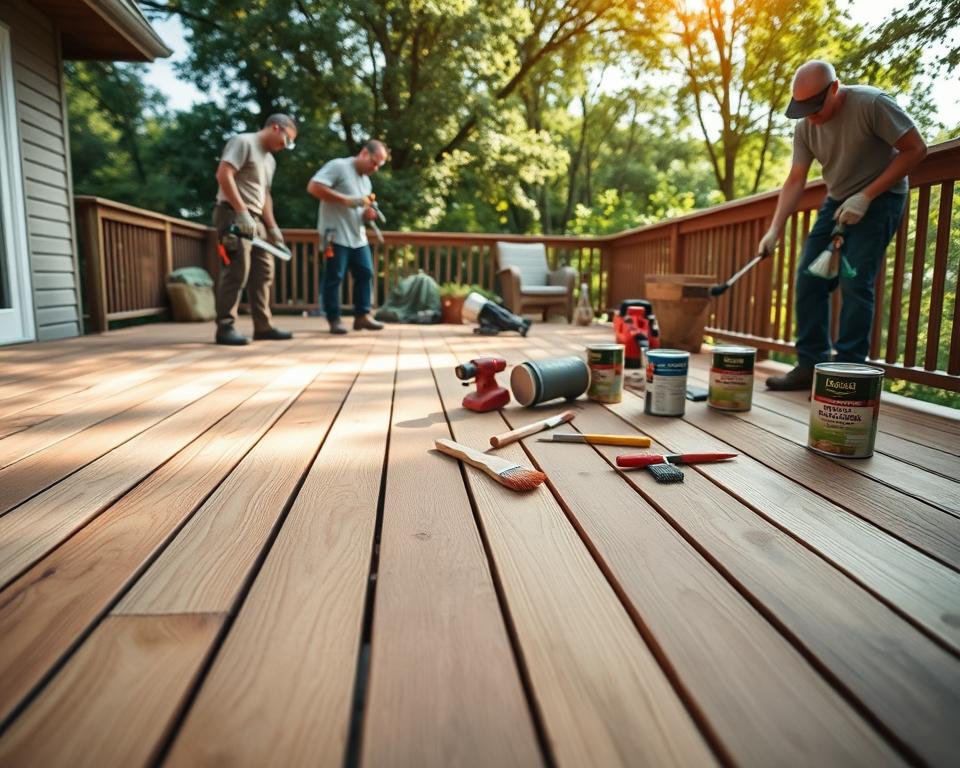
Understanding deck maintenance is crucial for preserving the beauty and longevity of your outdoor living space. Different wood types require varied approaches to decking treatment and wood preservation, making it essential to choose a strategy that matches your specific timber and lifestyle.
Weathering and Natural Colour Changes
Wood naturally responds to environmental exposure through a fascinating transformation process. Untreated timber will gradually develop a distinctive silvery-grey patina when exposed to sunlight and weather conditions. This weathering process varies across different wood species:
- Softwoods: Quick colour change within 2-3 months
- Hardwoods: Slower transformation, potentially taking 12-18 months
- Tropical hardwoods: Most resistant to immediate colour alteration
Treating and Sealing Your Decking
Effective decking treatment involves selecting appropriate preservation methods tailored to your specific timber type. Your maintenance approach will depend on the wood’s characteristics and exposure levels.
| Wood Type | Treatment Frequency | Recommended Products |
|---|---|---|
| Softwoods | Annually | Penetrating wood oils |
| European Hardwoods | Every 1-2 years | Semi-transparent stains |
| Tropical Hardwoods | Every 2-3 years | UV-resistant sealers |
Regular cleaning, proper application techniques, and selecting quality preservation products will significantly extend your deck’s lifespan and maintain its aesthetic appeal.
Cost Analysis: Balancing Budget with Performance
When planning your decking project, understanding decking costs becomes crucial for making an informed decision. Budget decking doesn’t always mean compromising on quality. The key is finding value for money by carefully evaluating the long-term investment potential of different timber options.
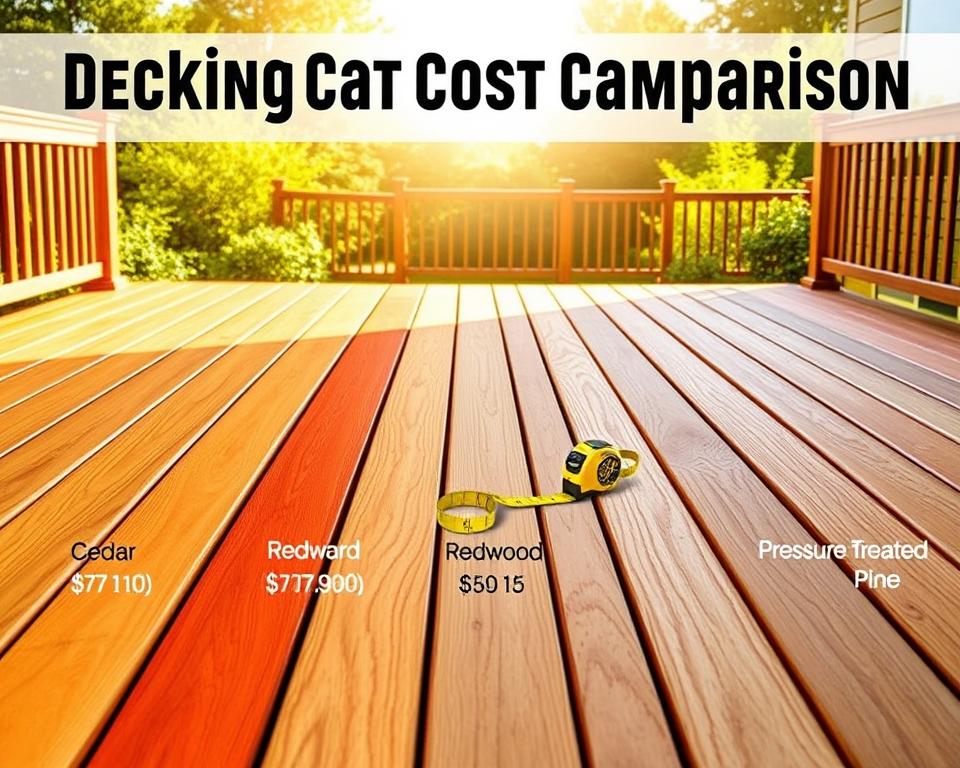
Your decking budget should consider more than just initial material prices. Different wood types present unique financial considerations:
- Pressure-treated pine: Most affordable option (£15-25 per square metre)
- Cedar: Mid-range pricing with natural resistance
- Tropical hardwoods: Premium investment (£80-150 per square metre)
Lifecycle cost matters more than upfront expenses. A cheaper pine deck might require replacement after 12-15 years, while a premium hardwood like Ipe could last 40+ years with minimal maintenance.
“Investing in quality decking is investing in your property’s long-term value and aesthetic appeal.”
Smart strategies for budget decking include:
- Using premium woods in visible areas
- Mixing material types strategically
- Phasing your project to spread costs
Remember, the cheapest option isn’t always the most economical. Carefully weighing initial costs against durability, maintenance requirements, and potential property value increase will help you make the most financially sound decision.
Environmental Considerations and Sustainable Sourcing
Choosing decking materials goes beyond aesthetics and durability. Your timber selection directly impacts environmental sustainability and global forest ecosystems. Understanding the ecological footprint of your decking project can help you make responsible choices that support sustainable timber practices.
FSC Certification and Responsible Forestry
When selecting eco-friendly decking, look for FSC certified decking as a gold standard of environmental responsibility. The Forest Stewardship Council (FSC) certification ensures timber comes from responsibly managed forests that protect biodiversity and support local communities.
- FSC 100%: Timber sourced entirely from certified forests
- FSC Mix: Contains some certified and controlled wood
- FSC Recycled: Materials from reclaimed timber sources
The Carbon Footprint of Different Timber Options
Not all timber has the same environmental impact. Local European hardwoods typically have lower transportation emissions compared to tropical hardwoods shipped from distant continents. Hardwoods also sequester carbon longer, providing extended climate benefits.
When considering eco-friendly decking, prioritise materials with:
- Minimal transportation distances
- Responsible forest management practices
- Longer product lifecycles
Your decking choice can contribute to global forest conservation. By selecting sustainable timber with proper certification, you support responsible forestry and reduce environmental degradation.
Conclusion
Selecting the right timber for your decking project involves carefully balancing multiple factors. Your best decking choice depends on understanding your specific needs, budget constraints, and long-term performance expectations. When choosing decking timber, consider how each wood type aligns with your aesthetic preferences, maintenance capacity, and environmental values.
The range of available timber options means you can find a solution that perfectly matches your outdoor space requirements. From affordable pressure-treated softwoods to premium tropical hardwoods like Ipe, each material offers unique advantages. Your decision should prioritise not just initial cost, but the complete lifecycle performance of the decking material.
Professional installers recommend viewing weathered timber samples and understanding how different woods age over time. Remember that quality installation is equally crucial as material selection. A well-constructed deck using FSC-certified timber will provide years of enjoyment, transforming your outdoor living area into a stunning, durable space that reflects your personal style and environmental consciousness.
Ultimately, the perfect decking timber is one that meets your practical needs while delivering the aesthetic and functional qualities you desire. Take time to research, consult experts, and carefully evaluate your specific site conditions before making your final selection.
FAQ
What are the most important factors to consider when choosing decking timber?
When selecting decking timber, you should consider several crucial factors: durability, maintenance requirements, initial cost, lifecycle value, aesthetic preferences, and environmental impact. Your choice will depend on balancing these elements to suit your specific outdoor space, climate conditions, and long-term expectations.
How long can I expect different types of decking wood to last?
The lifespan varies significantly across timber types. Pressure-treated pine typically lasts 10-15 years, cedar around 15-20 years, European hardwoods like oak can last 20-25 years, and premium tropical hardwoods such as Ipe can endure 40-50 years with proper maintenance.
Is it worth investing in more expensive hardwood decking?
While hardwoods have a higher upfront cost, they often provide better long-term value. More expensive woods like Ipe or teak offer superior durability, require less maintenance, and can last significantly longer than cheaper softwoods, potentially saving you money over time.
How does the British climate affect wood decking?
The UK’s moisture-rich, variable climate presents unique challenges for decking. You’ll need to choose timber with excellent moisture resistance, dimensional stability, and rot prevention. Woods like cedar, European oak, and tropical hardwoods perform particularly well in British weather conditions.
What maintenance is required for different types of decking wood?
Maintenance varies by wood type. Softwoods typically require annual treatment, European hardwoods need attention every 1-2 years, and tropical hardwoods might only need maintenance every 2-3 years. Regular cleaning, sealing, and protecting against moisture are essential for prolonging your deck’s life.
Are there environmentally friendly decking options?
Yes, look for FSC-certified timber from responsibly managed forests. European hardwoods and locally sourced timbers have lower carbon footprints. Options like sweet chestnut and robinia offer sustainable choices that support local forestry while providing excellent decking performance.
Can I install the decking myself, or should I hire a professional?
While DIY is possible, professional installation is recommended, especially for hardwoods and exotic timbers. Professionals understand specific requirements like proper ventilation, correct fastening techniques, and site-specific considerations that can significantly impact your deck’s longevity and performance.
How do I prevent my wooden deck from weathering and losing its colour?
To maintain your deck’s original colour, use UV-protective oils and appropriate sealants. Different woods weather differently—tropical hardwoods like Ipe retain colour longer, while softwoods silver more quickly. Regular cleaning and periodic treatment will help preserve your deck’s appearance.
What’s the most cost-effective decking timber?
Pressure-treated pine remains the most budget-friendly option, typically costing £15-25 per square metre. However, consider lifecycle costs—a cheaper initial investment might mean more frequent replacements and higher maintenance expenses over time.
How do I choose between softwoods and hardwoods?
Consider your budget, maintenance capacity, and aesthetic preferences. Softwoods are more affordable and easier to work with, while hardwoods offer superior durability and longer lifespans. Your specific project requirements and personal priorities will guide the best choice.