Create a Gravel Garden: Paths and Planting Beds
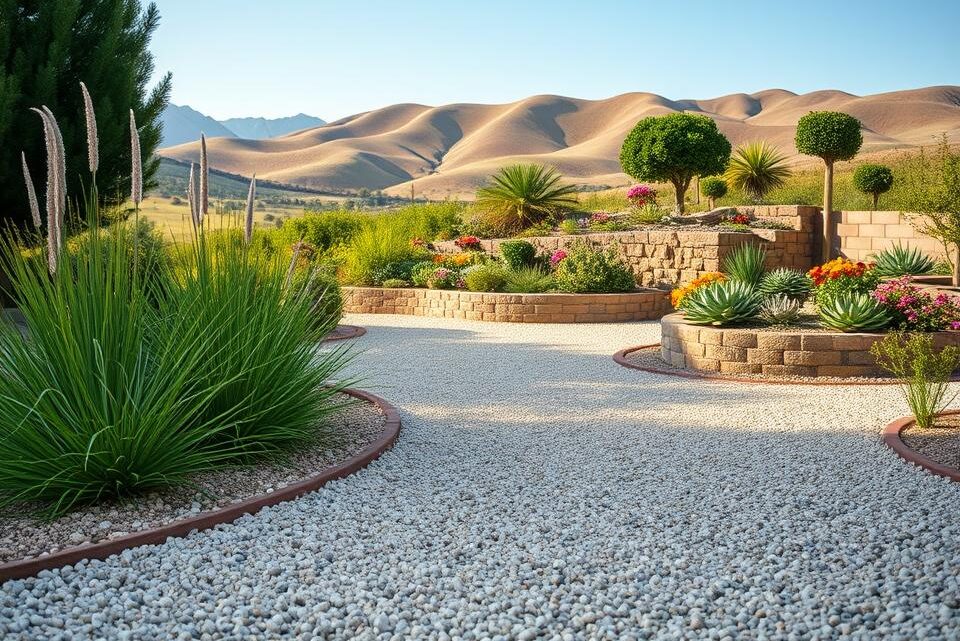
As a homeowner in the UK, you’re likely no stranger to the challenges of maintaining a beautiful garden. However, with a gravel garden design, you can enjoy a stunning outdoor space with minimal upkeep. Gravel gardens are an excellent choice for those seeking low-maintenance gardening solutions.
In this article, we’ll explore the key elements of creating a gravel garden, including the design and construction of paths and planting beds. By the end of this guide, you’ll be equipped with the knowledge to create a beautiful and functional gravel garden that suits your UK climate.
Inhaltsverzeichnis
Key Takeaways
- Discover the benefits of low-maintenance gardening with a gravel garden.
- Learn how to design and construct paths and planting beds for your gravel garden.
- Explore the best plants for a UK gravel garden.
- Understand the importance of proper drainage in a gravel garden.
- Find out how to maintain your gravel garden with minimal effort.
What Is a Gravel Garden?
The concept of a gravel garden, originating from Mediterranean regions, has been adapted to thrive in the UK climate. This style of gardening has gained popularity due to its aesthetic appeal and numerous practical benefits.
Origins and Mediterranean Inspiration
Gravel gardens draw inspiration from the Mediterranean region, where the dry, sun-baked landscapes have long been admired for their beauty and resilience. The use of gravel and drought-tolerant plants in these gardens reflects the Mediterranean’s low-maintenance approach to landscaping. By adopting similar techniques, UK gardeners can create outdoor spaces that are both stylish and sustainable.
Environmental and Practical Benefits
Gravel gardens offer several gravel garden benefits, including reduced water consumption and lower maintenance requirements. The use of gravel eliminates the need for frequent mowing and watering, making it an ideal choice for busy homeowners or those looking to reduce their environmental impact. Additionally, gravel gardens can thrive in the UK climate, providing a beautiful and resilient outdoor space throughout the year.
By incorporating drought-tolerant plants and efficient irrigation systems, you can enjoy a vibrant and sustainable garden that not only complements the UK climate but also contributes to a more environmentally friendly gardening practice.
Why Choose a Gravel Garden for Your British Landscape
If you’re considering a low-maintenance yet visually appealing garden solution for your British landscape, a gravel garden might be the perfect choice. Gravel gardens have gained popularity in the UK due to their numerous benefits, including reduced maintenance, water conservation, and year-round visual interest.
Low Maintenance in UK Climate Conditions
Gravel gardens are particularly suited to the UK climate, requiring less maintenance compared to traditional gardens. The gravel surface suppresses weeds, reducing the need for frequent weeding. Key benefits include:
- Reduced weed growth
- Less need for watering
- Minimal pruning and grooming
This makes gravel gardens an ideal choice for busy homeowners or those who prefer a more relaxed approach to gardening.
Water Conservation During Dry Spells
Water conservation is a significant advantage of gravel gardens, especially during dry spells. The gravel mulch helps to retain soil moisture, reducing the need for frequent watering. Some additional strategies for water conservation include:
- Using drought-tolerant plants
- Implementing efficient irrigation systems
- Collecting rainwater for garden use
By adopting these practices, you can significantly reduce your water consumption and create a more sustainable garden.
Year-Round Visual Interest
Gravel gardens can provide year-round visual interest through a combination of carefully selected plants, decorative gravel, and structural elements. Some tips for creating visual interest include:
- Incorporating plants with varying foliage and flowering times
- Using different textures and colours of gravel
- Adding sculptural elements or ornaments
By incorporating these elements, you can create a dynamic and engaging garden that remains attractive throughout the year.
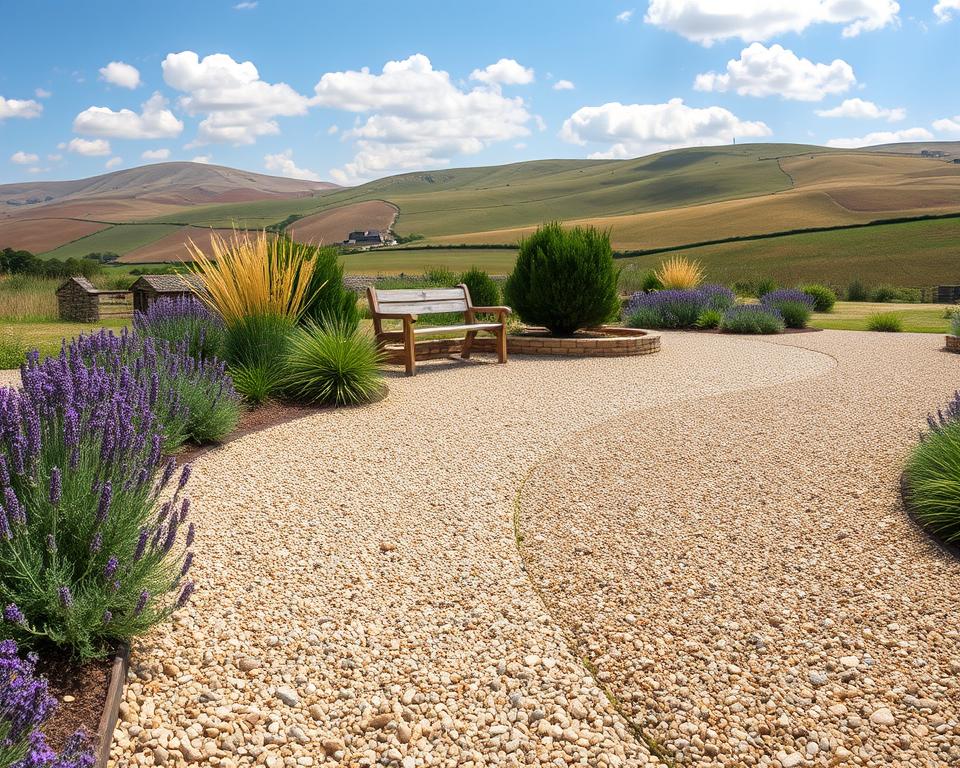
Planning Your Gravel Garden Layout
A well-designed gravel garden begins with a thoughtful layout that considers your garden’s unique characteristics. To achieve this, you need to assess your garden space, create a practical design plan, and address specific drainage requirements.
Assessing Your Garden Space
Start by evaluating your garden’s conditions, including sunlight, soil type, and existing features. Consider how you want to use your gravel garden – for relaxation, entertainment, or as a visual focal point. Take note of any slopes or uneven areas that may affect your design. Accurate assessment is crucial for a successful gravel garden.
Observe your garden’s microclimates and note areas that are prone to waterlogging or drought. This information will help you make informed decisions about plant selection and drainage solutions.
Sketching a Practical Design Plan
With your garden assessment in hand, create a detailed design plan. Sketch the layout, incorporating paths, planting beds, and other features. Consider the scale and proportion of your design elements to ensure a harmonious balance. Flexibility is key; be prepared to adjust your plan as needed during implementation.
Use graph paper to draw your design to scale, taking into account the mature size of plants and the width of paths. This will help you visualize the final result and make necessary adjustments.
Addressing British Drainage Requirements
Effective drainage is critical in British gravel gardens, where rainfall can be significant. Ensure your design includes adequate drainage solutions, such as French drains or permeable paving. Proper drainage will prevent waterlogging and reduce the risk of erosion.

Consider consulting with a professional if you’re unsure about the best drainage solutions for your garden. Proper planning will save you time and effort in the long run.
Essential Tools and Materials for Construction
The success of your gravel garden depends on using the right tools and materials for the job. Having the correct equipment will not only make the construction process smoother but also ensure that your garden is durable and requires minimal maintenance.
Required Tools Checklist
To start constructing your gravel garden, you’ll need a few essential tools. These include a shovel for digging, a rake for levelling and spreading gravel, and a wheelbarrow for transporting materials. You may also need a spirit level to ensure your paths and beds are even, and secateurs or a strimmer for managing plants.
- Shovel
- Rake
- Wheelbarrow
- Spirit level
- Secateurs or strimmer
Types of Gravel and Aggregates Available in the UK
The UK offers a variety of gravel and aggregate types suitable for gravel gardens. These range from pea gravel to larger stone aggregates. The choice depends on your desired aesthetic and the garden’s functional needs.
| Gravel Type | Description | Typical Use |
|---|---|---|
| Pea Gravel | Small, rounded stones | Paths, decorative areas |
| Crushed Stone | Angular stones, often limestone or granite | Drainage, pathways |
| Gravel Chips | Small, chipped stones | Decorative mulch, weed suppression |
Edging and Weed Membrane Materials
Effective edging and weed suppression are crucial for maintaining your gravel garden. Edging materials like metal, plastic, or stone help contain the gravel, while a weed membrane prevents unwanted growth.
Edging Materials: Metal edging for a sleek, modern look; plastic edging for flexibility; stone edging for a natural appearance.
Site Preparation Techniques
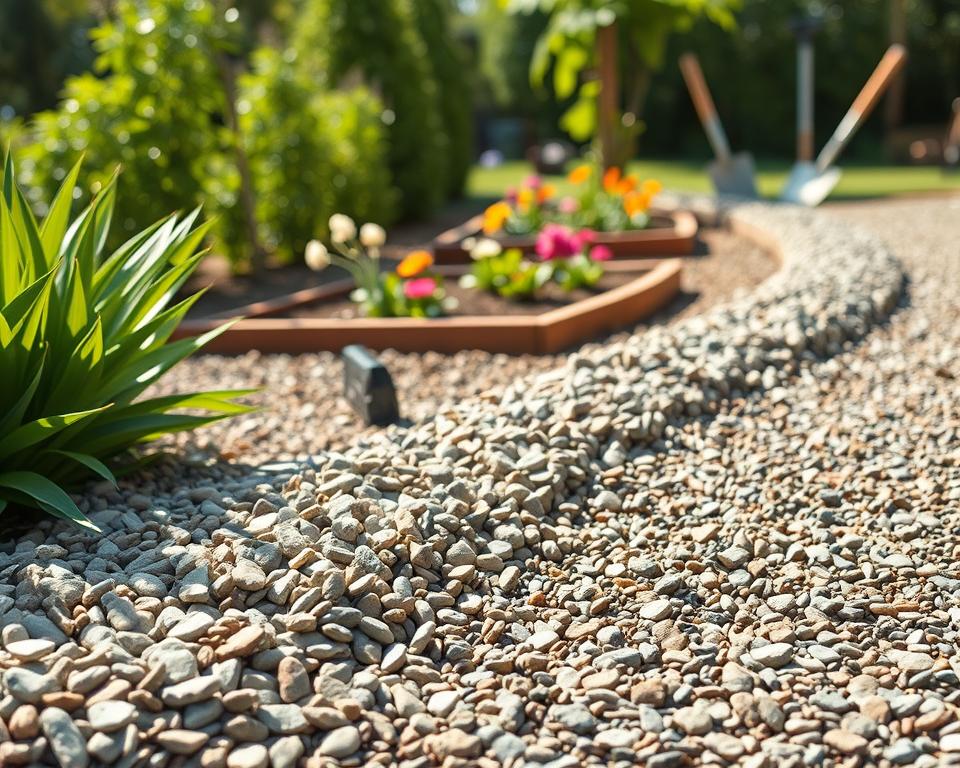
A well-prepared site is the foundation of a successful gravel garden, ensuring it looks great and remains low maintenance. Proper site preparation involves several key steps that set the stage for a beautiful and functional outdoor space.
Clearing and Levelling Your Garden Area
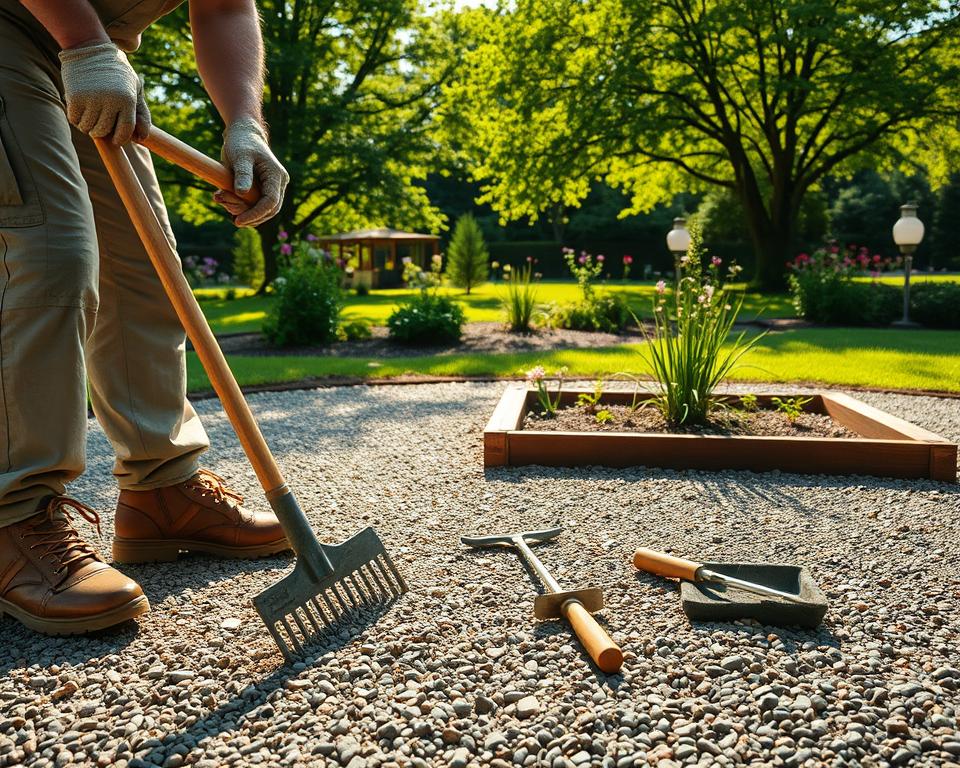
The first step in preparing your site is to clear the area of any debris, weeds, or existing plants. This can be done manually or with the help of machinery, depending on the size of your garden. Once cleared, assess the ground for any unevenness and level it as necessary. This ensures that your gravel garden will be even and visually appealing.
Soil Assessment and Necessary Amendments
After clearing and levelling, it’s crucial to assess your soil’s condition. Check for compaction, nutrient deficiencies, or other issues that could affect plant growth. Based on your findings, you may need to make amendments such as adding organic matter to improve soil structure and fertility. This step is vital for the health and sustainability of your gravel garden.
| Soil Condition | Amendment | Benefit |
|---|---|---|
| Compacted Soil | Add Organic Matter | Improves drainage and aeration |
| Nutrient Deficient | Fertilize | Promotes healthy plant growth |
| Poor Structure | Mix in Compost | Enhances soil water-holding capacity |
Effective Weed Suppression Methods
Weed suppression is a critical aspect of maintaining a low-maintenance gravel garden. One effective method is to lay a weed membrane, a porous fabric that allows water to pass through while preventing weeds from growing. This can be particularly effective when combined with a layer of gravel, creating a durable and weed-resistant surface.
By following these site preparation techniques, you can create a gravel garden that is not only beautiful but also easy to maintain, providing you with a serene outdoor space for years to come.
Creating a Gravel Garden – Paths and Planting Beds
To start constructing your gravel garden, you need to mark out the paths and planting beds according to your design plan. This step is crucial as it guides the subsequent construction process.
Marking Out Your Design on the Ground
Begin by marking out your gravel garden design on the ground using a garden hose or rope to represent the paths and beds. This visual representation helps in making any necessary adjustments before proceeding. Use stakes and twine to mark the boundaries more precisely.
Installing Robust Edging Materials
Edging materials are essential for maintaining the structure of your gravel garden. They prevent the gravel from spreading into the planting beds and add a decorative touch.
Metal Edging Options
Metal edging is durable and can be used to create sleek, modern designs. It is particularly effective for defining paths and can be made from materials like aluminium or steel.
Stone and Brick Alternatives
Stone and brick edging offer a more traditional look and can be used to create intricate designs. They are also durable and can withstand various weather conditions.
Securing Techniques
To secure your edging materials, use spikes or pins, especially for metal edging. For stone and brick, a combination of sand and mortar can be used to ensure stability.
Establishing the Structural Framework
Once the edging is in place, establish the structural framework by laying a weed membrane. This membrane prevents weeds from growing through the gravel, reducing maintenance. Ensure it is laid correctly to cover the entire area.
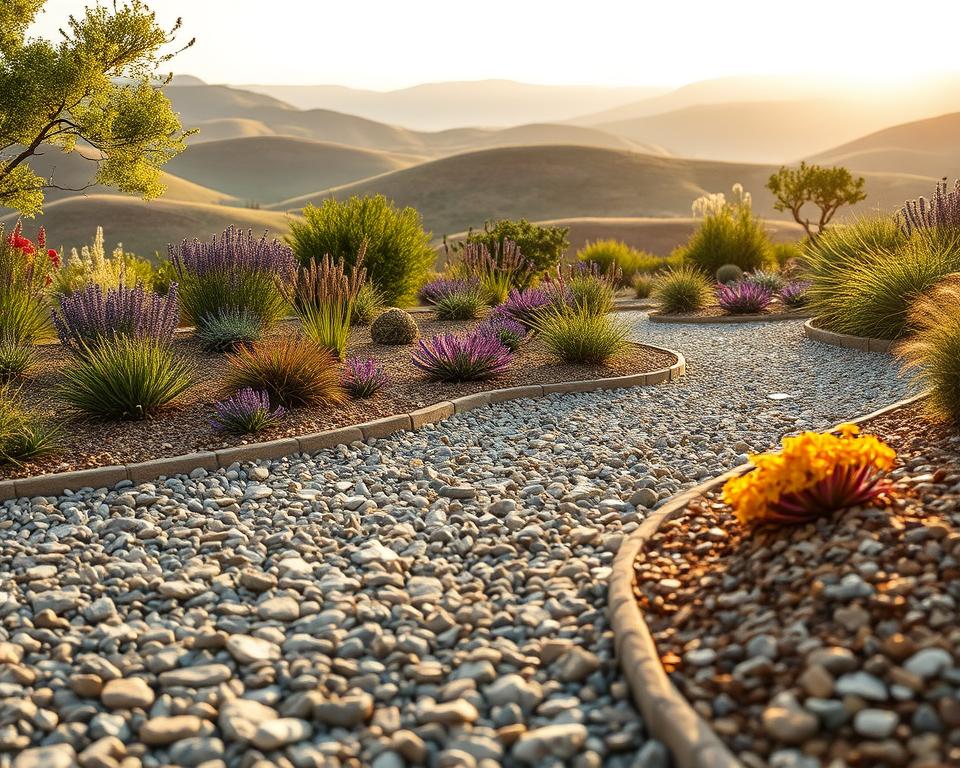
Some key considerations when establishing the structural framework include:
- Ensuring the weed membrane is durable and suitable for gravel gardens.
- Overlapping the membrane sheets to prevent weed growth.
- Securing the membrane with appropriate fixings.
By following these steps, you can create a well-structured gravel garden that is both aesthetically pleasing and low maintenance.
Constructing Durable Gravel Paths
To ensure your gravel garden remains functional and aesthetically pleasing, constructing durable gravel paths is essential. A well-designed gravel path not only enhances the beauty of your garden but also provides a stable and attractive walking surface.
Digging and Preparing the Path Foundation
Preparing the path foundation is a critical step in constructing durable gravel paths. This involves several key considerations to ensure the longevity and stability of the path.
Depth Requirements
The depth of the path foundation is crucial for its durability. A minimum depth of 100-150 mm is recommended to allow for adequate drainage and stability.
Edge Reinforcement
Edge reinforcement is vital to prevent the gravel from spreading and to maintain the path’s shape. Using edging materials such as plastic or metal edging can significantly enhance the path’s durability.
Drainage Considerations
Effective drainage is essential to prevent waterlogging and erosion. Ensuring that the path is sloped slightly and incorporating drainage solutions such as French drains can help manage water runoff.
Laying and Compacting Base Materials
Once the path foundation is prepared, the next step is to lay and compact the base materials. This typically involves using a layer of compacted hardcore or aggregate to provide a stable base for the gravel.
| Material | Depth | Purpose |
|---|---|---|
| Compacted Hardcore | 100-150 mm | Stable Base |
| Aggregate | 50-100 mm | Drainage and Stability |
Applying and Settling the Decorative Gravel Layer
The final step is to apply and settle the decorative gravel layer. This involves spreading the gravel evenly and compacting it to create a stable and attractive surface.
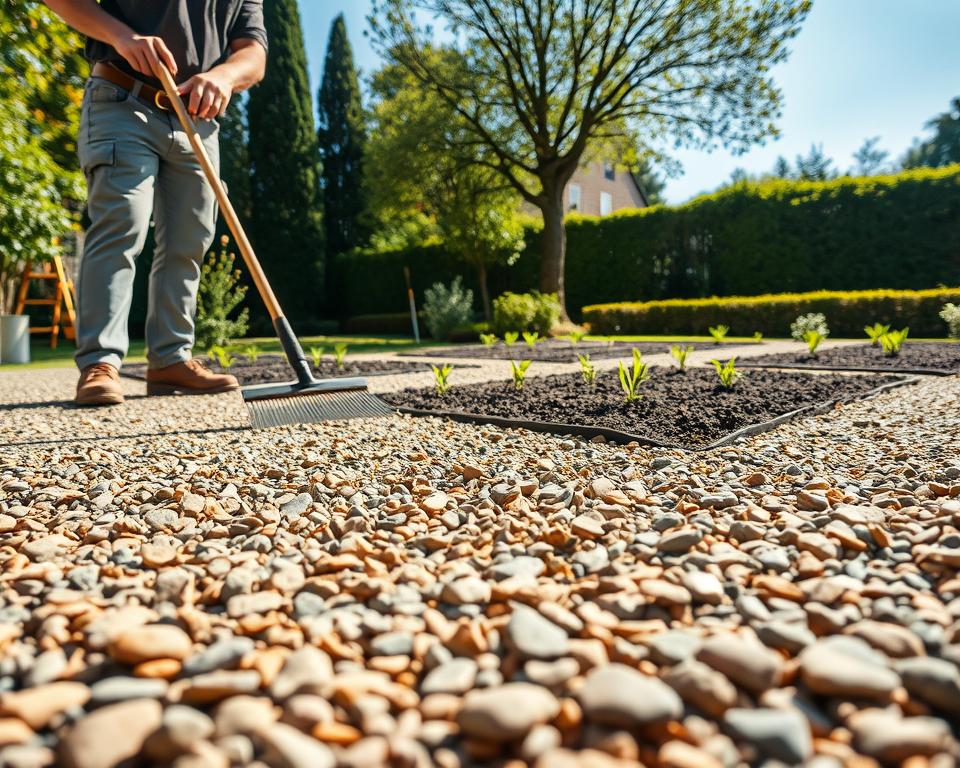
By following these steps and considering factors such as depth requirements, edge reinforcement, and drainage, you can construct durable gravel paths that enhance the beauty and functionality of your gravel garden.
Designing Effective Planting Beds Within Your Gravel Garden
The art of creating effective planting beds lies in mimicking nature’s patterns. When designing your gravel garden, the planting beds are a crucial element that can make or break the overall aesthetic. A well-designed planting bed should blend seamlessly into the gravel landscape, creating a natural and visually appealing environment.
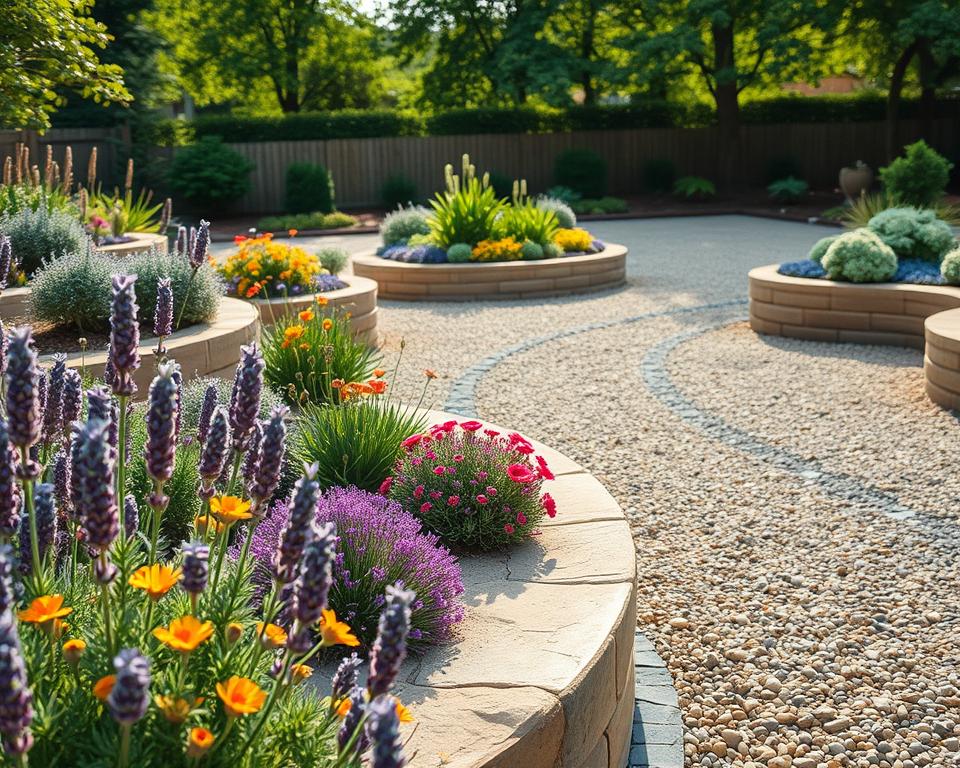
Creating Natural-Looking Shapes and Configurations
To achieve a natural look, avoid geometric shapes and instead opt for organic, curved configurations that echo the patterns found in nature. Consider the mature size of your plants and leave enough space for growth. Irregular shapes can add visual interest and create a sense of movement within the garden.
Soil Depth and Composition Requirements
The soil within your planting beds should be tailored to the needs of your chosen plants. For a gravel garden, it’s often beneficial to use a mix that drains well to prevent waterlogged soil. Soil depth is also crucial; deeper soils can support a wider range of plants, while shallower soils may require more drought-tolerant species.
| Plant Type | Soil Depth | Soil Composition |
|---|---|---|
| Drought-Tolerant | 30-60 cm | Sandy Loam |
| Mediterranean | 60-90 cm | Well-Draining Mix |
Incorporating Sculptural Elements and Focal Points
Sculptural elements and focal points can elevate your gravel garden’s design, adding visual interest and personality. Consider incorporating natural elements like large stones or sculptures that complement your planting beds. These elements can help draw the eye through the garden, creating a sense of journey and discovery.
By carefully designing your planting beds and incorporating sculptural elements, you can create a gravel garden that is not only beautiful but also unique and engaging.
Selecting Plants for Your British Gravel Garden
To maximize the potential of your gravel garden, it’s essential to select plants that are well-suited to the UK’s temperate maritime climate. The right plants will not only thrive in the gravel conditions but also provide year-round interest and beauty.
Mediterranean Plants That Thrive in UK Conditions
Mediterranean plants are ideal for gravel gardens due to their drought tolerance and love for well-drained soil. Some excellent choices include lavender, rosemary, and thyme. These plants are not only hardy but also provide a fragrant and visually appealing element to your garden.
- Lavender: Known for its purple flowers and drought tolerance.
- Rosemary: Offers fragrant foliage and blue flowers.
- Thyme: Provides low-growing, spreading coverage with tiny flowers.
Native Drought-Tolerant British Species
Incorporating native British plants into your gravel garden can enhance its natural beauty and biodiversity. Plants like heather and sedum are perfect examples. They are adapted to the local climate and soil conditions, requiring less maintenance.
- Heather: Adds a splash of color with its pink or purple flowers.
- Sedum: Features thick, fleshy leaves that store water, ideal for dry spells.
Ornamental Grasses and Architectural Plants
Ornamental grasses and architectural plants can add texture and drama to your gravel garden. Consider plants like stipa tenuissima for its delicate, feathery plumes or yucca for its striking, sword-like leaves. These plants create a dynamic and interesting landscape.

- Stipa Tenuissima: Offers a soft, flowing texture with its feathery plumes.
- Yucca: Provides a dramatic, architectural element with its tall, sword-like leaves.
Planting Techniques for Gravel Environments
When creating a gravel garden, the success of your plants depends on employing the right planting techniques. Gravel gardens offer a unique and beautiful landscape solution, but they require specific methods to ensure plants thrive.
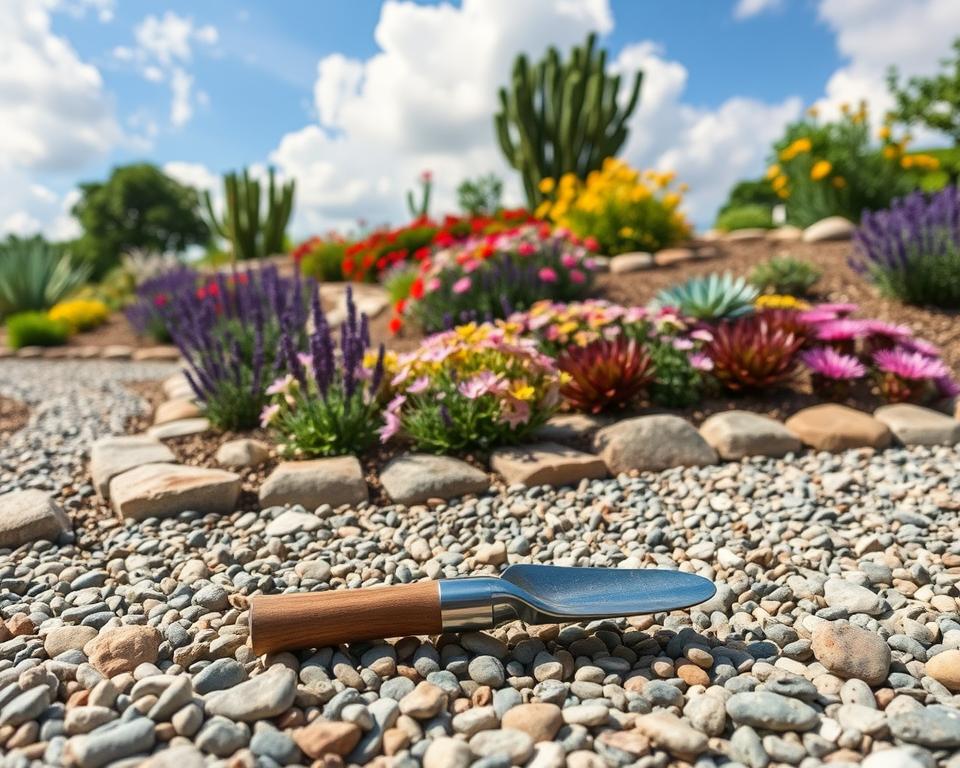
Proper Spacing and Arrangement for Mature Growth
To allow your plants to reach their full potential, it’s crucial to space them correctly. Research the mature size of each plant and leave enough room for growth. A well-planned arrangement not only enhances the aesthetic appeal but also promotes healthy growth by preventing overcrowding.
Effective Planting Methods in Gravel Substrates
The method you choose for planting in gravel substrates can significantly impact the success of your garden. There are several approaches to consider:
Planting Through Weed Membrane
Using a weed membrane can help suppress weeds and retain moisture. To plant through it, cut a slit in the membrane, carefully place your plant, and then secure the membrane around the base.
Direct Planting in Gravel
For a more natural look, you can plant directly into the gravel. Ensure the gravel is deep enough to accommodate the plant’s root system, and consider adding organic matter to improve soil quality.
Mulching Techniques
Mulching around plants helps retain moisture, suppress weeds, and regulate soil temperature. Use organic mulch like wood chips or bark, keeping it a few inches away from plant stems.
Initial Care for Successful Establishment
After planting, ensure your gravel garden receives adequate water, especially during dry spells. Monitor plant health, and adjust your care routine as needed. With proper care, your gravel garden will flourish, providing a beautiful and low-maintenance landscape.
Water Management in British Gravel Gardens
To keep your gravel garden flourishing, it’s vital to implement a robust water management strategy. Effective water management ensures that your garden remains healthy and visually appealing throughout the year, even during periods of drought or excessive rainfall.
Efficient Irrigation Systems
Installing an efficient irrigation system is a crucial step in water management. Consider using drip irrigation or soaker hoses, which deliver water directly to the roots of plants, reducing evaporation and runoff. These systems can be controlled using timers and moisture sensors to optimize water usage.
Rainwater Harvesting and Utilisation
Rainwater harvesting is another effective strategy for managing water in your gravel garden. By collecting and storing rainwater, you can reduce your reliance on mains water and lower your water bills. Use rainwater butts or tanks to collect rainwater from downspouts, and then use this water for irrigation during dry periods.
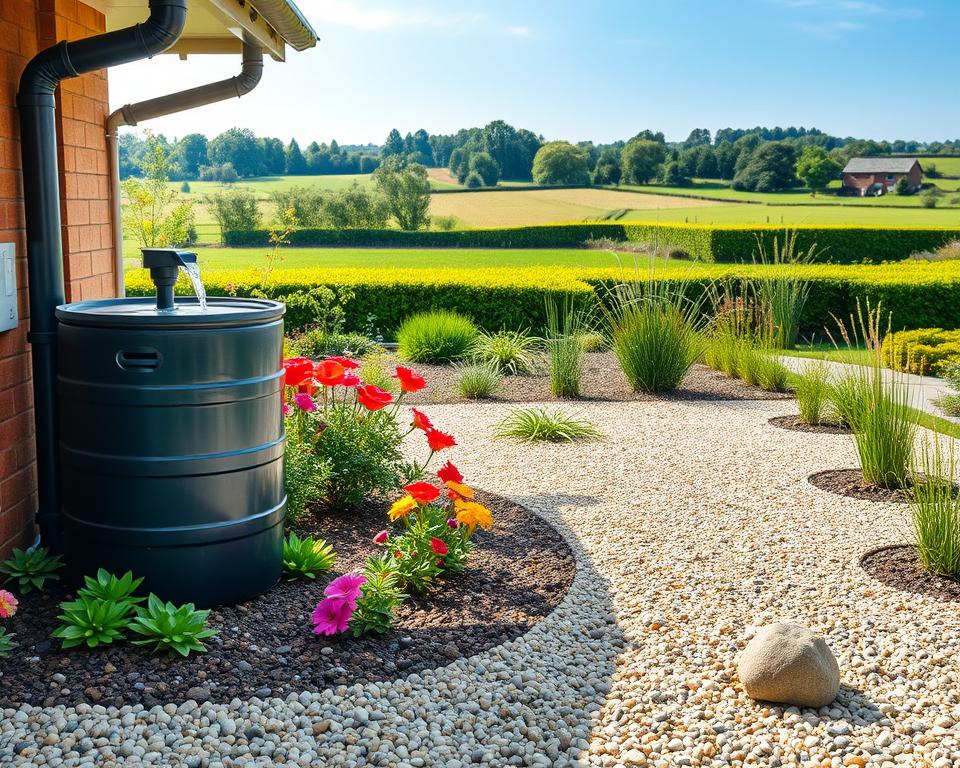
Managing Summer Dry Periods
During summer dry periods, it’s essential to manage water carefully to prevent stress to your plants. Mulching around plants can help retain moisture in the soil, while watering deeply but infrequently encourages deep root growth, making plants more drought-resistant.
By implementing these water management strategies, you can enjoy a thriving, sustainable gravel garden that requires less maintenance and conserves water.
Seasonal Maintenance Guide for UK Climate
To keep your gravel garden thriving, it’s essential to understand the seasonal care tasks tailored to the UK climate. Effective maintenance ensures your garden remains beautiful and healthy throughout the year.
Spring and Summer Care Tasks
During spring and summer, your gravel garden requires regular maintenance to thrive. Weed control is crucial; regularly inspect your garden and remove any weeds by hand or with appropriate tools. Ensure that your plants are watered adequately during dry spells, but avoid overwatering, which can be detrimental. Prune plants as needed to maintain shape and promote healthy growth.
Regularly inspect your irrigation system to ensure it’s functioning correctly, adjusting as necessary to accommodate the changing weather conditions.
Autumn and Winter Maintenance
As autumn arrives, clear away fallen leaves and debris from your gravel paths and planting beds to prevent them from becoming soggy and muddy. Consider adding a layer of fresh gravel or aggregate to replenish and maintain the appearance of your garden. In winter, protect your plants from frost and extreme cold by applying a suitable mulch or cover.
Check your edging materials and repair or replace them if necessary to maintain the structural integrity of your garden.
Long-term Refreshment and Renovation Strategies
To keep your gravel garden looking its best, consider periodic refreshment and renovation. This might involve replanting areas with new or different species, rearranging decorative elements, or replenishing gravel. Long-term planning can help maintain the garden’s visual appeal and functionality.
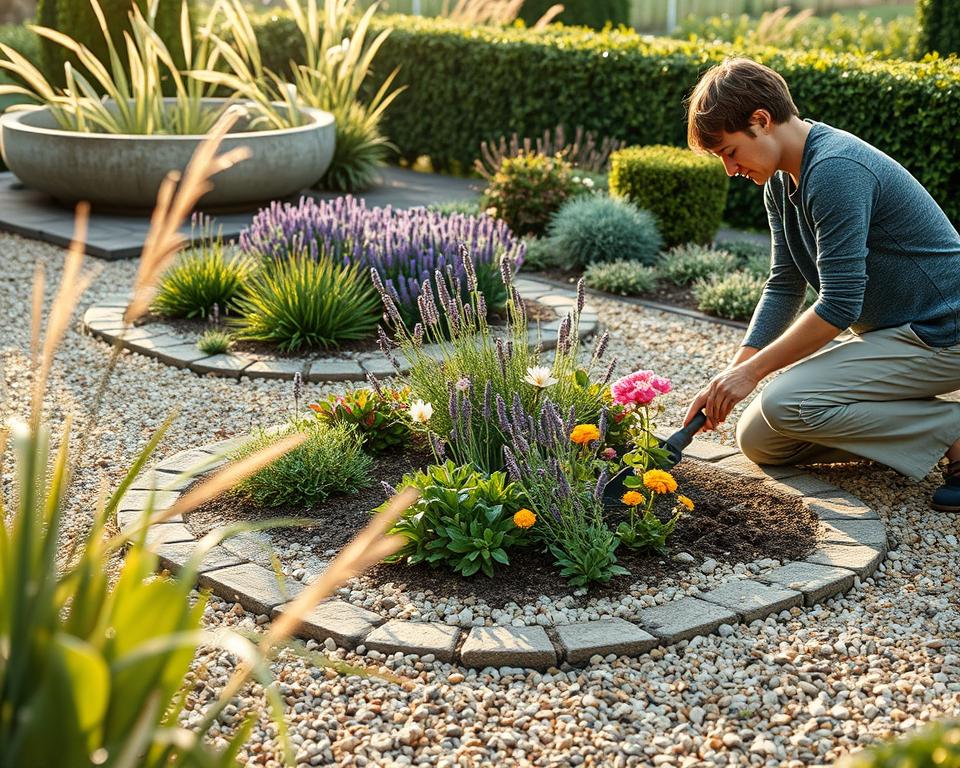
As noted by gardening expert, “A well-maintained gravel garden is not just about aesthetics; it’s also about creating a sustainable and low-maintenance outdoor space.” Regular maintenance and thoughtful planning are key to enjoying your gravel garden for years to come.
Troubleshooting Common Gravel Garden Issues
To keep your gravel garden thriving, it’s essential to troubleshoot common issues that may occur. Despite the many benefits of gravel gardens, challenges such as persistent weeds, gravel migration, and plant health problems can arise.
Preventing and Managing Persistent Weeds
Persistent weeds can be a significant issue in gravel gardens. To manage them, ensure you lay a proper weed membrane during construction. Regularly inspect your garden and manually remove weeds as they appear. Using a pre-emergent herbicide can also help prevent weed growth.
Addressing Gravel Migration and Displacement
Gravel migration can occur due to weather conditions or foot traffic. To minimize this, use robust edging materials to contain the gravel. Regularly rake the gravel to maintain an even distribution and consider replenishing it as needed.
| Cause | Solution |
|---|---|
| Weather conditions | Use robust edging, regularly rake gravel |
| Foot traffic | Install stepping stones, use weed membrane |
Solving Plant Health Problems in Gravel Conditions
Plant health issues can arise in gravel gardens due to poor soil quality or inadequate watering. Ensure your plants are suitable for gravel conditions and provide appropriate care, including watering and fertilization as needed.
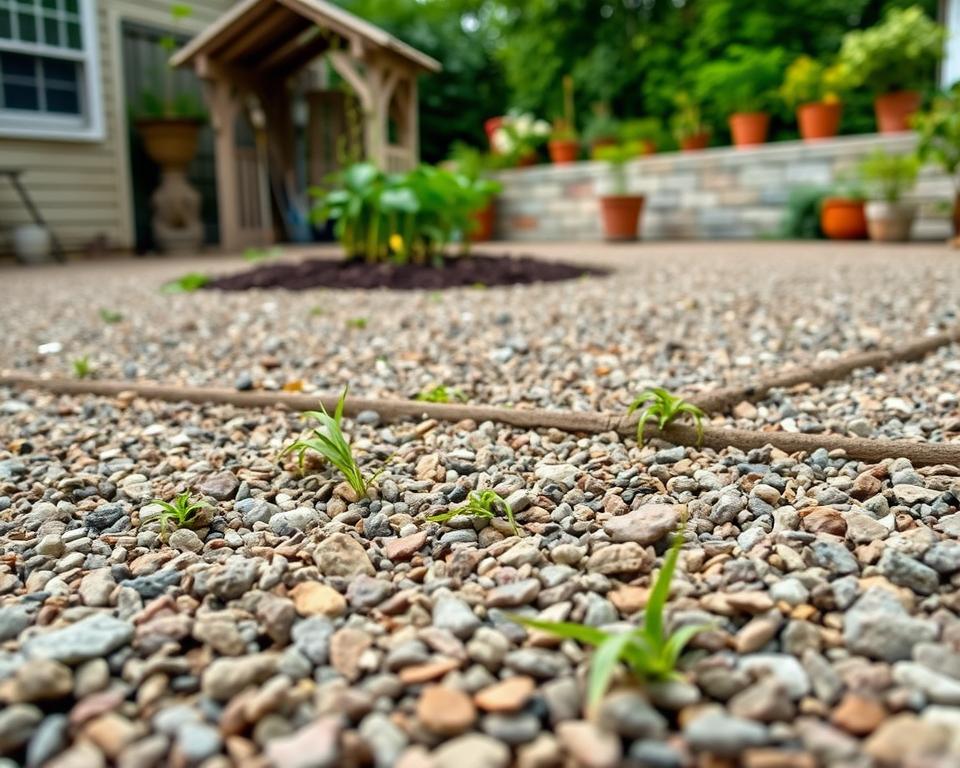
By addressing these common issues, you can maintain a healthy and visually appealing gravel garden. Regular maintenance and proper planning are key to preventing many of the problems that can occur.
Conclusion
You now have the knowledge to create a beautiful and functional gravel garden, complete with paths and planting beds. By following the steps outlined in this article, you can enjoy the many gravel garden benefits, including low maintenance and aesthetic appeal.
A well-designed gravel garden not only enhances your outdoor space but also provides a haven for drought-tolerant plants. With the right plants and proper care, your gravel garden will thrive, requiring less water and maintenance than traditional gardens. This makes it an ideal choice for those who want to enjoy low-maintenance gardening.
As you embark on your gravel garden project, remember to assess your garden space carefully, choose the right materials, and select plants that are suitable for your local climate. With these tips in mind, you can create a stunning gravel garden that brings joy and serenity to your outdoor space.
FAQ
What is the best type of gravel to use for a gravel garden in the UK?
The best type of gravel to use for a gravel garden in the UK depends on your desired appearance and the local climate. Popular options include pea gravel, shingle, and crushed stone. Consider factors such as drainage, colour, and texture when making your selection.
How do I prevent weeds from growing in my gravel garden?
To prevent weeds from growing in your gravel garden, you can install a weed membrane or landscape fabric beneath the gravel. Regularly inspecting your garden and manually removing weeds as they appear can also help. Applying a weed suppressant or using mulch around plants can provide additional protection.
Can I plant directly into the gravel in my garden?
While it is possible to plant directly into gravel, it is generally recommended to create planting beds with a suitable soil composition to support healthy plant growth. If you do choose to plant directly into gravel, ensure the area is well-prepared and consider using a grafting or layering technique to help plants establish.
How do I maintain my gravel garden during the winter months?
To maintain your gravel garden during the winter, clear any debris and leaves from the gravel surface. Check that edging is secure and inspect plants for any signs of stress or damage. Consider applying a protective layer of mulch or straw to sensitive plants to protect them from harsh weather conditions.
What are the benefits of using a gravel garden in a British climate?
Gravel gardens offer several benefits in the British climate, including low maintenance, improved drainage, and water conservation. They can also provide a visually appealing and drought-tolerant alternative to traditional lawns and planting schemes.
How often should I replenish the gravel in my garden?
The frequency of replenishing gravel depends on factors such as gravel type, weather conditions, and garden usage. Generally, you can expect to replenish your gravel every 5-10 years, although this may vary. Regularly inspect your garden to determine if replenishment is necessary.
Can I use gravel gardens in shaded areas?
Yes, you can create a gravel garden in shaded areas, although plant selection may be limited. Choose shade-tolerant plants and consider using a mulch or organic matter to improve soil health. Be aware that shaded areas may require less water conservation measures.
How do I stop gravel from migrating or spreading beyond the edging?
To prevent gravel migration, ensure that your edging is securely in place and consider using a geotextile membrane or landscape fabric to contain the gravel. Regularly inspect the edging and make adjustments as necessary to prevent gravel from escaping.