Inspecting Mineral-Felt Roofs on Timber Garden Stores

You open your timber garden store after a wet weekend to get the mower out, and you notice a dark patch on the inside of the roof board. Nothing is dripping, the contents are not soaked, and the store still looks sound from outside. This is exactly the point at which a mineral-felt roof inspection is worthwhile. On small timber storage units, especially pent-roof designs used for bikes, tools, lawnmowers and garden furniture, early roof maintenance is usually simple and inexpensive. Left too long, however, a small split in the felt can let water into the roof deck, barge boards and upper wall panels.
Mineral felt is a practical, widely used roof covering for timber garden stores. It is lightweight, affordable and well suited to sheds and storage units, but it is not maintenance-free. Sunlight, frost, wind uplift, overhanging branches, poor drainage and accidental damage can all shorten its service life. This guide explains how to inspect mineral-felt roofs on timber garden stores, what to look for, when to repair, and when replacement is the better option.
Inhaltsverzeichnis
Why mineral-felt roof inspections matter
A timber garden store is usually designed to keep stored items dry rather than to perform like a fully insulated building. The roof is therefore one of the most important protective parts. On a typical timber store, the roof covering sheds rainwater, while the timber roof deck beneath provides support. If the felt fails, water can sit against the timber and gradually cause staining, swelling, mould, delamination of board materials or rot.
Regular inspection is particularly important on compact garden stores because their roofs are often low and easy to overlook. You may notice the doors, hinges and wall cladding every time you use the unit, but the roof surface may only be visible from above or from the side. A quick planned check two or three times a year is far better than waiting until water appears inside.
When to inspect your garden store roof
For most UK gardens, inspect a mineral-felt roof at least twice a year: once in spring and once in autumn. Spring checks reveal winter damage from frost, wind and standing water. Autumn checks allow you to clear leaves, moss and debris before the roof spends months in damp conditions.
You should also inspect the roof after specific events:
- After strong winds, especially if the store is in an exposed position.
- After heavy rain, when leaks or pooling are easier to spot.
- After snow or frost, particularly if the roof has a shallow pitch.
- After nearby tree pruning, falling branches or impact damage.
- Before storing valuable or water-sensitive items for winter.
- After moving the storage unit or carrying out assembly work nearby.
Safety before you start
Most timber garden stores are not designed to be walked on. Do not climb onto the roof, even if it appears sturdy. Roof boards on small storage units are intended to support the roof covering and normal weather loads, not your body weight. Use a stable step ladder positioned on firm, level ground and inspect from the side. If you cannot see the whole surface safely, use a phone camera held above roof level or ask another adult to help from a safe position.
Wear gloves when handling old felt, nails or loose debris. Mineral felt edges can be rough, and exposed fixings may be sharp. If the roof is wet, icy or windy, postpone the inspection. A careful inspection in good light is more useful than a rushed one in poor weather.
Understand the parts of a mineral-felt roof
Before inspecting, it helps to know what you are looking at. On a timber garden store, the felt is normally laid over a timber or sheet-board roof deck. It may be fixed with clout nails, adhesive, battens or a combination, depending on the design. The edges are often finished with barge boards or fascias, which help cover the felt edges and improve the appearance.
On a pent roof, water should run towards the lower edge. This makes the front and rear edges particularly important. If water is allowed to track under the felt at the high edge, or sit at the low edge, the timber beneath may deteriorate even though the top of the roof looks broadly intact.
Step-by-step roof inspection
1. Check the roof from a distance
Stand a few metres away and look at the overall shape of the roof. The felt should lie reasonably flat and follow the roof plane. Look for sagging, ripples, lifted corners, missing sections, torn edges or obvious dips where water could collect. On a pent roof, confirm that the slope is clear and not obstructed by debris at the lower edge.
2. Look closely at the felt surface
From a ladder or safe vantage point, inspect the mineral surface. Some weathering is normal, but the surface should not be badly cracked, brittle, bald or lifting. Watch for splits along folds, nail lines and edges. Small cracks may be repairable; widespread brittleness usually suggests the felt is approaching the end of its useful life.
3. Inspect edges, corners and joints
Most felt failures begin at the edges. Wind can lift corners, rain can be driven underneath, and fixings may loosen over time. Check that the felt is still held down and that any barge boards or trims are secure. Corners are vulnerable because they are exposed to both wind and handling during assembly or maintenance.
4. Check for punctures and impact marks
Branches, tools, ladders, footballs and even wildlife can damage felt. Look for small holes, scuffs, cuts or dents. A puncture may not leak immediately in dry weather, but once rain and wind find it, water can enter the roof deck.
5. Inspect inside the store
Open the doors and look at the underside of the roof in good daylight. Dark staining, swollen board edges, mould, musty smells or damp items stored near the walls can all indicate water entry. If the roof has recently been wet, use a torch to check corners and the underside near the low edge of a pent roof.
Roof inspection checklist
Use this checklist during each planned inspection:
- Is the felt lying flat without lifted corners or loose edges?
- Are there any cracks, splits, punctures or worn patches?
- Are the roof edges and barge boards secure?
- Is rainwater able to run off freely?
- Are leaves, moss or twigs sitting on the roof?
- Is there any staining or dampness on the underside of the roof?
- Are stored items dry and free from mildew?
- Has wind, frost or nearby tree growth affected the roof since the last check?
- Does the felt feel flexible enough to remain serviceable, or is it brittle?
- Is repair sufficient, or is full re-felting now more sensible?
Using a real timber store as a practical reference
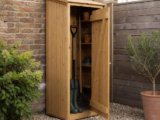
The same principles apply whether you have a compact tool store, a bike store, a mower store or a larger timber unit. For example, a shiplap pent garden store with double doors and a mineral-felt roof is a common arrangement in UK gardens. The roof covering protects the timber roof deck and the stored contents, while the timber structure beneath still depends on good drainage, ventilation and timely maintenance. The example below is included only to show the type of product these inspection principles apply to; your own store may differ in size, construction and finish.
How to decide between repair and replacement
Not every mark on mineral felt means the roof needs replacing. Equally, repeated patching can become false economy if the covering is generally worn out. Use clear decision criteria rather than guessing.
Repair is usually suitable when:
- The damage is localised, such as one small tear or puncture.
- The felt is still flexible and well bonded or securely fixed elsewhere.
- The timber roof deck beneath is dry and sound.
- The edges remain secure, with no widespread lifting.
- The roof has not been leaking for a long period.
Replacement is usually wiser when:
- The felt is brittle, cracked across large areas or shedding its mineral finish badly.
- Several patches have already been applied and leaks keep returning.
- Water has reached the roof deck in more than one area.
- Edges are lifting along a full side of the roof.
- The felt has reached the end of its expected service life for its exposure level.
- You are preparing the store for winter and want reliable protection for valuable contents.
If the roof deck is soft, swollen or delaminating, replacing the felt alone may not solve the problem. The deck may need attention before new felt is installed. Covering damaged timber with new felt can trap moisture and accelerate decay.
Practical maintenance steps
Keep the roof clear
Remove leaves, moss, pine needles and twigs by hand or with a soft brush. Do not use a pressure washer, as it can drive water under laps and damage the mineral surface. Avoid scraping aggressively with metal tools. A clean roof dries faster and is less likely to suffer from rot at the edges.
Trim overhanging vegetation
Branches above the roof drop leaves, encourage moss and may scrape the felt in windy weather. Trim vegetation so air can circulate around the store and sunlight can help dry the roof after rain. Also check that climbing plants are not pulling at the felt or forcing moisture against the timber.
Maintain the fall of the roof
A pent roof relies on its slope. If the store has settled unevenly because the base has moved, water may begin to sit on the roof rather than run off. Check that the unit sits level on a firm, suitable base and that the roof fall has not been compromised. Rectifying the base may prevent repeated roof problems.
Protect the felt during nearby work
If you are painting fences, cutting branches or moving ladders, protect the roof from accidental damage. Never rest heavy materials on the felt. Even a small compression mark can become a weak point if the roof covering is already weathered.
Common practical mistakes to avoid
Waiting until water drips inside
A visible drip is a late warning sign. Timber can absorb moisture before water appears on stored items. Staining, swelling and musty smells deserve attention even if there is no active drip.
Using unsuitable sealants as a permanent fix
General-purpose household sealants may not bond well to mineral felt outdoors, especially on dusty or damp surfaces. They can crack, peel or create water traps. Use products intended for roof felt repairs and follow the manufacturer’s instructions.
Nailing through the wrong area
Adding random nails can create extra holes and leak points. If felt needs re-fixing, use suitable fixings and place them correctly, usually where they can be covered or sealed as part of the repair. Do not overdrive nails so they tear the felt.
Ignoring the roof edges
Many people inspect only the middle of the roof. Edges, corners and joints are more likely to fail first. Pay particular attention to the windward side and the lower edge of a pent roof, where water and debris often collect.
Covering damp timber too quickly
If you discover a leak, allow the roof deck to dry properly before sealing it in, provided the weather and security of the contents allow. Trapping moisture beneath new felt can lead to hidden timber decay.
Seasonal care plan
A simple seasonal plan helps you avoid emergency repairs. In spring, inspect for winter damage, remove debris and repair small defects before summer heat makes old felt more brittle. In summer, check for sun cracking and trim vegetation while growth is active. In autumn, clear leaves and confirm the roof is watertight before prolonged wet weather. In winter, avoid disturbing frozen felt, as it may crack more easily; instead, monitor from the ground and deal with urgent issues carefully when conditions improve.
What to do if you find a leak
If you find water inside the store, first protect the contents. Move bikes, tools, electrical garden equipment, bags of compost and soft furnishings away from the affected area. Dry any wet items promptly to prevent rust, mildew or staining.
Next, identify whether the water is entering through the roof felt, around the roof edge, through a wall joint or via condensation. Condensation can form inside timber stores when damp items are stored with poor ventilation, but roof leaks usually correspond with staining beneath a defect or at a roof edge. If in doubt, inspect immediately after rain and trace the highest point of dampness.
For a small, obvious puncture, a felt repair patch or suitable roof felt adhesive may be enough. For extensive damage, plan a full re-felt. If the unit is under any warranty, check the terms before altering the roof, as unauthorised repairs may affect cover. Keep records of maintenance, especially if the manufacturer requires the building to be installed on a suitable base or maintained in a particular way.
FAQ
How often should I replace mineral felt on a garden store?
There is no single replacement interval because lifespan depends on exposure, installation quality, roof pitch, shade, debris and weather. Inspect regularly and replace when the felt becomes brittle, cracked, loose or unreliable, rather than relying only on age.
Can I walk on the roof to inspect it?
No. Most timber garden store roofs are not designed to carry a person. Use a stable ladder and inspect from the side, or use a camera to view areas you cannot see safely.
Is moss on mineral felt a serious problem?
A little moss is common, especially in shaded gardens, but heavy moss holds moisture against the felt and can shorten its life. Remove it gently with a soft brush. Avoid harsh scraping or pressure washing.
Why is the inside of my roof damp but the felt looks fine?
The cause may be a hidden edge leak, condensation, wind-driven rain, or moisture from stored items. Check roof edges, ventilation, wet contents and the base. If dampness appears after rain in the same place, a leak is more likely.
Should I upgrade the roof covering when replacing felt?
You may choose a higher-grade felt or another suitable shed-roof covering if compatible with the structure. Consider cost, weight, expected lifespan, appearance and ease of fitting. Do not add a covering that is too heavy for the roof deck.
Conclusion
Inspecting a mineral-felt roof on a timber garden store is a straightforward maintenance task that can prevent damp contents, roof deck damage and avoidable timber decay. Focus on the roof surface, edges, corners, fixings and the underside of the deck. Keep the roof clean, maintain good run-off, trim overhanging vegetation and act quickly when small defects appear.
For most owners, the best approach is simple: inspect in spring and autumn, check again after severe weather, repair local damage promptly, and replace the felt when it is generally worn rather than repeatedly patching a failing roof. With sensible care, your timber garden store will be far better protected against the damp, changeable conditions of the UK climate.