Maintenance planning for pressure-treated timber raised beds
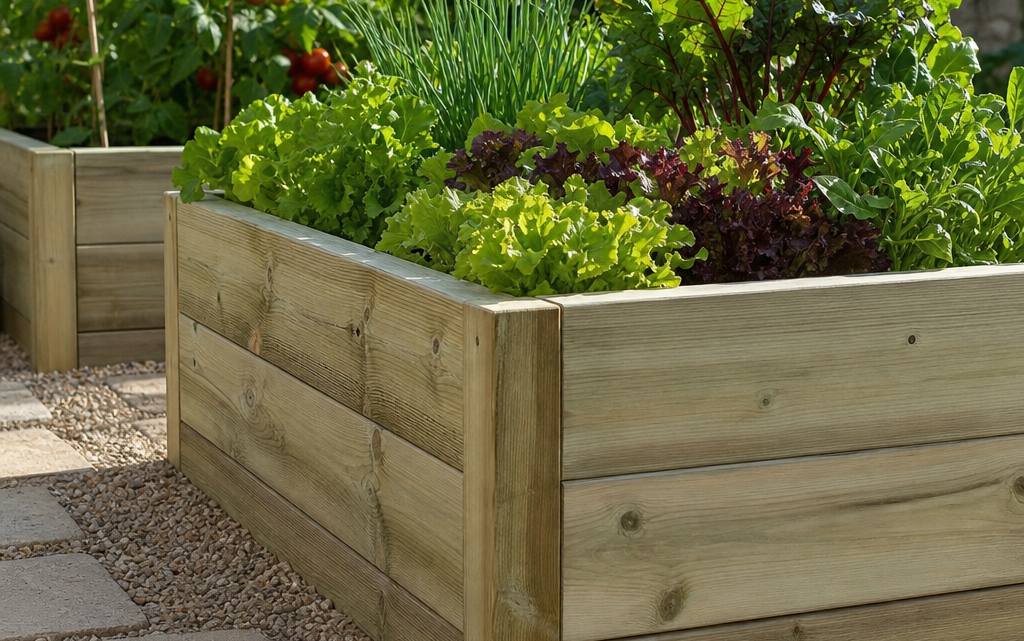
You have installed a pressure-treated timber raised bed, filled it with compost, and enjoyed the first season of herbs, salads or vegetables. The timber still looks sound, the crops have done well, and it is tempting to leave the bed alone until something visibly goes wrong. In practice, the best results come from light, planned maintenance: checking drainage, reducing soil-to-timber stress, topping up growing media and spotting early signs of movement or decay before they become expensive problems.
This guide explains how to plan the long-term care of pressure-treated timber raised beds in a practical, realistic way. It is written for typical UK garden conditions, where raised beds face wet winters, occasional summer drought, frost, soil pressure, slugs, weeds and regular watering. The aim is not to make timber last forever, but to help you get the best service life from it while keeping your bed productive and safe to use.
Inhaltsverzeichnis
Understanding what pressure-treated timber does and does not do
Pressure-treated timber is treated to improve its resistance to rot and insect attack. This makes it a sensible choice for raised beds because the timber is exposed to moisture, soil and changing weather. However, treatment is not a substitute for good installation and ongoing care.
A pressure-treated raised bed can still suffer if it is permanently waterlogged, buried too deeply, damaged by tools, poorly supported, or allowed to sit in constant contact with wet debris. The treatment helps the timber resist decay, but it does not prevent physical movement, warping, splitting, staining, algae growth or general wear. A warranty, where offered, usually relates to rot and may depend on correct use, so you should still follow the manufacturer’s instructions and keep a sensible maintenance routine.
Set your maintenance priorities from the start
Long-term care is easiest when you decide what matters most before problems appear. Your priorities may differ depending on whether the bed is used for food crops, decorative planting, a rental property, a school garden or a low-maintenance household plot.
Use these decision criteria
- Crop type: Vegetable beds need regular soil renewal and close inspection because they are watered and dug more often.
- Location: A bed in a damp, shaded corner needs more frequent checks for algae, standing water and soft ground than one in an open, sunny position.
- Access: If you can reach all sides easily, maintenance is simpler. Beds placed tight against fences or walls can hide problems.
- Expected lifespan: If you want the bed to last as long as possible, focus on drainage, avoiding trapped moisture and repairing minor damage quickly.
- Appearance: If the bed is a feature in the garden, you may want a cleaning and finishing routine as well as structural checks.
- Budget: A small annual budget for compost, fixings, membrane or repairs is often cheaper than replacing a neglected bed early.
Annual maintenance calendar for timber raised beds
A simple seasonal plan prevents raised bed care becoming a large, messy job. You do not need to inspect the timber every week, but you should have set points in the year when you check the structure and growing conditions.
Late winter to early spring
This is the most useful time for a thorough inspection, before the bed is full of vigorous growth. Remove dead plant material, lift any temporary covers and look closely at the timber. Check whether boards have shifted, corners have opened, fixings are loose, or soil has slumped to one side. If the bed was very wet through winter, look for signs of poor drainage such as sour-smelling soil, persistent puddling or green algae on the lower timber.
Spring is also the time to top up the growing medium. Soil and compost settle naturally, especially in new raised beds. Add well-rotted compost or suitable growing media and mix it into the top layer without repeatedly striking the timber with a fork or spade.
Late spring to summer
In the growing season, focus on watering practices and weed control. Raised beds dry more quickly than open ground, especially narrow or shallow beds. Water deeply when needed rather than giving frequent light sprinklings, which can encourage shallow rooting and keep the timber surface damp without benefiting the crop.
Keep the area around the bed clear. Grass, leaves and weeds pressed against the outside of timber trap moisture and reduce airflow. If you use a hose, avoid leaving it draped over the same edge all season, as repeated rubbing and wet contact can mark the timber.
Autumn
After harvesting annual crops, clear the bed properly. Remove spent stems, netting pegs, labels, broken canes and any plastic that has become buried. Check the timber before winter weather arrives. Autumn is a good time to repair small issues because the bed is not yet frozen or saturated.
If you grow winter crops, avoid overfilling the bed with heavy wet compost. Soil pressure increases when the bed is full and saturated, and repeated freeze-thaw cycles can exaggerate movement in joints or corners.
Winter
Winter care is mainly about preventing avoidable wetness. You do not need to cover every raised bed, but you should stop leaves, old pots, bags of compost and timber offcuts accumulating against the sides. After storms, check that the bed has not shifted on soft ground and that water is not pooling around the base.
Drainage is the foundation of long service life
Poor drainage is one of the most common reasons timber raised beds deteriorate earlier than expected. Even treated timber performs better when it can dry between wet periods. The aim is not to keep the bed dry; plants need moisture. The aim is to prevent constant saturation around the boards and base.
Practical drainage steps
- Choose a level but free-draining position. Avoid low spots where rainwater naturally collects.
- Do not seal the bottom unless the design requires it. Many raised beds are intended to sit open to the ground. Blocking drainage can create a sump.
- Break up compacted soil underneath. If the bed sits on heavy clay, loosen the surface before filling so water can move away more easily.
- Use suitable growing media. Dense, poor-quality soil can become waterlogged and heavy. Blend compost with appropriate soil or loam where needed.
- Keep external edges clear. Do not bank mulch, gravel, soil or turf high against the outside of the timber.
If your bed sits on a hard surface, such as paving, drainage becomes even more important. Make sure water can escape freely and that the timber is not sitting in standing water after rain. Raising the bed very slightly on suitable supports may help in some installations, but you must ensure the structure remains stable and safe.
Managing soil pressure and timber movement
Raised beds hold a surprising amount of weight. Wet compost and soil press outwards, and this can gradually loosen joints, bow boards or create gaps. Pressure-treated timber is still timber: it expands and contracts with moisture changes, and some movement is normal.
To reduce stress, fill the bed evenly rather than tipping all the soil against one side. Avoid overfilling above the top edge, as loose compost will spill and trap moisture against the external boards. If you notice a side beginning to bow, empty part of the bed before attempting repairs. Do not simply force the timber back while the bed is full and under pressure.
Using a manufactured raised bed as a practical reference point
When planning maintenance, it helps to look at a real raised bed kit and think about how its features affect care. For example, the Forest Caledonian Trough Raised Bed 5’11 x 1’6, listed as 1.8 x 0.45 m, is a pressure-treated timber raised bed supplied with fixings and instructions and described as having sturdy rails with half-lap ends. It is also supplied for two-person assembly and is covered by a 15-year anti-rot warranty. These details are useful because they highlight the sort of things you should factor into maintenance planning: treated timber still needs inspection, joints should be kept tight, and assembly quality matters from the first day.
Its listed price of 139.99 EUR also illustrates a practical point: even a relatively modest raised bed is worth maintaining properly. A few minutes of seasonal care can help protect the investment, particularly if you are using several beds to build a productive vegetable area or a structured planting display.
Do not treat any single product as a universal standard for all raised beds. Dimensions, board thickness, fixing type, warranty conditions and assembly methods vary. Always follow the instructions supplied with your own raised bed, especially where the manufacturer gives guidance on ground preparation, fixings, liners or finishes.
Should you use a liner?
A liner can reduce direct contact between damp soil and timber, but it must be used carefully. A badly installed liner can trap water against the wood or block drainage, which defeats the purpose. If you use one, choose a suitable permeable or purpose-made material and avoid creating sealed pockets where water can sit.
Line the sides rather than making the whole bed watertight, unless the product is designed for that use. Leave the base free-draining where appropriate. Fix the liner neatly so it does not slump into the bed or become torn by digging. Inspect it each year because damaged liner can collect wet soil behind it.
Cleaning and surface care
Timber raised beds do not need aggressive cleaning. In fact, over-cleaning can damage the surface. A soft brush is usually enough to remove soil splashes, algae and dried plant matter. If you wash the timber, use clean water and allow the bed to dry. Avoid high-pressure washing at close range, as it can roughen the surface and drive water into joints.
Some owners apply an exterior wood finish for appearance, but you must be cautious when the bed is used for edible crops. Use only products suitable for the intended use and follow the manufacturer’s guidance. Do not apply unknown preservatives, creosote-type products or unsuitable stains to timber that is in or near a food-growing bed.
Fixings, corners and assembly checks
Many long-term problems begin with small assembly issues. A bed that is slightly out of square may still hold soil, but stress can build at the corners. Fixings can loosen as timber dries and swells through the seasons.
At least once a year, check that fixings are secure and corners remain aligned. If the product was supplied without pre-drilled holes, as some kits are, careful assembly is particularly important. Pre-drilling may be recommended in some circumstances to reduce splitting, but you should follow the instructions for your specific product. If you replace fixings, use suitable exterior-grade alternatives of the correct size and type.
Raised bed maintenance checklist
Use this checklist once in spring and again in autumn. It is short enough to be realistic but covers the main causes of avoidable deterioration.
- Clear leaves, weeds and debris from inside and around the bed.
- Check that water is not pooling at the base or inside the bed.
- Look for soft, crumbly, split or badly discoloured timber.
- Check corners, joints and fixings for movement or gaps.
- Confirm the bed is still level and has not sunk into soft ground.
- Top up settled growing media without overfilling.
- Inspect any liner for tears, trapped wet soil or blocked drainage.
- Remove soil banked against the outside of the timber.
- Brush off algae and mud using gentle methods.
- Record any repairs needed before the next growing season.
Common practical mistakes to avoid
Overwatering little and often
Light daily watering can leave timber damp while failing to soak the root zone properly. Water according to crop need and weather conditions. Check the soil with your finger or a trowel before watering automatically.
Letting soil or mulch pile up outside the bed
When soil builds up around the outer face, the timber stays damp and has less airflow. Keep the external base visible and clear where possible.
Ignoring a small bow or loose corner
A slight movement is easier to correct than a distorted bed full of wet compost. Investigate early, reduce soil pressure if necessary and refix before the problem spreads.
Using unsuitable chemicals near edible crops
Do not apply random timber treatments to a vegetable bed. Check suitability carefully, especially if the product may contact soil used for food crops.
Blocking drainage with plastic sheeting
A solid plastic lining may seem protective, but if it traps water it can increase decay risk. Drainage should remain part of the design.
Damaging timber during cultivation
Repeatedly striking the sides with spades, forks or hoes can break fibres, loosen fixings and expose fresh timber. Work carefully near the edges.
When to repair and when to replace
Minor issues such as loose fixings, small surface splits or a torn liner are usually repairable. Replace damaged fixings with suitable exterior-grade ones, realign corners if possible, and remove trapped debris. Surface checking or shallow cracks are common in outdoor timber and are not automatically a sign of failure.
Replacement becomes more likely when the timber is soft through its depth, corners no longer hold securely, boards are badly bowed, or the structure cannot safely contain soil. If one board or section fails, check whether a local repair is possible before replacing the whole bed. However, do not continue using a bed that is unstable, especially where children, pets or public access are involved.
Keeping the growing medium healthy
Timber care and soil care are connected. Poor soil structure can hold excessive water, increase pressure and reduce crop performance. Each year, remove diseased plant material and replenish nutrients with compost or appropriate fertiliser for the crops you grow.
Avoid constantly digging right to the bottom unless necessary. No-dig or low-disturbance methods can work well in raised beds because they reduce compaction and limit accidental damage to the timber. Mulching the soil surface helps conserve moisture, but keep mulch inside the bed rather than spilling it over the outer edges.
Planning for several raised beds
If you have more than one raised bed, create a simple maintenance rotation. Number the beds or map them in a notebook. Record what you grew, when you topped up compost, and any structural issues. This helps with crop rotation and makes it easier to spot whether one location is consistently wetter or more problematic than the others.
Leave enough space between beds for airflow and access. Narrow gaps are hard to weed and often become damp channels full of leaves. If you are adding new beds, think about future maintenance before you set them in place. Being able to walk around a bed comfortably is not a luxury; it is part of keeping it in good condition.
Short FAQ
How often should you inspect a pressure-treated timber raised bed?
Inspect it properly at least twice a year, ideally in early spring and autumn. In very wet, shaded or exposed sites, add a quick check after heavy storms or prolonged rain.
Does pressure-treated timber need painting or staining?
Not necessarily. Pressure treatment is intended to improve durability. Painting or staining may be chosen for appearance, but any product used should be suitable for exterior timber and appropriate for beds used near edible crops.
Is it normal for timber to split slightly?
Small surface splits and checks are common as outdoor timber dries and takes up moisture again. They are not always structural. Investigate if splits widen significantly, fixings loosen, or the timber becomes soft.
Should you empty the bed every year?
Usually, no. Annual emptying is not needed for normal maintenance and can be a lot of work. Remove spent crops, refresh the top layer and only empty sections if you need to repair, move or investigate a serious drainage problem.
Can a raised bed sit directly on grass?
It can, but grass and weeds should be dealt with before installation, and the site should drain well. Grass growing against the outside should be kept trimmed so it does not hold moisture against the timber.
Conclusion
Pressure-treated timber raised beds are practical, attractive and well suited to UK gardens, but their long-term performance depends on more than the treatment alone. Good drainage, careful watering, clear edges, sound fixings and regular inspections all help the timber cope with soil pressure and wet weather.
Your maintenance plan does not need to be complicated. Check the bed in spring and autumn, keep debris and external soil away from the timber, repair small movement early, and refresh the growing medium as part of normal crop care. With these habits in place, you give your raised beds the best chance of remaining productive, tidy and structurally reliable for many seasons.