Window and door maintenance for glazed timber garden rooms
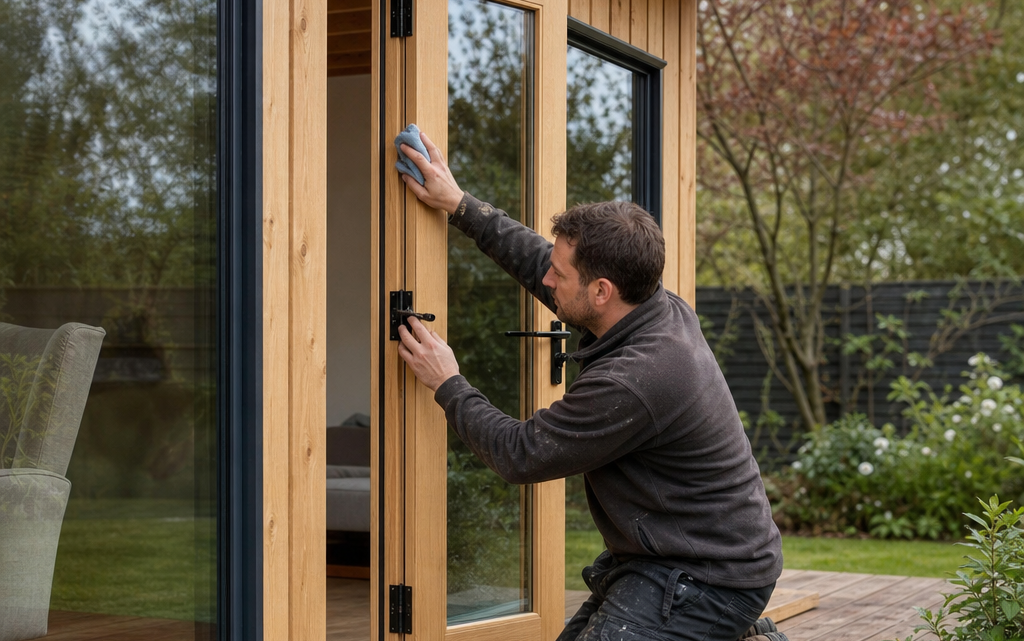
You unlock your timber garden room after a wet and windy week, open the doors for some fresh air, and notice that one of the windows feels stiff, the door needs a firm push to latch, and a small line of moisture has appeared near a seal. These are common issues in glazed timber buildings, particularly where opening windows, double doors and adjustable hinges are exposed to changing temperatures, rain, sun and seasonal timber movement.
The good news is that most window and door problems can be prevented with simple, regular care. Timber garden rooms are not like internal rooms in a house: the structure expands and contracts, seals are exposed to UV and dirt, and hinges carry the load of heavier glazed doors. A practical maintenance routine helps preserve weather resistance, ease of use and security, while reducing the risk of costly repairs later.
Inhaltsverzeichnis
Why window and door maintenance matters in timber garden rooms
Glazed timber garden rooms often rely on several parts working together: timber frames, opening casements, rubber seals, glazing units, locks, handles, hinges, sills and drainage details. If one part is neglected, another may suffer. For example, a dirty seal may stop a window closing evenly; a misaligned hinge may cause a door to rub; a blocked window gutter may allow water to sit where it should drain away.
Timber also behaves differently through the year. In damp weather it can swell slightly, while in dry or hot conditions it may shrink. This movement is normal, but it means that doors and windows should not be judged only by how they behaved on installation day. You should expect to inspect and fine-tune them periodically, especially during the first year and after major seasonal changes.
Set a sensible maintenance schedule
You do not need to dismantle your garden room every month. A light but consistent routine is usually more effective than occasional heavy intervention. The following schedule suits most glazed timber garden rooms, but you should always follow the manufacturer’s specific instructions where provided.
Monthly checks during regular use
Once a month, open and close every window and door. Check whether each one moves smoothly, closes evenly and locks without force. Look at the seals and wipe away dust, pollen, cobwebs and grit. Pay attention to the bottom edges of doors and windows, as dirt and water tend to collect there.
Seasonal checks in spring and autumn
Spring and autumn are good times for a more detailed inspection. Check all hinges, handles, locks, seals, sills and drainage channels. These are also sensible times to look for early signs of timber coating failure, such as flaking paint, faded stain, hairline cracks in exposed end grain, or darkened patches that stay damp.
After severe weather
After heavy rain, strong winds, snow or prolonged heat, inspect the glazed openings. Make sure water is draining away rather than pooling against seals or timber. If a door suddenly catches after a storm, do not force it repeatedly. Identify whether the issue is dirt, swelling, hinge movement or a latch alignment problem.
How to care for opening windows
Opening windows in a garden room provide ventilation, reduce condensation and make the building more comfortable. They also need more care than fixed glazing because they have moving parts and compression seals.
Clean frames, glazing and contact surfaces
Use a soft cloth, warm water and a mild detergent to clean the timber frame, glass and opening edges. Avoid abrasive pads and harsh solvents, as these can damage coatings, seals or hardware finishes. The aim is not only cosmetic: grit on the closing edge can prevent the window from seating properly and may wear the seal over time.
When cleaning, open the window fully and wipe the rebate where the sash meets the frame. This area is often missed, but it is where dirt can stop the window closing tightly. Dry the surfaces afterwards, particularly in colder months.
Check window operation carefully
Operate each window slowly. If it is a tilt and turn design, test both functions in the correct sequence according to the hardware instructions. Do not force the handle if the mechanism feels stuck. Forcing a tilt and turn window in the wrong handle position can strain the gearing or leave the sash awkwardly supported.
If a window rubs at one corner, check for visible debris first. If the frame is clean and the problem remains, the sash may need adjustment. Some systems allow fine adjustment, but the method varies by hardware type. If you are unsure, it is better to consult the installation guide or a competent installer than to over-adjust the fittings.
Keep drainage paths clear
Many glazed timber buildings include drip details, gutters or channels that help move water away from the window. These can become blocked by leaves, insects, moss or paint build-up. Clear them gently using a soft brush or cloth. Do not seal over drainage gaps with mastic or thick paint, as they may be designed to let water escape.
Door seals: what to inspect and how to maintain them
Rubber seals around doors and windows improve insulation and help reduce draughts and water ingress. They work by being compressed evenly when the opening is closed. If the seal is dirty, twisted, brittle or over-compressed in one area, performance can suffer.
Cleaning rubber seals
Wipe seals with a damp cloth and mild soapy water. Remove grit, algae and sticky residues. Rinse lightly and dry with a clean cloth. Avoid petroleum-based products, strong solvents or aggressive cleaners unless the seal manufacturer specifically approves them, as these can degrade rubber.
In exposed locations, seals may benefit from an occasional suitable rubber care product, but use this sparingly and only where compatible. The priority is to keep the seal clean, flexible and correctly seated in its groove.
Signs that a seal needs attention
- The door or window closes but you can feel a draught around one edge.
- The seal is flattened, split, brittle or coming loose.
- You see daylight between the frame and the opening sash or door leaf.
- Water marks appear at the same corner after rain.
- The door needs excessive force to compress the seal and latch.
If a seal has simply pulled away, it may be possible to press it back into position. If it is torn or has lost its shape, replacement is usually better than trying to patch it. Use the correct profile and size where possible, because an incorrect seal may stop the door closing or may fail to compress adequately.
Using a real garden room as a practical example
As an example, a glazed log cabin such as the Palmako Sandra 7.5m x 4.8m Log Cabin Summer House includes several maintenance points that are typical of larger timber garden rooms: multiple opening tilt and turn windows, half-glazed double doors, double glazing, rubber seals, aluminium window gutters, a stainless steel door sill cover and adjustable 3D hinges. These features are useful, but they still need routine inspection. The more glazed openings a building has, the more important it is to check each one rather than assuming they all behave the same way.
Adjustable hinges: when and why they need setting
Many quality garden room doors use adjustable hinges so the door can be aligned after installation and fine-tuned as the timber settles. Some systems allow adjustment on three axes, often described as x, y and z movement. In practical terms, this may let you move the door leaf sideways, raise or lower it slightly, or alter its compression against the seal.
Adjustment is useful, but it should be approached carefully. Hinges are not a cure for every problem. If the building base has moved, the wall logs have not settled correctly, or the frame has been fixed in a way that prevents natural timber movement, hinge adjustment alone may not solve the issue.
Decision criteria before adjusting hinges
Before you reach for a screwdriver or Allen key, decide what problem you are trying to correct:
- Door rubbing at the bottom: the leaf may have dropped, or the threshold area may contain debris.
- Uneven gap on the latch side: the door may need lateral adjustment, or the frame may be out of square.
- Draught around the seal: compression may be insufficient, or the seal may be damaged.
- Lock difficult to engage: the latch and keep may be misaligned, or the door may not be fully closing against the seal.
- Sudden change after wet weather: temporary timber swelling may be contributing, so cleaning and observation may be wiser than immediate major adjustment.
If the issue is minor and the hinge system is designed for adjustment, make small changes only. Mark the starting position if possible, adjust one hinge at a time, and test the door after each change. Large, uneven adjustments can twist the door leaf, over-compress seals or make the lock harder to use.
Practical hinge adjustment steps
- Clean the threshold, sill and frame rebates so dirt is not affecting the fit.
- Open and close the door slowly and identify exactly where it rubs or fails to meet the seal.
- Check that hinge screws are secure, but do not overtighten into timber.
- Consult the hinge instructions to identify which adjustment point controls height, side movement or compression.
- Make a small adjustment, then close and lock the door to test the result.
- Repeat gradually if needed, keeping the gaps even and the lock operation smooth.
If the door remains badly out of alignment, seek professional help. Persistent misalignment can indicate base movement, frame distortion, incorrect installation or settlement issues within the timber structure.
Checklist: seasonal window and door maintenance
Use this checklist at least twice a year, ideally in spring and autumn:
- Open and close every window and door; note any stiffness, rubbing or uneven gaps.
- Clean glass, timber contact surfaces, rebates and lower edges.
- Wipe rubber seals and check for splits, flattening or loose sections.
- Clear window gutters, drainage channels and sill areas.
- Check handles, locks and keeps for smooth operation.
- Inspect hinges for looseness, corrosion, movement or misalignment.
- Lubricate suitable metal moving parts lightly, if recommended by the hardware supplier.
- Check exterior timber coatings around frames, end grain and thresholds.
- Look for water marks, staining or persistent damp patches.
- Confirm doors lock without needing to be lifted, slammed or forced.
Common practical mistakes to avoid
Forcing stiff doors or windows
If a glazed door or opening window does not close easily, forcing it can damage the handle, gearing, hinges, lock or seal. Find the cause first. A five-minute inspection may prevent a broken mechanism.
Painting over seals or drainage details
When maintaining exterior coatings, take care not to paint rubber seals shut or block designed drainage paths. Thick paint around moving edges can also cause sticking. Mask seals where necessary and keep coats even.
Ignoring the base and structure
Door and window problems are not always caused by the door or window. A garden room needs a stable, level base. If the building settles unevenly, openings can become distorted. If several doors or windows become misaligned at once, look beyond the individual hinges.
Over-lubricating hardware
Lubrication can help moving metal parts, but too much oil attracts dirt and can stain timber. Use a suitable light lubricant only where appropriate, and wipe away excess. Do not apply oil to rubber seals unless the product is specifically intended for that purpose.
Neglecting untreated or poorly coated timber
Timber frames and surrounding logs need suitable protection. If your garden room was supplied untreated, apply the recommended preservative, stain or paint system promptly and maintain it as instructed. Exposed, unprotected timber is more likely to absorb moisture, which can contribute to swelling, staining and decay.
Ventilation and condensation control
Window and door maintenance is not only about rain from outside. Moisture from inside the garden room also matters. Working, exercising, drying items or using the room with several people inside can raise humidity. If warm moist air meets cold glass, condensation may form.
Open windows regularly to purge humid air, particularly after heating the room or during winter use. If the room has tilt and turn windows, the tilt function can be useful for background ventilation when conditions allow. Wipe condensation from glass and frames rather than leaving it to run down onto seals and timber.
When to call a professional
You can handle routine cleaning, inspection and minor care yourself, but some situations justify professional attention. Call a competent installer or joiner if a double-glazed unit appears failed, a door has dropped significantly, the lock no longer engages securely, a frame appears distorted, or you suspect base movement. You should also seek help if you are unsure how to adjust specialist hinge or tilt and turn hardware.
Professional help is particularly sensible for larger glazed buildings with heavy double doors. Correct adjustment protects the hinges, lock, seals and frame, while poor adjustment can make the problem worse.
FAQ
How often should I adjust garden room door hinges?
Only adjust them when there is a clear reason, such as rubbing, uneven gaps, poor seal compression or difficulty locking. Many doors need only occasional fine-tuning, often after seasonal timber movement or initial settlement.
Should rubber seals be replaced regularly?
There is no universal replacement interval. Replace seals when they are torn, brittle, permanently flattened, loose or no longer providing an even seal. Regular cleaning helps them last longer.
Can I use household oil on hinges and locks?
Use only a suitable lubricant for the hardware type and apply it sparingly. Avoid products that attract dirt or stain surrounding timber. For locks, follow the lock manufacturer’s guidance.
Why does my door stick only in wet weather?
Timber can swell slightly when humidity is high. Check for dirt, poor drainage and coating failure. If the door returns to normal in dry weather, avoid making large hinge adjustments too quickly unless the problem is severe.
Is a draught always caused by a faulty seal?
No. A draught may be caused by a damaged seal, poor compression, hinge misalignment, an uneven frame gap or debris preventing full closure. Inspect the whole opening before replacing parts.
Conclusion
Opening windows, rubber seals and adjustable hinges are essential to the comfort and performance of a glazed timber garden room. With regular cleaning, seasonal inspections and careful adjustment, you can keep doors and windows operating smoothly while reducing draughts, leaks and wear. The key is to act early: clear dirt before it damages seals, correct minor alignment issues before locks strain, and maintain timber coatings before moisture becomes a problem. A simple, consistent routine will do more for long-term reliability than occasional emergency repairs.