Using Long Timber Planters to Shape Narrow Outdoor Spaces
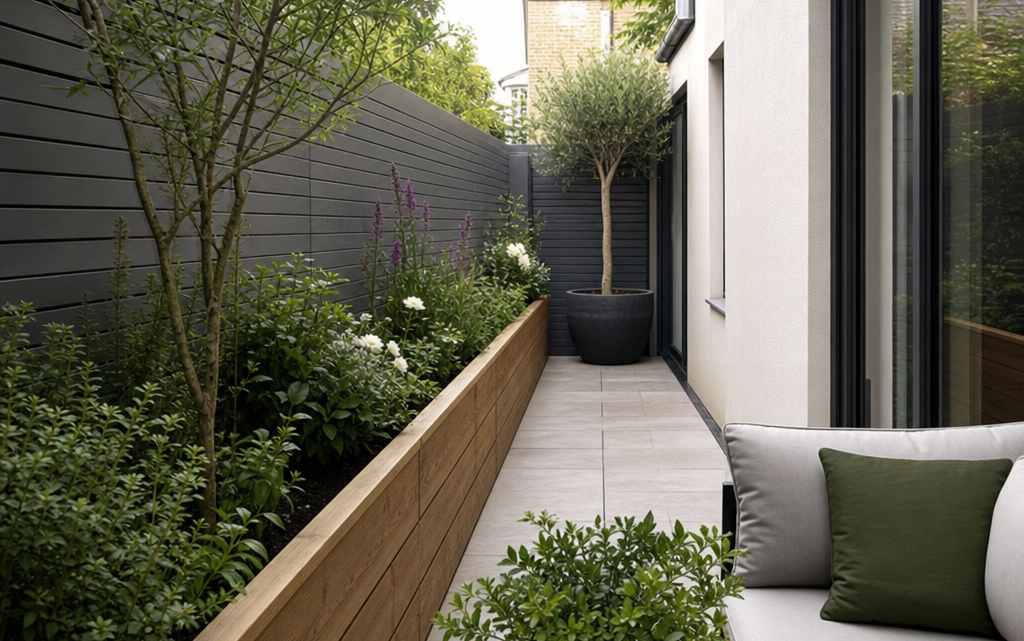
A narrow patio, a slim balcony edge or a straight garden path can easily feel like a leftover strip rather than a designed outdoor space. You may have enough room for a chair, a route to the shed or a view from the kitchen, but not enough width for deep borders, large pots or permanent structures. Long timber planters are useful in this situation because they add planting, structure and direction without taking up more space than necessary. Used well, they can define an edge, guide movement, screen a poor view and make a small area feel intentional.
This article explains how to use long wooden planters to shape narrow outdoor spaces in a practical, attractive and safe way. It covers where to place them, how to choose suitable proportions, what to plant, how to avoid common mistakes and how to maintain them over time.
Inhaltsverzeichnis
Why long timber planters work well in narrow spaces
Long planters suit restricted areas because their shape follows the lines that already exist: patio edges, balcony railings, fence lines, paths and house walls. Instead of adding a series of round pots that can look cluttered and interrupt movement, a rectangular timber planter creates a clean boundary.
They are especially useful when you want to:
- mark the edge of a patio without building a wall;
- soften the boundary of a balcony or roof terrace;
- guide people along a garden route;
- separate a seating area from a lawn or pathway;
- add greenery where there is no soil for planting;
- create privacy with upright plants, grasses or small shrubs;
- bring seasonal colour close to doors, windows or outdoor seating.
Timber also has a more natural appearance than many plastic or metal containers. It sits comfortably with decking, fencing, gravel, brick and paving, and it can look either contemporary or traditional depending on the planting and layout.
Start with the route, not the planter
Before choosing planters, look carefully at how the space is used. In narrow gardens and balconies, circulation matters more than decoration. If the planters make it awkward to walk, carry shopping, open a gate or move a garden chair, the design will quickly become frustrating.
Measure the usable width
Measure the full width of the patio, balcony or path, then subtract the depth of any furniture, doors, steps or overhanging plants. What remains is the practical walking width. As a general guide, a comfortable single-person route needs around 750mm to 900mm, although tighter spaces may function with less if they are only occasional access routes.
If the planter is going beside a dining area, allow room for chairs to be pulled back. If it is beside a door, check the door swing and leave space for people to step out safely. On balconies, make sure the planter does not restrict access to drainage outlets or emergency escape routes.
Use planters to clarify movement
A long planter can act like a low garden wall. Place it parallel to the route to guide the eye and make the path feel deliberate. In a very narrow patio, one continuous line of planters along a fence can be more effective than scattered pots. Along a garden path, planters can be used in pairs to frame a turn, a gate or the entrance to a seating area.
Where possible, avoid creating a slalom of obstacles. If you need to stagger planters, do it for a reason: to slow movement at a viewpoint, to create a sense of arrival or to screen a specific feature such as bins or a storage box.
Choosing the right size and proportion
The best planter is not always the largest one you can fit. In narrow spaces, proportion is critical. A planter should feel substantial enough to look intentional, but not so deep that it steals the usable area.
Length
Longer planters create stronger lines and can make a narrow space feel calmer. A single long planter often looks neater than several small pots placed side by side. However, you should also think about handling, assembly and future movement. A large planter filled with compost and plants can be very heavy, so decide on its position before filling it.
Depth and width
The front-to-back depth determines how much space the planter occupies. For a balcony edge or narrow patio, slim rectangular planters are usually easier to live with than deep square containers. However, the planter must still have enough soil volume for the plants you want to grow. Shallow containers dry out quickly and limit root growth, particularly for shrubs and taller grasses.
Height
Height affects both appearance and privacy. A low planter with trailing plants softens an edge without blocking views. A taller planter, or a medium-height planter filled with upright planting, can provide screening. For balconies, check that planting does not encourage climbing by children and does not conflict with safety requirements around balustrades.
Decision criteria before you buy or build
Use the following checklist before committing to a long timber planter layout.
Practical checklist for narrow spaces
- Available walking width: Will you still have enough clear space to move comfortably?
- Door and gate clearance: Can all doors, gates and storage lids open fully?
- Weight: Is the surface suitable for a filled planter, especially on balconies, decking or roof terraces?
- Drainage: Can excess water escape without staining paving, damaging timber decking or annoying neighbours below?
- Sun and shade: Does the planting plan match the actual light conditions?
- Maintenance access: Can you reach the planter for watering, pruning and clearing leaves?
- Wind exposure: Will tall plants or lightweight containers be stable in strong winds?
- Style: Does the timber finish work with your paving, fencing, furniture and house exterior?
- Longevity: Is the timber treated or otherwise suitable for outdoor use?
- Future flexibility: Might you need to move, extend or reconfigure the arrangement later?
If you are using planters on a balcony, roof terrace or raised deck, weight is particularly important. Compost, water and mature plants add considerable load. If you are unsure about the structural capacity, seek appropriate professional advice before installing heavy containers.
Using long planters on patios
On a narrow patio, long timber planters are often best placed along one side rather than both. This keeps the layout simple and avoids the feeling of being squeezed. A line of planters beside a fence can create a planted border where there is no open ground, while still leaving the central area free for seating or access.
If your patio is a long rectangle, place planters to break it into zones. For example, one planter can define the edge of a small bistro table area, while another can mark the transition to a barbecue or storage space. Leave visual gaps where you need access, but keep the overall line consistent.
For a patio beside the house, consider the view from indoors. A long planter outside a kitchen or sitting room window can provide year-round interest if planted with evergreen structure and seasonal colour. Avoid placing very tall, dense planting where it will block useful light into the house.
Using planters along balcony edges
Balconies benefit from long planters because they soften hard railings and make the space feel more garden-like. Positioning planters close to the balcony edge can create a sense of enclosure, but safety and drainage must come first.
Keep planters stable and do not rely on them as a guard or barrier unless they have been specifically designed and installed for that purpose. Make sure they cannot tip in high winds. Consider using lower planting if the balcony is very exposed, and avoid top-heavy shrubs in small containers.
Drainage is also essential. A porous lining or drainage layer can help protect timber and reduce waterlogging, but excess water still needs somewhere to go. Use saucers or feet with care: standing water can damage surfaces and harm plant roots, while uncontrolled runoff may drip onto neighbours below.
A practical example of planter size and specification
As a practical example of the type of product you might compare, the Forest Linear Long Wooden Garden Planter 4’x1′ measures 44 x 120 x 40cm and holds 151 litres of compost. It is made from pressure treated smooth planed timber, includes a porous lining, is supplied for self-assembly with fixings and instructions, and has a 15 year anti-rot guarantee. At a listed price of 99.99 EUR, it represents the kind of long, slim timber planter that could be used along a patio edge, balcony boundary or garden route, depending on your available space and load considerations.
The important point is not to focus on one model, but to use the specification as a comparison tool. Check the external dimensions against your layout, the compost capacity against your planting choice, the construction against your expected lifespan, and the drainage arrangement against the surface it will sit on.
Using long planters to define garden routes
In a garden, long planters can do more than hold plants. They can guide people through the space. This is useful where a path is informal, where paving blends into a seating area, or where you want to lead the eye towards a gate, sculpture, bench or view.
Create a strong edge
A row of long planters along one side of a path creates a clear edge without the cost or permanence of brickwork or raised beds. This is helpful in rented homes or where you may want to change the layout later. The timber line provides structure, while the planting softens it.
Mark changes in direction
Where a path turns, a planter can act as a visual hinge. Place it at the outside of the turn to encourage people to follow the route naturally. Plant it with something distinctive, such as ornamental grasses, herbs or seasonal flowers, so the change in direction feels intentional.
Frame entrances and thresholds
Two long planters placed either side of a gate, step or narrow entrance can create a sense of arrival. Keep the planting balanced but not necessarily identical. In small gardens, repetition of the same planter style helps the whole space feel connected.
Planting ideas for long timber planters
Your planting should suit the amount of light, the available soil volume and the level of maintenance you can provide. Long planters are excellent for layered planting, with a mix of structure, seasonal interest and trailing edges.
For sunny patios and balconies
Choose drought-tolerant plants if the space gets strong sun and reflected heat from paving. Lavender, rosemary, thyme, sage, ornamental grasses, pelargoniums and compact salvias can work well, provided the planter drains freely. Herbs are particularly useful near outdoor dining areas, but they still need regular watering in containers.
For partial shade
In east-facing or lightly shaded areas, consider heuchera, ferns, carex, compact hydrangeas, violas, ivy, hellebores and hardy geraniums. These plants can soften narrow spaces without demanding full sun all day.
For privacy and screening
If you want screening, use upright plants that remain in proportion to the planter. Bamboo can be effective but must be chosen carefully and kept contained; some types can become too vigorous. Alternatives include grasses, clipped evergreen shrubs, compact pittosporum in mild areas, or trained climbers on a separate support. Remember that tall planting increases wind resistance and may need more watering.
For year-round structure
A good narrow-space planter should not look empty for half the year. Combine evergreen structure with seasonal additions. For example, use compact evergreen shrubs or grasses as the permanent framework, then add bulbs, bedding plants or trailing annuals for changing colour.
Compost, drainage and watering
Container planting depends on the growing medium. Garden soil alone is usually too dense for planters and may drain poorly. Use a suitable peat-free container compost, and choose a mix appropriate to your plants. Mediterranean herbs prefer sharper drainage, while leafy shade plants generally appreciate more moisture-retentive conditions.
Drainage holes are essential. A liner can help protect the timber while allowing water to pass through, but it should not turn the planter into a sealed trough. If water cannot escape, roots may rot and the timber may stay wet for long periods. Raising the planter slightly on feet can improve airflow beneath it and reduce staining, but make sure it remains stable.
Watering is often the biggest maintenance task. Long planters can dry unevenly, especially if one end is sunnier or more exposed than the other. Check the compost with your finger rather than watering by habit. In warm weather, containers may need daily attention. Mulching the surface with gravel, bark or decorative grit can reduce evaporation and give a neater finish.
Layout ideas for awkward narrow spaces
The single-side border
Place a continuous line of long planters along one fence or wall. This is the simplest solution for a narrow patio or side return. Use repeated planting for a calm look, or alternate evergreen structure with seasonal colour.
The broken line
Use two or three planters with deliberate gaps between them. This works well where you need access to a tap, storage box or gate. Keep the gaps aligned with practical movement rather than leaving random spaces.
The threshold marker
Place one long planter at the edge of a seating area to separate it from a path. Choose lower planting if you want an open feel, or taller grasses if you want subtle enclosure.
The balcony green rail
Run planters parallel to the balcony edge, leaving enough room behind them for safe movement and maintenance. Use wind-tolerant plants and check drainage carefully.
Common practical mistakes to avoid
Choosing planters that are too deep for the space. A planter may look slim in a shop or online image, but even a small increase in depth can make a narrow route awkward. Always mark the footprint on the ground before buying.
Ignoring the filled weight. Timber, compost, water and plants can be heavy. This matters on balconies, roof terraces, raised decks and older paving. Do not assume that a planter is light just because it is easy to move when empty.
Blocking drainage. Decorative liners, plastic sheets or poorly placed trays can trap water. Timber planters need protection, but plants also need free drainage.
Using the wrong plants for the light. Sun-loving herbs will struggle in deep shade, while shade plants may scorch on a hot south-facing balcony. Observe the space through the day before planting.
Overplanting at the start. Small plants grow. If you fill every gap immediately, the planter can become congested, leading to poor airflow, disease and constant pruning.
Forgetting access for maintenance. If the planter is pushed hard into a corner or placed behind furniture, watering and deadheading become inconvenient. In a small space, inconvenience often leads to neglect.
Creating visual clutter. Too many different planter styles, timber colours and plant types can make a narrow area feel busy. Repetition is usually more successful than variety in restricted spaces.
Step-by-step approach to planning your layout
- Measure the space accurately. Include doors, gates, steps, furniture and any overhangs.
- Mark the proposed planter footprint. Use string, cardboard or masking tape to test the actual size on the ground.
- Walk the route. Carry a bag, open doors and move chairs to check that the layout works in real life.
- Check light and exposure. Note sun, shade and wind before choosing plants.
- Confirm drainage. Decide where water will go and how you will protect the surface below.
- Choose a consistent planter style. Timber planters often work best when repeated in the same finish.
- Select plants by function. Decide whether you need screening, colour, scent, herbs, structure or wildlife value.
- Fill and plant in position. Move the planter into its final place before adding compost if it will be heavy.
- Water thoroughly and monitor. Check moisture regularly during the first few weeks while plants establish.
Care and maintenance through the year
Timber planters are exposed to rain, frost, sun and regular watering, so routine care matters. Remove dead leaves from the compost surface, as they can encourage pests and hold moisture against stems. Check drainage holes periodically, especially after autumn leaf fall.
In spring, refresh the top layer of compost and add a suitable slow-release feed if your plants need it. In summer, prioritise watering and remove faded flowers to keep displays tidy. In autumn, cut back spent annuals and plant bulbs if you want spring colour. In winter, raise vulnerable containers slightly if standing water is a problem, and check that wind has not loosened tall planting or supports.
With timber, follow the manufacturer’s care guidance. Some pressure treated products require no immediate re-treatment, while others may need periodic maintenance. Avoid placing untreated timber directly where it will sit permanently in water.
FAQ
Are long timber planters suitable for very narrow patios?
Yes, provided you choose a slim enough depth and leave a practical walking route. Mark the footprint before buying to make sure the space still works when furniture, doors and movement are considered.
Can I use long planters on a balcony?
Often, yes, but you must consider weight, wind stability, drainage and safety. A filled planter can be much heavier than expected. If in doubt about structural load, seek professional advice.
What should I put in the bottom of a timber planter?
Use the liner or drainage arrangement recommended for the planter, and ensure water can escape. Avoid sealing the planter completely unless it has been specifically designed as a reservoir system. Use suitable container compost rather than dense garden soil.
How do I stop a narrow planter looking bare in winter?
Include evergreen plants such as compact shrubs, grasses, ivy, ferns or herbs, depending on the light conditions. Add bulbs or seasonal bedding for extra colour at different times of year.
Is one long planter better than several small pots?
In narrow spaces, one long planter often looks calmer and takes up less visual space than several separate pots. Small pots can still be useful for seasonal accents, but too many can make a route feel cluttered.
Conclusion
Long timber planters are a practical way to give narrow patios, balcony edges and garden routes a clearer shape. They create structure without major building work, add planting where ground borders are not possible, and help guide movement through awkward spaces. The key is to plan from the route outwards: measure carefully, protect circulation, check weight and drainage, then choose planting that suits the conditions.
Used with restraint and repeated consistently, long wooden planters can turn a thin strip of paving or balcony floor into a purposeful outdoor space with colour, texture and year-round interest.