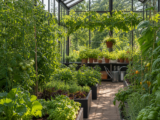
Resin-Framed Greenhouses and Their Role in Everyday Growing

You may be looking at your garden in early spring, with trays of tomato seedlings on the windowsill, a few herbs waiting to be potted on, and no reliable place to protect young plants from cold nights. A greenhouse is the obvious answer, but choosing the right type is less straightforward than it first appears. Glass, aluminium, timber and polycarbonate all have their place, yet resin-framed polycarbonate greenhouses are increasingly popular with everyday gardeners who want a practical structure without heavy maintenance.
This article explains how resin-framed polycarbonate greenhouses work, where they are most useful, what to check before buying one, and how to avoid common mistakes during installation and use. The aim is to help you decide whether this style of greenhouse suits the way you actually grow.
Inhaltsverzeichnis
What is a resin-framed polycarbonate greenhouse?
A resin-framed greenhouse uses a plastic-based structural frame rather than timber or metal. The frame is usually designed to resist rust, corrosion and rot, which makes it well suited to damp outdoor conditions. Instead of traditional glass, the glazing is made from polycarbonate panels. These may be twin-wall panels, which have an internal layered structure that improves insulation compared with a single thin sheet.
In practical terms, this combination is intended to give you a greenhouse that is lighter than many glass models, easier to handle during assembly, and less demanding to maintain. It can be a particularly useful choice if you want a growing space for seed raising, tomatoes, cucumbers, chillies, overwintering tender plants, or simply extending the growing season without taking on a high-maintenance structure.
Why resin frames suit everyday growing
Low maintenance in wet British weather
Many UK gardens face regular rain, damp air and fluctuating temperatures. Timber frames can require periodic treatment, and some metal components may eventually show signs of corrosion if coatings are damaged. A resin frame avoids many of these issues because it does not rust or rot in the same way. That does not mean you can ignore the greenhouse entirely, but routine care is usually limited to cleaning, checking fixings, and ensuring doors, vents and seals remain in good working order.
A lighter structure that is easier to assemble
Resin-framed models are often designed with straightforward connectors and lighter components. This can make them more approachable if you do not want a complicated build or if access to the garden is awkward. However, lighter does not mean casual. The greenhouse still needs a firm, level base and secure fixing, especially in exposed gardens.
Safer glazing for busy gardens
Polycarbonate is valued because it is far more impact-resistant than glass. In gardens used by children, pets or visiting wildlife, this can be reassuring. It is also useful if your garden is overlooked by trees, where small falling branches or wind-blown debris could be a concern. Polycarbonate panels can scratch and may flex, but they are much less likely to shatter in the way glass can.
How polycarbonate panels affect growing conditions
The glazing material directly affects light, warmth and plant performance. Twin-wall polycarbonate tends to diffuse light, spreading it more evenly through the greenhouse. This can reduce harsh hot spots and help protect tender leaves from intense direct sun. It can also provide better insulation than single-sheet glazing, which is helpful during chilly nights and shoulder seasons.
That said, polycarbonate does not remove the need for ventilation. On a sunny day, even in spring, temperatures can rise quickly inside any greenhouse. A roof vent, side ventilation, open doors or a combination of these will help prevent overheating, reduce humidity and lower the risk of fungal disease.
Key decision criteria before you buy
1. Size and usable growing area
Think beyond the footprint. Ask yourself what you want to grow and how you will move inside the greenhouse. A small greenhouse can quickly feel crowded once you add staging, growbags, pots, watering cans and a path. If you plan to grow upright crops such as tomatoes, consider headroom and roof shape. A barn-shaped or high-roofed design can make the space more comfortable to work in.
2. Base requirements
Many resin-framed greenhouses are supplied without a floor and must be fixed to a solid, level base. This is not a minor detail. A poor base can cause doors to misalign, panels to sit badly, and the whole structure to be more vulnerable in strong winds. Suitable bases may include paving slabs, a concrete pad, a timber perimeter frame fixed securely, or another firm and level foundation recommended for the greenhouse type.
3. Panel thickness and light transmission
Look at the type and thickness of the polycarbonate panels. Thicker twin-wall panels may offer improved insulation and rigidity, although the overall performance also depends on the frame, seals and build quality. Light transmission matters too. Plants need adequate light, but in summer, diffused light and UV protection can be beneficial for managing heat and scorch.
4. Ventilation and access
At minimum, check for a roof vent and doors that open wide enough for your needs. If you will be moving trays, bags of compost, growbags or larger pots, narrow access soon becomes frustrating. Wide double doors can be especially helpful where the greenhouse is used for both growing and storage.
5. Wind and snow resistance
If your garden is exposed, on a slope, near open fields or at the coast, wind resistance is a major factor. Check any stated wind rating and remember that installation quality and anchoring are just as important as the published figure. Snow-load information is also worth considering if you live in an area that sees heavy snowfall. Even when a greenhouse is tested for snow load, it is sensible to clear significant snow build-up promptly where safe to do so.
6. Warranty and spares
A warranty can indicate manufacturer confidence, but read what it covers and what conditions apply. Check whether replacement panels, seals or connectors are available. With any greenhouse, minor parts may need attention over time, especially after storms or accidental damage.
A practical example of this greenhouse type
As an example of the category, the 8’ x 8’ Palram Canopia Rion Hobby Gardener Green Greenhouse is a resin-framed polycarbonate model with a stated size of 2.4m x 2.4m and a listed price of €834.99. Its specification includes a UV-protected green resin frame, pin and lock connectors, rubber sealing strips, a reinforcement cable, 4mm twin-wall polycarbonate roof panels, 6mm twin-wall polycarbonate side panels, 82% light transmission, wind resistance to 90km/hr, snow-load testing to 75kg/m², wide double doors, an opening roof vent and a 7-year limited warranty. It is supplied without a floor and should be fixed to a solid, level base.
This is not the only way a resin-framed greenhouse can be designed, but it illustrates the features you should compare: frame material, glazing thickness, light performance, access, ventilation, weather testing, base requirements and warranty terms.
Planning the site in your garden
Where you position the greenhouse will affect its usefulness more than many gardeners expect. Choose a place that is practical to reach in poor weather, close enough to water, and not so hidden away that you forget to ventilate or water it. A greenhouse that is convenient gets used more often and looked after better.
Light and shade
For most general growing, you want good light for much of the day. Avoid deep shade from buildings, evergreen hedges or large trees. Some light afternoon shade can be helpful in high summer, but heavy shade will limit growth, particularly for tomatoes, peppers and seedlings.
Wind exposure
A slightly sheltered site is ideal. Avoid funnelling winds between buildings, placing the greenhouse at the top of an exposed slope, or installing it where gusts regularly hit the doors. If the best growing position is exposed, pay extra attention to anchoring, door catches and keeping vents closed during storms.
Access and working space
Leave space around the greenhouse for cleaning panels, checking fixings and maintaining gutters or rainwater run-off areas if present. You should also be able to carry compost, trays and tools to the entrance without squeezing through narrow gaps.
Installation steps that make a real difference
- Measure the site carefully. Mark out the full footprint and allow extra room around the sides for access.
- Prepare a level base. Use a spirit level and correct any dips or slopes before assembly starts.
- Check all parts before building. Lay out panels, connectors, seals and fixings so you can identify anything missing before the structure is half-built.
- Build in calm weather. Polycarbonate panels are light and can catch the wind, making assembly difficult and potentially unsafe.
- Follow the sequence exactly. Resin connector systems often rely on parts being fitted in the correct order for strength and alignment.
- Anchor the greenhouse securely. Fix it to the prepared base as required. Do not rely on weight alone.
- Test doors and vents. Make sure they open, close and hold correctly before loading the greenhouse with plants and staging.
Useful checklist before choosing a resin-framed greenhouse
- Do you have enough space for the footprint plus access around it?
- Is the site level, firm and suitable for a permanent base?
- Will the greenhouse receive enough daylight for the crops you want to grow?
- Are the doors wide enough for trays, pots, compost and equipment?
- Is there enough ventilation for summer temperature control?
- Are the polycarbonate panels UV-protected?
- Do the panel thickness and insulation suit your intended use?
- Are wind and snow ratings appropriate for your location?
- Can you obtain spare parts if a panel, seal or connector is damaged?
- Does the warranty match your expectations, and have you read the conditions?
Common practical mistakes to avoid
Installing on an uneven base
This is one of the most frequent problems. An uneven base can twist the frame, make doors difficult to close and create gaps around panels. Spend time getting the base right before assembly. It is far easier to correct the foundation than to dismantle and rebuild the greenhouse later.
Underestimating wind
Even a well-designed greenhouse can suffer if it is poorly anchored or left open in strong winds. Always close doors and vents when high winds are forecast. Check after storms for loosened panels, damaged seals or movement at the base.
Assuming polycarbonate means no temperature control
Twin-wall panels can improve insulation and diffuse light, but they do not regulate the greenhouse automatically. You will still need to ventilate, shade if necessary, and water appropriately. In summer, temperatures can climb rapidly; in winter, frost protection may still be needed for tender plants.
Overcrowding the interior
It is tempting to fill every inch with pots and trays. Overcrowding restricts airflow, encourages disease and makes watering harder. Keep a clear path and allow space between plants, especially crops with dense foliage.
Using weak staging or poor fixings
Resin-framed greenhouses are not all designed to carry heavy loads from the frame itself. Use freestanding staging where appropriate and avoid attaching heavy shelves unless the manufacturer specifically allows it. Wet compost, terracotta pots and full seed trays are heavier than they look.
Day-to-day use and seasonal care
Once installed, a resin-framed polycarbonate greenhouse should be straightforward to live with. In spring, use it for sowing seeds, hardening off young plants and protecting early crops. In summer, prioritise ventilation, watering and shading if temperatures become excessive. In autumn, clear spent crops promptly and clean surfaces to reduce pests and disease. In winter, check seals, doors and vents, and consider whether any tender plants need additional protection or a suitable greenhouse heater.
Cleaning is simple but important. Use mild soapy water and a soft cloth or sponge rather than abrasive cleaners. Clear algae, dust and debris from panels so light can enter effectively. Check that rainwater can run off the roof and that fallen leaves are not collecting in awkward places.
Short FAQ
Are resin-framed greenhouses strong enough for normal gardens?
They can be, provided you choose a model suited to your location and install it on a solid, level, well-anchored base. Check stated wind and snow performance where available, but remember that correct installation is essential.
Is polycarbonate better than glass?
It depends on your priorities. Polycarbonate is lighter, more impact-resistant and often better at diffusing light. Glass gives a traditional appearance and excellent clarity, but it is heavier and can break. For many everyday gardeners, polycarbonate is a practical and safer option.
Will a resin frame fade or become brittle?
Quality and UV protection matter. Look for a UV-protected frame and panels, and follow the manufacturer’s care guidance. All outdoor materials age over time, but UV protection helps reduce weathering and discolouration.
Do I need a base if the greenhouse has no floor?
Yes. A greenhouse without a floor should still be fixed to a solid, level base. The base supports the structure, helps maintain alignment and improves resistance to movement in wind.
Can I use a greenhouse like this all year round?
You can use it throughout the year, but what you grow will depend on light levels, ventilation and temperature. Tender plants may need extra frost protection or heating in winter, while summer crops may need regular ventilation and watering.
Conclusion
Resin-framed polycarbonate greenhouses offer a practical middle ground for everyday growers: they are generally low maintenance, resistant to rot and corrosion, easier to handle than many traditional structures, and well suited to seed raising, crop protection and season extension. The most important decisions are not just about size or price, but about siting, base preparation, ventilation, access and weather suitability.
If you choose carefully and install the greenhouse properly, a resin-framed polycarbonate model can become a reliable working space rather than just another garden structure. Treat the base, anchoring and ventilation as essential parts of the purchase, and you will be far more likely to enjoy steady, successful growing throughout the year.