
What to check before adding lattice toppers to a timber fence
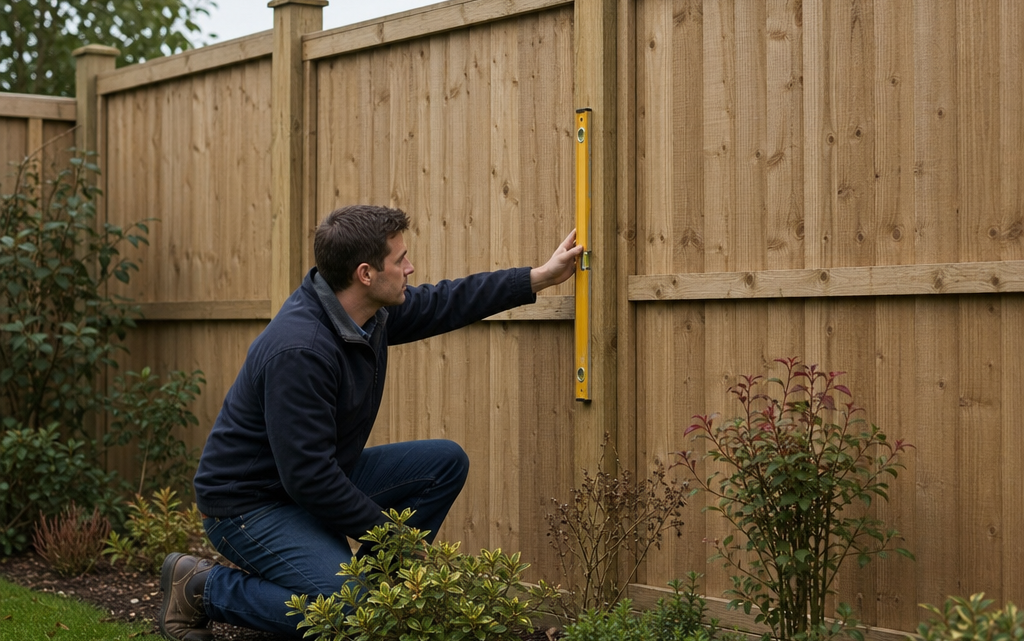
You may have a perfectly serviceable timber fence, but feel it is just a little too low for privacy or too plain for the garden you are trying to create. A timber lattice topper can be a neat solution: it adds height, lets light and air through, and gives climbing plants something to soften. Before you order panels or start fixing anything in place, however, the existing fence line needs a careful assessment. A topper is only as reliable as the posts, panels and fixings beneath it.
This guide explains what to check before adding lattice toppers to a timber fence, how to judge whether your existing fence can take the extra height, and where practical mistakes often occur. The aim is to help you make a sound decision before spending money or creating a maintenance problem.
Inhaltsverzeichnis
Start with the purpose of the lattice topper
Before assessing the fence itself, be clear about why you want to add the topper. Your reason will affect the type of lattice you choose, how much height you need and how robust the installation must be.
Privacy, screening or decoration?
A lattice topper is usually best for partial screening rather than complete privacy. The open pattern breaks up views and can feel less oppressive than a solid extension, but it will not block sightlines in the same way as closeboard fencing. If privacy is your main concern, look at the angle from which neighbours, paths or roads overlook the garden. In some cases, a 300 mm lattice extension may be enough to interrupt a direct view when you are seated. In others, it may have little effect.
If your aim is decorative, matching the width, colour and style of your existing panels will matter more. If you want to train climbers, you need to think not only about the timber topper but also about the added weight of mature plants, wet foliage and wind resistance.
Check the legal and boundary position first
Fence height is not only a design issue. In the UK, planning rules can apply, and boundary responsibilities can be more complicated than they first appear.
Height limits and planning considerations
As a general rule, many domestic fences can be up to 2 metres high without planning permission, or up to 1 metre if next to a highway used by vehicles. However, rules can vary where there are planning conditions, conservation area restrictions, listed buildings or covenants. If your existing fence is already close to the usual limit, adding even a modest lattice topper could take it over.
Measure from the ground level on the side where the fence is erected. If ground levels differ between properties, do not assume the measurement will be viewed from the side most convenient to you. If in doubt, check with your local planning authority before installing the topper.
Confirm ownership and responsibility
Do not add toppers to a fence unless you are confident it is yours to alter. Boundary features are not always owned according to the common “left-hand fence” myth. Check your title documents, previous agreements, or speak to your neighbour where appropriate. Even if the fence is yours, it is sensible to warn neighbours before increasing the height or changing the appearance on their side.
Assess the existing fence posts
The posts are the most important part of the assessment. A lattice topper adds height and wind loading. If the posts are weak, leaning or poorly fixed, the extra timber can accelerate failure.
Look for movement
Stand beside each post and push it firmly but carefully at shoulder height. A sound post should not rock significantly in the ground. Some tiny movement may be normal in older timber fencing, but visible rocking at the base, creaking, or movement between the post and concrete indicates weakness.
Pay particular attention to end posts, corner posts and gate posts. These often take more strain. If any posts already lean, adding a topper will make the line look worse and may increase the twisting force in high winds.
Check for rot at ground level
Timber posts commonly fail where they enter the ground or concrete. Use a screwdriver or bradawl to probe the wood around the base. If it sinks in easily, the timber is soft or crumbly, or you can see dark fungal decay, the post should be repaired or replaced before any topper is fitted.
Do not rely on the visible upper part of the post alone. A post can look reasonable above ground while being badly decayed below or at the soil line.
Consider post height and fixing points
A topper must be fixed securely, usually to posts or through suitable capping rails or framing, depending on the fence construction. If your posts stop flush with the top of the existing panel, you may need extension brackets, post extenders or a different fixing method. These must be strong enough for the extra height and must not simply create a weak joint above the fence.
Inspect the panels and rails
Once the posts have been checked, look closely at the fence panels or boards themselves. A lattice topper should not be used to disguise a fence that is nearing the end of its life.
Panel condition
Check whether the panels are square, intact and secure. Look for broken battens, loose boards, split frames, missing nails or sagging sections. If a panel rattles in the wind now, it is unlikely to perform better with extra material fixed above it.
If you have overlap panels, check the top framing rail. If it is thin, split or loose, it may not provide a reliable fixing point. Closeboard fencing may be stronger, but the arris rails, featheredge boards and capping still need inspection.
Fence line straightness
Stand back and view the fence from several angles. A lattice topper will create a new horizontal line at eye level, so any unevenness will become more obvious. Small variations may be acceptable in an informal garden, but a wavy line can make a new installation look poorly planned.
Use a string line if you want a more accurate assessment. Run it along the proposed top height and note where posts, panels or ground levels cause problems. It is often better to correct one or two weak sections before fitting toppers than to try to force the new timber to follow a distorted fence.
Measure accurately before buying
Many timber fence panels in the UK are nominally 6 ft wide, but actual dimensions, post spacing and panel fits can vary. Lattice toppers are often sold to match standard panel widths, so accurate measurement is essential.
Measure between posts, not just the panel label
Measure the clear distance between posts at the top of each bay. Do not assume every bay is identical. Older fences may have been adjusted on site, and posts may not be perfectly upright. If a topper is 1.83 m wide, for example, it may suit many standard 6 ft panels, but you still need to check whether your actual opening, post thickness and fixing arrangement allow it to fit neatly.
Check the added height
Measure your existing fence height and add the height of the proposed topper. Then compare the total with planning considerations, neighbour impact and the strength of the fence. A 300 mm addition can look modest on paper but visually change the sense of enclosure in a small garden.
Think about wind exposure
Lattice is more open than solid fencing, but it still catches wind. In exposed gardens, coastal locations, open rural sites and corner plots, wind load is a major factor.
Assess the direction of prevailing winds and whether the fence already flexes during gusts. If the existing fence is on a raised bank or at the end of a garden with little shelter, you should be more cautious. Heavier planting on the lattice can increase wind resistance, particularly when leaves are wet.
Practical example: matching a topper to an existing fence
As a practical example, a product such as the Forest 6′ x 1′ Diamond Lattice Trellis Fence Topper is described as a 1.83 m x 0.3 m timber lattice top panel intended for 6 ft width, square-topped, dip-treated panels. It is supplied dip-treated and the manufacturer states that it should be re-treated annually with a quality wood preservative to help prevent rot, maintain appearance and validate the guarantee. That type of information is useful because it tells you the nominal width, the added height, the finish and the maintenance expectation. It does not remove the need to check your own fence line first.
When considering any similar topper, compare its nominal dimensions with your measured bay widths, check whether the colour and treatment will sit well with your existing fence, and decide whether you are prepared for the maintenance cycle. The example above is decorative and suitable for supporting climbing plants, but mature planting can add weight and wind resistance, so your posts and rails still need to be sound.
Use this checklist before fitting lattice toppers
- Ownership confirmed: You know the fence is yours to alter, or you have reached agreement with the relevant neighbour.
- Height checked: The final height has been measured and considered against planning limits and local restrictions.
- Posts tested: Each post is upright, secure and free from serious rot at ground level.
- Panels inspected: Frames, rails and boards are not loose, split, sagging or badly decayed.
- Bay widths measured: Each section has been measured individually between posts.
- Wind exposure assessed: You have considered whether the fence is in a sheltered or exposed position.
- Fixing method planned: You know where the topper will be fixed and what brackets, screws or supports are needed.
- Treatment compatible: The finish, preservative and colour are suitable for the existing fence.
- Planting considered: Any climbers will be appropriate for the strength of the fence and easy to maintain.
- Access available: You can safely reach both sides if needed for fixing, staining and future maintenance.
Plan the fixing method carefully
The correct fixing method depends on the fence construction, the post height and the type of topper. The aim is to secure the topper so it cannot twist, rattle or lift in the wind.
Fix into structural parts
Where possible, fix into posts or substantial rails rather than thin decorative trim. Screws should be suitable for external use and long enough to achieve a secure hold without splitting the timber. Galvanised or exterior-grade fixings reduce the risk of staining and corrosion.
Pre-drilling pilot holes is often worthwhile, especially near the ends of timber components. It reduces the chance of splitting and gives a neater finish.
Keep the line level
Use a spirit level and string line rather than relying on the existing panel tops. If the garden slopes, decide whether the toppers will step with the panels or follow a continuous line. A stepped approach often works better with panel fencing because it respects the existing bay structure.
Avoid trapping water
Any added timber should be arranged so water can drain and surfaces can dry. Avoid creating tight pockets where rainwater sits between the top of the existing panel and the new lattice. If capping is used, make sure it sheds water rather than holding it.
Consider timber treatment and future maintenance
Lattice has more exposed edges and intersections than a plain board, so treatment matters. Factory dip-treatment provides initial protection, but it is not the same as permanent maintenance-free performance. Always follow the manufacturer’s guidance on retreatment.
If your existing fence is already stained, painted or weathered, test finishes carefully. A newly treated topper may look brighter or redder than older panels. You may decide to retreat the whole fence line after installation for a more consistent appearance.
Painting or staining before installation
It is often easier to apply preservative, stain or paint before fitting, particularly to the edges and lattice intersections. Let the timber dry properly before installation. If you cut or trim any treated timber, treat the cut ends before fixing them in place.
Think about climbing plants before you plant them
Lattice toppers are attractive supports for climbers, but not every plant is suitable. Vigorous species can overwhelm a light timber structure, force joints apart or make future maintenance difficult.
Choose plants according to the strength of the fence and the amount of pruning you can realistically do. Lightweight annual climbers, clematis varieties or modest honeysuckle may be easier to manage than very vigorous ivy, wisteria or rambling roses. Always check the mature size and growth habit before planting.
Leave a small gap between plants and the fence base where possible so air can circulate. Constant damp foliage against timber encourages decay.
Common mistakes to avoid
Adding toppers to a failing fence
The most common mistake is treating lattice as a cosmetic upgrade when the underlying fence is already weak. If posts are rotten, panels are loose or rails are failing, repair or replace those elements first. A topper will not stabilise a poor fence; it usually adds more strain.
Assuming all 6 ft bays are the same
Standard sizes are useful, but real fence lines vary. Measure every bay before ordering. A few millimetres may not matter in some installations, but a significant difference can leave you cutting panels, forcing them into place or accepting uneven gaps.
Ignoring neighbours
Even where you are legally entitled to alter your fence, adding height can affect light, outlook and the feel of a boundary. A brief conversation can prevent disputes. It is especially important if the reverse side of the topper will be visible from their garden.
Using unsuitable fixings
Indoor screws, short fixings or nails used in the wrong places can fail quickly outside. Use suitable exterior fixings and secure the topper to structural timber. Avoid over-tightening screws, which can crush or split slender lattice sections.
Forgetting maintenance access
A topper needs cleaning and retreatment like the rest of the fence. If shrubs, sheds or narrow gaps prevent access, maintenance will be neglected. Plan how you will reach the timber safely in future.
When replacement is better than adding a topper
Sometimes the assessment will show that fitting lattice is not the best option. If several posts are rotten, panels are warped, or the fence line is already unstable, a new fence with integrated trellis or purpose-made taller posts may be more economical in the long term.
Replacement may also be better if you want a uniform appearance across a long boundary. Mixing old panels with new toppers can work well in informal gardens, but it may look patchy where the existing timber is heavily weathered.
Short FAQ
Can I add a lattice topper to any timber fence?
Not always. The fence must be structurally sound, with secure posts and panels. You also need suitable fixing points and enough allowance within any relevant height limits.
Will lattice toppers provide full privacy?
No. Lattice provides partial screening and a softer visual barrier. It can improve privacy by interrupting sightlines, especially with planting, but it is not a solid screen.
Do I need planning permission?
It depends on the final height, location and any property-specific restrictions. Many rear garden fences are allowed up to 2 metres, but you should check if you are close to that height, next to a highway, or subject to special conditions.
Should I treat the timber before or after fitting?
Follow the manufacturer’s instructions. In many cases, treating before installation helps you cover edges and awkward lattice intersections more thoroughly. Cut ends should always be treated.
Can I grow climbing plants on a lattice topper?
Yes, provided the fence is strong enough and the plant is suitable. Avoid very vigorous or heavy climbers unless the structure has been designed to support them.
Conclusion
Adding timber lattice toppers can be an effective way to improve the appearance, height and planting potential of a garden fence. The key is to assess the existing fence line before you buy or fit anything. Check ownership, height limits, post strength, panel condition, bay widths, wind exposure and maintenance requirements. If the underlying fence is sound, a carefully chosen and properly fixed topper can look attractive and perform well. If the fence is weak, repair or replacement should come first.

