Do Solar Lights in Garden Buildings Need Electrical Approval?
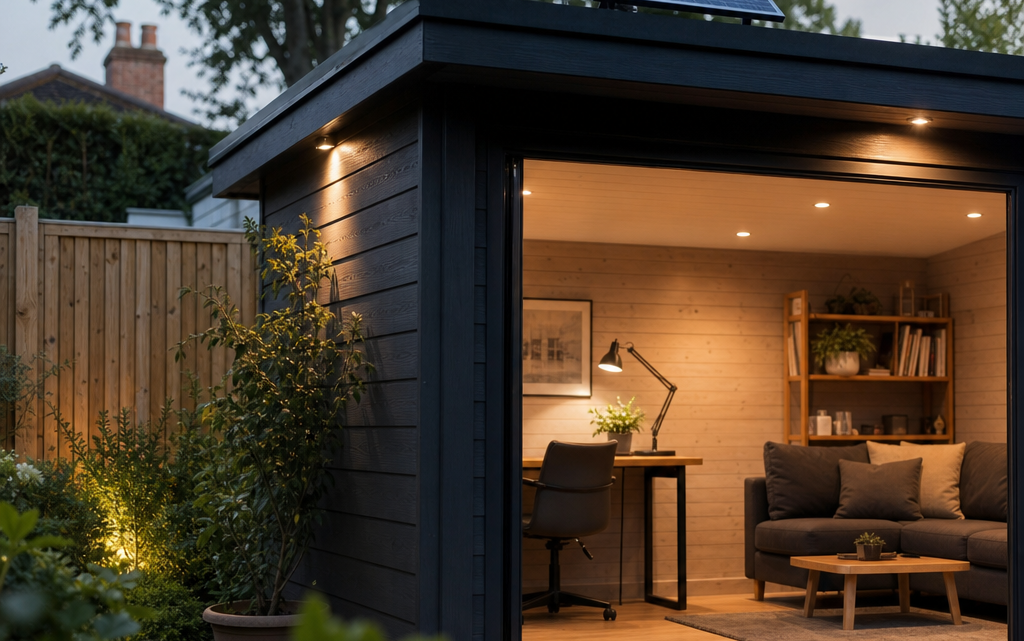
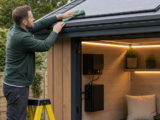
You have a shed, log cabin, summerhouse or workshop at the end of the garden and you want proper lighting without the cost and disruption of running a mains cable from the house. A small solar lighting kit can look like the ideal answer: a panel on the roof or wall, a battery hub inside, and LED bulbs or strips powered at extra-low voltage. The practical question is whether fitting this type of lighting counts as electrical work that needs approval, certification or a qualified electrician.
In most ordinary domestic situations, a self-contained extra-low-voltage solar lighting kit for a garden building will not need Building Control electrical approval, provided it is not connected to the mains electrical installation and you install it in line with the manufacturer’s instructions. However, you still have responsibilities for safety, weatherproofing, battery care, fixing the panel securely and not extending or adapting the system in unsafe ways.
Inhaltsverzeichnis
Do solar lights in garden buildings need electrical approval?
The short answer is usually no for a standalone solar lighting kit that operates independently from the house electrics. If the kit has its own solar panel, battery hub and low-voltage LED lights, and there is no connection to a 230V mains supply, it will normally fall outside the type of domestic electrical work that requires Part P notification in England or Wales.
That does not mean “no rules at all”. You are still responsible for installing and using the equipment safely. If you create a fire risk, damage the building, route cables badly or modify the kit beyond its intended use, you may still have problems with safety, insurance or future sale enquiries.
The position changes if you run mains electricity to the building, install sockets, connect to the consumer unit, add a new circuit, fit outdoor mains lighting or connect solar equipment to the grid. Those are very different jobs and may require a competent electrician, testing, certification and, in some cases, Building Control notification.
Understanding the voltage terms
Many people describe garden solar kits as “low voltage”. In everyday language that usually means they are far below normal 230V mains electricity. Technically, many small solar lighting kits are better described as extra-low voltage, often using 12V DC or a similar safe reduced voltage for the lights and accessories.
This distinction matters because the main electrical compliance risks are different. A self-contained extra-low-voltage lighting kit is generally much less hazardous than a mains installation, but it can still be damaged, overloaded or badly installed. Battery packs, connectors and cables still need to be treated properly.
When approval is usually not required
You are unlikely to need formal electrical approval for a garden building solar lighting kit where all of the following apply:
- The system is self-contained and not connected to the household mains supply.
- The lights are powered from the kit’s own battery hub or controller.
- The output to the lights is extra-low-voltage DC rather than 230V AC.
- You use the supplied cables, connectors, clips and fixings as intended.
- You do not alter the battery, controller, solar panel wiring or protective components.
- The installation is for ordinary domestic use rather than a commercial workplace or rented accommodation with additional duties.
In that situation, you are typically installing a consumer product rather than carrying out controlled electrical installation work. It is similar in principle to fitting a battery-powered light, although the solar panel and cable routing add extra practical responsibilities.
When you should involve an electrician or Building Control
You should not assume that all lighting in a garden building is exempt. You should seek professional advice if your plans include any of the following:
- Running a 230V mains supply from your house to the garden building.
- Installing sockets, a consumer unit, fused spur or mains-powered lighting.
- Connecting the garden building to an existing household circuit.
- Installing underground armoured cable.
- Using mains-powered battery chargers permanently in the outbuilding.
- Connecting solar panels to an inverter that supplies 230V AC.
- Exporting electricity to the grid or integrating with the house electrical system.
- Installing equipment in a location exposed to damp, condensation or water ingress without suitable protection.
In England and Wales, Part P of the Building Regulations is concerned with the safety of electrical installations in dwellings and associated areas. Notifiable work commonly includes new circuits, consumer unit changes and certain work in special locations. The precise rules and notification routes can vary, and Scotland and Northern Ireland have different building standards systems. If you are doing anything involving mains wiring, do not rely on a solar lighting product description as your compliance advice.
Using a solar lighting kit as a practical example
A typical example is a plug-together solar lighting system for a shed or summerhouse, with a solar panel outside, a battery hub inside and LED bulbs or strips connected by supplied cables. For instance, a kit such as the Hubi Work 32 Solar Light with LED bulbs is described as providing two 300 lumen bulbs, a lithium battery hub, a crystalline solar panel, supplied cables, cable clips and fixings. It is intended for lighting garden buildings without needing an electrician, and the manufacturer describes it as exempt from Part P because it is a self-contained solar kit rather than a mains installation.
The important point is not the brand or model, but the principle: if you keep the system self-contained, use the supplied components and avoid connecting it to mains electricity, the compliance position is normally straightforward.
Your practical responsibilities when fitting solar lights
Even where approval is not needed, you should approach the job methodically. A solar kit is still an electrical product, and a garden building can be a harsh environment because of damp air, temperature changes, movement in timber and occasional leaks.
1. Read the instructions before fixing anything
Before drilling holes or clipping cables, check the manufacturer’s instructions. Pay attention to permitted cable lengths, where the hub can be mounted, how the panel should be connected and whether the battery requires ventilation or a dry indoor location. Do not assume you can cut, extend or substitute cables unless the instructions say so.
2. Choose a sensible panel position
The solar panel needs daylight and should be fixed securely. Avoid positions shaded by fences, trees, gutters or the building’s own roof overhang. A panel on a flimsy felt edge, loose trim or rotten cladding can become unsafe in wind. Use the supplied mount where appropriate and fix into sound timber or masonry.
3. Route cables to avoid damage
Cables should not be trapped in doors or windows, stretched tightly, draped across walkways or left where tools, bikes or garden machinery can snag them. Use cable clips neatly and allow for slight movement in timber buildings. Where a cable passes through a wall, protect it from sharp edges and seal the opening against water ingress.
4. Keep the battery hub dry and accessible
The battery hub or controller should normally be inside the garden building in a dry, accessible place. Do not bury it behind fixed boarding or place it where rainwater, condensation or roof leaks can drip onto it. You should be able to inspect it, check indicators and disconnect it if necessary.
5. Do not overload the system
Many kits allow additional LEDs or have USB or 12V outlets, but that does not mean unlimited expansion. Stay within the manufacturer’s stated limits. Adding too many lights, using unsuitable accessories or improvising connectors can reduce performance and may create overheating or battery problems.
Solar lighting compliance checklist
Use this checklist before and after installation:
- System type: Is it fully standalone, with no connection to the household mains supply?
- Voltage: Are the lights supplied at extra-low voltage from the kit’s own battery hub?
- Instructions: Have you read and followed the manufacturer’s installation guidance?
- Panel fixing: Is the solar panel securely mounted to a sound surface?
- Weatherproofing: Are external parts suitable for outdoor use and are cable entry points sealed?
- Cable protection: Are cables clipped, supported and protected from sharp edges or crushing?
- Battery position: Is the battery hub dry, ventilated where required and accessible?
- Load limits: Are you using only compatible lights and accessories within the kit’s rating?
- Inspection: Can you easily check for damage, loose fixings or signs of overheating?
- Mains work: Have you avoided adding any 230V wiring unless handled by a competent electrician?
Common practical mistakes to avoid
Confusing solar lighting with a proper mains supply
Solar lighting is useful for illumination and sometimes for charging small devices, depending on the kit. It is not the same as installing a full electrical supply to a workshop. If you need power tools, heaters, freezers or multiple sockets, you are likely to need a properly designed mains installation rather than a small solar light kit.
Running cables through unsealed holes
A small cable hole can let in a surprising amount of water over time. Water ingress can damage timber, insulation, stored items and electrical components. Drill neatly, protect the cable and seal around the entry point with a suitable exterior sealant or grommet arrangement.
Mounting the panel where it looks neat but gets no sun
A shaded panel will give disappointing performance, especially in winter. South-facing or broadly unshaded positions are usually preferable in the UK, although the exact position depends on your garden. Think about seasonal shade from trees and low winter sun.
Leaving cables loose inside the building
Loose cables are easily caught by ladders, bikes, timber, tools or children. Clip them back neatly and keep them away from hinges, shelving brackets and sharp screw tips.
Modifying the kit
Cutting off connectors, splicing in extra cable, using non-compatible lights or connecting other batteries can invalidate warranties and create safety risks. If the kit does not meet your needs, choose a larger compatible system rather than altering it beyond its design.
Assuming “no electrician required” means “no maintenance required”
Outdoor solar equipment should still be checked periodically. Look for cracked cable insulation, water around the hub, loose panel fixings, corrosion, swelling or unusual heat from the battery unit. Stop using the system if you notice damage.
Other permissions and considerations
Electrical approval is not the only issue. Most small solar panels on domestic outbuildings will not raise planning concerns, but you should be more cautious if your property is listed, in a conservation area or subject to restrictive covenants. If you rent your home, ask the landlord before fixing equipment to a building.
If the garden building is used for business, by employees, customers or paying guests, additional duties may apply. Electrical equipment in workplaces and rented accommodation must be safe and suitable for the environment. Even an extra-low-voltage system should be installed and maintained responsibly.
You should also consider insurance. A normal, self-contained lighting kit is unlikely to be an issue when fitted properly, but insurers may take a different view if there has been unapproved mains wiring, DIY modifications or evidence of poor installation. Keep receipts and instructions, and take photos of a neat installation if you want a record.
FAQ
Do I need a Part P certificate for a solar light in my shed?
Usually not, if it is a standalone extra-low-voltage solar lighting kit with no connection to the mains supply. A Part P certificate is generally associated with domestic mains electrical installation work, not simple self-contained solar lighting products.
Can I install a solar lighting kit myself?
Yes, many kits are designed for DIY installation. You should follow the manufacturer’s instructions, use the supplied components and avoid modifying the wiring. If you are unsure about fixing the panel safely or routing cables, get practical help.
Can I connect solar shed lights to my house electrics?
Not unless the system is specifically designed for that purpose and installed correctly. A normal garden solar lighting kit should not be connected to household mains wiring. If you want mains power in the garden building, speak to a qualified electrician.
Are low-voltage solar lights completely safe?
They are generally much lower risk than 230V mains equipment, but not risk-free. Batteries, cables and connectors can still be damaged, overloaded or exposed to water. Safe installation and periodic checks are still important.
What if I want sockets as well as lighting?
Sockets normally mean a mains electrical installation or a properly designed independent power system. That is outside the scope of a simple solar lighting kit and should be assessed by a competent electrician.
Conclusion
For most householders, fitting a self-contained extra-low-voltage solar lighting kit in a shed, log cabin or summerhouse does not require electrical approval, provided it remains separate from the mains electrical installation. Your main responsibilities are to install it neatly, keep it dry, mount the panel securely, protect the cables and stay within the manufacturer’s limits.
If your project involves 230V wiring, sockets, underground cable, a new circuit or integration with the house supply, treat it as electrical installation work and get proper professional advice. Solar lighting can be a simple and compliant solution, but only when used for the job it was designed to do.