
Planning Seasonal Seating and Furniture Storage in a Timber Garden Gazebo
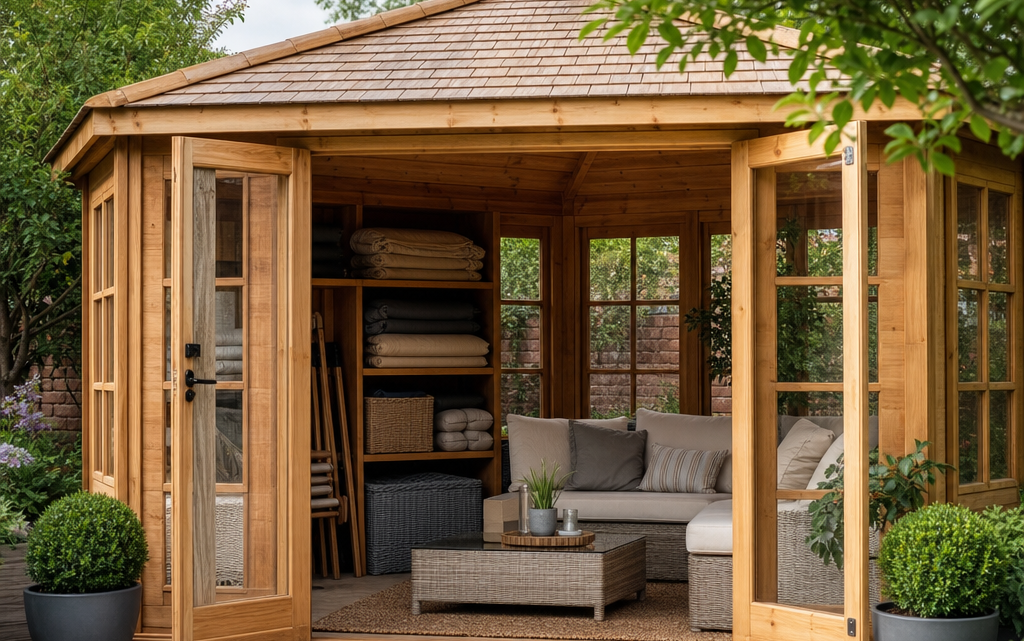
You have a small enclosed timber gazebo at the bottom of the garden, used in summer for quiet morning coffee, evening drinks or a shaded place to read. By October, the cushions, folding chairs and side tables are competing for space in the house, garage or shed. A well-planned timber garden gazebo can help with both needs: a comfortable seasonal seating area in warmer months and a practical, protected place to store garden furniture through winter.
The key is to plan the space for both roles from the start. A gazebo that feels charming in July can quickly become cluttered in November if you have not considered access, ventilation, floor loading, damp prevention and how furniture will be arranged or stacked. This guide explains how to use an enclosed timber gazebo sensibly across the seasons, with practical criteria for layout, storage and maintenance.
Inhaltsverzeichnis
Understanding the dual role of an enclosed timber gazebo
An enclosed timber gazebo sits somewhere between an open garden shelter, a summerhouse and a storage building. It is usually designed to be more attractive and sociable than a basic shed, but more weather-protective than an open-sided gazebo. That makes it well suited to seasonal seating and occasional storage, provided you use it realistically.
In spring and summer, the priority is comfort: light, views, airflow and enough space to sit without feeling cramped. In autumn and winter, the priority changes to protection: keeping furniture off wet ground, reducing exposure to rain and frost, and allowing air to circulate so that timber, cushions and metal frames do not suffer from condensation or mildew.
The most successful arrangements treat the gazebo as a flexible room rather than a dumping ground. You should be able to convert it from seating to storage without completely dismantling the interior every year.
Choosing the right position in the garden
Where you place the gazebo has a major effect on how useful it will be throughout the year. A beautiful spot in summer may be awkward in winter if it becomes boggy, shaded and difficult to reach.
Think about access in poor weather
You will need to carry chairs, cushions, small tables and possibly covers to and from the gazebo. Choose a location with a firm, safe route from the house or patio. A stepping-stone path across the lawn may be pleasant in June but slippery and muddy in December. If the gazebo is likely to be used for winter storage, a proper path or hardstanding approach is a sensible investment.
Consider sun, shade and prevailing wind
For summer seating, some shade is welcome, but deep shade all day can encourage damp conditions, especially in colder months. Ideally, the gazebo should receive some sunlight to help dry the structure after rain. Avoid placing it directly under trees where falling leaves, sap and branches may damage the roof covering or block drainage.
Also consider the direction of the prevailing wind and rain. Even enclosed buildings benefit from a sheltered position, particularly around the door. A door that faces directly into driving rain may need more frequent maintenance and may allow more moisture to be carried inside when opened.
Start with a proper base
A timber gazebo used for seating and storage needs a stable, level and well-drained base. This is one of the most important decisions you will make. If the base is poor, the building may distort, doors may not close properly, water may collect underneath and stored furniture may be exposed to damp.
Suitable bases often include concrete slabs, a concrete pad, a properly constructed timber frame base or a level paved area. The exact choice depends on the gazebo design, site conditions and manufacturer’s instructions. Whatever you choose, the base should:
- Be level across the whole footprint of the building.
- Support the full structure, not just the corners.
- Allow rainwater to drain away rather than pool around the timber.
- Keep the floor clear of direct ground moisture.
- Be large enough for safe access around the door.
Do not place a timber gazebo directly onto soil or grass. Even treated timber will perform much better when kept away from persistent moisture. A proper base also makes furniture storage easier because chairs and tables will stand level and are less likely to shift or mark the floor.
Planning the summer seating layout
Before buying or rearranging furniture, measure the usable internal space and think about how people will move through it. The most common mistake is choosing furniture that looks compact in a showroom or online but overwhelms the gazebo once placed inside.
Allow space for movement
You should be able to open the door fully, sit down without pulling furniture into the doorway, and move around safely with a drink or tray. In a small hexagonal or compact enclosed gazebo, lightweight individual chairs may work better than a fixed bench or bulky sofa. Folding or stackable furniture gives you more options when changing from summer use to winter storage.
Use the glazing and views
If your gazebo has windows, arrange seating to take advantage of the view into the garden. Avoid putting tall storage units or stacked furniture directly in front of glazing during the main sitting season, as this can make the space feel smaller and darker. A small central table, corner stools or narrow side tables are often more practical than one large coffee table.
Choose materials that suit seasonal use
Even inside an enclosed garden building, conditions are not the same as indoors. Temperatures fluctuate, humidity rises and falls, and occasional condensation can occur. For seating, choose materials that tolerate garden-room conditions, such as treated timber, powder-coated metal, rattan-effect furniture or easily removable cushions. Soft furnishings should be taken indoors during prolonged damp weather unless they are specifically designed for outdoor use and stored in breathable bags or boxes.
Designing for winter furniture storage
Winter storage is not just about fitting everything inside. It is about storing items so that they remain dry, clean, ventilated and easy to remove when spring arrives.
Group furniture by type
Stack chairs together, fold tables flat where possible, and keep cushions separate from hard furniture. If you have outdoor cushions, clean and dry them thoroughly before storage. Never store damp cushions in a closed gazebo, as they can develop mould and may also increase humidity inside the building.
Keep items off the walls
Leave a small gap between stored furniture and timber walls. This allows air to circulate and helps reduce the risk of trapped moisture. It also prevents chair frames or table edges from rubbing against the cladding. If space is tight, use slim spacers, wall-friendly hooks where appropriate, or freestanding storage racks, but always make sure any fixings are suitable for the building and do not compromise weather protection.
Protect the floor
Garden furniture can scratch or dent timber flooring, especially if metal legs are dragged across it. Use furniture glides, rubber feet or a breathable mat in high-wear areas. Avoid non-breathable plastic sheeting laid directly over a timber floor for long periods, as it can trap moisture. If you use a mat, lift it occasionally to check that the floor beneath is dry.
Checklist: preparing your gazebo for winter storage
- Clean the gazebo floor and remove leaves, soil and debris.
- Check the roof covering, corners, door and window areas for signs of leaks.
- Make sure all furniture is clean and completely dry before storing.
- Remove cushions and textiles unless they are properly protected and suitable for outdoor storage.
- Stack or fold furniture to reduce pressure on the floor and walls.
- Leave air gaps around stored items to encourage ventilation.
- Check that the door closes securely and the latch operates smoothly.
- Apply any required timber treatment according to the manufacturer’s guidance.
- Visit the gazebo periodically through winter to air it and inspect for damp.
Using a compact timber gazebo as a practical example
When comparing buildings, look at the details that affect both comfort and storage: wall construction, floor strength, roof material, glazing, door access and treatment requirements. A compact enclosed gazebo can be very useful if you plan the layout carefully, but it should not be expected to perform like a fully insulated garden room or a large shed.
For example, a traditional hexagonal timber summerhouse with shiplap tongue and groove cladding, a wooden floor, glazed door and side windows can provide an attractive place to sit in summer and a protected space for garden furniture in winter. The important point is not simply its appearance, but how its structure and access suit the way you intend to use it.
Use any product example as a prompt for your own questions. Is the floor appropriate for the type and weight of furniture you plan to store? Will the door opening allow you to move chairs and tables in and out without scraping the frame? Do the windows provide the light and outlook you want for summer seating? Are you prepared to carry out the recommended timber treatment to maintain weather resistance over time?
Ventilation and condensation control
Many people assume that if a gazebo is enclosed, everything inside will stay perfectly dry. In practice, timber garden buildings breathe and respond to outdoor conditions. Condensation can form when warm, moist air meets cold surfaces, particularly during autumn and winter.
Good ventilation is essential. If the building has opening windows or vents, use them during dry spells. If it does not, you can still reduce problems by opening the door occasionally on dry days, avoiding storage of damp items and keeping furniture away from the walls. Moisture absorbers may help in small spaces, but they are not a substitute for ventilation and proper maintenance.
Be especially careful with cushions, parasols, fabric chair pads and rugs. These items can hold moisture even when they feel dry on the surface. Air them thoroughly before storage, and consider storing them indoors if they are valuable or used frequently.
Security and practical access
A gazebo used for furniture storage should be secure enough for the value of the items inside. Many garden gazebos and summerhouses have simple latches or light-duty door furniture, which may be fine for casual use but not suitable for storing expensive equipment. Check what is supplied and decide whether additional security is appropriate.
Keep security proportionate. A visible high-value lock on a lightweight garden building can sometimes draw attention. More practical steps include placing the gazebo within sight of the house, using discreet internal storage, marking furniture, and ensuring gates and garden access points are secure. If you plan to store valuable items, check your home insurance conditions, as outbuildings may have specific requirements.
Maintenance through the seasons
Timber gazebos need regular care. Even if supplied treated, timber usually requires ongoing retreatment in line with the manufacturer’s instructions. This is not only about appearance; it helps protect the wood from moisture and decay.
Spring
Open the gazebo fully on a dry day and inspect the interior. Look for signs of damp, movement, loose fixings or damage caused by winter weather. Clean the windows, sweep the floor and bring out seating gradually. This is also a good time to plan any retreatment before the main summer use begins.
Summer
Use the space regularly and keep it tidy. Open doors and windows when possible to encourage airflow. Avoid leaving wet towels, damp garden cushions or plant pots directly on the timber floor. If you use the gazebo for entertaining, clean up food and drink spills quickly to avoid staining and pests.
Autumn
Prepare for storage before the weather turns persistently wet. Clean furniture, dry cushions and remove any items that do not need to stay outside. Clear leaves from around the base and roof area, and check that water is draining away properly.
Winter
Inspect periodically rather than locking the gazebo and forgetting it. After storms, check the roof felt, door and windows. On dry days, air the building. If you notice condensation, musty smells or damp patches, respond quickly by increasing ventilation and removing any moisture-retaining items.
Common practical mistakes to avoid
Overfilling the gazebo
If every inch is packed with furniture, air cannot circulate and you will struggle to inspect the building. Overfilling also increases the risk of scratched glazing, damaged door frames and pressure marks on timber walls.
Storing items while they are damp
This is one of the quickest ways to create mould and unpleasant odours. Always dry chairs, tables, cushions and covers before storing them. Pay attention to joints, folds and seams where water can linger.
Ignoring the base
A good gazebo on a poor base will not perform well. Uneven support can lead to misaligned doors, gaps and premature wear. Water pooling around the base can shorten the life of timber components.
Using indoor furniture without considering conditions
Indoor upholstered chairs, untreated softwood furniture and delicate rugs may not cope well with fluctuating humidity. If you want a cosy look, use removable accessories that can be taken indoors when not in use.
Forgetting annual treatment
Many timber buildings rely on periodic treatment to maintain their protection. Skipping this because the building still looks sound can lead to problems later. Follow the manufacturer’s maintenance schedule and use appropriate products.
Decision criteria before you buy or reorganise
Before committing to a gazebo or changing how you use an existing one, ask yourself a few practical questions:
- How many people will sit inside regularly? Plan for normal use, not rare occasions.
- What furniture must be stored in winter? Measure the largest items and check the door access.
- Will cushions be stored inside or indoors? This affects how much dry, ventilated storage you need.
- Is the site dry and accessible year-round? If not, improve the base and path first.
- Can you maintain the timber properly? Factor in time and cost for retreatment.
- Do you need extra security? Consider the value of stored items and insurance requirements.
- Will the building remain pleasant to sit in? Do not let storage needs overwhelm the summer seating role.
FAQ
Can you store garden furniture in an enclosed timber gazebo all winter?
Yes, provided the gazebo is weather-resistant, well maintained, ventilated and set on a suitable base. Furniture should be clean and dry before storage, and you should leave space for air circulation.
Should cushions be left in the gazebo?
It is usually better to store cushions indoors during winter, especially if they are fabric-filled or not designed for long-term outdoor storage. If you do keep them in the gazebo, they should be completely dry and stored in a breathable, protected way.
Does an enclosed gazebo need ventilation?
Yes. Enclosed timber buildings can suffer from condensation if air does not circulate. Open doors or windows on dry days and avoid storing damp items inside.
What type of furniture works best?
Lightweight, folding or stackable garden furniture is usually best for a dual-use gazebo. It allows you to switch between seating and storage without overcrowding the space.
Is a timber gazebo the same as a shed?
No. A timber gazebo or summerhouse is often designed with appearance, seating and garden enjoyment in mind, while a shed is primarily for storage. You can use an enclosed gazebo for seasonal storage, but you should avoid treating it as a general dumping space.
Conclusion
An enclosed timber garden gazebo can be a very useful seasonal space when you plan it carefully. In summer, it can provide a bright, sheltered seating area with views of the garden. In winter, it can protect chairs, tables and selected accessories from the worst of the weather. The best results come from choosing a suitable location, building on a sound base, allowing for ventilation, selecting practical furniture and keeping up with timber maintenance.
Think of the gazebo as a flexible garden room with limits. If you keep it dry, accessible and uncluttered, it will serve you far better than a space that is overfilled at the end of summer and forgotten until spring.

