

Description
Forest 6′ x 6′ Acoustic Noise Reduction Fence Panel reduces road noise by up to 30dB, with tested timber construction for quieter UK gardens and boundaries.
Calmer Boundaries with a Tested Acoustic Timber Panel
The Forest 6′ x 6′ Acoustic Noise Reduction Fence Panel, measuring 1.83m x 1.80m, is designed for garden boundaries where sound control is an important practical requirement. It is not a standard decorative fence panel with only visual screening in mind. Its construction is intended to reduce airborne noise, especially road traffic noise, by reflecting, diffusing and absorbing sound waves across the face of the panel.
For a garden house shop, this panel is particularly relevant for customers who want to improve the usability of outdoor spaces around a garden building, terrace, seating area, home office, workshop or boundary line. A quieter garden can make a noticeable difference when a garden room is used for work, reading, hobbies or everyday relaxation. The panel offers up to 30dB noise reduction, which the manufacturer describes as capable of reducing average road noise down to the level of normal conversation.
This acoustic fence panel has the highest acoustic rating in its range: acoustic rating 4. Its performance has been independently tested to British Standards, including BS EN 1793-2:2012 for road traffic noise reducing devices, Category B3. It has also been tested according to BS EN ISO 10140-2 and ISO 717-1, standards used for measuring airborne sound insulation. These references are important because they show that the stated sound reduction is based on recognised testing methods rather than only on a general product claim.
How the Triform Face Handles Sound Waves
The key technical feature of the Forest acoustic panel is its Triform Technology. The face of the panel is formed with multiple angles rather than a completely flat surface. These triangulated board profiles help sound waves behave differently when they reach the panel. Instead of passing through an open or lightly built fence, sound waves are reflected, diffused and absorbed by the angled timber structure.
Reflection means that some sound is directed away from the garden side of the panel. Diffusion means that sound energy is scattered rather than continuing in one direct path. Absorption helps reduce the amount of airborne sound energy that passes beyond the barrier. The combination of these effects is the basis of the panel’s acoustic function.
In practical terms, this makes the product suitable for boundaries close to roads, lanes, neighbouring hard surfaces or other external noise sources. It should be understood that no garden fence can remove all outdoor noise. However, a properly installed noise reduction fence panel with a tested construction can make a measurable difference compared with ordinary lightweight fencing, especially when installed without gaps.
17mm Tongue and Groove Boards for a Closed Timber Surface
The panel is made using 17mm thick smooth planed tongue and grooved interlocking boards. This board thickness is one of the main structural details of the product. Tongue and groove construction creates a closely interlocked surface, which is important because gaps allow noise to pass through more easily. A fence panel intended for sound reduction must therefore be more closed and more substantial than many standard garden fence types.
The smooth planed finish also gives the timber a clean and consistent surface. This contributes to the panel’s neat appearance while remaining practical for a boundary installation. The panel can be used in gardens where a more robust and ordered finish is preferred, particularly next to garden houses or outdoor buildings where the surrounding boundary forms part of the overall visual setting.
Because the boards interlock, the panel provides both screening and acoustic function. This makes it suitable where privacy and sound reduction are required at the same time. For example, a garden building used as a workspace may benefit from reduced external noise as well as a more enclosed boundary. The product is therefore more technically focused than a purely decorative fence panel.
A 45mm Rebated Frame That Helps Close the Gaps
The boards are mounted within a strong 45mm thick rebated smooth planed outer frame. This frame is not only a structural component; it also supports the acoustic purpose of the panel. The rebated design helps ensure that there are no open gaps around the boards where sound could pass through.
For noise reduction fencing, small openings can reduce performance. Sound can travel through spaces at the sides, bottom or between panel components. The robust frame therefore works together with the interlocking boards to create a more complete barrier. This is a key reason why the installation method is also important.
The 45mm frame adds stability to the panel and supports its suitability as a sturdy boundary product. A more rigid panel is better suited to remaining aligned in a fence run, particularly when the panel is installed correctly using suitable posts. For a timber acoustic fence, the combination of board thickness, interlocking joints and a substantial frame is central to the product’s performance.
Vertical or Horizontal Installation for Different Garden Lines
The Forest 6′ x 6′ Acoustic Noise Reduction Fence Panel can be fitted with the boards running either vertically or horizontally. This provides flexibility in the appearance of the fence run without changing the basic panel size. A vertical board orientation can visually emphasise height, while a horizontal orientation can accentuate the length of a boundary line.
This flexibility is useful when the panel is installed around a garden house, shed, studio or seating area. In narrow spaces, vertical alignment may make the boundary feel taller and more defined. Along a longer garden edge, horizontal alignment may create a more continuous visual line. The choice depends on the layout and the intended appearance of the outdoor area.
Although visual preference matters, the installation should still prioritise acoustic continuity. The panel should be fitted so that gaps are avoided wherever possible. The acoustic design relies on a closed surface and a secure connection to posts. The option to install vertically or horizontally should therefore be considered together with post type, boundary shape and the desired fence run.
Measured Noise Reduction Rather Than General Sound Claims
One of the most relevant details of this product is its independently tested performance. The panel offers up to 30dB reduction in noise and has been tested to BS EN 1793-2:2012, Category B3. This standard relates to road traffic noise reducing devices, which makes it especially relevant for gardens affected by vehicle noise.
The product has also been tested using BS EN ISO 10140-2 and ISO 717-1, standards associated with measuring airborne sound insulation. These standards provide a more precise context for the acoustic performance of the panel. For customers comparing fencing options, this information helps distinguish a tested garden noise barrier from a conventional boundary fence.
The stated reduction of up to 30dB should be understood as a maximum figure under appropriate conditions. Actual results in a garden can depend on factors such as installation quality, fence height, surrounding surfaces, terrain, gaps, the position of the noise source and the distance between the noise source and the listener. Even so, tested performance gives a useful basis for deciding whether this type of panel is suitable for a particular boundary.
Where This Panel Makes Practical Sense
The purchase is particularly worthwhile when a garden boundary is exposed to regular noise and a standard fence would not provide enough acoustic control. Road traffic is the most obvious example, as the panel has been tested under standards relevant to road traffic noise reducing devices. It can also be relevant for gardens where external airborne noise affects the enjoyment of outdoor areas.
For properties with a garden house, the panel can help create a more comfortable external setting. A garden house used as a home office, hobby room or quiet retreat can be more pleasant when the surrounding boundary reduces intrusive noise. The fence panel does not replace building insulation, but it can form part of a wider approach to controlling sound around the garden.
It is also suitable where a boundary needs to be both solid and visually tidy. The smooth planed timber, tongue and groove boards and strong outer frame provide a structured appearance. The product therefore offers a combination of acoustic function, boundary screening and robust timber construction.
Material, Thickness and Construction at a Glance
| Feature | Product detail |
|---|---|
| Product name | Forest 6′ x 6′ Acoustic Noise Reduction Fence Panel |
| Metric size | 1.83m x 1.80m |
| Noise reduction | Up to 30dB |
| Acoustic rating | Rating 4, the highest acoustic rating stated for this panel |
| Board construction | 17mm thick smooth planed tongue and grooved interlocking boards |
| Frame | Strong 45mm rebated smooth planed outer frame |
| Technology | Triform triangulated board face to reflect, diffuse and absorb sound |
| Installation orientation | Can be fitted with boards vertical or horizontal |
| Guarantee | 15 year guarantee against rot |
As this is a fence panel rather than a garden building, details such as roof type do not apply. The relevant construction specifications are the board thickness, board profile, interlocking tongue and groove design, frame thickness and recommended installation method. These details determine both the physical strength and the acoustic behaviour of the product.
Installation Details That Influence Acoustic Performance
For optimum acoustic performance, the manufacturer recommends fitting the panel using slotted ‘H’ posts or fixing it directly with screws to a pressure treated fence post. The purpose of these installation methods is to ensure that there are no gaps for sound to squeeze through.
This point is essential. A sound-reducing fence is only as effective as the continuity of the barrier. If gaps are left between panels, around posts, at the bottom edge or at junctions, sound can pass through those openings. Careful installation is therefore part of the acoustic system. The panel itself is designed to reduce noise, but the final result depends on how well the fence run is completed.
When planning an installation, the fence line should be assessed before work begins. The boundary should allow the panels and posts to be aligned securely. Uneven ground may need particular attention because openings below a panel can compromise sound reduction. The aim should be a continuous, close-fitting barrier wherever the noise reduction function is required.
Rot Resistance and Long-Term Care
The panel comes with a 15 year anti-rot guarantee. According to the product description, there is no annual retreatment or maintenance required for these high quality, sturdy and reliable noise reduction panels. This is relevant for customers who want a timber boundary with reduced ongoing care requirements.
Timber fencing is often selected for its natural appearance and compatibility with garden settings. However, maintenance expectations can vary significantly between products. A 15 year guarantee against rot provides reassurance about the panel’s intended durability. It also makes the panel suitable for garden layouts where repeated treatment would be inconvenient, such as behind planting, along longer boundaries or near garden buildings.
The maintenance-free description refers to annual retreatment not being required, based on the supplied product information. As with any exterior timber installation, correct fitting and sensible site conditions remain important. The posts, fixings and the overall fence run should be suitable for outdoor use and installed to maintain the panel’s intended performance.
Design Compatibility with Garden Buildings
Although the panel is primarily a boundary product, it can be especially useful in gardens that include a garden house. Garden buildings are often placed near boundaries to make efficient use of space. If that boundary faces a road or another regular noise source, the surrounding fence can influence how comfortable the area feels.
The Forest acoustic panel has a solid, structured appearance due to its smooth planed interlocking boards and framed construction. This can suit modern and traditional garden house settings, depending on the surrounding layout. The option to install the boards vertically or horizontally also allows the fence line to be visually coordinated with the proportions of the garden building.
For example, horizontal boards may visually extend a fence line behind a wider garden room, while vertical boards may suit a taller, more enclosed boundary. These are design considerations rather than separate technical features, but they help integrate the panel into the overall garden structure.
Sound Control, Privacy and Boundary Definition in One Panel
The panel’s closed board construction supports more than one practical purpose. It reduces noise, provides a solid visual screen and creates a clear boundary. For many gardens, these functions overlap. A boundary facing a road may require sound reduction and privacy at the same time. A boundary beside a seating area may need to feel enclosed without looking temporary or lightweight.
The 17mm tongue and groove boards help form a continuous surface, while the 45mm rebated frame gives the panel a defined edge. This makes it more robust than many open or semi-open fence styles. It is not intended as a lattice or decorative screen; it is a more substantial panel designed for acoustic and boundary performance.
Customers looking for a 6 x 6 acoustic fence panel should therefore consider both the sound specification and the structural details. The size, board construction, frame thickness and tested standards all contribute to its suitability for noise-sensitive garden areas.
What to Consider Before Ordering
Before choosing this panel, the site should be assessed carefully. The main question is where the noise is coming from and whether a fence line can be installed between the source and the area that needs protection. Acoustic barriers generally work best when they interrupt the direct path between noise source and listener.
The height and continuity of the fence run are also important. This panel is 6′ x 6′, or 1.83m x 1.80m. If the fence run includes lower sections, open gates or gaps at the edges, the overall acoustic result may be reduced. The product can perform as designed only when used as part of a properly planned boundary.
It is also necessary to plan the posts. For optimum performance, slotted ‘H’ posts or screws fixed directly to pressure treated fence posts are recommended. The post system should be selected with the aim of preventing gaps. The use of suitable pressure treated posts also supports the durability of the finished fence installation.
A Technical Choice for Quieter Outdoor Space
The Forest 6′ x 6′ Acoustic Noise Reduction Fence Panel is a considered choice for gardens where sound reduction is a clear requirement. Its specification is based on several practical elements: up to 30dB noise reduction, independent testing to recognised standards, Triform triangulated board technology, 17mm smooth planed tongue and groove boards, and a strong 45mm rebated frame.
The purchase is worthwhile when the objective is not simply to mark a boundary, but to reduce external noise while maintaining a solid timber appearance. The 15 year guarantee against rot and the absence of annual retreatment requirements add to its suitability for long-term garden use. For households using outdoor space regularly, particularly around a garden house or seating area, these characteristics can make the panel a practical part of the garden layout.
As a noise reducing timber fence panel, it should be installed with attention to acoustic continuity. Correctly fitted panels, appropriate posts and careful gap control are essential. When these conditions are met, the Forest acoustic panel provides a tested, robust and low-maintenance boundary solution for gardens affected by everyday external noise.
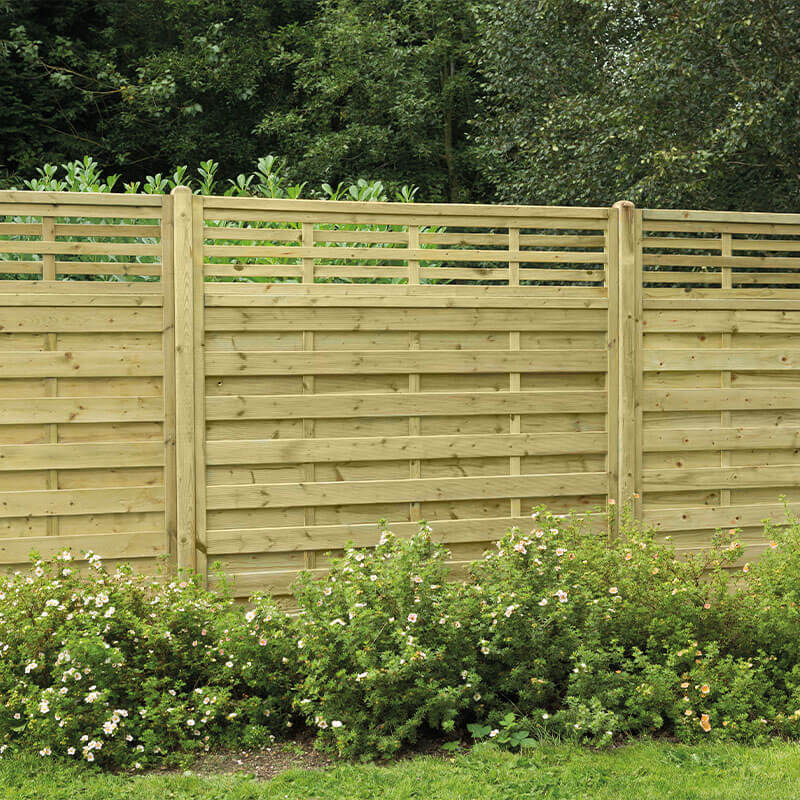 Forest 6′ x 6′ Kyoto Decorative Fence Panel (1.8m x 1.8m)
 Forest 6′ x 6′ Vertical Closeboard Fence Panel (1.83m x 1.85m)
 Forest 6′ x 6′ Contemporary Grey Double Slatted Fence Panel (1.8m x 1.81m)
 Forest 6′ x 6′ Pressure Treated Contemporary Slatted Fence Panel (1.8m x 1.8m)