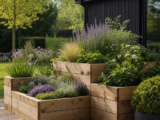
Planning stackable timber planters for seasonal garden displays

Seasonal planting often starts with good intentions: a few spring bulbs by the door, summer colour on the patio, perhaps herbs near the kitchen and a winter container by the gate. By the end of the year, however, many gardens have a collection of mismatched pots, empty compost bags and containers that are awkward to move or store. Stackable timber planters can solve much of this by giving you a repeatable, flexible format for displays that change through the year without taking over your shed, patio or side return.
Whether you have a small courtyard, a family garden, a balcony-style terrace or a large plot with several seating areas, the principle is the same: choose planters that are practical to handle, consistent in style and suitable for the plants you want to grow. This article explains how to plan stackable timber planters for seasonal garden displays, what to consider before buying, how to arrange them effectively, and how to avoid common mistakes.
Inhaltsverzeichnis
Why stackable timber planters work well for seasonal displays
Seasonal displays need to be changed, refreshed and sometimes moved. A planter that looks attractive in May may need different planting by October, and a container that sits in full sun in summer may be better used for bulbs or evergreen structure in winter. Stackable timber planters are useful because they are generally easier to store when empty, simpler to repeat across different areas of the garden, and visually softer than plastic or metal containers.
Timber also suits a wide range of garden styles. It can look appropriate beside brick, stone, gravel, decking, lawn or rendered walls. Square and rectangular planters are particularly useful in design terms because they line up neatly along paths, doorways, patios and boundaries. If you use several matching planters, you can create a coordinated display without making every planting scheme identical.
Start with the role of the display
Before you choose a planter, decide what the display needs to do. This prevents you from buying containers that are attractive but unsuitable for the job. A seasonal planter can provide colour, scent, privacy, edible crops, a focal point or a way to soften hard landscaping.
Typical uses for seasonal timber planters
- Front-door displays: compact arrangements of bulbs, bedding plants, evergreens or clipped shrubs to create a welcoming entrance.
- Patio colour: planters filled with summer bedding, ornamental grasses or long-flowering perennials around seating areas.
- Kitchen-garden containers: herbs, salad leaves, strawberries or compact vegetables placed close to the house.
- Temporary screening: taller grasses, bamboo in suitable containers, or upright shrubs to soften views and define spaces.
- Winter interest: evergreens, stems, berries, hellebores, heathers or underplanted bulbs to prevent the garden looking bare.
If you want the planters to move between these roles, choose a shape and size that is not too heavy once planted, and avoid very deep-rooted or permanent planting combinations unless the planter is intended to stay in place.
Choosing the right size and shape
Planter size has a direct effect on plant health, maintenance and flexibility. Small planters are easy to move and replant but dry out quickly. Very large planters retain moisture better and give roots more room, but they are harder to reposition and may dominate a small space. For flexible seasonal displays, medium-sized square or rectangular timber planters often offer the best compromise.
Square planters
Square planters are useful where you want a balanced, formal or repeatable display. They work well in pairs beside a doorway, as a group of three on a patio, or as punctuation points along a path. Their even proportions make them suitable for central feature plants, such as a compact shrub, standard bay, ornamental grass or a seasonal arrangement around a taller centrepiece.
Rectangular planters
Rectangular planters are better for edges, boundaries and linear schemes. They can define a seating area, run along a wall, or create a low screen. They are also convenient for herbs and salad crops because you can plant in rows or sections.
Hexagonal and decorative shapes
More decorative shapes can soften formal layouts and suit cottage-style or informal gardens. They may be less efficient to line up against walls, but they can make attractive focal points in open areas or at path junctions.
Decision criteria before you buy
Use practical criteria rather than choosing purely by appearance. The right planter should suit your space, your plants and your maintenance routine.
1. Available space
Measure the intended area before buying. Leave enough room to walk around patio furniture, open doors, use steps safely and access taps or storage. A planter may look modest in a product photograph but feel bulky in a narrow passageway.
2. Weight when planted
Compost, water and plants add considerable weight. If you expect to move planters regularly, choose manageable sizes and consider using pot feet, castors designed for outdoor use, or placing planters where they will not need frequent moving. Do not rely on being able to lift a planted timber container easily.
3. Durability and timber treatment
Outdoor timber is exposed to rain, frost, sun and soil moisture. Pressure-treated timber is commonly used because it helps protect against rot and decay. Even so, good positioning and drainage matter. Raised bases or feet can help keep the planter away from standing water, which is particularly useful on damp patios or compacted ground.
4. Storage and handling
If your displays change by season, think about what happens to empty planters. Stackable designs are valuable where shed or garage space is limited. They can also be easier to transport around the garden when you are reorganising displays.
5. Sustainability
If environmental impact matters to you, look for timber from certified sustainable sources, such as PEFC-certified timber. This helps you choose products with more responsible sourcing credentials.
Planning a year-round planting calendar
The most successful seasonal displays are planned as a sequence rather than as one-off purchases. You do not need to replant everything four times a year, but you should know which planters will provide structure and which will carry short-term colour.
Spring
Spring displays can include bulbs such as tulips, narcissi, crocus and muscari, combined with primroses, violas or early perennials. You can plant bulbs in autumn and add top planting in late winter or early spring. Square timber planters are particularly effective for layered bulb displays because the arrangement looks neat even before everything flowers.
Summer
Summer is the season for stronger colour and faster growth. Bedding plants, pelargoniums, begonias, petunias, salvias, cosmos, compact dahlias and herbs can all work well, depending on sun and exposure. In hot spots, choose plants that tolerate dryness and be realistic about watering.
Autumn
Autumn planters can bridge the gap between summer bedding and winter structure. Use ornamental grasses, heucheras, cyclamen, pansies, small evergreens and late-flowering perennials. This is also the time to plant spring bulbs beneath the surface for next year.
Winter
Winter displays should rely less on flowers and more on form, foliage and stems. Consider small evergreens, ivy, skimmia, carex, hellebores and dogwood stems inserted as seasonal decoration. In exposed areas, avoid delicate plants that will be damaged by frost or wind.
A practical example of a stackable timber planter set
As a practical example, a set such as the Forest Kendal Square Wooden Garden Planter 1’8 x 1’8 (0.5 x 0.5m) – Set of 3 shows the type of features that can support flexible seasonal displays. It is a square timber planter set, pressure treated for protection against rot and decay, raised off the ground to help protect it from damp conditions, stackable for storage and transport, and supplied without the need for assembly. The manufacturer states a 15-year guarantee against rot and fungal decay, and the timber is PEFC certified. Details like these are useful reference points when comparing your options, even if you ultimately choose a different size, shape or style.
For a garden design scheme, the key lesson is not that one product suits every situation, but that repeated, manageable units can make seasonal planting easier to plan. A set of three matching square planters, for example, could be used as a balanced group on a patio in summer, separated to mark different entrances in winter, or stored compactly when empty.
Designing with groups rather than single planters
One planter can look attractive, but groups usually create stronger seasonal impact. The advantage of stackable planters is that you can buy or use them as a coordinated set, then arrange them differently through the year.
Use odd numbers for informal displays
Groups of three or five tend to look natural and relaxed. Vary the planting height within each container: a taller central plant, medium filler plants and trailing or soft edging plants. Even when the planters are the same size, the planting can create movement and variation.
Use pairs for formal areas
Two matching square planters on either side of a door, gate or bench create symmetry. This works particularly well with evergreen structure, clipped shrubs or repeated seasonal bedding.
Create rhythm along a route
Place matching planters at intervals along a path or beside steps to guide movement through the garden. Keep enough spacing so the route remains practical, especially when plants mature and spill over the edges.
Preparing timber planters for planting
Always check the manufacturer’s instructions before preparing any planter. Timber planters vary in construction, and you should not make alterations that could affect their performance or guarantee unless the guidance allows it.
Practical preparation steps
- Choose the final position first. A planter is much easier to move when empty than when filled with compost and plants.
- Check drainage. Seasonal plants generally dislike sitting in waterlogged compost. Make sure excess water can escape according to the planter’s design.
- Raise where needed. If the planter is not already raised, pot feet or suitable supports can help reduce contact with standing water.
- Use appropriate compost. For short-term bedding, a good multipurpose peat-free compost may be suitable. For shrubs or longer-term planting, choose a compost that supports longer growth and structure.
- Water before and after planting. Dry compost can be difficult to re-wet thoroughly, so moisten it before planting and water again once plants are in place.
- Leave a watering gap. Do not fill compost to the very top. Leave space so water can soak in rather than running off.
Planting combinations that work
A reliable container display usually combines structure, seasonal colour and softening edges. You can use the simple “thriller, filler and spiller” method, but adapt it to British conditions and the style of your garden.
For sunny patios
Try a central salvia, compact dahlia or ornamental grass with trailing verbena, calibrachoa or thyme around the edge. Herbs such as rosemary, sage and oregano can also work well in sunny timber planters, provided drainage is suitable.
For partial shade
Use ferns, heucheras, violas, begonias, primroses or small hostas. Shade displays often work best when you focus on foliage contrast rather than expecting constant flowers.
For edible seasonal displays
Mix parsley, chives, thyme, lettuce, cut-and-come-again salad leaves or strawberries. Keep edible planters close to the kitchen so you use them regularly and remember to water them.
For winter structure
Combine a small evergreen with ivy, carex, winter pansies or hellebores. Add bulbs beneath the surface for a spring follow-on. Avoid overcrowding: winter plants grow more slowly, but they still need air movement to reduce disease.
Seasonal maintenance checklist
Use this checklist at the start of each season to keep your planter displays attractive and manageable.
- Remove dead, diseased or exhausted plants.
- Top up compost where levels have settled.
- Check that drainage is working and the planter is not sitting in standing water.
- Inspect timber surfaces for damage, loose parts or prolonged damp contact.
- Feed plants according to their needs, especially during active spring and summer growth.
- Water consistently, particularly in warm, windy or sheltered rain-shadow positions.
- Rotate planters if one side receives more sun and growth becomes uneven.
- Refresh the top layer with grit, bark or decorative mulch if appropriate for the planting.
- Move empty stackable planters into storage if they are not needed.
Common practical mistakes to avoid
Overfilling with plants
Seasonal displays can look sparse on day one, which tempts many people to plant too densely. Plants need space to grow, and overcrowding leads to poor airflow, increased disease and more frequent watering. If you want instant impact, use a few larger plants rather than too many small ones.
Ignoring the final weight
A timber planter that is easy to carry when empty can become very heavy once filled. Decide where it will live before planting, and avoid placing heavy containers on surfaces that may not support them safely.
Using the wrong compost
Old, compacted or unsuitable compost can cause disappointing growth. Short-term bedding, herbs, bulbs and shrubs may have different requirements. If you reuse compost, refresh it and remove old roots, pests and diseased material.
Letting planters sit in wet conditions
Even durable outdoor timber benefits from sensible placement. Avoid leaving planters in puddles or against constantly damp surfaces. Raised designs help, but you should still check the surrounding ground after heavy rain.
Forgetting the off-season storage plan
Stackable planters are useful only if you keep them clean and store them sensibly when empty. Brush off loose compost, allow them to dry where practical, and stack them somewhere they will not be knocked over or trapped in persistent damp.
How to arrange planters in different garden spaces
Small courtyard
Use two or three matching planters rather than many different containers. Place them in corners or along one edge to keep the central space open. Choose upright plants to add height without spreading too far.
Family garden
Position planters where they will not obstruct play, footballs, bikes or access to washing lines and bins. Robust timber planters can suit family gardens, but planting should still be chosen with safety and resilience in mind.
Front garden
Keep displays tidy and proportionate. A pair of square timber planters can frame a doorway, while a group of three can soften a paved frontage. Avoid plants that quickly flop over paths or catch on clothing.
Rented or temporary garden
Stackable timber planters are useful if you may move home or change the layout. You can take the display with you more easily than planted borders, and you can adapt the arrangement without permanent landscaping work.
FAQ
Can you use stackable planters as tiered planters?
Only if the product is specifically designed for that purpose. In many cases, “stackable” means the planters can be stacked when empty for storage or transport, not that they should be planted while stacked. Always follow the manufacturer’s instructions.
Are timber planters suitable for year-round use?
Many timber planters are designed for outdoor use, especially if they are pressure treated, but performance depends on construction, drainage, position and maintenance. Avoid prolonged contact with standing water and inspect them seasonally.
What should I plant for the easiest seasonal display?
Use a small evergreen or grass as a permanent centrepiece, then change the surrounding plants by season. This reduces replanting work while keeping the display fresh.
Do I need to treat pressure-treated timber planters?
Some pressure-treated planters are sold as not requiring further treatment, but you should always check the specific product guidance. If you apply any coating, make sure it is suitable for outdoor timber and compatible with the planter’s intended use.
How do I stop seasonal planters drying out?
Use an appropriate compost, avoid very exposed positions for thirsty plants, water deeply rather than little and often, and consider mulching the surface. Larger planters usually dry out more slowly than very small pots.
Conclusion
Stackable timber planters are a practical way to create flexible seasonal garden displays without committing to permanent borders or storing a jumble of mismatched containers. The best results come from planning: measure your space, choose manageable sizes, think about storage, check durability features and design planting schemes that change logically through the year.
Use matching planters to bring rhythm and order to patios, entrances and paths, then vary the planting to suit the season. With sensible preparation, good drainage, appropriate compost and regular maintenance, you can keep your displays attractive from spring bulbs to winter evergreens while retaining the freedom to rearrange your garden as your needs change.