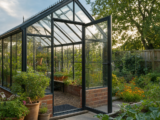
How to Plan a Raised-Bed Mini Greenhouse for Patio Growing

You may have a sunny patio, a small courtyard or a balcony that catches the morning light, but not enough space for a full greenhouse. A raised-bed mini greenhouse can be a practical way to grow salads, herbs, strawberries, compact vegetables and young plants without taking over the whole outdoor area. It can also make gardening easier if bending, kneeling or carrying trays in and out of the house is becoming inconvenient.
Good planning matters, especially in a confined space. A mini greenhouse that is too exposed, too difficult to water, too heavy for a balcony or awkward to access can quickly become more trouble than it is worth. This guide explains how to plan a raised-bed mini greenhouse for patio and balcony growing, what to check before buying, and how to avoid common mistakes.
Inhaltsverzeichnis
What is a raised-bed mini greenhouse?
A raised-bed mini greenhouse combines an enclosed growing cover with planting space set above ground level. Unlike a conventional greenhouse, it is usually compact enough for a patio, terrace, courtyard or generous balcony. Unlike a simple cold frame, it is often tall enough to include deeper planting trays, plant supports or storage below the growing area.
The main purpose is to create a more protected growing environment. The cover helps reduce wind chill, shelters crops from heavy rain and can raise the growing temperature slightly in spring and autumn. The raised bed makes watering, sowing, thinning and harvesting easier because the plants are at a more comfortable working height.
Decide what you want to grow first
Before choosing a mini greenhouse, decide what it needs to do. A unit intended mainly for seed raising has different requirements from one used for cropping herbs and vegetables throughout the season.
Good crops for patio raised-bed greenhouses
Raised-bed mini greenhouses are particularly useful for smaller crops and plants that benefit from shelter. Suitable options include:
- Cut-and-come-again salad leaves, rocket, mizuna and spinach
- Parsley, coriander, basil, chives, thyme and other herbs
- Spring onions, radishes and baby beetroot
- Strawberries in pockets, trays or hanging supports if provided
- Young tomato, chilli and cucumber plants before they are moved outside
- Seedlings and plug plants that need protection from cold nights
Be realistic about plant size. Compact crops work best. Tall tomatoes, vigorous cucumbers, courgettes and climbing beans usually need more root space, height and ventilation than a small raised mini greenhouse can provide for a full season.
Consider your growing calendar
A mini greenhouse is most valuable when used throughout the year. In late winter and spring, it can help you start hardy and half-hardy seedlings. In summer, it can protect herbs and salads from heavy rain, although ventilation becomes essential. In autumn, it can extend cropping for leafy vegetables. In winter, it can shelter overwintering herbs or empty pots and tools, depending on the design.
Assess your patio or balcony before buying
The best greenhouse on paper may not be the best choice for your outdoor space. Measure carefully and think about how you will use the area around it.
Check available space and access
Measure the footprint, but also allow working room. You need enough space to open lids, reach the planting area, slide or open any storage panels, and move around safely with a watering can or compost bag. On a narrow balcony, the depth from the wall to the balustrade may be more limiting than the total floor area.
As a practical rule, leave at least enough clear space in front of the unit for you to stand comfortably and bend your arms while gardening. If the greenhouse has opening lids, check that they will not hit a wall, railing, window, outdoor light or hanging basket.
Confirm balcony load limits
If you are planning balcony growing, weight is one of the most important checks. Soil, compost and water are heavy. A raised planter can become much heavier after rain or watering. The structure itself, the growing medium, wet compost, pots, stored tools and any water reservoir or drainage tray all add to the load.
If you rent, live in a flat, or are unsure about the balcony’s construction, check your lease, building rules or ask the property manager before installing a large planter. Avoid placing heavy units near weak decking boards or damaged surfaces. Where possible, position the load close to structural supports rather than at an unsupported outer edge, but seek professional advice if there is any doubt.
Think about wind exposure
Balconies and roof terraces can be far windier than ground-level patios. Wind can dry compost quickly, damage young plants and put stress on lids or glazing panels. A sheltered position is ideal, but avoid blocking ventilation completely. If the location is exposed, prioritise a sturdy frame, secure glazing, reliable lid catches and a shape that sheds wind rather than catching it like a sail.
Do not rely on plant weight alone to hold a greenhouse in place. Follow the manufacturer’s fixing or positioning guidance, and avoid leaving lids open during strong winds.
Choose the right position for light, warmth and convenience
Most edible crops need good light. A bright position with several hours of direct sun is usually best, especially in spring and autumn. However, a small enclosed greenhouse can overheat quickly in high summer, particularly on a south-facing patio or balcony.
Best orientation
For UK patio growing, an east- or south-east-facing position is often very useful because plants receive morning sun but may avoid the harshest afternoon heat. South-facing positions can be excellent in spring but need careful ventilation and watering in summer. North-facing balconies may still support herbs and leafy crops, but growth will be slower and seed raising may be less successful.
Keep it close to water
Place the greenhouse where watering is easy. If you have to carry water through a flat, across carpet or down steps, daily summer watering may become a chore. A small watering can with a fine rose is useful for seedlings, while a longer-spouted can helps reach the back of the bed without leaning too far.
Understand materials and construction
Mini greenhouses are commonly made from aluminium, steel, timber, plastic or a combination of materials. The best choice depends on exposure, maintenance expectations and budget.
Frame materials
Aluminium is light and rust-resistant, which is useful for patios and balconies. Galvanised steel can add strength, especially around bases or supports. Timber can look attractive but usually needs periodic maintenance. Plastic frames may be light and affordable, but check stability and UV resistance carefully.
Glazing and covers
Polycarbonate is commonly used because it is lighter and more impact-resistant than glass. Twin-wall polycarbonate can provide some insulation and light diffusion, while clear polycarbonate gives a clearer view and high light levels. Glass has a traditional look but is heavier and more fragile, which may not suit balconies or homes with children and pets.
Whatever the material, check how panels are secured and whether the cover provides ultraviolet protection if the manufacturer states this. UV-protected panels are less likely to degrade quickly in sunlight and can help protect plants from harsh rays.
Plan the growing area properly
The planting depth and layout determine what you can grow. Shallow trays suit salads, herbs and seedlings. Deeper beds allow better root development and hold moisture for longer. If the bed is divided into sections, plan crops by watering need and height.
Compost choice
Use a good-quality peat-free multipurpose compost for many herbs and leafy crops, adding grit for Mediterranean herbs such as thyme and rosemary if they need sharper drainage. For hungry crops, mix in a suitable slow-release fertiliser or feed during the growing season according to the product instructions. Avoid filling small raised trays with heavy garden soil, as it may compact, drain poorly and add unnecessary weight.
Drainage
Drainage is essential. Waterlogged compost causes root problems and encourages fungus gnats and mould. Check whether the greenhouse includes drainage channels, outlet points or trays, and plan where excess water will go. On balconies, make sure drainage will not drip onto neighbours below or stain walls and paving.
Use a real product specification as a comparison point
When comparing models, it helps to look at a real example and identify which details affect planning. For instance, the 4′ x 4′ Palram Canopia Plant Inn Raised Bed Small Mini Greenhouse measures 1.18m x 1.18m and is designed for smaller gardens, patios and balconies. It uses twin-wall and crystal-clear polycarbonate panels with a silver aluminium frame and galvanised steel perimeter base. The manufacturer states that the panels allow over 82% light transmission and are UV-protected. It also includes two raised beds, plant hangers, adjustable lids for access and ventilation, internal drainage, and storage below the planter accessed by a sliding side panel. The listed price is 265.99 EUR.
Those details show the kind of features worth comparing: footprint, working height, glazing material, ventilation method, drainage, storage and weather resistance. The same approach applies whether you choose this type of unit or another raised-bed mini greenhouse.
Check access, height and ease of use
A raised planter can make gardening much more comfortable, but only if the height and access suit you. If the planting area is too high, you may struggle to sow seeds neatly or reach the back corners. If it is too low, you may still need to stoop.
Consider who will use it most. For older gardeners, children or anyone with limited mobility, easy lid operation and a comfortable working height may be more important than maximum growing capacity. If you use a wheelchair or garden from a seated position, check the clearance, reach distance and whether storage compartments obstruct access.
Lids and ventilation
Adjustable lids are useful because they allow several modes of use: closed for protection, partly open for ventilation, and fully open for sowing, planting and harvesting. However, lids must be easy to secure. A lid that slams in the wind can damage plants or fingers. A lid left closed on a hot day can quickly overheat young plants.
Raised-bed mini greenhouse planning checklist
Use this checklist before you buy or assemble a patio greenhouse:
- Measure the space: include the footprint, lid opening space and standing room.
- Check weight: consider the structure, wet compost, plants, tools and stored materials.
- Assess light: note how many hours of sun the spot receives in spring and summer.
- Review wind exposure: choose a sheltered but ventilated position.
- Plan watering: make sure water is easy to carry or access.
- Plan drainage: prevent waterlogging and avoid nuisance dripping on balconies.
- Match crop to depth: choose compact plants suited to the bed size.
- Check access: make sure you can reach all parts of the planter comfortably.
- Read the warranty and assembly guidance: confirm what is included and what maintenance is expected.
- Check local rules: leases, building management and balcony restrictions may apply.
Practical steps for setting up
1. Prepare the surface
Place the greenhouse on a flat, stable surface. Uneven paving can twist the frame, make lids difficult to close and cause water to collect in one part of the bed. On timber decking, check that boards are sound and not slippery. On balconies, use protective pads if needed to avoid scratching the surface, but do not create an unstable base.
2. Assemble carefully
Follow the manufacturer’s instructions in order. Small greenhouses often rely on panels, frames and bases working together for strength. Do not leave out fixings, and avoid overtightening screws into lightweight components unless instructed. Assemble on a calm day, as glazing panels can be awkward in wind.
3. Fill gradually
Add compost in stages and firm it gently. Do not compact it heavily. Water lightly after filling to settle the compost, then top up if it sinks. This gives seedlings a more even root zone and helps you spot any drainage issues before planting valuable crops.
4. Start with easy crops
For the first season, grow reliable crops such as salad leaves, parsley, chives, radishes and strawberries. This helps you learn how quickly the unit warms up, dries out and ventilates. Once you understand the microclimate, you can try more demanding crops.
5. Keep records
Make a simple note of sowing dates, watering frequency and which crops performed well. Patio conditions vary widely, even between neighbouring properties. Your own observations are often more useful than general advice.
Common practical mistakes to avoid
Choosing style over function
A smart-looking greenhouse still needs to suit your space. Check ventilation, drainage, access and working height before appearance. A unit that looks neat but is awkward to water will not encourage regular use.
Ignoring summer overheating
Many gardeners think only about frost protection, but overheating is just as damaging. On sunny days, temperatures inside a small greenhouse can rise quickly. Ventilate early, especially for seedlings and leafy crops. Wilting, scorched leaves and rapid bolting are signs that heat and dryness are becoming a problem.
Overplanting the bed
It is tempting to fill every centimetre, but overcrowding reduces airflow and encourages mildew, aphids and weak growth. Follow spacing guidance on seed packets, and harvest salad leaves regularly to keep plants productive.
Forgetting about drainage water
On a patio, poor drainage may stain paving or make surfaces slippery. On a balcony, it can affect neighbours below. Always understand where excess water will go before you fill the planter.
Using unsuitable compost
Heavy soil or cheap, poor-structure compost can cause compaction and drainage problems. Use a suitable container compost and refresh it between crops. Remove old roots and top up nutrients as needed.
Leaving lids unsecured
Adjustable lids are useful only when managed properly. Close and secure them before strong winds, and open them for ventilation during warm weather. Do not assume a partly open lid will stay safely in place unless the design specifically secures it.
Maintenance and seasonal care
Even low-maintenance greenhouses need basic care. Wipe panels occasionally to improve light transmission, especially after pollen, dust or algae build-up. Remove fallen leaves and dead plant material to reduce pests and disease. Check fixings after windy weather and before winter.
At the end of each main growing season, remove exhausted compost or refresh the top layer depending on what you have grown. Wash trays and tools before starting seedlings to reduce disease risk. In winter, keep the unit tidy and avoid storing materials that may become damp, mouldy or attractive to pests.
Short FAQ
Can I use a raised-bed mini greenhouse on any balcony?
No. You need to check space, weight, wind exposure, drainage and any building or lease restrictions. If you are unsure about structural load, seek advice before installing a heavy planter filled with wet compost.
Will it protect plants from frost?
It can provide useful shelter and may reduce frost damage, but it is not the same as a heated greenhouse. Tender plants may still need fleece, indoor protection or additional measures during cold nights.
How often will I need to water?
That depends on the weather, compost, crop type and ventilation. In warm, sunny or windy weather, small raised beds may need daily checking. Always test the compost with your finger rather than watering automatically.
What should I grow first?
Start with easy, compact crops such as salad leaves, herbs, radishes and strawberries. They suit small spaces and give quick feedback on how your greenhouse performs.
Is polycarbonate better than glass for a balcony?
Polycarbonate is often more practical because it is lighter and more impact-resistant. Glass can look attractive but is heavier and more fragile, so it needs careful consideration in exposed or shared spaces.
Conclusion
A raised-bed mini greenhouse can turn a patio or balcony into a productive growing space, but success depends on planning rather than size alone. Start by deciding what you want to grow, then assess light, access, wind, weight and drainage. Choose materials and features that suit your conditions, and make sure the planting depth matches your crops.
Used well, a compact raised greenhouse can give you easier access, better protection for young plants and a longer growing season. Keep the design practical, ventilate carefully, avoid overplanting and treat your first season as a learning year. With those foundations in place, even a modest outdoor space can support regular, enjoyable home growing.