Keeping Climbing Plants in Check on Timber Lattice Panels
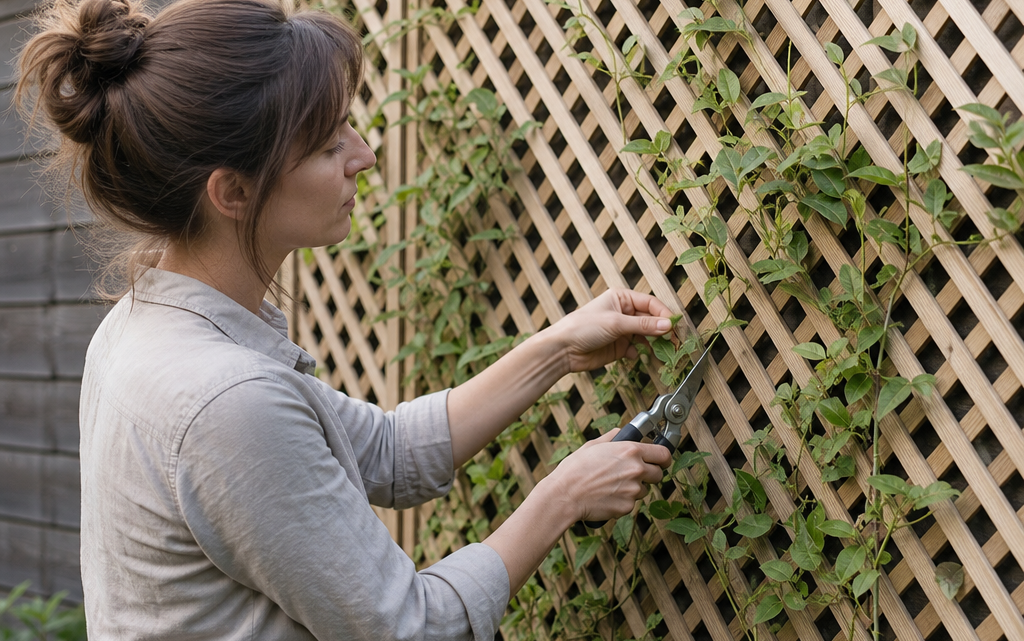
You put up a close-knit timber lattice panel to soften a bare wall, screen the bins, or add a little height and privacy to a garden boundary. Within a season or two, the climber that looked charming and delicate can become a dense mat of stems, leaves and tendrils. The panel may still be doing its job, but airflow can be poor, the timber may stay damp for longer, and the plant can start pulling, twisting or spreading where you do not want it. Keeping climbing plants in check is not about constant cutting back; it is about choosing the right plant, giving it a clear framework, and carrying out small, regular maintenance before growth becomes difficult to manage.
This guide explains how to manage climbers on close-knit timber lattice panels, including how to plan support, prune at the right time, avoid common mistakes and keep both the plant and the timber in good condition.
Inhaltsverzeichnis
Why close-knit lattice needs careful plant management
Close-knit timber lattice is attractive because it gives plants many points to grip and creates a denser screen than widely spaced trellis. That same advantage can also create maintenance issues if growth is left unchecked. Stems can weave tightly through the small openings, making later pruning awkward. Thick foliage can trap moisture against the timber, particularly in shaded or sheltered parts of the garden. Vigorous climbers may also put unnecessary strain on a narrow or lightweight panel if they are allowed to build up unchecked.
The aim is to keep the lattice visible enough to dry after rain, while still allowing the plant to create the coverage you want. A well-managed climber should be supported, ventilated and shaped, rather than simply allowed to smother the structure.
Choose the right climber for the panel and position
The most important decision is the plant itself. A close-knit lattice panel is well suited to lighter or moderately vigorous climbers, but it is not always the best choice for very heavy, woody or rampant plants unless you have a strong supporting structure behind it.
Decision criteria before planting
- Final size: Check the plant’s expected height and spread, not just its size in the pot. A plant that reaches 6 metres may be excessive for a small lattice screen.
- Growth habit: Twining plants, tendril climbers and scrambling shrubs behave differently. Twining stems may wrap tightly around narrow laths, while scrambling roses need tying in rather than weaving.
- Weight when mature: Evergreen climbers hold leaves all year and can become heavy when wet. Deciduous climbers may be lighter in winter but still develop a woody framework over time.
- Pruning tolerance: Choose a plant that responds well to regular trimming if the panel is in a narrow path, beside a gate, or near bins and compost areas.
- Light and exposure: A shaded, damp corner needs a plant that will tolerate lower light without becoming thin and congested. A hot, dry fence line requires drought tolerance and regular watering while establishing.
- Access for maintenance: If you cannot easily reach both sides of the panel, avoid a plant that needs detailed pruning several times a year.
For small panels, narrow screens or decorative lattice sections, consider compact clematis varieties, annual climbers such as sweet peas, or lightly managed jasmine where the position is suitable. Be cautious with very vigorous climbers such as Russian vine, mature wisteria, large honeysuckles or ivy on light structures, as they can quickly become too dense or heavy.
Understand how climbers attach themselves
How a climber grips the lattice affects how you should train and prune it. Not every climbing plant behaves in the same way.
Twining climbers
Twining plants wrap their stems around supports. They can make good use of lattice, but they may also wind tightly through close-knit gaps. Guide young stems horizontally or diagonally where possible, rather than letting them all shoot straight upwards. This produces better coverage and makes future pruning easier.
Tendril climbers
Tendril climbers use fine tendrils to grip. These are often well suited to lattice because they attach readily without much tying. However, dead tendrils and spent stems can remain tangled in the panel, so seasonal tidying is important.
Scrambling climbers
Scrambling plants, including many climbing roses, do not truly climb by themselves. They need tying in. Do not force thick stems through small lattice openings, as this can damage both the plant and the panel. Instead, tie stems loosely to the face of the lattice using soft garden ties.
Self-clinging climbers
Self-clinging plants attach with aerial roots or adhesive pads. They are often more suitable for walls than delicate timber panels. If used on timber lattice, keep them especially well controlled, as dense attachment can make inspection and maintenance difficult.
Set up the lattice for easy maintenance
Before planting, make sure the panel is securely fixed and accessible. A climber may look light in spring, but by late summer it can carry a surprising amount of leaf, stem and rainwater. If the lattice is being used as a screen rather than a load-bearing garden structure, it should still be properly supported by posts, rails, a wall or a suitable frame.
Leave a small gap where practical between the lattice and a solid wall or fence to encourage airflow. This helps foliage dry after rain and makes it easier to tie in stems. Avoid packing compost, mulch or soil directly against the bottom edge of timber. Even pressure treated timber benefits from being kept as dry and well ventilated as possible.
Use the close-knit pattern to your advantage
A close-knit lattice can make it tempting to thread every stem through the openings. This usually creates problems later. Instead, treat the lattice as a guiding surface. Let fine new shoots use the openings naturally, but keep the main framework on the front of the panel where you can inspect and prune it.
For most climbers, the best structure is a small number of main stems, arranged like a fan. Tie or guide these stems gently, then shorten side shoots as needed. This gives good coverage without creating an impenetrable tangle.
Practical example: using a narrow lattice panel
A narrow panel can be useful where you want a discreet screen, a decorative strip on a wall, or a controlled support for a compact climber. For example, a close-knit timber lattice panel measuring 1800mm x 300mm x 30mm can suit a limited space, provided the plant is chosen and trained to match the panel’s size. The narrow width means you need to be particularly disciplined about pruning side growth and preventing the plant from spreading beyond the support.
When using any similar close-knit timber panel, remember that the panel is the support, not a substitute for plant management. A pressure treated panel may be designed for outdoor use, but dense foliage can still hold moisture, block inspection and add weight. The better you control the plant, the longer the whole arrangement is likely to remain neat, accessible and effective.
How to train a climber on close-knit lattice
Training is easiest when the plant is young. Do not wait until the stems are long, woody and tangled. Spend a few minutes guiding new growth every week or two during the growing season.
Step-by-step training method
- Plant slightly away from the base: Place the climber a short distance from the panel rather than tight against the timber. Angle the plant towards the support if needed.
- Water well while establishing: Young climbers dry out quickly near fences, walls and screens because these areas can be rain-shadowed.
- Select the strongest stems: Keep a few healthy main shoots and remove weak, damaged or badly placed growth.
- Fan stems out: Guide stems diagonally and horizontally across the lattice. This encourages side shoots and fuller coverage.
- Tie loosely: Use soft ties, string or plant clips. Allow room for stems to thicken. Avoid wire or tight plastic ties that cut into growth.
- Keep the back clear: Where possible, prevent thick stems from weaving behind and through the panel, as this makes later removal difficult.
- Shorten wandering shoots: Trim shoots that head towards gutters, gates, paths, neighbouring plants or rooflines.
Routine pruning: little and often works best
Close-knit lattice panels are easiest to maintain with regular light pruning. If you let a climber grow unchecked for several seasons, you may be forced into hard renovation pruning, which can leave the screen bare and may stress the plant.
The exact timing depends on the plant species, so always check the pruning group or flowering habit of your climber. As a general rule, spring-flowering plants are often pruned after flowering, while many late-flowering climbers are pruned in late winter or early spring. Evergreen climbers may need light trimming in spring and summer to maintain shape.
What to remove first
- Dead, diseased or damaged stems.
- Growth pushing behind the panel or into fixings.
- Shoots growing across paths, gates, windows or vents.
- Congested stems that prevent airflow through the lattice.
- Old ties that are cutting into stems.
- Excessive top growth that makes the plant top-heavy.
Work gradually. Step back frequently and look at the overall shape. It is better to remove several small sections carefully than to cut one large area and leave a gap you did not intend.
Seasonal maintenance checklist
Use this checklist to keep climbers and timber lattice in good order throughout the year.
Spring
- Inspect the panel, fixings and posts before vigorous growth begins.
- Remove dead stems and winter damage.
- Retie main stems using soft, loose ties.
- Feed and mulch the plant, keeping mulch away from direct contact with timber.
- Check that new shoots are heading in the right direction.
Summer
- Trim fast-growing shoots before they become tangled.
- Water young or container-grown climbers during dry spells.
- Keep growth away from gutters, roof edges, vents and neighbouring properties.
- Thin dense foliage if the panel remains damp or shaded.
- Look for pests and diseases hidden within congested growth.
Autumn
- Remove fallen leaves caught in the lattice.
- Cut back unwanted extension growth after flowering where appropriate.
- Check that the plant is not pulling the panel out of alignment.
- Clear debris from the base to improve ventilation.
Winter
- Inspect the timber while deciduous climbers are bare.
- Prune suitable plants according to their type.
- Replace damaged ties and check fixings.
- Plan any renovation pruning before spring growth starts.
Protecting the timber while supporting healthy growth
Timber lattice used outdoors is exposed to rain, shade, plant moisture and seasonal temperature changes. Even where timber is pressure treated, good maintenance habits matter. The main risk from unmanaged climbers is not simply that they touch the timber, but that they create a damp, airless layer that rarely dries out.
Try to maintain some visibility through the foliage. You do not need to strip the panel bare, but you should be able to inspect it. If the plant has formed a thick green wall, thin selected stems from the base or sides rather than just shearing the surface. Surface trimming alone can encourage an outer shell of leaves while the inner layer becomes woody, dead and damp.
Also check the bottom of the panel. Soil, leaves and compost can build up there, especially around bin screens or compost areas. Clear this material away so the timber is not sitting in constant moisture.
Common practical mistakes to avoid
Choosing a plant that is too vigorous
A small lattice panel cannot comfortably support every climber. Planting a vigorous species and promising yourself you will keep it small often leads to constant pruning or a tangled structure. Choose a plant whose natural size suits the space.
Weaving thick stems through the lattice
Threading stems through openings may look secure at first, but woody stems thicken over time. They can become trapped, distort the lattice, or make future pruning difficult. Tie main stems to the face instead.
Ignoring the plant for a full season
Many climbers grow rapidly in late spring and summer. If you leave them until autumn, the work becomes harder and the plant may already have spread beyond its intended area.
Using tight or unsuitable ties
Thin wire, cable ties or tight plastic ties can cut into stems as they grow. Use soft ties and check them at least once a year.
Only trimming the outside
Clipping the visible surface creates a neat finish for a short time, but it can hide dead stems and poor airflow inside the plant. Thin congested growth as well as shaping the outer layer.
Letting growth reach buildings and services
Keep climbers away from gutters, vents, roof coverings, external pipes and electrical fittings. Once stems reach these areas, they can be difficult and potentially unsafe to remove.
Renovating an overgrown climber
If the plant has already taken over the lattice, approach renovation carefully. First, identify the plant so you know whether it tolerates hard pruning and when to do it. Some climbers recover well from severe cutting back; others may flower poorly for a season or respond badly if pruned at the wrong time.
Start by removing dead and loose material. Then take out a portion of the oldest or most congested stems near the base. Avoid cutting everything at once unless the plant type allows it and you are prepared to lose screening temporarily. After thinning, reselect a framework of healthy stems and tie them back neatly. If the panel has been pulled out of shape or the timber is hidden beneath woody growth, you may need to cut the plant back more substantially to inspect and repair the support.
Safety and access considerations
Do not overreach when pruning. Use stable steps where necessary, and avoid working from ladders on uneven garden ground unless you can do so safely. Wear gloves, particularly when handling thorny climbers, old stems or treated timber. Use clean, sharp secateurs and loppers to make controlled cuts. If a climber has reached overhead cables, high gutters or fragile roofing, seek appropriate professional help rather than pulling at stems from below.
FAQ
How often should I prune a climber on close-knit lattice?
Most climbers benefit from inspection every few weeks during active growth, with light trimming as needed. Formal pruning depends on the species and flowering time, but regular small adjustments are usually better than one severe annual cut.
Can I grow ivy on a timber lattice panel?
You can, but it needs firm control. Ivy is evergreen, dense and potentially heavy when mature. It can also make inspection of the timber difficult. If you use it, keep it thin, clipped and away from fixings, roofs and gutters.
Should I tie stems or weave them through the lattice?
Tie main stems to the face of the lattice. Fine young shoots may naturally pass through small openings, but thick or permanent stems should not be woven tightly through the structure.
How do I stop the panel staying damp behind the plant?
Thin congested growth, keep the base clear of debris, avoid excessive surface-only trimming, and maintain airflow around the panel. If the lattice is against a wall or fence, a small gap behind it can help where the installation allows.
What should I do if the plant is pulling the lattice forward?
Reduce the weight of the plant by pruning back top and side growth, then inspect the fixings and support frame. If the panel or posts have moved, repair the structure before allowing the climber to regrow heavily.
Conclusion
Close-knit timber lattice panels can make excellent supports and screens, but they work best when the climber is managed from the start. Choose a plant that suits the size and strength of the panel, train a simple framework, use loose ties, and prune little and often. Keep the foliage open enough for air to circulate and for the timber to be inspected. With sensible plant selection and regular care, you can enjoy attractive coverage without allowing the climber to overwhelm the lattice or create avoidable maintenance problems.