Planning storage zones in a combined cabin and shed
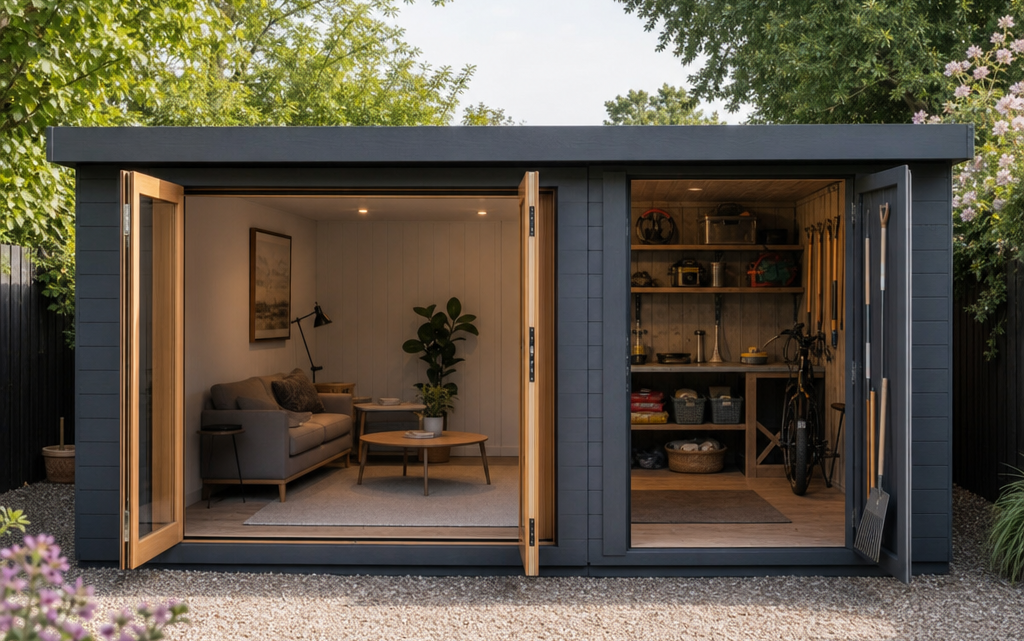
If your garden building has to work as both a pleasant cabin and a practical shed, the challenge is not simply finding enough space. It is deciding what belongs where, how often you need to reach it, and how to keep the “shed” side from gradually taking over the “cabin” side. A combined cabin and shed can be an excellent solution for a compact garden, but it needs a clear storage plan from the start.
This article explains how to plan storage zones in a dual-purpose garden building so that tools, outdoor furniture, hobby equipment and seasonal items all have a sensible place. The aim is to help you create a building that remains tidy, safe and usable throughout the year, rather than becoming a cluttered overspill room by the end of the first summer.
Inhaltsverzeichnis
Start by defining the two roles of the building
Before you buy shelving, hooks or storage boxes, decide exactly what the cabin area and shed area are meant to do. In most combined designs, the cabin is used for relaxation, hobbies, working from home, children’s activities or entertaining. The shed section is usually intended for garden tools, lawn care equipment, cushions, sports kit and maintenance items.
Write down the main purpose of each space. For example, your cabin zone might be “quiet seating and occasional hobby use”, while your shed zone might be “gardening tools, mower, compost supplies and outdoor furniture cushions”. This simple step prevents storage decisions being made item by item, which is how clutter spreads.
Separate clean, dry and dirty storage
A practical rule is to divide possessions into three categories:
- Clean items: books, craft materials, cushions, throws, office accessories and indoor-style furniture.
- Dry outdoor items: folding chairs, parasols, sports equipment, spare pots and barbecue tools.
- Dirty or damp items: muddy boots, rakes, spades, bags of compost, hoses, watering cans and garden chemicals.
Clean items should stay in the cabin area, ideally in closed cupboards, drawers or lidded storage. Dry outdoor items can sit close to the boundary between cabin and shed, provided they do not bring mess into the living area. Dirty or damp items should be kept firmly within the shed zone, preferably near the shed entrance if the design allows.
Plan zones according to frequency of use
The most useful storage is not always the neatest-looking storage. It is storage that matches your habits. Items you use every week should be easy to reach without moving three other things first. Items used once or twice a year can go higher up, further back or into labelled boxes.
Daily and weekly access zone
This zone is for items you need frequently: secateurs, gloves, watering attachments, dog leads, children’s outdoor toys, bike helmets or everyday garden cushions. Keep these at waist to shoulder height where possible. Hooks, shallow shelves and open-fronted boxes work well because they make it obvious where each item belongs.
Monthly and seasonal access zone
This is suitable for plant feeds, spare pots, seed trays, picnic equipment, folding chairs and less frequently used tools. These items can be stored on deeper shelves or in clear, labelled crates. If you have high-level shelving, use it for lighter seasonal items rather than heavy bags or sharp tools.
Long-term storage zone
Long-term storage should be limited. If something is kept in the building for years but rarely used, it is worth asking whether it belongs there at all. Christmas lights, spare outdoor covers and occasional camping equipment may justify long-term space, but broken tools, old paint tins and “might be useful” offcuts often become permanent clutter.
Measure the contents, not just the building
Floor area gives you a starting point, but it does not tell you whether your storage plan will work. A mower, wheelbarrow, garden vacuum or large barbecue cover can dominate a small shed section. Measure the largest items you expect to store, including their turning space and handle length.
You should also think vertically. A tall shed wall can take rakes, spades, ladders and long-handled tools on hooks. A lower wall may be better suited to shelves, stacking boxes or a workbench. Avoid assuming that everything can go on the floor. Floor-only storage quickly becomes awkward because every item blocks access to another.
Use the cabin area as living space first
The most common mistake with a combined cabin and shed is letting the cabin side become a cleaner version of the shed. If the cabin is meant to be a relaxing space, protect it from the beginning. Decide on a maximum amount of storage you will allow in the cabin area and keep most of it enclosed.
For example, a bench seat with internal storage can hold cushions, blankets or children’s games without making the room feel like a storeroom. A slim cupboard can hold hobby equipment or office supplies. Wall shelves can work well for attractive or frequently used items, but avoid turning every wall into storage unless the cabin is primarily a workshop.
Keep circulation space clear
Leave a clear route from the entrance to the main seating, desk or hobby area. If the cabin has glazed doors or a large window, avoid placing tall storage where it blocks natural light. You will enjoy the building more if it feels open, even if that means being stricter about what can be stored inside.
Design the shed zone around awkward items
The shed section should be planned around the most awkward items first. These are usually bulky, dirty, heavy or long. Once those have a proper position, smaller items can be organised around them.
Start with the mower or largest garden machine if you have one. It should be stored where it can be removed without lifting or twisting. Long-handled tools should be hung vertically if wall height allows, with sharp edges facing safely inwards or downwards. Bags of compost and grit should be kept low to the floor to avoid heavy lifting from height.
Group items by task
Task-based storage is usually easier to maintain than storage based on item type alone. You might create groups such as:
- Lawn care: mower accessories, lawn feed, edging shears and extension lead.
- Planting: trowels, gloves, labels, pots, seed trays and compost scoop.
- Cleaning: broom, bucket, outdoor cleaner and cloths.
- Entertaining: chair cushions, outdoor tableware, barbecue tools and covers.
When each group has a defined location, you waste less time searching and are more likely to put things back properly.
Allow for ventilation, damp control and treatment
Storage planning is not only about shelves and boxes. Garden buildings face changing temperatures and humidity, so you need to think about airflow and moisture. Do not pack items tightly against every wall. Leave small gaps behind storage units where possible so air can circulate.
If the building is supplied untreated, it should be treated with a suitable wood preservative after assembly and maintained as advised. This matters for storage because damp timber, poor ventilation and cluttered corners can encourage musty smells and deterioration. Avoid storing soft furnishings directly on the floor, particularly during winter. Use lidded boxes, raised shelves or storage benches to keep fabrics cleaner and drier.
Choose storage fittings that suit the structure
Before fixing anything to walls, check the building’s construction and the manufacturer’s guidance. Heavy shelving, tool racks and wall-mounted cupboards must be fitted securely and should not overload the structure. Freestanding shelving is often a flexible option, particularly if you may change the layout later.
Use robust, wipe-clean materials in the shed section. Metal or heavy-duty plastic shelving can be practical for tools and garden supplies. In the cabin section, wooden cabinets, storage benches and enclosed cupboards usually look more comfortable and help the space feel less utilitarian.
A practical example of a combined layout
As a practical example, a combined garden building with a main cabin of about 10.4 square metres and an integral shed of about 3.8 square metres gives you two clearly different areas to plan. The cabin area can be treated as the comfortable, clean zone, while the smaller shed section takes the working storage. Features such as glazed doors, a side window and an opening window may make the cabin more pleasant for sitting, hobbies or light work, while the separate shed area helps keep tools and outdoor equipment contained.
In a building of this type, it is sensible to keep tall, dirty and bulky items in the shed section and reserve the main cabin for furniture, low-level storage and items you want to keep clean. If the building has timber floorboards, consider using protective mats in high-traffic or tool storage areas to reduce wear and make cleaning easier.
Step-by-step storage planning method
Use the following practical process before you move everything into the building. It is much easier to plan an empty space than to reorganise a full one.
1. List everything you intend to store
Make a realistic list, including items currently in the garage, utility room, greenhouse, loft or under a tarpaulin. Include seasonal items such as garden furniture cushions, outdoor games, seed trays and winter protection fleece.
2. Remove anything that does not justify the space
Broken tools, duplicate items, dried-up products and old containers are easy to keep “just in case”. Be firm. A combined cabin and shed is valuable space, and every unnecessary item reduces its usefulness.
3. Mark out zones on the floor
Use masking tape, cardboard or chalk to mark where large items will go. Include door swing, walking routes and the space needed to pull out a mower, chair stack or storage box. This prevents a common problem: installing shelves that look good but make it difficult to move bulky items.
4. Decide what goes on the wall
Walls are ideal for long-handled tools, hose holders, small hand tools, folding chairs and ladders, provided fittings are appropriate. Keep dangerous tools out of reach of children and avoid placing sharp items near the cabin-side route.
5. Buy storage only after the layout is clear
It is tempting to buy boxes and shelving first, but this can create awkward dead space. Measure the intended positions and buy storage that fits the zone, not the other way round.
Storage zone checklist
Use this checklist when planning or reviewing your combined cabin and shed:
- Have you clearly separated clean cabin storage from dirty shed storage?
- Can you reach weekly-use items without moving other equipment?
- Are heavy items stored low down?
- Are sharp tools secured safely and away from casual access?
- Is there a clear route through the cabin area?
- Are glazed areas and ventilation points kept unobstructed?
- Are soft furnishings stored off the floor and away from damp corners?
- Have you allowed room for future seasonal items?
- Are boxes labelled clearly on more than one side?
- Can the shed section be swept without emptying it completely?
Common practical mistakes to avoid
Using the cabin as overflow storage
Once the cabin becomes the place for “temporary” items, it can quickly lose its purpose. If something belongs in the shed section, garage or house, do not let it settle permanently in the cabin.
Installing shelves too deep
Very deep shelves can seem efficient, but they often hide items at the back. In a compact shed area, shallow or medium-depth shelving is usually easier to manage. Use deeper shelves only for large, clearly labelled boxes.
Ignoring door access
Doors need clear space to open fully, and you need room to carry items in and out. Do not place bins, bags or tool handles where they interfere with the entrance. If the building has double doors to the cabin, keep the opening attractive and uncluttered so the space feels welcoming.
Storing damp items in sealed boxes
Putting damp gloves, cushions, tarpaulins or covers into airtight boxes can lead to mildew. Dry items first, or use breathable storage where appropriate. For cushions and textiles, choose dry, raised storage and check them periodically during winter.
Forgetting maintenance access
You may need to inspect walls, floor edges, door thresholds, locks, windows and roof areas. Do not build permanent storage so tightly around the inside that you cannot check for leaks, wear or signs of damp.
Security and safety considerations
A combined cabin and shed may contain both valuable leisure items and useful tools. Keep higher-value items out of obvious view where possible, particularly if the cabin has glazing. Use curtains, blinds or internal positioning to reduce visibility from outside. Lock tools and chemicals securely, especially if children use the garden.
Store fuels, paints, pesticides and similar products according to their labels and away from heat sources. Do not keep incompatible chemicals together. If you use battery-powered garden tools, store batteries in line with the manufacturer’s advice and avoid leaving chargers where they may be exposed to damp or extreme temperature changes.
Adapting the zones through the year
Your storage plan should change slightly with the seasons. In spring, planting tools, compost accessories and seed trays need to be easy to reach. In summer, cushions, garden games and barbecue equipment may move closer to the cabin side. In autumn, leaf bags, brooms and protective covers become more important. In winter, you may want to store furniture, cushions and delicate accessories securely and dry.
A good approach is to review the building twice a year: once in early spring and once in late autumn. Move the next season’s items into the easiest access positions and return out-of-season items to higher or less prominent storage.
FAQ
How much of the cabin area should be used for storage?
Use as little as possible if the cabin is intended for relaxation or leisure. Enclosed storage, such as a cupboard or storage bench, is usually enough for cushions, throws, books or hobby items. Keep open storage limited so the space remains comfortable.
Should I use open shelves or closed cupboards?
Open shelves are best for tools and items you use often, especially in the shed section. Closed cupboards are better for the cabin area because they hide visual clutter and protect cleaner items from dust. A mixture of both is usually most practical.
Can I store garden chemicals in a combined cabin and shed?
You can store garden chemicals only if they are kept safely, securely and in accordance with their labels. Keep them in the shed zone, away from children, pets, food, soft furnishings and heat sources. Do not store leaking, unlabelled or expired products.
How do I stop the shed area becoming untidy again?
Give every item a labelled home and avoid keeping too many rarely used items. Use hooks for tools, crates for grouped supplies and a seasonal review to remove clutter. The easier it is to put something back, the more likely the system is to last.
Is it worth leaving empty space?
Yes. Empty space is not wasted space. It allows you to move around safely, clean the floor, bring in seasonal items and access bulky equipment without frustration. A storage plan with no spare capacity usually fails quickly.
Conclusion
Planning storage zones in a combined cabin and shed is about protecting both functions of the building. The cabin should remain clean, comfortable and easy to enjoy, while the shed section should handle tools, equipment and outdoor supplies in an organised way. Start by defining each area’s purpose, measure your bulky items, group possessions by use, and choose storage that suits the structure and your habits.
With clear zones, sensible access routes and regular seasonal reviews, you can keep a combined garden cabin and shed practical without sacrificing comfort. The result is a building that works hard for storage while still feeling like a space you want to spend time in.