Maintaining Decorative Trim and Door Furniture on Timber Summerhouses
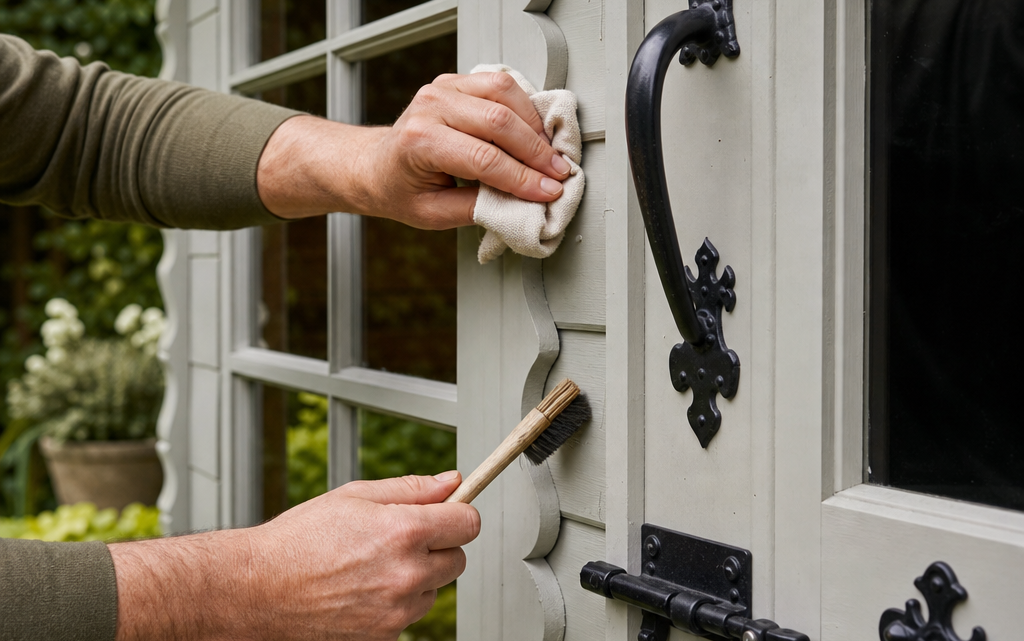
A timber summerhouse can look perfectly sound from a distance, yet still have small maintenance issues developing around the decorative trim, door hinges, latch, handles and other ironmongery. These details are often the first places to show weathering because they sit on edges, joints and exposed faces where rainwater, sunlight and movement all have an effect. If you look after them regularly, you help preserve both the appearance and day-to-day usability of the building.
This guide explains how to care for decorative trim and door furniture on timber summerhouses in practical terms. It covers what to inspect, how to clean and retreat timber details, how to maintain metal fittings, and which common mistakes to avoid. The advice applies to most domestic timber summerhouses, whether yours has simple fascia boards and a latch or more decorative barge boards, finials, glazed doors and antique-style ironmongery.
Inhaltsverzeichnis
Why decorative trim and ironmongery need separate attention
The main wall panels of a summerhouse are important, but they are usually broad, accessible surfaces. Decorative trim and door furniture are different. They have edges, corners, screw holes, joints and small gaps where moisture can collect. They are also handled, knocked and exposed to movement as doors open and close.
Typical decorative and functional components that need regular care include:
- barge boards and fascia boards on the roofline;
- decorative finials and roof trim;
- corner trims, cover strips and beading;
- door frames, glazing beads and thresholds;
- hinges, latches, handles, hasps and bolts;
- black or antique-style door furniture;
- screws, fixings and visible nail heads.
These parts contribute to the character of the building, but they also protect vulnerable junctions. If a trim board splits, a bead pulls away, or a latch corrodes, the issue can quickly become more than cosmetic. Water may enter, doors may bind, and untreated timber can start to deteriorate.
Set a sensible maintenance routine
A summerhouse should be checked at least twice a year: once in spring and once in autumn. Spring checks help you deal with any winter damage before the building is used more often. Autumn checks prepare the structure for colder, wetter months. If your summerhouse is in a very exposed position, under trees, near the coast or in a damp corner of the garden, inspect it more frequently.
What to look for during each inspection
Walk around the building slowly and look closely at the trim and ironmongery rather than only assessing the overall appearance. Pay particular attention to:
- flaking, faded or cracked timber treatment on trim boards;
- open joints where decorative timber meets the wall or roof edge;
- soft, darkened or swollen timber around door frames and thresholds;
- rust marks below screws, hinges or handles;
- loose fixings or moving latch plates;
- doors that no longer close cleanly;
- gaps around glazing beads or door furniture;
- moss, algae or leaf debris trapped around trim.
Use your fingers as well as your eyes. A trim board may look acceptable but feel soft at the lower edge. A latch may appear aligned but wobble when used. Early detection is the most cost-effective form of maintenance.
Cleaning trim without damaging the timber
Decorative timber should be cleaned gently. Avoid pressure washers, as they can drive water into joints, lift wood fibres, damage surface coatings and force moisture behind trim. A soft brush, warm water and a mild exterior cleaner are usually enough.
Practical cleaning steps
- Choose a dry, mild day so the timber can dry properly afterwards.
- Brush off cobwebs, dust, loose dirt, leaves and moss.
- Wash affected areas with warm water and a mild detergent or suitable garden timber cleaner.
- Use a soft-bristled brush for grooves, edges and moulded details.
- Rinse lightly with clean water, avoiding excessive soaking.
- Allow the timber to dry fully before applying any treatment, paint or preservative.
If you find green algae on shaded trim, remove it before retreatment. Coating over algae or dirt traps contamination beneath the finish and can reduce adhesion. For stubborn biological growth, use a cleaner intended for exterior timber and follow the manufacturer’s instructions carefully.
Retreating decorative timber details
Many timber summerhouses are supplied with an initial treatment, but this is not usually the same as long-term weather protection. Dip treatment, for example, normally needs regular retreatment with a suitable exterior wood preservative or topcoat to maintain protection. Always follow the summerhouse manufacturer’s guidance, especially where a guarantee depends on annual retreatment.
Decorative trim often needs more careful coating than flat wall panels because it has cut ends and exposed edges. End grain absorbs moisture more readily than the face of a board, so untreated ends are common weak points.
Decision criteria: when does trim need retreatment?
Retreat timber trim when one or more of the following applies:
- water no longer beads on the surface and instead soaks in;
- the colour has faded unevenly, especially on sun-facing sides;
- the surface feels dry, rough or fibrous;
- small cracks are appearing along edges or around fixings;
- previous coating is peeling, blistering or lifting;
- the manufacturer recommends annual treatment and the year is due.
Before applying a new coating, lightly sand rough patches and remove dust. Do not seal damp timber. Moisture trapped beneath a coating can lead to blistering, staining and decay. Apply the product into corners, screw holes, lower edges and the underside of overhanging trim where safe and accessible.
Using a real summerhouse as a maintenance example
As a practical example, consider a traditional timber summerhouse with shiplap tongue and groove cladding, an apex roof, barge board, decorative finial, glazed double doors and black antique-style latch furniture. On this type of building, the character features are also the places you should inspect closely. The roof overhang may give some shelter, but the barge boards and finial still face rain, UV exposure and temperature changes. The door furniture may complete the look, but it still needs cleaning, lubrication and fixing checks.
For instance, on a model such as the 6’7×5’5 Shire Haddon Traditional Wooden Summer House, the decorative roof details, single-glazed double doors, matching windows and black latch are all areas where routine care makes a visible difference. The building is supplied dip treated and the anti-rot guarantee depends on annual retreatment and following manufacturer guidelines, so the decorative trim should be included in the same maintenance cycle as the main timber walls.
Maintaining hinges, latches and handles
Door furniture is exposed to rain, condensation, hand oils, airborne dirt and movement. Even black or antique-style fittings can develop rust, stiffness or loose fixings if they are ignored. The aim is to keep fittings clean, secure, lightly lubricated where appropriate and correctly aligned.
Cleaning metal door furniture
Wipe handles, latches, bolts and hinge faces with a soft cloth. If there is dirt or bird mess, use warm water and a mild detergent, then dry thoroughly. Avoid abrasive pads unless the fitting is already badly corroded and you are preparing it for refurbishment, as abrasive cleaning can damage decorative finishes.
For light surface rust, use fine wire wool or a small nylon abrasive pad with care, then wipe away residue and apply a suitable protective coating or metal paint if the finish has been breached. Always choose products compatible with the existing metal finish.
Lubricating moving parts
Hinges, latches and bolts should move freely but not be drenched in oil. Too much lubricant attracts dust and can stain surrounding timber. Apply a small amount of light machine oil, silicone spray or another suitable lubricant to the moving points, then operate the fitting several times and wipe away excess.
Do not use thick grease on exposed decorative door furniture unless the manufacturer recommends it. Grease can collect grit, look untidy and mark clothing or hands.
Tightening and replacing fixings
Loose screws are common on summerhouse doors because timber expands and contracts with seasonal moisture changes. If a screw turns without gripping, do not simply keep tightening it. Remove it and assess the hole. A slightly longer or wider exterior-grade screw may solve the problem, provided it will not penetrate where it should not. For a worn timber hole, a timber plug or suitable repair method may be needed before refixing.
Use corrosion-resistant fixings suitable for outdoor timber buildings. Mismatched screws can cause staining, rust streaks and premature failure.
Keeping doors aligned and easy to use
Door furniture only works properly if the doors themselves are aligned. Timber doors can move slightly through the year as humidity changes. Small seasonal movement is normal, but persistent binding, large gaps or misaligned latches should be investigated.
Check the door action
Open and close the doors slowly. Look for rubbing at the top, bottom and meeting edges. Check whether the latch meets its keep cleanly. If the building has double doors, check that both leaves sit evenly and that any bolts engage properly.
If a latch suddenly no longer lines up, consider the cause before altering the latch plate. The issue may be a loose hinge, an uneven base, swelling from moisture, or movement in the frame. Adjusting the latch without addressing the cause can mask a bigger problem.
Protect the threshold and lower door edges
The lower parts of doors and frames are particularly vulnerable to splashback from rain. Keep soil, gravel, pots and vegetation away from the threshold area so air can circulate and timber can dry. If the door bottom looks dry or worn, retreat it promptly. Lower edges are easy to overlook because they are less visible, but they often experience the most moisture.
Decorative trim care checklist
Use this checklist during your spring and autumn inspections, and after severe weather:
- Brush off debris: remove leaves, moss and dirt from barge boards, finials, corner trims and door frames.
- Check coating condition: look for fading, cracking, flaking or bare timber.
- Inspect end grain: pay attention to the ends of trim boards and the bottom edges of doors.
- Look for open joints: note any gaps where water could enter behind trim.
- Test timber firmness: gently press suspect areas for softness or swelling.
- Clean ironmongery: wipe handles, hinges, latches and bolts, then dry them.
- Lubricate moving parts: use a small amount and remove excess.
- Tighten fixings: secure loose screws with appropriate exterior-grade replacements if needed.
- Check alignment: make sure doors close smoothly and latches engage correctly.
- Plan retreatment: coat decorative timber as part of the annual maintenance routine or as recommended.
Common practical mistakes to avoid
Ignoring trim because it seems decorative
Barge boards, corner strips and beads may look ornamental, but they often cover vulnerable joints. If they split, loosen or rot, water can reach areas that are harder to repair. Treat them as protective components, not just decoration.
Using a pressure washer
Pressure washing can force water behind trim, damage coatings and roughen timber. It may make the surface look cleaner for a short time while creating hidden moisture problems. Gentle cleaning is safer.
Painting over damp or dirty timber
Coatings need a clean, dry and sound surface. If you apply paint or preservative over damp timber, algae or flaking finish, it is unlikely to perform well. Preparation is not optional.
Forgetting screw holes and cut ends
Moisture often enters at fixings and end grain. When retreating trim, work product carefully into these areas. A neat finish is good, but complete coverage is more important for durability.
Over-oiling ironmongery
A little lubricant is useful; too much creates a sticky film that attracts dirt and can stain timber. Apply sparingly and wipe away surplus.
Replacing fittings without considering compatibility
If you replace a latch, hinge or handle, choose fittings suitable for exterior use and proportionate to the door. Poorly matched fittings can strain the timber, leave old holes exposed or spoil the appearance of the summerhouse.
When to repair, replace or seek help
Minor issues such as loose screws, light surface rust or faded coating can usually be handled as routine maintenance. More serious problems need careful judgement.
Consider replacing a trim component if it is split through, soft, distorted or no longer holding fixings. Replace badly corroded ironmongery if cleaning and lubrication do not restore reliable function. If doors are significantly out of square, frames are moving, or several parts of the building show softness, it may be worth seeking professional advice before carrying out cosmetic repairs.
Do not rely on filler alone for structural or moisture-related problems. Filler can tidy a small surface defect, but it will not solve ongoing water ingress or timber decay.
Short FAQ
How often should I treat decorative trim on a timber summerhouse?
Follow the manufacturer’s instructions. Many timber garden buildings need annual retreatment, particularly if supplied with an initial dip treatment. Exposed decorative trim may need attention sooner if it fades, cracks or absorbs water.
Can I use ordinary interior paint on door furniture or trim?
No. Use products intended for exterior timber or exterior metal, depending on the surface. Interior products are not designed to cope with UV exposure, rain and temperature changes.
What should I do if black door furniture starts to rust?
Clean and dry the fitting, remove light surface rust carefully, then protect the exposed metal with a suitable exterior metal finish. If rust is severe or the fitting is weakened, replacement is usually the better option.
Should I seal gaps around trim with silicone?
Be cautious. Some sealants can trap moisture if used incorrectly. If a trim piece has pulled away, it is often better to refix or replace it and then treat the timber properly. Use exterior-grade sealants only where appropriate and compatible with timber movement.
Why has my latch stopped lining up?
Common causes include loose hinges, seasonal timber movement, swelling from moisture, movement in the frame or an uneven base. Check the door and frame before moving the latch keep.
Conclusion
Decorative trim and ironmongery are small details, but they have a large effect on the appearance, weather resistance and usability of a timber summerhouse. Regular cleaning, careful retreatment, light lubrication and prompt fixing checks will help prevent minor wear from becoming costly damage.
Inspect these parts at least twice a year, include them in any annual timber treatment routine, and deal with loose, rusty or water-damaged areas as soon as you notice them. By giving barge boards, finials, door frames, latches and hinges the same attention as the main walls and roof, you keep your summerhouse attractive, practical and better protected through the changing British seasons.