Balustrades and Everyday Safety on Timber Summerhouse Verandas
A veranda can make a timber summerhouse feel far more usable: you have somewhere to pause before going inside, a sheltered spot for a chair, and a natural threshold between the garden and the building. However, the same features that make a veranda attractive — raised decking, roof support posts and balustrades — also affect everyday safety and ease of movement. If you carry mugs of tea outside, step in and out with muddy shoes, supervise children, or use the summerhouse in wet weather, the layout needs to be practical as well as pretty.
This article explains how to assess balustrades, posts and circulation space on timber summerhouse verandas. It is written for ordinary garden use, not as a substitute for structural design advice where a building is elevated, heavily loaded, altered, or used commercially. The aim is to help you choose, install, inspect and use a veranda in a sensible way.
Inhaltsverzeichnis
Why veranda safety is about everyday habits
Most veranda problems are not dramatic failures. They are small, repeated inconveniences: a narrow route around a chair, a post positioned where you naturally step, a balustrade used as a shelf, or a wet timber floor that becomes slippery after rain. Over time, these details determine whether the summerhouse feels comfortable or awkward.
Good veranda design should help you move naturally. You should be able to open the doors fully, step onto the veranda without twisting, stand under the roof overhang without bumping into posts, and use any seating without blocking the doorway. Balustrades should define the edge and discourage accidental stepping off, while still allowing you to enjoy the view of the garden.
Understanding the parts of a timber summerhouse veranda
Balustrades
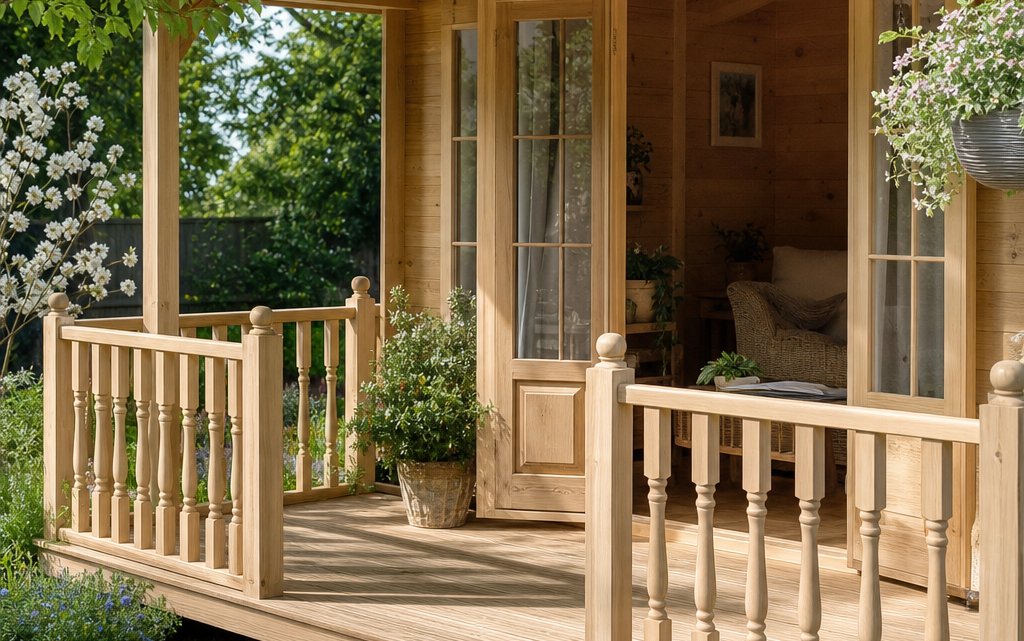
Balustrades are the side rails, infill panels or boarded sections that run along part of the veranda edge. On a garden summerhouse, they often perform three practical roles: they mark the edge of the platform, provide a degree of containment, and contribute to the traditional appearance of the building.
You should treat balustrades as edge definition rather than as seating, climbing frames or load-bearing supports unless the manufacturer specifically states otherwise. They may feel sturdy, but their purpose on a small timber garden building is usually domestic and decorative as well as protective.
Posts
Posts commonly support the roof overhang above the veranda. They can also help frame the entrance. Their position matters because they affect both structure and circulation. A post too close to the natural walking line can cause shoulder bumps, awkward turns or trips when carrying items through the doors.
You should not cut, move or reduce veranda posts unless the manufacturer’s instructions allow it or you have proper technical advice. A post may look like an obstacle, but it may be carrying roof load.
The veranda deck or platform
The veranda deck is the surface you stand on. In timber summerhouses it is often closely related to the building floor or front threshold. Its level, drainage, finish and maintenance condition all affect safety. Timber that is sound, clean and treated is usually easier to use safely than timber that is wet, algae-covered or beginning to decay.
Decision criteria before choosing a veranda layout
Before buying or positioning a summerhouse with a veranda, consider how you will actually use it. A veranda that works for occasional garden viewing may not be ideal if you want to place furniture outside the doors or if several people will pass through at once.
1. Door swing and standing space
Check whether the doors open outwards or inwards and how much clear standing room is available when they are open. Many summerhouses have double doors, which are useful for light, ventilation and access, but the veranda still needs enough clear space for you to step back, hold the handle, and avoid the balustrade or post.
2. Clear route from the garden
Look at the path you will take from the lawn, patio or stepping stones to the doors. The safest route is usually direct, level and obvious. If you have to step around a planter, squeeze past a chair or approach from the side because the central route is blocked, the veranda may become inconvenient in daily use.
3. Intended furniture
A veranda often looks as if it will take a bistro chair, plant pot or boot tray. It may do, but measure the space rather than guessing. Furniture should not obstruct the doors, force people close to the edge, or make the balustrade tempting to lean over. Foldable furniture can be a good option where space is limited.
4. Users and supervision
Think about who will use the veranda. Children may climb rails, older visitors may appreciate a clear and stable approach, and pets may dart through open doors. If the summerhouse is for quiet adult use, your priorities may be different from a family garden where children regularly run between house and lawn.
5. Weather exposure
A roof overhang can shelter the veranda from sun and showers, but wind-driven rain can still wet the deck and rails. In shaded gardens, timber may dry slowly and develop algae. If the veranda faces north or sits beneath trees, maintenance and slip prevention become especially important.
Practical spacing and circulation principles
You do not need a complex design process to assess circulation. Stand where the summerhouse will go and imagine the route: approach, step up, open the door, enter, turn around, come back out, and close the door. If any part of that sequence feels cramped, the veranda needs closer attention.
Keep the doorway zone clear
The area immediately in front of the doors should remain free from loose items. Avoid placing heavy pots, watering cans, lanterns or storage boxes where you naturally step. Even attractive accessories can become trip hazards when light is poor or the deck is wet.
Allow for carrying objects
You may use the summerhouse for cushions, garden tools, craft materials, books or refreshments. Carrying objects changes how much space you need. A route that feels adequate when empty-handed can feel tight when you are holding a tray or moving a chair.
Do not rely on balustrades as handrails
A veranda balustrade may help you judge the edge, but it should not automatically be treated as a handrail for regular support unless designed for that purpose. If you need dependable support when stepping up or down, consider the whole access arrangement, including steps, levels and a properly suitable handhold where appropriate.
Using a real product as a practical reference point
It can be useful to look at a typical timber summerhouse with a veranda to understand how these issues come together. For example, the 6’6×7’1 Shire Alnwick Traditional Wooden Summer House With Veranda is described as having an overhanging apex roof covering a veranda area with supporting posts and side balustrades. It also has glazed double doors with a traditional latch, 12mm tongue and groove shiplap wall cladding, a 34x34mm frame, a 12mm tongue and groove floor, and an 8mm OSB roof finished in felt. Those details illustrate the type of domestic garden building where veranda circulation, post position and routine timber maintenance all need to be considered together.
When assessing any similar summerhouse, use the specification to understand what the veranda is intended to do, then check the real-life layout in your garden. The product may provide a sheltered entrance and attractive edge treatment, but you still need to plan the approach, keep the access route clear and maintain the timber according to the manufacturer’s instructions.
Balustrade safety: what to check
Balustrades on timber verandas should feel secure, be properly fixed, and remain in good condition. Because timber moves slightly with moisture and temperature, you should inspect fixings and joints periodically rather than assuming they will remain unchanged for years.
Check firmness without forcing
Gently test whether the balustrade feels loose. Do not shake it aggressively, as that can damage fixings. A slight sense of movement may indicate a loose screw, swelling timber, worn fixing point or installation issue. If you notice movement, investigate before relying on it around children or guests.
Look for decay points
Pay attention to lower rails, end grain, joints and places where water can sit. Timber that remains damp is more vulnerable to decay. Surface staining is not always serious, but softness, splitting, crumbling or a musty smell may suggest a problem that needs repair.
Consider gaps and climbing temptation
In a family garden, look at whether the balustrade design encourages climbing. Horizontal rails, low side sections or conveniently placed furniture can all tempt children to climb. Keep chairs, boxes and planters away from the balustrade if children use the area.
Posts: safe use and maintenance
Veranda posts deserve particular care because they may support the roof overhang. Their condition affects not only appearance but also the behaviour of the roofed entrance area.
Inspect the base of posts
The lower ends of posts are vulnerable to water splash, trapped leaves and damp debris. Keep the area clear and allow air to circulate. If the post meets the deck or base, look for dark staining, softness, cracks or gaps where water can gather.
Avoid attaching heavy items
It is common to want hanging baskets, lights or decorations on veranda posts. Lightweight decorative items may be acceptable if fixed sensibly, but avoid adding heavy loads or drilling repeatedly into structural timbers without checking guidance. Poor fixings can admit water and weaken the timber over time.
Protect posts during garden work
Lawnmowers, strimmers, wheelbarrows and pressure washers can damage posts. A small nick in treated timber may expose less protected material beneath the surface. If you damage a treated area, follow the manufacturer’s recommendations for touching up or retreating the timber.
Checklist: veranda safety before regular use
- Confirm the summerhouse is installed on a firm, level and suitable base.
- Check that the veranda deck feels stable underfoot and does not bounce unusually.
- Make sure the doors open and close without forcing or catching on the veranda area.
- Keep the doorway and natural walking route free from pots, tools, toys and furniture.
- Inspect balustrades for loose fixings, damaged timber and unsafe movement.
- Inspect posts, especially at their bases, for damp, splitting or signs of decay.
- Remove leaves, moss and algae from the veranda surface to reduce slip risk.
- Use outdoor furniture that fits the space without blocking access.
- Supervise children and discourage climbing on rails or posts.
- Follow annual retreatment and maintenance guidance where required by the manufacturer.
Common practical mistakes to avoid
Using the veranda as overflow storage
A veranda can quickly become a convenient drop zone for compost bags, shoes, toys or gardening tools. This is one of the most common causes of awkward circulation. If the veranda is small, even one item can force people to step too close to the edge or twist through the doorway.
Ignoring slippery surfaces
Timber can become slippery when wet, especially if algae or leaf residue builds up. Do not wait until someone slips before cleaning the surface. Sweep regularly, remove organic debris and use cleaning methods suitable for treated timber. Be careful with aggressive pressure washing, as it can damage the surface if used incorrectly.
Assuming the balustrade is a seat or shelf
Balustrades are sometimes used for coffee cups, plant pots or sitting children. This can be unsafe and may also stain or stress the timber. Use a small table instead, positioned where it does not obstruct the route.
Altering posts to improve access
Cutting, moving or notching a post may seem like a simple way to gain space, but it can compromise the roof overhang. If a post is in an inconvenient position, solve the circulation issue by changing furniture, path alignment or usage habits rather than altering the structure without approval.
Forgetting the approach to the veranda
Safety does not begin at the balustrade; it begins at the garden path. Uneven paving, loose gravel, muddy lawn edges or a high step can make access awkward before you even reach the summerhouse. The route to the veranda should be as well planned as the veranda itself.
Installation and base considerations
A timber summerhouse with a veranda should be installed on a suitable base in accordance with the manufacturer’s instructions. A level base helps doors operate correctly, supports the floor and reduces twisting stresses in the structure. If the building is out of level, balustrades and posts may also appear misaligned or become stressed over time.
Before installation, clear vegetation and ensure water will not pool beneath or around the veranda. Good drainage helps protect timber components. Where the garden slopes, take particular care: a veranda that is close to ground level on one side may be noticeably higher on another. That can alter the perceived risk at the edge and may influence how you arrange access.
Maintenance routines for safer everyday use
Timber garden buildings need routine care. If your summerhouse is supplied dip treated or requires annual retreatment to support a guarantee, do not treat that as optional decoration. Protective treatment helps the timber resist moisture and decay, which is directly relevant to veranda safety.
Set a simple seasonal routine. In spring, clean the veranda, inspect fixings and check for winter damage. In summer, watch for drying cracks and ensure furniture is not rubbing against rails or posts. In autumn, remove leaves and check drainage. In winter, avoid leaving wet mats or debris trapped against timber for long periods.
FAQ
Are veranda balustrades essential on every summerhouse?
Not always. Some verandas are very low and open, while others include side balustrades as part of the design. Their usefulness depends on the height, layout and intended use. Where balustrades are provided, you should maintain them properly and keep the area around them clear.
Can I remove a veranda post if it blocks the view?
You should not remove or alter a veranda post unless the manufacturer confirms it is safe or you have qualified advice. Posts may support the roof overhang, so removing one can affect the structure.
What should I put on a veranda floor to stop slipping?
Start with cleaning and maintenance: remove algae, leaves and mud. If you use mats or strips, choose products suitable for outdoor timber and position them so they do not trap water or create a trip edge. Always follow the summerhouse manufacturer’s guidance.
Is it safe to put chairs on a small veranda?
It can be, provided the chairs fit without blocking the doorway or forcing people close to the edge. Measure the space with the doors open and leave a clear walking route. Foldable or lightweight chairs are often more practical than bulky furniture.
How often should I inspect the balustrades and posts?
Inspect them at least seasonally and after severe weather. Also check them before heavier use, such as family gatherings. Look for looseness, decay, damaged fixings and areas where water is collecting.
Conclusion
A timber summerhouse veranda should be inviting, but it also needs to work safely in everyday use. The key points are simple: keep circulation clear, respect the role of support posts, maintain balustrades, manage slippery surfaces and follow the manufacturer’s treatment guidance. When you plan the approach, doorway zone and furniture layout together, the veranda becomes more than an attractive feature — it becomes a practical, comfortable and safer part of your garden routine.