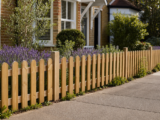
How to use trellis-topped timber fencing for garden screening

Inhaltsverzeichnis
How to use trellis-topped timber fencing for garden screening
You may not want to enclose your whole garden with a solid fence, but you might still need privacy where it matters: beside a patio, around a seating area, in front of a shed, or along a boundary overlooked by neighbouring windows. Trellis-topped timber fencing is a practical middle ground. It gives you a defined screen at lower level while allowing light, air and planting through the trellis section above.
Used well, decorative timber fence panels can make a garden feel more private without making it feel boxed in. The key is to plan the position, height, style and installation carefully, rather than simply adding panels wherever you feel exposed. This guide explains how to use trellis-topped fencing for partial screening in a way that is attractive, durable and appropriate for the space.
Why choose trellis-topped fencing for partial screening?
A fully solid fence can be useful where you need maximum privacy, but it can also cast shade, increase wind pressure and make a small garden feel narrower. Trellis-topped panels soften that effect. The lower timber section gives a degree of concealment, while the trellis top breaks up the outline and can support climbing plants.
This type of panel is especially useful when you want to screen a specific view rather than build a continuous boundary. For example, you might use two or three panels to shield a dining area from a neighbouring path, hide bins from a kitchen window, or create a more attractive backdrop behind a bench.
Good uses for partial screening
- Patios and outdoor dining areas: create a more sheltered, private space without closing it in completely.
- Sheds and storage zones: disguise practical areas while keeping access clear.
- Hot tubs and seating corners: add privacy where people are most likely to sit for long periods.
- Side returns and narrow passages: soften exposed boundaries and improve the view from the house.
- Neighbour-facing boundaries: reduce overlooking without creating an aggressive solid barrier.
Check the rules before you start
Before buying panels or setting posts, check whether your proposed screen is allowed. In many UK domestic gardens, fencing up to 2 metres high is usually acceptable, but there are important exceptions. If the fence is next to a highway used by vehicles, the permitted height may be lower, often 1 metre. Listed buildings, conservation areas, new-build covenants and leasehold properties may also have extra restrictions.
You should also confirm who owns or maintains the boundary. A title plan can help, but it may not always show responsibility clearly. If the screen is on or near a shared boundary, speak to your neighbour before work begins. Even where you are legally entitled to install fencing, a brief conversation can prevent disputes about height, appearance or access.
Decide what you need to screen
The most successful garden screening starts with a simple question: what exactly are you trying to hide or soften? Stand where you use the garden most, such as by the patio doors, at the table, or on a favourite seat. Look towards the problem area and note the sightline.
You may find that a short run of panels is enough. For example, a single 1.8 metre wide decorative panel might block the view of a shed door, while two or three panels may define a seating area. Avoid assuming the whole boundary needs replacing. Partial screening is often more effective, cheaper and visually lighter than a full fence line.
Consider height carefully
A panel around 1.2 metres high can provide a visual break and define a space, particularly when used with planting. Taller fencing gives more privacy but has a stronger impact on light, views and the overall feel of the garden. Trellis-topped designs work well because the top section can feel less imposing than solid timber at the same height.
If privacy is needed when seated, you may not need the screen to be very high. Sit in the position you want to protect and ask someone to hold a cane or board at different heights. This simple test helps you decide whether you need a low visual screen, a medium-height privacy barrier or a taller boundary treatment.
Choosing a decorative timber panel
Decorative timber panels vary in construction, finish and durability. For partial screening, appearance matters because the panels are often placed in prominent positions. Look for a style that suits your garden rather than choosing purely on price.
Key decision criteria
- Panel width: standard wide panels can cover ground quickly, but make sure the size suits the space and access route.
- Panel height: choose a height that screens the view without unnecessarily blocking light.
- Timber treatment: pressure-treated timber is generally preferable for outdoor longevity.
- Frame construction: a well-framed panel is easier to handle and usually more stable once installed.
- Style: horizontal boards, planed finishes and decorative trellis suit contemporary and cottage-style gardens depending on the surrounding planting.
- Maintenance needs: all timber outdoors will benefit from inspection and periodic care, even if pressure treated.
As a practical example, the Forest 6′ x 4′ Europa Prague Pressure Treated Decorative Fence Panel is a trellis-topped timber panel measuring approximately 1.8 metres wide by 1.2 metres high. It is described as having smooth planed horizontal boards, a rebated frame, pressure-treated European softwood construction and an integral decorative trellis top. This type of panel illustrates the sort of product that can be used where you want partial screening rather than a tall solid barrier.
Plan the layout before installation
Once you have chosen the type of panel, mark out the proposed run with string, canes or temporary boards. Do this before digging holes or ordering materials. A layout that looks right on paper can feel too dominant in the garden, especially near doors, windows or narrow paths.
Think about how the screen will look from both sides. If it is close to a boundary, your neighbour may see the rear face. If it is within your garden, you may see both sides as you move around. Decorative panels are often chosen because they are more attractive than basic utility fencing, but they still need to be aligned neatly and installed squarely.
Use screening to create garden rooms
Partial screens are useful for dividing a garden into zones. A short run of trellis-topped fencing can separate a dining area from a lawn, frame a gravel seating space, or create a backdrop for a planted border. Leaving gaps or using planting at the ends can make the transition feel natural rather than abrupt.
Avoid placing the screen exactly where it interrupts movement. Paths, mower access, wheelbarrow routes and shed doors should remain practical. If the screen hides a working area, make sure you can still reach taps, compost bins, storage boxes or gates without squeezing through an awkward gap.
Choose the right posts and fixings
Fence panels are only as reliable as their support. For timber panels, you will usually use either timber posts or slotted concrete posts. Timber posts can look warmer and more integrated in a decorative garden setting, while concrete posts are durable and make panel replacement straightforward. The best choice depends on the look you want, exposure to wind and your budget.
Use fixings suitable for outdoor use, such as galvanised or stainless-steel screws and brackets. Ordinary interior screws can rust quickly, stain the timber and lose strength. If you are attaching panels between timber posts, fence panel clips or angle brackets can help hold the panels securely while allowing future removal.
Account for wind
Even decorative trellis-topped panels can catch wind, especially when climbing plants grow through the trellis and thicken the surface. Exposed gardens, coastal locations and open boundaries need stronger support. In windy areas, set posts deeper, consider heavier-duty posts and avoid creating a long, unbroken sail of fencing.
Practical installation steps
If you are confident with basic landscaping work, a short run of screening may be a manageable DIY project. For longer runs, difficult ground or exposed sites, consider using a professional installer.
- Confirm the line: mark the position of the posts using string and pegs. Check the screen will not block access or encroach beyond your boundary.
- Measure panel spacing: allow for the panel width and the thickness of the posts. Check the manufacturer’s fitting guidance where available.
- Dig post holes: holes must be deep and wide enough for stable support. Ground conditions and fence height affect the depth required.
- Set the first post: use a spirit level to make sure it is vertical. Brace it temporarily while concrete or post mix sets.
- Fit the panel: position the panel level and fix it using suitable exterior-grade clips or brackets.
- Set the next post: use the panel as a guide, but do not force it into a twisted position. Keep checking levels.
- Protect timber ends: if any timber is cut, treat the exposed end grain with an appropriate end-grain preservative.
- Finish the base: keep soil and mulch away from direct contact with timber where possible to reduce moisture exposure.
Checklist before you buy
- Have you checked whether the proposed height is allowed?
- Do you know whether the screen is on your land or a shared boundary?
- Have you measured the space, including post thickness?
- Will the panels fit through side gates, passages or the house if access is restricted?
- Is the height enough to screen the view from seated and standing positions?
- Will the screen block too much light from your garden or your neighbour’s garden?
- Have you chosen posts and fixings suitable for outdoor use?
- Is the site sheltered or exposed to strong wind?
- Do you need matching gates, gravel boards or additional planting?
- Have you allowed for maintenance, staining or future replacement?
Planting with trellis-topped panels
The trellis section is ideal for climbers, but choose plants carefully. Vigorous species can become heavy and put pressure on the panel, particularly after rain or in windy weather. For a decorative screen, consider moderate climbers that are easy to prune and do not overwhelm the timber.
Good options may include clematis, honeysuckle, climbing roses or star jasmine in sheltered gardens. Ivy can be useful for evergreen cover, but it needs regular control. Wisteria is often too vigorous for lightweight trellis unless it has a separate, strong support structure.
Leave room for growth
Do not plant climbers hard against the fence posts. Give roots space and improve the soil before planting. Tie young stems gently to the trellis rather than weaving them tightly through every opening. This makes pruning easier and helps avoid damage if a panel needs to be removed later.
Common practical mistakes to avoid
Installing too much screening. It is tempting to screen every exposed edge, but too many panels can make a garden feel smaller. Start with the main sightline and add more only if needed.
Ignoring the view from indoors. A screen that works from the patio may look awkward from the kitchen window. Check the appearance from key rooms before fixing the final layout.
Using weak posts for decorative panels. A decorative panel still needs proper structural support. Under-sized or shallow posts are a common cause of leaning and movement.
Letting soil sit against timber. Constant damp at the base of timber can shorten its life. Keep soil, compost and bark mulch away from the lower edges where possible.
Forgetting maintenance access. If you plant densely in front of the screen, leave enough space to inspect, clean, stain or repair the timber.
Choosing climbers that are too heavy. A trellis top is decorative and useful for planting, but it should not be treated like a heavy pergola or wall frame.
Care and maintenance
Pressure-treated timber is designed for outdoor use, but it is not maintenance-free. Inspect panels at least once a year, ideally in spring. Look for loose fixings, damaged timber, plant stems forcing gaps apart, and areas where water is collecting.
If you want to change the colour, use an exterior timber stain or paint suitable for treated wood, following the coating manufacturer’s instructions. Allow new pressure-treated timber to dry sufficiently before applying finishes if required by the product guidance. Recoat as recommended, particularly on exposed faces that receive strong sun and rain.
Keep climbing plants pruned so air can circulate around the timber. Dense evergreen growth may look attractive, but it can trap moisture and hide early signs of damage.
Short FAQ
Is trellis-topped fencing private enough?
It depends on the height, position and planting. It is usually best for partial privacy and visual softening rather than complete screening. If you need full privacy, a solid panel or a taller permitted structure may be more suitable.
Can I add trellis to an existing fence?
Sometimes, but you must check the total height, the strength of the existing posts and any legal or boundary restrictions. Adding trellis increases wind load, especially once plants grow through it.
Should I use timber or concrete posts?
Timber posts often look better with decorative panels, while concrete posts are very durable. In exposed positions, structural strength should take priority over appearance.
How many panels do I need for a patio screen?
Often two or three panels are enough, but measure the sightline rather than guessing. Use canes or temporary screening to test the effect before buying.
Can trellis-topped panels support climbing plants?
Yes, they can support suitable climbers, but avoid very heavy or vigorous plants unless there is additional support. Regular pruning is important.
Conclusion
Trellis-topped timber fencing is a practical way to add privacy, structure and decoration without enclosing the whole garden. It works best when you use it selectively: screen the view that matters, choose a height that suits the space, install the panels on strong posts and soften the result with appropriate planting.
Before you start, check boundaries and height rules, plan the layout from both inside and outside the house, and choose materials that are suitable for outdoor use. With careful positioning and regular maintenance, decorative timber panels can provide an attractive partial screen for patios, sheds, seating areas and garden boundaries while keeping the space light and welcoming.