Using Horizontal Slatted Fencing to Define Garden Areas
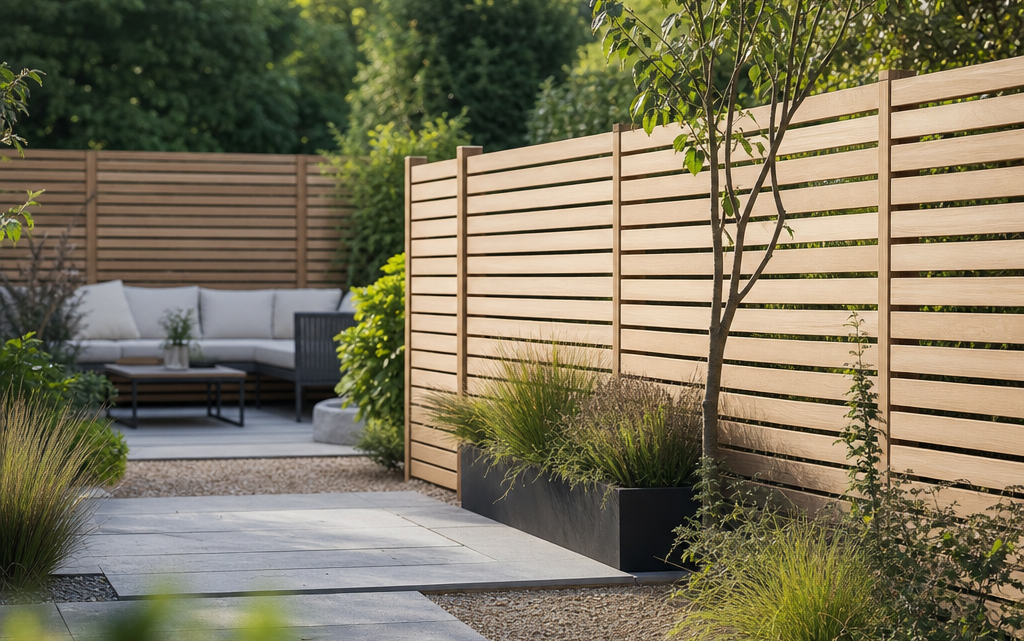
You may have a garden that is technically one space, but in daily use it needs to do several jobs: a dining area near the house, a play space on the lawn, a quiet corner for reading, a composting area you would rather not look at, and a route to the shed. Horizontal slatted timber fencing is a practical way to organise those areas without making the garden feel boxed in. Used well, it can guide views, create privacy where you need it, and add a contemporary structure that works with planting rather than against it.
Inhaltsverzeichnis
Using Horizontal Slatted Fencing to Define Garden Areas
Horizontal slatted fencing is often chosen for its modern appearance, but its real value in garden design is control. It lets you decide what is hidden, what is revealed, and how the eye moves through the space. Unlike a plain solid boundary, slatted or part-slatted fencing can soften divisions, maintain airflow, and allow glimpses of planting beyond. That makes it particularly useful for zoning gardens where a full-height wall or dense hedge would feel too heavy.
The key is to treat the fencing as part of the layout, not just a decorative screen. Before you choose panels, posts or paint colours, think about how you use the garden, where you stand or sit, and which sightlines matter most. A well-positioned horizontal screen can make a small garden feel longer, a wide garden feel more ordered, and an exposed patio feel more comfortable.
What horizontal slatted fencing does in a garden layout
Horizontal lines naturally draw the eye sideways, which can make a garden feel wider or more expansive. This is especially useful in narrow urban gardens, where vertical fencing may emphasise the tunnel-like shape. The repeated timber boards create rhythm, while the gaps or slatted top sections stop the structure from feeling too solid.
In practical terms, horizontal slatted timber fencing can help you:
- Separate uses, such as dining, seating, play, growing and utility areas.
- Screen clutter, including bins, sheds, storage boxes, compost bays and washing lines.
- Frame views towards a tree, sculpture, water feature or attractive planting.
- Interrupt direct sightlines from neighbouring windows or paths.
- Provide a backdrop for climbers, grasses, shrubs or raised beds.
- Add structure in winter when deciduous planting has died back.
It is important, however, not to confuse “slatted” with “private” in every situation. A fully open slatted fence can still allow views through at certain angles, particularly when you are close to it or when light is behind it. If privacy is a priority, consider closer board spacing, overlapping boards, a solid lower section, or a slatted topper rather than open slats throughout.
Start with zones, not fence panels
Good garden zoning begins with a plan of how you actually move through the space. Walk around your garden and note where you pause, where you feel overlooked, where the wind catches, and where your eye naturally travels. The fencing should support these patterns rather than create awkward barriers.
Typical garden zones to define
Most gardens benefit from a hierarchy of spaces. You may not need a full fence between each zone; sometimes a short run, corner screen or change in height is enough.
- Patio or dining area: often needs partial privacy and shelter, especially near boundaries.
- Lounge area: benefits from a more enclosed, intimate feel, often with planting in front.
- Children’s play area: may need visibility from the house rather than complete screening.
- Kitchen garden: can be defined with low or mid-height fencing to keep the layout tidy.
- Utility area: usually needs stronger screening for bins, storage and services.
- Wildlife or informal planting area: may only need a subtle edge to show intention.
Think in layers
A common mistake is to install a single hard boundary and expect it to solve every design issue. In most gardens, fencing works better when combined with planting, paving, level changes and furniture. For example, a horizontal timber screen behind a bench can create a sense of enclosure, while tall grasses in front soften the timber and reduce the feeling of a hard barrier.
Layering is also useful for privacy. A fence may block the lower sightline, while shrubs or small trees deal with overlooking from higher windows. This usually looks more natural than installing the tallest possible screen everywhere.
Choosing the right height and level of openness
Height and openness determine how the fencing will feel. A low panel may define a space without blocking views. A mid-height panel can screen seated areas while preserving openness above. A full-height panel provides stronger enclosure but may cast more shade and feel more dominant.
Low, mid-height and full-height options
- Low fencing: useful for vegetable beds, front garden subdivisions and visual edging. It defines without enclosing.
- Mid-height fencing: often effective for patios and seating areas because it blocks views at seated eye level.
- Full-height fencing: best for boundaries, utility screening and privacy hot spots, but it needs careful positioning to avoid a boxed-in feel.
When assessing height, sit where you will use the space rather than judging only while standing. A fence that seems too low when you are walking around may be perfect when you are seated at a table. Equally, check the view from upstairs windows and from neighbouring land where appropriate.
Open slats, overlapping boards and slatted toppers
Not all horizontal fencing behaves in the same way. Open slats give a lighter effect and allow glimpses through. Overlapping or alternately arranged boards can increase privacy while retaining a horizontal rhythm. A solid panel with a slatted top section can be a good compromise: the main body screens the lower view, while the top reduces visual weight and admits more light.
For garden zoning, partial screening is often more successful than complete enclosure. If you can see a hint of planting or light beyond the screen, the garden tends to feel larger and more connected.
Planning sightlines before installation
Sightlines are the invisible lines between your eye and a view. In garden design, you can use fencing to block unattractive views, frame attractive ones, or create a sense of discovery. Horizontal slatted fencing is particularly good at this because the lines of the boards naturally lead the eye.
Views to keep
Before adding a screen, identify the views you do not want to lose. This might be a mature tree, an attractive boundary planting scheme, a borrowed view beyond the garden, or simply a clear view from the kitchen window to where children play. Mark these sightlines on a sketch or with string in the garden.
Views to interrupt
Next, list the views you would like to soften or block. Common examples include a direct line from a neighbour’s patio to your seating area, a view of bins from the house, or the side of a shed from the dining table. In many cases, you only need to interrupt the direct line rather than build a continuous screen.
Using offsets and short runs
A short offset screen can be more elegant than fencing across the full width of a garden. For instance, placing a horizontal screen at right angles to the boundary can shield a seating area while leaving the rest of the garden open. Similarly, a staggered arrangement can create movement and interest, encouraging you to walk through the space rather than seeing everything at once.
Practical example: panel proportions and specification
When comparing options, look at the panel dimensions, construction, treatment and finish as well as the style. As a practical example, a decorative horizontal timber panel measuring around 1.8m wide by 1.2m high can be useful for mid-height zoning, screening a patio edge, or creating a backdrop behind planting. A pressure-treated panel with a rebated frame, mortise and tenon joints, horizontally mounted boards and a slatted top section would suit situations where you want a balance of privacy, strength and a lighter upper edge.
The important point is not to choose a panel solely because it looks contemporary in isolation. Check whether its height suits the sightline you are trying to control, whether the width works with your post spacing, and whether the degree of openness is right for the level of privacy you need. Also consider whether matching gates, alternative heights or repeat panels are available if you need a consistent design across several areas.
Decision criteria before you buy
Use the following criteria to narrow your choice. This will help you avoid buying attractive panels that do not quite work in your garden.
1. Purpose
Be clear about the job of each run of fencing. Is it for privacy, decoration, wind reduction, safety, boundary definition or hiding storage? A screen for bins has different requirements from a screen behind a relaxed seating area.
2. Height and viewing position
Test the required height from sitting and standing positions. If you are screening a dining area, sit at the table and measure the height needed to block the relevant view. If you are protecting a play area, you may want to preserve visibility from the house.
3. Openness and privacy
Check how much you can see through the slats at an angle. Open slats may look private when viewed straight on but reveal more from the side. For stronger privacy, look for closer spacing, overlapping boards or solid sections.
4. Timber treatment and maintenance
Pressure-treated timber is designed to resist rot, but you should still follow the manufacturer’s care guidance and keep timber away from prolonged standing water where possible. If you plan to paint or stain, check compatibility with the treatment and allow the timber to weather or dry as recommended.
5. Post and fixing requirements
Panels are only as reliable as the posts and fixings supporting them. Consider whether you need timber or concrete posts, gravel boards, panel clips, screws, brackets or capping. In exposed gardens, stronger posts and deeper foundations may be required.
6. Style and context
Horizontal slats suit contemporary gardens, but they can also work in cottage or family gardens if softened with planting. Consider the colour of nearby paving, decking, brickwork and garden furniture. A natural timber finish gives warmth, while darker stains can make planting stand out.
7. Rules and boundaries
In the UK, garden fencing is often subject to height limits, especially near highways, and there may be additional restrictions in conservation areas, listed properties or estates with covenants. As a general guide, many rear garden boundaries allow fencing up to 2 metres, while boundaries next to a highway may be limited to 1 metre without permission. Always check your local planning authority or title documents if in doubt.
Installation planning: practical steps
Careful preparation will make the finished fencing look intentional rather than added as an afterthought.
- Measure the area accurately. Record the total run, changes in level, corners and any obstructions such as drains, tree roots or existing posts.
- Mark the zones on the ground. Use string, bamboo canes, spray marker or temporary boards to test the proposed layout.
- Check sightlines. View the proposed screen from the house, patio, neighbouring side where relevant, and the main garden route.
- Choose panel heights. Do not assume every section must be the same height. A combination can look more natural if handled consistently.
- Plan posts and foundations. Ensure posts are correctly spaced for the panel width and set securely. Allow for sloping ground.
- Consider drainage at the base. Avoid trapping timber in wet soil. Gravel boards or a slight clearance can help prolong service life.
- Think about access. If the fencing defines a zone, make sure you can still move furniture, wheelbarrows and bins through the space.
- Finish the edges. Capping, neat cuts, aligned tops and consistent fixings make a significant difference to the final appearance.
Checklist: designing with horizontal slatted fencing
- Have you identified the main garden zones and how you use each one?
- Do you know which views you want to keep, frame or block?
- Have you tested the required screening height while seated and standing?
- Is the spacing or board arrangement private enough from the relevant angles?
- Will the fence cast unwanted shade on seating, lawns or planting?
- Are the posts, fixings and foundations suitable for the site and wind exposure?
- Have you checked boundary ownership and any planning restrictions?
- Will you still have practical access for maintenance, bins, tools and furniture?
- Does the timber finish work with paving, decking, walls and planting?
- Have you allowed budget for posts, fixings, gravel boards, gates and labour, not just panels?
Planting around horizontal slatted fencing
Planting makes timber screens feel settled into the garden. Without planting, even an attractive fence can appear stark, especially in a small space. The horizontal lines provide a strong backdrop for contrasting forms.
Plants that work well in front of slatted timber
Use upright grasses, clipped evergreens, multi-stem shrubs and soft perennials to break up the timber surface. Ferns and shade-tolerant plants can work well where the fence reduces light. In sunnier spots, lavender, rosemary, salvias and ornamental grasses can soften the base while keeping a clean, modern look.
Climbers can also be effective, but choose carefully. Vigorous plants may need strong supports and regular pruning. Avoid allowing heavy growth to force boards apart or trap damp against the timber. If you want climbers, install separate wires or trellis supports rather than relying on the panel structure unless the manufacturer states it is suitable.
Colour and finish
Natural timber will weather over time unless treated with a suitable finish. A pale finish can keep a small garden light, while black or dark grey can make the fence recede and enhance green foliage. Warm browns sit comfortably with brick and natural stone. Whatever you choose, test a small area first because timber colour varies and finishes can look different outdoors.
Common practical mistakes to avoid
Installing too much fencing
It is tempting to screen every boundary and every zone, but this can make the garden feel smaller and more rigid. Use fencing where it solves a specific problem, and rely on planting, furniture placement and surface changes elsewhere.
Ignoring wind exposure
Even partly slatted panels can catch wind. Exposed gardens, coastal locations and open rural plots need careful post specification and secure installation. If wind is a major issue, seek professional advice on posts, fixings and panel suitability.
Forgetting the view from indoors
You will often see the garden most from the kitchen, living room or bedroom. A screen that works well from the patio may block an important view from indoors. Always assess the design from inside the house before fixing anything permanently.
Placing timber directly in wet conditions
Timber lasts longer when it can dry out. Avoid soil piled against panels, blocked drainage, dense planting pressed tightly to the boards, and irrigation spraying directly onto the timber every day.
Creating awkward routes
Zoning should improve circulation, not make the garden difficult to use. Leave enough width for wheelbarrows, lawnmowers, prams or garden furniture. If a screen forces you into a narrow or muddy route, the layout needs adjusting.
Mixing too many styles
Horizontal slatted fencing has a strong visual identity. Combining it with several unrelated fence styles, ornate trellis, mismatched gates and multiple stain colours can look busy. Aim for a simple palette and repeat materials where possible.
When to use a professional installer
A competent DIYer may be able to install a short run of panels on level ground, particularly where posts are already sound and correctly spaced. However, professional help is sensible if the site slopes, the run is long, the ground is difficult, the garden is exposed, or the fence forms a boundary where disputes could arise. A professional can also help with stepped or raked layouts, accurate post setting and neat integration with gates, walls or existing structures.
If you are replacing boundary fencing, confirm ownership and discuss the work with neighbours in advance. Clear communication can prevent disagreements about height, appearance, access and temporary disturbance.
FAQ
Does horizontal slatted fencing provide enough privacy?
It can, but it depends on the board arrangement and viewing angle. Open slats are less private than overlapping boards or solid panels with a slatted top. For seating areas, test privacy from seated eye level before choosing a height and style.
Will horizontal fencing make a small garden look bigger?
It can help. Horizontal lines draw the eye across the garden, which may create a greater sense of width. The effect is strongest when the fencing is used consistently and not interrupted by too many different materials.
Can I use slatted fencing inside the garden rather than on the boundary?
Yes. It is often very effective as an internal screen for zoning patios, utility areas, vegetable beds or quiet seating corners. Internal screens can be shorter than boundary fences because they only need to guide movement or interrupt a specific view.
Do I need planning permission for garden fencing?
Sometimes. Many domestic garden fences fall within permitted limits, but restrictions can apply, especially next to highways, around listed buildings, in conservation areas or where covenants exist. Check with your local planning authority if you are unsure.
How do I stop a timber screen looking too stark?
Use planting at the base, repeat timber tones elsewhere in the garden, and avoid long uninterrupted runs where possible. Shrubs, grasses and climbers on separate supports can soften the structure while keeping the clean horizontal effect.
Conclusion
Horizontal slatted timber fencing is a versatile design tool for defining garden areas and managing sightlines. Its strength lies in balance: it can provide privacy without feeling as heavy as a solid wall, and it can divide a garden while still allowing light, air and visual connection. To use it successfully, start with the way you live in the garden, then choose the height, openness, position and finish to suit each zone.
Measure carefully, test views before installation, allow for robust posts and fixings, and soften the finished structure with planting. When chosen for a specific purpose rather than appearance alone, horizontal slatted fencing can bring order, privacy and a calm contemporary rhythm to gardens of many sizes and styles.