
Designing Raised Bed Areas for Comfortable Gardening Access
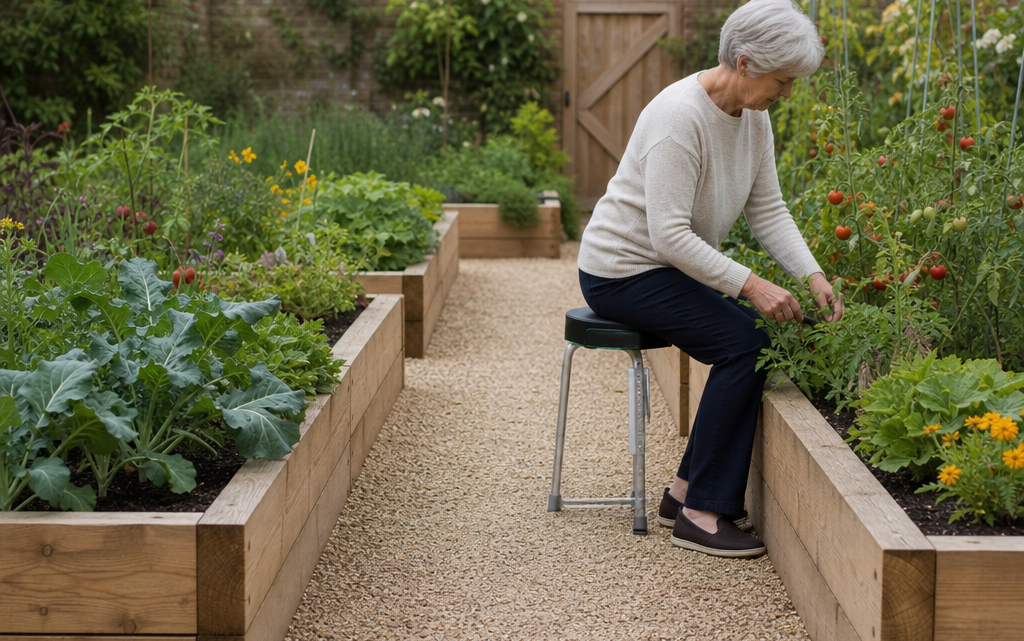
You may be planning a kitchen garden because you want herbs near the back door, a few reliable vegetables through the season, or a more attractive way to mix edibles with flowers. At the same time, you may be thinking carefully about comfort: how far you can reach, whether you can kneel, how easy it is to move a wheelbarrow, and whether the layout will still work in five or ten years. Raised beds are often suggested as the answer, but the real benefit comes from the layout, not simply from lifting soil above ground level.
Inhaltsverzeichnis
Designing Raised Bed Areas for Comfortable Gardening Access
A well-designed raised bed area should let you garden without awkward stretching, repeated bending or unnecessary carrying. It should also support healthy plants, suit the style of your garden and make everyday tasks simple. Whether you are creating a productive kitchen garden, a mixed planting area, or a combination of vegetables, herbs, flowers and small shrubs, accessibility needs to be considered from the first sketch.
The most successful layouts are planned around the gardener first and the plants second. If you can reach, water, harvest, prune and weed comfortably, the planting is much more likely to thrive.
Start with how you will use the space
Before choosing bed sizes or materials, decide what you want the area to do. A kitchen garden for regular harvesting has different access needs from a decorative mixed border that only needs seasonal maintenance. If you want both, you can design a practical structure with attractive planting so the area looks good all year.
Ask yourself these key questions
- Will you garden standing, sitting, kneeling, or from a wheelchair or mobility aid?
- How often will you need to access the beds: daily, weekly or seasonally?
- Will you be carrying compost, watering cans, tools or harvested crops?
- Do you need space for another person to help beside you?
- Will children, older relatives or visitors also use the garden?
- Do you want mainly vegetables, herbs, flowers, fruit, shrubs or a mixture?
These answers shape the whole design. For example, daily salad leaves and herbs should be close to the kitchen and easy to reach in all weather. Crops needing less frequent attention, such as potatoes or maincrop onions, can sit further away if paths are still safe and level.
Choose bed dimensions that match your reach
Accessible raised beds should be sized so you can reach the middle without leaning heavily on the soil or straining your back. As a general guide, a bed accessed from both sides can be wider than a bed placed against a wall or fence. A narrow bed is often better for comfort than a large bed that looks efficient on paper but is difficult to maintain.
Useful reach guidelines
- Access from both sides: many gardeners find a width of around 1.0 to 1.2 metres manageable.
- Access from one side only: consider a width of around 45 to 60 cm, depending on your reach.
- Square beds: compact square modules can work well where you want flexible layouts and easy rotation.
- Seated gardening: test your comfortable forward reach from the seat or mobility aid you actually use.
- Children or shared access: allow for shorter reach and lower working heights.
Height is equally important. A slightly raised bed can reduce bending, while a much taller planter may suit standing or seated gardening. However, taller beds need more filling material and may dry out faster in warm weather. If you want deep-rooted crops, larger shrubs or fruit bushes, make sure there is sufficient soil depth for healthy root growth.
Plan paths before you plan planting
Paths are not leftover space. In an accessible raised bed garden, they are part of the working design. You need enough room to move, turn, pause, carry tools and water safely. Narrow gaps may look tidy when the beds are empty, but they quickly become frustrating once plants spill over the edges.
Path width and turning space
For a simple standing gardener’s layout, paths of around 60 cm may be workable for light use, but wider paths are often more comfortable. If you use a wheelchair, walking frame or mobility scooter, you will need generous path widths and turning areas. A practical layout should include at least one wider route through the garden and enough space at junctions or ends of paths to turn without reversing long distances.
Think about the tools you use. A wheelbarrow, garden trolley or hose reel needs more clearance than a hand fork and basket. If two people garden together, paths should allow you to pass safely, especially near steps, corners or gates.
Path surfaces for comfort and safety
The path surface should be firm, stable, level and free-draining. Loose gravel can be difficult for wheelchairs and some walking aids, while smooth paving may become slippery if shaded and wet. Resin-bound gravel, compacted self-binding gravel, textured paving, brick, or well-laid stone can all work, provided the surface suits the user and the site.
Avoid sudden level changes where possible. If you need a slope, keep it gentle and add resting places on longer routes. Edging between bed and path helps prevent soil washing out and keeps the route clear.
Use layout shapes that make maintenance easier
Raised bed areas do not have to be rectangular grids, but simple geometry often makes them easier to use. Straight paths, clear bed edges and repeated modules help with crop rotation, watering and planning. Curves can look softer in a mixed garden, but very tight curves may waste space or make edging harder to maintain.
Common accessible layouts
- Parallel beds: efficient for vegetables and easy to irrigate, with straight paths between beds.
- U-shaped layout: useful where you want several beds close together with a central working space.
- Keyhole layout: can reduce walking distance, but the central access point must be wide enough and easy to turn in.
- Modular square beds: good for small gardens, crop rotation and mixed planting blocks.
- Perimeter beds: useful around patios, but only if the beds are narrow enough to reach from one side.
For kitchen gardens, repeating the same bed size can simplify planning. You can rotate crops more easily, estimate compost needs and set up consistent irrigation. For mixed planting, modular beds allow you to create rhythm with repeating herbs, edible flowers, compact vegetables and ornamental plants.
Decide what to grow in each accessible zone
Place high-use plants in the most accessible positions. Herbs such as parsley, chives, mint in a contained pot, thyme and coriander are best near the house or main path. Salad leaves, strawberries, tomatoes in suitable supports and cut-and-come-again crops also deserve easy access because you harvest them frequently.
Plants that need less frequent attention can go further from the main entrance, provided you can still reach them safely. In mixed planting, put plants that need deadheading, staking or regular picking at the front or sides of beds. Taller, lower-maintenance plants can sit towards the centre of beds accessed from all sides, or towards the back of one-sided beds.
Good combinations for kitchen garden and mixed planting
- Herbs with edible flowers, such as chives, calendula and nasturtiums.
- Leafy greens with compact annual flowers to attract pollinators.
- Strawberries along bed edges where they are easy to pick.
- Dwarf beans with low-growing herbs around the base.
- Perennial herbs in one bed and annual vegetables in another for easier soil management.
Be realistic about plant size. A courgette, kale plant or sprawling squash can quickly make a narrow path unusable. If access is a priority, choose compact varieties and support plants before they lean into walkways.
Practical example: using a compact square raised bed
A compact square raised bed can be a useful building block in an accessible garden because it is easy to position, repeat and reach from several sides. For example, a 90 x 90 cm square bed can suit herbs, salad crops, edible flowers or a small mixed display. It can also work as part of a group of beds with paths between them, rather than as one large growing area that is difficult to access.
When comparing products, focus on the dimensions, the working height, the timber or other material, how it will sit on your surface, and whether it fits into your planned path widths. A product may be environmentally appealing or suitable for vegetable growing, but it still needs to be comfortable for you to use in your particular garden.
Work out soil, drainage and watering early
Raised beds are only as good as the growing conditions inside them. For kitchen gardening, aim for a fertile, moisture-retentive but free-draining mix. The exact blend depends on the bed depth, existing ground and what you intend to grow. If the bed sits directly on soil, you may be able to improve the ground beneath and fill the bed with a mix of topsoil and compost. If it sits on paving or a hard surface, drainage becomes especially important.
Soil depth and plant choice
Shallow beds can support many herbs, salads and annual flowers, but they may not suit deep-rooted vegetables or larger permanent plants. If you want carrots, parsnips, fruit bushes or small shrubs, check that the bed depth and soil volume are appropriate. Avoid filling a bed entirely with rich compost for long-term use, as it can slump and may not provide the structure plants need.
Watering access
Watering is one of the most common pressure points in an accessible garden. Carrying heavy watering cans may be uncomfortable or unsafe. If possible, place a tap, water butt, hose point or irrigation system near the raised bed area. Drip irrigation or leaky hose can be particularly useful in kitchen gardens, provided you still check soil moisture regularly.
Raised beds can dry out more quickly than open ground, especially in sunny, windy positions. Mulching with compost, leaf mould or suitable organic material helps conserve moisture and reduce weeding.
Checklist: planning an accessible raised bed area
- Measure your available space accurately, including gates, steps and existing paths.
- Decide who will use the garden and whether they will stand, sit or use mobility aids.
- Mark out proposed beds and paths with string, canes or hose before buying materials.
- Check that you can reach the centre or back of each bed comfortably.
- Allow enough path width for turning, carrying, watering and passing another person.
- Choose firm, non-slip path surfaces suitable for wet weather.
- Place frequently harvested crops closest to the house or main route.
- Plan water access before installing beds.
- Choose plant varieties that will not overwhelm paths or neighbouring beds.
- Leave space for compost bins, tool storage, seating or a potting area if needed.
Design details that improve comfort
Small details often make the biggest difference in day-to-day use. A nearby seat gives you somewhere to rest, sort seedlings or harvest crops. A wide bed edge may provide a temporary perch, but only if the structure is designed and installed to take that use safely. Tool storage close to the beds reduces carrying and makes short gardening sessions easier.
Lighting may be useful if you access the garden in early mornings or evenings, particularly in winter. Keep hoses, canes and netting tidy so they do not become trip hazards. If you use plant supports, position them so you can still reach the crop and so they do not block paths.
Make maintenance manageable
It is better to start with fewer beds and maintain them well than to install a large productive area that becomes overwhelming. Accessible gardening is not only about physical reach; it is also about reducing unnecessary work. Use mulches, repeat planting schemes and simple crop rotations to keep the system manageable.
For mixed planting, include some permanent structure such as compact herbs, evergreen edging plants or small perennials, then add seasonal vegetables and flowers. This avoids the whole area looking empty outside the main growing season.
Common practical mistakes to avoid
Making beds too wide
The most frequent mistake is choosing beds that are too wide for comfortable reach. This leads to leaning on soil, stepping into beds, compacting the growing medium and avoiding jobs such as weeding or harvesting. Always test your reach before building.
Leaving paths too narrow
Narrow paths may maximise growing space, but they reduce comfort and safety. Plants often spread beyond bed edges, making the route even tighter. Allow for mature plant size, not just the empty bed.
Ignoring water access
A beautiful layout can become impractical if watering requires repeated trips with heavy cans. Plan the water source and hose route at the same time as the beds.
Using unsuitable path materials
Decorative loose gravel, uneven stepping stones or glossy paving can create access problems. Choose surfaces for stability and grip as well as appearance.
Planting vigorous crops in the wrong place
Large courgettes, trailing pumpkins, tall tomatoes or sprawling herbs can block paths and shade smaller plants. Give vigorous crops enough space or choose compact alternatives.
Forgetting future needs
A layout that works now should ideally adapt as your needs change. Modular beds, generous paths and simple access routes are more future-proof than tight, complex designs.
Short FAQ
What is the best raised bed shape for accessibility?
There is no single best shape, but narrow rectangles and compact squares are usually easiest to reach. The best choice depends on whether you can access the bed from one side, two sides or all around.
How wide should paths be between raised beds?
For basic standing access, allow enough room to walk, bend and carry tools without brushing against plants. If you use a wheelchair, walking aid or garden trolley, you will need wider, firmer paths and turning space. It is worth testing the layout physically before installation.
Can raised beds be used for both vegetables and ornamental planting?
Yes. Mixed planting can be very effective. Combine herbs, edible flowers, compact vegetables and ornamental perennials, while keeping frequently harvested or high-maintenance plants within easy reach.
Do raised beds reduce weeding?
They can reduce some weed pressure, especially if filled with clean growing medium and mulched, but they do not remove weeding entirely. Good access makes weeding quicker and less strenuous.
Are taller raised beds always better?
Not always. Taller beds can reduce bending, but they require more filling material and may dry out faster. The right height depends on your gardening position, plant choice and watering arrangements.
Conclusion
Designing raised bed areas for comfortable gardening access is about making practical decisions before you build. Bed width, path layout, surface choice, water access and plant placement all affect how enjoyable the garden will be to use. Compact raised beds can be useful elements within a wider plan, but the overall layout matters most.
If you design around your reach, movement and maintenance needs, you can create a kitchen garden or mixed planting area that is productive, attractive and comfortable to look after. The result should be a space where you can harvest, plant, prune and enjoy the garden without unnecessary strain.

