Natural Light and Privacy Considerations for Compact Plastic Garden Sheds

You have a narrow side return, a small patio corner or a modest patch beside the greenhouse, and you need somewhere dry for tools, compost, cushions or children’s outdoor toys. A compact plastic garden shed can be ideal, but one issue is often overlooked until after installation: how much natural light will it admit, and how private will the contents be from neighbours, passers-by or anyone looking in from the house?
For smaller sheds, especially polycarbonate models, the balance between daylight and privacy matters. Too little light and the shed becomes awkward to use. Too much visibility and you may feel exposed, particularly if you store valuable tools or the shed faces a shared path. This guide explains how to plan natural light and privacy sensibly before you buy, position or organise a compact polycarbonate garden shed.
Inhaltsverzeichnis
Why light and privacy matter more in a compact shed
In a large workshop-style shed, you may have room for task lighting, benches and dedicated storage zones. In a compact garden shed, every centimetre counts. You are often reaching in from the doorway, moving tools around in a tight space, or trying to identify items stacked behind each other. Good natural light reduces frustration and makes the shed safer to use during the day.
Privacy is equally important. A small shed may sit closer to boundaries, windows, alleys or shared driveways than a larger outbuilding would. If the shed has clear panels or windows, the contents can be visible from outside. Even if you only store basic garden items, visible tools, ladders or equipment can attract unwanted attention.
Understand the different types of natural light
Not all shed daylight is the same. Before choosing a design, think about where the light enters and what it reveals.
Side windows
Side windows provide direct visibility into the shed. They can make the interior feel brighter and are useful if you spend time inside the shed, but they also create the clearest view of stored items. In a compact shed positioned near a boundary or pavement, side windows may not be the best option unless they are obscured, shaded or carefully oriented.
Translucent or opaque roof panels
Roof light is often more private because it admits daylight from above rather than through the walls. A translucent or externally opaque roof panel can brighten the interior without making the contents easy to see from ground level. This is particularly useful in tight gardens where the shed sides face neighbours or footpaths.
Doorway light
In very small sheds, the open doors may provide enough daylight for routine access. If you mostly step up to the shed, open the doors, remove an item and close them again, you may not need windows at all. However, the deeper or more cluttered the interior becomes, the more useful additional light will be.
Assess your site before choosing a shed
A compact shed should not be selected on dimensions alone. Spend a few minutes observing the intended location at different times of day. This will help you decide whether you need roof light, wall light, no windows, or additional security measures.
Check the path of the sun
South-facing and west-facing positions may receive strong light for longer periods. This can help visibility, but it can also make the inside warmer in summer. North-facing spaces are often dimmer, so a roof that admits softened natural light may be useful.
Look at sightlines
Stand where other people might stand: at the garden gate, on a shared path, at neighbouring upstairs windows, or by your kitchen window. Ask yourself what they would be able to see if the shed had clear side windows. If the answer is “straight into the storage area”, privacy should be a key buying criterion.
Consider surrounding shade
Fences, garages, walls, mature shrubs and trees can all reduce light. A shed that looks bright in a product image may feel much darker if it is tucked into a shaded passage. Conversely, a shed in an exposed spot may not need much extra light at all.
Decision criteria for balancing light and privacy
Use these practical criteria when comparing compact plastic or polycarbonate sheds.
- How often will you use it? Daily use usually benefits from better natural light. Occasional storage may not require windows.
- What will you store? High-value tools, bikes, ladders and power equipment call for more privacy and better security habits.
- Will anyone be working inside? If you need to stand inside and sort items, light from above can be useful.
- Is the shed visible from public or shared areas? If so, avoid clear views into the interior.
- Can the doors be opened fully? Wide-opening doors may provide enough light for quick access.
- Is the roof material UV-protected? UV protection helps reduce harmful ultraviolet exposure to stored items and the shed material, where specified by the manufacturer.
- Is the light diffused? Soft, diffused light is often better than harsh glare in a small shed.
Using a compact polycarbonate shed as a practical example
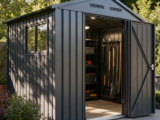
As an example of the sort of features to compare, a compact model such as the 5′ x 3′ Palram Canopia Dark Grey Voyager Shed is designed for small-scale garden storage and uses polycarbonate construction. Its listed features include 100% UV-protected 1mm polycarbonate walls, an aluminium frame, an integral anti-slip weatherproof floor, wide double doors with a pad bolt, and a 0.9mm shingled polycarbonate skylight roof with 10% light transmission. The roof is described as externally opaque for privacy while allowing soft natural light into the shed.
This type of arrangement illustrates a useful principle: in a compact shed, roof-based natural light can provide day-to-day visibility without relying on clear side windows. You should still judge any shed against your own site, storage needs and security expectations, rather than assuming one layout suits every garden.
Practical steps before installation
Once you have chosen a compact shed, good positioning and organisation will make a noticeable difference to both light and privacy.
1. Mark out the footprint
Use string, canes or masking tape to mark the proposed footprint on the ground. Open and close an imaginary pair of doors to check whether you will have enough access space. In a small garden, the door swing can affect how much light reaches the interior when you are using the shed.
2. Test visibility from outside
Before assembly, stand at likely viewing points and imagine the shed with the doors open and closed. If the shed will be visible from a lane or shared driveway, position stored valuables away from any areas that can be seen when the doors are briefly opened.
3. Prepare a firm, level base
A level base is essential for most sheds because it helps doors align correctly and prevents twisting of the structure. Poor alignment can leave gaps, make doors harder to close and reduce practical security. Follow the manufacturer’s base and anchoring instructions carefully.
4. Orient the entrance sensibly
If possible, face the doors towards a private part of the garden rather than a public path. This reduces the chance of someone seeing the contents when you open the shed. It also makes it more comfortable to use the shed without feeling overlooked.
5. Organise the interior to preserve light
Compact sheds can quickly become dark if tall items block light paths. Keep bulky items to the sides where possible, use hooks for hand tools, and avoid stacking opaque boxes directly beneath any roof light. If natural light enters from above, leave a central visual gap so it can reach lower shelves and floor-level storage.
Checklist: planning light and privacy in a compact shed
- Have you checked the shed position in morning, afternoon and evening light?
- Can neighbours, passers-by or visitors see into the shed when the doors are open?
- Do you need windows, or would roof light and doorway light be enough?
- Are valuable items hidden from direct view?
- Will tall tools or shelving block the main source of natural light?
- Is the base firm, level and suitable for anchoring if required?
- Are the doors able to open fully without hitting fences, pots or walls?
- Is the locking arrangement suitable for the value of what you intend to store?
- Have you allowed ventilation and avoided packing damp items tightly inside?
- Can you reach frequently used items without emptying half the shed?
Common mistakes to avoid
Choosing clear windows without considering sightlines
Windows can be useful, but they are not automatically the best choice for a small shed. If a clear window faces a public or shared area, it may reveal exactly what is inside. Consider whether diffused roof light, an opaque panel or a windowless side would be more appropriate.
Placing valuables directly opposite the doors
Even if the shed has no windows, the contents are visible whenever you open it. Avoid placing power tools, expensive equipment or easily portable valuables in the most obvious position. Store them lower down, behind other items, or in covered containers.
Blocking the available light with poor storage
A compact shed can lose much of its usable daylight if you stack boxes too high or lean large items across the interior. Keep the centre clear where possible and use wall-mounted storage carefully, making sure it does not obstruct light from above.
Ignoring glare and heat
Bright light is not always better. In exposed locations, direct sun can create glare and raise internal temperatures. Diffused light is usually more comfortable and practical for finding tools without making the shed feel harsh or overly warm.
Forgetting the base and anchoring
Light and privacy planning will not help if the shed is unstable or the doors do not close properly. Many compact plastic and polycarbonate sheds require a firm, level base and may need anchoring. Always follow the manufacturer’s instructions.
Improving privacy after installation
If your shed is already in place and feels too exposed, there are several practical adjustments you can make without replacing it.
- Rearrange storage: Move valuable items away from the doorway and any visible panels.
- Use opaque boxes: Lidded storage boxes can conceal smaller tools and accessories.
- Add screening plants: A planter, trellis or evergreen shrub can soften sightlines, provided it does not trap damp or block access.
- Improve locking habits: Use the supplied locking points as intended and choose a suitable padlock where one is required but not included.
- Keep the exterior tidy: Avoid leaving tools, ladders or packaging outside the shed, as this can advertise what may be stored inside.
When you may need extra lighting
Natural light is useful during the day, but it will not help much on winter evenings or in a heavily shaded garden. If you regularly use the shed outside daylight hours, consider a battery-powered or solar light designed for shed use. Choose a unit suitable for the environment and install it where it will not interfere with doors, storage hooks or tall tools.
Avoid trailing cables across the floor in a compact shed. They create trip hazards and can be damaged by garden equipment. If you are considering mains electricity, use a qualified electrician and ensure the installation is appropriate for outdoor buildings.
Short FAQ
Is a windowless shed always more secure?
Not always, but it can improve privacy because the contents are harder to see. Security also depends on the door design, locking method, base, anchoring, location and what you store inside.
Is roof light better than side windows?
For many compact sheds, roof light is a good compromise because it can brighten the interior while reducing direct views from outside. Side windows may be better if you work inside the shed, but they need careful positioning.
Can polycarbonate panels provide privacy?
Some polycarbonate panels are clear, while others are translucent, tinted or externally opaque. Check the manufacturer’s description carefully rather than assuming all polycarbonate sheds offer the same level of privacy.
Will natural light damage stored items?
Prolonged sunlight can affect some plastics, fabrics and packaging. Where a shed specifies UV protection, that may help reduce harmful UV exposure, but it is still sensible to store sensitive items in boxes or away from strong light.
Should I face the shed doors towards the house?
Often, yes. Facing the doors towards your house or a private garden area can make access easier and reduce visibility from public spaces. However, you should also consider drainage, wind exposure, door clearance and the base position.
Conclusion
Planning natural light and privacy in a compact polycarbonate garden shed is about practical balance. You need enough daylight to find and organise your tools, but not so much visibility that the contents are on display. Roof-based, diffused or externally opaque light can be particularly useful in small gardens, while careful orientation, a level base and sensible internal storage all improve day-to-day use.
Before buying or installing, check the site, study the sightlines, think honestly about what you will store and choose features that suit your garden rather than simply the brightest-looking shed. A little planning at the start will give you a compact storage space that feels usable, discreet and secure throughout the year.