How to plan a tall wall greenhouse for compact garden growing
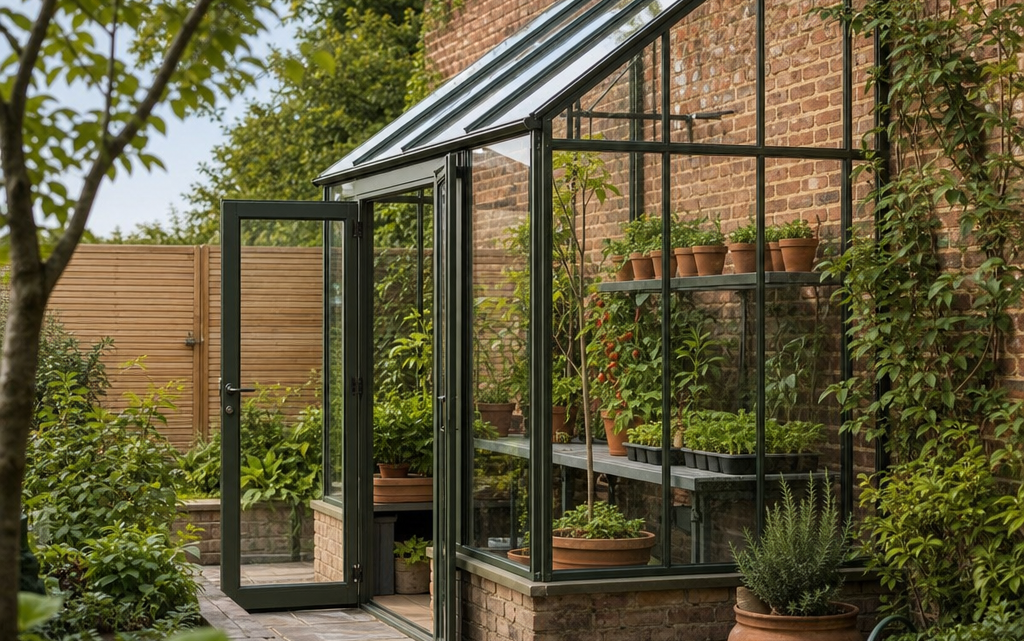
If you have a narrow side return, a small patio, a courtyard garden or a short run of sunny wall, a full-size greenhouse may feel unrealistic. You may still want somewhere protected for seed trays, cuttings, herbs, tender perennials or a few young vegetable plants before they go outdoors. This is where a tall wall greenhouse can be a sensible compromise: it uses vertical space rather than floor area, gives plants a warmer and more sheltered growing environment, and can sit neatly against a wall or fence line without dominating the garden.
Planning one well matters. In a compact garden, a few centimetres can affect access, ventilation, watering and the amount of light your plants receive. This guide explains how to assess your space, choose a practical position, plan shelving and ventilation, avoid common mistakes, and decide whether a tall wall greenhouse suits the way you actually garden.
Inhaltsverzeichnis
What is a tall wall greenhouse?
A tall wall greenhouse is a compact greenhouse designed to stand against a wall, fence or other vertical boundary. Unlike a low growhouse or cold frame, it gives you upright growing space, so you can combine seed trays, pots, taller plants and overwintering specimens in one narrow footprint.
It is particularly useful if you want the benefits of a greenhouse but do not have room for a walk-in structure. You should think of it as a plant care station rather than a miniature version of a large greenhouse. It is ideal for raising young plants, protecting vulnerable pots, hardening off seedlings, sheltering herbs, or keeping a small collection of tender plants in better condition.
Start with what you want to grow
Before measuring the site or comparing models, be clear about your intended use. A tall wall greenhouse for seed starting has different priorities from one used for overwintering pelargoniums or growing chillies in pots.
For seeds and cuttings
If your main aim is propagation, prioritise shelving, light and easy access. Multiple shelf levels allow you to organise seed trays, plug plants and cuttings. You will also need enough room to lift trays in and out without tipping compost everywhere. Good ventilation is essential because crowded seed trays in still air can quickly develop mould or damping-off problems.
For tender plants and overwintering
If you want to protect tender plants, focus on height, airflow and insulation options. Some plants need space above the pot as well as around the leaves, so check that shelves can be adjusted or removed. Remember that a compact greenhouse is not automatically frost-free. In cold weather, you may still need fleece, bubble insulation, a sheltered position or supplementary heat if the plants are not hardy.
For herbs, salads and small edible crops
For herbs, lettuce, microgreens and compact crops, think about convenience. A greenhouse near the kitchen or patio may be more useful than one tucked in the brightest but least accessible corner. You are more likely to water, ventilate and harvest regularly if the structure is part of your daily route.
Measure the space carefully
In a small garden, you should measure more than the footprint. A greenhouse may physically fit, but still be awkward to use if the door, lid, vents or shelves cannot be reached comfortably.
Measure the available width, depth and height. Then allow working room in front of the greenhouse. You should be able to stand, open the doors or panels fully, remove a tray, and water the back row of plants without stretching dangerously or crushing neighbouring planting.
Also check for overhanging features such as window sills, drainpipes, outdoor taps, fence caps, lights, hanging baskets and trellis. These can interfere with the roofline or prevent the greenhouse from standing flush against the wall.
Allow for practical access
As a guide, you should aim for enough clear space in front to bend, lift pots and use a watering can comfortably. If the greenhouse is positioned along a narrow path, check that you can still walk past it safely, especially when carrying tools or compost.
Check the ground level
A tall narrow structure needs a stable, level base. Uneven paving, loose gravel or sloping ground can make doors misalign and shelves feel unstable. If necessary, prepare a level area using paving slabs, a firm timber base or another suitable support. Avoid placing the greenhouse directly on soft soil unless the design specifically allows for it and it can be secured properly.
Choose the best position for light and shelter
Light is the main reason for owning a greenhouse, so avoid treating position as an afterthought. A wall greenhouse usually depends on light from the front, sides and roof, while the rear is against a solid surface or back panel. This means orientation and shade patterns are especially important.
Assess sunlight through the day
Spend a few days observing the proposed site. Note where the sun reaches in the morning, at midday and in late afternoon. South-facing and west-facing positions can be bright and warm, while north-facing walls may be too dim for many seedlings and sun-loving crops. East-facing sites can work well because they receive gentler morning sun and may avoid intense afternoon heat.
In summer, too much heat can be as harmful as too little light. A small greenhouse warms quickly, especially if placed against a heat-retaining wall. If the position is very sunny, ventilation and shading will become more important.
Use walls to your advantage
A wall can provide shelter from wind and may hold some residual warmth, particularly if it receives sun during the day. However, it can also cast shade or restrict air movement. Brick, stone and rendered walls may reflect light and warmth, whereas dark fences or dense hedging can make the space gloomier.
Make sure the supporting wall or fence is sound. A greenhouse should not rely on a rotten fence panel, unstable trellis or crumbling masonry for protection. If fixings are required, choose appropriate fixings for the surface and follow the manufacturer’s instructions.
Plan shelving before you buy
In a tall wall greenhouse, shelving is not just storage; it determines how you will use the growing space. Poor shelf planning can leave you with plenty of theoretical capacity but very little usable room for real plants.
Think in layers. The top shelf is often warmest and brightest, suitable for seed trays and small pots. Middle shelves can be used for young plants, herbs or cuttings. Lower areas may be cooler and shadier, making them useful for hardening off plants, storing compost trays temporarily, or holding plants that do not need full light.
Adjustable shelving is valuable
If you plan to grow anything taller than seedlings, look for adjustable or removable shelves. This gives you flexibility as plants mature. For example, you may want several shelf levels in spring for seed trays, but fewer levels in summer when tomatoes, chillies or ornamental plants need headroom.
Do not overload shelves
Small pots become surprisingly heavy when wet. Trays full of compost and water can strain light shelving. Always follow the product’s guidance on loading if supplied, distribute weight evenly, and avoid stacking heavy ceramic pots on upper levels unless the structure is designed for it.
Ventilation is not optional
Many compact greenhouse problems are caused by poor ventilation. Because the air volume is small, temperatures and humidity can rise quickly. Without airflow, plants are more prone to scorching, mildew, mould, weak growth and pest outbreaks.
Look for opening vents, doors or panels that allow fresh air to circulate. Ideally, you want ventilation high up where warm air can escape, as well as some lower-level air movement when conditions allow. If your greenhouse is in a sunny position, you may want to consider automatic vent openers if compatible with the design, as these can help prevent overheating when you are away from home.
Build ventilation into your routine
During mild spring days, open vents or doors before the interior becomes too hot. Close them later in the day if temperatures drop sharply. In summer, a small greenhouse may need daily ventilation and occasional shading. In winter, ventilate briefly on dry, mild days to reduce stale, damp air, but avoid chilling vulnerable plants unnecessarily.
Practical example: assessing a compact tall wall model
When comparing options, it can help to look at a real compact model as a reference point rather than as the only possible choice. A product such as the 5’x2′ Forest Victorian Tall Wall Greenhouse (1.5×0.6m), priced at 514.99 EUR, illustrates the type of small-footprint structure that may suit a narrow garden space. Its description highlights a classic tall style, pressure treated timber, a back panel, two heights of shelving with adjustable middle shelves, two opening air vents and suitability for auto vents, although auto vents are not included. It is presented as a greenhouse for plant nurturing where space is limited.
The useful planning lesson is not the brand itself, but the combination of features to look for: a narrow footprint, usable height, adjustable shelving, ventilation, treated timber and a design that suits its setting. You should still check the exact installation requirements, access needs, base preparation and compatibility with your wall or garden layout before buying any model.
Checklist: before choosing a tall wall greenhouse
- Measure the footprint: Confirm the available width and depth, including clearance in front.
- Check the height: Make sure there are no sills, pipes, lights or overhanging branches in the way.
- Assess sunlight: Observe the site at different times of day and in different weather.
- Check shelter: Avoid exposed spots where wind may batter the structure or dry plants too quickly.
- Plan the base: Use a firm, level surface that supports the structure properly.
- Review shelving: Decide whether fixed, removable or adjustable shelves suit your plants.
- Check ventilation: Look for usable vents or openings and consider whether auto vent compatibility matters.
- Think about watering: Ensure you can reach all plants without knocking pots over.
- Allow for cleaning: You need access to remove dead leaves, wash glazing and manage pests.
- Match the style: Choose a design that suits your garden, especially if it will be highly visible.
Prepare the base and surrounding area
A stable base helps the greenhouse last longer and makes daily use easier. Paving slabs, a level patio, concrete, or a prepared timber platform can all be suitable depending on the product and site. The key is that the surface should be flat, firm and free-draining.
Avoid placing the greenhouse where water pools after rain. Standing water can make access unpleasant, encourage algae, and contribute to damp conditions around timber or fixings. If the site is against a wall, check that roof runoff, gutters or overflowing downpipes will not pour directly onto the greenhouse.
Leave a clean working zone
Keep the area immediately in front of the greenhouse clear. A narrow strip of paving or gravel can make watering, feeding and cleaning easier. If you have only a tiny patio, use storage carefully so that compost bags, tools and spare pots do not block access.
Plan watering and drainage
Plants in a compact greenhouse can dry out quickly, especially on sunny or windy days. At the same time, overwatering in a poorly ventilated space can lead to fungus gnats, mould and root problems. Your watering routine should be based on plant needs rather than habit.
Use trays where appropriate, but do not leave plants standing in water for long periods unless they are species that tolerate it. Group plants with similar watering needs together. Seedlings, herbs and overwintering plants often need different moisture levels, so avoid treating the whole greenhouse as one uniform environment.
Make watering easy
If an outdoor tap is nearby, check that a hose can reach without pulling against the greenhouse. If you use a watering can, make sure you can lift and tip it safely in the available space. A small long-spouted can is often more practical than a large heavy one in a narrow greenhouse.
Think about temperature control
A tall wall greenhouse can extend your growing options, but it does not remove the need to manage temperature. In spring, it may give seedlings a useful head start. In summer, it may overheat. In winter, it may offer shelter but not full frost protection.
Use a simple maximum-minimum thermometer so you understand what is happening inside. This is particularly useful in small structures, where conditions can change dramatically between morning and afternoon. If temperatures rise too high, open vents, open the door if safe, use shading, or move sensitive plants lower down. If temperatures are too low, use fleece, move plants closer to the wall, or bring the most vulnerable pots indoors during cold snaps.
Choose materials with maintenance in mind
Materials affect appearance, lifespan and the amount of maintenance you should expect. Timber-framed greenhouses can look attractive in traditional and cottage-style gardens, and pressure treated timber can help resist decay. However, timber still benefits from sensible siting, airflow and periodic inspection. Metal and plastic-framed options may require different care, and their appearance may suit different settings.
Whatever the material, check fixings, hinges, vents and panels regularly. Tighten loose components, clean algae from surfaces, and remove trapped leaves. A compact greenhouse is easier to maintain if you deal with small issues early.
Common mistakes when planning a small wall greenhouse
Choosing a shaded spot because it is convenient
Convenience matters, but a greenhouse that receives too little light will frustrate you. Seedlings may become leggy, herbs may grow weakly, and flowering or fruiting plants may underperform. Balance convenience with adequate light.
Forgetting the working space
Many people measure only the greenhouse footprint. You also need room to open it, stand in front of it, water properly and remove plants. If you cannot use it comfortably, you will use it less often.
Overfilling it immediately
A compact greenhouse can look spacious when empty, but plants grow. Overcrowding reduces airflow and makes watering uneven. Leave space between pots and be prepared to move plants on as they mature.
Ignoring ventilation on cool days
Even when the weather feels cool outside, a small greenhouse can become warm in direct sun. Check the interior rather than relying on the outdoor temperature. Stale, humid air is a common cause of disease.
Assuming it is frost-free
A greenhouse provides shelter, not guaranteed warmth. Tender plants can still be damaged by frost inside an unheated compact greenhouse. Use extra protection during cold spells and choose plants realistically.
Using the wrong base
An unstable or uneven base can cause misalignment, wobbling and poor drainage. Preparing the site properly is less exciting than choosing plants, but it is one of the most important steps.
How to organise plants inside
Once installed, organise your greenhouse so that plant care becomes simple. Put the plants needing the most attention at eye level or within easy reach. Keep newly sown trays where you can monitor moisture closely. Place taller plants where they will not shade everything beneath them.
Group by purpose as well as size. For example, keep propagation trays together, overwintering plants together, and edible herbs together. Label pots clearly, especially if you are raising several varieties. In a small space, unidentified pots quickly become clutter.
Review the layout through the seasons
Your spring layout will not necessarily work in midsummer or winter. In spring, shelves may be full of seeds and young plants. In summer, you may remove or adjust shelves for taller pots. In autumn, the greenhouse may become a holding area for tender plants. Treat the layout as seasonal, not fixed.
Security and safety considerations
A tall narrow structure should be stable and safely positioned. Follow the manufacturer’s instructions for assembly and anchoring where relevant. If children or pets use the garden, avoid placing breakable pots or sharp tools on high shelves where they could fall. Keep fertilisers, pesticides and plant treatments stored safely and away from casual reach.
If the greenhouse is near a path, make sure doors or panels do not open into a trip hazard. In windy areas, secure vents and doors properly so they are not damaged by sudden gusts.
Short FAQ
Is a tall wall greenhouse suitable for a very small garden?
Yes, provided you have enough light, a firm base and practical access. It is best for plant care, propagation and compact growing rather than large-scale cropping.
Can you grow tomatoes in a tall wall greenhouse?
You may be able to grow compact or container varieties if there is enough height, light and ventilation. Standard cordon tomatoes can become too large for many narrow wall greenhouses, so check available headroom and shelf flexibility.
Does it need to stand against a wall?
Many wall greenhouses are designed to be positioned against a wall or similar backing. Always check the manufacturer’s guidance. The rear support, shelter and stability requirements can vary by design.
Will it protect plants from frost?
It will provide shelter and may reduce exposure, but it should not be assumed to be frost-free. Use fleece, insulation or bring vulnerable plants indoors during severe cold unless you have appropriate heating and monitoring.
Are automatic vents worth considering?
If the greenhouse is in a sunny position or you are often away during the day, automatic vents can be useful where compatible. They help reduce overheating, but they do not replace regular checks.
Conclusion
A tall wall greenhouse can make compact garden growing much more practical, but success depends on careful planning. Start with the plants you want to care for, then assess light, access, height, ventilation, shelving and base preparation. Choose a model that fits your routine as well as your space. If you can reach it easily, ventilate it properly and adapt the shelving through the seasons, a small wall greenhouse can become one of the most useful plant-care areas in your garden.