Planning Sensible Security for Glazed Timber Garden Cabins

You have chosen a glazed timber garden cabin because you want daylight, garden views and a pleasant place to work, read or relax. Then the practical question arrives: how do you keep it sensibly secure without turning it into a gloomy shed? This is especially relevant if the cabin has glazed double doors, an opening window and is used as a home office, hobby room or occasional guest space. The aim is not to make unrealistic promises about stopping every possible break-in, but to reduce opportunity, slow forced entry, protect valuables and make the cabin less attractive to intruders.
Good security for a glazed timber garden cabin is a combination of door specification, glazing choices, lock quality, installation, everyday habits, lighting and what you store inside. The door is important, but it is only one part of the wider security plan. The following guidance explains how to assess risk, choose sensible upgrades and avoid common mistakes.
Inhaltsverzeichnis
Start with how the cabin will actually be used
Before you buy extra locks or alarms, be clear about the role of the cabin. A summer house used for tea, books and garden cushions needs a different level of security from a year-round office containing a laptop, monitor, tools and paperwork. Your decision should be based on what is inside, how visible the cabin is from the house or street, and how often it is occupied.
Ask yourself these practical questions
- What will you leave in the cabin overnight? Avoid storing expensive tools, bicycles, laptops or garden machinery unless the overall security is suitable.
- Can the doors be seen from the house? A hidden side or rear garden position may need better lighting and monitoring.
- Is the cabin used all year? Regular use means more equipment inside, more wear on locks and hinges, and more need for weather-resistant fittings.
- Is there easy access from a lane, alleyway or low fence? If so, perimeter security may matter as much as the door.
- Would a break-in affect insurance? If you use the cabin for work equipment, check your policy requirements before relying on standard fittings.
Understand the security challenge with glazed doors
Glazed doors are attractive because they let light into the room and make a compact cabin feel larger. The trade-off is that glass allows people to see what is inside and, depending on the design, may create a potential weak point near the lock. This does not mean glazed doors are unsuitable. It means you should plan how to manage visibility, strengthen the vulnerable points and avoid leaving tempting items on display.
In many timber cabins, the entrance doors are relatively lightweight compared with a domestic external house door. They are designed for garden building use, comfort and appearance, not necessarily for high-security storage. Timber movement is also a factor. Seasonal expansion and contraction can affect how well doors meet, how locks engage and whether additional bolts remain aligned.
Assess the door construction before adding hardware
Security begins with the door leaf, frame and how the assembly is fixed into the cabin. A high-quality lock cannot perform well if the door frame is weak, poorly aligned or able to move easily under pressure.
Door leaf and frame
Look for doors that close cleanly, sit square in the frame and do not flex excessively. Laminated door construction, where provided, can help reduce the risk of twisting and cracking caused by temperature and moisture changes. This is useful for glazed timber cabins because door alignment affects both security and draught resistance.
Hinges and fixings
Check whether hinges are robust, correctly seated and fixed with suitable screws. If hinges are exposed externally, consider whether they could be unscrewed or attacked easily. Depending on the door design, hinge bolts or security studs may be worth discussing with a competent installer, especially for higher-risk sites.
Sill and threshold
The door sill is a high-wear area. A protected low sill, such as one with a metal cover, can help resist damage from repeated foot traffic and moisture. A damaged sill can make doors harder to align and easier to force, so maintenance is part of security.
Check the lock, but do not rely on it alone
Many garden cabins are supplied with a cylinder lock or similar standard locking arrangement. This is convenient and suitable for everyday privacy and basic closure, but you should not assume it provides the same resistance as a certified domestic security door. If you intend to store valuable items, ask the supplier what type of lock is fitted and whether it can be upgraded without damaging the door.
When assessing or upgrading a lock, consider:
- Engagement: the bolt or latch should enter the keep fully, not just touch the edge.
- Key control: avoid leaving keys in obvious places such as plant pots, meter boxes or under mats.
- Weather resistance: outdoor locks should cope with damp conditions and seasonal temperature changes.
- Compatibility: extra locks must suit the door thickness, frame and timber movement.
- Escape and safety: if the cabin is occupied, do not fit locks or bars that create a fire safety hazard.
For cabins used as offices, a locksmith or experienced installer can advise on suitable additional locks, surface-mounted bolts or security hardware. The right choice depends on the door style and whether it is a single door, double door, inward opening or outward opening arrangement.
Use the cabin specification as a practical example
As a useful example, consider a glazed timber cabin with double entrance doors, toughened glass, a cylinder lock, a laminated door finish, rubber seals and a stainless-steel-covered low sill. Those features support comfort, durability and everyday usability. The toughened glass helps with safety because it is designed to break differently from ordinary glass, while laminated door framing can improve stability. However, the presence of glass and a standard lock still means you should think carefully about visibility, valuables, lighting and possible supplementary security.
A cabin constructed from interlocking Nordic spruce logs, with tongue and groove floor and roof boards, can provide a solid garden room structure, but the door and window openings remain the areas to examine first. If the building is supplied untreated, applying the recommended timber treatment is also relevant because neglected timber can warp, split or deteriorate, which may affect door fit over time.
Manage visibility through glass
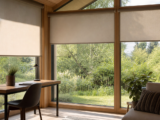
One of the simplest security improvements is to control what can be seen from outside. Intruders often make quick decisions based on visible rewards. If a passer-by can see a laptop, power tools, camera equipment or a bicycle through the glazed doors, the risk increases.
Practical visibility options
- Use blinds or curtains: Fit them neatly so they do not interfere with door operation or ventilation.
- Choose privacy film carefully: Frosted or reflective film can reduce visibility, but check suitability for the glass type and sun exposure.
- Reposition furniture: Keep desks, screens and equipment away from direct view through the doors.
- Create a closed storage zone: Use lockable cabinets or cupboards for smaller valuable items.
- Remove high-value items overnight: The most secure item is often the one not left in the cabin.
Be careful not to block every view if passive supervision from the house is useful. You want to reduce visibility of valuables while still allowing you to notice suspicious activity around the entrance.
Consider security film, glazing and safe detailing
Toughened glass is commonly used in garden buildings because it is safer than standard glass if broken. It is not the same as laminated security glass. If you are particularly concerned about forced entry, ask whether the glazing can accept an appropriate security film or whether upgraded glazing is available. Security film will not make glass unbreakable, but it may help hold fragments together and slow access, depending on the product and installation.
Any glazing modification should be compatible with the door design. Poorly applied film can peel, trap moisture or look untidy. Heavy aftermarket grilles or bars may place strain on lightweight doors and can make the cabin feel unwelcoming. If you use internal grilles, ensure they do not prevent safe exit when the cabin is occupied.
Fit lighting that helps without annoying neighbours
Lighting is a practical deterrent, especially for a cabin at the end of a garden. A motion-activated light covering the approach to the doors can discourage opportunistic behaviour and help you see what is happening. Position it so it lights the entrance and path rather than shining directly into neighbouring windows.
Solar lights can help with wayfinding, but they may not provide enough brightness or reliability for security. Mains-powered lighting, installed safely by a qualified person where required, is usually more dependable. If you already have outdoor power for a home office cabin, consider whether lighting, a small alarm and Wi-Fi coverage can be planned together.
Think about alarms and monitoring
A simple shed or cabin alarm can be worthwhile, particularly where the doors are out of sight. Door contact sensors, vibration sensors and motion detectors are common options. Smart alarms can send alerts to your phone, but they depend on Wi-Fi or mobile signal. Battery-powered devices must be checked regularly.
For a glazed cabin, a visible alarm box or warning sticker can deter some intruders, but only if the system is credible and maintained. Avoid fitting an alarm and then forgetting to change batteries, update apps or test sensors. If the cabin contains work equipment, check whether your insurer expects a particular type of alarm or lock.
Secure the approach before the door is tested
Good cabin security often starts at the garden boundary. If someone can enter the garden unnoticed, reach the cabin from a hidden route and work on the door without interruption, even a better lock may not be enough.
Improve the wider setting
- Keep side gates locked with weather-resistant hardware.
- Repair weak fencing and remove loose panels.
- Use gravel near approaches where appropriate, as it can make movement more noticeable.
- Cut back dense planting that hides the door from view.
- Store ladders and tools securely, as they can be used to force entry.
- Position bins and garden furniture so they do not help someone climb a fence.
Door security checklist for glazed timber cabins
Use this checklist before and after installation, and repeat it at the start of each season:
- The doors close squarely and do not rub, twist or leave a gap at the meeting point.
- The lock bolt or latch engages fully into the keep.
- Keys are controlled and not hidden in the garden.
- Hinges and visible fixings are tight and not corroded.
- The sill is sound, protected and not soft or water-damaged.
- Glass is intact, firmly held and not loose in its beading or frame.
- Blinds, curtains or storage arrangements prevent valuables being seen.
- Lighting covers the main approach to the doors.
- Side gates and boundary access points are secure.
- Alarms or sensors, if fitted, have been tested recently.
- Timber treatment and maintenance are up to date to prevent warping and decay.
- Insurance requirements have been checked if valuable items are stored inside.
Common practical mistakes to avoid
Focusing only on the lock
A strong lock fitted to a poorly aligned door or weak frame gives a false sense of security. Check the whole entrance assembly, including hinges, glazing, sill and frame fixings.
Leaving expensive items in plain sight
Glazed doors are inviting, but they also reveal the contents. Do not leave laptops, tools or electronics visible after use. Use cabinets, covers or remove them from the cabin.
Ignoring timber movement
Timber cabins expand and contract. Extra bolts fitted too tightly may become difficult to use, while locks can fall out of alignment if the building settles. Recheck door operation after installation and during seasonal changes.
Using unsuitable indoor hardware outside
Cheap internal bolts, padlocks or screws may rust quickly. Choose weather-resistant fittings and use appropriate fixings for timber.
Blocking safe exit
Security bars, internal bolts or grilles should never trap you inside. This matters if the cabin is used as an office, studio or hobby room for long periods.
Forgetting roof and general maintenance
Security is affected by the building’s condition. If the roof covering is incomplete, temporary or poorly fitted, water ingress can damage timber and doors. Keep the cabin weatherproof, treated and ventilated.
When to seek professional advice
You should consider professional advice if the cabin will contain expensive equipment, if it is in a high-risk location, or if you want to modify locks, hinges or glazing. A locksmith can advise on compatible door hardware. A qualified electrician can install reliable lighting, power and alarms. If you run a business from the cabin, your insurer may set specific conditions for locks, alarms or overnight storage.
Professional help is also sensible where the doors are not closing correctly. Forcing an extra lock onto a misaligned door may make the problem worse. Correct adjustment, settlement checks and weatherproofing should come before additional security layers.
Short FAQ
Are glazed timber cabin doors secure enough?
They can be suitable for normal garden room use, but their security depends on the door construction, lock, glazing, installation and what you store inside. For high-value contents, consider extra measures such as better visibility control, lighting, alarms and professional lock advice.
Does toughened glass mean security glass?
No. Toughened glass is primarily a safety glass that breaks into smaller pieces rather than sharp shards. It is not the same as laminated security glass. If security performance is important, ask specifically about glazing upgrades or compatible security film.
Should I fit extra bolts to double doors?
Extra bolts can help if they are compatible with the door and frame, correctly aligned and weather-resistant. Poorly fitted bolts can split timber, jam due to seasonal movement or create an unsafe exit problem.
Is an alarm worthwhile for a garden cabin?
Often, yes, especially if the cabin is out of sight or contains equipment. Choose a system you will maintain, test and actually use. Smart alarms also require reliable signal and power or batteries.
Can blinds improve security?
Blinds can reduce the visibility of valuables, which is a useful deterrent. They should be part of a wider plan, not the only security measure.
Conclusion
Planning sensible security for a glazed timber garden cabin is about balance. You want the benefits of light, views and an attractive entrance, while reducing easy opportunities for theft or damage. Start with realistic use: what you keep inside, where the cabin sits and how visible the doors are. Then check the door construction, lock engagement, hinges, glazing, sill and timber condition.
For most owners, the best results come from layered measures: well-fitted doors, controlled visibility, secure garden access, suitable lighting, careful storage habits and regular maintenance. If you plan to keep valuable equipment in the cabin, take advice before relying on standard fittings. A glazed cabin can be both welcoming and sensibly protected, provided you treat security as part of the design rather than an afterthought.